I got hung up on the “Straining Towards the Limits” chapter, also covered in posts 12 and 13, where Vogel discusses the elimination of: reality, the image, the screen, the camera, the artist.

Paul Sharits:

N:O:T:H:I:N:G (1968)

Color fields flicker and fade. Would be a different experience in the front row of a screening, swallowing the colors with your eyes, but if you can see the whole frame on TV your lasting impression is Square, like a flipbook of colored post-it notes. Our only figures among the fields were titles and lightbulb, and I figured this was silent so I put on the new Animal Collective live album, but a chair appeared halfway through with a buzzer noise that was pretty much absorbed by the music.


T,O,U,C,H,I,N,G (1969)

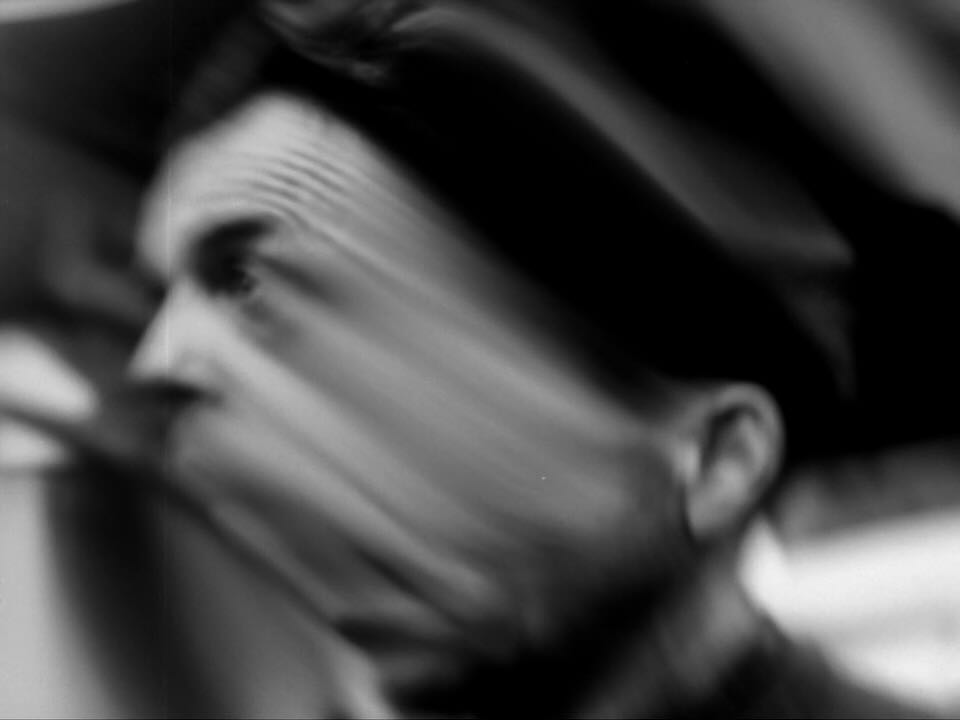
A guy having his face clawed off in two-frame flicker-motion, the soundtrack repeating the word “destroy” – then he’s cutting off his tongue with scissors Ichi-style. The flicker motion changes speed and intensity, reds and purples prevail, and the single letters appearing on occasion spell out the title. Pretty annoying! I’m missing the point as usual by watching a good video of this at home in 2025 with an IPA instead of at an underground film screening in 1969 out of my mind on hallucinogens.


Peter Kubelka:

Arnulf Rainer (1960)

Simply square black-or-white flicker patterns with stuttering static noise. I would have proposed swapping the titles of the flicker-film (Arnulf Rainer) with the mini-doc of Arnulf Rainer (Pause!) but that’s why Kubelka had a significant influence on the European and American avant-garde and I did not. Vogel: “This is the first frame-by-frame abstraction that entirely dispenses with the image and consists solely of carefully orchestrated alternations of blank black or white frames.”

Unsere Afrikareise (1966)

Germans on safari, blasting every wild creature they see and staring at nude women, a travel doc with sound, re-edited into more interesting structure than these things usually are, but not interesting enough to make it worth watching these dudes shoot zebras and elephants.


Robert Breer:

Inner and Outer Space (1960)

I think he’s animating airplanes (over Germany) in a very abstract way, all dots and lines, bombers and skywriting. Explodes into new subjects: red ball in obstacle course, brief sketch of people on the subway. Cool one.


Horse Over Tea Kettle (1962)

Opens with a frog then introduces a whole range of objects and creatures (no horses or tea kettles that I noticed). These things will eventually fall down on the scene like rain, then fly back up into the sky. In between, everything transforms into something else, because why even work in animation unless you’re gonna transform things into something else?

Sitney:

he directly attacked the conventions of the cartoon while working within it … he transforms and moves these conventional figures within an intricate orchestration of expectations and surprises involving changes of scale, direction, virtual depth, and above all movement off the screen at all four edges

PBL 2 (1968)

The year 1968 got to Breer, who turned away from abstraction to make a one-minute two-part social issues parable, craving the oscar nomination that Windy Day got instead.


Rubber Cement (1976)

Captioned scenes of the dog playing in the yard, animated in different styles, becoming more complex and intense, with periods of strobing. Focus turns to the means of production (xerox machine and rubber cement), aircraft are introduced, the whole scene melts into pure shape and color.

It’s Not Me (2024)

Real Godardian (complimentary)


Sans Titre (1997)

Possibly the genesis of the new film, a rare Cannes film made of short clips (magma, classic cinema, war, home movies, the in-progress Pola X) with voiceover, Leonard Cohen, Scott Walker. At least one clip of The Crowd appeared in both films.


Strangulation Blues (1980)

Mostly nighttime scenes, invisible under the low-res video murk. Collette’s occasional guy Paul comes home and everything he says is a cine-reference, then after fearing he might have strangled her in his sleep (he didn’t) Paul drives off again. I think it was mainly voiceover, but as I mentioned, I couldn’t see much.


My Last Minute (2006)

Gag video, where he types onto his computer that he’s quitting smoking, puts out the last cigarette then immediately shoots himself.


and a couple 2002 music videos he did for Carla Bruni – first a single take of her singing and playing acoustic on a couch while a guy carrying a candle stalks the next apartment over. The next one seems like it will be a single take of her walking through a cobwebby tunnel, until she stops during the guitar solo to dance with an old man who was walking the other way. Bruni is the sister of Valeria Bruni Tedeschi – these songs are from her smash hit debut album released six years before she married the president of France.

The Fourth Dimension (1936)

Right after I watch the movie Deja Vu there’s a “Deja Vu” title card in It’s Not Me, then the first Painleve film I find is showing time as an image flipbook and imagining that higher-dimensional beings can change pages at will. Pretty dry science film but it’s fun that scientists have always been excited about time travel.


The Octopus (1927)

Pretty random assortment of live and dead octopus…
Great doc, because octupusus are great.


Sea Urchins (1929)

More cool sea creatures which become increasingly disturbing as you learn more about them, zooming into their spiny surface to discover a horrid living forest of waggling suckers and claws


Daphnia (1928)

Nothing cool or cute about the microshrimp “water fleas,” ghastly transparent insectoid monsters, silently battling their nemesis The Hydra by the million in every lake and pond.


Freshwater Assassins (1947)

This one has sound – enjoy some swinging horn jazz while underwater insects munch on even smaller insects, 24 minutes of weird shrimpies chowing down on each other.

L’emission a deja commence (2023, Bertrand Mandico)

Puppet people talk about truth in media and introduce a series of pissing-fruit cartoons. How do you explain this sort of thing to potential investors?


The Last Cartoon (2022, Bertrand Mandico)

Kind of partly a cartoon – some abstract brightly-colored patterns – but the performance-art people take over, narrating in French and English about conflicting futures of cinema.


Four Unloved Women Adrift… (2023, David Cronenberg)

The autopsy mannequins make heated moaning sounds.
Mostly close-ups, only showing the full scene at the end.


The Menacing Eye (1960, Jerzy Skolimowski)

If my first short had been a stylish silent 2-minute backstage knife-throwing drama, I would also have grown up to become Jerzy Skolimowski.


Little Hamlet (1960, Jerzy Skolimowski)

A small group hanging around a half-demolished building plays out a silent slapstick story with musical narration which is sort-of a loose version of Hamlet.


The Miu Miu Affair (2024, Laura Citarella)

Meant to be another fashion ad like the Luca and the Lynch, but LC makes a Trenque Lauquen spinoff, a mystery about a missing fashion model that gets increasingly hazy and vague. it’s not great exactly, but it’s great for one of these.


Let Your Heart Be Light (2016, Romvari & Campbell)

She trims the tree while half-watching Meet Me in St. Louis on a laptop and drinking from her Chantal Akerman mug, then switches to a mix of trad-xmas songs before Sophy comes over to hang out.


I’m Hungry, I’m Cold (1984, Chantal Akerman)

The one who looks familiar is Maria de Medeiros (The Saddest Music in the World), the less hungry one is Pascale Salkin of Gang of Four. The most charming and fast-paced Akerman movie since Saute me ville?


and some auteur music videos…

PJ Harvey – I Inside The Old I Dying (Cocina & Leon)

The Wolf House team creates the illusion of a days-long journey within a single room, so cool. Man gets chomped to death by a beast, man’s dog grabs one of his bones and buries it, it grows into a tree.

New Order – Blue Monday (Breer & Wegman)

The main things happening here are (1) Breer animation, (2) a dog balancing on furniture, (3) the band members being bothered by floating tennis balls. These things get integrated in fun ways (e.g. the band members watch a flipbook of Breer’s drawings of the dog).

The Breeders – Divine Hammer (Richard Kern)

The focus is on Kim pulling poses indoors, and the other three have a minor thread going on a tour of strip clubs. They should’ve cut out the shots of Kim as the Flying Nun.

The Roches – Hammond Song (Lewis Klahr)

Lewis does his clip-art mashup thing. Lucky me to find this right after discovering the group – I’ve been playing their debut album this week. He made this forty years after the song came out.

Mystical Weapons – Colony Collapse Disorder (Martha Colburn)

Instrumental guitar rock by Sean Lennon and Greg Saunier, the only song here I didn’t already know. More clip-art, the religious and planetary icons giving flashbacks to the Harry Smith shorts. Faster cut than Klahr and with added digital glitch edits (or else my copy was defective).

The Secret Cinema (1967, Paul Bartel)

Jane’s bf Dick dumps her for not caring enough about the cinema, she runs home crying and tears down her Jacques Tati poster, then the next day she overhears her sexual-harasser boss complaining at the bf over the phone that he went off-script during the breakup. Turns out a cinema society is ruining Jane’s life while covertly filming it, and all the cool cinephiles in town are laughing at her in nightly screenings. Are they bowfingering Jane (I haven’t seen Bowfinger)? Jane is killed off as conspirator Helen is chosen as the next subject. Why has it taken me so long to catch up with Bartel’s films?

Jane accepts the boss’s invitation to a club:


Black TV (1968, Aldo Tambellini)

Shakily filming a flickering TV set, sometimes zooming rapidly in and out, then the image edited and split-screened to a different edit so they never match up. The sound is harsh noise then a loop of the aftermath of Senator Kennedy getting shot, then (blessedly) back to the harsh noise. Pretty intense – “TVs screaming at you” summarized one lboxd viewer. Once again I didn’t have the patience or viewing conditions for The Flicker, this was a good substitute.


Damon the Mower (1972, George Dunning)

Poetry and animation, with the full page and frame numbers visible, then two animations side by side. The right half is usually the mower (old-school sickle-style) and the left is anything from dancing creatures to exploding mills. Cool at the end when the swish of the sickle starts to reposition the animation paper within the frame. Looks like Dunning made a ton more shorts and also Yellow Submarine.


UFOs (1971, Lillian Schwartz)

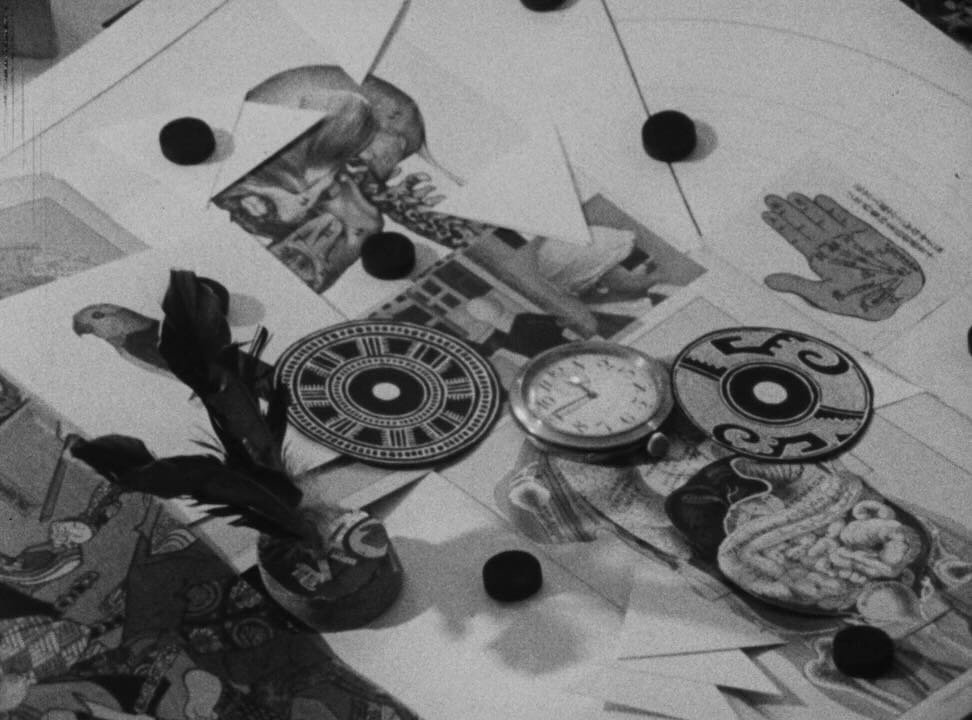
Super trippy video animation with equally trippy electronic music. This might have spawned both Pac-Man and the phrase “liquid television.” I’ve seen her Pixillation, and I guess she made lots more movies if you can find ’em.


H2O (1929, Ralph Steiner)

Steiner gets just the kinds of wild patterns that Schwartz would painstakingly produce with her video equipment, by aiming his camera at the surfaces of water in motion. Reproduces pretty poorly as stills, the movement is the point.

Me (2024, Don Hertzfeldt)

A Don Hertzfeldt dystopian jukebox musical? This made my heartbeat shift in a weird way. I’m going to try to stop thinking about it for the rest of the night, will revisit at a later date.


GUO4 (2019, Peter Strickland)

Montage of still photographs set to (good) pounding noise music. Nude male locker room wrestling? Filmed after In Fabric, a time when he was clearly going through some things.


Notes on Monstropedia (2017, Koji Yamamura)

I think it’s Edward Gorey with some Adult Swim thrown in, and inexplicable harpsichord music – either the combo isn’t working or the translation is off or it’s just not clever enough. A lesser work from the Mt. Head / Country Doctor animator.


The Curse of Dracular (2023, Jack Paterson)

Cute claymation retelling of the British Dracula movies as written by the director’s dad when he was nine. Worth it for the ending, when a five year-old says “don’t like you” and kills Dracular easily.


The Tell-Tale Heart (2008, Robert Eggers)

Ornate live-action movie with stop-motion tendencies, maybe Quay-inspired, and the rich old man played by a muppet. This movie loves clocks, and it’s right, clocks are cool. Shocking to hear spoken dialogue for the first time three-quarters through the film. The actual heartbeat part is very short, this guy is driven mad pretty easily. What is this “inspired by” credit when it’s a straight adaptation?


The Events at Mr. Yamamoto’s Alpine Residence (2015, Tilman Singer)

In a similar secluded fancy euro-house to the Cuckoo home, tennis girl opens a package unleashing a self-expanding white balloon that consumes everything. Everything I watch this weekend reminds me of The Prisoner. I don’t know that this was “any good” or “made sense” but it is fun to make and watch movies.


The House of the Plague (1979, Zlatko Pavlinic)

The plague is personified as a purple-eyed woman in mummy bandages. This is animation in a loose sense, drawings cross-faded. A woman coming home into town gets blackmailed into bringing the plague along. The plague-process images are cool but the movie’s main stylistic triumph is the rhyming (in Croatian) roboticized narrator.


Light, Noise, Smoke, and Light, Noise, Smoke (2023, Tomonari Nishikawa)

I’m glad this rhythmically edited montage of fireworks with a garbage soundtrack brought joy to the avant-garde cinephiles last year. Fireworks are cool, it’s true.

Revenger (1958, Dusan Vukotic)

Scarf Guy catches his wife cheating, goes to the gun store and imagines every possible scenario, none of them especially good, so he buys a butterfly net. That part must’ve made more sense in the original Chekhov story. Getting around to watching more by Vukotic after enjoying Cow on the Moon and Cowboy Jimmy.


The Playful Robot (1956, Dusan Vukotic)

A nutty one with excellent music. Scientist in a sort of Wallace-automated Jetsons laboratory creates a sentient humanoid robot then tells it to clean the lab while he naps. Instead it creates two smaller child robots so it can also nap, but they focus more on messing with each other. Not sure why a flying saucer bird hatches from an egg at the end, but the scientist wakes up and isn’t at all displeased by this messy racket.


The Struggle (1977, Marcell Jankovics)

Very good and short, feels like Bill Plympton turned classical. A muscley sculptor chisels away at a block while it chisels away at him, until the block has become a muscley human figure and the sculptor is old and busted. I still remember Marcell’s Sisyphus animation 15 years later. Won the (short) palme d’or.


Eyetoon (1968, Jerry Abrams)

Blobby abstract art flickers, fast-motion driving demo, geometric and psychedelic patterns, sex drugs and rock & roll – for the first half it can’t decide what it wants to be, then it settles on being an avant-porno for the second half.


Cab Calloway’s Hi-De-Ho (1934, Fred Waller)

Cab, even more of a goofball than expected and making the most of his floppy hair, rehearses with his pajama-wearing band in the sleeper car of a train, then they perform at the Cotton Club. Train Porter Sam buys a radio to keep his Chicago hotwife entertained while he’s away, Cab finds out the hotwife is alone and entertains her in person. Corny and hardly technically perfect, but there aren’t a lotta opportunities to see Cab dancing to his own songs.


Senor Droopy (1949, Tex Avery)

Wolf the star bullfighter is trouncing the bull, who then turns the tables. Nobody takes Droopy seriously, then the bull disrespects his dream girl and he gets mad. It’s Tex Avery, it’s Droopy, it’s good.


Chumlum (1964, Ron Rice)

A parade of double-and-more-exposures. Ron got Jack Smith and the Warholites to dress up and act freaky with percussive music by an ex-Velvet. It’s only 20 minutes and at least five of that is a girl swinging in a hammock chair. I’m sure it’s very transgressive but nobody appears to be having much fun except maybe Ron in the editing room.

Chuck Stephens in Cinema Scope:

A hallucinatory micro-epic filmed during lulls in production of Smith’s Normal Love … a movie so sumptuously and serenely psychedelic it appears to have been printed entirely on gauze … a thousand and one Lower East Side nights melting together in a cosmic slop of languid poses and limp half-dances, a smoke-fragile erotica that climaxes and dissolves the moment it hits your eye … it was only in the crazy crucible of Chumlum that Smith’s frittering, flailing “play” out in front of the camera seemed to find a mostly-in-focus chemical twin behind the lens.


Los Angeles Plays New York (2016, John Wilson)

John Wilson shot and edited a piece for a fashion guy who refuses to pay, so… he sues his friend Clark, standing in for the MIA fashion guy, after filming a fake fashion short with Clark as the supposed client, and they get booked on a boring new Judge Judy-affiliated court show and bring in a hidden camera. John then worries whether this short film violates his agreement with the TV studio and they’ll sue him over it, so he claims it can’t be released… then how am I watching it?


Mr. Hayashi (1961, Bruce Baillie)

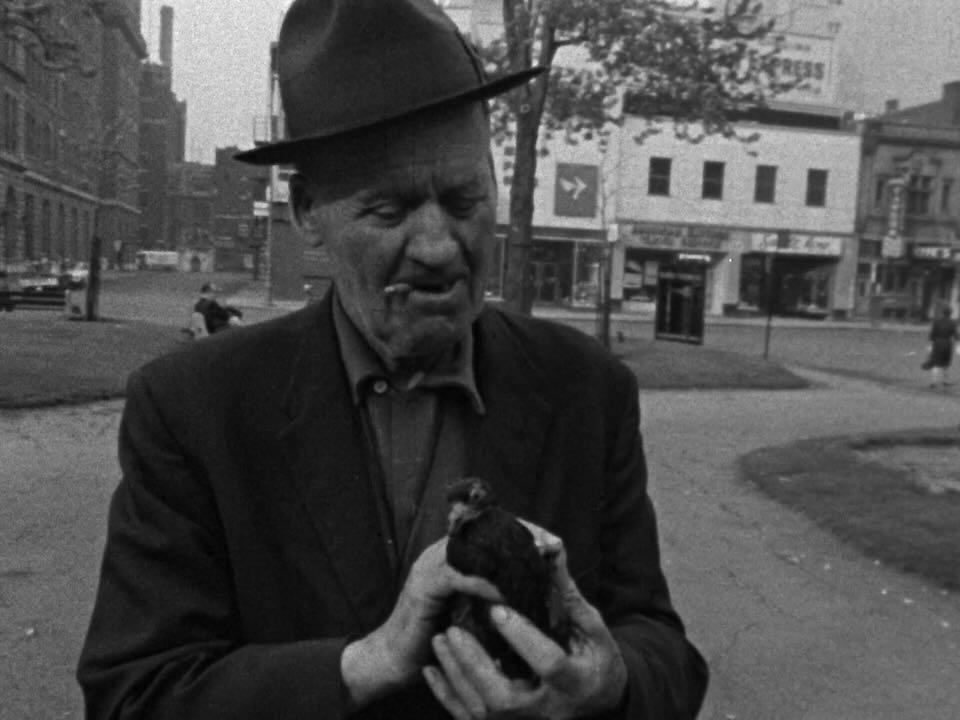
A great idea to make three-minute sun-bathed interview/portraits, there should be a thousand more of these. This one’s with Mr. Hayashi, part-time gardener – that’s about all we learn about him.


To Parsifal (1963, Bruce Baillie)

Bruce’s Leviathan – he rides a fishing boat and watches water and birds. After the halfway point he moves to land, exploring the railroad and its surrounding vegetation and insect life, all while listening to Wagner.


Mass for the Dakota Sioux (1963, Bruce Baillie)

Death/applause intro, then a hazy drift of city superimpositions. Long take tailing a motorcycle in San Francisco (not a known habitat of the Dakota Sioux) over the titles with church music. He does play with focus in a purposeful way (the ol’ rack from a distant American flag to nearby barbed wire) but sometimes the picture is so soft and blurry that you wonder if he remembered to focus at all. Parades, war, advertisements filmed off a TV with shaky reception. Repeated applause, motor vehicles, and bananas. Shots from X: The Man With X-Ray Eyes! The city pays little mind as a dead man is removed from the sidewalk to an ambulance, and the sea and the motorcycle roll on.

Horizon at the bottom of frame? That’s interesting:

The Starfish (1928)

He’s loving distorting the camera view and irising in, cross-fades, the poem as intertitles to the action. The starfish motion diorama halfway through is very great.

I stand by what I wrote last time. Watched the new restoration with music by Sqürl which I love whenever there’s guitar/feedback and/or drums (the all-keyboard sections feel too tame for these films). Man Ray and I were alive within a year of each other.


Emak-Bakia (1926)

What I said before, and add double exposures, plus Man Ray inventing the anamorphic lens-twisting effect 55 years before The Evil Dead.


Return of Reason (1923)

Film-surface object patterns, an underlit carnival.
Sqürl getting into it with the drums and keys, intense.


Mysteries of the Chateau of Dice (1929)

Faceless dice men drive out from Paris, leading to some excessive shaky-cam driving scenes, arriving at a very modern castle. Judging from the sliding panels full of canvases it’s the home of a rich art collector – is this movie a tour of a rich benefactor’s fancy house, like that one Cocteau? Apparently.

Bouquets 1-10 (1994-1995)

Excellent to see these with the intro by Gloria Vilches of a Barcelona film society, since she goes into Lowder’s history and filming methods – utilizing the 16mm bolex camera’s ability to advance or rewind to a specific frame and capture stills. So Lowder will shoot every other frame, then move to a new location and fill in the alternate frames, or any new pattern variation she thinks up on-location. Unusually for me, I’m watching these silent films without adding my own soundtrack, figuring they’re each one-minute complex creations and I need to pay strict attention.


Poppies and Sailboats (2001)

From the Cinexperimentaux 5 disc – unfortunately the poppy field does not hold up under DVD compression, but this is the easiest way to catch on to the perceptual experiments. With an even blend of poppy frames and sailboat frames, the boats are sailing through the flowers. Start to adjust the rhythms and you get something else, a harder flicker or a poppy field with sailboat ghosts.


Bouquets 11-20 (2005-2009)

Less interleaving, more slow/fast and even real-time focus on single moments, more attention paid to flying and walking creatures.

Rewatched these while reading her notebooks, less for the frame-by-frame structure of each piece than for the context and location (mostly small French organic farms). She emphasized that the films aren’t structually pre-planned, that the notebooks are documents of the filmmaking decisions that have already been made


Bouquets 31-40 (2014-2022)

The online copy of 21-30 isn’t great, skipping for now. I’d like to hear how her definition of a Bouquet has changed, because for instance Bouquet 1 (rapid flicker of beachy fauna/flora) isn’t so similar to Bouquet 40 (long take of a leather worker with a chicken credits stinger). The Light Cone notes are detailed, revealing that some Bouquets are sequels to previous episodes, and also that the chickens at the end of #40 were eaten soon afterwards by a fox.

Phil Coldiron in Cinema Scope 96:

Lowder creates constantly modulating patterns of outrageous intricacy. A more sustained accounting of these films would require taking their reels in hand and working frame by frame. While this would make available a more detailed description, it would not help with the fact that language requires placing one word after another, a process that plays out in a kind of time that is entirely remote from Lowder’s striving towards simultaneity – a richness of experience that is, for her, true realism. The images that we see in films such as the Bouquets, in some sense, don’t exist.