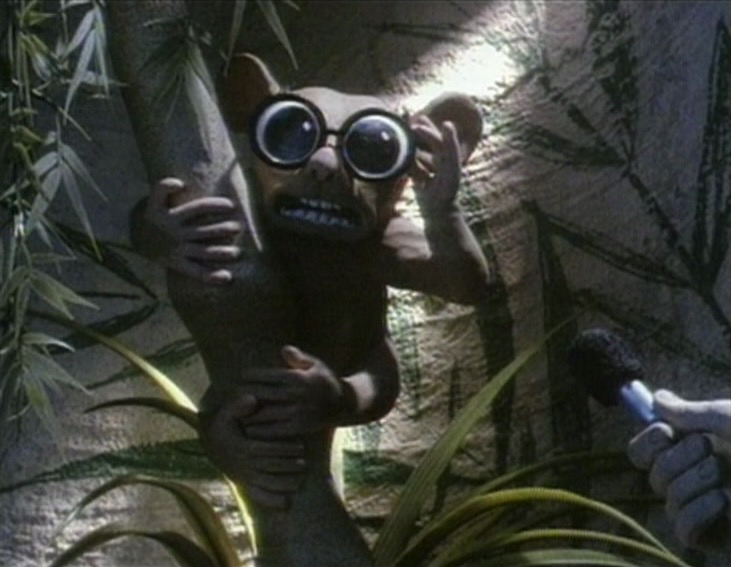
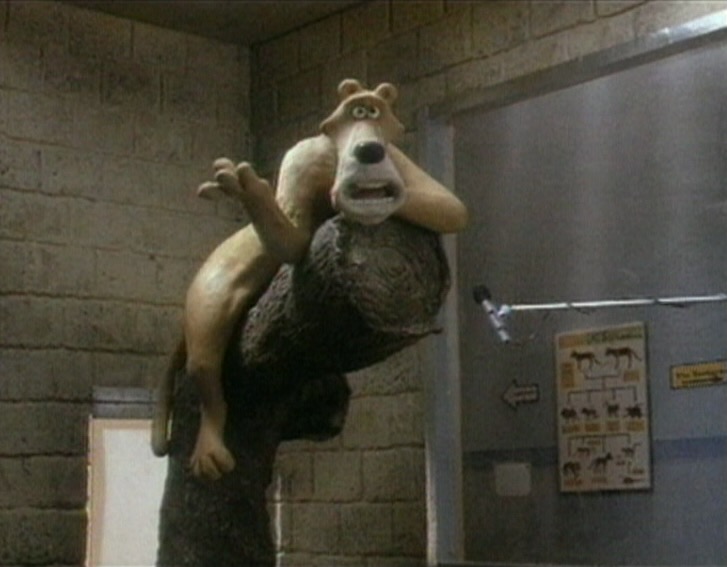
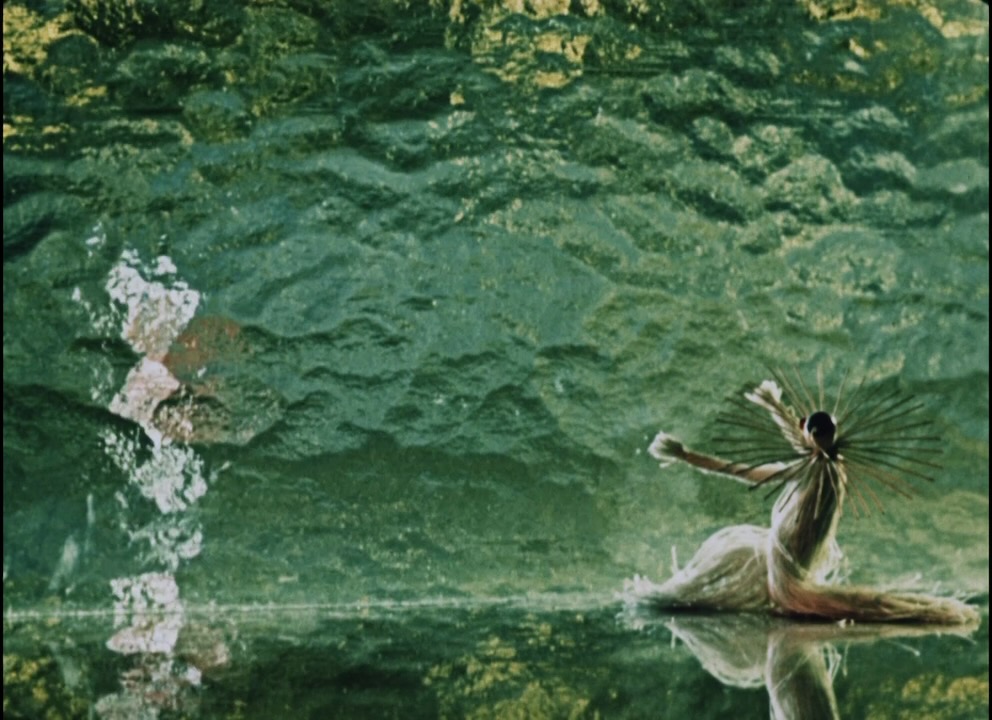
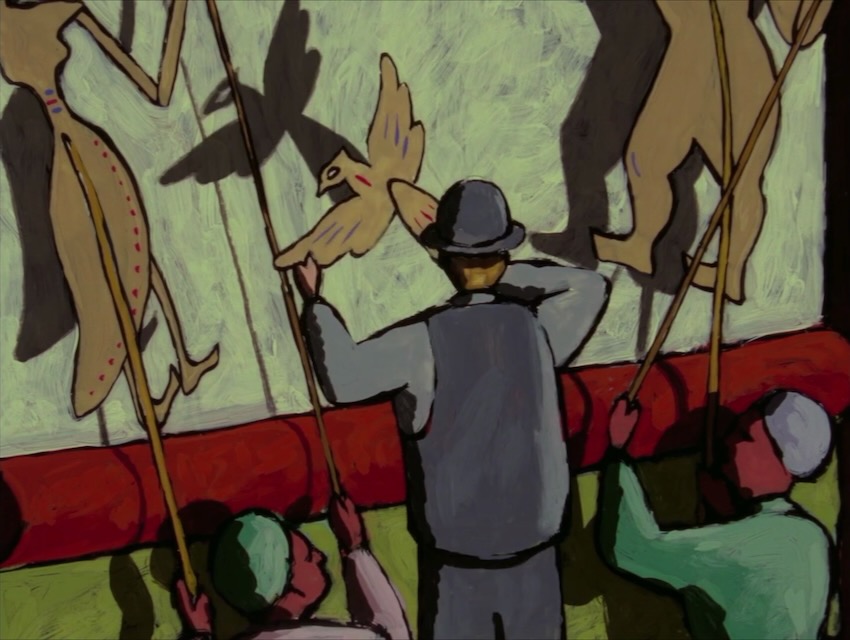
Strange Codes (1975)

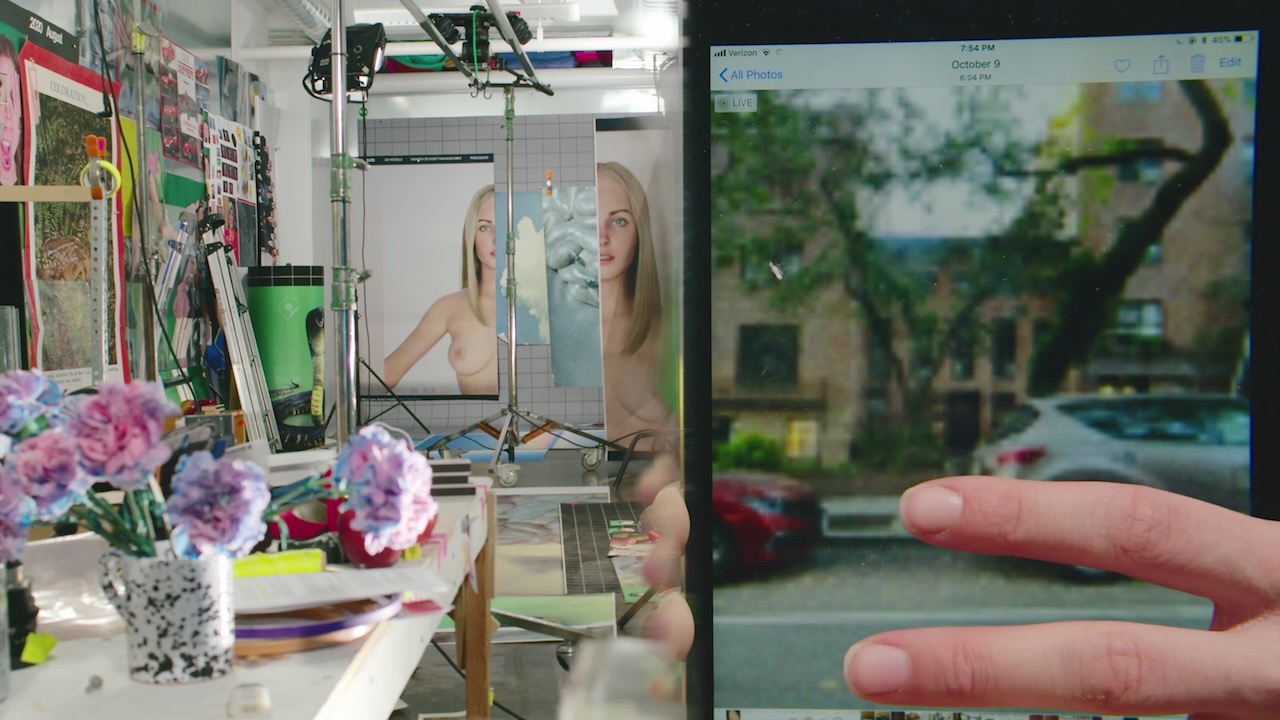
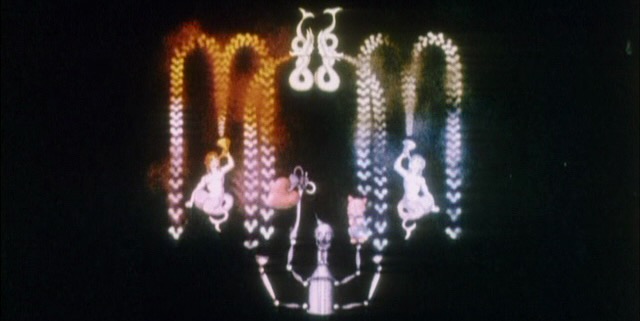
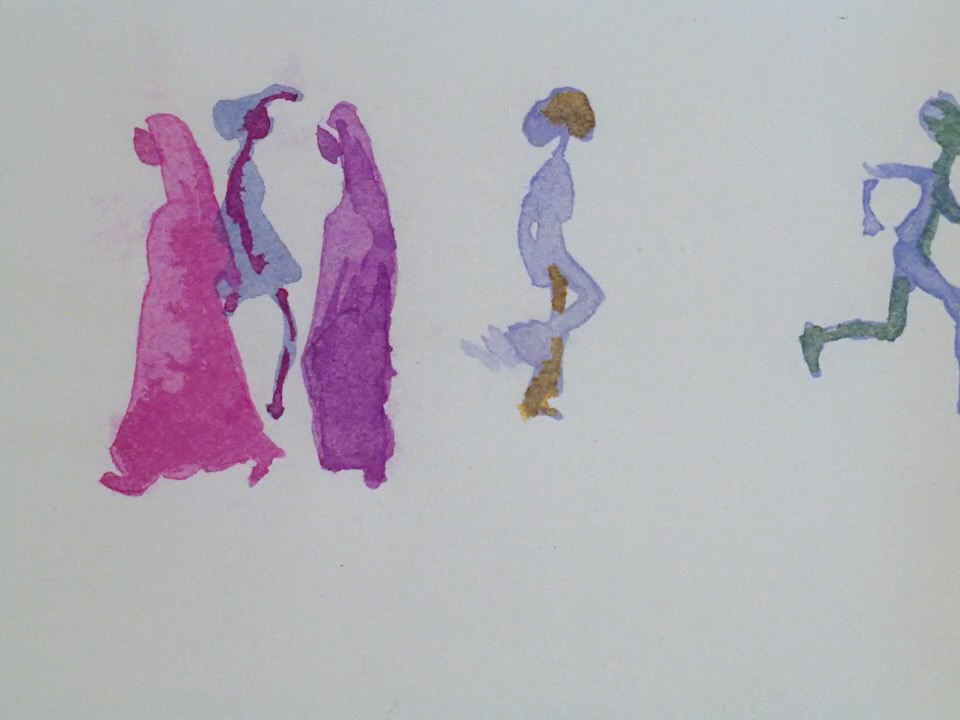
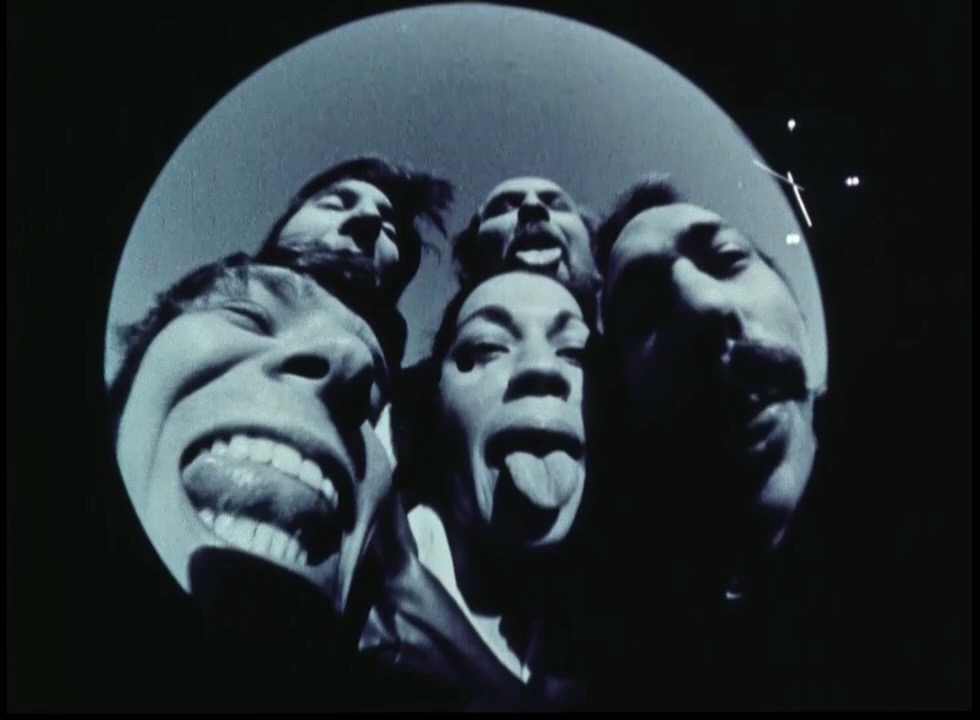
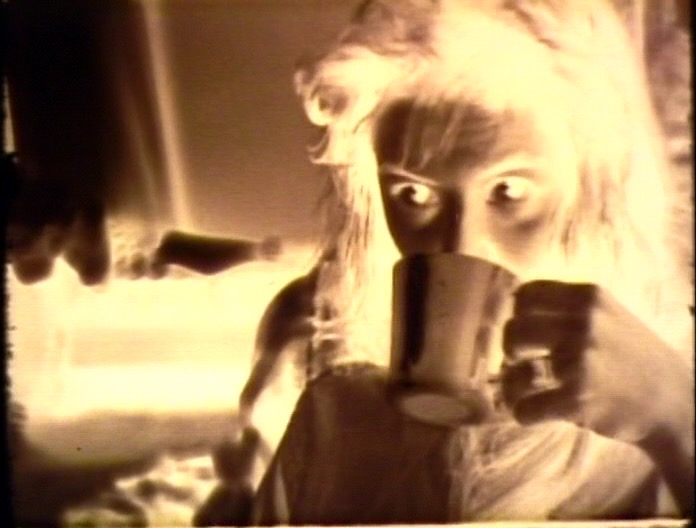
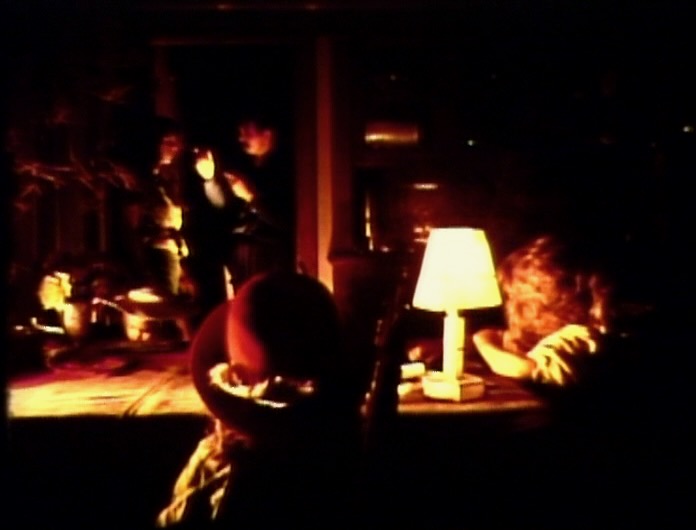
I meant to pair this with Everything Everywhere Again Alive but fell behind, so put together a little Lipsett fest instead – good thing, too, since I fared better with the earlier shorts. Lone eccentric makes a film at home, playing with all his props and displaying his collection of weird objects and games and papers, without coming up with an exciting way of presenting these thing cinematically. The sound alternates between Chinese opera and a cut-up monologue about 1962 computer technology. “Maddeningly impenetrable,” raves Cinema Scope. Will Sloan watched the extras.


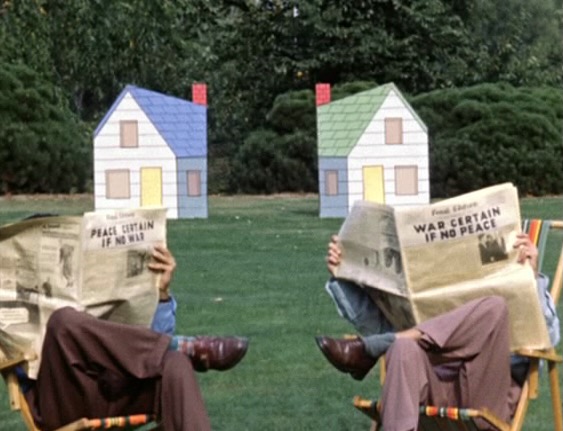
Very Nice, Very Nice (1961)

Audio and photographic montage, good fast editing and very nice photo choices, I’m into it.


21-87 (1964)

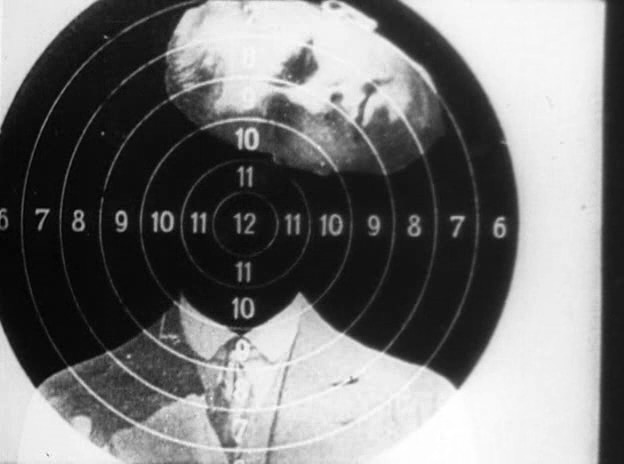
The montage technique (not as flipbook-fast as Very Nice) with motion footage, a great 1960s time capsule with a cut-up audio track that keeps returning to religious music/topics.


Free Fall (1964)

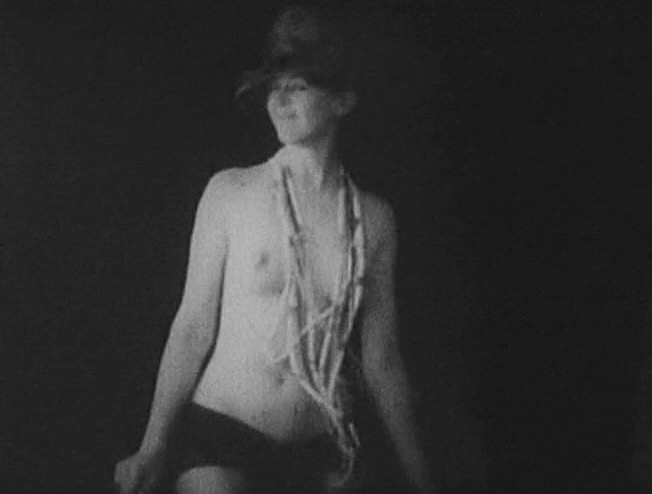
Highly variable cutting speed, from flipbook to long-held stills, now mixing photos with motion footage while intercutting human and animal/insect portraits and behaviors. A lotta fun, especially on the audio track.

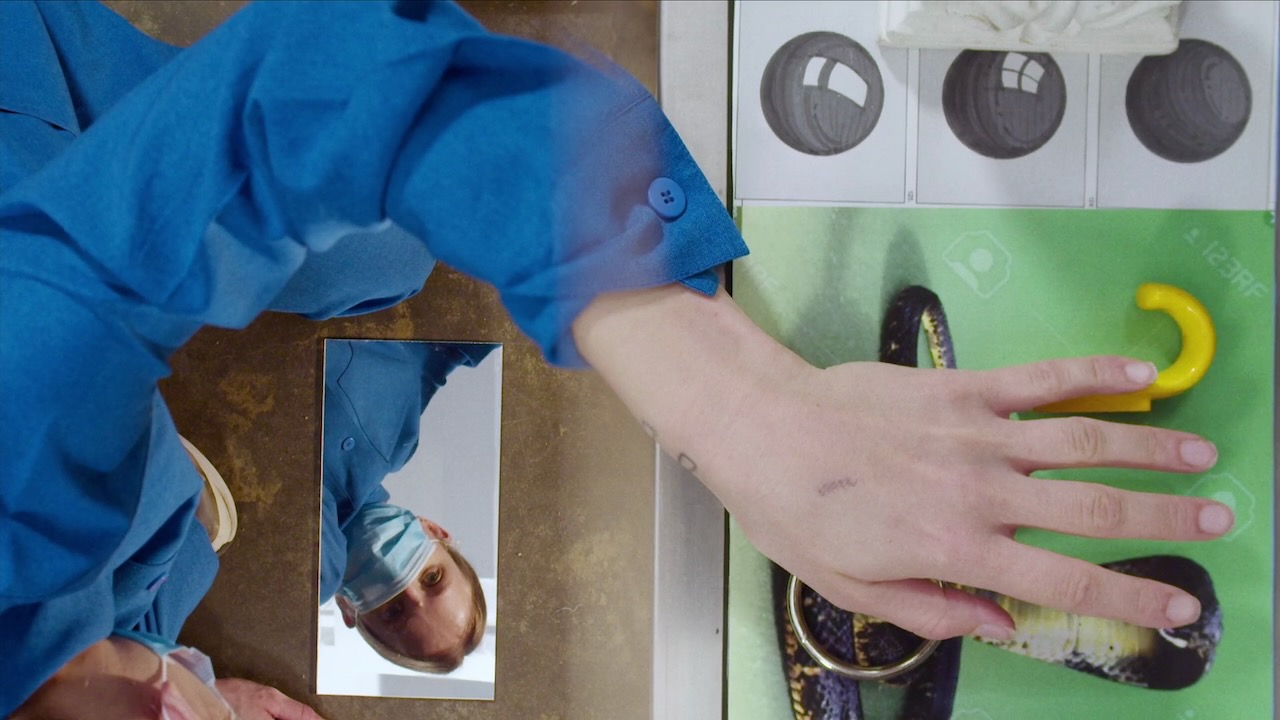
Naked Blue (2022, Mati Diop & Manon Lutanie)

Not actually naked, but wearing a blue skeleton suit, a girl is hanging around a studio, then the smoke machine turns on and she dances for a camera, but not ours, which seems more of a low-fi behind-the-scenes angle, giving the sense of a backstage parent filming their kid’s motion capture performance for a video game or music video. No sync sound, big classical music slapped on top of it – oh, now I see the music is the whole point of this, it’s a new piece by Devonté Hynes. The dancing girl is the daughter of Valeria Bruni Tedeschi and Louis Garrel.


Five Days Till Tomorrow (2022, Lewis Klahr)

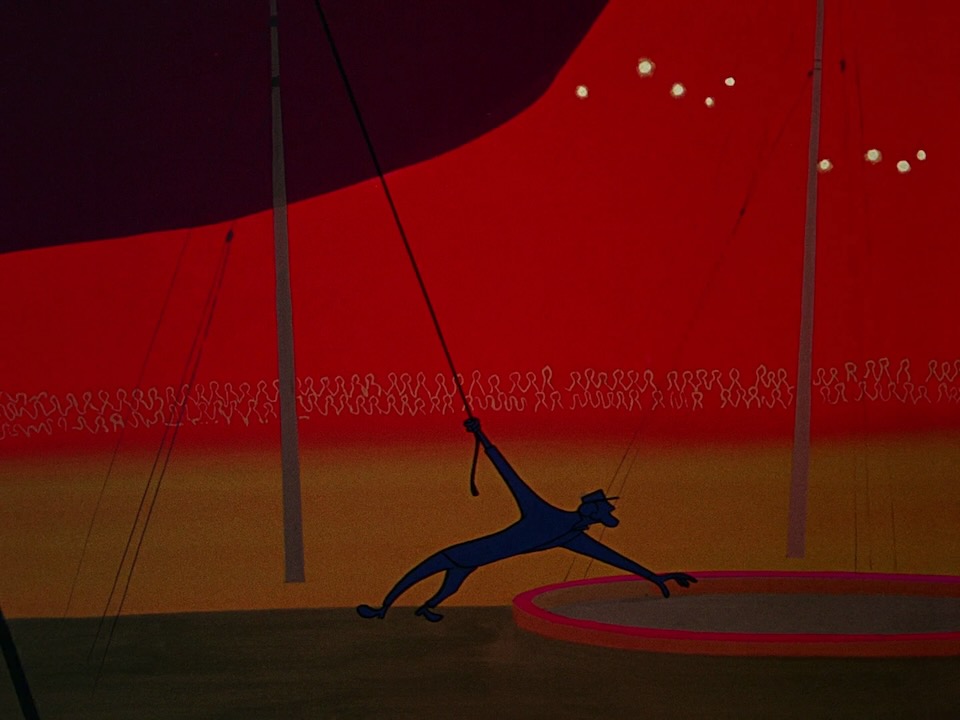
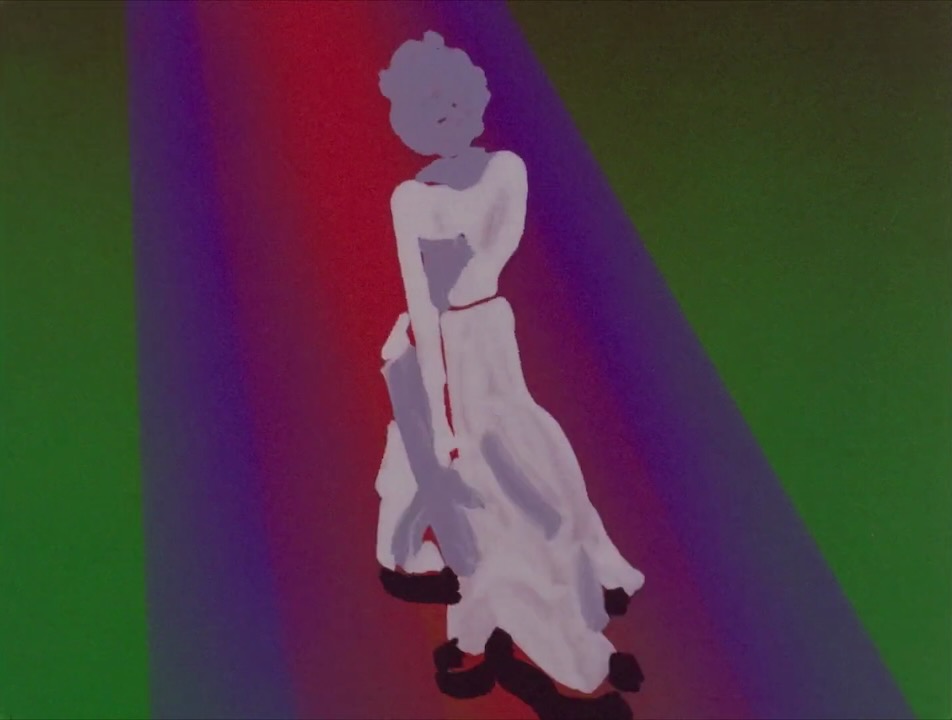
Klahr does more of his thing, this time to a minimalist piano piece. There are recurring characters but I couldn’t come up with a story except maybe “Luchador at the World’s Fair is haunted by circular objects.” I like how he uses cut-out characters with missing edges or word-bubble fragments, character art perfection not being the goal, also dig the subliminal flash-frame edits.


Om (1986, John Smith)

This guy again. Really good gag short, a misty monk turns out to be a barber’s cig-smoking customer, his tape-looped infinite om doubling as the sound of the electric razor.


Atman (1975, Toshio Matsumoto)

This is the Funeral Parade of Roses director pulling out some Takashi Ito moves, spinning around a seated demon in a breezy outdoor space, the camera moving and zooming at every speed from freeze-frame to freak-out. Pretty nice weirdo-loop music by Yoko Ono’s first husband.


Relation (1982, Toshio Matsumoto)

Another short from the long gap between Funeral Parade and Dogra Magra. Early 80s video art that actually holds up. Starts with an ocean scene split-screen at the horizon line, with the sky in fast-motion over a slow sea, then adds more frame splits and pictures-in-pictures after replacing the clouds with a left-to-right scrolling graphic finger, making the ocean look like a claw-machine of the gods.


How to Conduct a Love Affair (2007, David Gatten)

Crossfaded shots of (perhaps) large wrinkly paper sheets with charcoal drawings hanging under a slight breeze. Then bottles and hands, a bit of a nice green color after I’d thought it was a black and white movie. Opens with still text about patience in love affairs, ends with crossfaded sentences on black about colors and waiting, all silent.

Swain (1950, Gregory Markopoulos)

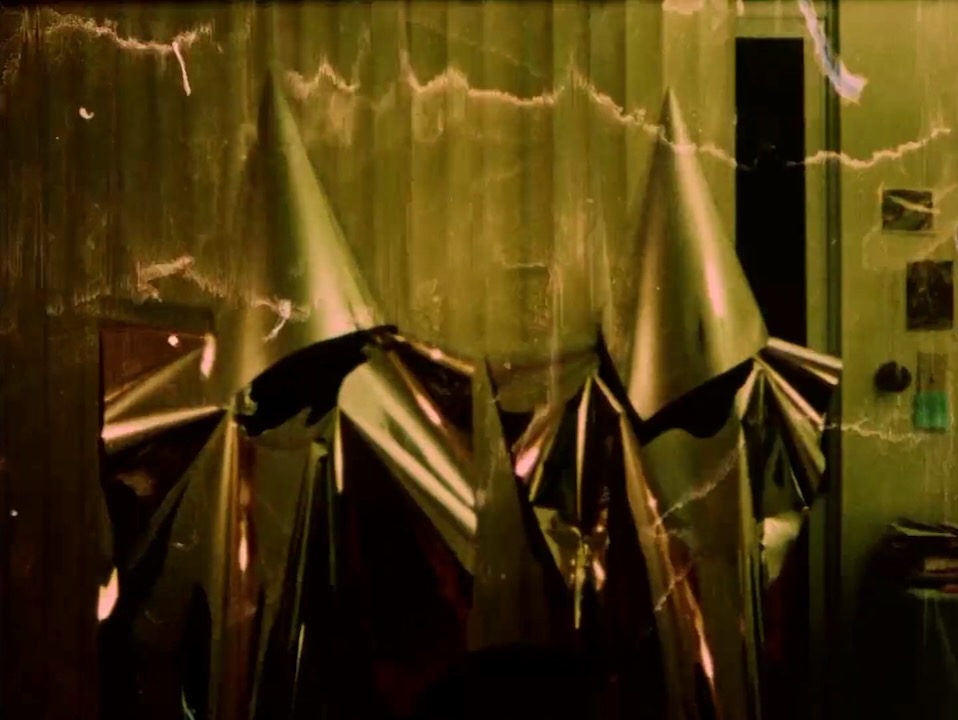
Young man is freaking out at the zoo so he goes to the sculpture park instead and has a nice wholesome time. He moves on to the botanical garden, but he’s being chased by a bride. Pretty sweet despite the quality of my copy – don’t suppose I’ll ever have the chance to see this properly. The Maya Deren vibes are pretty strong. Silent, so I played the first three tracks of Def Jux Presents volume 1, as the director no doubt intended. What ever happened to Cannibal Ox… oh wow, their third album came out this year and nobody liked it.


Bliss (1967, Gregory Markopoulos)

Vacation slides cut into vertical strips and visually jukeboxed together, flashing and overlaying, then joined by burning icons. I turned off RJD2 because this one has brief barnyard sounds over black halfway through, but then it’s back to silent church strobing for the second half.


Dance Chromatic (1959, Ed Emshwiller)

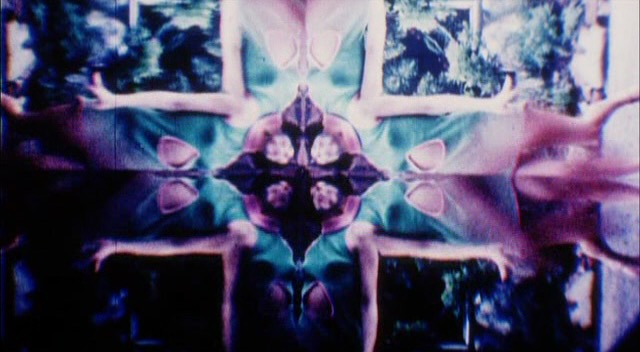
Ed edits a dancer in time and space across the screen, turning her into a graphic element, then does motion paintings in response to her moves. Very cool, somebody get Norman McLaren on the phone. Clangy percussion score.


The Bones (2021, Cociña & León)

Oh hell yeah. It’s got the house-destruction and wall-paint-creep from Wolf House and the walking-in-place trick from the PJ Harvey video, but the focus this time is stop-motion puppets. A girl unearths a pile of bones, reverse-burns them into a jumble of fleshy body parts, then Mr. Potato-Heads them in various configurations, marries them to each other, and disappears. Presented as if it were a reconstructed film from 1901, but even if so, there was no need to distress the soundtrack (increasingly disturbed piano music) since they didn’t have audiotape in 1901. Also, having just watched Leaves from Satan’s Book (1921), I can vouch that movies back then were not as satanic as this one.

Zero Kama in the studio:


Conversations of Donkey and Rabbit (2020, Ildikó Enyedi)

Are there really 20+ of these? I don’t think so. Long distance conversation: Rabbit has been reading Plato and is excited about birds and flowers, Donkey casually disagrees with her about how trees work. Nicely staged and photographed, very pandemic-feeling.

The Joke (1969, Jaromil Jires)

The joke was a cynical line he wrote to a girl he liked in a piece of intercepted mail which got him sent to a tribunal and kicked out of college – I didn’t mean to program a monthly theme of getting kicked out of school along with Education and Downhill. The flashbacks are wonderful, nobody plays the lead character as a young man, the camera is his stand-in, and his memories overlap the present, so the words of his expulsion tribunal are dubbed into a church ceremony he’s wandered into.

In present day our guy (Josef Somr of Morgiana) meets up with Helena (of the 1984 AI horror-comedy Grandmothers Recharge Well!) with a revenge scheme, meaning to seduce the wife of one of his accusers. All goes smoothly, except that the married couple are separated so the husband is happy that she’s found a new man, and Helena’s assistant is in love with her, and when our guy tries to ditch her she attempts suicide (Canby found this part “very funny”).

when your girl Marketa says she will stand by you:

when your revenge plot has fallen apart:

It was banned for decades, of course… based on a novel from the writer of The Unbearable Lightness of Being… Jires’s followup would be Valeria and Her WOW.


Zid / The Wall (1966, Ante Zaninovic)

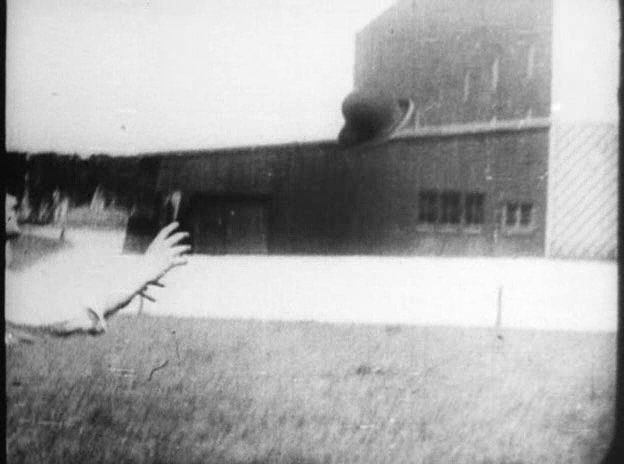
Decent little animation with hot music. Man in bowler hat sits patiently by a giant wall, until aggrieved naked man comes along and tries everything in his power to get through it, finally headbutting it and himself to death. Bowler man walks calmly through the new hole and waits at the next wall.


The Fly (1967, Marks & Jutrisa)

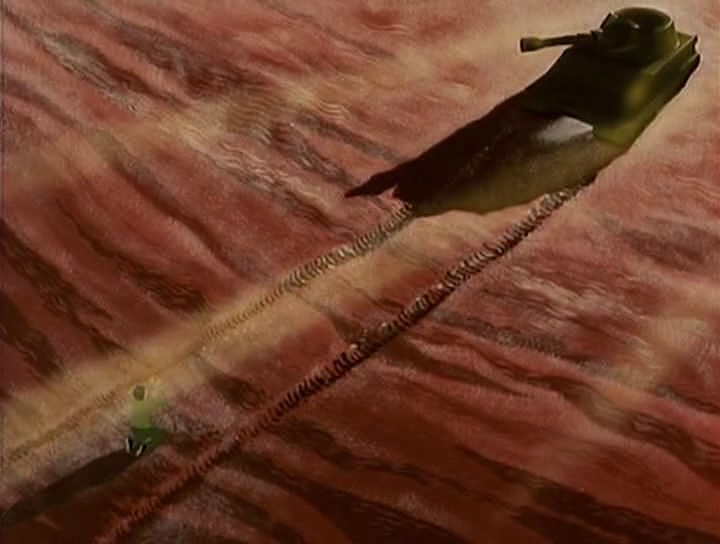
Yugoslavian animation. Impassive guy tries to squish a fly but it escapes and doubles in size every quarter minute until it’s large enough to annihilate the man’s world and send him hurtling through space. Aware of their power over each other, they decide to be friends? Someone had fun with the all-buzzing sound design. Not to be confused with The Fly or The Fly.


Be Sure to Behave (1968, Peter Solan)

Girl in prison solitary washes up, pees, paces, watched always by an eye in the door. She imagines scenes suggested by crack patterns in the wall. Then she’s dressed up all nice, blindfolded, escorted to a park and released. She narrates all this too – unsubtitled, whoops, but it’s a soviet psychodrama of some kind. Czech, Vogel had the subtitles:

In this film a woman prisoner, harshly incarcerated, is suddenly released as unpredictably as she had been imprisoned; “Stalin is dead,” she is told, and then, significantly, “Be sure to behave.”


Jan 69 (1969, Stanislav Milota)

Czech funeral doc, aka Funeral of Jan Palach. Jan has died young, burning himself in protest of Soviet occupation, and the people are all turning out. Silent, set to doomy choir music.


Don Kihot (1961, Vlado Kristl)

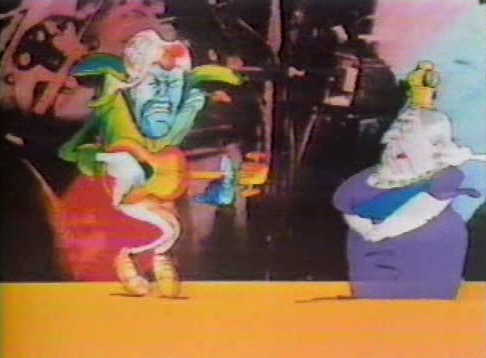
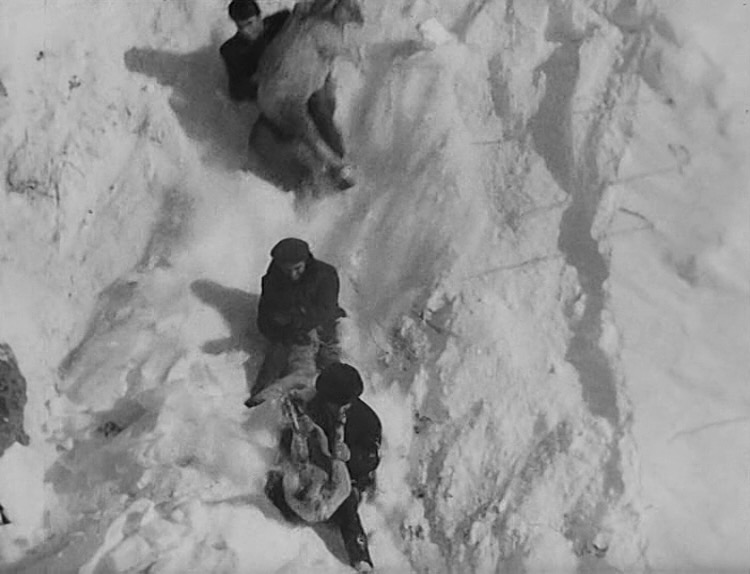
Not what I was expecting given the title. Confusing flying machines, a cross between WWII planes and faces with bristly mustaches, bustle about. This tall robot must be the Don, taking on all the mustache pilots at once, going rogue in a police state. Big showdown arrives and the Don pauses to make out with a magazine, then either wins or loses, I couldn’t follow the abstract character design. Some pointedly handdrawn backgrounds (no straight lines) and inventive prop stuff. Unreleased in its native Yugoslavia, Vogel: “Don Quixote has become mechanized and is threatened by a technological society bent on destroying his individuality. He defeats it by exposing it to the power of art and poetry; but the art work is itself ironically distorted, raising a question mark.”


Among Men (1960, Wladyslaw Slesicki)

Stray dog draws the attention of some kids playing war and they attack it. It’s sold to a medical research place but escapes. Rounded up and leashed by animal control, rescued and taken to a friendly animal farm, but flees again, hungry on the streets. This city is portrayed as a shithole, with nice photography at least. This predates Balthazar and some other stories of innocent animals in a selfish human world. Vogel: “The most important of the famed Polish Black Series documentaries which dared to touch on negative aspects of socialist society.”

Un Chant d’Amour (1950, Jean Genet)

Contact between adjoining prison cells. Almost narrative, then it doubles back on itself or fantasizes itself out of the prison, or introduces a murderous prison guard.

Basically the same image in Be Sure to Behave:


The Demands of Ordinary Devotion (2022, Eva Giolo)

Objects and processes, an excellent example of this sort of thing, nicely edited with a great focus on sound.


Stone, Hat, Ribbon and Rose (2023, Eva Giolo)

Scenes from bigger spaces, ambient outdoor sounds in less controlled environments, cut with short snips of people indoors making noises on everyday objects when used unusually. How does a horn sound when you rub it, or a plant when you hug it, videotapes when they’re stacked? “Stop filming a train station, you’re not Chantal Akerman,” I demanded of the movie, not realizing it was made as a tribute to her, part of an omnibus feature. Forgot I’d watched one of Eva’s a couple years ago. Her follow-up to this was filmed on an island and her latest short sounds anthropological, getting further from the enclosed spaces of Demands and Flowers.

Michael Sicinski makes the new one sound pretty fun, and writes that these two:

exhibit Giolo’s particular brand of editing, which tends to allow individual shots to play out before being replaced by an entirely different sort of material. Shots with humans tend to be followed by ones without, landscapes succeeded by interiors, brown, natural colors followed by saturated reds and blues.


The Other Side (2021, Nan Goldin)

One of the famous slideshows, and it is really a slideshow, a parade of images (sometimes images of parades) with short crossfades, set to a mixtape. I probably liked two of the seven songs and most of the images, many of which were in vertical formats ill-suited to my wide TV.

Same Vogel chapter as The Spanish Earth, “Left and Revolutionary Cinema: the West.” Useful to note that Vogel is never posting lists of his favorite movies, but the ones that illustrate a particular quality or movement – he spends half this chapter complaining about early 1970s Godard.

Unfortunately, the resultant films – from British Sounds to Tout Va Bien – prove that to “will” political cinema into being without the mediation of art is self-defeating. Despite brilliant sequences (reminiscent of the “old” Godard), these works are visually sterile, intellectually shallow, and, in terms of their overbearing, insistent soundtracks didactic, pedantic, dogmatic.


The Cry of Jazz (1959, Edward Bland)

“Rock and roll is not jazz.” Argument within a college(?) jazz club about whether only Black people could have created jazz, the white boys arguing that there are plenty of white players so race has nothing to do with it. Narrator Alex explains how music works (repeating chorus, changes/harmonies) and how jazz has evolved, culminating in the hottest group of today, the Sun Ra Arkestra. While the kids are stuck arguing in their musicless bland room, our camera hits the streets and the clubs seeking examples for Alex’s explanations. After a savage scene comparing Black life (pool game) to white life (poodle getting a haircut), eventually there’s a short debate over whether Americans have souls, concluding ambivalently: “America’s soul is an empty void.” For a half-hour movie that begins looking like a MST3K educational short, this sure takes some wild turns.

The two restraining elements in jazz are the form and the changes. They are restraining because of their endless repetition, in much the same way that the Negro experiences the endless daily humiliation of American life, which bequeaths him a futureless future. In conflict with America’s gift of a futureless future is the Negro’s image of himself. Through glorifying the inherent joy and freedom in each present moment of life, the Negro transforms America’s image of him into a transport of joy. Denied a future, the joyous celebration of the present is the Negro’s answer to America’s ceaseless attempts to obliterate him. Jazz is a musical expression of the Negro’s eternal recreation of the present. The Negro’s freeing worship of the present in jazz occurs through the constant creation of new ideas in jazz. These new ideas are born by improvising through the restraints of the form and the changes. Jazz reflects the improvised life thrust upon the Negro. Now, melody is one element which can be used in improvisation. The soloist creates this melody through elaborating on various details of the changes. The manner in which each change shall be elaborated upon is a problem of the eternal present. As Negro life admits of many individual solutions, so does the way in which a change can be elaborated upon. Of course the Negro, as man and/or jazzman, must be constantly creative, for that is how he remains free. Otherwise, the dehumanizing portrait America has drawn of him will triumph.

Editor Howard Alk worked on Dylan movies, and one of the jazz club girls grew up to be Magnolia‘s Rose Gator. Bland went on to arrange for Sun Ra in New York and compose orchestral works. From his NY Times obituary:

The British critic Kenneth Tynan, in a column for The London Observer, wrote that it “does not really belong to the history of cinematic art, but it assuredly belongs to history” as “the first film in which the American Negro has issued a direct challenge to the white.”


I’m a Man (1969, Peter Rosen)

“Police are always frightened.” John walks through a Connecticut town carrying a spear in order to provoke white people, then calls his wife to say he’s about to be arrested. The doc(?) interviews people from John’s court case: the whites think he’s incompetent, the blacks realize he’s an intellectual. John sees himself as a militant, says he expects to die poor and hated, but aims to increase freedom for his kids.


Wholly Communion (1966, Peter Whitehead)

Something completely different: document of a post-beatnik pre-hippie poetry reading in June 1965 at Royal Albert Hall. “This evening is an experiment” – with minor crowd disturbance or drama or movement, it’s mostly just guys reading poetry with better-than-decent sound recording.

Ginsberg listens and waits his turn:

J.S. Bach Fantasy in G Minor (1965)

Organist wedges an apple in his mouth and gets to work. The rest is a Bach music video, focused on decaying walls, locks and grates, with stop-motion interludes of gashes and holes appearing in pulsating rows. Finally all the doors are thrown open and the camera rushes into the streets, confronted with a whole new world of decaying walls and locks.


Et Cetera (1966)

Exuberant little movie with better music than the Bach (sorry). Three parts in seven minutes, each piece an action that reaches a loop point then fullscreen letters exclaim ETC, ETC, ETC. Of course the film begins with FINE so when it reaches the end, the entire piece is a loop, ETC ETC, until the film material melts in lovely stop-motion.


Punch and Judy (1966)

Incredible, two puppets fight over the price or possession of a live guinea pig, burying and mutilating each other in turn. Jan’s editing and close-ups have never been better.


Historia Nature Suite (1967)

Different families of animals in rapid montage (birds obvs. the best segment), combining artistic/scientific drawings, taxidermy, and live creatures into an edited whirl, each part ending with an extreme closeup of a guy eating creature-meat.


The Garden (1968)

Gardener takes his guest Fred home, tries to show off his prize rabbits but Fred is too distracted by the garden’s living fence (a chain of humans around the property holding hands). The gardener tells some secrets about the fencemen, unheard by us, and the guest immediately joins the fence. Live actors and the vaguely folk-horror scenario set this one apart.


Don Juan (1970)

Juan’s dad won’t lend him money, so the Don smashes his dad’s head in. Juan’s chosen girl’s dad disapproves, so the Don cuts the old man’s face off. Juan’s brother Felipe, beloved of the girl, seeks Juan in the forest to take revenge, so the Don stabs his brother full of holes. Then the girl’s dad returns as a vengeful ghost who sends Don Juan to hell. Some of the usual delights, and the effect of actors wearing giant eyeless marionette-suits is fun, but much of this is the people/puppets standing around and announcing their dialogue.


The Castle of Otranto (1977)

Documentary interview with a researcher who discovered that a Czech castle was the setting for an old Italian novel, with nearby caves and secret passages and armor fragments matching those in the book. Svank and the viewer grow tired of this at about the same time, and he switches focus to animating the book’s illustrations, retelling the story of a young woman being chased around by all the castle’s men until the castle is destroyed by a giant, who also interrupts the (fake) interview.


Another Kind of Love (1988)

Music video for a bland-looking British singer (Hugh Cornwell of The Stranglers) who seems to have been patient with the stop-motion process and allowed his clay doppelganger to be hilariously mutilated. Snappy editing.


Virile Games (1988)

Viewer watches a soccer game on TV but it’s a harlem-globetrottin’ version of soccer where points are scored by attacking the opposing players’ faces with foreign objects until their clay heads implode. The ball gets kicked through the viewer’s apartment window and the game is relocated to his cramped living room, not that he notices. Also: the viewer, the ref, and all the players are the same actor.

Rainer, a Vicious Dog in Skull Valley (2023, Bertrand Mandico)


We Barbarians (2023, Bertrand Mandico)

These are backstage meta-Conan spinoffs, the first one cycling through playwright trance-purgatory, the second a series of character monologues, always ending in hell and death.


Healthy, Wealthy and Dumb (1938, Del Lord)

Curly is entering slogan/jingle contests like it’s Christmas in July, and he wins for “coffin nail cigarettes.” Three hot girls in their same hotel plan to marry them for the money, but alas, everybody is lying and poor.


Violent Is the Word for Curly (1938, Charley Chase)

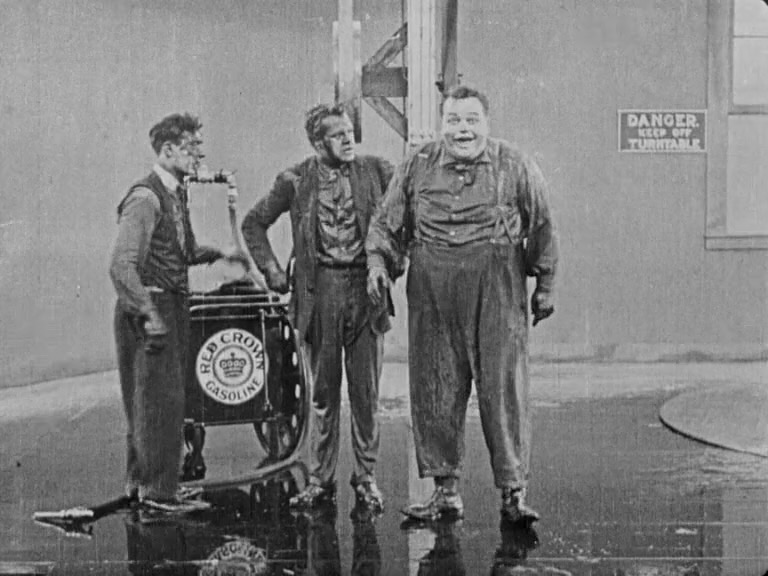
They work at a gas station and dance around a car saying “super service!” while destroying the vehicle and its posh occupants. Then after they are mistaken for those three automobile-owning visiting professors, there is a musical number, which had me briefly enraged until I gave in to the gleeful idiocy. The weird title is a play on the now-forgotten oscar-nominated drama Valiant Is the Word for Carrie about a Southern prostitute moving north.


Three Missing Links (1938, Jules White)

They go to “Africa” and tangle with a gorilla and (another) lion… okay, that’s enough of these for now.

Street Musique (1972 Ryan Larkin)

Intro of street musicians, then a set of short songs illustrated in fluidtoons style, from pens to watercolors, absolutely gonzo and excellent.


Symphony Hour (1942 Riley Thomson)

Mickey predating the opera-conducting Bugs. Their sponsor Mr. Macaroni puts their orchestra on live radio but Goofy has trashed all the instruments on the way over, so they sound like a cartoon (or PDQ Bach) and to the sponsor’s surprise it’s a huge hit. Newly restored in HD to bring you the only known scene of Mickey threatening Donald with a gun.


Moving Day (1936)

While the Mickey disc is out, let’s play some from Jerry Beck’s list. Mickey and Donald are deadbeat roommates being evicted by the sheriff and Goofy is an ice delivery man enlisted into helping them. Someone rings their doorbell till it falls off, which I just saw happen to Laurel & Hardy. Largely this one’s about how Goofy should not be hired to help you move, or even deliver your ice, as he duels with a piano possessed by trickster spirits, but also a fair bit of time devoted to Donald getting things stuck on his ass. A Ben Sharpsteen joint, a couple years after his Two-Gun Mickey.


Thru the Mirror (1936)

Mickey falls asleep reading Lewis Carroll and dreams himself into a sort of Pee Wee’s Playhouse version of Wonderland, bearing no resemblance to the version Disney would make fifteen years later. There is a battalion of playing cards, which is all in good fun until Mickey gets cheeky with the queen. David Hand directed, the year between Who Killed Cock Robin and Snow White.

Why don’t you pass the time by playing a little solitaire?


Mickey’s Trailer (1938)

Mickey and buddies ride their House of Leaves fully-automated trailer across the country. An early warning against self-driving vehicles. Ben Sharpsteen directed, between Clock Cleaners and Dumbo.


Lonesome Ghosts (1937)

Mickey shorts weren’t really on TV in the 80s, but I know their Ghostbusters story well because we had the talking-pages storybook. The fully produced version is much less scary for some reason, though it does have Mickey waving guns around again, and more Donald ass-trauma. The ghosts telephone our guys themselves just to mess with them. Burt Gillett directed, the year before Brave Little Tailor.


Bad Luck Blackie (1949 Tex Avery)

Mean dog torments little kitty until kitty hires the titular Blackie, who crosses the dog’s path causing objects to fall on his head. An exoeriment in all the shapes a dog can be bent into while still being recognizably the dog. Sorry, this is many times better than any of the Disneys. Weird Kitty Foyle reference.


Porky’s Spring Planting (1938 Frank Tashlin)

We’re planning our own spring planting, let’s see if this is instructive… (1) get a hat with eyeball window wipers, (2) get dog to do the work for you, (3) neighborhood birds end up eating everything. Weird social security joke, and Porky pronounces asparagus “ass-pah-RAH-gus.”


Hen Hop (1942 Norman McLaren)

Short hand-drawn cameraless chicken dance synched to music – McLaren was the commercial Stan Brakhage.

Feather Family (2023 Alison Folland)

Mashup of backyard children home movies (distressed film) and glitchy 3D bird-based video game (clipping, strobing). The hawk eats a pigeon, the kid’s broom has googly eyes.


Mockingbird (2020 Kevin Jerome Everson)

Watching the watcher: very shaky handheld of a Mississippi Air Force guy looking through binoculars. Sadly, no birds appear, at least none I could make out.


Ornithology 6 (2021 Bill Brand)

Ugly green fence footage splintered into pieces, vaguely in the shape of a flock of birds. Silent, endless.


NYC RGB (2023 Viktoria Schmid)

Static shots of interior/exterior buildings with light and shadows refracted into rainbows, really cool effect, ambient soundtrack. Clouds and traffic are not immune to the rainbowing.


A Portrait of Ga (1952 Margaret Tait)

Her mom smokes outside while gardening and hanging out, and she smokes inside while having a half-melted hard candy. Light narration, nice color, file alongside Mr. Hayashi.

Cayley James in Cinema Scope:

A series of portraits and close readings of the places she called home, Tait’s “film poems” (as she called them) invite the viewer into a familiar but altogether hypnotic vision of everyday life. While there is an air of the home movie about the movement of her handheld 16mm camera, there is something far more exploratory here than in the average diary film … In this foundational early work, Tait’s camera is drawn to things that would become her visual vocabulary throughout her career — hands, bird calls, flora and fauna, the cut of a dress — while eschewing the easy route of picture-postcard views afforded by Orkney’s windswept landscapes.


Information (1966 Hollis Frampton)

More like interlaced-formation, ugh. The intended image is lost by being broken into video-stripes, but the intended image is just wiggly white flashlight dots on a black background, silent.


Prince Ruperts Drops (1969 Hollis Frampton)

A lollipop is licked in extreme closeup, then from the other angle. We give a guy a lot of free passes on stuff like this when the guy also made Zorns Lemma. Halfway through it switches to first-person basketball dribbling, in approx. the same rhythm as the licking. The title refers to strong glass beads formed by dropping (dribbling?) molten glass into cold water.


A and B in Ontario (1984 Hollis Frampton & Joyce Wieland)

1967 home movies of these two taking home movies of each other, pausing only to reload. The game of camera warfare escapes the house and spills into the yard then all through town, hiding behind cars and lampposts, then to a park by the water. Casual back-and-forth editing until the last couple minutes when it takes some big swinging camera moves and shatters them into each other. Interesting edit overall, since you’re watching someone filming then cutting to their POV but usually/always at a different time, not to the reverse angle you’d expect.


From Soup to Nuts (1928 Edgar Kennedy)

In Laurel & Hardy’s first couple minutes on the job they ruin a meal, attack the chef, and break a pile of plates. Long sidetrack of the hostess attempting to eat a cherry atop her fruit cocktail, lot of cake-smashing and banana peel-slipping. Finally they’re straight-up punching their boss.

The hostess is L&H/Charley Chase regular Anita Garvin, her tall husband was featured in Modern Times. The tail end of silent comedy, fun music with sfx on the DVD. Appreciate that the traveling camera following the hostess’s wiggly ass is repeated to follow Stan when he comes out to serve (“undressed”) salad in his underwear.


Nocturne (2006 Peter Tscherkassky)

More classic film destruction for The Mozart Minute project, this time scenes of a masked ball and a girl escaping out her window, the Mozart soundtrack creatively degraded to match the picture.


Parallel Space Inter-View (1992 Peter Tscherkassky)

Not conveyable with screenshots since it’s a flicker film, alternating frames between parallel spaces. Intertitles are typed live onto a Mac word processor, like the closing credits of my own Godzilla 2. Good soundtrack, ambient noise loops. Halfway in, we get our classic narrative film footage quota, silent and strobed into some psychotronic nude woman.


Hotel des Invalides (1951 Georges Franju)

Fanciful little doc focusing on a war museum within the grand veterans hospital in Paris, made a couple years after Blood of the Beasts.

They saved Napoleon’s dog:


In Order Not to Be Here (2002 Deborah Stratman)

Opens with refilmed video of a police arrest, proceeds to a glaring spelling error in the title text, and we’re not starting out promisingly. The rest is good, a narration-free video essay on fences, walls, gated communities, surveillance – commerce centers at night. Halfway through the police presence returns, culminating in an epic chase, all (per the credits) staged.


Pitcher of Colored Light (2007 Robert Beavers)

Everyday backyard light and shadow, cutting every couple seconds. Like if Portrait of Ga had fewer life details and was five times as long. This one is rare, anyway. The short that convinced me to stop watching shorts. Anachronistic, that timeless 16mm color makes it feel like the 60s or 70s, you would never guess 2007.

The titular pitcher: