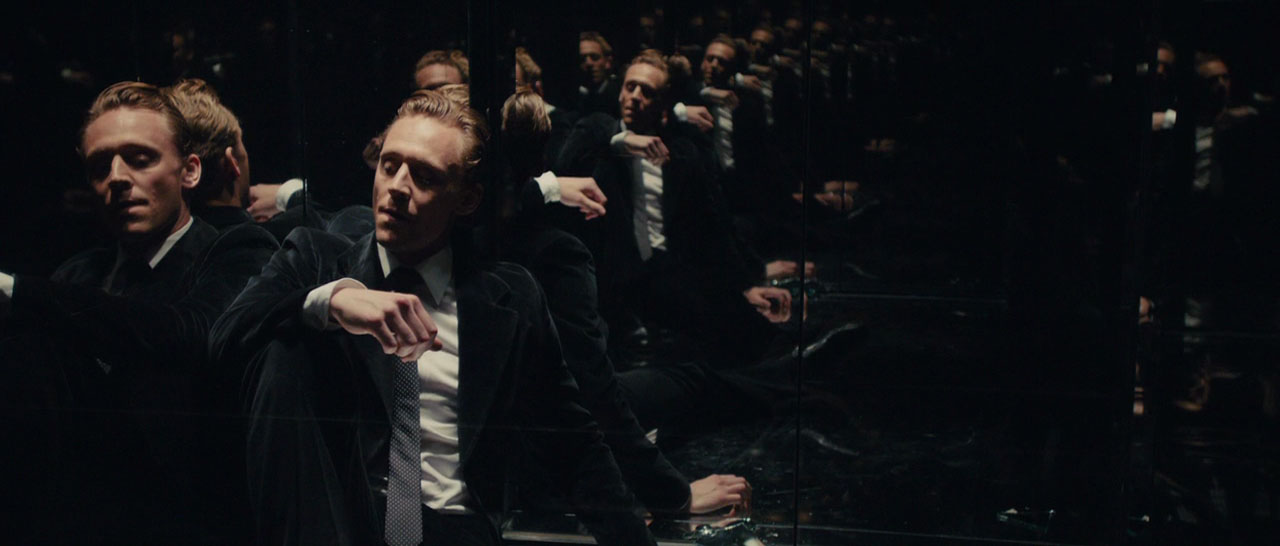
Not the best fantasy English-language debut by a Cannes jury prize winning European filmmaker starring John C. Reilly I’ve seen in theaters this week. Hard to believe this was even worse than Reality. No atmosphere or rhythm, just a series of things happening to no apparent purpose. The colors and costumes looked nice, anyway.

I guess there are three nearby kingdoms. King John C. Reilly dies slaying a sea monster to cast a spell so Queen Salma Hayek can have a baby, but her substitute chef also has a baby and they grow up to be albino twins Christian and Jonah Lees, who send messages via water flowing out of a tree root. Second there’s King Vincent Cassel (Black Swan) who loves having sex with ladies and wants all the ladies to have sex with him. He likes the singing voice of Shirley Henderson so her sister Hayley Carmichael semi-competently fools him, then is thrown from his window and turned into young and beautiful Stacy Martin (Young Joe in Nymphomaniac) by a witch in the woods, after which she marries the king. And King Toby Jones is obsessed with his giant pet flea so absentmindedly allows his daughter Bebe Cave to marry a dangerous ogre.

Shot by Peter Suschitzky (Cosmopolis, Lisztomania) and edited by tossing rough-cut scenes in the air and picking them up in any order.

M. D’Angelo:

One tale will be abandoned for so long that its return is like suddenly remembering last night’s dream in the middle of the day. Guy Maddin employed that device masterfully in The Forbidden Room (which premiered at Sundance earlier this year), but he did so by burying dozens of stories inside others, like Russian dolls. Here, Garrone just randomly cuts to someone else every so often, killing the momentum every time.

The CLF in Cinema Scope:

Thanks to very good CGI and a diligent DP, the film looks pleasant if you’re into Middle Ages fetishism, dragons, albino twins, abusive ogres, and that sort of thing. The way Garrone elaborates the source material is pedantic in its refusal to give a moral dimension to the stories (something missing from the original). What is the point of drawing on archetypical forms of storytelling if their transposition fails to meaningfully relate to the present time? Like many films these days, the only good question Tale of Tales raises is: Why was this film made?

My preparatory viewings of various Crime and Punishment adaptations didn’t end up preparing me at all for Whispering Pages, which uses none of the main events from the novel, instead taking minor scenes and mashing them up with other novels, creating a general tone of miserablist 19th century Russian literature without bothering itself with a story.

Extreme Slow Cinema here, but Sokurov keeps it short, under 80 minutes. He seems to love paintings and long takes. Motion shots turn to stills. The color temperature of shots changes. The picture sometimes looks blurred or stretched or warped, but given the stills I’ve seen of Mother and Son, this is probably intentional. Film grain and rolling mist are more main characters than our lead actor A. Cherednik, who speaks with a breathy Peter Lorre voice and seems to have killed someone offscreen.

Overall I wasn’t a fan, but it does have some mesmerising moments. There’s the main dialogue scene with E. Koroleva, in which he tells her that he’s killed someone and they debate him turning himself in and the existence of God, and she reacts like this:

There’s an obscure bureaucracy scene with this weirdo:

And there’s an inexplicable (dream sequence?) where everyone around our hero is leaping in slow-motion into unknown depths. Stills can’t do that shot justice, so instead here is some mist.

Definitely more in tune with the mopey Kaurismaki Crime and Punishment than the talky, overbaked Sternberg version. In fact, Student out-mopes Kaurismaki, with an unnamed lead character who lives in a constant state of anger and shame, walking head-down and barely speaking a word during the movie.

Get used to this expression – it’s the only one you’ll get:

There’s much explicit talk in the movie (in his philosophy classes, on TV, at his job slating shots on a film production) about wealth disparity and the modern condition. We witness rich guys punishing people and killing animals with impunity, but the Student still murders and robs a local shopkeeper, and in his late confession to a girl he likes, he says he didn’t do it for the money but “to see if I’m capable of real action, or a coward who just talks, like most people.” Differences from the other movies: he doesn’t toss or hide the stolen money, the crime investigation doesn’t enter the film, and he has no contact with the police until the final few minutes when he turns himself in – although he shows up at the scene of the crime and talks with workmen renovating the place, a familiar scene from the other versions.

The poet’s daughter, to whom he eventually confesses:

Online it’s being called Bressonian – I can see that, with the pacing, and some might see the Student as blank-faced, but I saw simmering rage in his expressions. Bresson wouldn’t have injected so many dream sequences – there are at least three, very effectively staged so that you only realize they were dreams moments after he wakes up (so the same time he’s realizing it).

M. Sicinski (who makes a good case for the movie being Bressonian besides just the lead performace):

Omirbayev could hardly be more pointed in his exploration of what these now-classical ur-texts — Dostoyevsky and Bresson — have to tell us about the contemporary situation in Kazakhstan and, arguably, the former Soviet states more generally … the Student is finding himself stranded in a society where unchecked power rules the day, and yet he is expected to stick to his studies, gain knowledge, evaluate ethical quandaries that no one in the urban jungle of Astana even remotely cares about.

B. Nelepo in Cinema Scope has been following Omirbaev’s career, refers to “his trilogy of adaptations of Russian classics after 2007’s Shuga (based on Anna Karenina) and his short film of Chekhov’s About Love for the Jeonju Digital Project in 2006″:

And yet I’m progressively less enthusiastic about each new Omirbayev feature, because he’s caught up in a pattern he invented a long time ago. Student is his most explicitly political film: the director juxtaposes the protagonist’s crime to the assassination of JFK, the final monologue is a lashing-out against the bombings of civilians, and a visit by George W. Bush is broadcast on TV as a reference to Napoleon, who is mentioned in Crime and Punishment. One would hardly expect the author of the stunning Kaïrat (1992) and Cardiogram (1995) to reduce Dostoyevsky to a simple anti-capitalist poster.

Back in theaters… not for the happiest of reasons, but I’ll take it. Electrifying for the first half hour, then gradually settles into a biopic-groove despite all of Mann’s trademark flair. But with energy and performances this good, I wasn’t worried at the time, just floating on the great history and character and love in this movie.

V. Morton:

Best appreciated in a theater, with a real sound system. The sound mix is key to the legendary opening montage, the way Mann brings Sam Cooke forward and backward, providing structure to otherwise-random memory footage that serves as exposition and context, without feeling like it. The sound is also the key to the fight scenes, in which Mann puts on the screen the subjective feel of being in a boxing match in a way rarely-matched.

Unfortunately, sound at the Grand was turned way down, I guess so the retro boxing movie wouldn’t audibly compete with whatever Care Bears nonsense was playing next door. I get better sound from my barely-in-stereo TV at home.

MZ Seitz:

Even when its momentum falters, its visuals never do. Lubezki, the wizard who went storybook-painterly for Tim Burton’s gruesomely entertaining Sleepy Hollow, shoots nearly the entire film with handheld cameras and gyroscopically stabilized Steadicams, shifting focus spontaneously in each shot as if he’s recording history as it happens. It’s arresting, alive and provocative – a documentary affectation reimagined for Hollywood, and it goes a long way toward making Ali exciting even when it’s not making much sense.

You can tell that one was written in 2001/2002, because not since The New World and Children of Men has anyone equated Lubezki with Sleepy Hollow. This points to another reason that the Ali re-release is less revelatory than I hoped – handheld spontaneity has become de rigueur in Hollywood since its first release (not nearly as purposefully as it’s done here)

B. Ebiri:

So there’s another element to Ali — a ghost in the machine that courses throughout the film. Ali the man desires to be free. But the meaning of that word slowly changes. (“Free ain’t easy,” Bundini says. “Free is real. And real’s a motherfucker.”) Ali seeks freedom not just from the reality of America, but also from everything else with dominion over him. He finds this freedom in the construction of his ever-changing, ever-moving identity. (“Your hands can’t hit what your eyes can’t see.”) In essence, he liberates himself by becoming larger than anything that ever tried to control him — larger than the Nation of Islam, larger than the media, or boxing, or even, ultimately, America itself.

Still watching the nice HD collection of Looney Tunes


Duck! Rabbit, Duck! (1953, Chuck Jones)

The duck season/rabbit season short in which Daffy gets blown to bits a hundred times and Bugs causes chaos and confusion. Murderous fun. “I hope I didn’t hurt you too much when I killed you.” IMDB calls it the end of a Hunting Trilogy with Rabbit Fire and Rabbit Seasoning.


I Love To Singa (1936, Tex Avery)

“Enough is too much! Out of my house!” Forgot that Owl Jolson’s parents have heavy German accents… also forgot an excellent scene combining telegram lingo with sexual harassment.


A Tale of Two Kitties (1942, Robert Clampett)

Abbot & Costello cats try to steal a pink, featherless, smartass bird from its nest. Very quippy and gaggy, only loosely a story. Explicit Hays Office reference! “Lemme at him Babbit, I’ll moydalize him.” Pre-Tweety premiere of “I tawt I taw a putty tat”?


The Old Grey Hare (1944, Robert Clampett)

God listens to Elmer for some reason, and sends him to the year 2000, which has futuristic weapons and newspapers full of 1940’s references. Then we get a flashback within the flash-forward, so both elderly and baby versions of Elmer & Bugs.


Hare Tonic (1945, Chuck Jones)

In which Bugs convinces Elmer that he’s caught Rabbititis. I thought this was an old-model Elmer, but it’s made a year after the modern-Elmer Old Grey Hare, so what’s going on? The Elmer-torture is prompted not by hunting this time but by Elmer trying to buy fresh rabbit at the meat market, which at least proves that he intends to eat rabbits and isn’t just hunting them for the sport of it.


Fast and Furry-ous (1949, Chuck Jones)

Coyote and Road Runner origin story, setting up the template for many to come – and arguably never surpassed. I like that Road Runner doesn’t just zoom past the traps, but actively fucks with the coyote. I also like that there are complicated cloverleaf interchanges in the middle of the desert. My birds responded to the “meep meep”

My favorite invention, very Silver Surfer:


The Scarlet Pumpernickel (1950, Chuck Jones

Daffy begs his movie producer J.L. to give him a dramatic role for once, which is enacted by an all-star cast: Porky, Sylvester, Elmer, Chicken Hawk. Rated R for snuff usage and suicide.


Chow Hound (1951, Chuck Jones)

Red kitty has a whole string of “owners”, who all feed him, but the food is stolen by a bully dog, who finally overeats his way into the hospital.


Bewitched Bunny (1954, Chuck Jones)

Bugs is reading Hansel and Gretel when he runs into the kids themselves, with ridiculous German accents, and ends up being chased by the witch through her hilariously designed house, and nearly saved by Prince Charming, who got the wrong fairy tale. “Thanks large, mac.” Ends with maybe the rudest punchline ever.

“I killed a louse and became one myself. The number of lice remained constant … I wanted to kill a principle, not a man. Killing a man may have been a mistake.”

Aki’s debut feature, restored in HD to look good as new. And an excellent start to his career it was, setting the pace and tone for so many of his later pictures. It feels nice to get back to his grim deadpan work after recent sidetracks into the Leningrad Cowboys series.

It’s also hard to reconcile this Crime and Punishment with the Sternberg version I just watched. This one seems to depart radically and inexplicably from the story, keeping the title. Raskolnikov is Antti Rahikainen, who is not a student with crime theories but a meat factory worker, and who doesn’t kill a pawnbroker because of profit or some napoleonic vision, but shoots the man who killed his wife in a car accident years earlier. The relationship with the police inspector (Esko Nikkari: Polonius in Hamlet Goes Business) is different here too, but still interesting.

Inspector Polonius:

Antti and his coworker friend:

Antti acts differently all the time according to his conscience: often he’s not just resigned to being caught, but actively self-sabotaging by introducing himself as the killer to a near-witness (caterer Eeva) and handing evidence and his name to workers at the crime scene. Other times he’s ambivalent, starting a semi-romance with Eeva, deceiving the inspector or challenging him to prove Antti’s guilt. And sometimes he’s working towards escape, planting stolen goods on a homeless man (in both movies a poor innocent is taken to the police station and coerced into confessing), procuring a fake passport and plotting with his friend to leave the country.

Arrested homeless man:

There’s no sister in this one, but Eeva has a boss with designs on her who fulfills the Grilov role, and who gets drunkenly killed in traffic towards the end. No complicated theories on the murder or aftermath: “I just found him disgusting. That’s why I killed him.” But Antti’s swings of conscience and reckless behavior keep the tension high. Kaurismaki of course throws in a couple musical numbers, local rock bands doing English-language songs.

I love when an absurd movie by a foreign filmmaker starring a pile of my favorite current international actors opens in town… and plays the multiplex. Judging from the turnout, they won’t be making that mistake again.

We open with the situation I knew from the trailer: Colin Farrell and acquaintance-turned-rival John C. Reilly are at a hotel where they are given thirty days to find a compatible mate or else they’ll be turned into an animal of their choosing. They go for daily treks in the woods to shoot escaped loners – for each one they bag, they’re given an extension of their hotel stay. In desperation, each man tries to fake compatibility with a woman – Reilly gives himself nosebleeds to get paired with pretty young nosebleed-prone Jessica Barden (because these are the kinds of surface similarities that make successful couples) and Farrell acts heartless to get matched with champion hunter Angeliki Papoulia. After this fails catastrophically and she murders his brother (a dog), he escapes into the woods, later returning to forcibly turn her into an animal (he also murders double-agent maid Ariane Labed, which means he dispatches both stars of Alps).

It’s no better in the woods, as leader Lea Seydoux has even stricter rules against coupling. Unfortunately, during their covert trips to the city (where Seydoux is pretend-paired with Michael Smiley of Kill List), he and his travel companion Rachel Weisz fall in love, and she is blinded as punishment, which leads to a hilarious/horrifying finale (remember the nosebleeds).

Also at the hotel: Peep Show star Olivia Colman as the manager, Ashley Jensen (Extras) as a sad woman who fails to get Farrell to like her, and Ben Whishaw (Cloud Atlas) as the “limping man”. I’ll have to watch again – when listing islands, did someone say “Chevalier”?

M. Singer:

Combined, [the film’s segments] add up to this cautionary tale about the way rigid governments impose their values on their citizens, and how close-minded people try to convince others (and often themselves) that their beliefs are not only the correct ones but the only ones. In the end, that sort of thinking can leave you blind to the truth that happiness can’t be regimented or regulated. And right now, that feels like a pretty timely message.

I’m trying to decide which Sokurov movie(s) to watch in preparation for Francofonia opening in theaters, and this description of Whispering Pages catches my eye:

With this film, Alexander Sokurov “leafs through the pages” of a classic work of Russian prose. Dostoevsky’s Crime and Punishment supplies this work with its ideological theme and the historical setting, but [not] its plot. The novel’s events and familiar characters are simply not mentioned. If anything, they are represented in an “inverse perspective,” where proximity is united with remoteness, beginning with end, the present with the absent.

At the same time I’m watching animated shorts, this week by Piotr Dumala, leading up to his half-hour Crime & Punishment, which the IMDB reviewers agree has beautiful illustration with no discernible story. I don’t even know the story of Crime & Punishment myself, so rather than read the book, or even its wikipedia entry, I thought I’d start with a more narrative movie version, holding a small Crime & Punishment Marathon. But I forgot, one shouldn’t count on 1935 Production Code Hollywood for stories of moral ambiguity.

Lorre, the moment after the crime:

Some Sternbergian-lit close-ups and nice shadow play, but overall it’s a talky studio picture with clunky dialogue, not what I would’ve figured the great Sternberg made between The Scarlet Empress and The Devil is a Woman. I think his heart wasn’t in it.

Peter Lorre’s Raskolnikov graduates with top honors, and writes an acclaimed article about criminal psychology, but then as now, writing acclaimed articles doesn’t pay the bills. Nearly destitute, he knocks off a pawnbroker and steals some stuff, but flees the scene before getting anything of real value. Rask decides since he’s a crime expert he can’t get caught, so he puffs himself up and offers help solving the crime to chief inspector Edward Arnold (a Capra regular who’s very good here, given the time and space to do his own thing). Emboldened, Rask marches into a publishing house and demands a large advance to write new work, which he receives, and begins throwing money around. Though Rask is becoming megalomanic, he’s still pretty incompetent in the real world, and his growing guilt plus the poor religious girl Sonya who he met at the pawn shop the day of the crime set him straight, and he turns himself in with a look of humble enlightenment.

All in English with a few odd references to Russia (rubles, Siberian prisons) to remind viewers of the story’s global-lit origins. Also a whole side plot about Rask’s sister Antonya, who’s going to marry a rich buffoon (Gene Lockhart, Crachit in the Reginald Owen A Christmas Carol) until Rask gets wealthy and chases the man off – and a nosy fellow named Grilov who knows the sister and overhears Rask, who is generally bad at covering his tracks, speaking about the crime.

Lockhart at center, with the while Rask family:

I assumed the Bible-carrying Sonya convincing Rask to turn himself in was a Hollywood addition, but after the major discrepancies between this and the Kaurismaki version I finally read the novel’s wikipedia plot summary and the Christian repentance comes from the book. Some other interesting wiki tidbits: “His motivation [to kill] comes from the overwhelming sense that he is predetermined to kill the old woman by some power outside of himself.” In this film, the motivation seems like pure desperation, and his delusions of outside powers begin afterward. “He also kills [the pawnbroker’s] half-sister, Lizaveta, who happens to stumble upon the scene of the crime.” Here it’s a couple of dudes, and Rask runs from them in a panic. Lorre (“the celebrated European star,” as he’s introduced in the opening titles) was between appearances in Hitchcock’s The Man Who Knew Too Much and Secret Agent, and this movie could’ve used more Hitchcock – or even more Sternberg.

I started watching Masters of Horror shortly before starting the movie blog, so in my season one round-up, three episodes are mentioned but got no writeup. Well it turns out MoH blu-rays are cheap, so now I own those three episodes, and am gonna rewatch the two good ones – Mick Garris’s Chocolate is doomed to be the odd man out.

Imprint was the episode I remembered the least. I wanted Miike’s English-language debut to be better than it was, and now that I can enable subtitles I didn’t miss any part of the story, but it seems like he and writer Shimako Iwai were trying to impress by throwing in every shocking thing they could come up with: pregnant prostitute murder, sibling incest, parental rape, aborted babies tossed casually into the river, a syphilitic dwarf (actor familiar from Zebraman 2), birth defects, Audition-reminiscent needle torture, madness, hanging and strangling and… this:

But there’s great color and some arresting images – more than any other MoH episode, I’d guess.

And the actors all acquit themselves well enough with the English dialogue, even native speaker Billy Drago (Papa Jupiter in The Hills Have Eyes Remake). Drago has made his fortune and returned to Prostitute Island to rescue his lovely Komomo (Michié of R100) but is told that she’s dead by a facially-deformed woman (Mystery Train star Yûki Kudô), who proceeds to tell him why, changing the story multiple times making herself more and more guilty of Komomo’s torture (at the hands of an evil needle woman played by the author Iwai) for supposedly stealing a ring from the house madam (Toshie Negishi of Over Your Dead Body and Audition), until Drago has heard enough stories, murders the woman and goes to jail.