The Benaki Museum (2013, Athina Tsangari)
Lovely seven-minute advertisement for a Greek museum narrated by Willem Dafoe, children acting as curators, interacting with ancient artworks.

The Boy Who Saw the Iceberg (2000, Paul Driessen)
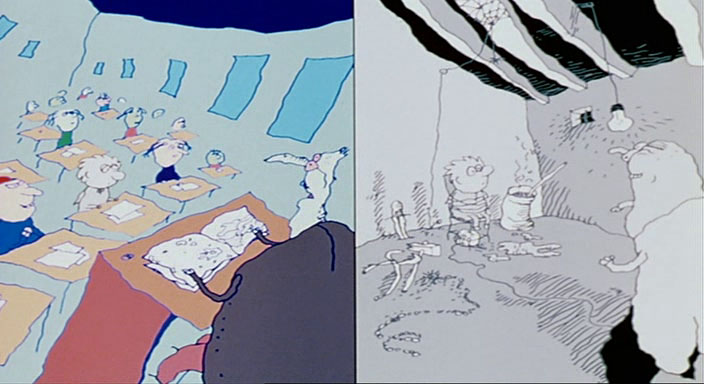
Crazy… split-screen with a boy’s ordinary day on the left and his imagination (which usually involves being captured and making a daring escape on the right. Then he and his family die when travelling on a boat that hits an iceberg. The imagination side takes another minute to adjust to this ending. Animation is fluid, doodly and wonderful. Driessen is Dutch, has a long career of award-winning shorts.
The Lost Thing (2010, Tan & Ruhemann)
Dude is collecting bottlecaps when he finds a Lost Thing (sort of an armored contraption with mechanical parts, jingle bells and tentacles), seeks its origins, finally returns it to a secret area in the city where crazy mecha-organic beasts all live. Won the oscar, same year as Day & Night. Tan created the source book, Ruhemann lately produced something called Chuck Norris vs. Communism.

Zerox and Mylar (1995, Joel Brinkerhoff)
Wicked one-minute claymation thing. Cat wants to lure mouse, paints his hand like a lady mouse, but mouse traps the lady-mouse-hand and has his way with it/her. Brinkerhoff is obviously a madman, apparently worked on Marvin the Martian in the Third Dimension, which is on one of the Looney Tunes blu-rays.

The Temptation of Mr. Prokouk (1947, Karel Zeman)
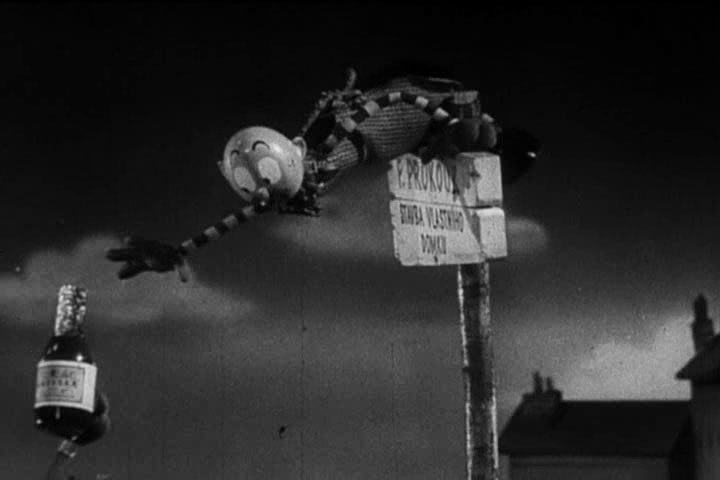
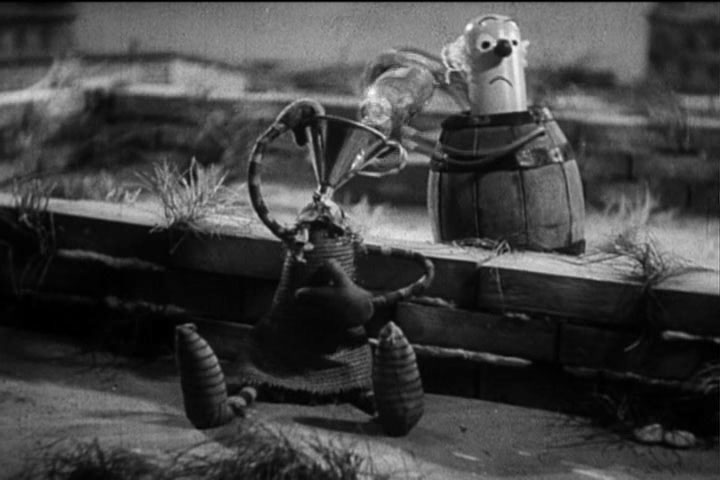
Mr. Prokouk is building his own house when he’s tempted by the evils of alcohol. After going on a massive bender and literally losing his head, he recovers, murders the ghostly barrel-shaped liquor salesman who got Prokouk hooked on the stuff, and continues with the house building. I dig the little birds who build a nest on his sign.
Mr. Schwarzwald’s and Mr. Edgar’s Last Trick (1964, Jan Svankmajer)
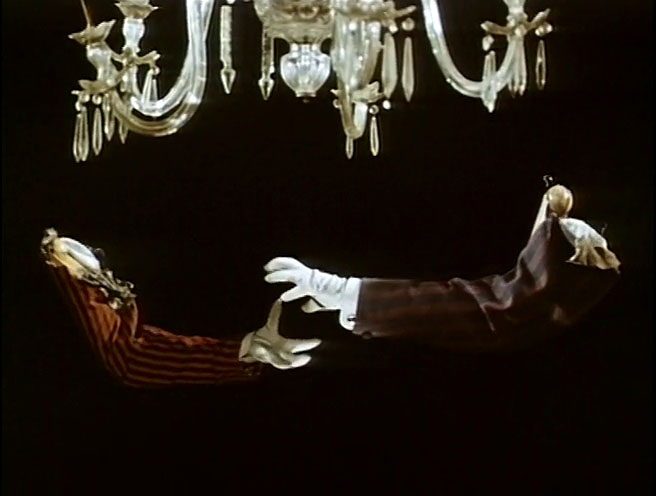
Svankmajer’s first short! Stop-motion, live actors, painting and puppetry, all very well blended, with extreme close-ups, frequent zooms and super fast edits. So JS was accomplished at making great-looking, creepy films from the very start. Two wooden-mask-faced magicians take turns performing elabotate tricks, aggressively shaking hands after each one, until the handshake turns lethal and they tear each other apart.

Your Acquaintance aka The Journalist (1927, Lev Kuleshov)
A 15-minute excerpt from a feature. Possibly Kuleshov’s follow-up to the great Dura Lex – IMDB isn’t so clear on Russian cinema. Aleksandra Khokhlova (Kuleshov’s wife, crazy Edith from Dura Lex) is a newspaper columnist who gets fired for turning in an article late while she was distracted by a handsome rich man. That’s about all I got from this fragment, plot-wise.

Edition Filmmuseum:
She is a modern woman, in-your-face and interesting in both the way she dresses and the way she handles the men who surround her in her everyday working life: she writes almost all of them off as wimps but the one she loves, a functionary, proves to be a conformist: disappointment ensues … The mise-en-scène is unique, with razor-sharp contours and extreme lighting provided on the one hand by Aleksandr Rodchenko with his constructivist design of the materialistic world, and on the other hand by cameraman Konstantin Kuznecov with his “svetotvorchestvo” (light-making) already known from [Dura Lex].
The Tony Longo Trilogy (2014, Thom Andersen)
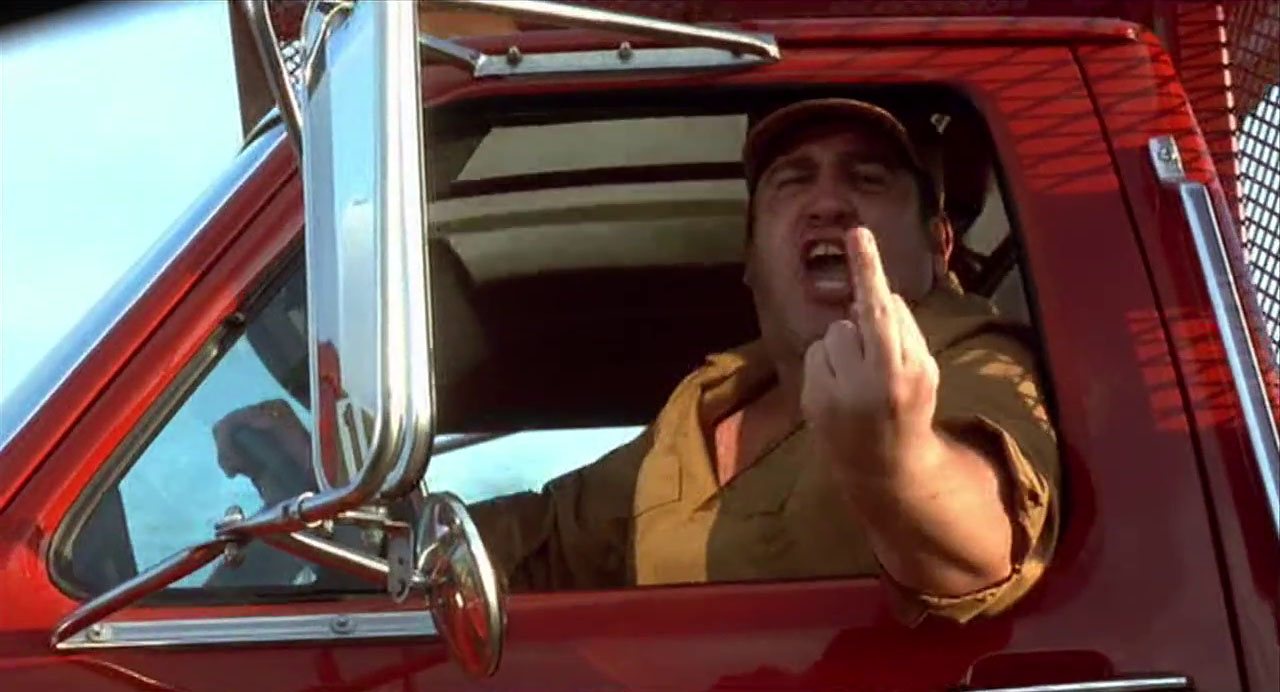
A found-footage piece, Andersen taking three films and isolating only the scenes with imposing character actor Tony Longo in them. Tony is an ineffective doorman in The Takeover, is seeking Justin Theroux in Mulholland Dr., and fights with Rob Lowe before being murdered by Jim Belushi in Living in Peril. Why was Thom Andersen watching Tony Longo movies? Tony died soon after this came out, unrelated to the fact that IMDB says he was once struck in the mouth by lightning.
Cinema Scope:
What makes the videos in The Tony Longo Trilogy both exciting and frivolous is that it’s not terribly difficult to imagine Andersen repeating the operation for Tony Longo’s other hundred-odd screen credits, or, to push the idea to its limit, for anyone who’s ever appeared in a motion picture.
Riot (2015, Nathan Silver)
Home movies of 9-year-old Nathan reenacting the LA riots in his back yard wearing a Ren & Stimpy shirt

Uncle (1959, Jaromil Jires)
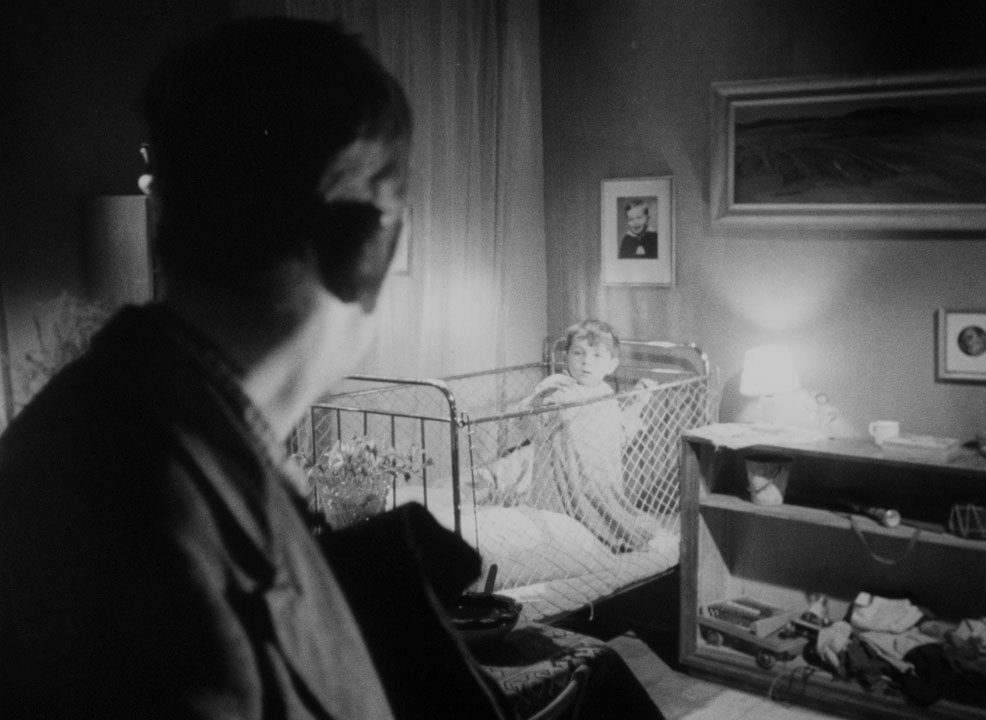
Kid in crib makes friends with the thief breaking into his house. Jires’s second short, still in film school. Uncle Vlastimil Brodsky was already an established actor, would later star in many Jiri Menzel films and Autumn Spring.
Tramwaj (1966, Krzysztof Kieslowski)
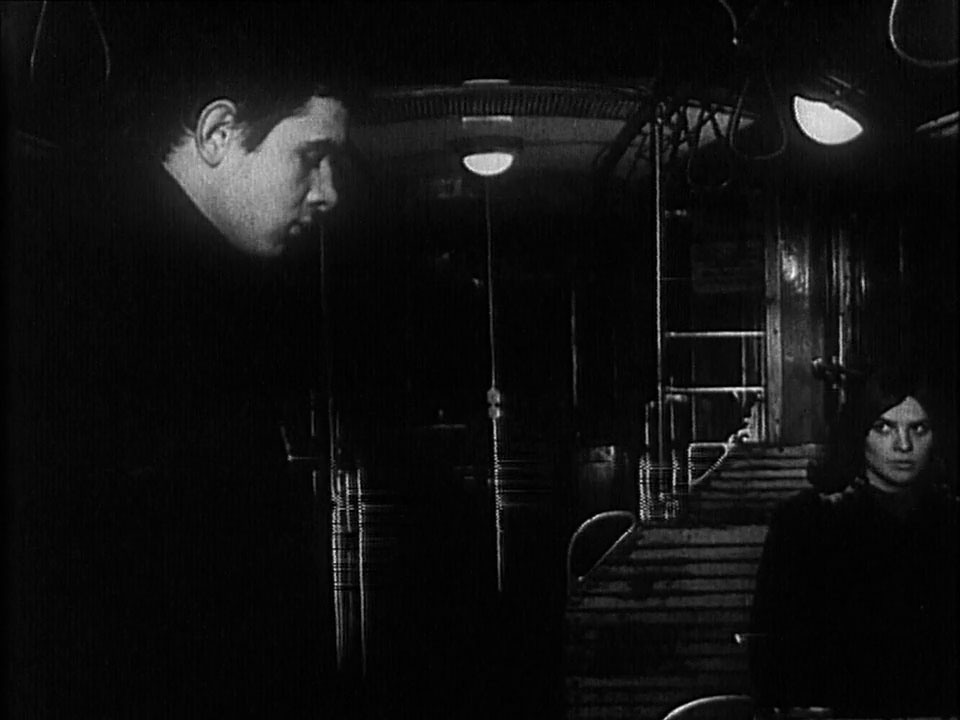
Silent… guy is miserable at a party, so leaves and gets on a dismal night train where he tries to impress a sleepy girl. One of Kieslowski’s first shorts, made in film school.
Logorama (2009, Alaux & Houplain & de Crecy)
Fantastic concept, a world made only of corporate logos. The writing and voice acting could’ve been better though. After creating this graphic-design logo monstrosity, they fill it with some sub-Tarantino cops-and-robbers shootout stuff, Michelin cops fighting a rogue Ronald McDonald. Logorama beat A Matter of Loaf and Death at the oscars, also won awards at Cannes and the Cesars. Two of the directors went on to make a tie-in short to a Tom Clancy video game series. David Fincher did a voice, along with the writer of Se7en and a guy with small roles in half of Fincher’s movies.

Sniffer (2006, Bobbie Peers)
Sniffer works as a deodorant tester in a world where people wear metal boots to keep from floating off. One day after seeing a pigeon crash into a window, Sniffer decides it’d be nice to float off, and unstraps his boots. Norwegian, I think.

The Foundry (2007, Aki Kaurismaki)
Seen this before in an anthology but now it’s available in HD so I watched again.


