Happy SHOCKtober 2025! This is only the fourth episode of The Last Ten Minutes to feature screenshots, but more to come.
–
Silver Bullet (1985, Daniel Attias)
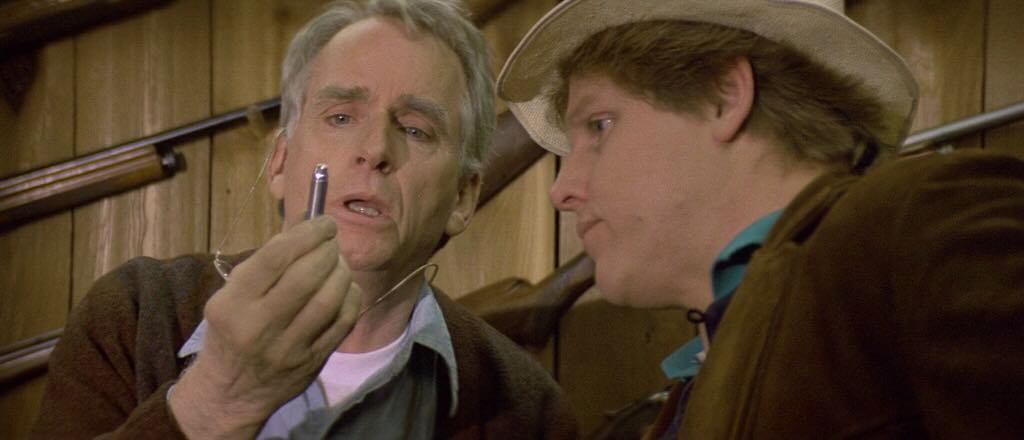
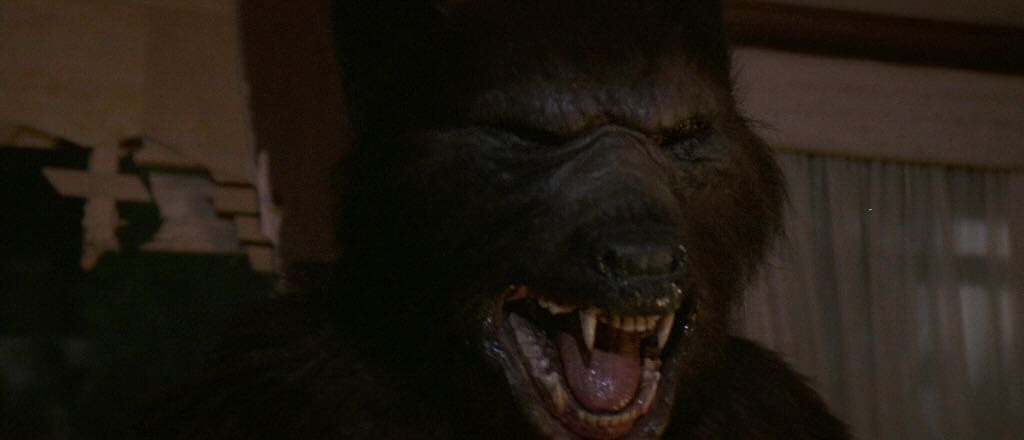
Holy cow, it’s Gary Busey, visiting a “wizard of weapons” (per narrator) who uses some pretty non-magical tools (just normal gunsmith tools) to create the titular bullet. Everyone is overdoing everything. Uncle Busey schemes to get rid of the kids’ parents for the full moon, the wolf attacks, they shoot it, case closed (didn’t realize until Trevor mentioned the wolf was Big Ed). Where’d all these 1980s people end up? The girl grew up to be Anne of Green Gables, the boy to be Corey Haim, and Attias won awards for directing prestige TV.
–
The Dark Half (1993, George Romero)
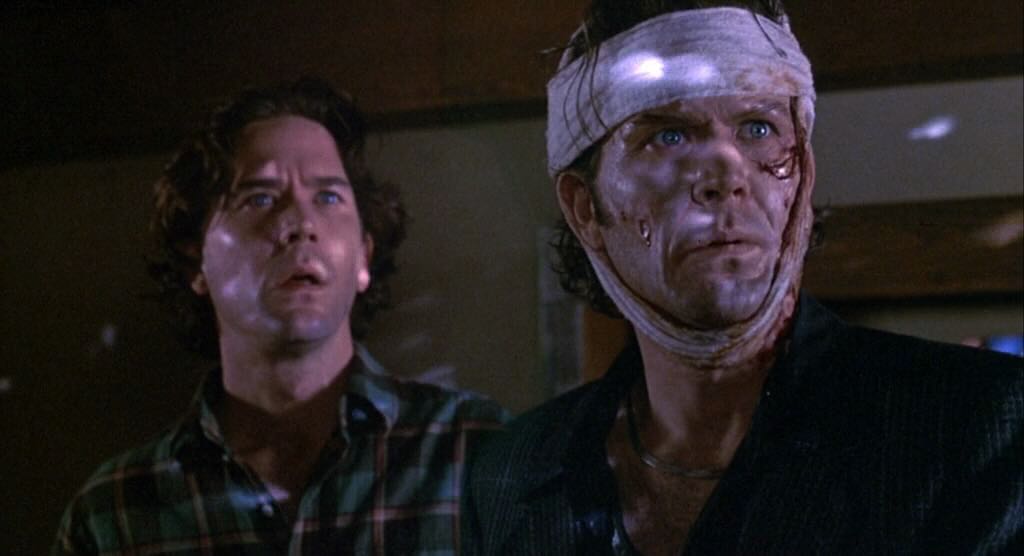
Timothy Hutton doppelgangers face off kicking each other in the nuts while a flock of finches swarm the house and Amy Madigan (the witch from Weapons!) is tied to a chair somewhere. Isn’t “hero writer vs. villain arguing who gets to write a story ending” reused from Misery? Cop Michael Rooker arrives to untie Amy but more importantly he lets the finches in and they eat Evil Hutton (good fx as he’s reduced to a skeleton). Adapting this into a movie was a bad idea but the acting and overall look are higher caliber than Silver Bullet. Hutton was also in Ghost Writer and Secret Window, has a real thing for dumb movies about split-personality authors.
–
The Mangler (1995, Tobe Hooper)
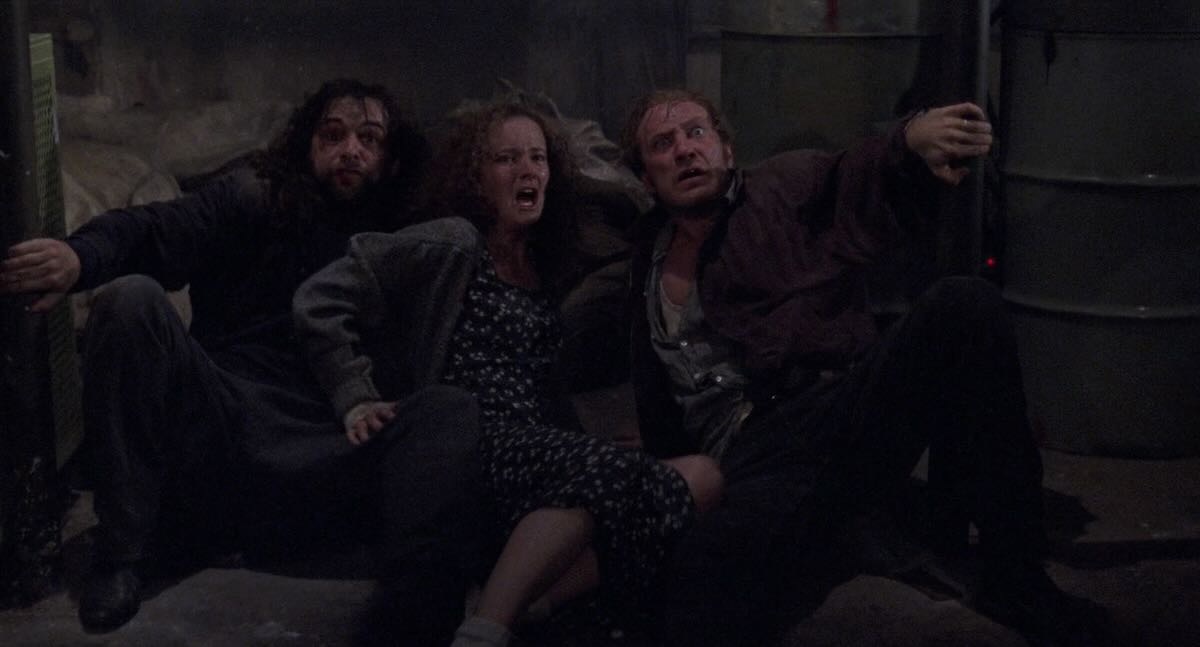
Here it is, the “king” of the shouldn’t-have-been-adapted stories, as three drunk(?) people think they’ve succeeded in exorcising the killer laundry machine, then it starts chasing them down some stairs. The priest-guy (also a priest in Hooper’s Night Terrors) gets mangled, Buffalo Bill (his voice!) escapes, and his girl falls into the hands of laundry-machine cultists. Movie got two sequels, I assume ironically. I watched this in the theater in ’95, maybe this is why nobody wanted to hang out with me.
–
Sleepwalkers (1992, Mick Garris)
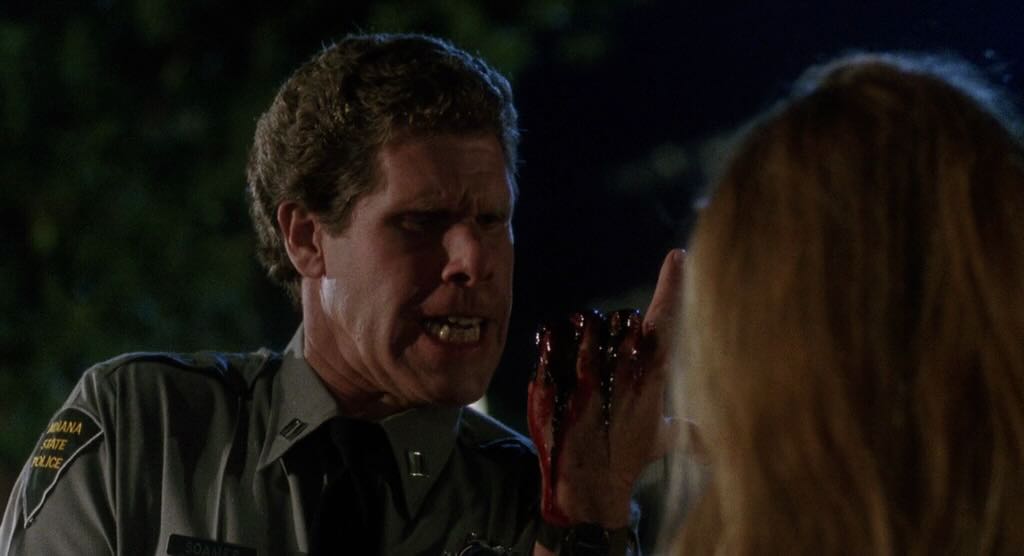
Angry Alice Krige (who specializes in playing witches) bites off Officer Ron Perlman’s fingers and twists off his arm, sets another cop on fire, knows exactly where to aim a pistol to cause cars to explode with a single shot. She kidnaps Shelley (in her Twin Peaks follow-up), taking her to dance with her mutant zombie son Charles in a house surrounded by cats. Turntable plays “Sleep Walk” by itself as Charles attempts to suck her soul. What is it with King and soul-sucking cats? But Shelley turns the tables (err, knocks Charles down and gouges out his eyes) and cats jump on Alice until she spontaneously combusts, but not before she makes time to kill one more cop. Mick’s first of seven King movies is set in Indiana, not Maine, disappointing.

–
Watchers (1988, Jon Hess)
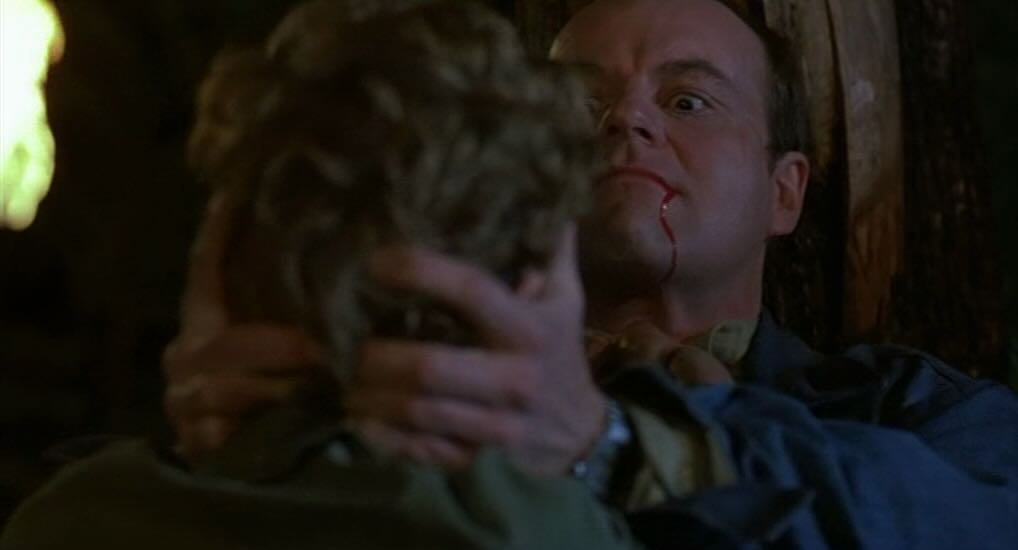
This was my favorite Dean Koontz book, and I think Watchers II (a remake masquerading as a sequel) was the better adaptation, but nobody’s got that for download. Supergenius Scrabble-playing dog and his boy Corey Haim are under assault by Michael Ironside, who claims to be a labmade perfect killing machine but gets immediately wasted by a couple of noobs. Now they’re attacked by an evil gorilla (psychically linked to the dog, if I recall?), and they waste it too, easy peasy. Director Hess went on to make Alligator 2: The Mutation, Corey’s sister was Frank Zappa’s niece.
–
Humanoids from the Deep (1980, Barbara Peeters)
A girl with her tits out is beating a humanoid (seaweed-people with external brains) with a rock. The setting is a marina carnival on fire with a few-seconds-long tape of screaming citizens on endless loop. For some reason I thought this was James Cameron’s first movie (that was Pirahna 2: The Spawning). Doug “The Virginian” McClure and Vic Morrow and some pretty girls with short careers all survive.
Nice tile:

–
Dog Soldiers (2002, Neil Marshall)
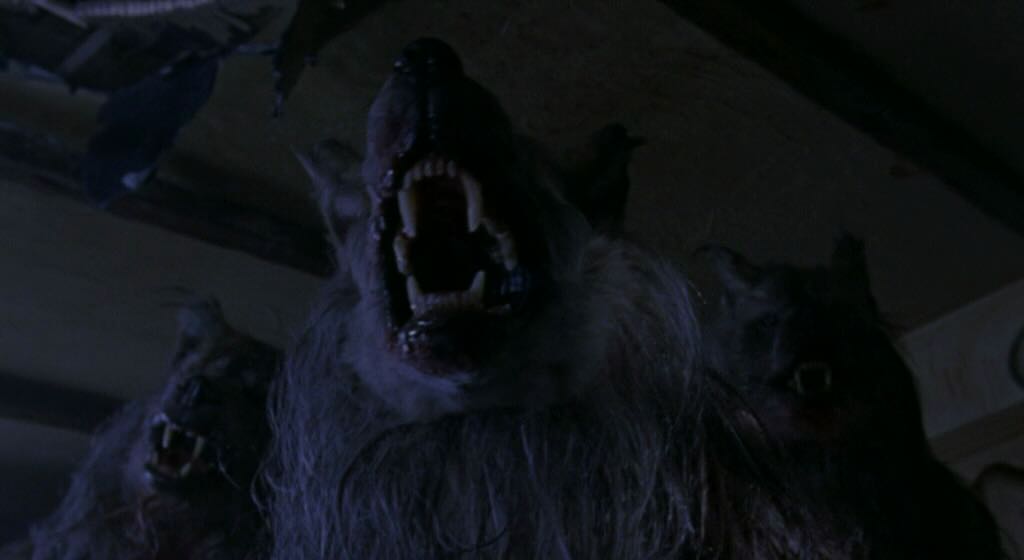
Are the dogs soldiers, or are soldiers just fighting giant dogs? Trevor: “The whole military seems to be made up of clones of Mike from Spaced.” Surrounded in a house with breakaway walls, the humans fight with pots and pans, aerosol cans, etc. One guy always has a blue glowstick in his mouth, and I know there’s gonna be a payoff… ah nope, he just likes glowsticks. If Brits call bathrooms “the closet” what do they call closets? Spoon gets eaten, another guy is starting to wolf out, so he stays behind and blows the cabin using the gas stove, still time for one more ugly-looking fight. Marshall went on to be one of those almost-cult horror guys making almost-good movies until he faded to Hellboy-remake status.
–
Underworld / Transmutations (1985, George Pavlou)
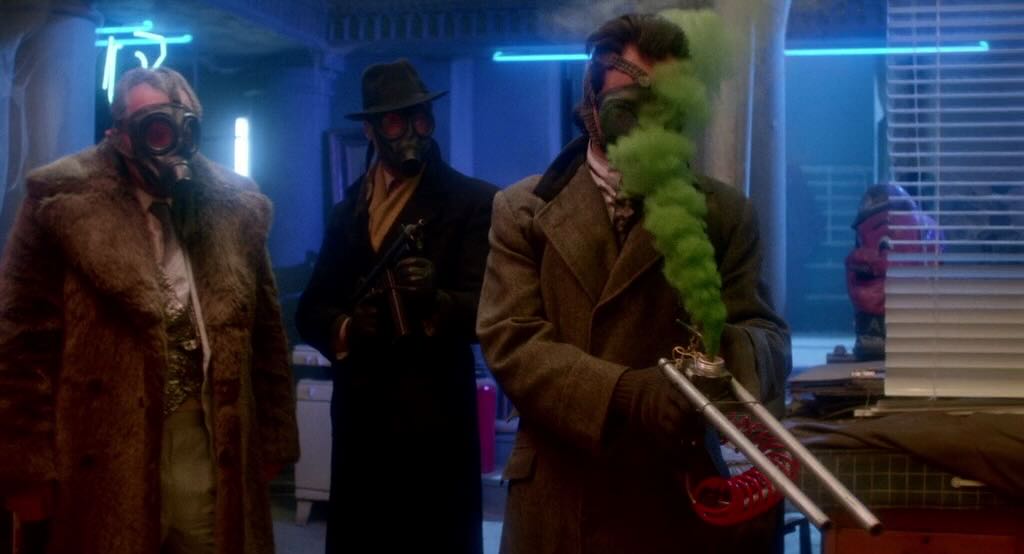
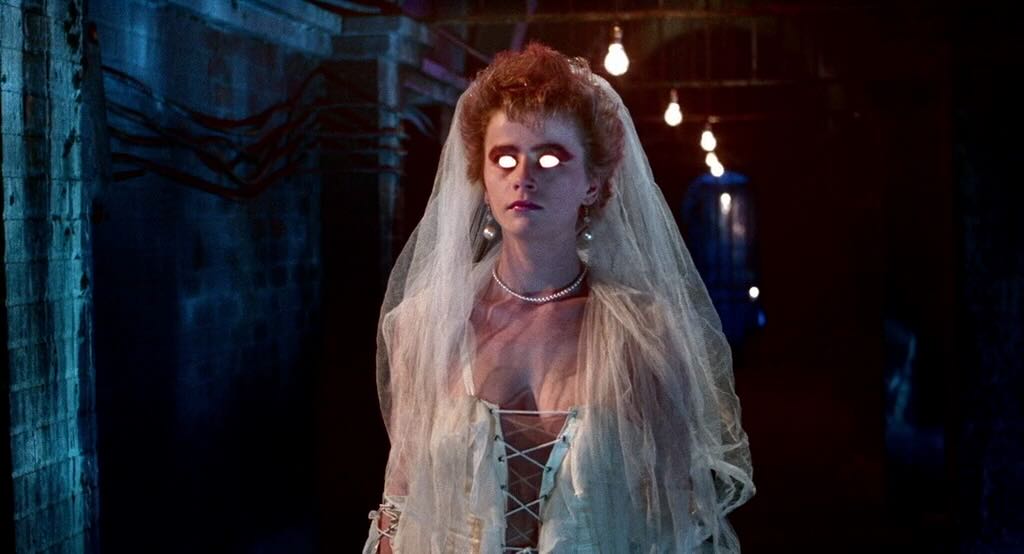
Masked baddies shoot green gas into their own face, then onto our (presumed) mutant heroes. These guys are terribly incompetent villains – they keep pointing guns but not firing them, and end up sabotaging each other’s plans. Some glowy-eyed woman repeats “show me your dreams” at the baddie leader over and over again, then scans him to death, the music one shimmery note taped down on a synth. Was this an early version of Nightbreed? At least two of these actors were in Dennis Potter movies. Great color on the remaster, glad I waited forty years to watch the last ten minutes of this.
–
Rawhead Rex (1986, George Pavlou)
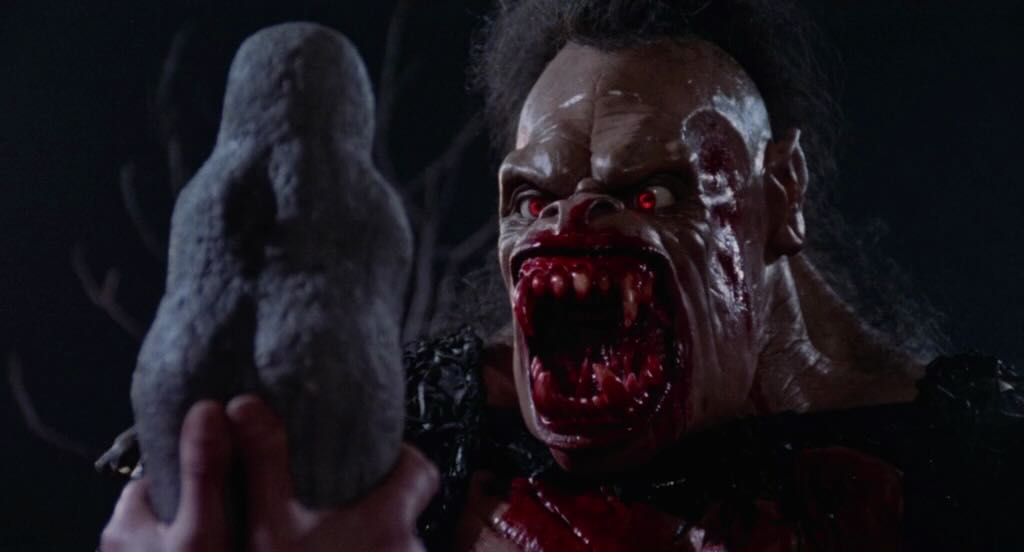
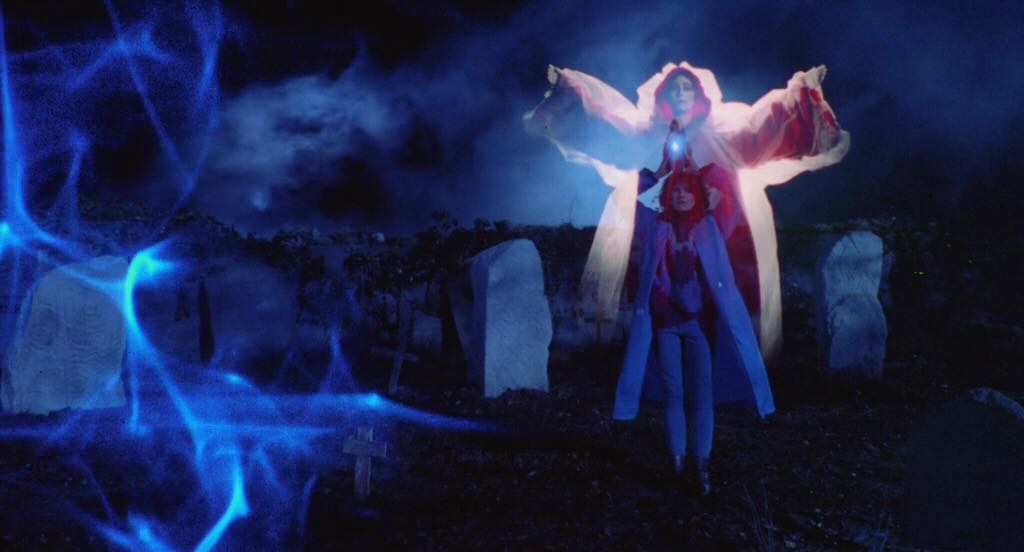
Howard (of Stephen King TV movie Rose Red) finds a bloody man whose dying words might be the key to defeating the evil demon, then a priest yells for Howard to “get the fuck out” of his church – there’s the Clive Barker we all love. The church houses a hellish horror… oh no it’s just a rock. Rex looks deliciously fake with his light-up eyes, and since he’s a puppet and can’t move, the priest has to lean into him to get bitten to death. Useless Howard gets knocked around by the monster then a lady picks up the rock and unleashes its lady-magic in the form of 1980s light effects. Meant to be the first in a series of Books of Blood adaptations, but fortunately the following year Clive took things into his own hands with Hellraiser.
–
TerrorVision (1986, Ted Nicolaou)
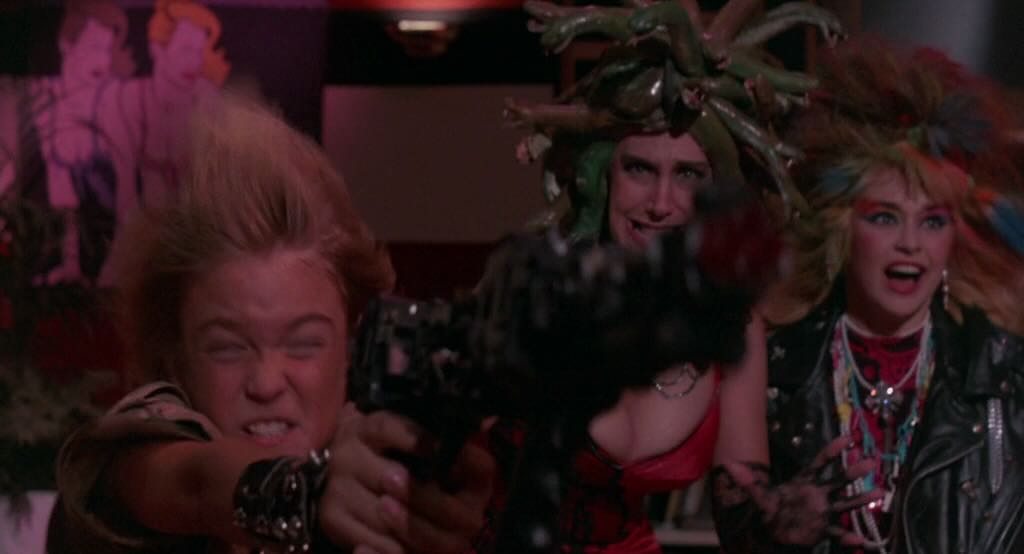
I kinda remembered this movie’s theme song, but it’s much less sinister and more new-wave than I recall, and the movie is more knowingly goofy and popping with color. Two kids with machine guns are busy defeating the monster with electricity when a spacesuit alien beams in to explain what’s going on, but a random party guest executes him and the monster eats everyone, haha. Wouldn’t have guessed that this would be the best-looking movie of the bunch.