First movie watched on the New TV, and first time I’ve seen this in hi-def. The creature/typewriter effects hold up, as does the circular story blending the Burroughs stories with his own strange life, and the acting by Peter Weller and Judy Davis (same year as Barton Fink, wow).

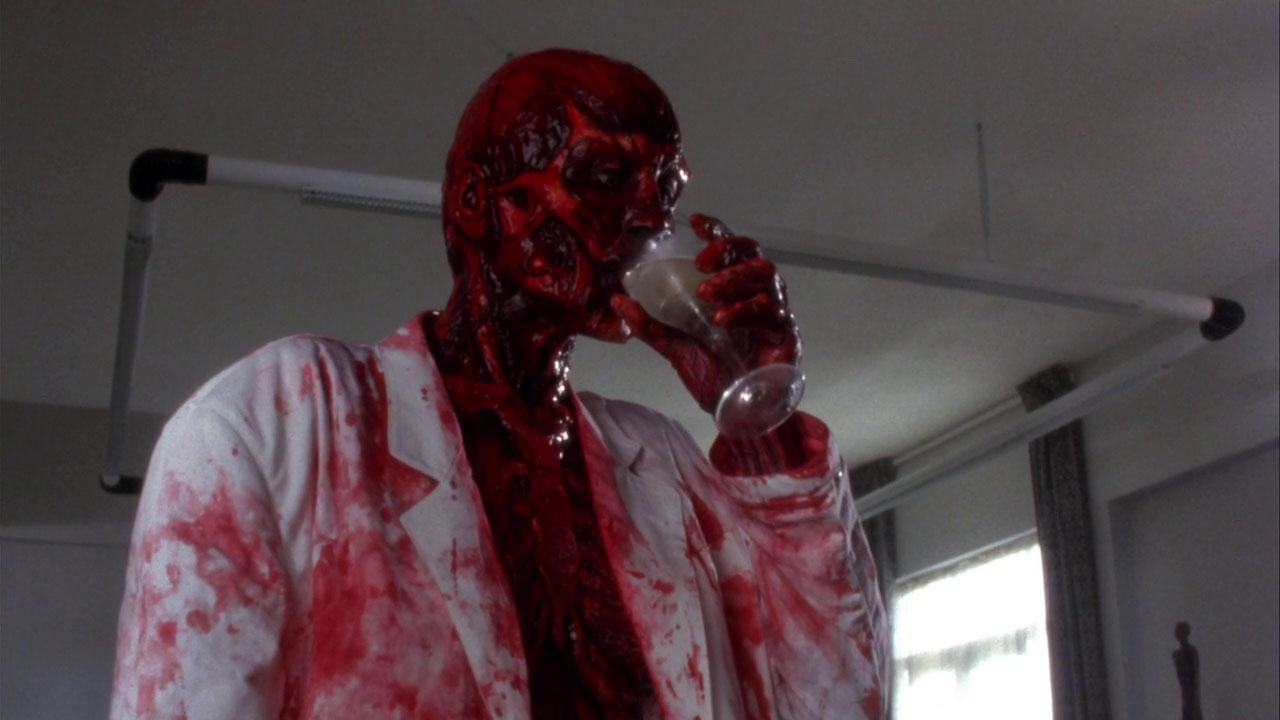
“Rewriting is censorship.” Exterminator Bill is in trouble at work because his wife is shooting up his bug powder (“It’s a Kafka high; you feel like a bug”). “I am your case officer,” says the anus of the bug the cops leave him with, “Your wife is not really your wife.” After Bill catches writer Hank on top of his not-wife Joan, they do the ol’ William Tell act, then the bigger bug at the bar gives him a ticket to Interzone and says he’s to write a report.

Sands, Kiki, Eclectus:

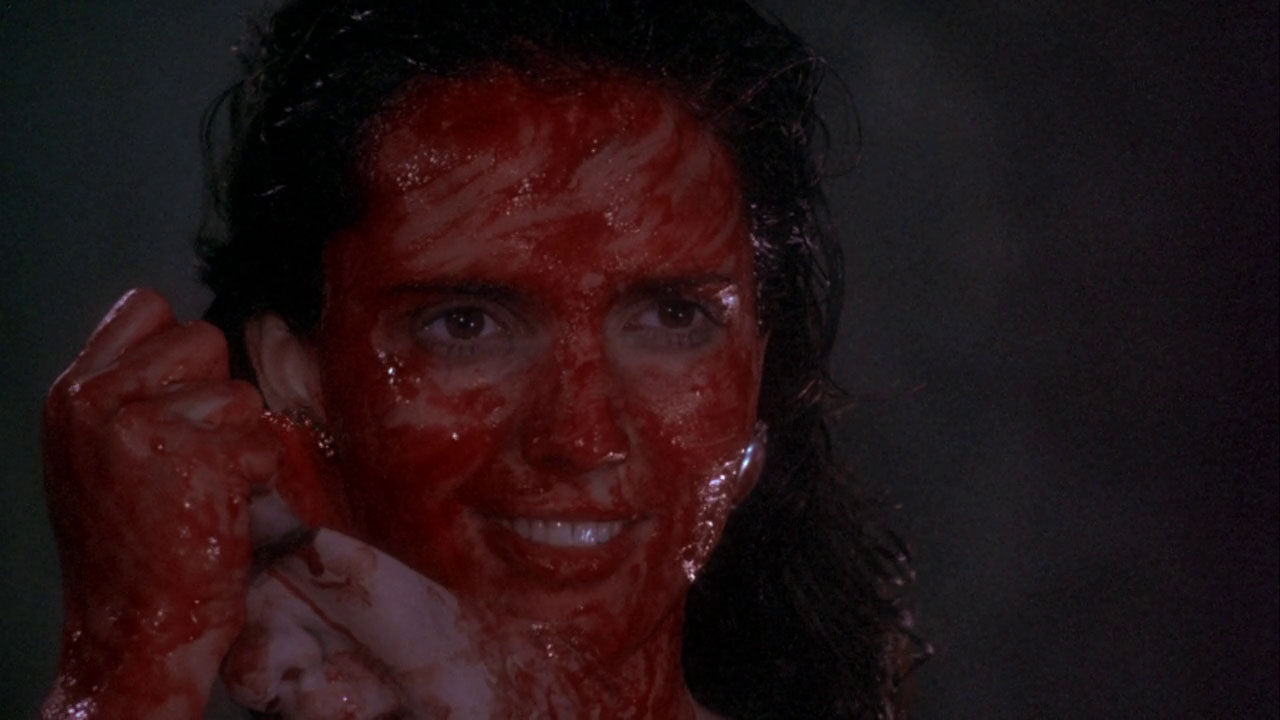
Hitlery Hans (Cronenberg regular Robert Silverman) introduces him to Kiki, who introduces him to another Joan’s husband, typewriter aficionado Ian Holm (I forget how Julian Sands fits in, but he’s there, in a white suit of course). Sinister doctor Roy Scheider reappears as a lesbian mind-control druglord at the end, and the whole thing combines sex, drugs, death, literature and insects in ways that nothing else ever has.

The Amateurist (1998, Miranda July)

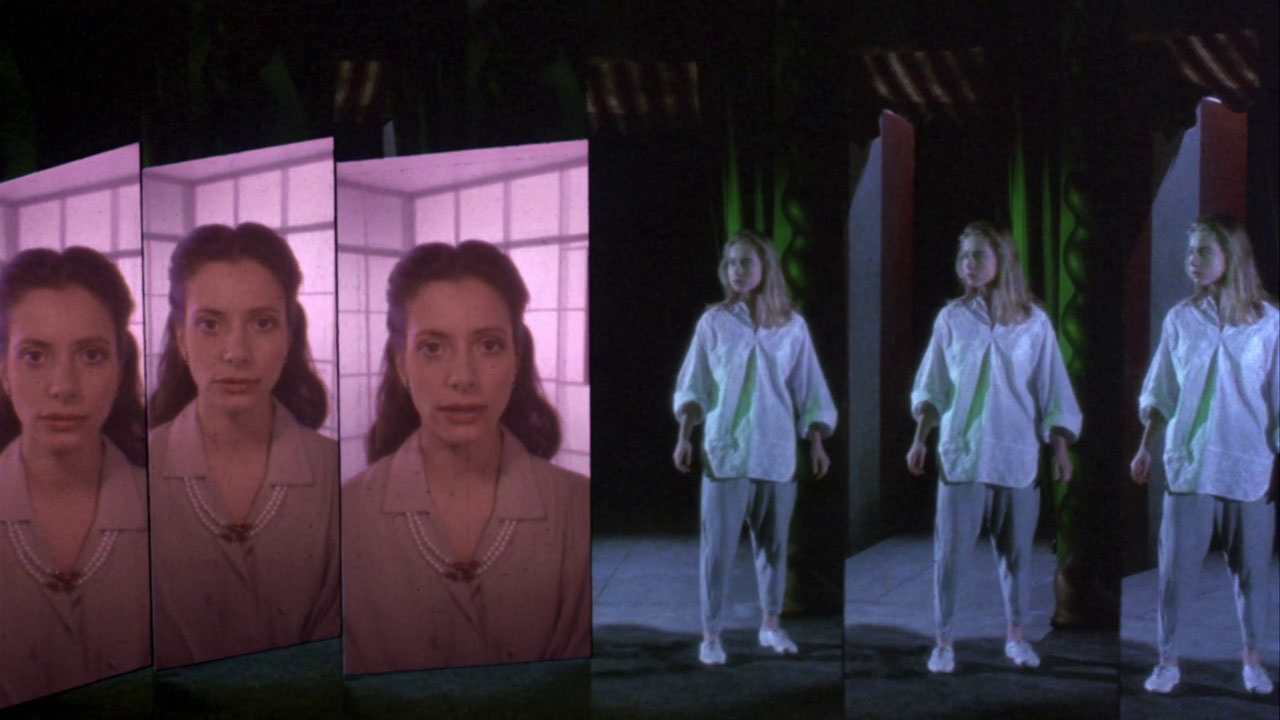
Miranda 1 “the professsional” is presenting her work on Miranda 2 “the amateur” to the viewer. I think 1 transmits numbers and patterns to 2, who paces a cell, reacting with hostility to these communications, while 1 watches lovingly. “A portrait of a woman on the brink of technology-induced madness”


Pioneer (2011, David Lowery)

Another single-room two-person short. Will Oldham is an ageless man telling his stepson a bedtime story about how the boy was kidnapped and sought for over a hundred years, only to mysteriously reappear.


Saute ma ville (1968, Chantal Akerman)

Whoa… teenage Chantal comes home, eats dinner, tosses the cat out the window, cleans the apartment, then kills herself on the stove. Jeanne Dielman in miniature – with less technical mastery, replaced with a playful sense of anarchy, extended to the dubbing (she sings in voiceover when not singing onscreen, and when lighting a match, the sound effect is a voice saying “scrrratch”). Watching the doc later, she calls it “the mirror image of Jeanne Dielman.”


Asparagus (1979, Suzan Pitt)

Up there with Lynch in terms of having the most warped ideas and having the technical chops to get them onscreen. This is the height of color and form/space/scale weirdness while still maintaining some vague narrative trajectory, accompanied by bent spooky music, then it hits new heights when our heroine leaves the house (putting on a mask first, much appreciated), sneaks into a theater and unleashes her phantasmagoric cel-animated phallic-symbol madness on an unsuspecting stop-motion audience. A masterpiece, filmed from 1974 to 1978.


Atlantiques (2009, Mati Diop)

Serigne boarded a pigogue heading to Spain and died on the way. However, Serigne sits around the fire with a couple of friends detailing the trip and his reasons for leaving. Obviously a ghostly precursor to the feature.

– bonus short –

Strasbourg 1518 (2020, Jonathan Glazer)

Exhausted repetitive dances in vacant domestic spaces.

Faster cutting between a larger set of dancers towards the end.

New music by Mica Levi is an irritating fast club beat with hints of bird calls

It’s cool when you end up on netflix, though you’d prefer it not be because your friend’s daughter was the primary whistleblower in a sexual abuse scandal.

Respect to athletes, none for US olympics gym admin/staff.

Groundhog Day but “the pain is real,” which adds a haunting edge. It’s still a Lonely Island adjacent movie, often funny and extremely likeable, and I assume the phrase “dark edgy Groundhog Day” has already been claimed by Russian Doll, so I am allowed to say this. Samberg (argh, Brigsby Bear) picks up Cristin Milioti (lead captive of USS Callister) at her sister’s wedding and ends up trapping her in his time loop, along with his archenemy JK Simmons, who chills out once he realizes the pain is real.

Not a remake of the 1930’s David Niven gambling cowboy movie. Director Barbakow has met Werner Herzog! We saw five Sundance/True/False crossover features this year, and after Shirley last week, this is my second film from the USA Drama section.

Nearly the same plot as Spaced: two down-and-out strangers apply for a couples-only newspaper ad. But here, another popular 1930’s plot is thrown in: the rich guy pretending to be a commoner. Trouble in Paradise star Herbert Marshall is a futurist auto mogul, God’s own Jean Arthur (same year as The Whole Town’s Talking) can cook very well, and they’re hired as cook-and-butler by some fellas. He’s trying to stay in charge of the company he founded, she is arrested when his secret auto designs are found in her possession, their criminal employer Leo Carrillo proposes to Jean, Herbert doesn’t fool anyone for long and when he returns to his old life, Leo kidnaps him from his society wedding – it’s a lot for a 70-minute movie, and it mostly works thanks to the cast.

Oops I’d been trying to avoid police brutality movies, then put this on without knowing what it’s about. Got what I deserved with the icky ending, a beaten wife pledging to wait for her new man, a crooked violent cop heading to jail for killing a man and framing her dad.

Cool trick shot, the two cops are the same guy:

Dana “Night of the Demon” Andrews is bad cop Dixon, busted down a rank by bignose lieutenant Karl Malden, determined to prove himself by busting chill sniffy gambler Gary Merrill (All About Eve the same year). While shaking down one of Gary’s players for info, Dana knocks the guy’s block off then spends the rest of the movie covering up his crime. Besides the trick shot above (seriously, I was glad for once that the characters begin every other line by saying each other’s name, since they all kinda look the same) there’s a neat bit where time passes via light-play on a miniature(?) of the city. The Girl is The Ghost and Mrs. Muir star Gene Tierney, separated wife of the newly-dead guy, who falls for her husband’s killer even as her sweetie dad Tom Tully is being held for the murder.

Louisiana and Mississippi, cutting between different threads. After the lovely and gentle Stop the Pounding Heart led to the intimate look of The Other Side led to the racist militia at the end of that movie, it’s nice to reset and spend time with the New Black Panther Party. And after a month of watching movies on the laptop screen, it’s nice to see this on the big(ger) screen, experiencing as close as I’ll get to cinema this summer.

Michael Sicinski on Mubi via letterboxd:

As with Minervini’s previous films, there is something both startling and a bit disconcerting about the degree of access he achieves, as well as the fact that his camera crew is almost never acknowledged. How does he get so close, capturing key emotional moments like Judy’s cousin Michael finally visiting his mother’s gravesite, or Judy herself meeting a fellow addict and describing her years of abuse? One of the things that Minervini accomplishes in What You Gonna Do…, both with these scenes, the New Black Panther meetings, and in some consciousness-raising moments in Judy’s bar, is a careful depiction of free black discourse, the kind of discussion about identity, politics, and culture that a community can have when they are not worried about how outside listeners will misconstrue their words.

Halfway through Jeannette, little Lise aged-up to older Jeanne Voisin, and now due to a casting snafu, she’s aged back down to Lise for the battles and trial. It’s Jeannette Redux for the battles – all conversations in the desert, Joan “sings” a song in voiceover, her horse dances to a drumbeat then all the horsemen dance around her in a choreographed pattern. Mostly notable here is Lord de Rais who looks 18 with lion-hair.

Why does the king (Rohmer actor Fabrice Luchini), who everyone respects, act like such a sleazy scumlord and wear a juicer-hat?

The start of the trial is all talk, but livened up by the actors, especially church master Nic l’Oiseleur (below, right), a Quinquin-caliber performer. The church is an infinitely more gaudy setting than the Passion or the Bresson, and all the non-Joan actors are more interesting than those in the other films – shot mostly in close-up but it’s a large echoey room so they’re all shouting. It’s maybe a more eccentric movie than the first, and for the better… not a big fan of the vocal songs, but the instrumental music is just great.

WWII-era French town descends into paranoia when someone is writing letters accusing other townspeople of various crimes. I’m a fan of the sharp-looking Clouzot fast-paced b/w thrillers, though I watched this while tired and my notes make little sense (“everyone in church got forged letters arranging them to meet… no 13 suicided after letter… Rolande is someone”).

Key players:

Doctor Germaine: Pierre Fresnay, lead dude of The Devil’s Hand

Hotgirl Denise: Ginette Leclerc, “stupid wife” of the remade Late Mathias Pascal

Old Man Vorzet: Pierre Larquey, a Diabolique professor, 8th billed so nobody guesses he’s the villain

Young Goodwife Laura: Micheline Francey of a late 30’s Phantom Carriage remake

Dave Kehr:

Polished, impersonal work, it puts forward little more than a spirit of free-floating misanthropy. Remade (and improved) by Otto Preminger in 1951 as The Thirteenth Letter.