Manual of Arms (1966)

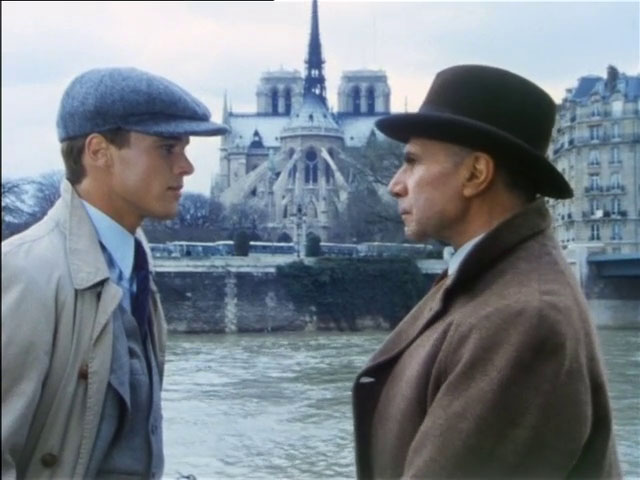
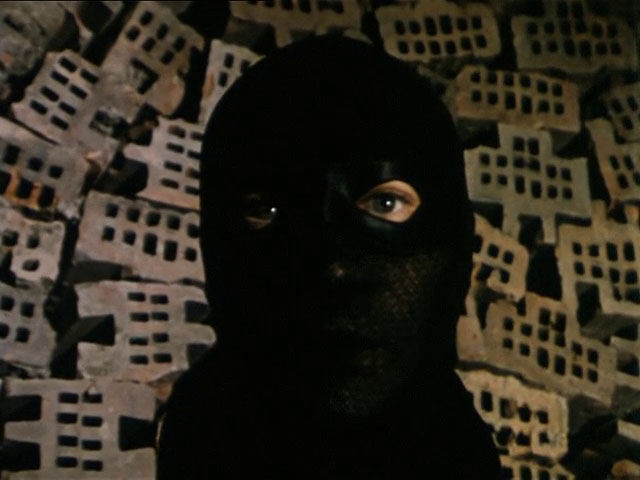
A series of half-in-shadow close-ups of his friends, silent with jittery camera, with black between them. Then four minutes in, the title. After that, another series of the same people in a room with a single light, the camera moving differently for each subject. It seems to love objects, focusing on one person’s mug, another’s fur coat, a knife and cigarette, a can – for another person it’s their hair, or their shadow, or the stage light itself. Lots of cuts to black, sometimes rhythmically but usually not. Some fast cutting and superimpositions. Still the jittery handheld camera, the deep black.

Music played: Steroid Maximus “Gondwanaland” tracks 1-5

Process Red (1966)

Like a more obsessive version of the previous film, focusing on hands holding objects, the color that of photographs on ancient film which have faded to pink, interspersed with b/w shots of quick panning, just blurry movement lines – always moving with hyper editing.

Music played: “Gondwanaland” track 6

Maxwell’s Demon (1968)

“It was a very important film to me because it representing getting several concerns into a very tight and tense structure.” Named after physicist James Clark Maxwell, whose work led to color photography. The film was “an homage to the notion of a creature that deals in pure energy, and to Maxwell, whom I’ve admired.”

Simple b/w shots with still camera of an exercise instructor, intercut with quick segments of pure color, and color-tinted waves that emit a fuzzy sound. Fun, energetic, short.

Music played: “Gondwanaland” track 6

Surface Tension (1968)

Opens and closes with an ocean wave.

Part 1: Man on windowsill starts clock, talks. Time flies, about a minute per two seconds. This continues, as a phone rings constantly on the soundtrack.

HF: “The first part is a comic passage that emphazises the passage of time.”

Part 2: time-lapse of a handheld tour through the city, awesome. A man speaks German on the soundtrack.

HF: “The second part is, if not tragic, at least pathetic in a foot-sore (?) sort of way, and emphasizes passage through space.”

Part 3: a goldfish inside tank with shore waves crashing around. Silent, words appearing on screen, possibly a partial translation of what the German guy was saying? I loved this part.

HF: “The third part proposes to deal with a subject that… disregards both time and space.”

A Lecture (1968)

“Nothing in art is as expendable as the artist.”

Speaking about film as sculpture in light, he shows pure white light on the screen. “Our white rectangle is not nothing at all. In fact, it is, in the end, all we have. That is one of the limits of the art of film… We must devise ways of subtracting, of removing, one thing and another, more or less, from our white rectangle.” I wish narrator Michael Snow would speak a little faster and more naturally. It gets over-long in the second half. “Self-expression was only an issue for a very brief time in history, in the arts or anywhere else, and that time is about over.”

Also on the disc: Carrots and Peas, which I watched a few weeks ago, Zorns Lemma, which I watched at Emory some years ago, and Lemon, which has a great commentary from Frampton on Screening Room in ’77. He speaks of so-called minimalist artists (“a label that they like about as much as I like structural”), trying to get at “what really was at the root necessity of the art… What could you get rid of and still have a painting? The same is true of film.” Film Necessities: “I felt at that time that one of the most important things about film was that we were looking at it with EXPECTATION, we were believing what we saw, there was an ILLUSION, and what we probably were expecting was CHANGE.” Speaking of the difference between film and video, Frampton seems pretty open-minded about it, the idea that his films could be viewed on television. Saying Frampton could have chosen any fruit, Gardner asks the great question: “Are you trying to stay on the acid end of things with this?” Frampton: “When I went to the market to purchase the star of the show, found a lemon that was as breast-like as possible.” HF speaks of the film’s dedicatee, painter Robert Huot, who claims he heard that the word “lemon” appears exactly once, precisely in the middle of the novel Ulysses. Hewitt’s response: “Do you mean to tell me that Joyce could’ve written the word lemon, then written the first word to the right and first word to the left of it, and built it out from the middle?”

Plus twenty minutes of interview excerpts, Frampton himself, not hiding behind Snow and a white frame, speaking straightforwardly about his artistic history and interests.

Almost as good as the other Joss Whedon movie I watched this month. The action scenes are fun, but the movie gets too loud and ‘splosioney at times. Better is the comic bickering between Thor, Iron Man, Sam Jackson, Captain America, Black Widow and Loki. But best of all is watching Hulk smash. For all the perceived failure of the last two Hulk movies, he seems like an excellent character and it is undeniably fun to watch him smash.

Jeremy Renner’s Hawkeye isn’t listed amongst the banterers above because he spends most of the movie as a villain under Loki’s spell, as does a mostly-offscreen Stellan Skarsgard (whose friend Natalie Portman gets quickly explained out of the movie). The extraterrestrial villain who puts Loki up to his mischief doesn’t matter, nor does the additional post-credits sequel-setup extraterrestrial villain. Essential Killing director Jerzy Skolimowski appears as the evil Russian whose ass Black Widow kicks at the beginning. And everyone is sad that Nick Fury’s bland MIB assistant Coulson gets (potentially) killed, but there’s a pretty girl MIB to take his place.

“A terrible word is the NON”

A film with a stagy, heightened atmosphere in which you plainly see things happening though you somehow come to believe that these things are not happening. It’s a feeling I’ve had before with Oliveira, and with some of my favorites by Ruiz, Bunuel and Resnais, a slippery strangeness which I suppose most critics call surrealism.

Obvious predecessor to A Talking Picture, a movie full of narrated history lessons ending with a moment of violence, history’s revenge on the present. Portuguese soldiers on a troop truck, out defending the colonies, chat about politics. Lt. Cabrita (Luis Miguel Cintra, scary uncle in Pedro Costa’s O Sangue) tells them stories of their country’s past defeats, which are played out for us in full costume using the same actors as in the truck.

Two of my fave soldiers: at left is Manuel, Diogo Doria of Manoel on the Island of Wonders

Flashback, B.C. 130’s: Viriato, a successful defender of Portugal (then Lusitania) against the Romans, an icon of Portuguese independence, killed by his own Roman-bribed men while he slept.

Flashback, early 1470’s: Portugal fights Spain on two fronts. King Afonso V is defeated in a chaotic battle, while his son Prince John fought and won a battle that was apparently tactically brilliant but seemed strange to me. So, “There were neither victors nor vanquished.” Symbol of the battle was “The Mangled Man, who, in his chivalrous ardour, refuses to let the nation’s symbol fall” – a flag-bearer who kept holding the flag after having both hands cut off by the enemy. “King Afonso V’s image is belittled compared to The Mangled Man’s, whose courage the king himself didn’t deserve.”

Flashback, late 1470’s: John of the previous battle is now king, and his son Afonso is married to daughter of Ferdinand and Isabella of Spain, so the children would have united the Iberian kingdoms, had Afonso not died during a horse race. Zodiac-like, this episode adds up the details of the suspicious/tragic event without drawing clear conclusions.

Time out for Cabrita to speak of Portugal’s discoveries and art, how they are more meaningful than any military achievements. This features a song, baby angels, much nudity, and Leonor Silveira.

Flashback, 1578, Alcazar-Quibir, the War of the Three Kings, a disastrous battle fought in northern Morocco. Cintra/Cabrita plays Alexandre Moreira, head of the adventurers’ regiment, who attacked first, to no avail. Three kings were killed, the nobility slaughtered, the army defeated, and Portugal was taken over by the Spanish government for the next sixty years.

Cintra/Cabrita/Moreira:

The next day, out on patrol, they’re caught in Portugal’s latest military defeat – Cabrita is shot, taken to a military hospital populated by mutilated men. He dies in the hospital on April 25, 1974, the day of the Carnation Revolution which ended the colonial war.

Acquarello: “By juxtaposing history-based fiction with historical non-fiction, Oliveira illustrates the process of mythologization, where history becomes refracted and idealized in times of crisis and upheaval. However, rather than engendering a romanticism for the past glory, Oliveira dismantles the myth of conquest, reframing history as an elusive (and delusive) quest for fleeting victories and unsustainable empires.”

Oliveira quoted and took inspiration from Portuguese poet Camoes and his Lusiades. When asked to think back on the film: “The NON. . . you don’t have to go back, because the NON goes forward many years, therefore we are late compared to the NON.”

Early on, the movie is doing those things I’ve seen Dovzhenko do before – have actors pose, standing stock still, having the camera do crazy stuff with the horizon line. Movie is divided into sections, and seems to be the same tiresome Russian plot about how work is so wonderful and the shock workers are greatest of all, and everyone spends their spare time in union meetings.

I didn’t follow all the story or characters, hence all the heavy quoting below, but I got that there’s a good-looking shock worker named Ivan with a slacker father named Stepan (S. Shkurat, Uncle Opanas in Earth). While Ivan works on building a giant dam, Stepan fishes from a scaffold platform. I loved this guy – not because I’m in favor of laziness, but he seemed less brainwashed and adds a welcome comic touch to the propagandistic proceedings.

J. Rosenbaum:

Ivan and Aerograd aren’t just silent films with music and sound effects. The first resembles an orchestral suite divided into six sections

Ivan got Dovzhenko into plenty of trouble as well. There are three separate characters named Ivan in the film, a celebration of the building of a huge dam on the Dnieper River that doesn’t bother to show us the completed dam. One of these Ivans has a gruff, illiterate father who’s an unapologetic slacker and a hilarious bullshit artist. He spends his time idly fishing at a construction site where the rest of the people are working their butts off; he boasts directly to the camera that he’s contemptuous of the very notion of labor, brandishing the back of his neck for all to see. Without question, the film adores this old coot more than anyone else in the picture. And when we later see a Soviet army marching, the sky is so vast and the soldiers so tiny, crawling across the lower edge of the screen like bugs, that it’s hard to know exactly what’s being extolled. If this is propaganda, we need to ask on behalf of what.

Ukrainian Week:

The regime began to settle its accounts with Dovzhenko. It forced him to apologize by shooting a film (Ivan) on industrial expansion in Ukraine. From the purely technical viewpoint, it is another product of Dovzhenko’s cinematic genius. For example, the image of the Dnipro, a powerful and beautiful river, is absolutely otherworldly. But the rest is just fake – an industrial landscape and no word on what takes place beyond. Dovzhenko is silent on what Ukrainian peasants, who did all the construction work, thought and felt. He worked on the film under the sword of Damocles – all of the party bureaucracy… wanted to destroy him. They had no need for a brilliant Ukrainian director, so even Ivan with its half-truths was pronounced a harmful and reactionary ideological product.

Grunes:

The central character is an unschooled teenaged farm boy. He and his father, along with numerous others there, must leave, for the success of their farm work — in retrospect, a grim inadvertent irony — makes their agricultural tenure superfluous… In a marvelous subjective-expressionistic montage we see the boy, aglow, drinking in the applause that he imagines his labor entitles him to. But his work is deemed “sloppy” by the foreman, deflating the boy, who resorts to another adolescent fantasy — but this one, instead of preening, anxious: himself, standing, explaining to a seated committee that the foreman hadn’t even inspected his work. The film patiently tracks the boy’s progress as he himself comes to realize his need to submit to the discipline of training and education. At the end, we see him, along with countless other youth, in a huge lecture hall — a scene that indicates the “book-learning” that must precede his becoming a responsible crane operator. Thus Dovzhenko, a former science teacher, is able to end Ivan on a note celebrating education and the trainability of youth.

The third brilliant passage begins with a mother covering the corpse of her young son, who has just been killed in a construction accident. The boy’s name is Ivan, like that of the hero (who as easily might have been the casualty), and it’s the name, also, of another, studious boy — an image of the kind of boy that the hero will eventually become. (Both living Ivans have fathers but no mothers; by the end of the film, the deceased Ivan’s mother has evolved into a transcendent figure: the Mother of the Working Class.) This woman tears from her son’s body on the ground and starts running; amidst noisy industrial machinery, dodging cranes and other devices that are shot from the vantage of low, upwardly facing cameras in order to suggest their attacking her, she keeps running, running. Her destination: the office of the man in charge of the dam-building operation. He is speaking on the telephone. Having heard of the boy’s death, he is instructing that safety precautions be instituted to minimize the risk to workers. Now he notices the woman standing silently in his office. He asks her what she wants. Satisfied with what she has just overheard, she replies, “Nothing!”

The opening and closing shots of children conspiring at a great distance from the camera remind me of the final shot of Cache – this could be its comedy sequel. Besides those shots, it’s set in a single apartment. Based on a play (duh) by Yasmina Reza, which won the Tony a couple years ago. Amusing little real-time drama where world-class actors portray friendly, enlightened parents whose behavior soon degrades until they seem worse than the kids. If that piece of minor irony wasn’t the point of the film, then I’m afraid I missed it.

Set in “New York” in the home of Jodie Foster (whom I haven’t seen since Inside Man) and John C. Reilly (haven’t seen since Walk Hard), whose son was nailed in the face by the son of Kate Winslet (last seen in Contagion) and Christoph Waltz (Water for Elephants). Waltz is a terribly important lawyer always on his cell phone, Winslet can’t hold her liquor (there’s a lot more throw-up in this movie than I expected), Foster is insufferably liberal and Reilly the opposite. Or something – there’s not much to it, and the trailer gave away too much, but watching the actors is total fun.

A. Nayman in Cinema Scope:

The only thing more pretentious and transparent than the behaviour of Reza’s straw men and women is the playwright’s own notion that she’s revealing something about human nature. The simplest way to point out what’s wrong with this material is to say that Carnage is exactly the sort of acclaimed easy-bake drama that its own characters would probably hustle to see: a hot ticket for patrons eager to be reduced to social stereotypes and howl like hyenas at the “keen-edged” observations of their own foibles and frailties. … Where a director like Sidney Lumet or, God forbid, Sam Mendes might have felt this high-end horror-show in their bones, Polanski seems triply unimpressed: with the characters’ regressive lunacy, with Reza’s pride in hoisting them on their own petards, and with his own easy grace in crafting a watchable welterweight prestige picture.”

Sometimes called In The Hands of a Puppetmaster, presumably to distinguish it from the terrible Donald Sutherland movie The Puppet Masters and Full Moon’s Puppet Master series. Another Taiwanese-occupation historical drama, the center part of a trilogy with City of Sadness and Good Men, Good Women. City of Sadness seems more memorable than this one did since I had ol’ Tony Leung to latch onto. This one is more detached from the action, which is broken up over a longer timeline.

A true-ish story narrated by the film’s real-life subject, who appeared as an actor in previous Hou films. We don’t see him on-screen for the first third of the movie. His appearance brought to mind American Splendor, only with less humor and no cartoons. Wiki: “Based on the memoirs of Li Tian-lu, Taiwan’s most celebrated puppeteer, this story covers the years from Li’s birth in 1909 to the end of Japan’s fifty-year occupation of Taiwan in 1945.”

Real Mr. Li:

from V. Canby’s original Times review:

His story is revealed in a succession of short, often oblique but vivid vignettes. These begin with a dramatization of a family row about whether the baby is to bear the name of his mother’s or father’s family, a tale cut short by the real Mr. Li’s terse soundtrack interjection: “That’s how I was born.”

There are harrowing tales about his mother’s death, his unloved stepmother, his disinterested father and his rebellion as an adolescent, when he was apprenticed to a traveling puppet-theater troupe. From time to time, the audience is given long, wonderful chunks of Mr. Li, as a boy and as a young man, working his delicately fashioned hand puppets during performance.

A synopsis can’t convey the particular quality of “The Puppetmaster”; that is, the seductive way Mr. Hou takes the audience into a world of arcane rituals and rites. The director’s fondness for the meditative, stationary camera, which was favored by the Japanese film master Ozu, no longer looks borrowed but reimagined. The lack of camera movement and the long takes, in which an entire scene is shot without a cut, reflect the searching manner of an old man as he tries to make sense of the past.

The camera occasionally simply stares at a room or into a series of rooms that open one out of another before a character has entered or after a character has departed. It’s as if the mind of this singularly alert survivor were dealing with Proustian associations, memories uncovered by a kind of afternoon sunlight, or a cooking smell or the touch of someone long gone.

Young Fake Mr. Li:

I had trouble keeping up from the very start, when the old man narrates his own birth and explains why he’s got his mother’s last name. Obviously a movie that rewards a second viewing, once you’ve got a basic grasp on the plot. Neither am I sure which actors played what parts – usually I can use the IMDB cast to help figure out which characters were which, but not today.

Older Fake Mr. Li:

N. Schager:

That Li ascribes his origins to a set of legal provisions immediately connects him to his occupied homeland—a disempowered territory now defined by the rules and regulations of a foreign party—just as his age-old profession ties him to the ancestral traditions of Taiwanese culture. Such associations run throughout Hou’s biographical tale, with Li’s rebellion against his abusive father and stepmother, his exile from puppeteering after the Japanese forbade public performances, his compulsory work for a Japanese propaganda puppet troupe (part of the government’s “Japanization movement”), and his ultimate triumphant rebirth as a celebrated artist all designed to reflect the upheaval of a country in which the indigenous population was forced to accept that, as one drunken Imperial Army soldier tells Li, “You can never escape the fact that you are a colonized islander. A third-class citizen.”

By having Li relate altered versions of things we’ve already witnessed, Hou strikingly points out how the act of remembering invariably sparks a metamorphosis of what’s come before. Yet just as importantly, such a device allows the filmmaker to express the passage of time by asking viewers to experience the film’s occurrences in both real-time and, through our own reliving of certain scenes more than once via Li’s delayed annotations, the past. This process of experiential repetition is the film’s most arresting and vital structural component, linking now with then, the real with the semi-real, in a web of era-intertwined symbiosis.

I wish our gov’t would put on propaganda puppet shows:

When he’s eight, his grandmother gets sick, but as she’s recovering his mother dies instead. His girlfriend Big Eyes is sent away. Grandfather dies and little Li is beaten by his stepmom. But he gets his dad to let him join a puppet troupe, after which he’s traded away to other troupes for years and finally founds his own (called Also Like Life – so that’s where Shooting Down Pictures got their domain name from).

Japan starts interfering, prevents all outdoor performances in Taiwan, killing puppetry dead. Li moves in with an opera group, meets a prostitute named Leitzu. “I had told her before that I was married with children. But what about us? We are travelers that meet on a path.” Back into puppetry (and back with his family), he joins a couple of Japanese propaganda puppet theater groups, gets into a scuffle with an occupying officer, but gets away with it because of his fame and regard.

At the end of the war he has a terrible evacuation from Taipei. The whole family catches malaria and his youngest son and father-in-law both die. He joins a new theater group – the final shot is of the townspeople disassembling Japanese planes, after he’s told that the money to pay him comes from selling scrap metal.

Grunes: “The title refers to both Li’s profession and Taiwanese history under the Japanese, who appropriated Taiwanese puppetry for their own propagandistic purposes and who otherwise impressed their own culture on the Taiwanese, making puppets of them.”

T.M. Hoover:

It’s long but not big, complex but not epic, morally committed but not given to proselytizing, and offers no grand spittle in the face of the cruelty of colonization. Instead, it gives us the story of a man who had to organize his life around circumstances he did not want and, through the juxtaposition with the source of those trials (some of which had nothing to do with politics or other alterable conditions), talks of what one has to do when the gods throw thunderbolts at inconvenient times.

Father William (Steve Little, a writer on Camp Lazlo and Flapjack), introduced using his bible as a mousepad, calls up his old buddy Robbie for a canoeing trip. It turns out Robbie isn’t even his old buddy – he’s William’s sister’s ex-boyfriend whom William has long idolized. Robbie doesn’t even remember William, and just barely remembers the sister. And William is a terrible canoer and a terrible priest.

A Sundancey character drama could’ve been made from this material, but Rohal is more interested in being unpredictable. He has the couple meet two Japanese girls calling themselves Tom Sawyer and Huck Finn, who carry a musical device that makes Robbie’s head explode. Robbie briefly comes back to life with a huge rock for a head, the silent “Jim” riding with the Japanese girls confesses his crimes (offscreen) to William, and it closes with a pleasant folk song about how “God will fuck you up.”

I can’t say all this wasn’t amusing, but I’m not sure what it all leads to – a combination of the strained friendship vacation in Old Joy, the deluded social disfunction of Lars and the Real Girl and the straight-up indie wackiness of Little Dizzle, without having enough of either – using the recent trend of movies with elliptical endings, but with an unclear motive. Maybe I give it too much credit, and it was really just Rohal and Little making each other laugh, and assuming (correctly) that we’d sometimes laugh along.

I liked the death-metal theme, and the closing credits were pretty awesome. Twitch reveals that the ending has “a major homage to a film that almost nobody has seen,” Funky Forest: The First Contact. Rohal’s earlier The Guatamalan Handshake got better reviews, and his next one features rival scoutmasters Patton Oswalt and Johnny Knoxville.

Onscreen text, much talk about the workers, pictures of Hitler and holocaust, calm voiceover and mentions of may 68. Yup, it’s a post-60’s Godard film, alright. Here he takes his textual analysis to new heights, obsessing over the word AND (or ET). It manages a level of interest similar to Tout va bien, significantly higher than Letter to Jane.

No onscreen credits (at least on my copy). The last Godard-Gorin collaboration, Mieville taking over for Gorin. Once again they speak within the film about its own creation and intent.

“In 1970 this film was called Victory. In 1974 it is called Here and Elsewhere.” Looks like Victory was a Palestinian propaganda movie. “Here” they stage scenes of a family watching television, and filmmakers displaying stills one by one before a camera. Lots of talk about the nature and meaning of images. It’s not as bad as it sounds.

Rosenbaum:

Jean-Luc Godard’s short feature about the PLO was initially shot with Jean-Pierre Gorin in the Middle East in 1970, but when he edited the footage with Anne-Marie Mieville several years later, many of the soldiers that had been filmed were dead. Reflecting on this fact, as well as on the problems of recording history and of making political statements on film, Godard and Mieville produced a thoughtful and provocative essay on the subject. Coming after the mainly arid reaches of Godard’s “Dziga Vertov Group” period (roughly 1968-1973), when his efforts were largely directed toward severing his relation with commercial filmmaking and toward forging new ways to “make films politically,” this film assimilates many of the lessons he learned without the posturing and masochism that marred much of his earlier work. The results are a rare form of lucidity and purity.

A wacky new alternate-history sci-fi film from the writer of Saddest Music in the World. No, not really – it’s a new lovingly-crafted drama about repressed love from the writer of Remains of the Day. I was surprised to see Kazuo Ishiguro credited for Saddest Music – his original screenplay is unpublished, but I found a Maddin quote, calling the source a political satire, “a story about how Third World countries can survive only by losing all their dignity, or keep their dignity by panhandling in a very clever way.”

Mark One Hour Photo Romanek directs with sunlit fatalism. The kids at boarding school come to realize that they’ve been bred for organ-harvesting a la Parts: The Clonus Horror, but instead of public exposure and revolution, the most they hope to attain is a couple extra years with the clone they love before their fatal surgeries. Politically (because all sci-fi is political) it seems like an “every life has a soul” message, examining the consequence of creating life in a lab to help current humanity without considering that new life’s own worth.

Keira Knightley mostly plays the cool and collected one, but gets to try on some of the histrionics she’d perfect in A Dangerous Method. Carey Mulligan (less deadly-cute than in Drive) is so in love with Andrew Garfield (least interesting cast member of both Social Network and Imaginarium of Dr. Parnassus) that for a while it seems like they’ll find a way out. Charlotte Rampling (the awful, awful mother in Melancholia) keeps the kids in place, and Sally Hawkins (same year as Submarine) fails to bring enlightenment and rip the system.