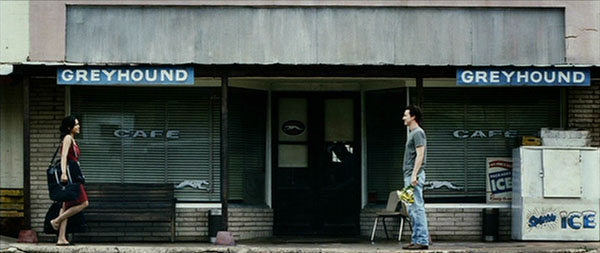
Whew, a not-too-good late-70’s-looking thriller with hardly any thrills, this wasn’t nearly as good as I’d hoped it’d be. Funny how in a week I went from watching John Cassavetes masterpiece Faces to watching a movie that ends with John Cassavetes exploding.

Boom!!:
image

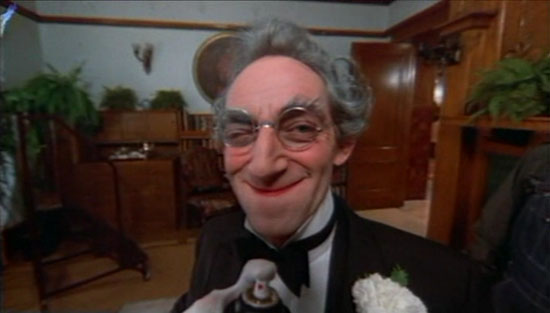
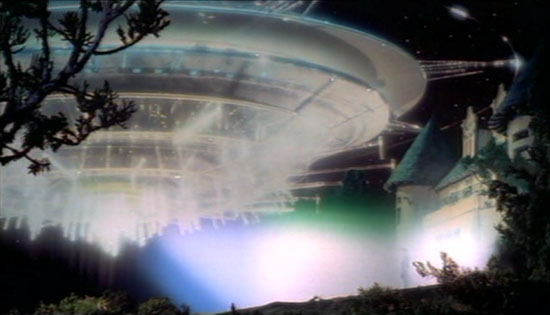
Movie opens in “Mid East 1977.” Kirk Douglas (below) loses his psychic son Robin to evildoer Cassavetes who subjects him to experiments we’re barely shown for reasons we are never told (and JC doesn’t seem to sweat it when Robin is killed at the end). Kirk goes deep undercover to rescue his son, enlisting Carrie‘s Amy Irving (who gets killed by a car in a botched escape) and psychic troubled girl Carrie Snodgress to help him infiltrate the secretly Cassavetes-backed psychic rest home run by Charles Durning (the president in Twilight’s Last Gleaming). Kirk finds his son but Robin has turned evil and they both plummet to their deaths from the roof. Carrie is miffed and explodes John Cassavetes again and again from fifty-six different camera angles.

image

A brief timeline of stories featuring psychic kids and exploding bodies:
Carrie (King, 74)
The Fury (John Farris, 76)
Carrie (De Palma, 76)
The Fury (De Palma, 78)
Firestarter (King, 80)
Scanners (Cronenberg, 81)
Firestarter (Mark Lester, 84)

One of those cool De Palma signature perspective shots:
image

Cassavetes (you can tell he’s evil by the black-gloved hand in a black arm cast) with Charles Durning:
image

Robin (Andrew Stevens, vet of 70+ crappy movies) looks like he’s wolfing out, but really he’s hanging off a rooftop from his father’s arm full of psychic rage:
image

Sembene’s third-to-final film, the one before Faat Kiné. His usual feminism is in effect here, but it’s mostly pushed to the background because he has more pressing issues to worry about.

Guelwaar (Thierno Ndiaye, below, also in Karmen Gei) has just died when the movie begins but we meet him in flashback. He has been killed because of his outspoken political beliefs, that it is better for a person or a nation to live poor than to accept handouts. He and his family are Catholic, and when his expatriate son Barthelemy goes to retrieve the body for the funeral, he finds that there has been a mix-up and Guelwaar was buried in a Muslim cemetery. A cop somewhat-assists, but when he finds out Bart lives in France he suggests that Bart appeal to his ambassador instead of asking the local police for help.

image

Meanwhile at Guelwaar’s house, the funeral party drags on longer than anyone had anticipated. His widow Nogoy, younger crippled son Aloys, and prostitute daughter (the prime breadwinner of the family) socialize with the guests (who include the daughter’s coworker, actress who played Rama in Xala). When word gets out about the fate of Guelwaar’s body, the Catholic priest and Muslim imam have a showdown, each craving peace but backed by an angry and armed mob of their people. The Muslims only back down when a government man (on whom they depend for food) drives up and convinces them of their burial error. Guelwaar is returned to the Catholics for his funeral, Bart has a newfound patriotism, and on the way out, the Catholics, in solidarity with Guelwaar’s climactic flashback speech (and as an outlet for their pent-up rage) destroy the shipment of food headed for the Muslim town in a passing wagon.

image

Interesting that Guelwaar defends the fact that his family lives off the daughter’s prostitution trade, over his wife’s protests. At least it is work, he argues, and they are not relying on handouts from others. This scene cuts down his noble martyr status by a couple notches. Nobody’s perfect. Also I like that the imam (above) is portrayed as a good man who listens to reason and tries to sway his angry followers to do the same. The only group that is portrayed as irredeemable is the corrupt government officials who silence Guelwaar’s voice that decries the handout system, since they skim a large share from foreign aid money before distributing it to their people, and they’d like to keep it that way.

Whoa, I thought I knew lead actor John Marley, but I guess I’ve only seen him in The Godfather. Definitely know Gena Rowlands, the greatest of all actresses, as John’s new girl. Lynn Carlin is best known for this, and was oscar nominated for it, as was Seymour Cassel in his first big part, looking very young and smooth as Chet.

Cassavetes’ second canonical film after 1959’s Shadows, although he directed some others in between and co-wrote Too Late Blues.

Film looks terrific, all blown-up grainy b/w, sometimes a nice long take to let an actor’s piece play out, but it seems less like an improv than Shadows was. Wouldn’t mind reading up on Cassavetes to see how the film was conceived and constructed.

In short: Richard and Maria are rich, bored, and have no sex life, so Richard leaves her for Jeannie and Maria has an affair with Chet the same night, but they end up at home together, not exactly reconciled, but maybe resigned. Ruminations on love, sex, fidelity, aging, and being too obsessed with yourself and your wealth to have a real human relationship.

Supremely non-entertaining, an honest and hurtful film, one of the best I’ve seen.

Some faces:

image

image

image

image

image

image

I started off the year talking about how there are so many great movies I’d like to see, it’s stupid to waste time watching bad movies… see also “The Finding Forrester Effect“. And here I am watching two bad ones in a row (this and Doomsday). Sure both viewing decisions were vaguely auteur-based since I’ve liked work by these directors before, but wasn’t Finding Forrester itself directed by a renowned film auteur? Oh well, there is no discovery without risk.

image

Chow plays a poor, uneducated, overworked, widowed single father. On top of that, his son is bullied at school, failing his classes, and can’t play sports because his shoes are falling apart. On top of THAT, Chow falls off a building at his construction job and dies. and his son cries and cries, and so does his nice teacher, and so do the only other people in the movie theater besides myself.

On the other hand, there are poop jokes and dream sequences, and the kid has a cute flubbery alien that his dad found at the dump.

Back on the first hand, the alien is beaten and squished and drowned and exploited and abandoned. Finally it kills (?) itself to resurrect Chow, god only knows why.

Movie alternates between bland and cruel. When it’s not making one of its main characters suffer, it’s not doing anything particularly exciting or interesting either. The good parts (most of them involving two extremely oversized middle-schoolers) are few, and not good enough to make this a movie worth watching.

image

It’s rare that we get a foreign film here in Atlanta less than two months after its opening date in its home country. I guess this didn’t play the festival circuit and was maybe pre-sold for US distribution after the 1-2 punch of Shaolin Soccer and Kung Fu Hustle. Anyway, it closed in a week and we’ll hopefully never hear from it again. Better luck next time in Kung Fu Hustle 2

Supposed to be the first great work by Para(d)janov, whose other work I haven’t seen yet.

young Ivan:
image

Film is divided into sections. At the end of each one the world turns red, then a bold title card introduces the next. Time is fluid here, sometimes passing slowly, sometimes quickly, and it’s hard to tell how much of it has passed… this is because Parajanov refuses to film anything that is not awesome for purpose of story or character clarification. This is a cine-poem, a work of art, not even the same medium as the David Schwimmer and Jim Carrey and Neil Marshall movies playing in theaters right now.

grown Ivan discovering Marichka’s body:
image

Only a minute into the film we have a shot from a falling tree’s POV. Later, we see naked children, multiple axe-fights, a long-take shot travelling from a giant raft over an unseen bridge onto shore. Vodka. No sex, but suggested sex. A sorcerer and voodoo dolls, many deaths.

Palagna:
image

Story is divided in half. When he is young, Ivan(ko)’s brother and father are killed in the same week, he meets a girl (Marichka, daughter of his father’s killer), they grow up in love but she drowns before they can wed. Second half, Ivan is depressed, brightens up enough to marry Palagna, then goes back to being depressed. She just wants to be rid of him, eventually gets her wish.

Actually sounds kind of depressing, but it is so beautifully told (and Ivan meets Marichka in a death dream at the finale, so it’s sort of a happy ending), a pleasure to watch.

Marichka reborn:
image

There was a movie a few years later, The White Bird Marked with Black, directed by this film’s cinematographer, with the same lead actress (Marichka), written-scored-and-starring our Ivanko.

One tiny little complaint: I wish movies would not blatantly show characters biting into apples when they are about to give in to temptation.

image

A film worth watching even when Pere Ubu is not performing a live score. The movie doesn’t have a lot of incidental music so they were playing most of the time, and they added some other fun stuff (rimshots at the bad jokes, soundtrack-looping to repeat lines of dialogue). Got applause after an intense few minutes of music when Ray is driving away pursued by a helicopter towards the end.

An intense but oh-so-stiff (like he’s in a trance) Ray Milland (Ministry of Fear, Dial M for Murder, Panic in Year Zero) stars as Dr. X. He has an empty shell of a beautiful doctor friend to fall in love with, two male co-stars who both appeared in Kubrick’s Spartacus, and a shifty manager played by Don Rickles. Plot, he invents an eyedrop that lets you see through things, tests it on himself, accidentally kills his friend, escapes to a circus, becomes a mystical healer (well, diagnose-r) under Rickles’ supervision, is finally hunted down by the cops who chase him to a bible revival tent where he claws his eyes out and does not scream “I can still see!!” over the end title.

Corman wastes so little time on character development that he actually has to pad the runtime to make the movie count as a feature. So we get more bubbling lab equipment at the start, and more blurry perspective shots of Las Vegas at the end (apparently gazing at Vegas through x-ray eyes just makes it look skewed and blurry). Among the blurry bits there’s a repeated shot of a half-constructed building pasted skeletally against a flat sky with X’s narration about watching the city become unmade. This bit conveys the horror of X’s condition far better than the hundred shots of Ray Milland looking nervous ever could, and along with the over-the-top ending it gives the movie a real sense of terror peering out from all the camp and sci-fi silliness, elevates it far above its MST3K-worthy contemporaries.

Because of pacing problems and mostly uninteresting writing and acting and sets, I wouldn’t want to watch X more often than I do, once every three or four years. But I wouldn’t want to watch it any less often either. It’s a crap classic, and I enjoy it every time.

Happy 10th anniversary to the funniest comedy of the 90’s!

In honor of this anniversary, I intended to post pictures of Jeff Bridges’ smiling eyes, but the DVD crashes my VLC player on both computers, so I will abandon this post before I am tempted to start quoting lines.

I, An Actress (1977)
“This film gives an insight into my directing techniques while under pressure.”
A good way to start things off… George directs a screen test for a young actress and ends up in front of the camera flamboyantly showing her how he wants the scene performed. The funniest film of the evening, and it wasn’t even “written” to be funny. J. Steffen says it “becomes a commentary on his own camp persona and on the eternal problem of directing actors with wills and personalities of their own.”

Hold Me While I’m Naked (1966)
The famous one! Kuchar plays a film director whose actress quits mid-shoot out of disinterest and because George has asked her to take her clothes off. He calls around but finds nobody else, and falls into a crisis. Hilarious little movie. Played very straight, as George claims he was actually quite depressed. I wouldn’t say that the editing reminded me of Breathless and Parajanov, but Steffen did say that.

I Was a Teenage Rumpot (1960)
The young Kuchar brothers discovered three people who look completely unlike movie stars and began filmmaking careers in order to get these people onscreen. This sums up what makes Kuchar interesting and worth watching, and where all the John Waters comparisons come from. A glorious no-budget fake melodrama starring the ‘differently-shaped’ Arline, Edie and Harry.

Sylvia’s Promise (1962)
Sylvia promises that if Mike will only settle down and marry her, she’ll lose weight. The joke ending is that eight years later, they’re married and she’s lost three pounds.

Anita Needs Me (1963)
I’m not doing a good job describing these movies, and I don’t even remember which one this is because I’ve waited too long after the screening to write about ’em (ten days is too long?!?), but they’re totally fun to watch, short enough to never outstay their welcome, and different enough from each other to make seeing a bunch in a row worthwhile. It was a hoot of a screening, and I’d watch any one of ’em again.

Eclipse of the Sun Virgin (1967)
GK: “Painstakingly filmed and edited, it will be painful to watch, too.” This was my favorite of the bunch, just awesome. Unbelievably, I couldn’t remember what to say about it so I just watched it again on Ubu web… and I still don’t know what to say about it! Um, something about piano playing and humiliation and the color red? It’s poetry, and it is awesome.

Knocturne (1968)
Starring Joyce Wieland, Michael Snow’s wife. I think this one was less narrative than the others, and I’ll leave it at that.

The Mongreloid (1978)
George with a late-70’s mustache reminiscing on the time he shared with his dog Bocko. Brief sound dropouts were replaced in post-production with tiny bursts of music, keeping a playful edge on this otherwise diary-like personal short.

This was a very good program, and Kuchar is a good speaker, full of stories about an entire adult life spent making cool underground films, and the people he’s known (John Waters, Michael Snow, Ken Jacobs, Jack Smith, Jonas Mekas). Wish I could’ve made it to the other nights of screenings, featuring his storm-chasing films and diary videos. Wait, this just in:

Wild Night In El Reno (1977)
As watched on Ubu web. 6 minutes long, storm over a motel builds into the night. Probably some nice footage, but the online video flattens it out and uglies it up, and my sound dropped out after a minute. No substitute for the wonderful Eyedrum screening.

GK: “At the age of 12 I made a transvestite movie on the roof and was brutally beaten by my mother for having disgraced her and also for soiling her nightgown. She didn’t realize how hard it is for a 12-year-old director to get real girls in his movies.”

This will be one to watch again when I know more French, or just when I’ve lived longer.


Chapter 1(a), “Toutes les histoires” (“All the (Hi)stories”)

Dedicated to Mary Meerson (Langlois’s companion who helped run the Cinematheque) and Monica Tegelaar (producer of Raoul Ruiz’s On Top of the Whale).

image

IMDB says parts one and two came out in the late 80’s, and the rest followed in the late 90’s. This one seemed more like a 50-minute trailer than an episode. Montage of archive footage, still and moving, edited and faded and superimposed and blended together. The footage includes scenes from films of course (rules of the game, great dictator, day of wrath, germany year zero) but lots of stills (producers, directors, Thalberg, Hughes) and paintings. Lots of focus on World War II, and ending with that Germany Year Zero segment, the whole thing came off as vaguely depressing. Maybe that’s why it took ten years to get the rest of the episodes made?

Three images overlapped: (1) Rita Hayworth dancing, (2) a drawing of Howard Hughes in his final days, (3) the witch-burning scene in Day of Wrath.


Chapter 1(b), “Une Histoire seule” (“A Single (Hi)story”)

Dedicated to John Cassavetes and Glauber Rocha (Brazilian director of Black God, White Devil).

image

Surprising number of references to Godard’s own films. Tons and tons of stuff I am not getting because I don’t know much French (I pick up half the film titles and some of the short sayings printed onscreen) or art history, and haven’t seen most of the films. Should’ve known better than to think part two would be more straightforward or make more sense. Even if I don’t know what it’s saying, I still get interesting juxtapositions of images and nice shots from great films seen and unseen, which is enough to keep me watching. Sounded like I heard some Leonard Cohen and Neil Diamond.


Chapter 2(a), “Seule le cinema” (“Only Cinema”)

Dedicated to Armand J. Cauliez (a writer, published a book on Jacques Tati) and Santiago Alvarez (Cuban filmmaker).

image

Fast-forward a decade. Same ol’ thing here, but two big changes:

(1) Not just montage of pre-existing footage edited with Godard in his study anymore. An actual actor, Julie Delpy, reading poetry. Also an interview with Godard by another guy (couldn’t be Serge Daney – he died in ’92), 90% untranslated.

(2) Me getting a little tired and pondering making my own historie(s) of cinema instead


Chapter 2(b), “Fatale beauté” (“Deadly Beauty”)

Dedicated to Michele Firk (film writer turned militant radical, killed herself in Guatemala to escape arrest) and Nicole Ladmiral (actress in Bresson’s Diary of a Country Priest).

image

Sabine Azema (above) recits some poetry, much of it untranslated. Godard types at his typewriter some more. I listened in the headphones and a background noise (JLG’s pet bird?) frightened me. Something about photography being invented in black and white as the colors of mourning to note the death of reality. And something about women, and murder, and Band of Outsiders and Rancho Notorious and Gone With The Wind. Good to see that Godard appreciates Tom Waits.


Chapter 3(a), “La Monnaie de l’absolu” (“The Coin of the Absolute”)

Dedicated to Gianni Amico (Italian filmmaker, assistant director on Bertolucci’s Before the Revolution and Godard’s Le Vent d’est & James Agee (film writer, champion of Chaplin’s Monseiur Verdoux, writer of Night of the Hunter and The African Queen)

image

or part 3A, the war and futility episode. WWII talk leads into an appreciation of Italian Neorealism and the most clearly presented introduction to a certain aspect of cinema and history thus far in the series. Says that Italian cinema in the 40’s and 50’s changed film like Manet (the godfather of modern art) changed painting. Closes with a nice montage of Italian film (minus too much onscreen block text and crazed fade transitions) set to a Richard Cocciante song. This episode has a clear point and meaning and narrative arc and supporting arguments… I don’t understand. Maybe the others have too, and I’ve been missing it. Juliette Binoche appears with Alain Cuny (of Les Amants and La Dolce Vita), who died in 1994, four years before this episode aired. Julie Delpy looked mighty young in her segment too – maybe all this footage was shot in the 80’s and not finished editing until ten years later.


Chapter 3(b), “Une Vague Nouvelle” (“A New Wave”)

Dedicated to Frederic C. Froeschel (head of a cine-club in Paris, 1950) and Naum Kleiman (Russian film critic, director of the Moscow Film Museum).

image

“Becker, Rossellini, Melville, Franju, Jacques Demy, Truffaut. You knew them.”
“Yes, they were my friends.”

A personal episode, sometimes celebratory but more usually melancholy. Godard himself is the guest speaker this time, but he’s actually into it, not just distractedly reciting behind his typewriter. These things never quite seem to begin, the opening titles still playing when the episode is half over. Some 400 Blows, some Henri Langlois, more goings-on about the death of cinema. What, is video the new art form?


Chapter 4(a), “Le Côntrole de l’univers” (“The Control of the Universe”)

Dedicated to Michel Delahaye (actor in Out 1, Alphaville, plenty more) and Jean Domarchi (1950’s, 60’s Cahiers critic, had a bit part in Breathless).

image

Another really good one. Probably not coincidentally, all the voiceover on this one is translated, so I was able to understand it. Lots of voiceover – it’s getting to be more of an essay lately and less of a purely visual slideshow. Still plenty of that dull video text, white-on-black block lettering. The thing always drags a little when JLG decides to move those words around the screen for thirty seconds before returning to the film clips. When there were clips, it seems half of them were by Hitchcock, “our century’s greatest creator of forms.”


Chapter 4(b), “Les Signes parmi nous” (“The Signs Among Us”)

Dedicated to Anne-Marie Miéville (one of Godard’s collaborators since 1976) and to Godard himself.

image

I hope nobody stumbles across this entry hoping to learn about the film, because I really doubt I understood most of it. More more more war images in this section (have I mentioned that the film is obsessed with WWII?) and more ponderings on love, death, art, history, man, the state, and Charlie Chaplin. And it seems to me that Godard is terribly depressed. Anyway, here’s a good bit of the voiceover from the last eight minutes:

I need a day to tell the history of a second…
I need an eternity to tell the history of a day.

We can do everything except the history of what we are doing. It is my privilege to film and live in France as an artist. Nothing like a country that every day walks further down the path of its own inexorable decline.

I am the fugitive enemy of our times. The totalitarianism of the present as applied mechanically every day more oppressive on a planetary scale. This faceless tyranny that effaces all faces for the systematic organization of the unified time of the moment. This global, abstract tyranny which I try to oppose from my fleeting point of view. Because I try, because I try in my compositions to show an ear that listens to time. And try to make it heard and to surge into the future.

The only thing that survives from one epoch is the art from it created. No activity can become an art until its proper epoch has ended. Then, this art will disappear. Thus, the art of the 19th century – cinema – made the 20th century exist, which barely existed.

Cinema feared nothing of others or of itself. It wasn’t sheltered from time. It was the shelter of time. Yes, image is happiness. But beside it dwells nothingness. The power of the image is expressed only by invoking nothingness. It is perhaps worth adding: The image, able to negate nothingness, is also the gaze of nothingness on us. The image is light. Nothingness, immensely heavy. The image gleams. Nothingness is that thickness where all is veiled. The most fleeting moments possess an illustrious past. If a man passed through paradise in his dreams and received a flower as proof of passage, and on waking, found this flower in his hand… What is there to say? I was that man.

Thought I’d watch the Cannes 1988 press conference, but after the first three minutes (“video artist” Godard passionately attacking television) it all turns French.

From a belatedly-discovered interview between JLG and J. Rosenbaum:

JR: Yes, but it also isn’t legally acknowledged that films and videos can be criticism.
JLG: It’s the only thing video can be — and should be.

With that strong distinction between film and video, it occurs to me that JLG considers Histoire(s) as being about cinema but not being a work of cinema itself. I watch Breathless on my TV and say I’ve seen one Godard movie, then I watch Histoire(s) on my TV and say I’ve seen two Godard movies. JLG should like to smack me for such a thought.