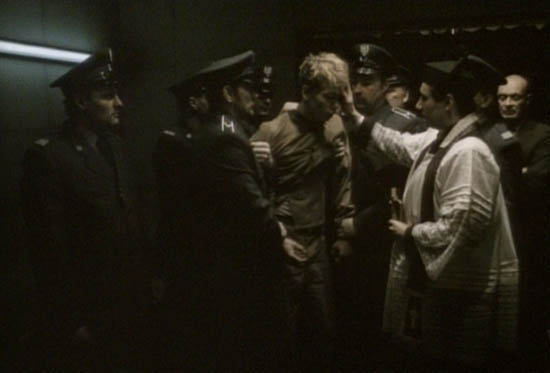
Program kinda sucked this year. Feels like I spent enough time on it already, so not gonna spend too much more writing about it. I’m sure each film felt “experimental” to its creator, but there was nothing here we hadn’t seen before. Also with few exceptions people feel the need to accompany their “experimental” images with “abstract” blippy swimmy music, ugh. Also also, forget any references to “film” below, since everything but Shake Off was on video (and Shake Off either originated on HD or at least had mostly digital components). Why can’t everyone call ’em “movies” like I do? All quotes are from the film festival booklet, with their queer use of commas intact.

Doxology (Michael Langan)
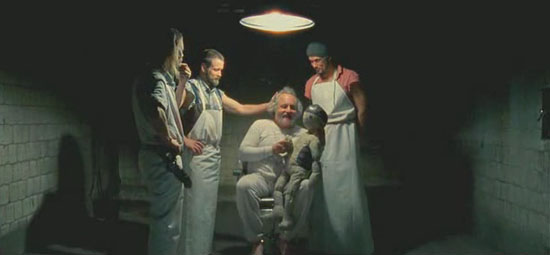
“An experimental comedy…” Cute. Tennis balls and automobiles and vegetables defy space and time – funny and not overlong. Probably would’ve been my favorite here, but the picture was fucked and distorted, stretched out much wider than it should have been. Thanks, AFF365/Landmark.

Such As It Is (Walter Ungerer)
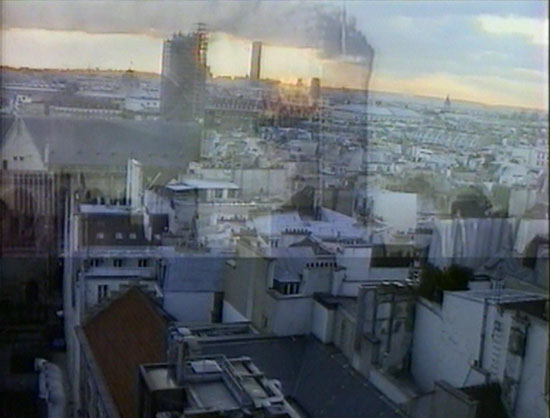
“The film is divided into four parts and four themes: the underground in the city; above ground in the city; a field in the country; and fog and the ocean. Each theme has its separate identity, yet they are not separate. Through manipulation and abstraction of imagery the four parts are joined, as the land, and the air, and the oceans are joined by the earth.” Besides the over-use of commas at the end there, this description is far better than the film it describes. The interminable subway bit, tiny flicks of reflected light turned into digital noise on an ugly gray glowing background, seemed suddenly less crappy in comparison when I saw a cityscape turned into spinning 3D cubes within cubes. What did they mean by the title? How is it? This was the first of a bunch of ugly video-projected shorts (from digibeta or dvd?). I do a bit of quality-control on our video deliveries at work, and I never would’ve allowed this thing to go out with all the banding issues it had. Go check your After Effects settings, re-render in 16-bit and bring it back to me later.

A Convolution of Imagined Histories (Micah Stansell)
“The film is comprised of four chapters, telling four separate stories that make up a meta-narrative. The works are the result of imagining the visual track to the story of someone else’s memories.” One of those short films where a narrator talks about shit their parents did when they were young or before they were born, like The Moon and the Son but with less animation and more overlapping sounds and video and slow/fast effects… anything to make it seem interesting (which it was, but only barely). Director in attendance seemed a nice enough guy. Talks not about “filmmaking” but “compositing”. Experimental Short Composites would be a more honest name for the program.

Dear Bill Gates (Sarah J. Christman)
“A poetic visual essay exploring the ownership of our visual history and culture.” Thought I was in trouble when the voiceover said “40,000 years ago…” but it was well-done, with deep storage of photos in old mines subliminally connected with “data-mining” and the mining of our memories. The longest of the shorts, and interesting enough to justify its runtime.

Passage (Peter Byrne)
“A reflection on the peripheral… this work visually catches sight of experience, as it moves past.” Notes I took in the theater read: “flickering, fluttering digital colored mess overlapped w/ blurry video of birds w/ sucky jangly music. These all have crappy music. I can hear yawning.” Film festival directors: I am available to write blurbs for your shorts programs!

Office Mobius (Seung Hyung Lee)
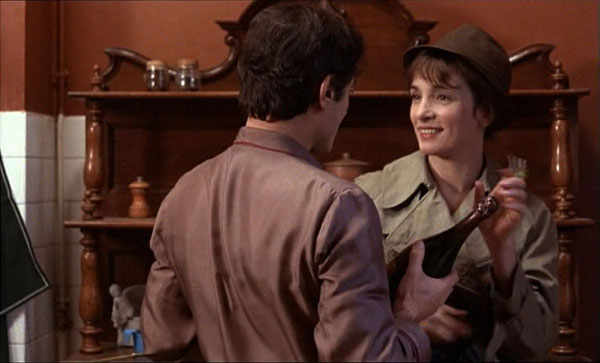
“An abstract story…” I didn’t find it abstract at all. Kinda cute buncha office collisions, with one character who got laughter whenever he’s on screen – a star in the making. My notes say “butt-ugly digi credit titles.” Letterboxed within the 1.33:1 projector frame within the 1.85 movie screen.

24 Frames Per Day (Sonali Gulati)
“The film raises important questions around immigration, cultural stereotypes, and the meaning of home from a transnational perspective.” Bunch of field recordings interspersed with a fake-sounding conversation (perhaps based on a real one) between director and “cab driver”. The stop-motion visuals of a hallway manage to be less interesting than the soundtrack. They say it was shot 24fpd over nine months, but La Region Centrale (or even 37/78 Tree Again) this ain’t.

Drop (Bryan Leister)
“The aesthetic journey of a drop of water – animation sound and image are combined to create a zen-like exploration of fluidity and nature.” I might have written: “a bit of nothing to fill out four minutes in the program.” Nice to hear actual music, though.

Rewind (Atul Taishete)
“The film moves in reverse towards the beginning as the opening of the film evolves as the climax.” Clumsily worded, but what they mean is the film’s shot totally in reverse, not just in reverse-ordered segments like Memento. Unlike Memento, there’s no reason within the narrative to justify the reversal, except I suppose that it wouldn’t have been as cool (or “experimental”) in regular motion. It’s about a blind guy in a diamond heist and ahhh, I’m not going into it. This also had music.

Shake Off (Hans Beenhakker)
“A perspiring boy dances magically across borders.” Seriously, a perspiring boy? I would’ve called him a “dancer” as do the credits, but then they would’ve had to think of a synonym for “dances” as an action verb. Can’t tell if it was the same dance footage looped four times, or just a similar performance. The dance and fluid camera movements weren’t enough – they had to put fakey digital backdrops behind the guy and with David Fincher zooms and cuts that appear seamless. A nice dance & technology demo.

The last two (both non-U.S.) are the only ones listed on IMDB. I spend so much time on that site, sometimes I consider making a film JUST so I can be listed on IMDB. These compositors have different ambitions than I do.

Sometimes I consider taking this “blog” off the internet and making it for my eyes only. I just know one of the filmmakers is going to google themselves, find this page and be offended. I’m sorry!

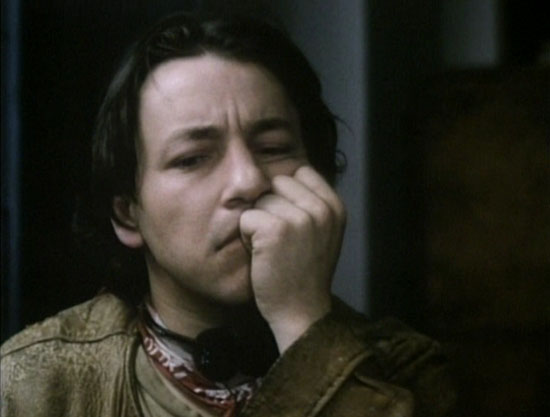
Won best screenplay at Cannes, nominated for the golden palm. I was startled to recognize the lead guy from Werckmeister Harmonies as the German bookshop owner. Didn’t notice that his aunt Tunde in Werckmeister played Mrs. Straub, through I knew she looked familiar so I should’ve figured that out.

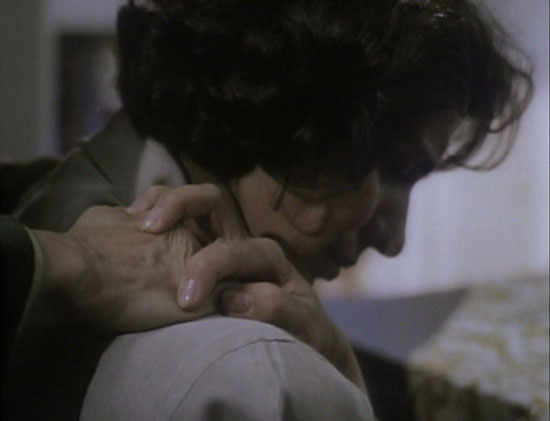
Well shot, edited, scored, etc., with no real attention-grabbing technical aspects. VERY well written and acted – focus here is on story and character. One of those interweaving-narratives things, but not annoyingly so. Emotional human story, multilayered, examining freedom and moral decisions and parent/child relationships, but subtly. When Ayten is spit upon by her former comrades as she abandons their cause in prison to go home with her girlfriend’s mother, there’s just that moment to think about later, not a whole conversation about the relative importance of family, love, freedom and politics. It’s a moral tale.

Prostitute Yeter Öztürk is estranged mother to young rebel Ayten. Ali Aksu is father to German professor Nejat. Susanne Staub is mother to student Lotte. The parents are all widow(er)s, the kids all unattached, until Ayten, in hiding after a political rally gone bad, stays with Lotte and they fall in love. Ali “rescues” Yeter from her prostitute life, but later he drunkenly strikes her, she dies and he goes to prison. Nejat disowns his father and moves from Germany back to Turkey, settling in Istanbul to find Ayten, tell her about her mother’s death and offer to fund her studies. Those two never connect, even though Lotte (and eventually her mother) stays with Nejat. All of the characters end up staying with each other, and not counting Ali’s attempted ownership of Yeter, it’s all out of love, compassion, generosity. Ali is the worst of the six, but he’s not a monster, and the film ends with Nejat (and us) going to Ali’s hometown to reconcile with him as Lotte’s mother Susanne works on forming a bond with her murdered daughter’s lover Ayten. Ayten is abandoning her rebel cause, which has good values at heart but also had an obsession with guns and violent protest that indirectly led to Lotte’s death, so you feel that Ayten is doing the better, more human thing by leaving, that by living her life (with or without new mother-figure Susanne) and holding onto her values she can do far more good than she could imprisoned in solidarity. Ends on such a spiritual high that it made my face hurt from wanting to cry. A beautiful movie, rivaling Paranoid Park as the best thing I’ve seen in theaters this year.

“Cinema is the ultimate pervert art. It doesn’t give you what you desire; it tells you what to desire.”

With his focus on the “traumatic dimension of the voice… which distorts reality”, I must believe that narrator Slavoj Zizek, with his heavily accented voice, is watching and interpreting slightly different versions of these movies than the ones I have seen. After all, I watch films and he watches “fillums”.

image

A few bits: the three levels of Norman Bates’s house representing the id / ego / superego… the power of the voice represented by Dr. Mabuse… “Music is potentially always a threat”… a look at the intersecting fantasies in Blue Velvet, and the related horror themes of Blue Velvet and Mulholland Drive.

Calls a scene in The Piano Teacher “the most depressive sexual act in the entire history of cinema.” To think I once showed that movie to my girlfriend’s parents!

Wish Katy had finished watching this with me, could’ve helped defend my position on David Lynch movies. And for stupid cinephiles like myself, who love Lynch movies (and The Piano Teacher, and Eyes Wide Shut, and Blue) but get lost in their images and atmosphere without thinking too hard about their psychological implications, he handily explains the stories and characters from a psych point-of-view.

“I think that flowers should be forbidden to children.”

The movie might teach the rewards of closely analyzing a few great movies instead of trying to watch every potentially great movie. This is a lesson I will not be following. Maybe one day…

I feel so vindicated that he picks Alien Resurrection as a film worth discussing. When oh when will that gem get its due? Only the second of the series (after the Ridley Scott original) to count as a horror film, plus it’s good sci-fi and an innovative sequel/reboot that hasn’t been matched since (well, maybe those Chucky movies).

“All modern films are ultimately films about the possibility or impossibility to make a film.”

He compares Cecil B. DeMille to the Wizard of Oz to the mystery man in Lost Highway.

“In order to understand today’s world, we need cinema, literally. It’s only in cinema that we get that crucial dimension which we are not ready to confront in our reality. If you are looking for what is in reality more real than reality itself, look into the cinematic fiction.”

Writer/director Altman, “third woman” Janice Rule, her cheating husband Robert Fortier and the actors who played Pinky’s parents (Ruth Nelson of Humoresque and blacklisted 30’s and 40’s director John Cromwell)? All dead now.

More similar in tone and style to 1972’s Images than to anything else I’ve seen by Mr. Altman. Unlike Images it’s not shot subjectively, showing the hallucinatory visions of a lead character; everything on screen is assumed to be happening. But there’s the tight psychological focus on just two characters and the slow (and sometimes overlapping) motion shots of the mystical ancient-looking paintings set to creepy flute music.

Woman 1:
image

Story goes that three sad women with names similar to “Millie” meet in a small California town (desperate, pathetic but high-spirited single Shelley Duvall, childish Sissy Spacek, and Janice Rule, a painter pregnant by her cheating husband). After each of two harsh breaks in their routine (Spacek’s attempted suicide and ensuing coma, then Rule’s stillborn birth attended by the other two), the women assume different identities. First Spacek becomes an unleashed and attractive version of Duvall’s character and Duvall becomes withdrawn and passive, then in the finale, the three move in together (the husband having met a mysterious shooting death) assuming the roles of daughter, mother and grandmother and speaking in spookily robotic tones. D. Sterritt says the ending “presents a parody of American family life as desolate as it is surreal.”

Woman 2:
image

Good movie, but I found it a little slow and wondered at the symbolism. Lots of humor, absolutely perfect performances by a post-Carrie Spacek and pre-Shining Duvall, and an extreme yellow-and-purple color palette.

Spacek uses Duvall’s social security number in her job application, an early sign of the current identity-theft crisis!

Woman 3:
image

Altman: “I’m trying to reach toward a picture that’s totally emotional, not narrative or intellectual, where an audience walks out and they can’t say anything about it except what they feel.”

image

Nice movie… felt really good walking out of this one.

Shot by my hero Christopher Doyle with lots of slow-motion, but looks more idiosyncratic in Van Sant’s style than in Doyle’s. Shot in 1.33:1 aspect ratio (thankfully respected at the Plaza). I notice light levels slowly fluctuating. I see Van Sant’s long, wandering shots and his slooow forward camera movement like in Last Days and Elephant, but seriously toned down now, not calling attention to themselves anymore. Regular story segments are buffered by 8mm skate footage. The soundtrack was the most surprising part. Music is usually playing, and it’s all over the map, from suspenseful Bernard Herrmann sounding pieces (actually Nino Rota’s circus-noir), thrash punk, glitchy ambient music, singing in French, a cowboy song heard twice, some hip hop, a bit of indie rock (Menomena), bird calls (!) and two Elliott Smith songs (which did not remind me of Good Will Hunting, but it’s understandable that reviewers keep bringing that up).

image

Acting ranged from very good to great with a nonprofessional cast (except surprisingly for our guy’s girlfriend, who starred in Jim Carrey’s Grinch and other high-profile stuff). Story is told out of order, as is so fashionable now, with flashbacks and diary-entry narration. Never flashy with the editing, the flow and pacing really work for the story, so the non-chronological thing is never annoying. No Kids (or even Elephant) style gratuitous teen sex, even when there was a convenient spot for it in the story – thanks for that.

And the story, wow, smaller and more intimate than you’d expect from the trailer, with real depth and feeling for our lead character Alex. He’s a low-key skater kid, hangs out with his friends Jared and Macy and girlfriend Jennifer, deals with his excitable younger brother and his divorcing parents. Then one day he goes to the title skate park alone, goes off to play on the train tracks with a cool older kid and accidentally causes the death of a security guard. Tension mounts when a detective comes to school to question all the kids, and later (actually revealed earlier than the group interrog.) questions Alex alone. The detective isn’t a bad guy, and wants to solve this crime, but Alex feels horrible for what he’s done, and we do not want to see him locked up. At the end there’s no scene where the detective sighs to his partner “I guess we’ll have to rule this one an accident”, but we assume Alex gets away with it. He writes his confession in a journal then burns the pages, freed (or at least partially relieved) of his guilty burden. It’s a beautiful ending, one of my favorites of recent years.

image

Set in the near-future of summer 2008, which would’ve worked better had the film played more than a couple film festivals in its intended release year of 2006.

image

I could go on and on summarizing plot strands and talking about story bits like Liquid Karma being harvested from the center of the earth and injected into Iraq war soldiers to give them psychic communication powers, TV ads that feature cars fucking each other, multiple sets of identical twins, triple-crossing double-agents in an undercover war between government spy corporations and the neo-Marxist underground… but it’s not worth recounting, really. I find the following bits more interesting:

1. The casting choices. Are they meant ironically, humorously, or meta-post-something? Admittedly some of these people are good actors, but it seems like stunt-celeb casting akin to Steve Guttenberg dancing in a reality show. These people actually appear in this movie:
– teen idols The Rock, Buffy, Seann William Scott, Mandy Moore & Justin Timberlake
– TV comedy vets John Larroquette, Jon Lovitz and Will Sasso
– SNL comics Nora Dunn, Cheri Oteri and Amy Poehler
The Princess Bride‘s Wallace Shawn
– Christopher “Highlander” Lambert
– The ghost expert from Poltergeist (now in her 70’s)
– Donnie Darko’s uptight teacher, but with an unpleasant fake accent
– Donnie’s dad Holmes Osborne
– Janeane Garofalo (somehow I did not recognize her)
– Kevin Smith in heavy old-man makeup
Mulholland Drive‘s Rebekah Del Rio (below)
– 80’s movie nerd Curtis Armstrong (Cusak’s wired friend in Better Off Dead)
– Miranda Richardson of Spider and Sleepy Hollow
– Bai Ling of Dumplings and Sky Captain

image

2. Apparent product-placement for Bud Light in both the movie and the comic, and empty references/namechecks of Robert Frost poems and Robert Aldrich films and Philip Dick novels. A location called “Fire Arcade” could fit in this category as well.

3. The post-modern fractured storytelling aspect, complete with lots of internetty technology business in plot and presentation. Doesn’t work as well as it did in Redacted, and it remains to be seen whether this concept will ever work completely in any movie (a fixed-length linear medium) or whether movies should simply not try to emulate DVDs, CD-ROMs and websites. At least the story was told in chronological order (as was Redacted).

A scarred and blood-drenched teen idol, who must’ve shot a lot of scenes that got cut out of the picture since he never quite seems to fit in:
image

4. The gall of this thing to exist, with its bad acting, big budget and mishmash story. It truly feels like Kelly was afraid that this might be his last film (it won’t – his Cameron Diaz and Cyclops starring follow-up with hardly any stunt casting is in post-production) and wanted to make it about every single idea he’d ever had all at once. Global warming! Internet privacy! Individual identity! The US perpetual war machine! Fart humor! Religion! If you want to be unkind you could say the fractured storytelling wasn’t even purposeful but just reflects Kelly’s total lack of focus on a single story or concept.

5. Commonalities with Darko (Kelly’s continuing obsessions with pop songs, 80’s culture, time travel and memory).

Parts of the comic, like the rapidly-growing baby and the bit about certain people evolving beyond the need to defecate are missing from the film except in coded messages. You poo too?
image

But these are the most interesting aspects of a kinda uninteresting movie. I’d have to say the whole enterprise was a waste of time, time better spent watching Stephen Chow kick stuff in Royal Tramp II. At the end there is an explosion, a young guy who goes through a rift in the space-time continuum, and someone who is shot in the eye. Why would a studio pay $17mil for a crappy remake of Donnie Darko? Then there’s a line about the messiah being a pimp. This is the way the movie ends. This is the way the movie ends.

Trying to clear my head of CJ7, I grabbed the first Stephen Chow movie I could find at the store, and hit paydirt. Not as artistically ambitious as most of the movies I like, but as entertainment it is supreme, better than Michael Bay’s filmography to date and probably a thousandth as expensive. Plus these are only two of the six films Wong is credited with directing in 1992 alone. Take that, Mr. Bay.

I’d check the IMDB every ten minutes during part one trying to keep characters straight and to locate superstar Brigitte Lin… finally figured out that she shows up at the very end (the final shot!) of pt. 1 to set up her starring role in pt. 2. But then she’s not even that big a deal in 2 – it’s another jumble of too many characters (sometimes crossdressing to make it even more confusing for me). Just a ton of penis jokes, more than I think I’ve ever heard in one place before. Supposedly very clever wordplay in the dialogue, but I don’t guess that translated very well in the subs. I found it funny anyway. Not the greatest most showoffy action scenes, but they’re alright. Just so much going on, impossible to get bored while watching this. Trying to lay out all the plots and alliances here would take longer than re-watching the movies, but in short…

Stephen Chow is Wei Shu Bo, works at a brothel or someplace, rescues the lead dude (Chan) of an anti-government organization, joins their group and is sent to the emperor’s palace to do some shit, but befriends the emp (Ning) and his sister (Princess Kim). In each movie he tries to protect them from a traitorous super-powerful white-haired dude, first Obai then Fung (who works for King Ng of Ping-Si whose son Prince Ng is to marry Kim, who is in love with Stephen Chow, who is also having sex with Brigitte Lin and the Swan twins, but I get ahead of myself). Actually Chow is powerless but lucky throughout part one (the empress or queen, the one who later transforms into Brigitte Lin, kills Obai but Chow takes credit), working as apprentice to eunuch Hai, then when Chow has sex with Lin in pt. 2 he gets most of her powers. Chow has a friend Dor Long who shows up a lot, and there’s a girl named Ah Or or maybe Sister Bond who I never figured out who she was and nobody else seems to know either. Oh and Lin’s teacher the one-armed nun is a big deal in the first half of pt. 2.

Stephen Chow had been in 30 movies by now so I assume he was pretty well known. He started his writer/director career a couple years after this.
image

Lin starred in Police Story, Zu Warriors and Peking Opera Blues, Swordsman II & III, New Dragon Gate Inn, Bride With White Hair, then she pretty much stopped acting after doing two Wong Kar-Wai films and getting married in ’94.
image

I didn’t get screenshots of the first movie, but the queen was Sharla Cheung (costarred with Stephen Chow in a bunch of things), the eunuch was Stephen Chow fave Man Tat Ng (also in Happy Together), and Obai (hilariously credited as O’Brien on IMDB) was Elvis Tsui of the Sex & Zen movies and a hundred others.

The emperor’s sister, Chingmy Yau (below), costarred with Jet Li in some other Jing Wong films in the 90’s as well as the HK version of Street Fighter. The emperor, Siu-Lun Wan, hasn’t been in much else. The mysterious Sister Bond, Sandra Ng Kwan Yue, has been in a hundred movies with titles I recognized from the other filmographies I looked at.
image

King Ng is Paul Chun (appeared with Chow Yun Fat and Jackie Chan movies back in the 70’s), his son the prince (who gets castrated by the princess if I haven’t mentioned) is Ken Tong (of a bunch of movies with knockoff titles of more famous movies, incl. a semi-sequel to Royal Tramp starring Tony Leung).
image

Lan Law, the one-handed nun, has been acting since the 50’s, appeared in Wayne Wang’s Eat a Bowl of Tea.
image

The puppetmaster Fung, Shi-Kwan Yen, was in a lot of stuff in the 70’s, some high-profile films in the 90’s, and hasn’t done much since Iron Monkey in ’93.
image

Oh wait, forgot to mention the best part. At the end of part one, it freeze-frames on Brigitte Lin, and the credits come up, declaring “PEPSI / SEVEN-UP”. A soda advertisement in the credits!

Made and released before My Night at Maud’s, but it’s part four of the Moral Tales. I made a moral decision to watch the films according to their numbering in the DVD box set, and not in the order they were made.

It’d be almost Antonioni-esque without the voiceover. Hardly anything actually happens, but Adrien always keeps us filled in on what he’s thinking. I considered disliking the movie for a while, a movie about idle rich young artists having self-conscious affairs, but it turns out Adrien and Haydée aren’t rich (only idle and leeching off their rich friend) and never manage to have an affair. I ended up liking it.

image

Buff 30ish Adrien comes to the beach to take his “first vacation in ten years” prior to an art opening, hopes to sit around with buddy Daniel and do absolutely nothing, not even think (they read so they don’t have to think). 21-yr-old Haydée is also at the house sleeping with a different guy every night. We don’t get much insight into Daniel – he’s the third wheel here – but Adrien and Haydée are both trying to find themselves, define their own moral codes, playing off each other and never quite getting together. At the end, Adrien pulls a standard Moral Tales move. Chances are good that he’s got Haydée for the night, but he leaves her in the middle of the road, deciding that sleeping with her would be against his character, and books a flight for London to see the girl he’s with (briefly) at the start of the film.

Leisurely-paced movie, but never slow or dull. Differently structured than the other films, with a few-minute prologue for each character before the main section of the movie begins. Rohmer and his cameraman would be happy to just stare at Haydée all day – her entire prologue is shots of her barely-clad body. Apparently that’s what defines her character.

image

Have I mentioned that it is in color? Guess that’s another good reason to watch it fourth instead of third. Nice, rich color, too. Much of the look is in the bleached grays and browns and blues of the beach and the plain interior of their villa, so what colors we get in clothing and city life and an antique vase all stand out. Adrien and Daniel wear some hilarious clothes throughout (see above). Must be a 60’s artist thing.

Adrien was Patrick Bauchau, had a smallish part in Suzanne’s Career, later in American stuff like The Rapture and Panic Room. Haydée was Haydée Politoff, immediately turned to Spanish and Italian horror movies, had a small part in Love in the Afternoon, and mostly quit acting after that. Daniel was Daniel Pommereulle, appeared in Godard’s Weekend the same year, then two by Philippe Garrel.

image

from V. Canby’s NYT review:

Much of the comedy in La Collectionneuse, as in Rohmer’s later films, is provided by the otherwise aware hero’s elegant self-deceptions about his own motives, followed by his dimly seen perceptions of what could be another truth. In this context, it is a momentous event (and, comparatively speaking, momentously funny) when Adrien begins to have doubts about the affair of Haydée and Daniel. “I couldn’t be sure,” he tells himself with complete seriousness, “that their complicity was entirely for my benefit.”

There is a certain chilliness and lack of spontaneity to all of the performances, especially Bauchau’s, which, I suspect, has as much to do with the tiny scope of the film as to the actor’s talents. My Night at Maud’s and Claire’s Knee suggest living worlds outside the films’ rarefied milieus, whereas La Collectionneuse exists in splendid, arrogant isolation. Adrien is tiresome. Daniel is enigmatic, and Haydée is sweet, and great to look at, but, after a while, sadly commonplace.

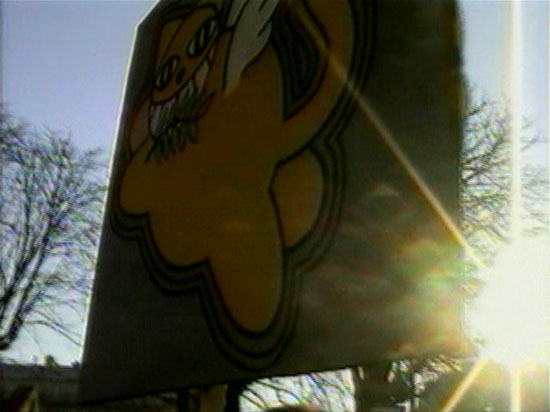
A note of interest to local film buffs: the Seymour Hertzberg who is listed in the credits (he plays Sam, the American art collector whom Adrien solicits), is the nom d’écran of Eugene Archer, a former New York Times film reviewer who, I’m told, has absolutely no intention of acting again. He is an excellent reviewer.

“Seymour Hertzberg”:
image

From P. Lopate’s Criterion essay:

Haydée is not the most articulate young woman, though she says just enough to cast doubt on the men’s interpretations. There will be other Rohmer films that take us deep into the psyches of women; this one does not, but it gives us a very daring, precise portrait of the misogynistic, entitled, self-loathing psyches of men. And unlike, say, most Woody Allen movies, it does not let the rationalizing male character off the hook. Rohmer explicitly warned us, in an interview: “You should never think of me as an apologist for my male character, even (or especially) when he is being his own apologist. On the contrary, the men in my films are not meant to be particularly sympathetic characters.”

From an appreciation in The Guardian:

Drama, for Rohmer, is made up of a number of frequently small incidents which culminate in an inevitable denouement. There are many kinds of film-making but Rohmer’s would be very difficult to beat within the confines of his chosen metier.

A Modern Coed, 1966

image

“People used to say girls went to college only to land a husband. Though today’s coed might find a husband, she isn’t necessarily looking.”

Just a short doc to tell the world that there are female college students, and some of them even study science. Its main reason to exist today is to document mid-60’s Paris hairstyles. Narrated by Vidal from Maud’s.

Foreground: our coed. Background: a cat with a hat in a box.
image

Rohmer on La Collectionneuse in 1977:
“It’s the only film I made that followed the era’s fashion. Audiences loved the new fashions, the long hair, the blue jeans. Then there was Haydée, whom audiences adored. Marcel Carné signed her for his next film right after that.”

He speaks proudly of a conversation scene in the 1976’s The Marquise of O, calling it “tiresome and static” but saying nobody else would have dared film it as written.

“This is a problem that concerns me. In the past, I was drawn by the way people spoke. I’m deeply interested in language. Currently, I find a kind of sloppiness has crept into the French language and I don’t like it very much. I like colloquial language, but today, especially as it’s used in intellectual circles, I find little of interest in it. … That said, I also believe characters in film should speak naturally. I’m getting around this currently by shooting films set in the past. When I return to contemporary films, I don’t know what my position will be. Perhaps by then language will have evolved further. Today’s spoken language is so extremely impoverished that it doesn’t inspire me. You find the same dialogue in every film now.”

image

An ugly, gray horrors-of-war movie. The twist here is that instead of simply running through all the reasons why war is hell, this one brings sex into the picture – not just the usual love and desire stuff, but a variety of situations dealing with sexual need during wartime.

image

Our titular heroine (Nishi) is a nurse in an army hospital in 1939 during Japan’s war with China. She spends some of her time at a base hospital where men with illnesses and minor injuries rest up before they are sent home or back into combat, and the rest of her time at an understaffed camp hospital at the front dealing with a constant flow of critically wounded men, fatalities and amputations. She is raped by a soldier who is sent back into combat to his death as punishment. She sexually services a man who lost both arms and can’t take care of himself anymore (but he commits suicide soon afterwards). Then she ends up at the front in love with a morphine-addicted surgeon, in a platoon where the local “comfort women” are spreading cholera to the troops, but the troops keep visiting them anyway. Mishi manages to get Dr. Okagi off the morphine so he can make love to her, but the place is destroyed in a Chinese raid a few hours later, everyone killed but Nishi. She finds Okagi’s body on the ground. The end!

image

A pretty interesting movie, definitely not the kind of war film I’ve seen before. Compassionate, but also somewhat hopeless given the surroundings and situations. I liked it, but can’t say I’m itching to watch it again.

Nishi is played by Ayako Wakao, who starred in a bunch of Masumura’s films (Seisaku’s Wife, Manji, A Wife Confesses, A False Student, Afraid To Die) as well as Mizoguchi’s Street of Shame (played the money-lending girl who opens her own shop at the end) and A Geisha, Ozu’s Floating Weeds, and Kon Ichikawa’s An Actor’s Revenge. Dr. Okagi appeared in Suzuki’s Underworld Beauty. And the armless guy starred in Oshima’s Naked Youth.

image

J. Rosenbaum:
“Roughly contemporary with M*A*S*H (as in Altman’s film, scenes of war-front surgery provide a corollary to Vietnam), it sometimes suggests a less comic treatment of the same theme–how to preserve one’s humanity amid impossible circumstances–but its ethics are considerably more developed.”

J. Sharp for Midnight Eye:

Made for Daiei Studios, Masumura’s stark wartime drama, an adaptation of a novel by Arima Yorichika, is one of the handful of films made in the mid 60s dealing with the personal experiences of those involved in the war, including the same director’s previous Hoodlum Soldier (Heitai Yakuza, 1965) and Seijun Suzuki’s Story of a Prostitute (Shunpuden, 1966). Both Masumura and Suzuki had been active towards the end of the war, and both used their experience to examine the conflicts and interpersonal dramas that arose on the frontline in order to question such concepts as duty and loyalty to their country. To this end both directors approach their subject using strong female protagonists whose role in the war is often forgotten, with Story of a Prostitute focusing on a group of prostitutes sent out to the frontline to service the soldiers, and Red Angel almost making analogous use of the nurses (although Masumura’s film does feature a group of prostitutes and takes pains to point out that the nurses duty is not the same as theirs!) In a world gone mad it is these female characters who provide the only source of stability and comfort, even morality, whilst the shell-shocked, emasculated walking wounded dream of returning home to their families.

image