image

From Sam Fuller’s autobiography:

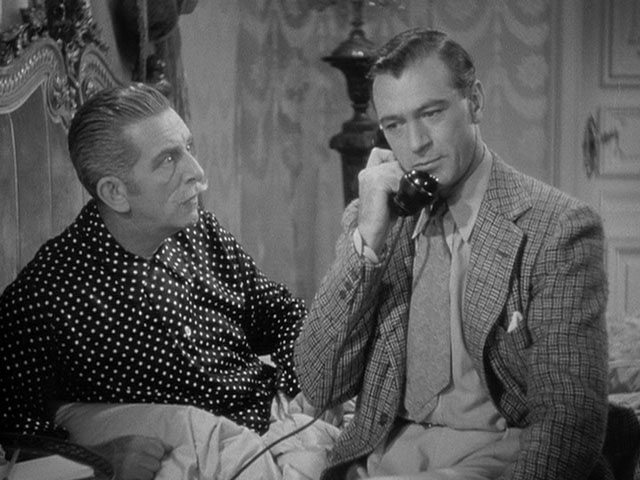
[Writer/producer Myles Connolly] and I started throwing around ideas for his picture. It was supposed to be about a character based on Tom Mix, the cowboy star of silent films who’d made scores of Westerns. Then came the talkies, and Mix didn’t make the transition successfully. Myles and I came up with a story about a silent cowboy star who doesn’t want to play a gangster role in a talkie because he wants to be loyal to his fans. He doesn’t want to disappoint the kids who are crazy about his Westerns. We called it Once a Hero, but after the movie went into production, they gave it the more commercial title of It Happened in Hollywood.

Harry Lachman, who’d been a successful painter in Paris, directed the picture. Lachman is forgotten today, but he made over thirty movies before he stopped directing in the early forties. Fay Wray played the female lead. This was after King Kong distinguished her from all the pretty blondes of the day as the one who could scream the best. the Tom Mix character, Tim Bart, was played by Richard Dix. It Happened in Hollywood was my first real credit on a picture.

Fay Wray, the one who could scream the best:
image

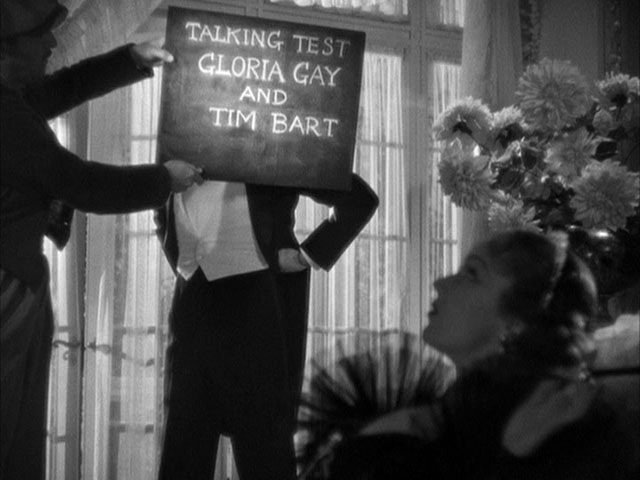
The name wasn’t changed soon enough – the Once a Hero title card made it onto the film. Celeb cowboy actor Bart is introduced screening his latest movie to sick kids, a real white-hat good-guy honest friendly lunkhead. He and his leading lady Gloria are called back to Hollywood for sound tests – she makes it but Bart, dressed in a silly period suit and made to speak out-of-character flowery dialogue, gets cut. Gloria later gets him a bit part as a gangster but he walks when the script is changed to make him a cop killer.

“The day of Westerns is over. We have to make the pictures indoors from now on.” Recalls The Naked City, which we watched the same week, finally making the pictures outdoors again.

Bart in gangster getup with his director:
image

Out of work and unpopular when a young fan comes to visit, Bart throws a party and invites all the stars’ doubles and stand-ins to delight the kid – the highlight of the picture. Some stand-ins do the voices better than others – Chaplin’s and Harold Lloyd’s have no problem since they don’t speak.

This is not W.C. Fields:
image

The improbabilities pile up… a realtor, after Bart to repossess his mansion while the party is being held, is kidnapped. Bart and Gloria tearfully confess to each other that they’re broke. The boy falls ill and the doctor says he can’t be moved. Tim hits his low point, about to reenact the bank robbery for real, ends up foiling a more serious bank robbery and shooting the criminals. Now a hero in the papers, he’s hired back by the studio, Westerns make a comeback and Tim opens a ranch for sick kids. That’s a better ending than Tom Mix got, touring with a circus after leaving the movies, marrying for the fifth time then dying when his car plunged into a ravine.

Did anybody realize that Blake Edwards made a movie in which Tom Mix (Bruce Willis) teams up with Wyatt Earp to solve a murder at the Academy Awards? It came out three months before Die Hard.

A boy in trouble:
image

Decent movie. I liked Richard Dix (who’d really been a silent film star, and not exclusively in Westerns) but Fay Wray made more of an impression. It all confused Katy, who knows Sam Fuller is some kind of badass and didn’t follow his connection with this movie. I didn’t either, honestly – assuming Power of the Press and Scandal Sheet will show off more of his style (I already know that Shockproof does).

Stephen (dreamboat Jackson Rathbone from M. Night’s Last Airbender and the Twilight series) is a black haired film student who meets Quaid (edgy dude who studies fear). Stephen’s editor is a vegetarian girl, and I remember what happens to her from the short story. Abby is a girl with a dark goth birthmark all over her face and body – I liked her best.

image

The ol’ “kid upstairs watches his family get killed by a maniac below” bit. Didn’t I see the same scene in Giallo last week? Everyone in this movie has tattoos and listens to teen hard-rock. It’s like the vision of underground youth culture put forth by 8mm or Blair Witch 2. Whoops, there’s my favorite M83 song over a clubbing/sex/film editing montage so I guess I’m guilty too. They hang up their fear-study flyers (on red paper, of course) among gratuitous ads for the new Dresden Dolls album.

A stupid, awful, violent little movie. Makes sense that the vegetarian-trapped-in-room-with-rotting-meat scene from the short story would make it to the movie intact. There’s nothing horror movies enjoy more these days than a psychological (yet gruesome) torture chamber. This also shared a hint of the ending of Martyrs, the torturer gaining enlightenment by staring into the dying eyes of his victim, but that movie somehow seemed both far more violent and less gratuitous. Stephen ends up killing everyone, gets away, ho-hum.

The writer/director has his hands on most Barker-related movies of the recent past and near future, including Midnight Meat Train, Book of Blood, something called The Plague and the upcoming Hellraiser remake.

I probably shouldn’t say I watched this at all, since I was focusing more on cutting out CD tracklists than on the screen, but I looked up often enough for this to remind me of Chop Shop. Seemed like one of the modern indie movies that are trying to outdo each other with their raw realism, with traces of The Wrestler follow-cam. I’m not so into the gritty Dardenne school, but this didn’t overdo it. Sugar dreams baseball, makes furniture, gets into the U.S. major-league farm teams, is the next big thing, then thinks he’s losing his edge so runs off to NYC to work on furniture, play small-time ball in his spare time.

Regular collaborators Fleck and Boden are both credited as director, but Fleck took sole director credit on breakthrough Half Nelson so Boden doesn’t get as much mention in the reviews. I don’t know who either one of ’em is, so it’s all the same to me.

Cinema Scope liked it, said they “pared down the dialogue, kept the plot off to the side, and invested everything in looks, gestures, space, and atmosphere.”

Clooney fires people for a living, is always flying, gives speeches about dropping all your attachments and being free of troublesome possessions, hobbies, pets, family and friends which only weigh you down and lead to death (he didn’t explain exactly how his way of free living equals happiness or longevity). Doesn’t sound like a winner of a guy, but we’re talking George Clooney here. He cruises by on charisma, intensity and confidence, never looking back or down until he crashes, hard, in love with a fellow traveler. Movie ends beautifully with him rethinking his priorities, gazing at a departure board.

Equally excellent: George’s happily-married affair Vera Farmiga (the only woman in The Departed, the two-timing psychiatrist) and George’s possible successor, super-confident young Anna Kendrick (Rocket Science, Edgar Wright’s next film).

I found nothing wrong with the movie, enjoyed almost as much as Michael Clayton. Katy liked it too, but disagrees with the award talk for George’s performance – said he just plays George Clooney. Some real call-attention-to-themselves cameo appearances by Zach Galifianakis, JK Simmons and Sam Elliott still aren’t as distracting as Clooney’s own cameo in The Thin Red Line, so I give them a pass. I guess none is distracting if you don’t know the actor. Katy misidentified Zach, and I was probably the only drooling Big Lebowski fan in the theater who got excited over Sam.

“The class of people who comes here seems to get worse every year… and this year we seem to have next year’s crowd already.” Lubitsch movies always have such great dialogue, but he didn’t write ’em and English wasn’t his first language, so why is it?

It was a bad week for staying awake all the way through movies. Shout out to Gold Diggers of 1933 (I hardly remember anything) and Ninotchka (some awful Russian spies who reminded me of the encyclopedaeists in Ball of Fire were cashing in when I checked out), both of which Katy finished after I’d fallen asleep, and Hollywood Canteen which she didn’t feel like finishing after it got repetitive (army man and buddies are fawned over by actors, including huge star Joan Leslie (who? the girl from Yankee Doodle Dandy?)). I liked this one the most, at least its first half, so I came back the next day to watch the ending.

image

Opens with a racy scene about sleeping in and out of pajamas. Bank owner, cheapskate and stickler for everything Gary Cooper meets Claudette Colbert whose father the marquis is trying to hold onto his status despite being flat broke. CC falls for Gary and they’re to be married when he confesses he’s had seven ex-wives. Angry as hell, she signs a lucrative pre-nup agreement, marries Gary then spends his money while trying her best to provoke a divorce. Hilarity ensues.

image

Gary Cooper’s gruff phonetic pronunciation of French words adds to the humor. He’s actually not bad as a comic actor. Apparently a remake of a Gloria Swanson silent film. That’s David Niven on the beach above as Colbert’s friend (and a bank employee) whom Colbert sets up as a fall guy in her divorce plot. And the great E. Everett Horton as the marquis. Great looking movie with a perfect cast.

One of the funniest movies I’ve seen all year. And it’s the kind of humor that makes the film nerd in me very happy, lovingly referencing 70’s cheapie Blaxploitation movies, even down to the shitty edits, overacting and pointedly sloppy dialogue, such as “your mama would turn over in her grave if she were here to see this.”

image

Beautiful lines like “Ain’t nothing in the world get Black Dynamite more mad than some jive-ass sucka dealin’ smack to the kids” are just icing on the cake.

image

That’s Tommy Davidson, the only star of In Living Color who didn’t go on to much of a movie career (unless Booty Call and Bamboozled count). Our star is Michael Jai White, Spawn himself, finally back on top where he belongs.

image

Plot isn’t important. BD avenges the death of his brother, wipes smack off the streets, foils Fiendish Dr. Wu’s evil chemical plot and then defeats Richard Nixon in a nunchuck battle.

image

Obviously destined to be a cult video classic alongside Wet Hot American Summer.

image

Aw, crumbs. I thought I’d written a whole lot about The Naked City already, then I click over here a couple weeks later and find a blank page. I did watch it twice (once with commentary) and check out all the DVD extras, but I didn’t write anything. So I’ll be brief.

Katy and I were impressed by this crime scene sketch:
image

Single-handedly created the police procedural, the idea that a single Sherlock Holmes/Sam Spade detective doesn’t solve a case, but rather a large team, labs and research and lots of hard work. So it’s an ensemble cast, led by young cop Don Taylor (of Stalag 17 and Flying Leathernecks, also directed Planet of the Apes 3, Omen 2 and The Final Countdown) and older wiser Irish cop Barry Fitzgerald (The Quiet Man, Bringing Up Baby). A girl has been killed, so her friend from work (Dorothy Hart), her slimy, mysterious buddy (he’s also the work friend’s fiancee: House Jameson, later appearing in some episodes of the Naked City TV series) and her doctor Howard Duff (A Wedding, While the City Sleeps) are all questioned. Turns out the buddy is a thief but no killer – real bad guy is pugilist/harmonicist Ted de Corsia (Lady from Shanghai, The Enforcer), who gets a boffo chase scene down and up the Williamsburg bridge at the climax.

Our two heroes:
image

A remarkable movie, better than I was expecting. Works as a sordid crime investigation drama, and somehow with all that complicated/groundbreaking location shooting they found the time to produce some excellent shots. From Luc Sante’s Criterion essay: “Hellinger chose as his cinematographer William Daniels, a great craftsman – once known as Garbo’s cameraman – whose career demonstrates how brief the history of the movies has been: he shot Greed (1925) at one end of it and Valley of the Dolls (1967) at the other.”

image

The producer (who also narrates) was a former newspaper man who would work on city crime scenes. He died a week after the first sneak preview of Naked City.

Jameson: a real loser
image

J Hoberman:

“The Naked City,” an otherwise conventional police procedural that, like Brute Force, was among its year’s top-grossing movies, was distinguished mainly for its Lower East Side locations and what the critic James Agee called the “majestic finish” of its chase across the Williamsburg Bridge. The cameraman William Daniels won an Oscar, but the movie was heavily re-edited before release, in part, Dassin said, because one of its screenwriters, Albert Maltz, was by then part of the blacklisted Hollywood 10.

Can’t remember the corny line the narrator said over this image:
image

As the title character in childhood flashback sits for minutes at a time on the floor while his mom quietly cooks hamburgers I’m thinking that Tsukamoto is punishing the people (fans? studio?) who insisted on a sequel to the great Nightmare Detective. I didn’t ask for this, just enjoyed the first one and trusted the director enough to watch another, but he gave me some bullshit, reminiscent of Noriko’s Dinner Table following Suicide Circle (fortunately not quite that bad).

image

Seems like horror series usually save the long, unnecessary backstory scenes for part three (or for the remake, in Halloween‘s case), but we’re gonna explore the ND’s troubled past right here in part two, making a third movie unnecessary. His mom was psychic, became afraid of everything and everybody including her own son, and finally hung herself. ND can hear thoughts as well, but he’s less afraid than perpetually miserable. Somehow that two-sentence backstory takes up half the screen time, mostly through ND’s dream sequences which don’t do much to build atmosphere or further character development, but just begin to hang around and repeat themselves.

image

Meanwhile some high-school girls (led by Yukie) terrify another girl Kikukawa (Hanae Kan, a star at 11 in Pistol Opera then the unrelated “family member” in Nobody Knows) who proceeds to haunt them Elm Street style. ND is interested because Kikukawa has the same fear issues as his late mother, gets belatedly involved after the deaths of two girls.

image

At least Shinya’s got enough energy and interest to pull off a mysterious dream-murder scene among all the boredom and backstory. Yukie and friend Mutsumi nod off in class and dream a restroom in the gymnasium. K. appears, face hidden, walks backwards towards them and tosses a glass of water into Mutsumi’s face. Y. awakens, sees M.’s head has fallen through her school desk. Shades of Elm St. 4 minus the fumbled inhaler and sucking-face joke.

image

Same video look but little of the epilepsy camerawork of the action scenes in part 1. Some cool imagery near the end, especially the N.D. stepping through Yukie’s body, dropping it like a rubber suit (which in fact it is), entering her dream to confront the out-of-control Kikukawa.

image

Mob violence must’ve been on Fritz Lang’s mind, after making M and fleeing nazis. This is my second or third favorite of his films, a powerhouse drama with a simmering Spencer Tracy, a wrong-man revenge tale. Makes me all upset every time I watch it. I always forget the incriminating word slip that reveals to Tracy’s girl that he’s still alive: it’s memento/momentum.

It’s hard to skim Patrick McGilligan’s Lang bio since it’s full of conflicting stories told by Lang himself, a notorious fabricator. It seems in the original script, Joe was an honest lawyer and after he’s presumed dead his wife (not fiancee) falls in love with a rival attorney. Joe plans to let the townsfolk/mob hang after some are convicted, but he’s discovered by the attorney/wife who run to stop the hanging. No redemption for Joe – he pulls a gun to stop them. Lang suggested Joe become more likable and the wife take over the story after Joe is “killed” so women will have more to enjoy from the film. “There was indeed a tremendous amount of social awareness in the early versions, which featured breadlines, black characters, even a settlement house where Katherine worked. [Newspaperman, The Front Page screenwriter] Cormack’s first rewrite cleared away some of the social commentary; more would disappear as he honed the script.” Lang had shot scenes to visualize Joe’s guilt: ghosts emerging from behind trees to chase him. At the first test screening, which was Lang’s own cut, “after the ghosts came on the public didn’t stop laughing.” So producer Joe Mankiewicz recut the film, removing the ghosts and shooting a final scene where Joe’s wife hugs him forgivingly (which was never in the Lang version) and the movie opened to acclaim. Lang began a lifelong feud with Mankiewicz and studio head Louis Mayer swore Lang would never work at MGM again – some way to begin his Hollywood career. Fury made a star out of Spencer Tracy and exiled Fritz Lang to make westerns and sequels.