The Wandering Image (1920)

Released seven years before Lang was a star with Metropolis, and I know those years represented some major developments in filmmaking, but I notice this wasn’t very Metropolis-like. It’s not letting the image tell the story, but seems like a string of wordy intertitles with brief motion images between them. I guess this is partly because half the film has been lost and some of these were explanation title cards added during the restoration, but I didn’t pay attention which were the originals and which were summaries.

The plot is convoluted, justifying all those title cards. Wil Brand is trying to claim the inheritance of his deceased cousin George, is about the sue the cousin’s wife Irmgard, though he has never met either of them (a weird way to introduce the characters, methinks) when he unexpectedly meets the wife on a train and offers to help her, as she’s desperately trying to escape John, her late husband’s brother, who is stalking her by telegram. It’s immediately impressive that this 1920 movie seems to be shot on moving trains and boats and in the woods and the mountains, not at a film studio.

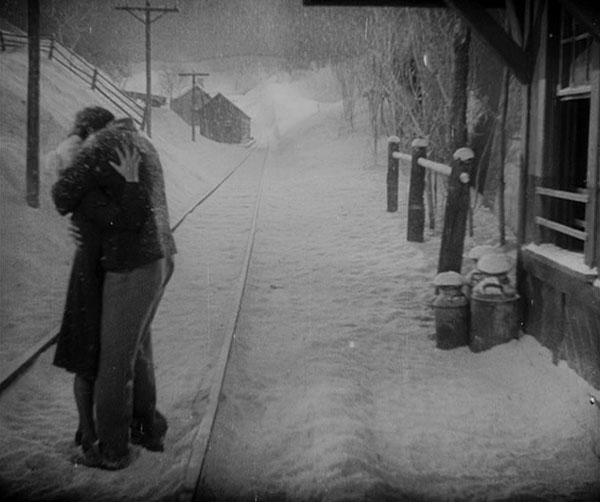
Irmgard says farewell to helpful Wil Brand:

John maliciously tells strangers that Irmgard is his mentally unstable wife so they’ll help him locate her, so Wil sends her into the wilderness. She looks totally miserable, passes a hermit shepherd who decides not to help her, then goes off into the mountains where John catches up and steals some dynamite, getting serious with the death threats now. The hermit comes to her rescue and buried in rubble together, he admits he’s her husband George who faked his own death.

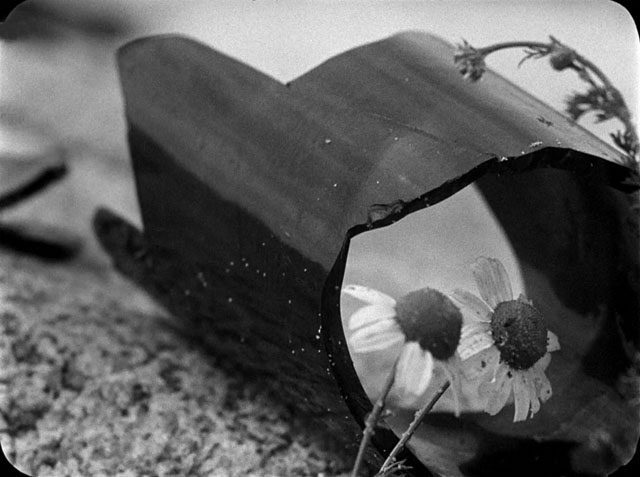
Death tolls a bell for the avalanche victims:

Flashback! She married George after becoming his secretary as he wrote books about free love. He could never marry lest he be seen as a hypocrite by his fascinated readers, since he’s about the only man in 1920 willing to live by his late-1960’s ideals. So John helped them marry in secret, but now that George is “dead”, John threatens to expose the whole sham and prove she’s legally married to him in order to claim the inheritance.

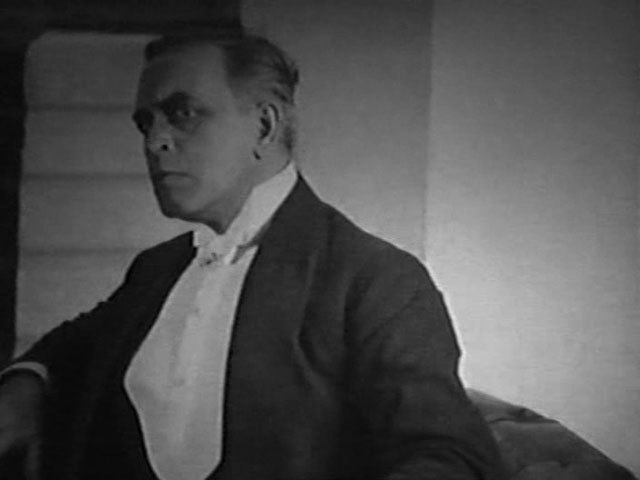
Hans Marr as John:

Hans Marr as George:

Anyway, back in the avalanche, John is atop a mountain cavorting like a madman, tossing rocks at the heads of would-be rescuers, when Wil Brand helps the couple escape. Later, a massive extended contrivance involving the virgin Mary convinces George to return to civilization, but he only stays long enough to retrieve his wife, and take her to live by his side in the mountains, leaving Wil with his promised inheritance – a happy ending, I suppose, given how the Germans used to worship mountains.

Seems like Wil Brand would barely need to have been part of the story, but then Irmgard would’ve had to be stronger and more self-sufficient in the early scenes (she still does pretty well). He was Rudolf Klein-Rogge, Thea von Harbou’s wife at the time, who also had a part in Four Around a Woman and would become Lang’s Dr. Mabuse. George and John are both played by Hans Marr, which probably seemed like some awesome cinematographic trick in 1920. Irmgard was Mia May, Joe May’s wife, who starred in his film of Lang and von Harbou’s Indian Tomb/Tiger of Eschnapur the following year.


Four Around a Woman (1921)
I watched this the next day. Watched it for real, paid it my full attention, not just screwing around on the computer while it was playing. But then how come I couldn’t make any sense of it, or keep track of any characters? Perhaps I’d had too much wine.

Harry Yquem:

Harry Yquem (Ludwig Hartau of Lubitsch’s Anna Boleyn) has the most beautiful wife you could imagine, someone tells us, but then we see the wife and I could imagine better. She is Florence (Carola Toelle), who later tells a friend that “a beautiful woman need not necessarily be true to her husband.” There’s an exchange of fake jewels, rendezvous at an underground tavern, somebody’s long lost brother, a murder and a police investigation. Anton Edthofer (also of Murnau’s Phantom) either plays twins (like in The Wandering Image) or plays one guy who pretends to have a brother, I never figured which. Charles Meunier (Robert Forster-Larrinaga of Dr. Mabuse, The Gambler) is after Florence for a while, and she’s friends with someone else named Werner, and I think it turns out she was a spy and has actually remained true to Harry. Based on a play by Rolf Vanloo, who was also adapted by Joe May for Asphalt.

Florence and one of the twins, I believe:

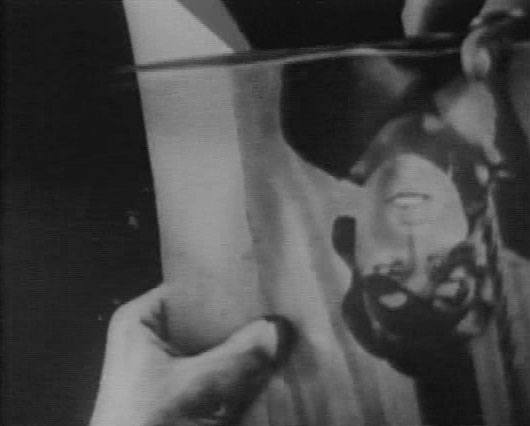
Opens with a tracking shot around a gambling table – hello, Dr. Mabuse. If the movie wasn’t such a lo-res gray blur, and ironically if there were more intertitles, I might know what is happening. There was zero music on my copy so I played “The World of Shigeru Umebayashi,” which I loved but probably didn’t help my attention level since it wasn’t meant for this kind of film. The only parts I got really excited about were when I saw a 1920 Boston Terrier, some film leader and a test pattern between the first two acts, a man with a monocle, a couple of neat shadowy camera shots, and when this happened:

I’ve enjoyed all the Frank Borzage movies I’ve seen so far, so this week I watched all three that he released in 1929. Not only in the same year, but according to IMDB they all came out within a two-month period – can that be right? I’ve only seen seven feature-length movies from 1929, so now 43% of them are by Borzage.


Lucky Star

image

Hunky, brave Tim (Charles Farrell, of course) meets a cute girl (Janet Gaynor, of course), then goes off to war in France and gets his legs blown off delivering food to the troops in a crappy horse carriage whilst his old boss at the telephone company takes the proper army truck to meet girls. There is no such thing as subtlety!

Chuck and Big Boy fight atop a telephone pole:
image

Janet watches, impressed:
image

Back home, Tim’s boss (Guinn “Big Boy” Williams of a couple Lang and Renoir movies) is passing himself off as a brave sergeant in town and wheelchair-bound Tim is making friends with the dirty, savage young girl (TOO young, as Tim eventually finds out, backing away slowly). But the girl’s parents promise her to Big Boy. Can Tim rise from his wheelchair for the first time since the war and crutch-walk into town (in the snow) in time to stop the marriage and claim the girl as his own, publicly revealing Big Boy to be a war coward along the way? Yes!

Big Boy and Janet’s mom Hedwiga Reicher:
image

Paul Fix (After the Thin Man, El Dorado, Red River), who sadly never worked with Tom Mix, is a buddy of Tim’s, his only human contact besides the girl. That’s probably him driving by, as Tim leans on a crutch at top of the frame.
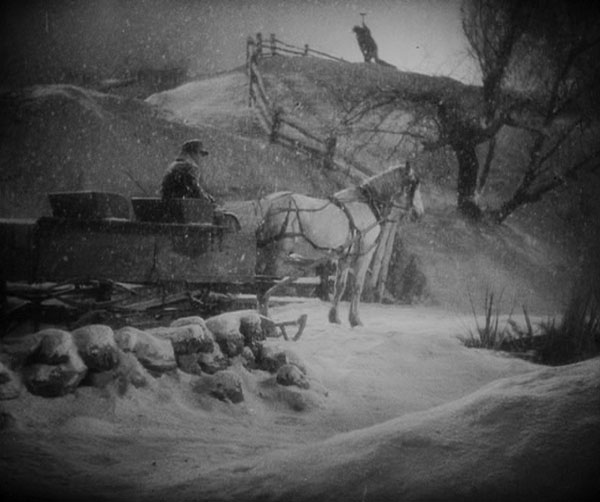
image

Shot as a part-talkie with dialogue and effects, but that version has been lost, leaving behind a silent masterpiece. As silly as the plot can be, I got caught up in the (melo)drama of it all and the glorious visuals. Also loved how the film is sped up to make Tim look more wheelchair-proficient than he actually was.

image


They Had To See Paris

Good ol’ down-home mechanic Will Rogers (I liked him better as Judge Priest) strikes it rich as an investor in the town oil field. His wife acts just like Effie in Ruggles of Red Gap, packing up the family (unattached older son Rod, and daughter Opal who’s in love with a hometown boy) and heading to Paris to get them all fine clothes and high culture.

Rod with Christiane Yves, probably:
image

What would a Borzage movie be without beautiful cinematography, fluid camera movements and heartfelt performances? Well, it would be this one. Sound pictures were in their clunky infancy, and even a prestige director like Frank couldn’t make much of a talkie in 1929. No music, but could’ve used some – full of stagey, awkward, staticky silences in the dialogue. It’s also his first comedy that I’ve seen, and I wouldn’t say it exactly had the Lubitsch Touch. But it’s not late-Keaton bad, just disappointing.

image

Poor Will is saddled with increasingly unlikable wife Irene Rich (Lady Windermere’s Fan, The Champ, Fort Apache), aristo-dating daughter Marguerite Churchill (Dracula’s Daughter) and wannabe-bohemian son Owen Davis Jr. (All Quiet on the Western Front). Will raises some hell, wearing a suit of armor to a party and having a non-genteel, drunken conversation with guest of honor Grand Duke Mikhail (above), but eventually his family has him depressed so he fakes an affair with tedious slut Fifi (below) to horrify his family into returning home.
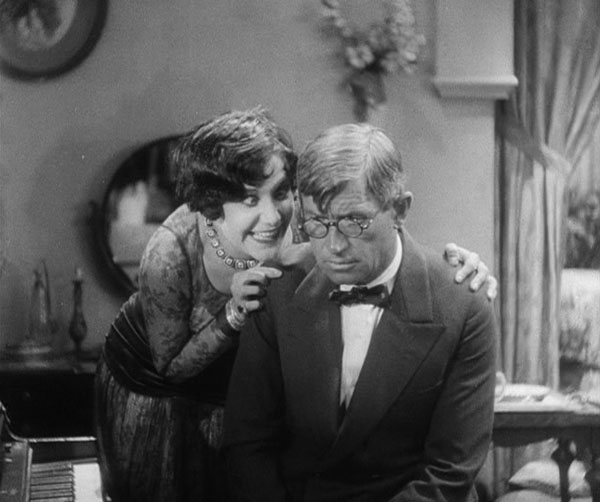
image

Unfortunately this wasn’t a career-killer for the grating Fifi D’Orsay. She appeared in They Just Had To Get Married, then in Joanna’s favorite film What a Way to Go. TJHTGM isn’t a sequel to this (though it sounds like one) but apparently They Had To See Paris was enough of a hit to engender follow-ups, first the semi-sequel So This Is London then the full-on sequel Down to Earth, both of which starred Will Rogers and Irene Rich (and Grand Duke Mikhail even returns in Down to Earth). This is some corny flick, and with Borzage (and let’s also blame the writer Owen Davis Sr., young Ross’s dad) unable to hide his cheesy melodrama behind the artifice of title cards and artful silent cinematography, it just sits out stinking.

Family reunion:
image


The River

Another gorgeous Borzage silent about simple-minded youth in love, ho-hum. This one is a different viewing experience because it’s incomplete, reconstructed with stills and titles a la the TCM version of Greed. Something else that’s different: Charles Farrell plays opposite Mary Duncan, not Janet Gaynor. Duncan (also of City Girl, 4 Devils) lived till the 90’s but only acted through ’33, and was obviously better-suited to this part than Gaynor, since the character is not at all the innocent sweet girl.

image

Farrell, polite and capable but so dumb, builds a riverboat to see the country but stalls at a dam for the winter. There are six more trains into the city where he plans to spend the season, but busying himself with skinny-dipping and wood-chopping, he can’t seem to manage timetables and misses them all. Now it’s just Farrell and somewhat cruel sexpot Duncan. Finally she stabs him and he proposes to her, in that order, but she laughs off the proposal until he almost dies in the cold.

image

Take it, D. Callahan:

The fragment ends with an extraordinary sequence that stands with Borzage’s best work. Allen John has chopped wood all night in the snow, trying to prove that he’s man enough for Rosalee, and he falls deathly ill. Snow is rubbed all over his bare chest in an effort to break his fever, but his heart stops beating. Desperate, realizing how much she loves him, Rosalee climbs into bed with Allen John and tries to warm him alive with her body. Borzage films their faces in close-up with a religious intensity reminiscent of Dreyer, lingering on Farrell’s beatific eyes as his soul slowly seeps back into them. The communion of bodies here is both a rebirth and a renewal, of Allen John’s life and Rosalee’s hopes.

image

Just then, Mary Duncan’s old boyfriend, the murderer Marsdon (Alfred Sabato, who directed the first talkie in Italian) escapes from prison to reclaim her from the weakened Farrell, but fortunately hulking deaf-mute Sam (Ivan Linow, of the Unholy Three remake, who has played characters named Rako, Red, twins Loko and Boko, Tossilitis, Slumguillion and Heinie) appears just in time. The closing titles are outrageous:

image

image

IMDB mentions lost characters The Miller and Widow Thompson, but the fifth lead of the surviving footage has got to be Marsdon’s pet crow, left behind to watch the girl while he’s imprisoned. I’m always glad to see a bird as a major character.

Mary Duncan with crow:
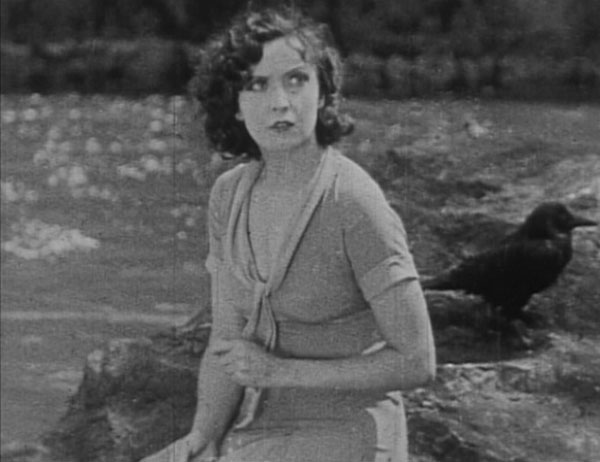
image

I told Katy it was more a string of comic episodes than a consistent story, but I badly misremembered. Very consistent indeed… almost too consistent, with some mopey bits and plot necessities dragging down the comic momentum. But Chaplin’s goal was presumably not to make just the funniest film, but something both funny and true.

From A. Vanneman’s terrific Chaplin articles in Bright Lights:

Charlie has three big men to contend with in The Gold Rush, Tom Murray as “Black Larsen,” Mack Swain as “Big Jim,” and Malcolm Waite as “Jack Cameron.” Wolf Larsen scarcely has a personality. He is merely a symbol of the savagery of nature. He murders two Mounties and leaves Big Jim for dead, before Nature herself, reclaiming her own, sends him plunging to his death in an avalanche.

Big Jim is Chaplin’s partner/rival searching for gold. They don’t do much searching, really, just hide out in murderer Larsen’s cabin attempting to keep peace and stay alive through the cold and hunger. Among the danger and misery we get Chaplin turning into a chicken, a cooked and eaten shoe and the famous cabin-on-edge-of-cliff number. Big Jim found plenty of gold at the start of the film but can’t get back to it, and when he does Larsen clubs him (amnesia!) before heading for death by avalanche. Jim, dazed, wanders towards town and isn’t seen for 45 minutes.

Charlie takes the second half with a love story, pining for Georgia Hale who makes fun of him, then feels sorry for him, and finally decides she loves him moments before Charlie reveals he’s become a millionaire by helping Big Jim re-find his gold. Not quite a City Lights ending but it’ll do.

More Vanneman:

“Oh, you’ve spoilt the picture,” exclaims the cameraman when Charlie and Georgia kiss, an inside joke based on the cliché that in Chaplin’s pictures he never got the girl. When Chaplin re-released The Gold Rush with a soundtrack in 1942, he cut out the kissing scene for some reason, although it’s still clear that Charlie and Georgia are going to get married.

Second time I’ve avoided the re-release, which is shorter and supposedly has Chaplin’s bemused voice narrating instead of the intertitles. Sounds ghastly, but maybe I’ll be on a Chaplin completist kick one day and check it out.

Zweigroschenzauber (1929, Hans Richter)
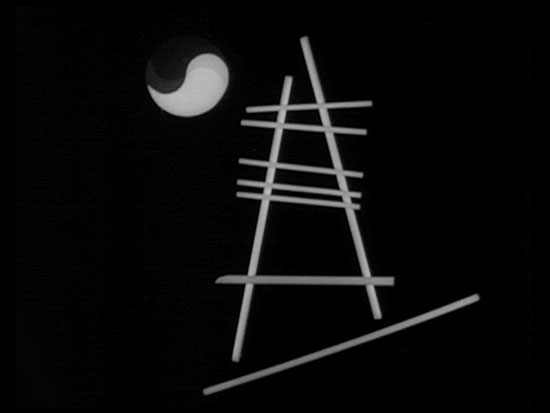
The intertitle says “Twopence Magic: a commercian in picture rhymes.” Movie shows us a thing, then crossfades to a similar-looking thing. Much better than I’ve made it sound.
image

Dada (1936, Mary Ellen Bute & Ted Nemeth)
Shapes in motion, quick.
image

Synchromy No. 4: Escape (1938, Mary Ellen Bute & Ted Nemeth)
A Bach music video, with black bars perversely imprisoning the viewer away from the orange and blue color geometric spectacle beyond.
image

War, etc. (1983, Leo Schatzl)
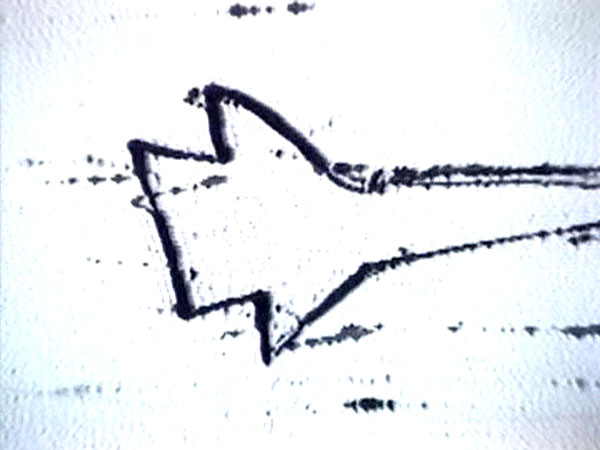
Crude drawings of planes, horizontal scratches give the appearance of speed, sound fx from old arcade games. Mix it up with some TV interference. Part of an installation which surely annoyed many (unless the sound was turned down).
image

OXO Wonder Vision (1996, Leo Schatzl)
Looks/sounds like the window of a plane flying through a cloud. Then the plane slowly sinks into a giant coffee pot. It must be endless fun to be an avant-garde video installation artist.
image

The Endless Sandwich (1969, Peter Weibel)
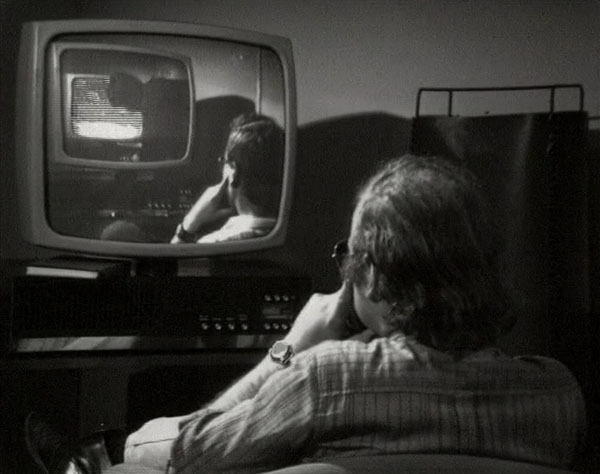
Pretty much this shot, a guy watching a guy watching a guy, until the TVs start staticking from the inside out, until our own TV statics, closing with a quote by the filmmaker.
image

Imaginare Wasserplastik (1971, Peter Weibel)
Meta-video-art using “television as a time-space switch,” only a minute long. Not great, but so far I like this guy better than Leo Schatzl.
image

Fluxfilm 1 (1964, Nam June Paik)
“pranksters”, “playful artists”, “ephemeral humor”: the Fluxus movement sounds like fun. But then the first film I watch is a pure white screen and silent soundtrack. What’s worse, someone has punk’d my DVD player so the clock is moving at half-speed.

Fluxfilm 2 (1966, Dick Higgins)
Still silent, closeup of a man’s mouth chewing. Okay, I’m done for now.

Methuselah (1927, Jean Painlevé)
The title character is a dog-masked shoe-obsessed megalomaniac. Painlevé himself plays Hamlet, and surrealist poet Antonin Artaud found time to appear in this between Abel Gance’s Napoleon and The Passion of Joan of Arc. Doesn’t really make sense on its own – five filmed episodes that were projected during a stage play, strung together here with a stereotypical silent-film piano score.

The Vampire (1945, Jean Painlevé)
Portrait of the South American vampire bat set to happy jazz. They put a bat and a guinea pig in a cage and let the one eat the other. Don’t think I’ll be showing this one to Katy.

Bluebeard (1938, Jean Painlevé)
An opera version of Bluebeard, comically told with awesome and elaborate claymation.

The High Sign (1921, Keaton & Cline)
Buster steals a cop’s gun, runs a shooting gallery, becomes a rich guy’s bodyguard and becomes the same guy’s hired killer. Gags involving ropes and dogs and a house full of traps – one of BK’s funniest and most complicated shorts. So many film scraches I thought it was supposed to be raining. Features Al St. John (the clown who would one day be known as Fuzzy Q. Jones in a hundred westerns) and the gigantic Joe Roberts.
image

One Week (1920, Keaton & Cline)
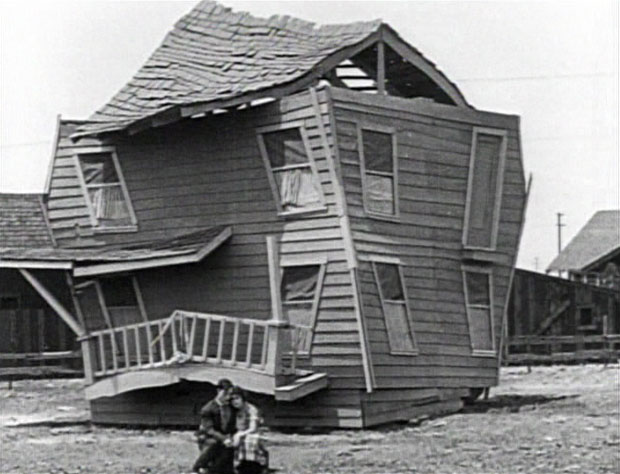
Opens with the same calendar we just saw in The High Sign and Buster getting married… nice transition from the last movie except that it’s a different girl. The one in which he builds a house. More acrobatic stunts than the previous movie – the two make a good pairing. Ooh, a meta camera gag and some near-nudity. I think more work went into this than all of Go West.
image

A Wild Roomer (1927, Charley Bowers)
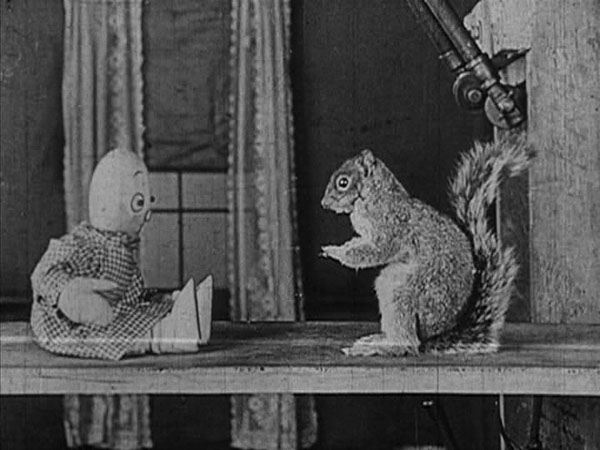
Charley (who not-so-subtly calls himself an “unknown genius” in the intertitles) makes a God Machine which creates self-aware puppets.
image

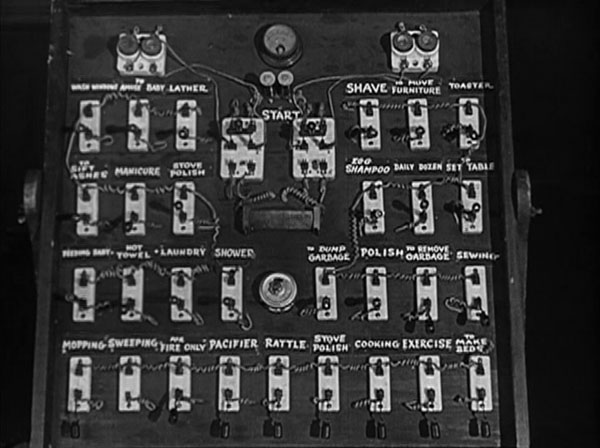
Actually I’m not sure what that was about, besides being an extended stop-motion demonstration – the machine is supposed to take care of all your household chores. As with both of the other Bowers films I’ve watched recently, he has unquestionably made an excellent machine, so the conflict comes from the complications from having to show it off to others (in this case a cranky saboteur uncle with an inheritance at stake).
image

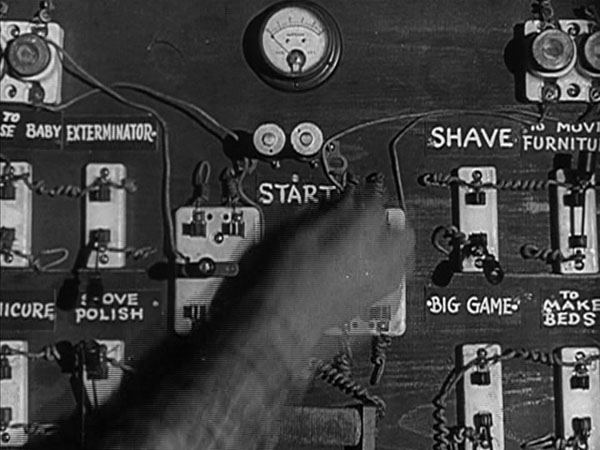
Zooming in further one finds… a baby exterminator??
image

Fatal Footsteps (1926, Charley Bowers)
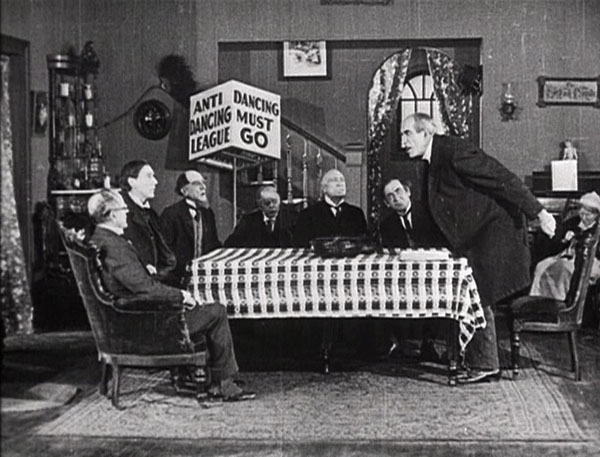
“If there were a tax on idiots, Tom would send his dad to the poorhouse.” Well that makes up for the “unknown genius” line. Charley is trying to learn the Charleston to win a contest in the very house where the Anti-Dancing League (motto: “mind thy neighbor’s business”) is meeting. Just when I thought it was gonna be that simple, he invents some mechanical dancing shoes – stop-motion ensues. The shoes get mistakenly worn by Charley’s relative who offends his fellow Leaguers, then Charley wins (and escapes) the contest.
image

Even fish are learning the Charleston:
image

Haunted Spooks (1920, Hal Roach/Alfred Goulding)
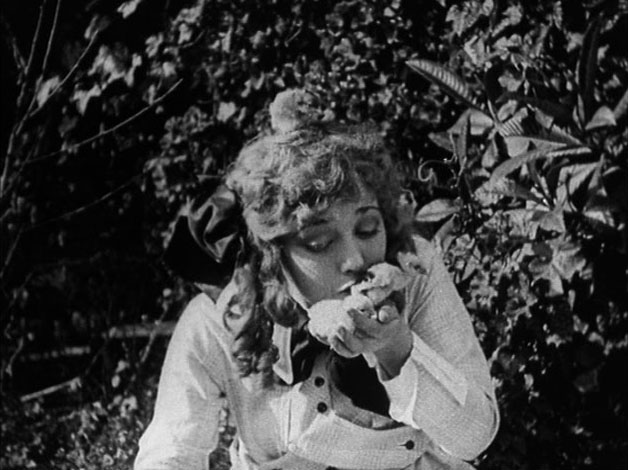
The girl is first introduced kissing baby birds, so she’s got my sympathy.
image

Her grandfather dies – she gets the house and inheritance if she lives in it for a year with her husband – but she has no husband! I thought I’d be in for 25 minutes of haunted-house hijinks, but the husband problem has to be solved first (Harold Lloyd is rejected by his rich dream girl, picked up by our girl’s lawyer while attempting to commit suicide) so we don’t get to the house until minute 17. After introducing some superstitious-negro stereotypes, the girl’s crooked uncle proceeds to “haunt” the house to drive her away and steal the inheritance.
image

image

Cute movie, but what I liked best were the illustrated intertitles.
image

Chess Fever (1925, Vsevolod Pudovkin)
Fever has gripped the whole town. Chess breaks up a relationship, drives two people to attempted suicide, then happily reunites them. I guess from important-sounding Pudovkin, with his grim-looking video covers, I wasn’t expecting a comedy, but this was light (despite all the suicide) and wonderful. Wikipedia says it includes documentary footage of the 1925 Moscow chess tournament.
image

Charleston (1927, Jean Renoir)
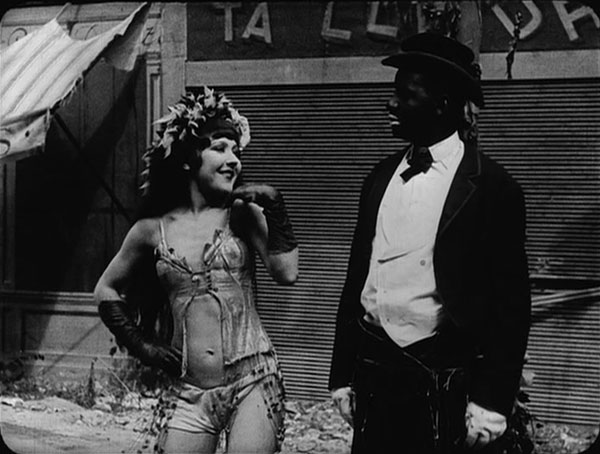
A scientist from central Africa (a white guy in blackface and a tuxedo) flies in his aircraft (a marble on a string) to post-apocalyptic Paris, runs into a sexy Euro-girl and her pet monkey. The girl (Catherine Hessling, Renoir’s wife) teaches him the Charleston, filmed in cool slow-motion. Maybe this wasn’t as surreal in ’27 as it is today. The first (credited on IMDB anyway) film produced by Pierre Braunberger, who would go from Renoir to Resnais/Rivete/Rouch to Truffaut/Godard to Shuji Terayama.
image

The Little Match Girl (1928, Jean Renoir)
New year’s eve, a poor girl (Catherine Hessling again) can’t sell any matches, starves/freezes to death on the street after hallucinating a better life. The first Renoir film I’ve seen with stop-motion (there’s only a tiny bit) but not the first to focus on clockwork machines. Also reverse and slow-motion and a horse race through the clouds – much more ambitious than Charleston. In her fantasy she plays at the toy store, shrunk to toy size herself, and meets a handsome soldier who looks suspiciously like the handsome cop who was nice to her in the snowy street. It’s all fun and games until Death comes and wrestles her from the soldier. Both these shorts were shot by Jean Bachelet, who would be cinematographer on three separate films of The Sad Sack including Renoir’s.
image

November was Shorts Month! All shorts were watched at home on video, except for an outing to the November edition of Bizarro Saturday Morning, at which I fell asleep during the only theatrical short, tired out by episodes of Casper, Ultraman and Rocket Robin Hood, so it’s sadly not represented here.

The Policemen’s Little Run (1907, Ferdinand Zecca)
Tedious, undistinguished little romp, wherein cops chase a dog for stealing food, then the dog chases the cops. Fakey backgrounds ensue. Ferdinand Zecca, director of Kissing in a Tunnel (not the 1899 original or the 1899 remake, but the 1901 remake), later co-directed one of the first feature-length (well, 45 minutes) films.
image

Troubles of a Grasswidower (1908, Max Linder)
The Mr. Mom of its time. Dude is an asshole so his wife leaves him, goes home to mother. Dude then fails to do the simplest household tasks until everything is in ruins and his wife returns to shame him. Terrible! Well, it’s slightly more bearable than the cops chasing the dog. Linder must’ve played the widower; he wrote and starred in plenty more shorts, such as Max’s Hat, Max Takes Tonics and Max and Dog Dick (?!)
image

Winsor McCay, the Famous Cartoonist of the N.Y. Herald and His Moving Comics (1911)
Now that’s more like it. Winsor announces he’s going to make an animated moving picture, some blowhard dudes laugh at him, then he damn does it and it’s brilliant. One should never doubt the author of Dreams of a Rarebit Fiend.
image

Winsor at work:
image

Dream of a Rarebit Fiend (1906, Edwin S. Porter)
Most of the movie is the guy drinking, eating and going home, with finally some actually dreaming there at the end. His shoes fly off on strings, some stop motion, some Exorcist bed-bucking and Little Nemo bed-flying. The best part, with little devils beating him from above, looks like a Melies-lite advertisement for headache powder. One assumes he’s speaking the punchline at the end, but there’s no intertitle. Comic strip was better!
image
Winsor would later create his own animated Rarebit films, and Melies would make the probably unrelated Dream of an Opium Fiend in 1908.

The Telltale Heart (1928, Charles Klein)
I love total Caligari-ripoff expressionism in cinema, and there isn’t enough of it so I was happy to find this. Completely excellent, probably my favorite Telltale Heart yet. I don’t mean to disparage the recently-watched Ted Parmelee animated version and I do miss the rich voice of James Mason, but everything works here – the Caligari sets and fonts, the acting of the lead fellow, his crazy-POV version of the inspectors and the montage and effects (overlays and mirrors).
image

Depending who you believe, this was either directed by Klein (a writer/director up to the 40’s) or Leon Shamroy (cinematographer through the 70’s who worked with Fritz Lang, also shot The Robe, Caprice and Planet of the Apes).
image

Fall of the House of Usher (1928, James Watson & Melville Webber)
Every version of Telltale Heart re-tells the story with narration or titles, but this film tells the Usher story through mystifying visuals… and since I’m not familiar with the story I still don’t know exactly what happened, but boy was it awesome.
image

What if cinema had ended up looking more like this? What if poets were directors? The mind boggles. I’ll bet Cocteau loved this (or despised it since he didn’t think of it first).
image

dream sequence from When The Clouds Roll By (1919, Victor Fleming)
A semi-remake of Rarebit Fiend! Douglas Fairbanks eats some Welsh rarebit (melted cheese on toast) along with mince pie, lobster and an onion. Not a drunken fool like the original rarebit fiends, DF is conned into eating the nightmarish midnight snack by a mad doctor. He then runs around doing stunts on horses, trampolines and camera-trick houses, pursued by ghosts, a party of society women and giant costume versions of the foods he ate. I am definitely dressing up as rarebit next halloween.
image

Oramunde (1933, Emlen Etting)
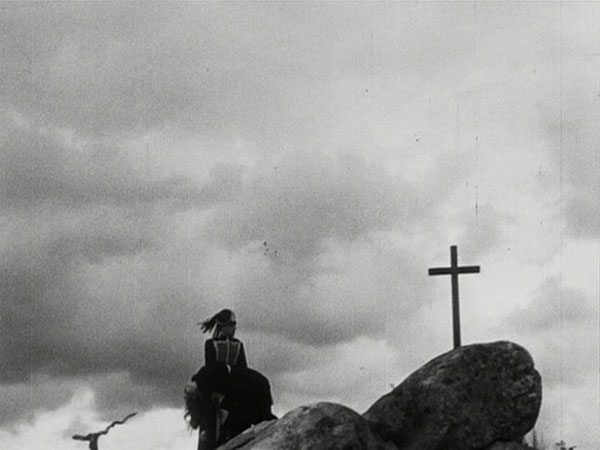
Woman in a too-long white dress dances on the rocks to express her sadness. Made me sad so I guess it’s pretty good.
image

Hands (1934, Ralph Steiner & Willard Van Dyke)
Hands, falling, against black, doing stuff. Montage of hands doing stuff on location. Hands getting money for doing stuff. Hands buying stuff, taking vacation, getting married to other hands. Counts as propaganda somehow.
image

More 16mm screenings from Clay, Halloween-themed this time. Clay showing seasonal shorts reminds me of Robyn Hitchcock’s halloween show where he joked that since he’s only playing songs about ghosts and death, nearly half his catalog is disqualified.

The Skeleton Dance (1929, Walt Disney) was the first in the Silly Symphonies series, with good music-visual sync, but too much repeated animation. No spoken/sung dialogue, wordless skeletons playing in a cemetery until the sun comes up.

Runaway Brain (1995, Chris Bailey) is an excellent, fast-paced Mickey Mouse short with a mad scientist voiced by Kelsey Grammer, beaten for an academy award by Wallace and Gromit. Seems like nobody around me had heard of this before.

The Tell-Tale Heart (1953, Ted Parmelee), animated with some abstract imagery, overlapping shots and sharply-drawn characters. Has a deservedly high reputation, but beaten for an oscar by Disney’s Toot Whistle Plunk and Boom.

Betty Boop’s Hallowe’en Party (1933, Dave Fleischer) – always great to see a Betty short. Her party is pretty tame – kids bobbing for apples and singing like the birdies sing (tweet, tweet tweet) – until a bully shows up and she attacks him with her secret cache of ghostly evils. Full of amazing animation and visual ideas, beautifully synched to the music. I gotta get me a whole pile of these cartoons someday. I asked Wikipedia when the apostrophe disappeared from “hallowe’en” but it didn’t know.

Naturally the show was also full of TV episodes and classic commercials – Count Chocula vs. Franken Berry, of course, also a kids vehicle that looks suspiciously like the Wacky Wheel Action Bike (“you can’t ride it! you can’t ride it!”) and an awesome PSA warning kids to stay away from blasting caps.

Of the TV shows, we’ve got a Popeye the Sailor episode where an evil robot-popeye robs banks, the adventures of Goodie the Gremlin, who helps people invent the steam engine, airplanes etc. instead of tormenting people like the other gremlins want, a Spider-man episode where Green Goblin gets his hands on a book of voodoo spells, and a hilarious, surreal episode of Ultraman (featuring benign fluffy chattering Pigmon monster in a recording studio, giant plumed lizard monster with heat-seeking feather missiles, and the usual bonkers dialogue). Then the lower-tier corny garbage shows: a cartoon Sinbad the sailor, some dimwit monster who shoots smoke out of his head, Beany and Cecil meet the invisible man (1962, produced by a post-Warners Bob Clampett) and a Hal Seeger-created short called Batfink, in which BF and his dim pal Karate fight a magician.

Not full of great gags. Seems like a feature to show off Keaton’s comic improv genius – but where’s that genius? Give Keaton a lasso and… the rope gets tangled and his hat falls off. Give him a basket of eggs and… he puts the eggs down then mistakenly steps in them. Not groundbreaking stuff here.

image

Mercifully short feature about Keaton taking Horace Greeley’s advice, moving west and falling for a cow. He hops trains, learns how to shoot, fails to learn how to milk a cow or do anything useful. When his host rancher’s herd is derailed by a rival, Buster drives the cattle through the city to the yards, saves the day, and gets to keep his own favorite cow as a reward (not the rancher’s cute daughter – the cow! ha!).

image

The city scene is the big showpiece. Has its moments (Keaton in a costume shop dressing up as the devil to get the bulls to chase him), but most of the humor derives from how unreasonably afraid of cows the townsfolk are. My favorite visual bit was early on, the movie demonstrating the passage of time by the length of his package of food as he rides the trains. After that I’m afraid it wasn’t entertaining enough to keep me awake late at night.

image

IMDB says a post-scandal Fatty Arbuckle had a cameo in the city. Guy who played the ranch foreman drowned filming one of his next movies.

image

Grand duke Ramon of some little island (Abacco), not a thrifty fellow, is introduced throwing money into the water for diving natives, while his white-bearded treasurer Paqueno is taking a meeting about the island’s huge debts and given three days to repay them. I thought the rest of the movie would be between the duke and his finance guy, but white-beard disappears after he screws up in chapter four, replaced by a more charismatic character.

Meanwhile, a businessman named Bekker wants to buy part of the island to mine sulfur, which would clear the government debts but would turn this tropical paradise into a stinky sulfur pit, so the duke declines, leading Bekker to instead contact the local easily-located anti-government conspirators.

Bekker and the money man:
image

The Duke’s proposed way out of this mess is the love letter he’s received from Russian Crown Princess Olga, who wants to marry our duke despite her family’s objections. She finally heads to Abacco, “pursued by a descendant of Ivan the Terrible,” and bumps into…

image

Professor Philipp Collin, “a gentleman of changing names and professions,” our movie’s new hero! A master of disguise and trickery who has just broken into a blackmailer’s house and retrieved the purloined royal love letter (long story), he puts ugly old-woman makeup on the princess and pretends she’s his wife.

Lady and the duke:
image

The princess manages to marry our duke, Collin makes a fortune in bond trading through his inside-info on the royal goings-on, and Bekker and the conspirators are easily defeated after they try to hang the duke.

image

Amusing comedy, packed with plot left-turns, broken into chapters so it plays like a serial. A few exciting motion shots (camera scrambling onto land from a boat). Movie is much better than its title.

A Nazi collaborator made a sound remake ten years later, after Murnau’s death

image

Grand Duke Harry Liedtke, who’d appeared in early Lubitsch films, was killed at home by Russian soldiers in ’45. Professor Alfred Abel, star of Metropolis and Phantom, was also in a Sirk film and tried his own hand as director. Princess Mady Christians came to the U.S. in the 30’s, played in the remake of Seventh Heaven and portrayed an old Joan Fontaine in Letter From an Unknown Woman.

image

Walter Rilla (which one was he again?) fled the nazis in the 30’s, returned later and played in the 1960’s Dr. Mabuse pictures. Max Schreck, after Nosferatu and The Street, plays one of the conspirators (which one?)

My favorite intertitle:
image

image