Would you believe that this is the hundredth May ’68 movie I’ve watched, and the first to explain how “May ’68” started and what it was about and how it ended? Sure I could’ve wikipediaed it, but I figured cinema would provide all answers, and eventually it did. This is an essay film using only preexisting footage, mixing archive footage from Paris with thoughts on the filmmaker’s mom visiting China and on other revolutions, examining subconscious behavior of the (usually anonymous) camerapeople capturing history and noting how the framing reflects their political positions. The movie is more emotional that this academic description might sound, Joao’s soft-spoken narration leading us from one country and era to another and back again whenever it feels right, without a preconceived structure, often letting large chunks of footage play out. Anyway, I take it this didn’t open in a ton of cities, and we got it for a week plus a Q&A with the director, so sometimes it’s alright living in Lincoln.

The first fifteen minutes of this ninety-minute movie was one long story about when Hampton Fancher was out of work, dating Teri Garr and getting into trouble. I was worried, but I’m here because of Experimenter, and don’t know who Fancher is, really, and I’m home alone on a snowy day, so let’s see where this leads. This segment is heavily illustrated with clips of performances by Garr (who I recognized) and Fancher (who I didn’t, because we don’t see him until part three).

Part two is text on screen and still photographs, covering Fancher’s family life, running away at 15 to become a flamenco dancer, marriage to Lolita star Sue Lyon, and acting career. Next, we see him in the present, and it’s another fifteen-minute, barely-relevant story, ending with his cheating death because he felt bad about dumping a girl while on a press tour.

“Actually, this story is so terrible I’m not gonna tell it.” Fancher’s best friend Brian Kelly (star of Flipper) is paralyzed while out with Fancher and has to quit acting. Then a short segment about Fancher’s attempted screenwriting career, a failed meeting with Phil Dick. All of this finally comes together majestically in the final segment, as a series of coincidences, friendships, bizarre interests and weird life choices culminates in Fancher writing Blade Runner. In the end, this doc was better than Blade Runner 2049 (which Fancher also wrote!)

A treasure trove of film prints, largely of silent movies thought long-lost, were discovered buried in Dawson City, but the films weren’t any good – dramas so generic that Morrison has fun editing together scenes from them, changing the source film with every shot and showing how it still coheres. So rather than spotlight the films on their own merit, we follow the fascinating story of Dawson City, its famous former residents and unfamous locals, illustrating this history lesson with clips from the discovered films and others, and showcasing some astounding glass-plate photography from the era under discussion. And of course we’re not limited to the most well-preserved films – different kinds of decay and destruction are discussed and displayed. Dawson City was a primary Canadian gold rush town, so it’s full of sordid and enterprising stories, and he sidetracks into any exciting bit for as long as it takes. Exciting is relative, though – Bill’s into drawing things out, slowing them down to the wavelength of the great Alex Somers (Sigur Rós) score, my favorite yet in a Morrison movie. What could’ve been a one-hour informational PBS special becomes a two-hour feature, and Katy wanted things to move more quickly.

He did the dumb thing… and then he did it again and again. An instructive doc, with a camera crew given full access to Anthony’s New York mayoral campaign as he’s recovering from a recent scandal and hit by a new one. It’s also very frustrating because it’s so mired in the scandal that I have no idea why anyone would vote for Anthony, who he is, or why all these poor campaign workers would be working to get him elected. Katy wanted to see this a while back but I was mad at the dude for doing the dumb thing yet again, infecting the presidential campaign his wife was working on (and landing him in federal prison), so we delayed for a year.

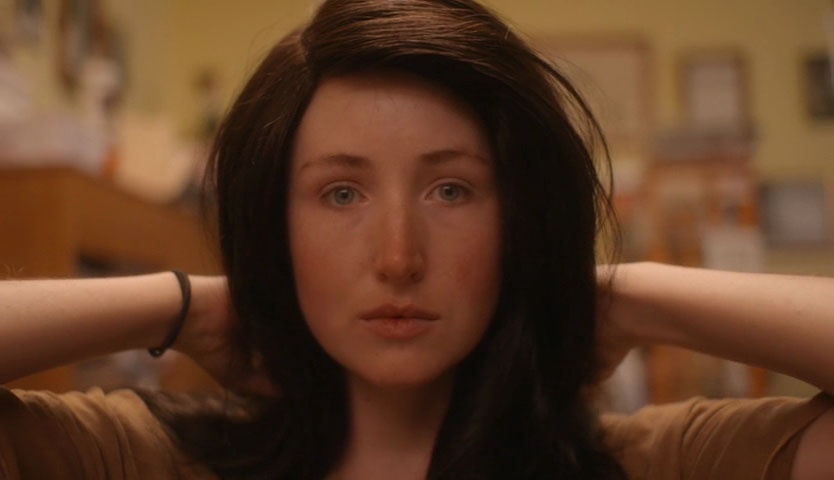
Watched right after Christine. I didn’t love Greene’s Actress (or Christine), but they made for good prep-work for this masterpiece whatsit. A sort-of documentary following Kate Lyn Sheil as she preps to play Christine Chubbuck, presumably in a feature along the lines of Christine, though we see few any details about the feature and nobody’s helping her with character prep.

The first movie I’ve seen to film its own crowd release notice:

Kate’s in Florida where it happened, and locals seem to have no memory of Christine or her fate. She goes through library microfiche, reads books about suicide, does some serious tanning and gets fitted for a wig, goes gun shopping and finally gets a peek at some archive footage of the real Christine. It all leads to a joke of an ending, Kate finally building up the nerve to shoot herself, but the entire process leading up to that was fascinatingly staged (or “staged”).

Opens with Etaix introducing the idea, explaining the sheer amount of film that was shot for this project, then being attacked by a giant flowing mass of unruly film stock. Unfortunately this turned out to be the best part.

The rest is an interview film, gauging the man on the street’s attitudes on sex and violence, entertainment and celebrity, TV and advertising, world events, personal relationships, and Pierre Etaix. Interviewees are French people on holiday, just after May ’68, which doesn’t really come up. He spends longer than necessary at some kind of open-mic festival. It’s all like the least interesting aspects of Chronicle of a Summer and À propos de Nice mixed together, with some fun/ironic editing, but not enough to make it worth sitting through all the amateur singing performances.

In-depth into the shower scene in Psycho, how it was done, why it was important, context and reactions. Entertaining, and full of film clips from Psycho and others, celebrity and critic talking heads, and even some fun reenactments. Definite highlights are Marli Renfro (Janet Leigh’s body double), and Elijah Wood and his buddies having a great time. The director previously made docs about zombie culture, Star Wars fans’ opinions of George Lucas, and the soccer-prediction octopus.

There are nine days left in the year and I only finished my SHOCKtober posts yesterday, so I’m gonna have to rush some entries… not that I had an awful lot to say about this movie either way.

The story of Brittany, who is an incredibly good shouter, and other Ferguson residents in the wake of the Michael Brown shooting. Somehow I got the impression from the description that this was assembled from cellphone footage shot by the participants, but no, it’s a proper doc with a camera crew and everything. Also the second T/F’17 movie we’ve seen to use the “say his name” song. I don’t like to use words like “powerful” when describing a movie, but it’s powerful, and makes you not want to hang around any cops for a while.

Nuclear war was in the air this month, so I double-featured two hour-long films.


Atomic (2015, Mark Cousins)

A bunch of period footage cut with no sense of rhythm… not sure what this adds to the conversation. It’s not fair that Cousins gets to use and manipulate the music of Mogwai, instead of vice versa. It’s diverting, at least.


The Bomb (2016, Kevin Ford & Smriti Keshari)

Started out so promising… scientific documents expertly composited over footage that was mostly unique from the other movie. Then it devolves into mumford-scored bomb montages with a long segment from that old standby Duck & Cover, ending up on the surface of the sun, just like the other movie. If we could’ve taken the first half of this movie and scored it with Mogwai, then we’d really have something.