Watching shorts from the Flicker Alley blu-ray, part two.

Tarantella (1940 Bute & Nemeth)

Abstract designs move in time to music, a la An Optical Poem and some of the Len Lye films. Bold and colorful.

Lewis Jacobs in Film Quarterly:

At first glance, the Bute-Nemeth pictures seemed like an echo of the former German pioneer, Oscar Fischinger, one of the first to experiment with the problems of abstract motion and sound. Actually, they were variations on Fischinger’s method, but less rigid in their patterns and choice of objects, tactile in their forms; more sensuous in their use of light and color rhythms, more concerned with the problems of depth, more concerned with music complimenting rather than corresponding to the visuals … Fischinger worked with two-dimensional animated drawings; Bute and Nemeth used any three-dimensional substance at hand: ping-pong balls, paper cutouts, sculptured models, cellophane, rhinestones, buttons, all the odds and ends picked up at the five and ten cent store. Fischinger used flat lighting on flat surfaces; Bute and Nemeth employed ingenious lighting and camera effects by shooting through long-focus lenses, prisms, distorting mirrors, ice cubes, etc.


Pursuit of Happiness (1940 Rudy Burckhardt)

These NYC mini-docs keep getting better. This one is mostly focused on people and advertisements. Towards the end, Rudy goes nuts in the editing, rotating and slowing and superimposing and splitting images. “Intentionally silent,” which I cannot abide, so I played some Cyro Baptista.


1941 (1941 Francis Lee)

Flowing paint and broken glass, an abstract visual response to the bombing of Pearl Harbor made just before the filmmaker went to war.


Meshes of the Afternoon (1943 Maya Deren)

This is the best. Cocteau-like death-dream narrative from every perspective, with doubling, mirror-faces, slo-mo – all the effects used to great poetic purpose. Wrote (a bit) more here.

Deren:

This film is concerned with the interior experiences of an individual. It does not record an event which could be witnessed by other persons. Rather, it reproduces the way in which the subconscious of an individual will develop, interpret and elaborate an apparently simple and casual incident into a critical emotional experience.


Meditation on Violence (1948 Maya Deren)

A man practicing wutang and shaolin moves to flute music. Drums are added, and completely take over the soundtrack as the man warps to an outdoor setting with a sword and costume. A few token slo-mo and freeze shots then he’s back indoors. Apparently it’s much more complex than it looks and Deren had theories and charts to explain what she was doing, but Sitney calls it “a film overloaded by its philosophical burden.”


In the Street (1948 James Agee, et al)

Documentary of kids of all ages hanging out and playing in the street. Builds to a climax with a war of boys fighting with stockings filled with gravel, then chills out again, then a montage of close-ups. Costumes are involved, and rambly piano music accompanies.


Four in the Afternoon (1951 James Broughton)

Four vignettes set to Broughton poems. 1. Jump-roping woman imagines possible suitors. 2. Gardening man imagines finding a date. 3. Prancing woman in garden is pursued by even prancier man. 4. Sad man in rocking chair dreams of ballerinas past. This one has some nice reverse-action.

Sitney:

For each of the four film poems there is a distinctive cinematic trope; with Game Little Gladys it is stop-motion manifestation and disappearance of possible lovers; in the case of The Gardener’s Son it is a composition-in-depth with the boy in the foreground and the woman he desires in the background … The final section, The Aging Balletomane, may be the finest … Reverse motion is the trope of this episode.

That Flicker Alley blu-ray set I threatened to buy at the beginning of the year, well I bought it. And besides being full of interesting avant-garde films beautifully preserved in high-def, it’s really well sequenced and presented. Gonna have to break this into a few screenings and posts since I’m taking so many screenshots.


Manhatta (1921 Sheeler & Strand)

City photography, mostly seaside and rooftop, floats by, with intertitles from a Whitman poem. Impossible to know how this looked in 1921 since by now I’ve seen hours and days of NYC photography. Buildings and ships still look like buildings and ships, so I was mostly interested in the few shots of people and traffic. Strand later photographed Redes and codirected Native Land.

Lewis Jacobs, writing in Film Quarterly in late 1947:

In technique the film was simple and direct, avoiding all the so-called “tricks” of photography and setting. In a sense it was the forerunner of the documentary school which rose in the United States in the middle 1930’s … The picture’s emphasis upon visual pattern within the real world was an innovation for the times.


Anemic Cinema (1926 Marcel Duchamp)

Alternates geometric spirals with word spirals (jokey French puns, I think). Peaceful. His buddy Man Ray helped out, and some prankster named Gustavo contributed a drone soundtrack.

In Visionary Film, Sitney calls it one of the “two fundamental works of the graphic cinema from the 1920s made without animation,” along with Ballet Mechanique.

Kristin Thompson:

Duchamp’s purpose was presumably to create an artwork with minimal means, including quasi-found objects, the disks he had made for another purpose. His idea is clearly reflected in the title, Anémic cinéma, which suggests a weakness or thinness of means. “Anémic” is also an anagram for “cinéma.”


Life and Death of 9413 (1927 Florey & Vorkapich)

Still one of my favorite shorts ever. I love that Florey & Vorkapich were already this cynical about Hollywood in the silent era – especially great is the “babababa” mouth-flapping in place of speech. Would be a good short to run before The Last Command.


Skyscraper Symphony (1929 Robert Florey)

New York buildings, photographed straight ahead and jutting out in all directions, making this an appropriate follow-up to the city documentary Manhatta and the expressionist angles of 9413. Donald Sosin contributes a very nice piano score. Florey directed a Marx Brothers movie the same year.


Mechanical Principles (1930 Ralph Steiner)

Pistons, meshing gears and other mechanics, beginning slow and simple and getting into crazier and faster gizmos. Really cool.


A Bronx Morning (1931 Jay Leyda)

More New York scenes, this one more social than the structural interests of the others. Leyda had documentary cinematography and editing pretty well figured out by age 20, worked with Steiner, later with Eisenstein and went on to write film histories.

How much does expert ladies hair bobbing cost to-day?


Lot in Sodom (1933 Watson & Webber)

Leagues beyond the previous films in visual poetry. Bodies collide in slow motion, mirrored and refracted. Eventually a plot takes shape when an angel appears to woolen-bearded Lot and tells him to get out of town before it’s destroyed by a rain of fire (there’s some other stuff I didn’t catch, not being familiar with the bible story). Like I wrote for the same directors’ Fall of the House of Usher, “I still don’t know exactly what happened, but boy was it awesome.”

Jacobs called it “the most distinguished experimental sound film of the period.”

Lot in Sodom used a technique similar to that of The Fall of the House of Usher, but far more skillfully and resourcefully. It drew upon all the means of camera, lenses, multiple exposure, distortions, dissolves, and editing to achieve a beauty of mobile images, of
dazzling light and shade, of melting rhythms, with an intensity of feeling that approached poetry. Its brilliant array of diaphanous shots and scenes … were so smoothly synthesized on the screen that the elements of each composition seemed to melt and flow into one another with extraordinary iridescence.


Poem 8 (1933 Emlen Etting)

Visual poetry with no narrative – the first time that had been done, according to Etting, who is wrong (Man Ray, Hans Richter, Ballet Mechanique). Rough on the technical side, but it works for me. Dig the first-person camera sipping a cocktail and making out with an undressing woman. I didn’t feel the new piano score by Rodney Sauer was appropriately poetic.


An Optical Poem (1938 Oskar Fischinger)

Floating shapes appear and move in sync with a Liszt song. Since it’s made with paper cutouts in stop-motion (which must have been aggravating) you can their shadows upon each other.


Thimble Theater (1938 Joseph Cornell)

Cornell and his posthumous editor Lawrence Jordan throw together a bunch of things and run circus music under them all. Too many kids in a paper flower… what looks like a Melies movie… a cartoon printed inverse and upside down… mountain goats… a man vs. kangaroo fight in slow-motion. Before Spike & Mike or Everything Is Terrible or Star Spangled to Death, Cornell was the original curator of clip shows of wonderous things.

Exciting to get to see this in theaters… glad I held off on watching the DVD for so long. I’m always afraid Akerman’s movies will put me to sleep at home, probably unfounded since I found D’Est mesmerizing. This one is similarly anthropological, showing New York in its specific era, making me wonder if the movie feels more special as a time capsule with each passing year. Akerman had moved to the States for a couple years and her mom wasn’t taking the separation well, writing constant letters, mostly to ask why Chantal hadn’t sent more of her own letters. So Chantal reads the letters from her mom aloud rapidly over her long-take images and sounds from the city, often letting the spoken correspondences get drowned out by traffic and train noise. In practice, it’s more interesting than it sounds.

M. Orange:

The keenest signifier of Akerman’s pervading sense of rootlessness, of unbelonging — a reaction, perhaps, to the threat of confinement of any kind — would also be her truest anchor in the world: her mother, Natalia … Speaking in I Don’t Belong Anywhere, a documentary profile shot shortly before her 2015 death, Akerman wonders if “throw[ing] Jeanne Dielman in her [mother’s] face was very generous of me,” describing the film as “a kind of mirror that wasn’t necessarily something [women of that generation] appreciated seeing.” In the same documentary, Akerman says it was only with News From Home that she realized her mother formed the center of all of her work. At the time of these interviews, Akerman was completing work on No Home Movie, a meditation on her elderly mother’s decline and impending death. It would be her final film.

Six years in the life of Yonkers NY, surrounding the building of court-ordered low-income housing for black/hispanic residents in the white parts of town. Lots of scenes in city council meetings and offices, places which don’t necessarily make for great TV viewing, and of course the local bars where David Simon characters always meet to make the real decisions.

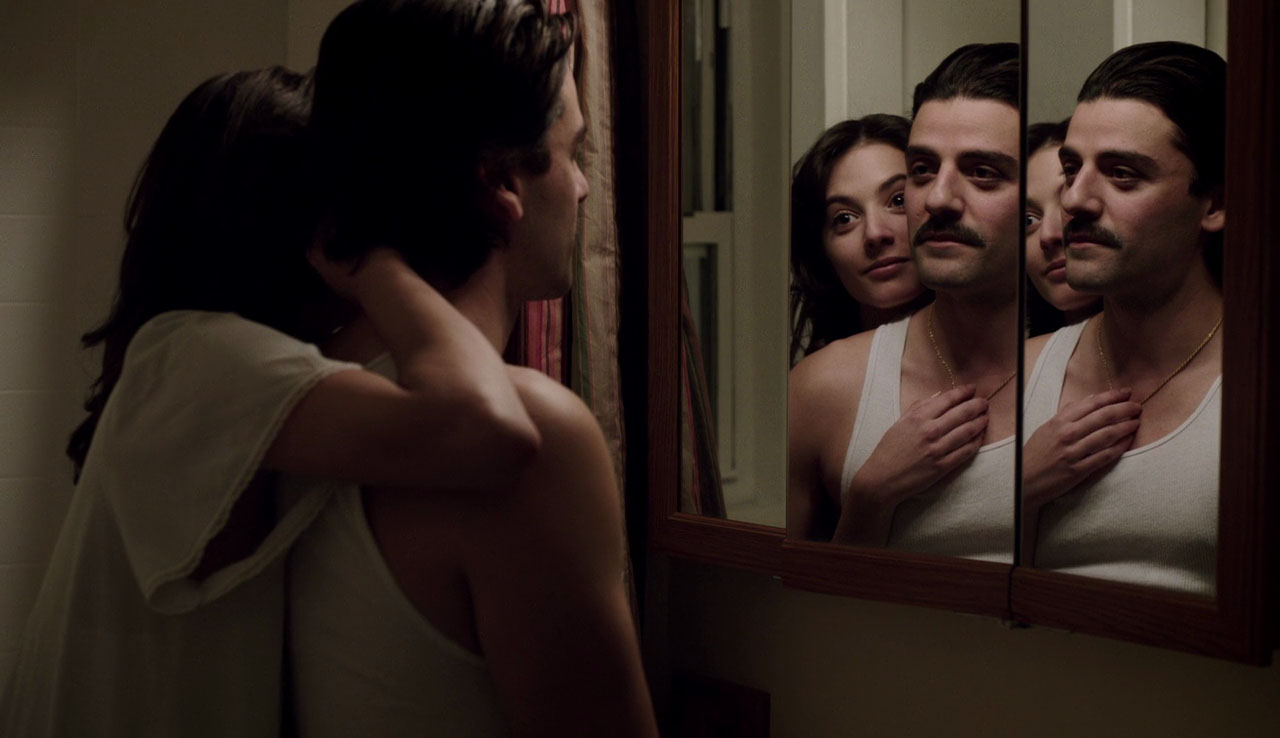
The less-engaging side of the series is about local politics with Nick (Oscar “Llewyn Davis” Isaac, who had an epic 2015) as our protagonist. He’s the title hero, though his investment in desegregating Yonkers seems a far distant second to his self-centered political aspirations, which take off when he becomes an unlikely young mayor, swept into office (replacing Jim Belushi) to fight the desegregation, but finding himself having to defend it. Sure, Nick has morals, but his “doing the right thing” is meant to keep the city from going bankrupt from federal fines, not to bravely and singlehandedly defeat racism. And though he turned out to be the mayor the town needed at that particular time, he’s quickly run out of office by arrogant bastard Alfred Molina, and Nick’s political dreams turn to despair, feeling that he’d won a great victory, but a victory the angry residents would never recognize.

The rest of the show follows prospective residents of the new townhomes, detailing their individual lives and travails. Among the indifferentiated mob of white residents who show up to town hall meetings screaming about their property values is Mary (Catherine Keener), who’s representative of the gradual acceptance of the new housing. When the houses finally go up and families move in, Mary is coerced (by Clarke Peters, Det. Lester Freamon) to join a committee to meet with the residents and help them adjust – and help their bitter white neighbors adjust as well.

Mary before/after:

“We’re not prejudiced. Anyone is welcome to live in my neighborhood if they have the money.”

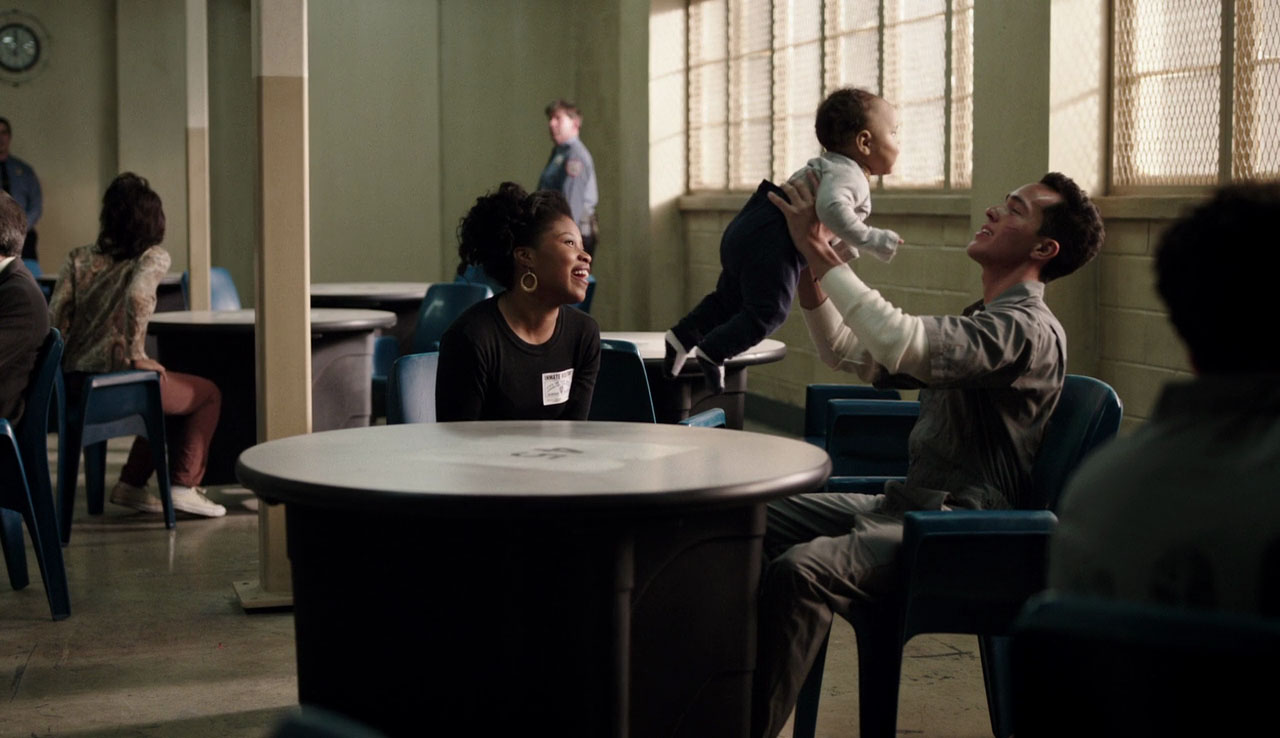
Most of the future residents we follow are women in trouble. Doreen (Natalie Paul)’s man is a drug dealer with asthma – and we know what happens to movie characters with asthma, so soon she’s a single mom, hooked on the crack. Norma (LaTanya “wife of Samuel L.” Jackson) was a nurse until she loses her sight due to diabetes, is helped out by her son Brother Mouzone. Carmen (Ilfenesh Hadera, currently on the Paul Giamatti show Billions) is from Dominican Republic, tries going back there but can’t make ends meet in either country. Billie (Dominique Fishback, soon appearing with D’Angelo Barksdale in another period New York David Simon miniseries, The Deuce) gets pregnant (a bunch of times) by petty criminal (later major criminal) John (Jeff Lima of Half Nelson), who spends half the show in prison.

Meanwhile, Nick will do anything to get back into office, including getting his wife (Carla Quevedo) fired and turning on his oldest council friend Winona Ryder. But he’s not exactly beloved around Yonkers, having sided with the federal enemy. The quiet unsung heroes here are the smart federal specialists (housing experts Peter Riegert and Clarke Peters, and judge Bob Balaban) manipulating a belligerent town towards social change.

Molina don’t give a shit:

Some awful hair and suits, gradually getting more tolerable as the horrors of the 1980’s fade away. Lots of Bruce Springsteen and a good Steve Earle tune used as theme song. Sadly, only one use of the word “mook”. Movies often start at the end (I have a starts-at-the-end tag on the blog), but this one repeats its suicidal-Nick-in-the-cemetery finale at the beginning AND in the middle.

Mostly this got deservedly great reviews, though the Haggis-haters at Slant tore it apart (I’ll agree with the line “Keener dons ridiculous old-lady drag”). Presumably they didn’t tear up, as I did, at the final episode: the joy and terror felt by the new residents about their neighborhood, Nick’s strangled cry for help before heading to the cemetery, the horrified look Winona Ryder gives Nick’s widow at the funeral, and the thaw in hostilities between new neighbors represented by Poodle Lady (played by the director’s ex-wife).

Poodle Lady:

Last film watched in 2015, and it’s a good one. Impossibly gorgeous and perfectly-lit Saoirse Ronan is in every scene, which should be enough of a recommendation, but it’s also a good story – a small-scale immigrant drama and minor love triangle given epic scale through grand filmmaking.

Eilis (which looks like Ellis, as in the island, now that I see it written) is sent abroad to New York by beneveolent priest Jim Broadbent, leaving her mother and sister Rose behind in Ireland. After a rough ship ride she settles in at her department store job with Parker Posey doppelganger Jessica Paré and a boarding house run by Julie Walters with other girls (incl. Arrow star Emily Rickards) who are looking for men and enjoying the night life. Quiet Eilis manages to attract a serious guy – an Italian plumber named Tony (Emory Cohen of Afterschool) with big dreams of a family housing business. After her sister’s sudden death she returns to Ireland to see her mom and friends, starts hanging out with Domhnall Gleeson, locally considered a major catch. Will she abandon her Tony and her golden dreams of America to stay comfortably at home with Gleeson? No!

Novel by Colm Tóibín, adapted by Nick Hornby, directed by Crowley (Boy A, Closed Circuit). Up for three oscars, but not everyone loved it.

M. D’Angelo:

… feels weirdly sanitized, like somebody’s pseudo-nostalgic conception of the ’50s based on movies from that era. (Compare and contrast with Carol, which admittedly inhabits a different milieu but is unmistakably grounded in lived experience.)

Katy’s pick for post-Thanksgiving viewing was much more successful than my vote for Looney Tunes. In any year that I hadn’t watched Damsels In Distress, this would obviously be the funniest and most charming Greta Gerwig movie. It’s still funnier and more charming than Frances Ha (which was pretty damned charming).

Lola “sister of Jemima” Kirke (the trailer-park neighbor who robs Rosamund in Gone Girl) is an aspiring writer who can’t get into her campus literary society and can’t get a boy in her class (Matthew Shear of Baumbach’s While We’re Young) to go out with her. Lola meets vibrant Gerwig (their parents were gonna get married, then they don’t) and starts mining Gerwig’s life for story ideas on the sly. Great second half as the three of them and the boy’s jealous girlfriend (Jasmine Jones) crash the Connecticut* house of Gerwig’s rich ex (Michael Chernus, of this year’s People Places Things) and his wife (Heather Lind of Demolition and Boardwalk Empire) to beg funding for the restaurant Gerwig wants to open.

Great dialogue in the movie overall, and Baumbach is good at coordinating all these characters into a sustained screwball sequence. He loves Gerwig’s energy and idealism, but he can’t keep from knocking her characters down a few pegs at the end of his movies, so she is punished for having no business sense and letting other people steal her ideas, but at least she seems to stay friends with Lola.

* wikipedia: “The philosopher Stanley Cavell has noted that many classic screwball comedies turn on an interlude in the state of Connecticut (Bringing Up Baby, The Lady Eve, The Awful Truth).”

V. Rizov:

Driver’s amateur documentarian in While We’re Young may be a jerk, but pretty much everyone around him (save poor Ben Stiller) concedes the end results are worth it. Inversely, in Mistress America, Tracy is climactically shamed for the diagnostic cruelty of her fictionalized portrait of Brooke, but she remains secure in the value of the work. Both films articulate multiple tangled perspectives on the rightness or wrongness of unkind fictionalization, and both effectively end by throwing their hands up and walking away from the question without resolution. This is self-critique, but it shies away from concluding that the ends don’t justify the means: the films themselves negate that conclusion.

Piecemeal protest doc with surprisingly great location footage and interesting scenes, each one a bit too loud and going on for too long. The pieces are mostly unsigned, but I believe Chris Marker put the project together, and some segments are either identified online, or just very easily guessed (ahem, Resnais). They mention that Joris Ivens shot on location – most everyone else stayed home and used stock footage or filmed protest marches.

“It is in Vietnam that the main question of our time arises: the right of the poor to establish societies based on something else than the interests of the rich.”

Cluster-bomb:

Supposed to be President Johnson:

The Resnais segment is interesting before it wears out its welcome. Bernard Fresson (of a few Resnais films, including a small part in Je t’aime, je t’aime) is playing “writer Claude Ridder” (name of the lead character in Je t’aime, je t’aime played by Claude Rich) while a woman Karen Blanguernon (Rene Clement’s The Deadly Trap) glares from the corner of his office. This segment was written by Jacques Sternberg (Je t’aime, je t’aime, of course), so perhaps Claude Ridder was his standard lead character name, since this Ridder seems too impassioned to be the heartbroken dead soul from the feature. “Ridder” monologues on the war, politics, and his own inability to make change. “A spineless French intellectual articulating excuses for his class’s political apathy,” per the NY Times.

Next, a history lesson using stock footage, photographs and comics, drawing connections to the Spanish Civil War (the Resnais had mentioned Algeria).

Then Godard, who monologues in front of a giant film camera, talking about the distance, his inability to connect with the war itself, or even the French working class, the focus of so many of his films. Since he can’t film on-location, he inserts Vietnam into his feature films. “I make films. That’s the best I can do for Vietnam. Instead of invading Vietnam with a kind of generosity that makes things unnatural, we let Vietnam invade us.”

After a jaunty music video to a protest song by Tom Paxton, a longer somber voiceover reading the words of Michele Ray who spent three weeks with the Viet Cong, showing her footage before it goes crazy at the end.

“Why We Fight,” in which General Westmoreland explains the official U.S. position on the war, filmed off a TV while someone zooms around and twiddles knobs. Title must be referencing the 1940’s U.S. propaganda film series Why We Fight, which Joris Ivens contributed to.

Anti-napalm rabbi:

Monologue by Fidel Castro, who gives his theories on guerrilla warfare and how this applies to Vietnam. The new wavers seemed to have easy access to Fidel back then.

Ann Uyen, a Vietnamese woman living in Paris discusses Norman Morrison’s setting himself on fire outside the pentagon, and what that meant to her people. “We think that in America there is another war, a people’s war against everything that’s unfair.” Then an interview with Norman’s widow, who seems in sync with Norman’s politics. This was by William Klein.

War protest zombie walk, probably shot by Klein:

Marker’s outro:

In facing this defiance [of the Vietnamese], the choice of rich society is easy: either this society must destroy everything resisting it – but the task may be bigger than its means of destruction – or it will have to transform itself completely – but maybe it’s too much for a society at the peak of its power. If it refuses that option, it will have to sacrifice its reassuring illusions, to accept this war between the poor and the rich as inevitable, and to lose it.

Good combo of the Before Sunrise slow-romance and the maturing-artist drama, a nice surprise from Rock after two Grown Ups and three Madagascars. Between the Chaplin references, the wonderful Cinderella ending and the overall walky, chatty New York vibe, it feels like he’s got a sense of movie history, is trying to craft something more timeless than the usual hard-mugging studio comedy. The movie doesn’t aim for laughs in every scene, casting Rosario Dawson instead of a comedian as Rock’s foil and spending much of the plot on struggles with alcoholism (although while in jail after a drunken relapse, Rock gets serenaded by DMX, singing Chaplin’s “Smile”). Rock’s fiancee (Gabrielle Union of Bring It On, Bad Boys 2) is prepping their wedding for a Bravo series, but Rock doesn’t waste time mocking reality TV, even with both Tracy and Angie “Queen of” Jordan in his supporting cast. Dawson’s character seems to have plenty of time to hang out even though she juggles a kid, a series of relationships, alcoholics anonymous, and at least three writing personas (sex columns for Cosmo, pseudonym film reviews, plus the feature interview she’s supposedly writing on Rock). JB Smoove is cool as Rock’s friend/handler and Cedric the Entertainer is hilarious as a hedonist promoter in a low-point flashback sequence.

Watched a couple new Marker-related shorts,
and rewatched some older ones in shiny new copies.


Sunday in Peking (1956) in lovely high definition


Letter from Siberia (1957)

Forgot how amazing this one is.
Songs and animation and opera, owl-led advertisements and imaginary newsreels.

“Since you can never tell how a bear will react to a camera, we were offered the protection of an armed policeman. But since we’re much more frightened of policemen than we are of bears, we politely declined.”

The Irkutsk Dam, “sitting on its own reflection like a station in outer space”:


Le Chant du Styrene (1958, Alain Resnais)

Mostly shots of the factory, with few humans.
Forgot about the rhyming voiceover.


Broadway By Light (1958, William Klein)

From Marker’s intro: “Each evening, in the centre of New York, an artificial day rises. Its purpose is to announce spectacles, sell products, and the producers of these adverts would be amazed to know that the most fascinating spectacle, the most precious product made by them, is the very street transformed by their signs.” Klein shoots the lights of Broadway, scored by cartoon-jazz music that matches the editing and light movement. Wonderful, would like to put this and some Joris Ivens and Bert Haanstra shorts on an infinite loop in my office. Klein’s first film (I only knew his Mr. Freedom before), edited by Alain Resnais.


A Valparaiso (1963, Joris Ivens) from the 2008 restoration


Junkopia (1981)

Uses the sort of electronically-processed sound he’d be featuring in his next full-length film, Sans Soleil.


Eclipse (1999)

On a day when everyone is looking at a solar eclipse through special glasses, Marker watches the watchers instead. First half has live sound at a hippo sculpture park, then he switches to slow motion and electronic music and goes elsewhere (the zoo? there are owls).


Description of a Memory (2007, Dan Geva)

I didn’t rewatch my terrible-quality copy of Marker’s Description of a Struggle, but instead tried this doc, the second feature-length film I’ve seen this year made in response to a Chris Marker-related film. Geva shows the Marker film and stills to locals, asks about the people who appeared in the original. Reminds me of Marker’s friend Agnes Varda, her periodic returns to previous films through documentaries and shorts and DVD extras. Geva is investigating images and memories a la Marker and Varda, turning out a worthy follow-up to the original feature.

Of the happy kid riding a cart down a hilly street: “British policeman bashed his head with an iron rod. Gone a bit mad since.

“Noah Rosenfeld, who fulfilled his dream to become a chess champion.”


More Marker:
Far From Vietnam is out in HD. The Confession is also out, and includes the Arthur London short. Mémoires pour Simone still lacks subtitles, as do most of the 1969-1970 shorts. Oh, and it looks like new copies of Description of a Struggle and Blue Helmet just came out – will save those for another day.