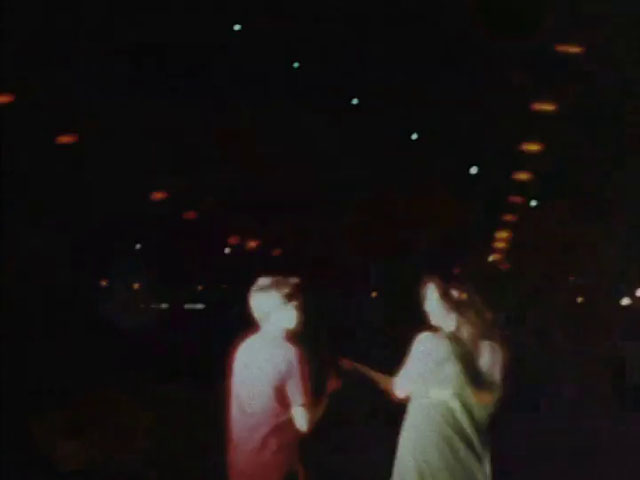
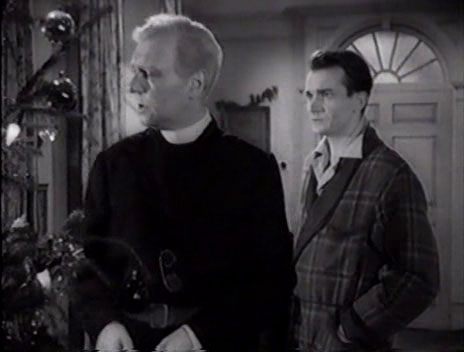
Jacquot de Nantes (1991, Agnes Varda)

A pretty good movie about a kid growing up in small-town France wishing to make films – but if you’re a Varda/Demy fan who knows the backstory, that she’s filming her husband’s childhood memories as he’s dying, it becomes extremely wonderful and moving.

The Beaches of Jacques:

You see inspirations for The Umbrellas of Cherbourg, Donkey Skin, Pied Piper and Lola, family life, the love for music and cinema. Largely black and white with splashes of color. Varda flips between childhood events and the film they’d inspire, flashing a graphic of a pointing hand from the Demy Garage sign in between.

Jacquot 1:

“Seeing my name there when I was so young gave me a sense of the fragility of our existence.”

WWII occupies much of the film. His father helps with wartime manufacturing. The kids see Les Visiteurs du soir instead of Baron Munchausen because they’re not allowed see German films. In September 1943 his town is bombed. “There were dead all over town.” Adult Demy tells us he’s hated violence ever since.

Jacquot 2:

Making La Ballerine:

Young Demy spends a season with the clogmakers, works with puppet shows, decides he wants to manufacture theater and film sets. After tiring of the 8mm Chaplin film he’s given, he scrapes off the emulsion and hand-draws his own war story on the film. After a failed attempt at live-action shooting, he continues making films alone – stop-motion this time.

Jacquot 3:

Demy is sent to trade school but hates it, makes his stop-motion and keeps dreaming of cinema. The movie ends quite suddenly. “Later, Christian-Jaque came to Nantes to present his film D’homme a hommes. Christian-Jaque was kind enough to look at my film.” Demy gets to enroll in film school. “I met a woman filmmaker, we made a few films, then she gave me a fine son, and now I paint.”

L’Univers de Jacques Demy (1995, Agnes Varda)

Varda’s doc about her late husband’s films, with some personal details and stories thrown in, and interviews with key participants. Varda says they didn’t work together until Jacquot de Nantes, “so I’ll be discreet in this documentary.”

Demy on the set of Lola:

Covering all his films, in no particular order: Lola (with Anouk Aimee, Marc Michel and Michel Legrand), Three Seats for the 26th (with Francoise Fabian), Donkey Skin (with footage of Jim Morrison visiting the set). “I wanted to recreate things that Marais did with Cocteau.”

A Slightly Pregnant Man, then flashback to the war, the nazi bombing of his hometown. “After something as horrible as that, you get the feeling nothing worse can ever happen. And that’s when you start creating a fantasy world.” A Room in Town with Michel Piccoli. La Table tournante, codirected with animator Paul Grimault at the end of both men’s careers. A hilarious montage of scenes from 1954’s The Rebels of Lomanach in which Demy plays the soldier who dies first in every battle scene, then assisting Jean Masson and Georges Rouquier, who encouraged Demy by producing his clogmaker short.

Umbrellas of Cherbourg with Deneuve and producer Mag Bodard. Model Shop, which was “Lola in L.A.” and would have starred Harrison Ford if the studio hadn’t insisted on bankable star Gary Lockwood (heh). Varda catches up with Ford and asks Aimee about the sequel. Demy: “I called it Model Flop, which it was.” On to Pied Piper (also in English), The Seven Capital Sins (Demy drew Lust), and his weird-looking 1980’s Orpheus story Parking, “a fairy tale where there’s no fairy.” Back to Bay of Angels, then Lady Oscar and the TV movie La Naissance du jour (“I like it because I thought it was unfilmable”) before ending on a high note with Young Girls of Rochefort.

So, having just heard about them for the first time, I watched some of Demy’s early shorts.

Le Sabotier du Val de Loire (1956)

A solemn documentary about the clogmakers of Demy’s youth – or perhaps a half-documentary with a dramatic story added, including a death and a climactic wheelbarrow purchase.

Le Bel indifferent (1957)

Demy’s first non-hand-drawn color work, based on a Cocteau play about a very desperate and lonely woman, waiting all day for her man to return, but seeming even more alone when he does. Cinematography by Franju regular Marcel Fradetal.

Lead Actress Jeanne Allard appeared in Varda’s Les Creatures.

Ars (1959)

Another black-and-white semi-doc, this time about Jean-Marie Vianney, parish priest of the small town of Ars, who’d be named a saint after his death. Demy films museums and artifacts while briefly telling Vianney’s story, but most effectively he shoots the present-day town as if the events were happening currently.

Also watched Les Horizons Morts (1951) again – a very accomplished student film.

And happily, Demy’s homemade animations are available to watch in full, apart from their appearances in the above two features.

Le Pont de mauves (1944)
Bombing of the bridge.

Attaque Nocturne (1948)
Looks like the mugger is walking past the Demy Garage entrance.

La Ballerine (unknown date)
I love the pinholes tracing her path.

The Pilgrim (1916, Frank Borzage)

A little western two-reeler with a good piano and violin score, starring Borzage as the humble, good-natured title character. Shadowplay: “I can think of few westerns where a good bit of the plot is devoted to healing a bad guy, who then departs the story without being bad again.” D. Sallitt: “The Pilgrim focuses on expressions, on using cinema to stop time and ponder the feelings that people can only half communicate.”

Jerks, Don’t Say Fuck (2001, Zhao Liang)

A punk-industrial music video with thrashy editing, military images and other weirdness. Video glitches, super-fast motion and repetition.

Bored Youth (2000, Zhao Liang)

Shirtless dude in blurry night vision breaks a lot of windows, just a ton of windows. the sound starts to go out of sync and echo. Editing slows way down, showing off the glorious digital video artifacts in low light. This goes on for seven minutes. Then: repeated shots of a squid catching a fish, the sound of machine-gun fire, and a demolition crew the next morning.

Four Women (1975, Julie Dash)

Music video for a Nina Simone song. Backlit dancer wrapped in a sheet for the intro, then different dances and clothes during the four parts of the piano-and-vocal section, all danced by Linda Young.

Bauca (2009, Albert Serra)

Fullscreen washes of color, edited to a symphonic piece. Cutting follows the music, but rarely right on the rhythm. Song ends suddenly and picture goes white.

Dignity (2008, Abderrahmane Sissako)

Interviewer asks different people to define dignity, and each does so silently.

Sissako: “I think it’s very difficult to deal with such sweeping concepts as justice and dignity in the allotted two or three minutes, so I looked for an idea that actually asked the question ‘What is dignity’ rather than answering it.”

My Heart Swims In Blood (2011, John Gianvito)

A veteran does not sleep well. Voiceover tells us horrible facts about the current wars while the camera shows everyday scenes and watchful owls. This is his section from the omnibus Far From Afghanistan, which I hope comes out soon. I think Andre (My Dinner With Andre) Gregory played the old man in bed.

Walker (2012, Tsai Ming-liang)

Monk carrying his lunch walks through the busy city in extreme slow-motion. Just wonderful.

EDIT JAN 2021: Katy read something about stillness, then agreed to watch Walker with me. I had Journey to the West and No No Sleep queued up next, but she did not delight in watching the monk walk very slowly, so Tsai-fest was cancelled.

The Street (1976, Caroline Leaf)

Story of the summer grandma lay dying in the back bedroom, as told by the grandson who wanted that room for himself. Brilliant animation, looks like charcoal, with erasures visible under the movement. Internet says it was paintings on glass, lovely. Leaf made a pile of animated shorts – I’ve watched her Kafka Metamorphosis one. Did not win the oscar – the movie that beat it is described by an IMDB reviewer as “eye-gougingly dull”.

Is It Always Right To Be Right? (1970, Lee Mishkin)

A 1960’s political generational-gap movie, also featuring sexual and race differences. “Everyone was right – of course – and they knew it.” Pretty below-average animation with a heavy-handed message, but still won the oscar. the director also worked on Mister Magoo shorts and a 1980’s bionic superhero show, ending up on The Simpsons.

Le Chapeau/The Hat (2000, Michele Cournoyer)

An insane morph-drawing of women, sex and hats. Internet says: “An exotic dancer recalls an incident from her childhood where she was physically abused by a male visitor,” but I was busy being impressed by the animation and missed the point.

Munro (1961, Gene Deitch)

Reminiscent of The Bear That Wasn’t. A four-year-old boy is drafted into the army. He tries to tell everyone that he’s four, but every draftee has an excuse to try avoiding the draft, and that one doesn’t fly. Won the oscar over a Czech film, a Disney short about a tiny elephant, a Sylvester cat cartoon and a Chuck Jones sheet-music sketch. Writer Jules Feiffer had a weird career, including Carnal Knowledge and Altman’s Popeye. The director worked at UPA, did some Popeye shorts and a version of Where The Wild Things Are.

Girls Night Out (1987, Joanna Quinn)

A housewife and her buddies blow off steam by partying at a male strip joint while her miserable-looking husband watches television at home, unaware. Nice Bill Plympton-looking animation, with great flickering shadows coming from the TV set.

Just a Gigolo (1932, Dave Fleischer)

Live-action singer Irene Bordoni intrudes into an unusually short Betty Boop cabaret cartoon to sing her gigolo song with follow-the-bouncing-ball onscreen lyrics.

Hugo-inspired Melies shorts, followed by Melies-inspired silent shorts, followed by Sherlock Jr. Everything except A Trip to the Moon had live music by Donald Sosin and Joanna Seaton, and the films were introduced and attended by every Emory film person I’ve ever seen. A great program – Katy loved it too.

A Nightmare (1896)
Melies is trying to sleep, but different people keep appearing in his bed.

The Man With the Rubber Head (1901)
Magician Melies reveals that he’s got his own head in a box, and can inflate and deflate it using a bellows and a valve. Magician Melies is too excited, and Melies Head is super flustered. It goes on like this until M.M. decides to let a passing clown inflate his head, then he is pissed at the clown when it explodes. What did M.M. think would happen??

Extraordinary Illusions (1903)
A straight-up magic show, with things turning into other things. The beauty is he cuts on the action, so to speak, transforming things as they’re thrown into the air.

The Melomaniac (1903)
Conductor Melies lays out sheet music onscreen using eight Melies Heads as notes. Much fun for the musicians.

The Infernal Cauldron (1903)
A devil throws people into a pot, I think there was fire and maybe an explosion – I was mostly staring at the vivid hand-coloring.

A Trip to the Moon (1902)
A group of wizards stands around talking for three minutes – longer than any of the previous films – before they finally decide to take any trips to the moon. What was that all about? After the explorers journey to the moon and make moon men explode by whacking them with umbrellas, they capture one alien (sort of – he grabs onto their capsule) and bring him home triumphantly to an appreciative crowd. In my remake, I would have the moon man suddenly grab an umbrella and whack the mayor, making him explode. Hyper coloring and nonsense music by Air.

The Haunted Curiosity Shop (1901, Walter Booth)
Very Melies-style thing with a sarcophagus and skeleton and throwing someone piecemeal into a pot.

The ‘?’ Motorist (1906, Walter Booth)
Two complete psychos run over a cop, drive up a building, circle the moon, ride on Saturn’s rings, then escape police by turning their car temporarily into a horse. One of the ten best films ever made, according to Ian Christie. I’m inclined to agree.

The Dancing Pig (1907, Pathe Freres)
Someone in a sick pig suit harasses a girl, is forced to strip, then dances for about a hundred minutes. One of the ten best films ever made, according to nobody ever.

Princess Nicotine (1908, J. Stuart Blackton)
Two smoke fairies harass a weirdly antisocial smoker, featuring some matchstick stop-motion.

Fantasmagorie (1908, Emile Cohl)
Holy crap. One minute of trippy stick-figure animation, eating itself.

How a Mosquito Operates (1912, Winsor McCay)
A balding mosquito the size of a man’s head sucks gobs of blood out of the sleeping man after sharpening his proboscis, repeating his actions frequently since McCay discovered the joy of animation reuse. One of the ten best films ever made, according to Mike Leigh.

Sherlock Jr. (1924, Buster Keaton)
Presented on 35mm, as was A Trip to the Moon. What I wrote last time still goes, except this time the music was much better.

Frampton explains his Hapax Legomena cycle:

Hapax Legomena means things said one time. The phrase is a piece of scholarly jargon that refers to words that occur only once in an entire literature or in the entire corpus of a writer’s work in the antique languages. The problem typically with a hapax legomenum is that because it occurs once, it occurs only in one context, and the context does not always reveal the meaning… There is always an element of uncertainty.

Poetic Justice (1972)

Frampton: “a film script in the act of becoming a film”

HF shoots 240 pages of a script upon a table, one at a time, describing a film in four scenes (tableaus). The first describes a couple of rooms in which “you” (I didn’t expect to be the star of the film) attempt to film a blue jay out the window until “your lover” comes home. The second scene alternates between shots of empty rooms, and shots of “my hand holding a photograph of the same scene” but populated. Next, the two of you make love while different impossible visions appear out the window. Back to photographs in the fourth scene, as your lover rifles through a stack of photographs, alternately showing the two of you in similar scenarios. The filmmaker returns: “Your lover’s hand is holding a still photograph of myself, filming these pages.”

Critical Mass (1971)

Slowly step through the audio of a two-character improvised drama, looping two steps forward, one step back, like a less intense but no less methodical version of a Martin Arnold film. Audio plays over black for a couple minutes, then picture, then picture disappears halfway through, and comes back (but out-of-sync) after an interval. Near the end, the editing stops interrupting every word of the dialogue, lets them run on for 20 or 30 seconds at a time, repeating sections we’ve heard before.

Briefly annoying, then thoroughly mesmerizing for the first half, then back to annoying.

I’ve watched (Nostalgia) before. The other four in the series are Travelling Matte, Ordinary Matter, Remote Control and Special Effects.


Criterion summarizes Magellan: “His intention was for the cycle to include thirty-six hours of film, to be shown over the course of 371 days, which Frampton dubbed the Magellan Calendar.” This never made sense to me until I heard HF’s comments on the disc:

First of all, it’s a kind of encyclopedia or inventory of sites (sights?) which proposes to have so many different images that it will function as a kind of voyage through the world… If one were to undertake to see the final film in a certain form there would be really a little bit to see every day… One of the aspects that I think is important is that I feel that the spectator of film who has been invited or asked to experience film… might also enjoy having another kind of experience of film that filmmakers have. For a filmmaker, film is not an exotic thing that you go out to, it is a thing pretty much that you do every day. For a filmmaker, whatever you’re doing, even if you’re making Cleopatra or something like that, still you live with it, it becomes an extremely intimate part of your life, which is vivid on the one hand, and on the other hand it’s very ordinary. Film is not an exotic thing to be doing for a filmmaker, it’s daily.

The Birth of Magellan: Cadenza I (1980)

Green flickers on black as an orchestra tunes up. A thunderstorm. Then alternating shots of a wedding preparation (applause) and a silent film (a low buzzing sound), with a white/red circular wipe separating the two. Bizarre.

Pans 0-4, 697-700

I thought from the title that HF would be panning the camera for a minute, each in a different location, but these are simply minute-long idea-films using any sort of motion or effect.
0: two cloud patterns strobed together
1: hippie bead thing penduluming left and right
2: thin white stips falling downward
3: manic time-lapse run through cornfield
4: sheets of paper on wall blowing in breeze, overlaid with the same shot at a different time, so each page looks like two sheets, moving through each other
697: argh, machete man removing dead cow’s head
698: whipping back and forth in a flower field
699: boy taunts camera with a still-living frog on a fishhook
700: ghostly translucent road traffic

Selected Pans:

Ingenivm Nobis Ipsa Pvella Fecit, Part I (1975)

Nude woman walks, turns, skips rope, plays ball on a black field in stuttering stop-motion. To HF, this represents springtime.

Magellan: At the Gates of Death, Part I (1976)

Skulls and mummified things. Red and green overlaid patterns that would probably make your eyes fall out if you watched with 3D glasses on. A hexagonal pattern rushes past as a palate cleanser between the other sections. I liked this one a lot.

Winter Solstice (1974)

Opens with what looks like the bonfire shot from Zorns Lemma. Jittery handheld shots of fire – dark, all yellows and red, with single frames of light blue at the cuts. A shower of sparks which might have been Pan 2. It’s all repetitive, hypnotic and silent – an excellent film to doze off to.

Also on the disc is Gloria!, which I watched once before.

A night of avant-garde shorts watched in memorium of a fellow enthusiast who died young.

Let Me Count The Ways (Minus 10, 9, 8, 7, 6) (2004, Leslie Thornton)

“August 6, 1945 – Dad observes the bomb drop on Hiroshima from a reconnaissance plane” Processed stock footage, some of it labeled “dad”. Motion seems sped up. Japanese dialogue, a woman is questioned about having lived through the Hiroshima explosion. “Not one white person was burned.” Onscreen text about plant mutations. Flyover camera with a blue circle flashing on and off, scrolling faster and faster. Stills of Hitler striking poses warp into one another, with confusing voiceover in German and English.

The Whitney uses big words: “By editing together controversial or transgressive material, she creates discursive cinematic spaces in which to consider humanity’s inexplicable behaviors, as do fellow avant-garde filmmakers Chris Marker and Chantal Akerman. . . . Thornton’s employment of footage relating to Hiroshima and the atomic age, elucidating her preoccupation with anxiety, trauma, and culpability, derives in part from her grandfather’s and her father’s roles in developing the atomic bomb and from her up-close childhood experience of the Cold War.”

Tusalava (1929, Len Lye)

Animation that looks like it’s inspired first by cellular biology, then at the end by an abusive relationship, all with great piano music.

Glimpse of the Garden (1957, Marie Menken)

Brief static and longer motion shots of the garden, with nice extreme close-ups. It’s all set to the ceaseless chirping of a bird whose song I know well, since my parents had a mechanical singing version. But which bird?

Wintercourse (1962, Paul Sharits)

Quick movement and fast cuts form light patterns with recognizeable images: trees, statues, a gutter gushing water, flashes of nudity. The movie pauses to watch some TV, then goes on and on. I dozed, but I think there was a wedding near the end.

Pixillation (1970, Lillian Schwartz)

I liked the inky liquid-on-glass effects more than the computer graphics, though those are probably impressive for 1970. Music that gets increasingly harsh, loud and grating, so I kept turning it down. Didn’t count on me being able to do that, huh Gershon Kingsley? Lillian Schwartz did computer animation on The Lathe of Heaven.

Dirty (1971, Steven Dwoskin)

Two topless girls drink a bottle of wine then roll around in bed, printed with differing levels of extreme slow motion, the light all pulsating. There’s supposed to be music but I just hear a staticky rumble

Yantra (1957, James Whitney)

A million colored specks slide into different patterns, surely animated by some mathematical obsessive. Soundtrack goes from annoying to nice and quickly back – sounds computery, but this was 1957 so maybe not.

Rat Life and Diet in North America (1968, Joyce Wieland)

Illustrating current politics using rats, wonderful. Nightmarish soundtrack: from a siren to a sax solo to carnival music to the beach boys (but covered in buzzing flies). Joyce was married to Michael Snow at the time – wish he’d provided some lighting or sound editing help.

Valentin de las Sierras (1968, Bruce Baillie)

A Mexican family at work and play, shot in extreme close-up, with music and some voice on the soundtrack.

Carabosse (1980, Larry Jordan)

More madcap cutout animation, made less madcap by the dour piano tune on the soundtrack. Maybe cropped at the top?

Luckily, a Canyon Cinema program was playing at the university when we rolled into Portland, and I somehow got Katy to come along to the severely under-attended screening.

Our Lady of the Sphere (1969, Larry Jordan)

Occasionally amusing clip-art animation with a colorful circus theme, featuring a woman with a balloon head. But if amusing is what Jordan was going for, he’s about 20,000 leagues below Terry Gilliam. I assume there’s something else that eludes me. The sound was irritating. I give it slightly more credit for difficulty once I realized it was made in the 60’s with physically-clipped-art and not on a Macintosh in the early 90’s. Apparently this is one of his best-known works – it’s in the National Film Registry, whatever that is. Internet says it draws from the Tibetan Book of the Dead.

Dream Work (2002, Peter Tscherkassky)

Quiet (relatively) centerpiece of the Cinemascope Trilogy – a world of difference seeing this on a cinema screen vs. my laptop and television. So, so awesome. Katy watched with her eyes closed. I’ve seen it before on DVD, noted here.

Self Portrait Post Mortem (2002, Louise Bourque)

A decaying pattern scrolls up on left and right of frame, low frame rate but with a weird sliding motion. During the second half, a woman appears in the center of screen.

Happy-End (1996, Peter Tscherkassky)

The one composed from stock footage of a couple in the 60’s at different holidays (or is it just one holiday?), opening and drinking a ton of celebratory booze, dancing and posing for the camera. I’ve seen it before on DVD, noted here.

Very (2001, Stan Brakhage)

We saw a trailer for some upcoming Helen Mirren thing before the shorts started, and I was annoyed to see that the projectionist was running another trailer beneath this totally gorgeous, brightly-colored hand-painted Brakhage piece, but no, it looks like Stan ran out of blank film and painted over a trailer reel for the movie Quills, taking his title from the on-screen superlatives complimenting that movie and cast. Hilarious and wonderous.

Night Mulch (2001, Stan Brakhage)

Companion piece to Very, coloring over the shortened TV version of the Quills trailer. Katy loved these.

Mirror (2003, Matthias Muller)

The rare piece with original footage using actors and locations and lots of careful lighting, not hand-tooling some stock footage. Lots of darkness, and chairs.

The Observer: “The tableaux in which the figures stand like statues are animated by light alone. A light that glimmers, or suffuses a room like smoke, or crackles and fizzes from overhead lamps in long corridors. It polishes a grand piano, soothes the cheek of the pensive woman, surrounds the man with glassy halations and then makes him vanish, as if his part was over, before the room in which he stands disappears.”

Phantom Limb (2005, Jay Rosenblatt)

Title cards tell the story of Jay’s little brother who died as a boy, then a series of short pieces (home movies, some stock footage, some staged) are presented in order of the stages of grief. Katy didn’t approve of the birthing scene, and I was mesmerized by the sheep-shearing one.

Orderly or Disorderly (1981, Abbas Kiarostami)

Like an expanded version of Two Solutions to One Problem, A.K. films some situations in two ways each: chaotic and organized, to demonstrate that ordered efficiency leads to happier results. First it’s school children, in line vs. every-man-for-himself. Then they attempt to film traffic patterns, first outside the city then inside. But the traffic cop helping them with their “organized” model is no match for city drivers and pedestrians. Each scene begins with a slate, and at the end A.K. says “cut,” but in certain situations (“disorderly” schoolkids taking forever to board a bus, multiple unsuccessful attempts to get “orderly” traffic patterns) you hear the director and crew talking, discussing their results and the purpose for the film – an early example of A.K.’s love of behind-the-scenes stories and slyly demystifying the filmmaking process (sly because he re-mystifies it in various ways, like the final shot of 10 on Ten, or most of Through the Olive Trees).

stubbornly disorderly traffic:

M. Saeed-Vafa in Senses:

What is normally non-humorous is seen and heard as humorous, ridiculous, or absurd through Kiarostami’s films. Similar to Tati’s Playtime, Kiarostami’s fantastic short Orderly or Disorderly derives its power and humor through shot composition, the use of sound, and, in particular, Kiarostami’s voice over. The high angle long shots of the children in the school-yard lining up to drink water or getting on the bus, as well as the impatient drivers who complicate traffic in a Tehran intersection, reveal the humorous nature of chaos and order in public spaces.

Rotterdam Europoort (1966, Joris Ivens)

A really strange one – you think it’s going to be a doc portrait of the city, but it goes full-on poetic instead. This makes perfect sense once I realize that Ivens is the guy who made A Valparaiso and A Tale of the Wind. I’d gotten him confused with Bert Haanstra somehow, whose movies are just as exciting, but more straightforward and focused, documentary-like. Repeated dialogue (err, monologue), talks about work, old age and youth, the nature of man. Monumental, inexplicable. I watched it twice. IMDB says Chris Marker adapted the narration for France. Shot by Etienne Becker (L’Amour Fou, Malle’s Calcutta) and Eduard van der Enden (Haanstra’s Glas and Fanfare, Tati’s Trafic).

from the Ivens site:

After more than thirty years of work abroad, Ivens was invited by the municipality to make a film in Rotterdam again, where he had shot his well-known The Bridge (1928). Rotterdam-Europoort, whose production took two years, became a layered hybrid of fact and fiction, poetry and legend: a modern interpretation of The Flying Dutchman. Not devoid of critical remarks, it was a challenging way to promote the port.

Grunes:

The figure of a lost soul, who is at one point addressed (by an opera singer) as “Captain,” is Ivens’s and, if we are of a certain age, our own surrogate. This elegant, mysterious, mystified man is embroiled in a scattered existence, at least partly caused by the war, the ongoing burden of its memory, and the onslaught of youth who kill time rather than people.

mysterious Captain in a skirt shows up halfway through:

I Am (Not) Van Gogh (2005, David Russo)

Thinking about Little Dizzle again, I looked up Russo and discovered he has a short I haven’t seen. I’m not crazy about the voiceover – Russo explaining the premise of his proposed short film to a skeptical arts festival council – but the visuals are just what I’d hoped for, more of the chaotic/precise stop-motion of Populi and Pan With Us, this time amongst a festival crowd, flitting rapidly behind the animation, out of time like that Orbital video. I loved the rolling clock – also great are a swimming fish on cut-out paper and an animated mouth lip-synched to David’s flustered narration.

78 Tours (1985, Georges Schwizgebel)

Better than the others I’ve seen by Schwizgebel. Nothing but excellent animation and imaginative transitions as everything morphs into everything else for four minutes, to a catchy accordian theme.

S. Katz: “For 78 Tours Schwizgebel drew out ellipses at varying angles to indicate the positioning of the characters in relations to the camera. Some of these plan views are so complex they look like technical drawings for an engineering project.”

Squirtgun Stepprint (1998, Pat O’Neill)

Black and white water-droplet (squirtgun?) patterns that sometimes seem to flow, but usually just flicker and jitter, seeming to double back on themselves (step print?).

Description by somebody who understands: “O’Neill applied film developer to film stock using a squirt gun, then rearranged the results into rhythmic repetitions.”

stills don’t really make sense for films like these:

Coreopsis (1998, Pat O’Neill)

Line-drawing (or scratching) patterns, abstract, though I tried to make them into faces, bodies, fireworks, footballs. Again with the jittery repeated patterns in the motion. Sometimes a focused bunch of overlapping figures on screen, but just as often a sparse batch of small lines in a vast darkness. The lines get thicker and fuzzier towards the end. After the previous short, I realized this would be silent and played some late Ennio Morricone over it, not to brilliant effect, turning the film into a sitcom title sequence.

Details found online: “O’Neill scratched directly on the film, then altered it using an optical printer.”

The Wholly Family (2011, Terry Gilliam)

A rich tourist couple in Naples argue amongst themselves while their son swipes a masked statuette from a street vendor. That night after the boy is sent to bed without dinner, it comes to life and an army of masked Italians taunt him with food he’s never quite able to eat (plus the heads of his parents). The family has a happy reunion in the morning, but they’ve become figures at the street vendor’s stand.

Very good little movie, with masks out of Dr. Parnassus, doll-parts out of Tideland and who knows what else.

The Discipline of D.E. (1978, Gus Van Sant)

This has been one of my favorite short stories for years (it’s by William Burroughs from Exterminator) and despite the movie’s ranking on J. Rosenbaum’s list of favorite films, I figured a satisfactory adaptation would be near-impossible. It’s fun, but really just reading the story aloud and illustrating on film.

Carrots & Peas (1969, Hollis Frampton)

A taster of the new Criterion set – I also rewatched parts of Zorns Lemma (thanks for adding chapter stops) and played the great commentary track on Lemon. Stop-motion carrots, cross-fade, stop-motion peas. Color filters, reversals and other craziness. Then around the one-minute mark it becomes a still life, barely changing for the next four. Meanwhile a lecture plays in reverse on the soundtrack. Some fiddling in quicktime reveals that it’s a fitness lesson of some sort.

The Town (1944, Josef von Sternberg)

An advertisement for small-town USA, filmed in Madison, Indiana. Boring, flavorless little industrial film – no reason at all to ever watch this, besides to see the depths to which the once-glorious Sternberg had fallen.

Turen til squashland (1967, Lars von Trier)

Holy cow, an animated romp with happy bunnies. One is kidnapped, so the hot dog man and other two bunnies ride a friendly whale to the kidnappers’ castle, where the missing bunny rides down its water spew.

Revolution (1967, Peter Greenaway)

A grim-looking leftist march of young men, not seemingly shot in any organized way, but edited to the Beatles’ Revolution, which is kind of funny since it’s got a lyric about “carrying pictures of Chairman Mao,” and some marchers carry anti-capitalist posters.