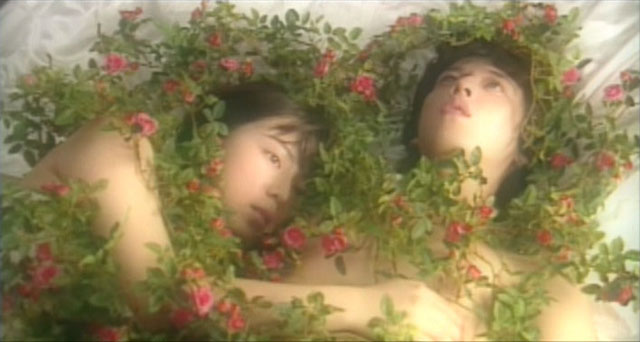
Watching at my usual slow pace. Ten months to watch thirteen episodes, oh my. At this point I’m probably willing to agree with people who’ve been saying this is the best show ever on television. Still one season to go.

New directors: Anthony Hemingway, who also worked on The Corner, steps up from being a longtime assistant director, David Platt (a Law & Order guy), Jim McKay (R.E.M.’s Tourfilm) and TV’s Seith Mann.

Low body count this season. Careers after death: Fruit, shot in the head in the first episode – Brandon Fobbs, who went on to appear in an Uwe Boll movie. Tyrell Baker (Little Kevin) starred in The Barbershop Chronicles, which is not a sequel to Barbershop. Cyrus Farmer (tough kid Michael’s stepdad), also of Oz, appeared in a Notorious B.I.G. bio-pic. And J.D. Williams (personable drug dealer Bodie Broadus, a regular since season 1), was in a short-lived show called The Kill Point.

It’s Auteur Completism Month! I try to watch all the movies by my longtime favorite filmmakers – Fuller, Lang, Jarmusch, Cocteau, Maddin and so on – but sometimes a couple titles fall through the cracks. Either I can’t find them or they’re just not a priority. Auteur Completism Month is meant to take care of that.

Sam Fuller is the one whose movies I’ve tried the hardest to see, buying a bunch from bootleg tape traders in the dark days before they all came out on DVD. This was the last lingering title on my original list, and it snuck out on disc a few months ago. IMDB has since added a bunch more titles Sam supposedly directed – six episodes of The Iron Horse and something called The Dick Powell Theatre – but I’d rather check out the movies he wrote, like The Klansman, The Deadly Trackers, The Command, The Tanks Are Coming and Confirm or Deny.

A hammy Tony Perkins introduces the series, an inadequate replacement for his onetime director Hitchcock. As far as I’m concerned Patricia Highsmith, on whose stories this series are based, is inadequate as well, but I shouldn’t judge based on a single short story. In fact, Hitch himself adapted her story for Strangers on a Train.

This story is ridiculous, but the actors are game and Fuller is freaking out in full, free Dead Pigeon on Beethoven Street mode. He must figure they wouldn’t have called him if they’d wanted a cheap but professional straightforward television production – in this post Shock Corridor (in fact, post White Dog) era, they wanted Rebel Fuller. So he threw all he had at this story of a doomed modern chicken farm, including an awesomely-edited black and white musical dream sequence, nutty angles, nuttier acting, zooms and camera shots from a chicken’s point of view – literally inside a chicken eyeball.

Gross drifter-looking John (Cris Campion of Altman’s Aria episode and Polanski’s Pirates) shows up at his aunt and uncle’s farm, discovers they’re into automated chicken farming these days. Caught him sharing inappropriately suggestive looks with aunt Helene (spanish Assumpta Serna of Wild Orchid, Piano Tuner of Earthquakes) when not being ranted at about the wonders of chicken farming by crazed, desperate, possibly loaded uncle Philippe Léotard (older brother to France’s former minister of defense, had recently been in an Agnes Varda movie, less recently in Truffaut’s Two English Girls).

Aunt Helene looks crazed:

Uncle Ernie demonstrates his enthusiasm for chicken farming:

The couple’s daughter Samantha Fuller’s little cat dies as soon as John arrives – a bad sign. There’s some time-killing business. Neighbors Manuel Pereiro (Pod People) and Christa Lang come to visit. Then Samantha herself dies by suffocating in the grain (possible references: A Corner in Wheat, Vampyr) and her parents lose it. Helene frees the chickens who kill uncle Ernie then gather outside under the watchful eye of the single rooster. And Helene starts making out with her nephew (who often looks like a scarecrow). Shot by Alain Levent (Cleo from 5 to 7, The Nun). Some corny dialogue and ominous keyboard music and abuse of the song “Old Macdonald,” but a cute movie. Anyway, a good November 1 transition movie from SHOCKtober to Auteur month.

Christa Lang:

Some chickens were almost definitely harmed in the making of this picture.

Thought I’d kick off SHOCKtober this year with Miike’s epic vampire TV- movie which I bought on DVD years ago but never actually watched. Bad move: either it was too stupid or I was not drunk enough to enjoy it properly. I think the problem is simply that it’s a giggling teenage sparkly-vampire flick and I am in my thirties.

Dig the shadow:

Opens with some guy who doesn’t matter getting his whole gang’s ass kicked by a teen girl in motorcycle gear – Riona, I think, who is friends with Mahn (Ayana Sakai of Battle Royale II and Devilman), I think. I didn’t take very good notes here, so I’ll omit the words “I think” (also “teen”) from now on, or else you’ll see them everywhere. Together they’re some kind of Teen Girl Squad who practice sweet fight moves, and maybe kill vampires. Not sure if vampires were a big deal before the scope of this movie, but presumably they fought something in Tennen Shojo Mahn, the previous chapter of this series. Both movies came out the same year as Audition and Dead or Alive and Silver and a couple others, so these didn’t exactly receive Miike’s full attention.

Mahn and Riona, I think:

Vampires have sparkly blood, of course, but they can walk in the daylight and go places they’re not invited and other stuff. Local hunk Yuya runs the city’s dreamiest fashion modeling agency (despite being nineteen) and is the public face of the vampire organization, while his buddy Kamio lurks moodily atop a skyscraper wishing for more power. Then there’s a winged “Saint Vampire” who controls them all from behind an Argentoesque red curtain.

Vamp boys:

Saint V:

Cheap cheap cheap looking movie. Reviews say it has amazing FX for television, but these reviewers have low expectations. The girls aren’t great actors either, but the fight scenes are surprisingly okay.

More intrigue: the girls’ friend Maki (who is big into donating blood – don’t ask) wants to be beautiful like top model Maria (played by porn star Shiori Fujitani), so gets bitten and joins the vamp club, immediately becoming a bitch to her former friends. Head vamp Yuya is a misogynist who is “taking revenge on all women”, though despite his big talk he kinda seems nice And Mahn meets a bullied young boy who happens to be Yuya’s little friend. She gives him a time-killing training montage set to some bland mid-tempo pop songs, teaching him not to be such a little wuss, while Yuya (who could’ve taught the kid himself) looks on disapprovingly. Everyone gets facile back-stories, including characters I won’t bother to mention. And this beardy preacher (Shingo Tsurumi of Freeze Me and Dead or Alive) shows up, embarrassing everyone whenever he’s on screen:

“Mahn, I wish I’d met you earlier… I might not have hated all women.”

Things Of Slight Interest: The word “vampire” isn’t spoken for the first hour. Kamio has a Dr. Claw-via-Minority Report virtual TV (below) that shows him what’s happening anywhere in the city. Only virgins can become vampires, so one girl’s dad tries (unsuccessfully and pathetically) to rape her in order to save her. And vampires are immune to garlic, crosses and sunlight but grow weak when they hear piano music. That one was never explained.

Turns out only the saints have eternal life. Girls become super beautiful and powerful when bitten, but only live 500 days after that, so Maria has an electric death scene on the beach. The girls decide to act, so their former friend won’t suffer the same fate. Then the grand vampire turns out to be the long-lost dad of one of the girls, or maybe of Taichi, I wasn’t paying attention. Some shit goes down and he dies easily, then Yuya stabs Kamio and himself and has a dull, protracted death scene

Maria on the beach:

Based on a comic, obviously, from the writer of Stop The Bitch Campaign, and adapted by the writer of Andromedia and (surprisingly) Visitor Q. So, not a killer Miike adaptation, but we do get a couple cool moments reminiscent of Big Bang Love:

30 Rock seasons 1 & 2

So apparently I like sitcoms now. Katy and I enjoyed this a lot. I don’t want to talk about TV shows (“remember that one episode?”), so instead I looked up the credits.

Writers with movie connections: Tina Fey and Kay Cannon (co-producer of Baby Mama), along with veterans of Norm, Animaniacs, Just Shoot Me, Spin City, The Weird Al Show and Futurama

Directors with interesting credits: Dennie Gordon (Joe Dirt, What a Girl Wants), Don Scardino (lead actor of Squirm), Gail Mancuso (lead director on Roseanne), Beth McCarthy-Miller (Demetri Martin’s show, 200+ eps of Saturday Night Live, the superbowl halftime show when Janet Jackson took her shirt off, Nirvana Unplugged), Michael Engler (Sex and the City episodes), Scott Ellis (an upcoming movie from the writer of Untamed Heart, he hopes), Adam Bernstein (It’s Pat: The Movie), Juan José Campanella (oscar winner The Secret In Their Eyes), Richard Shepard (The Matador) and Kevin Rodney Sullivan (Barbershop 2).

Oh, the guests!
Paul Scheer (as the head page) and his Human Giant costar Rob Huebel, Jerry Seinfeld, Steve Buscemi, David Schwimmer (as “Greenzo”), Kristen Wiig, Edie Falco, James Carville (yay), Andy Richter, Matthew Broderick, Conan O’Brien, Whoopi Goldberg, Paul Reubens (as the last of the Hapsburgs), Isabella Rossellini, Charlyne Yi, LL Cool J (as “Ridikolus”), Wayne Brady, Nathan Lane, Molly Shannon, and hundreds of TV people I don’t know.


The Mighty Boosh season 1

I didn’t care for this at first, but oh boy did it grow on me. I’d like to thank Fumi for insisting for years that I watch it.

Howard Moon (Julian Barratt) started out on Edgar Wright’s Asylum, which I really must watch now that I’ve found a copy. He and Vince Noir (Noel Fielding) were in the seemingly popular Nathan Barley and the barely-known-to-IMDB Unnatural Acts together. Naboo seems to have only ever been Naboo, which is fine by me because he is a perfect Naboo.

Director Paul King made a darkish Gilliam-esque movie called Bunny and the Bull with some Boosh cameos, and worked on a promising-sounding show called Garth Marenghi’s Darkplace.


Stanley Kubrick’s Boxes (2008, Jon Ronson)

A fascinating look through Kubrick’s research with glimpses into his working methods and various obsessions (like collecting stationery, and having a location scout photograph every single doorway in a certain neighborhood, only to have Kubrick end up creating the doorway in a studio). Can’t say I was enthused by Ronson’s role as gleeful narrator, but I’m thankful for his valuable work peeping at Kubrick’s private life and showing us the results (especially dug the rapid-fire location-photo montages set to the music from the Clockwork Orange sex scene). Lots of talk about Eyes Wide Shut and a couple never-completed projects, so I wonder why there wasn’t a single mention of A.I.. Ronson wrote the book The Men Who Stare At Goats was based on, and he hopes he’s written the book Edgar Wright’s next movie will be based on, but he shouldn’t hold his breath.

A silly TV western series in which the good guys smile all the time, with an episode written/directed by the great Sam Fuller in his prime (between Underworld USA and Shock Corridor) and guest starring Lee Marvin. In 1884, Marvin shoots gang leader Sharkey (Warren Kemmerling of Close Encounters) and takes over the gang (were they called gangs back then?), plotting revenge on Judge Garth (Lee J. Cobb of Party Girl, Call Northside 777, Our Man Flint) for sending him away years earlier (of course, that’s always why dudes in westerns want revenge on judges). It’s up to our gang of interchangeable white-hats to stop him – and stop him they will, but not before Lee Marvin gets in a good bit of badassery (oh, spell-check doesn’t like that word).

I assume Fuller was working with a rush schedule and stock crew, but he was always a guy who worked fast, so he gets in plenty of striking shots. He also crams the script with literary quotes and references to newspapermen (Joseph Pulitzer is a major presence in the episode). Glad I tracked this one down.

“It all began on a summer night in 1987. The idea for a television series based on Greek culture had just crystalized and we were facing a spectre which haunts the realm of the cultural documentary and that Chekhov defined for eternity: to say things that clever people already know and that morons will never know.”

Marker hosts banquets across the world and interviews subjects one-on-one (in front of giant pictures of owls), discussing Greece. Mostly it’s school, like a PBS doc without the music or the constant zooming around ancient photographs. Hard to stay interested, since I had no real curiosity about Greek culture, only a curiosity about Chris Marker’s movies (in the credits he’s listed as “skipper” and producer Jean-Pierre Ramsay is listed as “long-distance calls”).

Each episode is preceded by a disclaimer from the billionaire Greek funding agency distancing themselves from its content… way to go there, Chris. Something must have upset the rich people who thought ancient Greece would be a harmless, noble topic. Maybe it’s when Richard Bennett in episode six says: “Pythagoras was a great man. He was in the same league – I may shock some people here – as Moses, Buddha and Jesus Christ.”


1. Symposium, or Accepted Ideas

Droney keyboard sounds behind scenes from Olympia mixed with war films. One minute later we are looking at a storehouse of sculptures, supposedly underneath the roundtable discussion, and I’m already put in mind of Statues Also Die.

“This was an extreme example, but the fact remains that Greece, or at least the idea of Greece, has been used to fuel the spirit of totalitarianism, and it still does now and then. All the more need, then, to look for that Greek word which is theoretically the safest antidote to totalitarianism… the word “democracy.”

“We have this horrid image of Greece as a land of light and harmony. Abysmal nonsense. Greece is a land of incest, murder, where Oedipus blinded himself … In Greece, moderation and order are won against reality and not as their birthright, hence their obsession with aphorisms. ‘Be moderate.’ ‘Do not exaggerate.’ I can’t imagine a Swiss or a Dutch with such obsession for moderation. The Greeks are obsessed with it, obsessed with going too far, because it’s their natural tendency.” – Cornelius Castoriadis


2. Olympics, or imaginary Greece

It’s not in fact about the olympics, but about modern Germany’s relationship to and interpretation of Greek culture. The series can’t go on like this for eleven more episodes, can it? Interviews of people speaking in general terms about Greece and its perceived contributions to the current world? I will get bored.

Film clip of naked rituals from Paris 1900, a documentary which young Alain Resnais and Yannick Bellon both worked on, produced by Pierre Braunberger

Renate Schleisser:

Manuela Smith:


3. Democracy, or the city of dreams

Democracy vs. oligarchy, and the terrible truth behind greek democracy. Nice cut to a clip of George Bush Sr. right as a guy says “the large amount of hypocrisy.” Nostalgia for when people were passionate about participation in the system.

Clips from the Greek episode of Marker’s 1969-71 On vous parle series – I didn’t know there was a Greek episode. It’s not on IMDB.

John Winkler and Elia Kazan at a dinner party:

philosopher/economist Cornelius Castoriadis:


4. Nostalgia, or the impossible return

Much talk about Greek identity, nostalgia and homeland. I think I dozed off. Clips from a 1911 film and from Kazan’s America, America.

George Steiner: “The Greeks are nostalgic. Nostalgic for what? For everything and nothing. They have nothing left – it’s all in their heads.”

musician Angelique Ionatos:


5. Amnesia, or history on the march

About Greece’s sense of history vs. our own. A segment on the person (and the film) Z. Jean-Pierre Vernant mentions that the word autopsy means “the act of seeing with one’s own eyes”. Vassilis Vassilikos says the country has always been a battleground because it links Africa, Asia and Europe. And I got hooked on the story of the first king of independent Greece after 1820, a Bavarian who didn’t speak any Greek.

author of Greek and Roman histories Oswyn Murray:

director Elia Kazan:


6. Mathematics, or the empire counts back

All about logic and mathematics, with graphic examples in hyperstudio. Scenes from a Norman McLaren film and from something called Avant-Poste, featuring a totally-80’s feathered-hair blonde (it’s Arielle Dombasle, who I’ve seen in La Belle Captive) in closeup with tubular music playing telling us about Greek mathematics.

Daniel Andler gets brownie points for using owls in his example about uncertainty. I haven’t seen the dinner party for a few episodes now.

Michael Serres: “I wish the scientific heritage could recover its humanistic trail. I wish the humanistic heritage, also a bit lost at the moment, could recover its scientific trail. It’s one and the same heritage, but we are mediocre inheritors.”

The controversial Richard Bennett:


There’s more (I only watched half of the series) but I’m stopping here for now. I tried to struggle through for the sake of Marker completism but I’m not terribly interested in Greek culture at the moment and can’t imagine that three more hours of this will help. Maybe I’ll pick it up again sometime.

Credits: Co-writer Jean-Claude Carrière was Buñuel’s co-writer for some of his best work, then worked on The Tin Drum and Godard films, and recently on Birth. Some of the cinematographers would work with Angelopoulos, Youssef Chahine, Jean-Jacques Beineix. Other interview participants included Catherine Belkhodja (star of Level Five), director Theo Angelopoulos, artist Matta, Arielle Dombasle (star of movies by Terayama Shuji, Eric Rohmer, Raoul Ruiz and Alain Robbe-Grillet), Yukio Ninagawa (Funeral Parade of Roses), Alex Minotis (Howard Hawks’ Land of the Pharaohs), Melina Mercouri (Jules Dassin’s wife/lead actress), computer-music pioneer Iannis Xenakis and Vasilis Vasilikos (writer of Z). André Dussollier (Love on the Ground, Wild Grass) apparently narrated the French version, but not the version that I’ve got.

“They say the hardest part of rollerblading is telling your parents you’re gay.”

Finally, a post-Mr. Show sketch comedy show that I love. Did Paul recommend this one? I think he did. Thanks, Paul.

Ringer guests include Brian Posehn, Jon Benjamin (as Bruce Willis), Patton Oswalt, Mary Lynn Rajskub, Kristen Schaal (of Valentine’s Day fame) and Jay Johnston.

Written by the main dudes plus Jon Glaser (not Jon Glazer) and some Funny or Die / Drunk History.

Maybe I should also check out: Parks & Recreation, Childrens’ Hospital, Players, and possibly The League though that one may rely on over-my-head football jokes.

Is it just me, or did a late episode repeat entire sketches from an earlier episode?

Fun to watch British comedians tear apart TV shows I don’t watch while praising The Wire and Deadwood to the heavens. I tuned in because of a connection between this series and documentarian Adam Curtis in later seasons, but now I’ll have to hold off watching those later seasons for fear of catching Wire spoilers in the raving recaps. The show kind of works as a best-and-worst-of television. Now I can feel more connected to society, because I know what Deal Or No Deal? is, as well as major differences between the US and UK versions. Mainly, though, it’s worth watching because writer/host Charlie Brooker is a funny guy, charismatic despite his sociopathic posturing.

image

On one hand I’m proud of myself for burning through half a season in three weeks. That’s an unusually productive period of TV watching for me. On the other hand if you take the entire 12-episode season into account, I finished season 2 in August and season 1 a year ago, so bragging is not in order.

The usual stable of directors is joined by TV’s Leslie Libman, oscar-nominated filmmaker Agnieszka Holland, Alex Zakrzewski (lead cinematographer on Homicide: Life on the Street) and first-timer Christine Moore (who’d later work on CSI episodes). That’s twenty directors! The hardcore auteurists must go mad trying to figure this out.

Dead Men and Women:
Omar’s gang member Tosha: Edwina Findley, who went soap opera before landing in a new movie co-written by George Lucas. Main man Stringer Bell: the great Idris Elba, soon to appear in The Losers and Kenneth Branagh’s Thor. And Johnny, Bubbles’ junkie friend, in the least-surprising development in the entire series so far, dies of a drug overdose: Leo Fitzpatrick, who I didn’t recognize as Telly, lead character in Kids. Since The Wire he’s been in Hal Hartley’s Fay Grim.