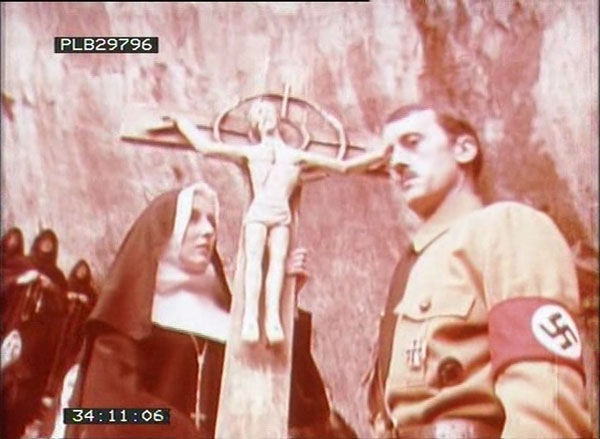
“A comic strip in 7 episodes on the life of Richard Strauss 1864-1949” Strauss is played as a power-hungry megalomaniac by Christopher Gable (also of Russell’s Tchaikovsky film The Music Lovers). The film itself is fanciful and alive, and surely one of the best biographic movies I’ve seen.

image

Only two years after 2001: A Space Odyssey, Russell accompanies that film’s big opening song with shots of a caveman who soon runs into religious mania and screaming nuns (both of which would be rampant in The Devils the following year).

image

“Alas, the time is coming when man will give birth to no more stars. The dead end of mankind is approaching.” I could quote every line and display stills from every shot. This seems way too extravagant to be a made-for-public-television movie, and too good to be a long-censored rarity. Only ten years until this can be shown legally despite the Strauss family’s objections, unless copyright law is extended like it always is.

image

We get a love triangle in the box seats at the opera, scenes of Macbeth, Don Quixote, a fun Salome with two lead actresses, and the infamous garden party with the nazis. Yes, the film does feature Strauss giving Hitler a piggyback ride, both of them grinning and playing violins. Various fantasies, both nightmarish (Allied soldiers interrupt Strauss’s innocent mountain vacation and murder his family) and wishful (his glorious music pounds critics into submission).

image

Kenneth Colley (Jesus in Life of Brian) – the only actor to play both Jesus and Hitler?
image

“A life completely away from politics and war – that is what I’ve always longed for.” Ends with a speech by an aged Strauss distancing himself from the nazi party, “There’s no stain on my character. These nazis are criminals, I’ve always known that.” But a minute later complains about “Jewish stubbornness” before catching himself. Russell partly credits Richard Strauss with scenario/dialogue, saying he used the man’s own words in the script. A scathing portrayal.

image

IMDB has incomplete credits. Judith Paris (a nun in The Devils) played Strauss’s wife Pauline, Vladek Sheybal (camp classic The Apple, Russell’s Women In Love) was Goebbels and Imogen Claire (appeared in and choreographed Lisztomania) was one of the two Salomes.

image

Tape number at top of screenshots provided so the BBC can locate their tapes and release this properly. Timecode (below) provided so you can easily find your favorite scenes. Thank me later.

The MBC:

The complete title reveals Russell’s intention to create a satirical political cartoon on the life of the German composer, who Russell saw as a “self-advertising, vulgar, commercial man . . . [a] crypto-Nazi with the superman complex underneath the facade of the distinguished elderly composer.” And, although, according to Russell, “95 percent of what Strauss says in the film he actually did say in his letters and other writings,” many critics and viewers found Russell’s treatment of the venerated composer itself to be vulgar.

More 16mm screenings from Clay, Halloween-themed this time. Clay showing seasonal shorts reminds me of Robyn Hitchcock’s halloween show where he joked that since he’s only playing songs about ghosts and death, nearly half his catalog is disqualified.

The Skeleton Dance (1929, Walt Disney) was the first in the Silly Symphonies series, with good music-visual sync, but too much repeated animation. No spoken/sung dialogue, wordless skeletons playing in a cemetery until the sun comes up.

Runaway Brain (1995, Chris Bailey) is an excellent, fast-paced Mickey Mouse short with a mad scientist voiced by Kelsey Grammer, beaten for an academy award by Wallace and Gromit. Seems like nobody around me had heard of this before.

The Tell-Tale Heart (1953, Ted Parmelee), animated with some abstract imagery, overlapping shots and sharply-drawn characters. Has a deservedly high reputation, but beaten for an oscar by Disney’s Toot Whistle Plunk and Boom.

Betty Boop’s Hallowe’en Party (1933, Dave Fleischer) – always great to see a Betty short. Her party is pretty tame – kids bobbing for apples and singing like the birdies sing (tweet, tweet tweet) – until a bully shows up and she attacks him with her secret cache of ghostly evils. Full of amazing animation and visual ideas, beautifully synched to the music. I gotta get me a whole pile of these cartoons someday. I asked Wikipedia when the apostrophe disappeared from “hallowe’en” but it didn’t know.

Naturally the show was also full of TV episodes and classic commercials – Count Chocula vs. Franken Berry, of course, also a kids vehicle that looks suspiciously like the Wacky Wheel Action Bike (“you can’t ride it! you can’t ride it!”) and an awesome PSA warning kids to stay away from blasting caps.

Of the TV shows, we’ve got a Popeye the Sailor episode where an evil robot-popeye robs banks, the adventures of Goodie the Gremlin, who helps people invent the steam engine, airplanes etc. instead of tormenting people like the other gremlins want, a Spider-man episode where Green Goblin gets his hands on a book of voodoo spells, and a hilarious, surreal episode of Ultraman (featuring benign fluffy chattering Pigmon monster in a recording studio, giant plumed lizard monster with heat-seeking feather missiles, and the usual bonkers dialogue). Then the lower-tier corny garbage shows: a cartoon Sinbad the sailor, some dimwit monster who shoots smoke out of his head, Beany and Cecil meet the invisible man (1962, produced by a post-Warners Bob Clampett) and a Hal Seeger-created short called Batfink, in which BF and his dim pal Karate fight a magician.

“Nothing worse than a horror movie geek.”

My three-year quest to see every Jacques Rivette film is slowly ongoing, my five-or-six-year quest to see every Luis Bunuel film proceeds at one title per year, but I thought it was best to push those cinematic luminaries aside and watch everything by Stuart Gordon, creator of classic 80’s horrors Re-Animator and From Beyond. Why is that? Because during SHOCKtober it’s nice to have someone you can rely on. While I admit there was nothing special about Daughter of Darkness, his Masters of Horror episodes have always been good, and this one, from the quickly-cancelled and rumored-to-be-crappy season 3 (aka Fear Itself) was excellent.

img

Starts out promising, setting a creepy horror mood off the bat, with a shadowy, rattle-shaking voodoo prisoner Dwayne (horror regular Stephen Hart) loaded into a police station jail cell for the night, the station lights flickering so badly that I’m thinking the episode’s budget didn’t include lighting and sets.

img

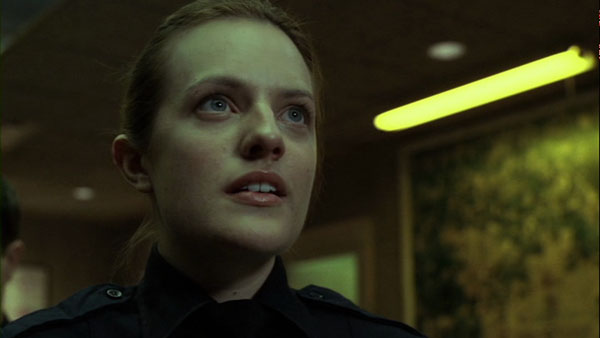
Our protagonist, eager rookie Bannerman (Mad Men star Elisabeth Moss) is a horror fan, turned on by proximity to Dwayne, wants to hear more about his crimes. I figured it’d go in a more Silence of the Lambs direction here, but there’s no time for quiet spooky conversations about fava beans – Dwayne “escapes” by possessing the bodies of the other cops, saving her for last. Interesting horror tactic – we don’t see any killings, just find bodies left behind, like the ending of Halloween, hidden all over the place. Bannerman is trapped in the locked station with a cannibal psycho killer and is definitely going to be eaten, so she eats rat poison, so when he catches up and takes a bite out of her neck, it kills them both.

It’s not like Gordon to have such a shocking, depressing ending, but it works. Anyway he didn’t write the episode – the guys behind WTF story The Washingtonians did. Nicely done, extremely tense little flick (maybe a tad underlit) with a great supporting cast. Witness:

Stephen Lee, star of Dolls over 20 years ago and still kinda looking the same
img

Russell Hornsby, whom I loved as the boyfriend in Stuck
img

Nick Sobotka, star of The Wire season 2.
img

Why, right after watching the classic original Dracula, would I waste time on a cheapo 80’s made-for-TV vampire thriller? Because it’s one of only two unseen titles on Stuart Gordon’s filmography, and SHOCKtober seems like a good excuse to tackle the last of them.

It’s a rare film indeed which stars Mia Sara (Ferris Bueller’s girlfriend) – looks like after Ferris Bueller it was mostly this and Timecop. She shows up… somewhere… Romania? I shouldn’t have waited three weeks before writing this. I’ve fallen behind, you see. The question comes up often, “watch movies or write about movies?” and watching them wins. So three weeks ago I watched a crappy vampire movie starring Mia Sara… in what country did it even take place? Let’s say Romania.

Ferris’s girlfriend and her enchanted necklace:
img

Friendly cab driver Max, “Americans and me, we kill many nazis,” drives her around as she seeks her long-lost father. She has a dramatic encounter with Anthony Perkins (in between Psychos 3 and 4) who says her father is dead, which clearly means Perkins is her father. Writer Andrew Laskos apparently didn’t think we’d figure that one out.

Perkins and Grigori:
img

Oh, but I said it was a vampire movie and I mentioned Romania. Yes, Perkins is a good vampire, and Mia’s love interest Grigori (Robert Reynolds of Howling 6: The Freaks) is a bad vampire. The former wants to protect her, while the latter wants to have sex with her and create a race of super half-vampire babies like Blade or Ultraviolet.

Anthony Perkins, sunburned vampire:
img

There’s a vampire war (a very minor one), Perkins is left in the sun, Mia rescues him, he saves her from Grigori killing them both, oh and the cab driver from before turns out to be a vampire crony. The movie apparently thought it now needed to rescue the derailed romantic subplot, so it pairs Mia up with an American ambassador (current Heroes star Jack Coleman), who has only been grudgingly nice to Mia for the entire flick.

“Shut up, I’m your new love interest!”
img

Wonder if this was Stuart Gordon’s sole interesting contribution or if this was in the script… the vampires don’t have fanged teeth, they have little toothy mouths in the tips of their tongues, like the girl’s breasts in Trapped Ashes.

img

Movie looks very made-for-TV, which it was. Gordon must’ve needed work after Dolls, and fortunately (in the long run) didn’t get himself tied up in the Puppet Master series.

SHOCKtober gets off to a rocky start with this five-part British miniseries. The premise is that there’s an apocalyptic zombie attack which we see through the eyes of reality show Big Brother participants. I think maybe if I’d ever cared about the show (or even seen it) this might’ve made a bigger impact… movie seems geared towards fans.

Who loves Dawn of the Dead?
“Why do they keep coming towards the house?”
“This place used to be like a chuch to them.”

I hope to see no more work from director Demange and cinematographer Tat Radcliffe who provide garbage visuals for Brooker’s cliche but sometimes exciting story. Every time there’s a bit of action the cameraman goes spastic. Since the bits of action are what make zombie movies fun, this one kinda blows. Fun to see zombies unleashed on a reality TV set though, ripping up the only character I liked, a girl whose only line seems to be a dismayed “I don’t like it!” We’re supposed to be thrilled instead at the prolonged, gory death of mega-asshole producer Andy Nyman, but he was too cartoonish to hate – I just appreciated his death scene because it was the only zombie-attack bit where the camera stood still.

MPEG noise over gloomy clouds makes the sky appear to be full of tiny birds.

Another great set of Clay’s 16mm cartoons, and it’s been too long since the last one.

Mysterious Mose (1930, Dave Fleischer) is a proto-Betty Boop (she looks like a dog; a sexy dog) cartoon in which she is haunted by a sorta ghost casanova. The Great Piggy Bank Robbery (1946, Robert Clampett) is a weirdly violent Daffy Duck gangster parody. Since his “Duck Twacy” fantasy is spurred by a knock on the head while reading comic books, it’d be a good short to play before Artists & Models. It’s Tough to Be a Bird (1969, Ward Kimball) is a Disney doc about birds and watchers with musical cartoon segments. And We Have Met the Enemy, and He Is Us (1973, Walt Kelly) is an unfinished Pogo cartoon with a harsh environmental message. I think all the voices were done by one guy.

Bunch of TV stuff. Spiderman fights a bank robber in a mole-man costume. There’s a Casper cartoon (in which Casper does not appear) about a watch repairman who gets attacked by an eagle at the end. Ralph Bakshi contributes an episode of Captain America. A horrible show called Hoppity Hooper (set in Wisconsin) with a Rocky-and-Bullwinkle-repetitive bit about “the traffic zone” was the low point. The high point was the hilarious 60’s-70’s commercials for Mr. Wizard, Hot Wheels, Cheerios and the like. Real fun program… too bad the next one is scheduled for the same night Art Brut is playing.

image

Returning directors Ed Bianchi (now working on an alternate-reality King David miniseries), Steve Shill (whose Beyonce movie did pretty well) and Timothy Van Patten (of Master Ninja) are joined by Elodie Keene (two TV movies starring Linda Hamilton), Thomas J. Wright (Millennium, Firefly, a Hulk Hogan movie), Daniel Attias (Stephen King’s Silver Bullet), Rob Bailey (CSI), Ernest R. Dickerson (The V Word, Juice, cinematographer on Do The Right Thing) and series co-creator/producer Robert F. Colesberry (also first a.d. on Warhol’s Bad) who died six months after season two ended.

I briefly mentioned why I’d give a crap about TV episodes’ directors in my season one write-up – I started watching the show after reading an online fight over it. An auteurist extremist (heh) watched one late-season episode and wrote a tirade accusing the episode’s director (not the writer, not the series creator) of being homophobic and called the show “the most awful racist drek I have seen in years.” My favorite part: “The show, like a lot of current American TV, has deliberately bad exposition. This is designed to make you watch all 54 previous hours of the series, so you can figure out what the heck is going on.” This started a hundred-message discussion culminating in the dramatic exit of the list’s founder, and got me interested enough to finally watch the show which everyone but those two guys were passionately defending.

The Dead this season: D’Angelo Barksdale (Larry Gilliard Jr.) moved on to The Machinist and Brad Anderson’s Fear Itself episode and some new Patrick Swayze show. Frank Sobotka (Chris Bauer) was in Flags of Our Fathers, Broken Flowers, starred in Anderson’s Sounds Like, and is in a new vampire show. Stolen-goods warehouser George Glekas (Teddy Cañez) shows up in Law & Order from time to time. People who probably won’t be back (serving long prison terms or witness-protection): Nick Sobotka (Pablo “Liev’s brother” Schreiber) was in J. Demme’s Manchurian Candidate remake and Stuart Gordon’s Fear Itself episode (and should consider being Ben Affleck’s stand-in if he runs out of work). Ziggy Sobotka (James Ransone) was in Inside Man and Generation Kill. Dealer White Mike (Brook Yeaton) is actually The Wire’s props guy who worked with John Waters back in the day. Greek drug man Eton (Lev Gorn) played a dealer in Keane with at least two other Wire actors, and russian muscle guy Serge (Chris Ashworth) was 25th-billed in Terminator: Salvation.

I’d be here all week if I attempted a plot description. Season 2 was slow going at the start, pulling the team back together, but it got rolling towards a great/depressing ending, which should lead naturally right into another season. I wonder if there was no guarantee of a second season after #1, but after #2 a third was a sure thing.

Wallace & Gromit’s Cracking Contraptions (2002)
Ten W&G shorts. I think these were made to promote the full-length film… of course I had the chance to watch them back then and somehow put it off for seven years. Anyway these are cute – faves were The Snoozatron (a machine that dresses G. up as a sheep and flips him on a trampoline so W. can “count” him and fall asleep) and The Turbo Diner (a table-setting device exactly a la Charley Bowers in He Done His Best).


All This And Rabbit Stew (1941, Tex Avery)
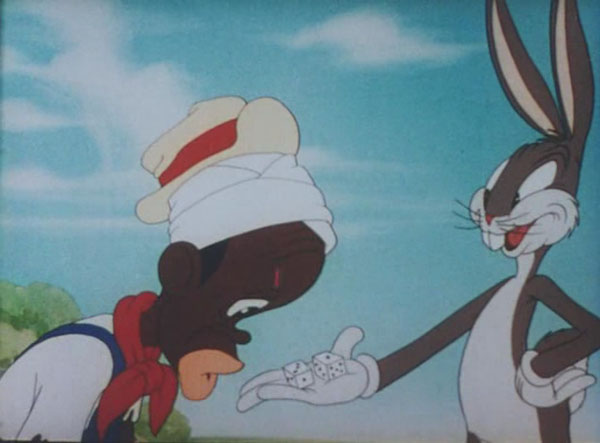
Tex’s final Bugs short before moving to MGM. Hooray, now that I’ve watched those John Ford movies I can recognize that the offensive black stereotype hunter is based on Stepin Fetchit. I tried telling myself that if he didn’t look African the character would basically be Elmer Fudd – but then Bugs gets out of being held at gunpoint by shaking some dice and that idea goes out the window. Ouch.
image


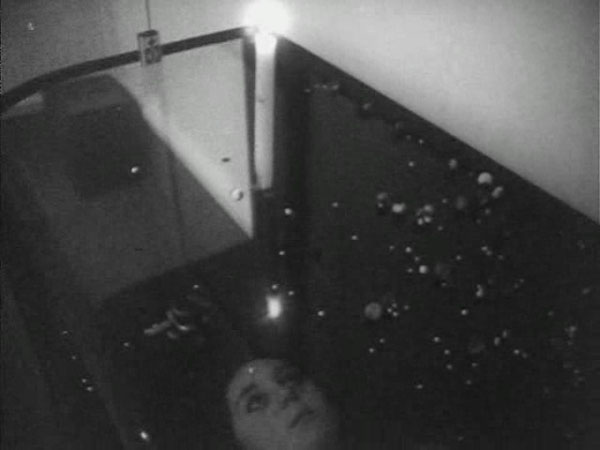
Vivian (Bruce Conner, 1964)
If you liked a girl in the 1960’s, you made an avant-garde film of her. Harvard Film Archive: “An ecstatic portrait of actress Vivian Kurtz that features footage of a 1964 Conner exhibition and couches a humorous critique of the art market.” Set to a pop song called Mona Lisa, loads of fun and only three minutes long. This would go on my “best of a-g” gift reel if it wasn’t such a problem to make such a thing.
image


Journey on the Plain (1995, Bela Tarr)
Poems about friendship loss, life and death, each with a long tracking shot (imagine that), written by famed Hungarian poet Sándor Petöfi and performed by one of my favorite film music composers, Mihály Vig (Irimiás from Sátántangó, in color!). Suddenly in one scene 20 minutes in, he’s on a truck loudly playing a doomed keyboard. An odd movie, peaceful and beautiful. I would gladly watch again, paying more attention to the words of the poems.
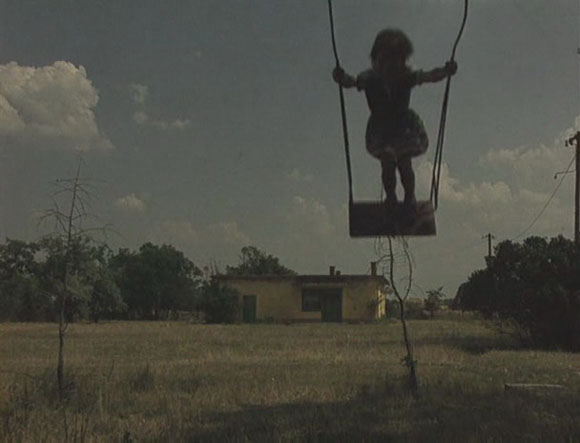
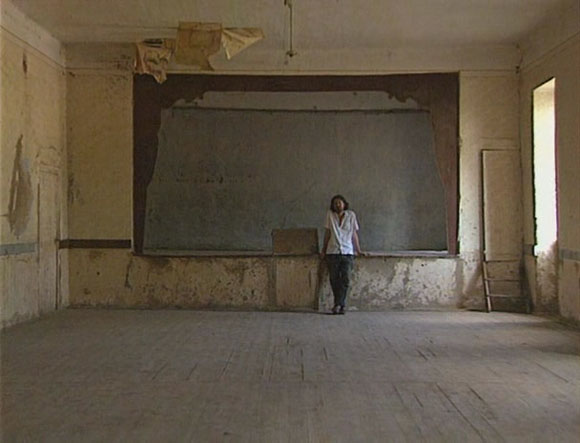
image

image


Thriller (1979, Sally Potter)

A narrator goes over the story and characters of an opera, then analyzes it while staring into a mirror, memory and identity swirling about. Very art-film, told in black-and-white stills and scenes, narrator all heavily french-accented. Kind of entrancing, really, with repeated poses and images and phrases, never quite turning into something I can make sense of (though I hear it’s some kind of marxist-feminist critique of Freud and contemplation of human existence, thanks to a useful, knowledgeable and well-considered review on the IMDB – a rare thing indeed).

Sony Pictures: “a critical re-working of Puccini’s opera La Boheme, was a cult hit on the international festival circuit.” Sudden bursts of the shower theme from Psycho. “Yes, it was murder. We never got to know each other. Perhaps we could have loved each other.” I need to see it again, obviously, but I’m not dying to do so anytime soon.

from K. McKim’s great Senses of Cinema article

Potter’s 16 mm black and white cult hit Thriller (1979) overtly equates revision with survival; the film invokes formal conventions to interrogate the narrative necessity of Mimi’s death. Inscribing this inquiry within allusion to female murder victims (Thriller cites Bernard Hermann’s screeching Psycho score), Mimi questions the conventions that locate meaning in the death of a young beautiful woman. Scripted, edited, produced and directed by Potter, Thriller transforms the opera into, as the title suggests, a thriller that uncovers operatic form’s generic and gendered hypocrisy.

image

image


Dottie Gets Spanked (1993, Todd Haynes)
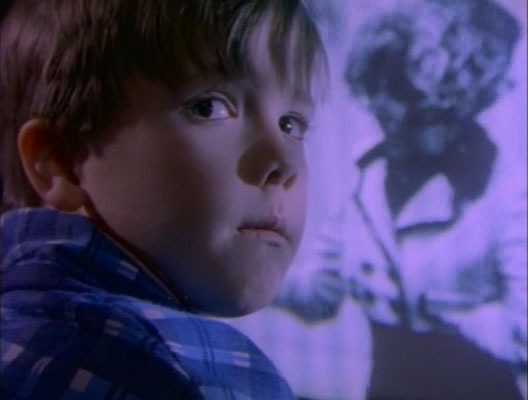
Wow, this was great. Boy with a mommy complex idolizes an I Love Lucy-esque TV show, wins a contest and gets to visit the set. Movie swirls with repression and fantasy and budding sexuality.

The distributor: “anticipates … Far from Heaven with its excavation of placid mid-century surfaces and deeply-buried emotions.” R. Lineberger: “This short film was commissioned by the Independent Television Service as part of a search for short films about American television. The pairing is perfect. Haynes is subversive, but approachable. His film deals with ominous and disturbing themes, but he never comes out and says anything objectionable. For example, Steven’s father is suggested to be violent, or at least sharply critical, but we never actually see any aggressiveness from him. The whispered consequences and punishments exist in glances, or in Steven’s thoughts.”

image

image


13 Screen Tests (1964-66, Andy Warhol)

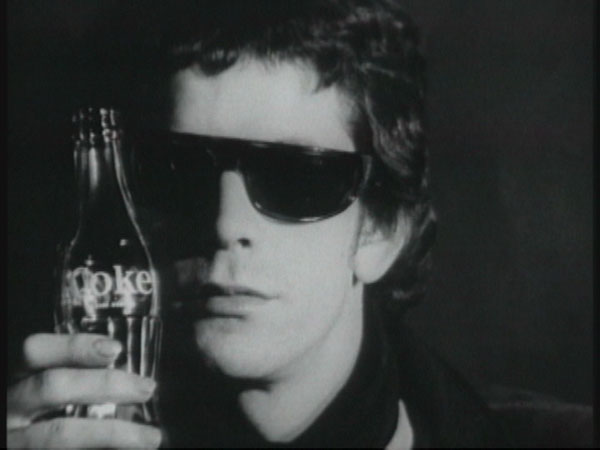
Rented Warhol’s screen tests sorta against my will (I just wanted to hear the new Dean & Britta songs) then proceeded to half-watch ’em while listening to the music. The films were better than I thought (that Edie Sedgwick has got something, and Lou Reed and Dennis Hopper are funny) and the music was worse (standard instrumentals, a few new songs and some covers). I did try watching a screen test straight through, the way I’m supposed to, to see if I experienced a sudden tingly appreciation for the Cult of Andy, but it didn’t work; maybe I picked the wrong one.

G. Comenas:

Factory visitors who had potential “star” quality would be seated in front of a tripod mounted camera, asked to be as still as possible, and told not to blink while the camera was running. … Some of the earliest Screen Tests were those included in Warhol’s film The Thirteen Most Beautiful Boys. … More than 500 Screen Tests were made. In addition to The 13 Most Beautiful Boys, some of the footage was incorporated into other compilation reels such as The 13 Most Beautiful Women (1964) and 50 Fantastics and 50 Personalities (1964).

LA Times:

Each test lasted as long as a single 100-foot roll of film. Each was shot at 24 frames per second and projected at two-thirds of that speed, a trick Warhol often used. Each took a little less than three minutes to film, and takes a little more than four to watch. The slow-motion effect adds a discernible flicker, heightens every movement and contributes to the dreamy, ghostly quality.
image

I’ve always wondered about this one. In my mind it represented all the non-musical Potter plays, the other half of his career, and so I had to coax myself into finally watching it for fear it’d damage my image of the great man. Liked it for sure, but don’t think I would’ve been hooked if this was the first one of his plays/adaptations I’d seen. Well-written, subversive, but dark as all hell… I am surprised this guy was allowed to work in television.

Over two decades before The Blair Witch Project:
image

Michael Kitchen (Out of Africa, recurring role in recent James Bond flicks) is Martin, an evil young man who bumps into strangers on the street and tries to convince them that they know each other. Denholm Elliott (A Room with a View, Bad Timing, best known as a good guy in the Indiana Jones movies) almost falls for it then ditches him, but Martin stole Elliott’s wallet, takes it home and easily talks his way into the house with the wife Patricia Lawrence (in Potter’s Son of Man a few years earlier). Martin sees that their daughter Pattie is lying brain-damaged at home and fakes that he was an ex of hers who was turned down for marriage, offers to help care for her, acts ever so polite. Elliott is suspicious but doesn’t move fast enough, and Martin integrates himself. The wife might be gullible, but she’s also so weary from taking care of Pattie constantly and jumps at the chance to leave her in compassionate hands for a few hours each day. One night when Martin is about to rape Pattie for at least the second time, she wakes up screaming, aware of herself at last, and Martin flees, immediately starts looking for a new family.

Move mouse over image to see Michael Kitchen get over-excited:
image

Barry Davis (who also directed Potter’s Schmoedipus the same year) keeps things lively on a miniscule budget. The not-at-all-naturalistic lighting effects (see first screenshot) are especially nice. From the initial street scene on, it stays remarkably intense, bizarre and horrifying. Martin has supernatural powers and hairy demon feet. He talks politics with the family, encourages their own worst impulses. Potter writes: “Deport them, that’s what I say. England for the English” into the mouth of the devil. Then of course there’s the home invasion aspect, the rape of a mentally damaged girl and the miracle ending. This was banned for eleven years (“brilliantly written and made, but nauseating”) – that’s why IMDB lists it as a 1987 release. The theatrical remake starring Sting was actually the first version released in the UK.

Denholm Elliott:
image

My favorite line… having some brandy – “There’s fluoride in the water, so are you able to drink it neat, dear?”