Rounding up some of the foremost comics and filmmakers, P-Bog opens with the greatest authority on film history – himself, of course. It’s extremely easy to find people with nice things to say about Buster Keaton, and to fill the rest of a 100 minute documentary with highlight clips from Keaton’s terrific films, and P-Bog does exactly that. In fact, the whole thing begins to feel like an advertisement for Buster and his great features – and it is, produced by Cohen Media Group, who is currently releasing the Keaton films on blu-ray, and also happens to own the Landmark theater where this doc played. But even if P-Bog doesn’t turn in something on the level of his epic Tom Petty doc, this was a fun way to revisit some Keaton. He peppers the “sad later years” section with highlights from Keaton’s forgotten advertisements and cameos, and puts this section in the middle of the film, so he can start strong with the shorts, and end strong with the features.
Wild Rose (2018, Tom Harper)
A loser mom in Scotland dreams of being a country singer – it’s not the worst premise, but then her extremely well-meaning employer Sophie Okonedo wants to help this dream come true, as fiery Jessie Buckley undermines her own success at every opportunity, and the movie becomes an overly-smiley, Disney version of a John Carney plot (so, it becomes Begin Again).
Jessie is a loser because she gives up on everything, including her own family, as long-suffering mom Julie Walters reminds her, but when Jessie finally goes to Nashville assuming she’s be dramatically discovered by talent scouts within a couple days, sees the sad reality of the open-mic scene there, and gives up on this dream to return home, it’s a triumph. Anyway, the climactic Mary Steenburgen song is sure to get nominated, and Jessie (Chernobyl, Michael Pearce’s Beast) is already winning things. Director Tom Harper has already followed up with The Aeronauts (LWL: “the longest 100 minutes you’ll spend in a cinema this year”).
Mad Monster Party? (1967, Rankin/Bass)
Twenty-three SHOCKtober movies this year… I would’ve guessed the worst would’ve been Cannibal Holocaust, or another Italian horror, or the late Ken Russell, or one of the 1980’s movies… but it ended up being this made-for-TV horror-comedy stop-motion feature. The very words “stop-motion feature” make for a must-see movie, and this month’s The Wolf House was an insane masterpiece, but this thing felt like a celebrity Scooby Doo episode.

Outside of the stop-motion (especially anything involving water), Bride of Frankenstein Phyllis Diller’s laugh is the main source of enjoyment – otherwise it’s all horrible jokes and slow, pointless plot and voice impressions. All the world’s monsters, plus a sap (Jimmy-Stewart-sounding Felix Flankin) convene at Dr. Frankenstein’s castle for something or other, then fight over the doctor’s inheritance and his “formula for destroying matter.” I think we turned it off after red-haired Francesca falls in love with Felix for hitting her, or maybe it was during the endless song she sings right afterward. The monsters are all hoping IT doesn’t show up, so I watched the end of the movie the next day, but IT was just King Kong minus his trademarked name.

Most voices were by Allen Swift – his career ranged from Howdy Doody to Courage the Cowardly Dog. In the late 1950’s he was on WPIX channel 11 NYC as “Captain Allen,” ensuring his eternal legacy via the Arcwelder song. Karloff played the Doctor, at the end of his career, the year after voicing The Grinch. Francesca was Gale Garnett, who beat Bob Dylan at the Grammys a few years prior, and also appears in future Shocktober classic The Children. Diller was in her celebrity prime, the year before Tashlin’s Private Navy of Sgt. O’Farrell. Rankin/Bass made this between their Rudolph and their Frosty, long before their Hobbit and Last Unicorn, and the cowriter was Mad Magazine creator Harvey Kurtzman, whose jokes work better in print.
The Mountain (2018, Rick Alverson)
Posting these out of order, but I watched this right after The Nightingale, making for a 4:3 double-feature – perverse, since no screens are shaped like that anymore. Tim & Eric and Neil Hamburger aren’t in this, so it seemed like a good starting point, and damn, now I need to watch Alverson’s other four features. In fact, I might need to watch this one again, since I suspect Denis Lavant’s big speech at the end should’ve had subtitles.

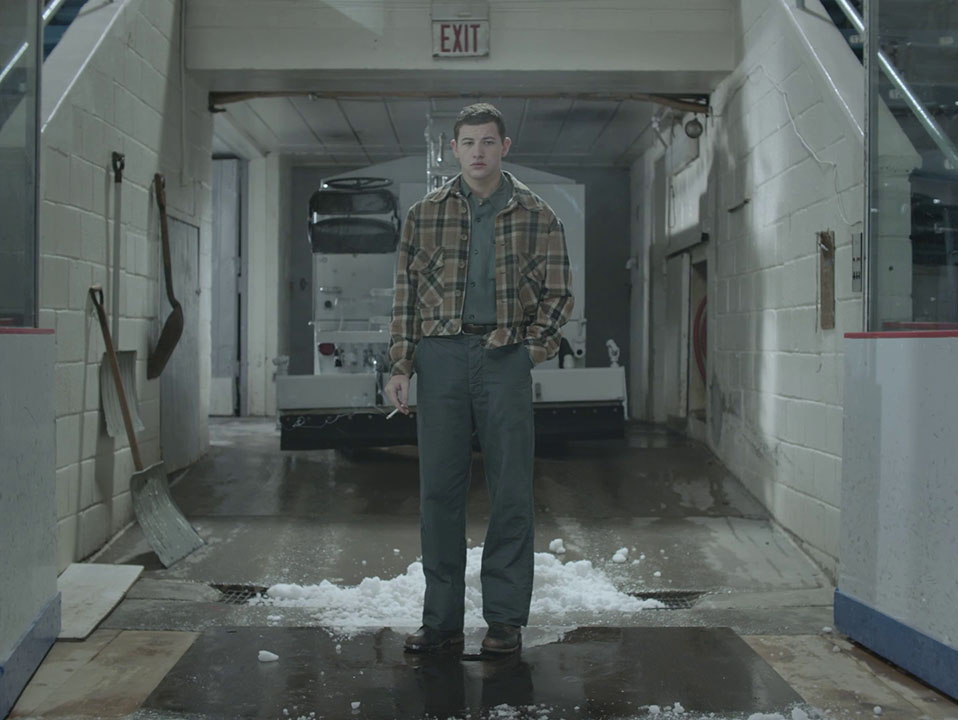
Doctor Jeff Goldblum tours hospitals, with a former patient’s introverted semi-orphan son (Tye Sheridan of Ready Player One) in tow, performing lobotomies with a seemingly low success rate. Sounds like a real drag, so I can’t explain why I loved it – the squared-off compositions, the bleak period-postcard look, Goldblum, Udo Kier as Tye’s late father, and a seething Lavant are all pluses for sure.


Benjamin Mercer in Reverse Shot:
For our fictionalized lobotomist, the object of the westward-leading circuit is to outrun the strengthening professional headwinds, the first wave of antipsychotic pharmaceuticals having recently been introduced, leaving fewer and fewer institutional decision-makers with an appetite for the operation in question, with its barbaric follow-through and uninspiring “success” rate … Andy learns that sharing a hotel room with Fiennes, not just a reckless physician but an alcoholic skirt chaser to boot, is its own special kind of hell, and he begins to sympathize more and more with the patients he’s charged with photographing for medical posterity.

Lavant’s daughter / Tye’s love interest played young Lois Smith in Marjorie Prime. Cowriters include the guy who made Person to Person and the star of Alverson’s first two features.
The Canterbury Tales (1972, Pier Paolo Pasolini)
Too many closeups for a movie with such horrid dubbing. I listened to the English version for a few minutes, which seems to have a more balanced sound mix, but reluctantly returned to the Italian. I bought the Criterion box set of this trilogy, and in the extras you hear all about the difficulty in making these, the world travel adventures, filming on an active volcano, and the artistic work, recreating Bosch paintings with live actors, designing compositions and colors inspired by Dürer and Paolo Uccello… but while watching them, you can’t shake the feeling that they’re hastily-dubbed, silly-ass sex comedies.
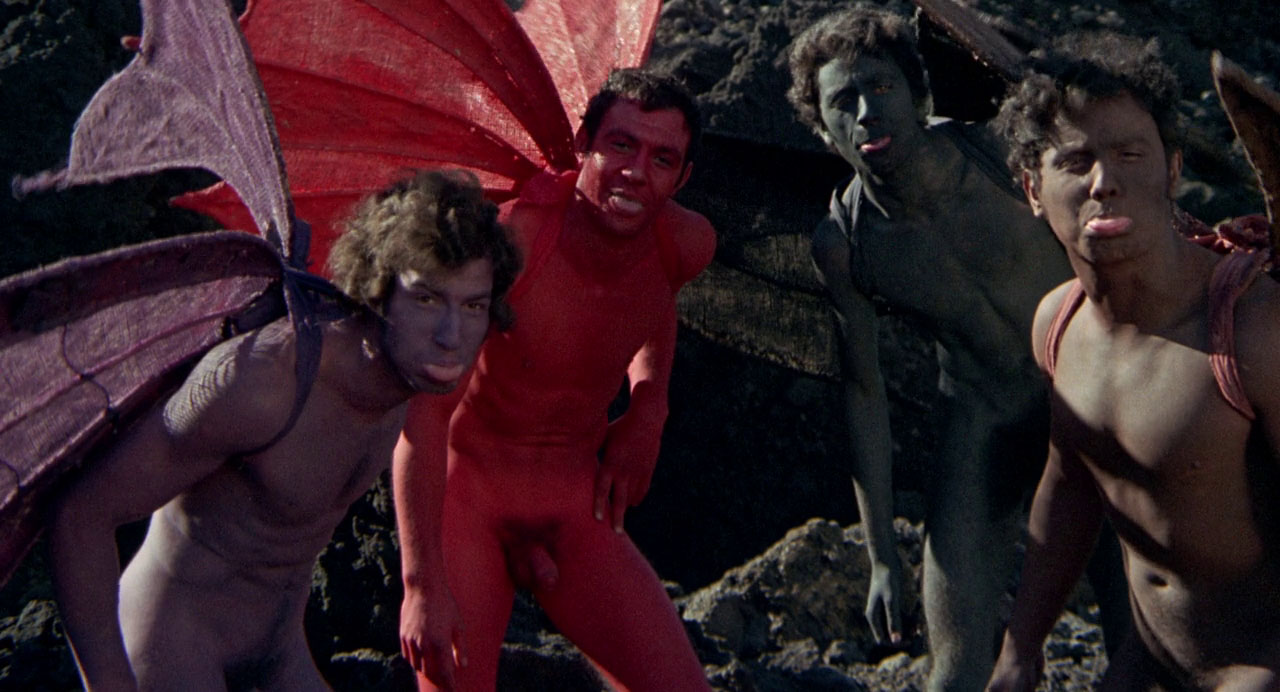
You know the setup: a diverse bunch of weirdos gather around, their guide says that on the way to Canterbury they should each tell a story. Firstly, old rich dude (wicked-eyebrowed Hugh Griffith of the Dr. Phibes movies) seeks a wife, finds hot young Josephine Chaplin (Shadowman), but she falls for hip young Damiano and cucks her blind husband. Buncha stuff happened in the second chapter – a dude is burned to death, the devil (Accattone star Franco Citti) tricks another dude into hell – then ol’ Chaucer, played of course by our Pasolini, gets the idea to start writing these down.

From one Chaplin to another – highlight of the movie is Ninetto Davoli, the messenger from Teorema, doing a Chaplin parody as a cheerful tramp who is easily distracted by gambling and prostitutes. More silliness follows, overlong episodes lacking the sped-up film effect of the Ninetto. Two young dudes fight over Michael Balfour’s wife Jenny Runacre (star of Jubilee and The Final Programme). Laura Betti of (A Bay of Blood) marries a dull anti-feminist and so bites his nose off. More wife-stealing, and multiple fart jokes – I liked the section where some stupid young men go on a quest to kill Death, and almost immediately get distracted and murder each other.
Also featuring Welsh wrestler and Jon Langford subject Adrian Street – I think this is him?

Rock Docs and Concerts, part 5
The Devil and Daniel Johnston (2005, Jeff Feuerzeig)
RIP Daniel. This was jaw-dropping, I had no idea.
“He spent some time in Bellevue, a day or two, was released through a clerical error, and actually opened for Firehose at CBGB that night.” It all sounds perfectly unbelievable, “print the legend,” larger-than-life biography, but Daniel is real and wonderful, so you follow along from his humble beginnings as the stories get wilder. I kept pausing the movie to tell Katy stories until she asked if I was Forgotten Silvering her. Then Daniel wrestles control of his dad’s plane, cuts the engine and throws the keys out the window, and you’ve entered new ground for a rock doc.

–
Industrial Accident: The Story of Wax Trax! Records (2018, Julia Nash)
Katy overheard me watching this, said it seems like there’s a lot of talk and not much music, and she’s not wrong. Wax Trax! was started by a gay couple in the 1970’s, and this is very much their story, with the colorful rock & roll stories as decoration. In fact it could’ve used more WT! music – when the label starts taking off with some Ministry singles, we hear “To Hell With Poverty” instead of Ministry. Nice touch: we hear someone say “Nine Inch Nails was a terrible catalyst,” before showing the heretic speaking the words (it’s Reznor). The label was said to be popular in the bible belt (“It almost seemed the more conservative a small town you were in, the more you needed a Revolting Cocks record”), and in fact one of the label cofounders left it all behind and moved to Arkansas in the mid-90’s, right about when I was in Arkansas discovering all this music for the first time. The Amphetamine Reptile movie was 100x better, but this one is more emotional.

–
MC5: A True Testimonial (2002, David Thomas)
I watched this despite having listened to the group’s “Kick Out The Jams” album this summer and thinking it was just okay… and after watching, it turns out the MC5 is the greatest band in the history of rock & roll. One of the most unconventionally affectionate rock docs I’ve seen, with not a single celebrity testimonial, just the surviving band members and their friends and family, making the band seem smaller than they were, which lets the music (and there’s lots of it!) speak for itself.
MC5 faced down the police, constantly got arrested for obscenity, faced down the US fuckin’ Army, and formed the White Panther movement because they wished they could be as cool as the Black Panthers.
The internet says Wayne Kramer suppressed the movie for 15+ years, boooo.

–
Apocalypse: A Bill Callahan Tour Film (2012, Hanly Banks)
Between songs, some very short interviews, scraps of wisdom and insight. Grab all you can from the Apocalypse man. A few short years later in 2019, Bill is healthy and happy, wide open, chatty and content, touring on another consecutive masterpiece record. Back in 2012, this was more than we expected, and it was good, each song with its own visual scheme, as in the best concert films.
–
Also watched some live Malkmus/Jicks

Some reunion-era Ween

Yo La Tengo with Jad Fair

Rolling Blackouts Coastal Fever

and Courtney Barnett

Tokyo Tribe (2014, Sion Sono)
Japanese gang-war rap musical, opens with an epic long take, then blonde gang boss Mera (Ryôhei Suzuki of Kurosawa’s Seventh Code) explains the local gangs and neighborhoods to a noob cop he has stripped and threatened with a knife, and we already know what the movie is like: it’s gross and loud and sexist, and kinda fun as hell.

Mera ambushes his hated rivals, the peaceful gang Musashino led by Kai, and kills a guy, and his body is wheeled back home with a new girl in tow (Nana Seino). Meanwhile, Mera ally Lord Buppa (played by a pop-eyed Riki Takeuchi, a classic Miike star I haven’t seen since Battle Royale 2) is sent two elite fighters by the High Priest to recover HP’s missing daughter Erika (the new girl, obvs), and previously unknown gang the Waru is activated.
A holographic message from the wise High Priest:

Kai bands together all the Tokyo tribes, including the Gira Gira Girls and Neri Muthafuckaz and probably a couple more, to fight this new threat. It all looks impressively choreographed and real, neon lights and stunt fights, then a super-fake CG tank comes along and blows it. Still, for a full two hours of rap mayhem, this doesn’t lose steam. I’d been avoiding Sion Sono since Noriko’s Dinner Table, but this and Why Don’t You Play In Hell were fun, so maybe I should watch his four-hour masterpiece Love Exposure sometime.

Cat People (1982, Paul Schrader)
From Showgirls to this, it’s my year to watch movies that are considered horrifically bad, but are actually kinda cool. I mean I’m not running out to buy Cat People posters for my dorm, but from its wordless mystical prologue on, it never hits a wrong note, and is slick looking with cool music (until the lame Bowie title track over the credits, sorry).

I guess Ruby Dee’s introduction, overexplaining why her character name is Female, pronounced fuh-MOLL-y, is a wrong note, but right after that, look it’s John Larroquette, and then a pretty woman hosing an elephant (this is Annette O’Toole, the Jessica Chastain of the original It). Okay, I guess the movie’s attempted reenactment of the Tourneur version‘s pool scene, seemingly written only as an excuse to show Annette naked, is another wrong note.

Comic relief guy loses an arm:

As soon as Nastassja Kinski arrives in New Orleans to meet her long-lost brother Malcolm McDowell (awesomely, lecherously creepy), he goes off to kill prostitutes in form of a leopard and gets captured. Kinski gets a zoo job to be near her leopard-brother, wants to date zookeeper John Heard (After Hours bartender) but sexual desire makes her get furry, and while she’s trying to figure this out, McDowell is pestering her: “we can live together as mates, just as our parents did.” John Heard somehow survives a night of full moon bondage sex, and she takes her late brother’s place as a zoo exhibit.


The Treasure of the Sierra Madre (1948, John Huston)
Based on a then-twenty-year-old novel, which somehow hasn’t been remade yet, but I suppose every movie about no-good men coming into money then turning into paranoid murderers is a remake in spirit. Damn good movie, but the true stories about the contested identity of the novel’s author are even better! John Huston’s fourth non-doc feature won oscars for himself and his dad, and his other movie that year won Claire Trevor an award.
A couple of downluck laborers overhear Walter Huston (just off playing “The Sinkiller” in Duel in the Sun) bragging about his prospectin’ skills, and they ask if he’d join them on an expedition. I didn’t know who was the bigger sucker, but it wasn’t the two Americans since Huston indeed had the knowledge and skills to find all the gold dust you please; it was jolly Huston for taking on these bozos as partners. I guess Tim Holt (prolific cowboy star, an Earp in My Darling Clementine) isn’t so bad. especially compared to his villainous partner Humphrey Bogart (what?) who becomes gold-crazed, tries to kill the others and finally gets murdered by banditos who lose all the gold dust to the wind (making The Killing another semi-remake).