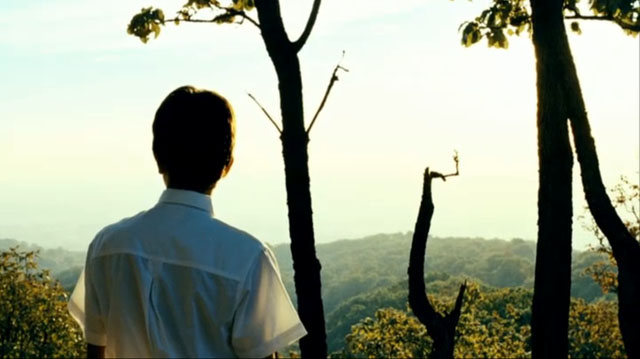
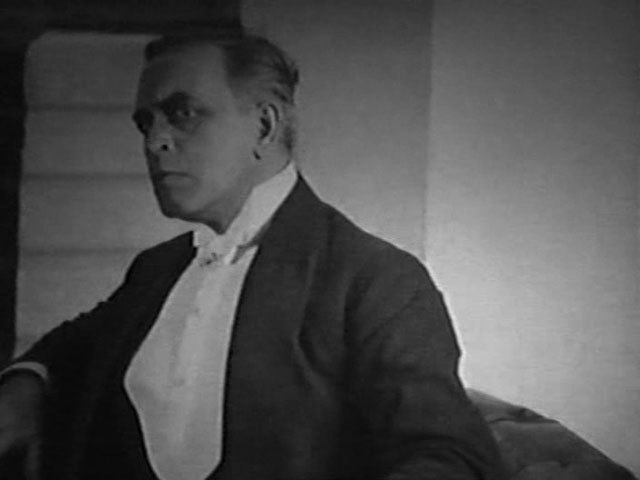
Rare 16mm print from Emory’s own collection. I was wary when the first word onscreen read “Strring,” but the subtitles turned out to be good.

Chin has frizzy hair, large glasses, has been dating round-headed fabric-store worker Lon since high school and they don’t seem very close anymore. Also they wear bad suits in every scene. Chin works assisting Ms. Mei, is getting a raise in her first scene at work, and the company is getting bought out (due to financial ruin from a 10 cm surveying error) in the next.

Her boyfriend Lon seems depressed, trades videotapes of baseball games with his former coach Mr. Lai. Lon’s ex Gwan is getting divorced, and Chin’s coworker Ko, also getting divorced, wants to hang out with Chin. Chin’s dad is inappropriate (and a financial mess, and former abuser), mom is evasive and withdrawn, and sister lives in a graffiti-laden high-rise (prominently scrawled: “Duran take youself”) with other kids. Lon runs into Kim, a cabbie friend with a flake wife and three unattended kids.

As the movie progresses (takes place over a few months), more and more money problems and relationship problems are revealed and intensified, not just from our central couple but everybody. The mood is occasionally lightened with a few jokes or some laughable 80’s fashion but there’s an air of constant unease. Things start to go bad when Lon gets into a bar brawl (to a Michael Jackson song, which may account for the movie’s unavailability on video), then Chin throws him out after he sees his ex, who is visiting from Tokyo.

Chin is being stalked by ex-coworker Ko at this point, and I wish I’d paid more attention to what he looked like, then maybe I’d be sure if he’s the one who stabs Lon to death at the end. Of Yang’s films I’ve only seen this, A Brighter Summer Day and Yi Yi, and each ends with a death. “Once it’s over, forget it. Understand?,” Lon says to the motorcycling assailant, who then follows Lon’s cab until the inevitable confrontation. Movie gets slightly metaphysical there at the end – he has a dying dream sequence reflected in an unplugged television, then it cuts from Lon, smoking, to the smoke above his head – beautifully done. Back to Chin, still unaware of her boyfriend’s fate, who is finally getting her job back, meeting her ex-and-future boss Ms. Mei in an empty, white office building, recalling the empty white apartment the couple was about to rent in the first scene.

Articles online mention visual distancing effects: characters peering through blinds, shots through mirrors, Chin’s ever-present sunglasses, one interaction shown only with shadows on a wall. They also mention Lon’s fantasies of playing baseball when he was younger, which I’d thought would be a bigger deal than it was. From skimming a couple articles I figured he’d be like the insufferable skateboard-head-injury guy in Little Children, but it’s more of a gently aimless pre-middle-aged malaise.

There’s a karaoke bar, but nothing that stands out as much as the karaoke scene in A Brighter Summer Day – better is a dance club where the power goes out in the middle of “Footloose” as Chin sits alone in the corner.

Written by Yang, Hou and T’ien-wen Chu (cowriter of Three Times, among others) and shot by Wei-han Yang, who worked with Yang again on Yi Yi but nothing in between.

Lead actress Chin Tsai married the director, was in a Stanley Kwan movie the following year which sounds pretty good, then nothing else. Hou Hsiao-hsien (Lon) was already a writer/director – his A Time to Live and a Time to Die came out the same year. Nien-Jen Wu (cabbie Kim) and I-Chen Ko (was he the stalker?) were also writer/directors… it’s an accomplished cast.

Update from shinbowi3 on twitter: the film’s original title “literally translates as Pure Plum and Bamboo Horse. This is a chinese phrase that colloquially describes a love born from childhood friendship. This title frames the film as more personal and I LOVE IT.”

Katy says she’ll do a guest write-up for Gigi, so consider this a placeholder. She liked the filmmaking very much, and I’m sure it was very good (Minnelli can do no wrong) but I was put off by the story.

Young Gigi (Leslie Caron, who was actually 26, so I guess it’s all okay) is being taught by her family how to please men, and super-rich Gaston (Louis Jourdan of Letter from an Unknown Woman, which we watched directly afterwards) is bored with every girl in town except Gigi. At the end he decides that he loves her, much to the delight of her family, including dirty old grandfather Maurice Chavelier (27 years after The Smiling Lieutenant), motherly (but not her mother – Gigi has no parents) Alvarez (Hermione Gingold of The Music Man) and stickler aunt Alicia (Isabel Jeans, star of two Hitchcock movies in the 20’s). Won an awful lot of oscars – pretty much everything but acting and special effects.

As far as movies about fat, opaque, dull-witted men with menial jobs in alienated cities who eventually turn to crime and suicide, I suppose I liked this better than Crimson Gold, and as far as movies with extended blowjob scenes, I suppose I liked this better than The Brown Bunny. But that’s not to say I liked this all that much. Certainly not in my top films of the decade there, Sight & Sound, but I suppose important critics give bonus points to stuff that can “willfully sabotage narrative tension and dynamism,” while I enjoy movies with more, I don’t know, narrative tension and dynamism?

image

Opens with some very nice string music as the camera slowly reveals a girl giving a blowjob, and it looks like video but I can’t tell if that’s just the DVD transfer. Marcos the giant chauffeur picks up Ana the general’s daughter and escorts her to the “boutique” where she is secretly a high-class prostitute. They have awkward sex (her on top him being perfectly still, she jokingly says “calm down Marcos”) while the camera wanders off out the window, slowly takes in the whole courtyard area around the building before returning to the couple. I suppose that sabotaged narrative tension, and it was actually one of my favorite moments so maybe I like that sort of thing.

image

Half an hour into the movie, Marcos quietly tells her “the thing is, my wife and I kidnapped a baby, and he died this morning.” Later at home his wife curses him out, saying the girl will talk to the police. So Marcos watches some soccer, takes a family trip (with the family whose baby he kidnapped – talk about awkward), then visits Ana and kills her with a big knife. If he hadn’t planned how to kill her without being caught, and he spoke of turning himself into the police anyway, I can’t see why killing Ana is a good idea except maybe to relieve some sort of sexual tension. Sight & Sound doesn’t know either, admitting the film is “riddled with enigmas.”

An uncharacteristic shot:
image

Music at weird times – sweeping strings at the gas station, drum and horns after the sex scene. Sounds start to disappear. We see huge bells being rung in the rain, and we hear the rain but not the bells. There’s some religious business at the end, as Marcos wears a hood and shuffles into a church on his knees, to presumably die from blood loss at some time before the police enter the building.

image

Director in interview: “Some people even think that I’m obsessed with awkward sex or fat people.” Says he wants to create the film more through the editing than camerawork… I assume from what little I’ve heard about them that Japon and Silent Light are vice-versa.

image

Slant:

With his 2005 flamethrower Battle in Heaven he connects our discomfort viewing graphic sex to a daring critique of a country’s complicity in a man’s frustrated social situation. Reygadas provokes—calmly, not thuggishly—our contempt for his film’s radical aesthetic patterns and explicit sexual nature, suggesting our anxiety with the text’s essential unconventionality is tantamount to racism, bodyism, and anti-artism.

Ver(onica) hits something then continues on. She checks in and out of a hospital and a hotel, has an affair with a guy she seems to know, visits family, all in a daze, following the leads of others. She gets to work at her dental office and sits in the waiting room by mistake. Finally recovers herself enough to get a few words out, and tells her brother that she hit someone. He flies into cover-up mode, and tries to convince her it was a dog – meanwhile a boy’s body is found in a canal near the accident but the papers are saying he drowned.

The camera stays close with Ver (Maria Onetto, amazing, though beaten out by a Brazilian for best actress at Cannes), as she recovers from her shock more and more, starts acting out her life again. She is surrounded in every scene by symbols and reminders: children, cars, her own car with its dented front, Indians (it was a native whom she hit), her phone (she was reaching for it during the accident), the canal, and water – the one time she breaks down it’s when a sink won’t work. Her trauma is effectively conveyed by the filmmaking without going all Eureka-depressive.

image

Martel is pointing to class differences (the killed child isn’t important except when his body inconveniences the city by blocking the canal), but isn’t going out of her way to make Ver a villain – she’s in shock, then confesses, then as she recovers and the event seems more ghostly and unsure, she’s not made out to be a horrible person. I wouldn’t say the viewer is meant to be on her side, exactly, but the filmmaker’s sympathies and intentions are hard to pin down. I have watched a bunch of acclaimed depression flicks in a row with Eureka, Songs from the Second Floor and Battle In Heaven and was afraid this would be another feel-bad mopefest, but I thought it was excellent, and it fit my weary, headachy state without losing interest.

Interesting tidbit from Martel, courtesy Salon:

Today in Argentina there’s a very particular situation because our government is in favor of clarifying things in the past, what happened during the dictatorship [of the 1970s]. But the government is completely blind about current times, what’s going on now. So I thought it was interesting to link that blindness about the past to blindness about the present time. That’s why I made some aesthetic decisions. I chose music from the ’70s, and the men have long hair, sideburns. Everything else is from today, the mobile phones and the cars. … It’s not so much to talk about what happened in the ’70s, or a conflict between that time and this time. The movie as a whole is a process of thinking. For me, that’s what cinema is about.

G. Kenny says that after the accident we see a dog behind her car (the same dog the brother finds when he takes her to investigate). I didn’t realize that because of the DVD’s limitations – assumed that the collapsed figure on the road was a kid. The movie opens with a group of kids playing, and later we learn that one of them, who works at a garden equipment store, has gone missing. So whether we see a dog or a boy behind her car, it’s never explicitly shown whether she hit a person or not. No wonder the movie gets comparisons to Cache.

image

I risk over-quoting D. Kasman:

While it initially seems that The Headless Woman is after a conventional art-house expressionism, where Vero’s shock renders her mind dull and out of sync with her environment—soft-focus, tight close-ups with fuzzy, unclear backgrounds, and people melting into shadows and off-camera—this ho-hum alienation gradually reveals itself as something else. As Vero goes about her life, regaining a little bit of her mind, the moral and social threat of the potential crime—did she kill a boy and will she be caught—disperses from a threat of action—one of plot—to a threat of tone, a tactile but unidentifiable sense that an unglimpsed, terrifying world has cracked open, if only with the smallest, subtlest of cracks. Something is wrong, and it is hauntingly wrong, but we are never quite sure what. … That Vero feels guilty is clear, but as we gradually pick up out-of-focus children playing in the background of shots it never becomes apparent whether Vero is being haunted by someone’s death or by a possibility for death everywhere. When she gets back in a car, we do not think about the child she killed; all we can think of is that a child could die again. And then Martel layers, casually, suggestions of insanity and incest in Vero’s family.

Everyone talks about the sound design. Must watch with headphones next time.

Martel again, on the “fear of not having a trace…of not existing” after her hotel and hospital records have disappeared: “This is maybe the most political part of my film. I believe that hiding, not just hiding to protect somebody—it’s not so simple—also entails the idea that you are also hiding a part of yourself. That you are actually erasing a part of yourself. You are creating black holes in your life.”

E. Hynes:

With regal calm beneath a nest of dyed blonde hair (a playful nod to Vertigo), Vero carries her beauty and class with comfort and easy entitlement. She’s a dentist, wife and mother, but considering how long it takes for her co-workers and family to notice her altered state, not a particularly engaged one. … Now that she’s mentally, if only temporarily, compromised, Vero’s husband and cousin (another of Martel’s ambiguously amorous family relations) are eager to take charge and whisk the accident away, as well as whatever autonomy she knew before or since. They deny the truth of her experience but give her a cover. She’s the fainter who’s caught, coddled, and controlled; she’s kept safe, but at a cost. “Nothing happened,” they assure her, and the horror is watching Vero accept the easy, life-negating lie as truth.

Just a couple weeks after we heard about a Kenyan sci-fi short making the festival rounds, there’s a free screening of the same director’s first feature here at the Carter Center. What luck! We didn’t quite get the full experience because the video subtitles were turned off, so we missed the Arabic conversations between lead security guy Abu (Ken Ambani) and his suicide-bomber Somali friend Fareed (Abubakar Mwenda). But they looked thoughtful and intense.

It’s a high-quality picture, with good camerawork, editing, lighting, etc., and good storytelling, jumping back and forth in time without calling attention to itself. Better than most of the Atlanta Film Festival flicks I’ve seen – surprising for such an under-the-radar debut African feature, but I guess it won two major awards at the Pan-African Film Festival just last month and swept the African Academy Awards (I didn’t know there was such a thing). Good soundtrack by Eric Wainaina, a huge music star in Kenya.

The mother of young Tamani (Corrine Onyango) dies in the 1998 U.S. Embassy bombing in Nairobi, but her important businessman father never tells Tamani, just says mom is missing. So when T. is older and back in town (she keeps getting sent to the States for something or other) she renews the search for her mom, eventually meeting Abu (whose wife is a fan of T.’s red-heart-adorned artwork), who finds out that her mom died in the blast. Tamani is understandably mad at her father for lying, but they work things out.

More interesting than the business between Tamani and her father (especially since the father, presumably played by Godfrey Odhiambo since that’s the only other name listed on IMDB, is the only not-so-good actor of the group) is between her and Abu (in the present) and Abu and Fareed (in flashback). Abu doesn’t display your stereotypical tortured guilt/anger, but talks calmly about missing his friend and trying to forgive him – a tough thing to say to a survivor of the bombing. Abu makes a good point that if he can forgive Fareed then surely Tamani can forgive her dad for never coming clean. Maybe dad made a foolish move, but he was just trying to be protective. Katy liked it, too.

The latest thriller from the director of The Host takes fewer sidetracks and has a more sustained atmosphere, though it lacks some of the monster movie’s more extremely exciting scenes. Just as astoundingly excellent, maybe even better than The Host, which I wasn’t expecting from the plot description.

image

Bin Won (of The Brotherhood of War) is the son Do-joon, a slow guy who leans on friend Jin-tae (Ku Jin of A Bittersweet Life), whom Mother tells her son is a bad influence. DJ’s friend and mother have always told him to stand up for himself, to fight anyone who insults him, so when the boys get in trouble attacking a guy who hit DJ with his car (and smashing up the car), JT pins the costly damage on his forgetful friend, who accepts his guilt.

Film Comment on character:

Diminutive yet ferocious, Kim embodies Mother as the ultimate survivor. And she’s surviving for two—her relationship to her son is so symbiotic he’s practically an appendage. Frantic and penniless, Mother uses all of her meager advantages: the perceived innocuousness and near-invisibility of an elderly woman. The delicately handsome Won Bin transforms himself into a credible simpleton just by the way he breathes and by assuming the stunned look of a stoner. Do-joon frustrates everyone, dimly working things out, sometimes years after the fact. Like Mother, he is not quite what he seems. Won barges through the film, conveying the confusion of a stunted child desperate to break free, only not before dinnertime.

image

So when JT is accused of murdering a girl, his mother (Hye-ja Kim) knows he didn’t do it, and swings into action. She hides in JT’s closet and retrieves the bloody potential murder weapon, but the cops tell her it’s not blood, it’s lipstick. She confronts the grieving family of the girl at her funeral to explain that her son is innocent. And she follows a long trail to locate the dead girl’s missing cellphone – seems she was a slut with a phone full of men in compromising positions, and everyone wants the phone, but DJ’s mother finds it first and it leads her to the old junk collector, who witnessed the murder, saying her son is guilty.

image

She doesn’t take that well, kills the old guy and burns his place, gets home to find that her son is free as the cops have arrested another mentally-challenged guy for the murder (she meets the boy, asks him “Do you have a mother?”). Final scene is exceptional. She’s taking a bus cruise, pulls out her acupuncture needles and sticks one in the secret place that causes you to forget all your worries. Uninhibited dancing ensues, shot all zoomed-in, jittery and backlit, abstract revelry.

Just won best film, actress and writing at the Asian Film Awards, whatever those are. Oh wow, Yatterman and Symbol were nominated for stuff. Sounds like a more fun award show than most. This movie might mark a turning point for me, in a way. It was playing theatrically here (at my least-favorite theater) but I chose to stay home and watch it in HD instead… and I don’t regret it, don’t feel like I missed anything. I had perfect picture quality, control over the show time and environment, and about as large an audience as I would’ve seen at the weekend matinee of a foreign film in Atlanta. Of course it’s rare that a movie would be available in HD at the same time it’s playing in theaters, so perhaps not a choice I’ll be making very often.

Cinema Scope:

Bong has become one of the premiere narrative film artists now working—and while that label does hang a trifle portentously over Bong’s commendably unpretentious head, this only shows how difficult it is to place him. Another small-town murder tale, Mother once again demonstrates Bong’s ability to render violence, sadism, and brutality (even that, most troublingly, of a sexual nature) at once entirely serious and screwball comic without offense.

Why isn’t there already a Hollywood remake of this? Seems like the perfect convoluted rom-com plot. Boy (sweaty Leopoldo Trieste – replace with Matt Damon… or Steve Coogan, it’s not important) and new wife (Brunella Bovo of Miracle In Milan – maybe Katherine Heigl) are honeymooning in Rome. He has their trip meticulously planned, but she sneaks out while he’s napping and goes to visit the offices of her favorite magazine – meets the romance writer (Fanny Marchió of Variety Lights – I’m thinking Glenn Close) who gets the newlywed whisked away to a photo shoot with her idol the White Sheik (Alberto Sordi of Mafioso: Ben Affleck). Hijinks ensue.

I like the sweating James Gandolfini-looking hotel attendant, and that the sheik is introduced with a mighty crotch shot underneath a swing, and that there are apparently references to future Fellini movies (the husband is tempted by prostitute Cabiria). I like that Ivan covers for his wife, since he’d seemed the type to blame her in front of his family for his day going wrong, but he secretly searches for her whilst placating his family, and she gets increasingly caught up in the photo shoot (they’ve just put her in costume when the director yells “get ready for the rape scene!”), while the Sheik looks increasingly like a cad, making the inevitable happy reunion of the couple (moments before their audience before the pope) that much more meaningful.

Watched for the Shadowplay Film Club, which has a much better write-up, hence my lack of effort.

Shanks (1974)

“The town drunk with a shrew for a wife and a deaf mute for a brother-in-law”

The movie has silly, cartoonish music by Alex North which belongs in a goofy porno comedy, just a few years before North’s lowest low point in Wise Blood. He was oscar-nominated by the tin-eared academy, but fortunately they awarded the great Nino Rota the honors instead.

Shanks (Marcel Marceau) is a ridiculed mute puppeteer hired by rich Mr. Walker (also Marceau!) to control dead people using a three-button remote? I don’t remember why. Honestly, it was late at night and it was a very silly movie and I watched it while assembling Ikea furniture. But here are some notes I took:

The miracle of bringing dead animals to life is achieved cinematically by using live animals
Suddenly an underage love interest named Celia.
The drunk gets killed by a reanimated chicken in slow motion
Flowery intertitles

Wife is hit by a car – I’m not giving murderous Marceau credit for that one
TV laugh track during sinister scenes
He makes them do an awful lot with just three buttons

Mr & Mrs Barton is the couple, mute is Malcolm
Perverse to star a celebrated mime but have all the other actors play fun reanimated dead people [this was before I realized Marceau also played Mr. Walker, the first to be hilaiously reanimated]

Silly-ass music

“The outside world of evil,” says a title card which burns away revealing… youth on motorcycles. Still the greatest threat to society in 1972: mustache dudes on motorcycles.

Mata Hari is the bad girl
Good girl is killed and, let’s face it, probably raped. Typical 70’s.

Closing title card unsubtly tells us “Good versus Evil,” but I wouldn’t exactly call Marceau “good,” just maybe in comparison with the others in this movie. He’s also shown to be a better fighter than the leader of the bike gang. Needless to say, he reanimates the dead girl at the end and makes her dance with him, because he is a dangerous creep. Mata Hari never wakes up and calls the cops, like she should.
First rom-zom-com? Look out, Shaun of the Dead.


Mr. Sardonicus (1961)

“London, 1880”
Castle doesn’t really look like John Goodman, but he is just as cheesy.

What was this about? Robert goes to Sardonicus’ castle to surgically fix his death-grimace face, supernaturally obtained when Dr. S tried to rob a winning lotto ticket from his own father’s grave, but Robert’s science is unsuccessful. There is intrigue involving Dr. S’s wife, I believe. I’m pretty sure I liked it better than Shanks, or maybe I’d just been drinking more.

Sir Robert is a handsome physical therapist with right-hand man Wainwright
Much is made of the invention of the hypodermic needle
He has a photo-locket that speaks to him in flashback-voiceover
One-eyed hunchy Krull [Oskar Homolka of Ball of Fire and Sabotage]

A scene ripped off from Dracula when he arrives in eastern europe
Also no mirrors in the castle
Ana has leeches on her!

Nice to see a castle servant who’s intelligent and well-spoken
Maybe Sardonicus is meant to sound like sarcophagus, but it looks more like sardonic
Toulon! [Sardonicus is played by Guy Rolfe, Andre Toulon in Puppet Masters 3-7]

Henryk [Vladimir Sokoloff of Baron of Arizona] was his dad. I actually thought it was Oskar playing a different character. Elenka is his first wife
Comically over-explainy, like in MANT

A Letter to Uncle Boonmee (2009, Apichatpong Weerasethakul)

Slow-panning shots outside looking in, but mostly inside looking out. Unique location (Nabua village in Thailand) but also unique photography style. I wonder if another filmmaker could’ve found images half as strong as these. As for the story, well, as usual with A.W. I don’t really get it. The village has a history of violence and repression, and this (fictional?) uncle is unseen, addressed by a narrator. Actually it’s more than one narrator, reading the same script, which is later critiqued for accuracy of dialect as we continue roaming the houses, looking slowly up at the trees. Makes me want to catch up with A.W.’s features that I’ve missed. Later: So I have, with Syndromes and a Century. Its dialogue repetition and shots of trees from inside buildings reminded me of this short.

Academic Hack:

In a stunning act of political avant-gardism, Joe has adapted Thai Buddhist tenets regarding reincarnation as a means for excavating the hidden history of a troubled landscape. As his camera slowly creeps and pans through darkened, abandoned homes, Apichatpong is displaying the remnants of a repressed past, in an assertion of ghostly, vertical time. … Joe’s dominant visual cue throughout Boonmee is the depiction of dark, illegible interiors whose porous walls and broken-out windows allow the bright green of the jungle to puncture the once-domestic space with light and texture. As beautiful as the effect may be, it is also chilling, since it represents the breakdown of human effort’s separation from natural encroachment, the dissolution of basic boundaries.


We Work Again (1937)

A newsreel short about how “we” (meaning black americans, though it sounds like the regular white studio voiceover guy saying “we”) are finding jobs after the depression – mostly jobs in the arts, thanks to the federal works agency. Contains rare footage of Orson Welles’ “Voodoo Macbeth,” which used all black actors and looks like it could’ve used a higher prop budget.

image


The Little White Cloud That Cried (2009, Guy Maddin)

Commissioned for a Jack Smith program. It reminded me of Kenneth Anger, with the classic pop songs strung together, the soft-focus closeups, but that’s probably because I barely know anything about Jack Smith. Lots (lots!) of nudity, largely (maybe entirely) transsexuals. Typical Maddin editing (which is to say: exhilarating). It’s either art or the best porno I’ve ever seen.

image

Someone got the filmmaker by accident. He looks so intense!
image

Send Me To The ‘Lectric Chair (2009, Guy Maddin)

No credits. Need to get a copy someday without interlacing. Made for the Rotterdam festival for an outdoor exhibit. Isabella is in the ‘lectric chair. A man rushes to save her, too late, embraces her as the switch is pulled. Charming homemade effects: tin foil, sparklers and exercise equipment. Louis Negin (reused footage from Glorious?) dances shirtless in celebration!

Maddin: “Now, I was immediately told no nudity, I was immediately told no strobing, so strobing became the new taboo. It would throw the citizens of Rotterdam into epileptic fits flipping on the sidewalks.”

image

More, from a simply fantastic interview with Maddin: “My condition for doing it was that I got permission to re-use the footage in my next feature. Whenever I accept a short film commission, I get permission to use the footage from it and so I’m slowly assembling clips… and in this financially depressed time, you need to. It’s a Frankenstein feature film built together from a bunch of dead short commissions.”

image


Zoo (1962, Bert Haanstra)

One of the greatest short films ever. He must have shot for days and days to get so many great shots of animals and spectators, then associatively edited them together into a docu-comedy. I learned from the ravingly positive writeup on the official Bert site that it was all filmed with a hidden camera.

image


Contact (2009, Jeremiah Kipp)

Boy and girl visit dealer, get bottled drug and take it together naked. Bad trip ensues. Girl’s concerned parents wait at home, until she shows up late, hugs daddy. Very little spoken dialogue – for artistic sake, or with international film fest distribution in mind? Heavy-handed sound design with echoey shock-horror effects with a sidetrack into 8-bit glitch noise.

image


The Bookworm (1939, Hugh Harman)

The crappiest little time-filler of an MGM cartoon. Can’t imagine anyone wanting to buy these as a set, so may as well parcel ’em out as bonus content on other discs. Poe’s raven wants to catch a bookworm (that’s a worm who eats books) to put in the Macbeth witches’ cauldron, but the worm is saved by characters from other books, with a complete lack of imagination, not even the har-har caricature value of those not-great Tashlin library shorts. Why would the books want to save a bookworm anyway? This seems an important part of the story, and it’s just ignored. Ted on IMDB overthinks the movie, says it’s “amazingly sophisticated in its abstraction,” no kidding. A Tashlin movie would just blow Ted’s head right off. Harman put more effort into the same year’s classic short Peace On Earth.


Love On Tap (1939, George Sidney)

At least with The Bookworm you can tune out the story and watch the animation, but there’s no joy in this one. Well, it’s a musical short so I guess you’ve got dancing, but that’s not much of an attraction. Story goes this dude is trying to marry a gal who leads a dance troupe, but her dancers are whiny dependent brats and she caters to their every whim, putting off the guy until he threatens to leave instead of marrying her. He should’ve. Sidney later directed celebrated musicals like Annie Get Your Gun and Kiss Me Kate… guess you gotta start somewhere.


Michelangelo Eye to Eye (2004, Michelangelo Antonioni)

Antonioni silently contemplates the work of another Michelangelo. 15 minutes of static or slowly tracking shots, with just room noise until an ethereal choir sings us out into the credits. Nice to see that after all these years, M.A. is still filming people dwarfed by giant structures and pillars.

image


Wake Up, Freak Out, Then Get a Grip (2008, Leo Murray)

A cute cartoon illustrating how we’re all going to die from global warming. Only Leo doesn’t say we’ll all die, he says all the good species of animals will die, leaving rats and roaches, and since there won’t be enough resources left for all of us, those with the most guns and lowest morals will survive to slaughter the rest. Then he says we can’t stop things by being jolly good consumers and buying fluorescent bulbs, we must rather campaign our governments and friendly local corporations to smarten up. Not likely! Move inland.