The Kiss – The raciest, most controversial film of its time.
image

Serpentine Dances
image

Sandow
image

Comic Boxing
image

Cock Fight – some early animal cruelty from our man Edison, who would later outdo himself with the classic “Electrocuting an Elephant”.
image

The Barber Shop – Can’t imagine the appeal here, watching someone get a shave. One of the earliest films ever made and the “latest wonder” is a cheap/quick shave, not the motion picture itself?
image

Feeding the Doves
image

Seminary Girls
image

Swimming in the Sea
image

Children Digging For Clams – the best short for watching children dressed in silly period garb
image

Loading a Boiler, or, “the one where nothing happens”.
image

Dragoons Crossing the Sâone – dragoon: noun, cavalryman, a member of a European military unit formerly composed of heavily armed mounted troops.
image

Promenade of Ostriches – actually only one ostrich, also a camel and some elephants
image

Childish Quarrel
image

Lion, London Zoological Garden – more animals getting taunted for the camera
image

Photograph
image

Transformation by Hats
image

Carmaux: Drawing Out The Coke – coke: noun, the residue of coal left after destructive distillation and used as fuel.
image

Poultry-Yard – an inferior remake of Edison’s “Feeding the Doves”
image

Arab Cortege, Geneva – first appearance of a black person in the cinema?
image

New York: Brooklyn Bridge
image

New York: Broadway and Union Square
image

Policeman’s Parade, Chicago
image

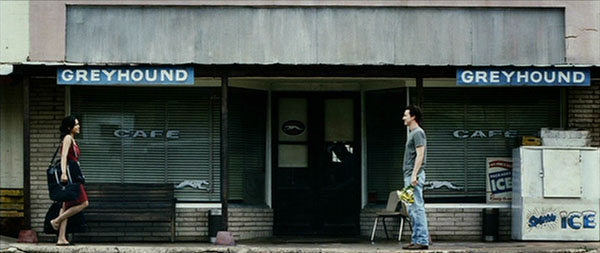
Dude who looks an awful lot like Leo Dicaprio and will soon star in Speed Racer plays Chris, who abandons his rich dysfunctional family (Marcia Gay Harden: Tim Robbins’ wife in Mystic River, William Hurt: the killer brother in A History of Violence, Jena Malone: Donnie Darko‘s girlfriend) and heads into the wild. Along the way he makes himself a new family, two hippie parents (some dude and Catherine Keener), grandfather Hal Holbrook (star of Creepshow: The Crate), and a sister (the girl from Panic Room). Then he lets them all down by failing to eat properly out in the Alaskan wilderness.

An emotional movie, full of warmth and humanity, but not enough of either for our main character who leaves it all behind to pursue his Alaskan dream. According to the movie/diary he hoped/intended to return before he was sidelined by an impassible river and some poisonous veggies.

Movie walks the line between putting Chris forth as a hero, a role model, a visionary who got a few details wrong vs. a deluded kid whose family drove him to self-destruction, maybe slanted towards the latter. Some quick editing, lots of askew close-ups, foreground in a corner of the frame with something blurry happening in the large looming distance. A strange, interesting look to the movie with artistic intentions to be sure. An ambitious picture, almost all successful. I liked it a lot, but I have to say Grizzly Man still has the edge.

ADDENDUM: thanks to the Golden Globe award nominations, I am now remembering to mention that the Eddie Vedder songs were distracting.

My new hero Nathan Lee of Slate on this movie:

I immediately and powerfully sympathized with the questing hero — I, too, am a privileged young man undergoing an existential crisis! — but as his quest went on (and on and on and on and on), I found myself less and less invested. The trajectory of the movie proved emotionally frustrating but ethically acute: My gradual alienation from the “hero,” our ostensible audience surrogate, was replaced by empathy with all those marvelous supporting characters he encounters on his journey, a set of alternative families he briefly joins then abandons. Into the Wild is a conventional treatment of the same theme contemplated through kaleidoscope in I’m Not There. Both movies celebrate the thrill of personal reinvention while simultaneously attending to the spiritual toll of perpetual escape. Neither film is hagiographic; neither odyssey ends up feeling very heroic. If I’m Not There packed the greater wallop for me, it’s probably because I connect on a deeper intellectual and emotional level to Haynes’ mega-meta technique than Penn’s nostalgic naturalism.

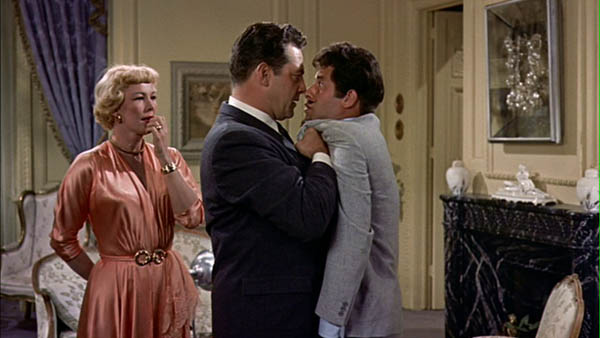
“I have never spent two more miserable hours in my life. Every scene was cheap and vulgar. They didn’t realize that the ’30s were a very innocent age, and that it should have been set in the eighties — it was just froth; it makes you cry it’s so distasteful.” – Fred Astaire

image

“Pennies begins with Martin in a state of despair that only intensifies as the movie progresses. Martin achieves his dream of opening a record store only to watch it die an unmourned death. Peters becomes pregnant, gets an abortion, and sinks into prostitution at the behest of Christopher Walken’s tap-dancing pimp. And while there is no sweeter phrase in the English language than ‘Christopher Walken’s tap-dancing pimp,’ I actually prefer Verner Bagneris’ otherworldly solo to the title song to Walken’s rightfully revered strip-tease tap-dance to ‘Let’s Misbehave.’ ” – Nathan Rabin at The AV Club

Emotionally, hits higher highs than the miniseries version, but not as low lows. Bob Hoskins was definitely a better, slimier and more depraved Arthur, but Steve Martin is fine. More importantly, the sets, design, musical numbers and camera work are all glowing and gorgeous in this version. The story is depressing enough without stretching it over four hours… some character dev gets lost, but the essence is all still here. Ross (or DP Gordon Willis, of the “Godfather” series and all the good Woody Allen films) lets the scenes play out in front of the camera without excessive cutting, proving that everyone in the cast was equal to their dancing challenges.

Martin’s wife stalking him through the bedroom holding scissors while singing “It’s a Sin to Tell a Lie” is truly awesome, but as Nathan Rabin says, it’s the title song that kills me. Incredible movie, I loved it. Katy walked out.

Bernadette Peters as the corrupted schoolteacher turned prostitute
image

Jessica Harper as Arthur’s repressed and frightened wife
image

“Christopher Walken’s tap-dancing pimp”
image

The cops close in, fantasy version
image

The cops close in, actual version
image

All those people smiling on the cover of the DVD tricked us into expecting a romantic comedy, not these wintry intertwined tales of sad, lonely Parisians.

Relationships: Thierry and Charlotte are real-estate agents. Thierry lives with his younger sister Gaelle. Gaelle is dating men from the internet and meets Dan. Dan is breaking up with his girlfriend Nicole. Nicole is looking for a new apartment with the help of Thierry. Dan hangs out a a hotel bar tended by Lionel. And Lionel’s elderly father (offscreen Arthur) is looked after part-time by Charlotte.

Difficulties: Charlotte, very religious, secretly likes to tape herself dancing in naughty lingerie. Thierry sees one of the tapes and becomes attracted to Charlotte. Gaelle catches her brother watching the tape and gets angry. Nicole is frustrated with Thierry and can’t find an apartment. Charlotte and Lionel don’t know what to do with Lionel’s horrible father. Aaaand Gaelle sees Dan talking with Nicole and runs off.

Written by the same playwright who did Smoking/No Smoking, Private Fears etc was the original title and Resnais changed the film’s title to Coeurs. Easy enough to see why. He shoots one careful scene at a time (no cross-cutting), softly falling snow behind every window and over every scene transition, every once in a while a sudden zoom (signifying what?). Soft and incomplete boundaries between people, beginning with a bedroom split in half by a wall (so the two “rooms” share a window), then Lionel’s bar, his father in the other room with the door always open, a curtain of beads, a glass wall between the real-estate agents’ desks. Gaelle’s failure to connect with Dan helps her reconcile with her brother. Charlotte’s aching hidden desire to express herself frustrates Thierry but helps free Lionel. The actors are all super, and their characters are affecting, building up to a snowing-indoors finale.

Music by Mark Snow (X-Files!) and shot by Assayas fave Eric Gautier, who also did Gabrielle and Into the Wild.

Nicole – Laura Morante of The Son’s Room
image

Dan (left) – Lambert Wilson, the english guy from Not On The Lips
image

Charlotte – Sabine Azéma, star of Melo, Not On The Lips, Same Old Song and Smoking
image

Gaëlle – Isabelle Carré of various films I’ve never heard of
image

Lionel – Pierre Arditi of Melo, Smoking, Same Old Song
image

Thierry – André Dussollier, Audrey’s lawyer? uncle? in A Very Long Engagement and in Same Old Song, Melo and Rohmer’s Perceval le Gallois
image

Arthur (offscreen) – Claude Rich of Stavisky

Dave Kehr:
“At first, Resnais’s mise-en-scene seems stiff and broadly theatrical, emphasizing the divisions within the decor and between the characters; then, the camera becomes more mobile, rising above walls and partitions, as the characters seem to break out of their established orbits and begin colliding with each other. The playing becomes more naturalistic, the lighting more gentle, and the geometry of the compositions less harsh as seemingly appropriate couples begin to form.” … “At 84, the eternally elegant, emotionally reserved Resnais seems to be allowing the mask to slip a bit: this is the quietly devastating testament of a deeply lonely man.”

Keith Ulrich in Slant:
“There’s more than a whiff of contempt in the way Ayckbourn conceives his seven upper-class characters, all of whom circle in and out of each others’ lives with contrived dramaturgical abandon, but Resnais’s inquiry into their tragicomic malaise is genuine, at best enraptured.”

Jonathan Rosenbaum:
“It’s an archetypal and at points almost insufferably clever piece of boulevard theater — the sort of thing Resnais has been producing periodically ever since he adapted the French play Melo in 1986 and began mining his childhood playgoing experiences. At the same time, it’s a lyrical lament that doubles as a comprehensive retrospective of his career. The characters, invested with an almost tragic tenderness, are by and large played by actors Resnais has been using for two decades. When Dan and Gaëlle trade confidences in the hotel bar, we could almost be back in Hiroshima Mon Amour (1959), just as a camera movement exploring part of a flat summons up Last Year at Marienbad (1961) and a montage of domestic objects returns us to Muriel (1963). All three of these films, to some degree, are about private fears in public places, a theme that’s come up again and again in his work.”

and
“The film’s constant snowfall, not at all indicative of typical Paris weather, is a personal invention with no counterpart in the play. (Another is the 19th-century portraits and landscape paintings, by Turner and others, that crop up in some of the flats, pointing toward the characters’ unacknowledged Victorianism.) This magical heavy snow, viewed through windows and used in transitions bridging the film’s 54 short scenes, is as laden with metaphorical nuance as the snow in Citizen Kane and The Magnificent Ambersons. It’s so central to the overall mood and visual texture that when we suddenly see it falling inside a kitchen during a climactic scene, shortly before the camera starts to encircle two characters, the moment’s emotional logic is perfectly pitched. Fundamentally, Resnais has always been an expressionist, using his settings and compositions to evoke the inner states of his characters. Here, tying expressionism to social critique, he becomes an improbable but unmistakable blood brother of Carl Dreyer, turning material written by others into a highly personal testament that burns its way into our souls.”

Preceded by nothing (well, “le beau serge”), it was The 400 Blows, Hiroshima Mon Amour and Pickpocket in 1959 France, and it’d never quite be that good again.

I wrote to Trevor
———
Aha… so in 400 Blows, he’s going to the movies with his parents.

“What’s playing?”
“Paris Belong To Us.”

In the DVD liner notes for “Paris Belongs To Us” it says:
“Rivette began production… in 1958. It was only after the commercial
success of Truffaut’s The 400 Blows and Godard’s Breathless that the
resulting film, the elusive and intellectual Paris Belongs To Us, saw its
release in 1960.”

So Antoine Doinel’s parents couldn’t have seen it AND if they had seen it
(“elusive and intellectual”) they wouldn’t have liked it, heh.
———

and he replied…
———
I was more concerned with the fact that his friend (Rene) came to visit him when he was in the correctional institute. He came on a bicycle. When Antoine escaped, he ran to the sea. The closest sea to Paris is about 200km away according to google maps, so if Antoine was within running distance of the sea how did Rene get there on a bicycle?
———

image

image

image

“I have never been so deeply moved by a picture.” – Jean Cocteau

Cute meta-movie, seems less revolutionary than it might’ve been, with its “8 1/2” references and coming soon after “Adaptation”, but it’s funnier than both of those. My favorite explanatory bit:

Tony Wilson: Why Tristram Shandy? This is the book that many people said is unfilmable.
Steve Coogan: I think that’s the attraction. Tristram Shandy was a post-modern classic written before there was any modernism to be post about. So it was way ahead of its time and, in fact, for those who haven’t heard of it, it was actually listed as number eight on the Observer’s top 100 books of all time.
Tony Wilson: That was a chronological list.

Just having Tony Wilson appear as an interviewer says more about the movie’s constant folding-in upon itself than I should bother putting into words. Winterbottom is forging a strange career making this, “24 Hr Party People”, “9 Songs”, “Code 46” and “Road to Guantanamo” all within a few years.

Movie is a chaotic in-joke with Altman sound mixing, portraying Tristram’s birth (Coogan plays Tristram, his father and himself) and conception, a battle scene, the filming of the battle scene, further research into filming battle scenes with help from a historical re-enactment society, the last-minute casting of Gillian Anderson as the romantic interest, and the final cast/crew screening of the film minus any battle or romance scenes. Plus all the behind-the-scenes stuff with Coogan getting in trouble and trying to one-up his funny co-star Rob Brydon.

I did not recognize Dylan Moran (the uptight guy torn apart at the end of “Shaun of the Dead”) as the doctor or Naomie Harris (Jamie Foxx’s wife in “Miami Vice”) as the film-buff production assistant who hits on Coogan.

Kelly Macdonald, playing Coogan’s girlfriend, was Renton’s underage girlfriend in Trainspotting and plays the female lead (?) in No Country For Old Men. “Director” Jeremy Northam is a Katy fave hunky actor whom she knows from “Emma”? Or maybe Gosford Park.

The text of the novel is searchable on google, so I could confirm that the phrase “meat curtains” does not appear.

So Rohmer’s standard scenario for the Moral Tales was: male protagonist with one girl, tempted by another. Sounds easy. Let’s go.

The Bakery Girl of Monceau (1963)
Student is in love with girl Sylvie he passes on the street, finally builds up the nerve to talk to her. Then she disappears for a month. He spends his dinner hour that month looking for Sylvie, eating pastries from a bakery, and littering. Starts flirting with the pastry girl Jacqueline, finally asks her on a date, but he’s not serious about her. Suddenly Sylvie reappears, he makes a date with her the same night and stands up Jacqueline, because why waste time with her when the dream-girl is back in his life?

Short, black and white location-shot with a documentary look, no fancy camera tricks, told very straightforward with a narrator doing most of the talking. Interesting and probably a good intro to the Moral Tales, but not a great film on its own. Moral Tales producer Barbet Schroeder (who I now know better as an actor than a director) stars. Bertrand Tavernier, not yet a director himself, narrates. Michèle Girardon, who played Sylvie and starred in Eric Rohmer’s first feature in ’59, killed herself 12 years after the short was made.

Suzanne’s Career (1963)
Bertrand is kind of a shy, low-key guy. He likes popular girl Sophie, and is friends with obnoxious Guillaume. One day they meet Suzanne and Guillaume successfully schemes to get her into bed. She stays in their life constantly, so G. and B. conspire to start getting her to pay for all their outings. But she still hangs around, now she’s just broke. A few months later, G. is busy with school, B. is still trying to date Sophie, and Suzanne shows up happily married to Sophie’s ex. Her “career” was to land a husband, and given that G. and B. have made themselves look like jerks, it would seem that Suzanne wins at the end.

A good movie. Still black and white, higher proportion of dialogue to narration than in “Monceau” and mostly set in cafes and apartments, so less of a documentary feel but still very story/character based with no showoffy new-wave tricks. It seems that Rohmer is more Truffaut than Godard.

Presentation, or Charlotte and Her Steak (1951/61)
A weird one. Filmed in ’51 with Jean-Luc Godard and two actresses, then edited and overdubbed ten years later by Godard and two different actresses, and wedged into a collection of shorts that Godard made about the Charlotte character. Apparently she’s leaving “Switzerland” soon… on her way someplace hurriedly, she stops at her house pursued by Godard to have a bite to eat. He’s not allowed in, has to stand in the doorway, but she does give him some steak, then they go their separate ways. Can’t tell if the original short even had anything to do with the overdubbed story. A curiosity.

Nadja In Paris (1964)
More of a location documentary than a character study, following visiting student Nadja (her real name) through some of her favorite parts of the city.

Movie starts and I am happy. Remote women’s clinic picks up a girl in trouble, then her father, a possibly dangerous anti-abortion religious nut with three gun-happy sons, drives up. Window rolls down… it’s Ron Perlman! You do not mess with Ron Perlman!

image

Turns into a precinct/assault movie, which I have no problem with, but uh oh, where’s the horror? Oh, the girl was raped by demons, and her demon baby is about to be born (spoiler: it’s a flesh-colored spider with a doll head) and nothing can stop that and its demon father will rise up from the ground to claim the baby!

image

So, pretty stupid. I could at least forgive it that, but that twice, twice!, a character (perlman, one son) comes up against the demon in a hallway of the clinic during the assault, gives an uh-oh look, camera cuts to demon looking all demony… then nothing. Did that low-rent demon suit not offer enough freedom of movement to take a swipe at a guy’s head? Anything? Anyway, girl shoots her baby and demon wanders off. Movie manages not to be an adequate comment on abortion, religion, clinics, fanatics, motherhood or demons.

Percussive score written by Carpenter’s son is the worst movie music I’ve heard since Goblin was in business.

Movie still gets points for having Ron Perlman in it.