Hellraiser Prophecy
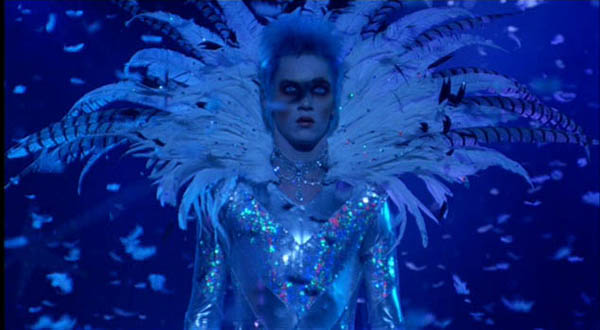
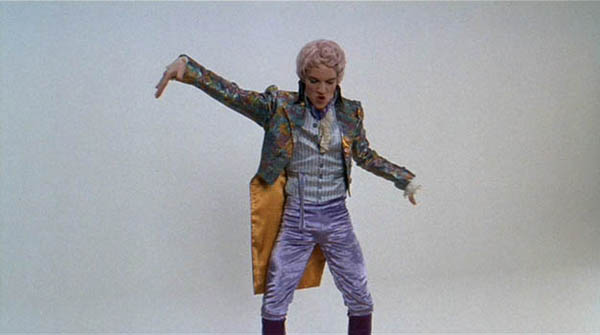
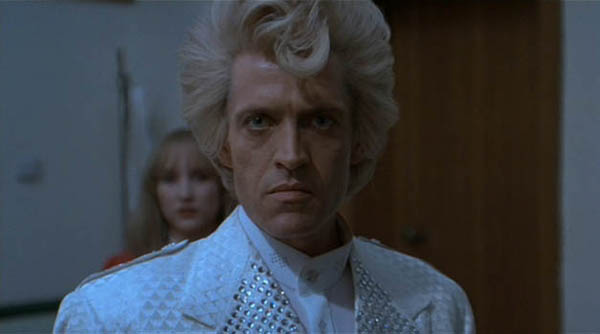
Holy crap this was bad. I’ve avoided fan films for this long, so why did I watch this one? Oh yeah – I’ll watch anything in the Hellraiser series. I’m sure this guy was proud of his fan script, trying to tie the Leviathan thing from Hellraiser 2 together with the lead character who I don’t remember from Hellraiser 4 and introducing Lucifer himself into the Hellraiser world for a collision of different hells. That’s all fine and good – the mistake was to actually shoot the thing, with dismal actors who stumble over their lines and no sense of skill or vision behind the camera, just some series-aping tribute bits with the chains and some good makeup and costumes on the cenobites. Guess I’m not sorry I watched it (only 20 minutes long) but I won’t be checking out the hour of DVD bonus features.

Flowers and Trees
First technicolor cartoon AND first oscar-winner for best animated short (probably no coincidence) is a disney “silly symphonies” musical. Two trees (a nasty gnarled one and a strong young one) compete for a beautiful girl tree, and there’s a forest fire and singing and stuff. Like a popeye episode, but with plants.

Super Mario Movie
Clever: guy hacks a super mario bros. cartridge and turns it into a “movie” installation piece. It’s over-long at 15 minutes, but cute. The “plot” is that Mario is trapped inside an old game cart in a closet somewhere while the code is starting to break down. Like Rejected, but in 8-bit.

Hyas and Stenorhynchus & Love Life of the Octopus by Jean Painlevé
These are a lot cooler looking than I thought they’d be. The Yo La Tengo music works fine – I was going to try synching up the live versions, but I don’t suppose exact timing matters much in this case. Katy is grossed out by the idea of octopus sex.

Opens on a dark highway that looks suspiciously like the one in “incident on and off a mountain road” and maybe “pick me up”.

Stupid story that just gets more ridiculous as it goes. Guy moves into his grandparents’ old house with his family, finds scroll written by George Washington talking of eating children and carving forks out of their bones. Finds out it’s true and there’s an evil secret group devoted to keeping this secret and carrying on the eating/carving while wearing powdered wigs.

image

A seems-familiar-but-I-guess-he’s-not-after-all Saul Rubinek plays the professor friend who summons the swat team at the end. Our male lead starred in “8mm 2”, his wife is a cartoon voice actress named Venus, evil lead was in MST3k-featured “The Dead Talk Back”. Based on a short story by a guy named Bentley. Aaaand our director, a 70-year-old Hungarian, made “The Ruling Class” and “Species 2” (those are really his horror-master qualifications?) and is supposedly now filming his next movie in Atlanta.

MoH motifs: skinlessness (not really, but someone does get threatened).

Closing joke after the news gets out and Washington has been nationally discredited, “they switched georges”:
image

Director of so-what teen-horror “Wrong Turn” (and upcoming cary elwes starrer “The Alphabet Killer”) brings a surprisingly great episode to the so-far dismal second season of Masters of Horror. Inventive, not over-long, good performances and great makeup effects.

image

Dentist MARTIN DONOVAN, who I am so happy to see again, is a very bad husband who lights his wife on fire after a car accident (revealed through flashbacks) then tries to pull her life support so he can carry on with his girlfriend/receptionist Robin Sydney (of gary busey horror “the gingerdead man”, heh).

image

Some problems come up. The wife’s mother starts a(n underdeveloped) media war against Martin to keep the wife alive. Martin enlists lawyer Corbin Bernsen (not the washed-up catcher from major league [that was tom berenger] but the grumpy old veteran player) to get the wife unplugged. But a bigger problem is that whenever the wife flatlines, her ghost comes after Martin (and sometimes Corbin) and tries to kill him. So Martin has to turn a 180 and try everything to keep his wife alive, even if it means skinning his girlfriend when a donor doesn’t come through in time. Fabulous ending, he misses the clock, she dies, and he resignedly walks into his house where the ghost is waiting.

MoH motifs: naked breasts, skinlessness (those two unfortunately collide), recognizable actors doing silly things, that one dark highway that I see in every episode.

image

Joan’s sister Valerie is getting married, so Joan wonders how she might also get married. Marriage, you see, is a business, and emotion should not be involved, so Joan (Ann Harding of Holiday & Peter Ibbetson) makes a business decision to marry John (William Powell, the Thin Man and the Great Ziegfeld), with the scheming help of Valerie (Lucile Browne of Soup To Nuts) and the unwitting help of their father (strangely german-accented Henry Stephenson, who played the nice rich guy who adopts David Lean’s Oliver Twist).

John isn’t into the whole marriage thing and starts hanging out with his hottie ex Lilian Bond (apparently best known for Wyler’s 1940 The Westerner). Meanwhile Val has gone deep into debt buying fancy clothes and in her drunkenness she blows the secret of the scheming to John, who was gonna divorce Joan anyway, but he and Joan kinda love each other now so I think it’ll turn out alright.

George Meeker (ninety movies in the 1930’s! first one was preston sturges’ first big hit as a writer) is unexciting as the sister’s husband, but Reginald Owen (Stingaree, 1938 Christmas Carol, Diary of a Chambermaid, The Pirate, Red Garters and Mary Poppins) is delicious as John’s butler.

It’s a good movie, some funny and racy parts (sly references to all the sex everyone’s having offscreen), good direction, some long camera takes. Nice to see such an excellent new print of a film from 70+ years ago.

We were told by the Turner guys who introduced the film that a famous drag queen was hired as the couturier in the opening scene but upon seeing the rushes the studio flipped and made ’em reshoot it with a more low-key (but still semi-flaming) actor.

“Tomorrow I kill myself.”

The score by Erik Satie probably sounds familiar because it was used in a Wilson brothers scene in “Royal Tenenbaums”. Luke W. later tries to kill himself right after quoting Alain Leroy into the mirror. I’d always wondered why he says “tomorrow” when he’s killing himself right then.

It’s a sharp-looking black-and-white movie about Alain Leroy’s last two days alive, because he sure enough kills himself at the end. Kind of the opposite of “Zazie dans le metro”, which I watched right before. Because of the harsh sudden downturn in emotion from “Zazie” and the late hour it aired, I was in an annoyed daze through this one. I know that Alain visited a lot of friends but I couldn’t tell you which was Jeanne Moreau from “elevator to the gallows” or even Yvonne Clech from “zazie”. So here’s the NY Times’ character round-up:

“Lydia, his wife’s friend, wants desperately to marry him. Life, his understanding doctor says, is worth living. Dubourg, his one-time carousing sidekick, has found peace and certainty in his studies of Egyptology and with a good woman and her children. Jeanne, the disenchanted painter, is, likewise, a kindred soul but unable to possess his imagination and love. Bernard Noel, as the kindly Dubourg; Lena Skerla, as his wife’s loving friend; Jeanne Moreau, as the jaded but understanding artist, and Jacques Sereys and Alexandra Stewart, as his rich friends, are some of the fine portraits in this gallery of generally off-beat Parisians.”

image

Guess I didn’t like it much. The movie’s not ultra-depressing because Alain’s friends are alive and hopeful enough to continue – without diving deep into his own inner thoughts, it makes him out as dysfunctional, unable and unwilling to take control of his life. So it’s not a harsh unforgiving world (in fact, the world is very tastefully shot by the guy who later shot “young girls of rochefort”), it’s just Alain’s problem. Made in tribute to a suicidal friend of Malle’s as well as a tribute to Malle’s own reckless youth. Admirable, just not enjoyable.

TCM: “Long after making it, Malle remarked that with The Fire Within he finally managed to find a cinematic style—objective, unobtrusive, no frills—that ideally matched the content of the story he was telling.”

image

NY Times: “highly introspective, often tenderly touching and sometimes tediously redundant”… “A viewer can appreciate the delicate exploration of Alain Leroy’s mind and heart but he is so special a case that it is extremely difficult to relate to his highly special tragic condition. One is often more attracted to the loving or well-meaning people who are seriously anxious to aid and comfort him.”

Roger Ebert: “The film is a triumph of style. It is quiet and indicative. It doesn’t explain a lot, but we understand a lot about it all the same. And in the concerned, indifferent, kind, cruel behavior of his friends, we see ourselves acting toward people like him, or acted toward by people like them. Rarely does a film so carefully portray this complexity of personal relationships.”

Shooting Down Pictures: “One of the recurring visual fascinations of this film is its preoccupation with people’s gazes, particularly at Alain. … I think this paradox, that humans’ attentions in each other, their gazes, their advances, can be full of energy and vitality and simultaneously empty and dehumanizing, is a substantial line of investigation offered by the film (moreso than its insights into the suicidal mind).”

“I just got enganged.”
“Are you pregnant?”
“Not yet, but we’re getting married anyway”

Awesomely insane comedy following a girl (Zazie, who apparently had a cameo the following year in A Woman is a Woman) through Paris for a weekend vacation in the care of her uncle Gabriel (Philippe Noiret of Agnes Varda’s debut feature and La Grande bouffe).

image

Zazie quickly escapes her uncle. She teams up with an icky-seeming man who I’m not sure is trying to kidnap her or not, and the uncle (who is incidentally a cross-dressing dancer) teams with his cab-driver friend Charles. There are car accidents and cops and the uncle is kidnapped by tourists… all plot description attempts are useless. I also wasn’t paying total attention because it was on TV and I couldn’t pause when making dinner. Should be fun to watch again sometime.

Came out a year after The 400 Blows, half a year after Breathless, and there’s already a “new wave” joke in it.

Wasn’t letterboxed. I got screenshots from elsewhere.

image

Time out review:

Malle’s third feature plunges us straight back into the world of New Wave jiggery-pokery, with jump-cuts, lavish in-jokes, and a whirlwind narrative (taken from Raymond Queneau’s delightful novel) centred around a precocious brat (Demongeot) lewd enough to give a few tips to the Jodie Foster of Taxi Driver. It has survived the years much better than other indulgent frolics, mainly because Malle really does seem motivated by gleeful malice and anarchy – he’s not just toying with a fashionable mood. This spirit captured even underground guru Jonas Mekas, who commented on the original US release, ‘The fact that the film is a failure means nothing. Didn’t God create a failure too?’

image

Jonathan Rosenbaum:

Arguably Louis Malle’s best work. Based on Raymond Queneau’s farcical novel about a little girl (Catherine Demongeot) left in Paris for a weekend with her decadent uncle (Philippe Noiret), this wild spree goes overboard reproducing Mack Sennett-style slapstick, parodying various films of the 1950s, and playing with editing and color effects (Henri Decae’s cinematography is especially impressive), though gradually it becomes a rather disturbing nightmare about fascism. Forget the preposterous claim by a few critics that the movie’s editing influenced Alain Resnais, but there’s no doubt that Malle affected Richard Lester–and was clearly influenced himself by William Klein, whom he credited on the film as a visual consultant. A rather sharp, albeit soulless, film, packed with ideas and glitter and certainly worth a look.

image

Watched many times before, but never in dolby disney digital 3-D with cool polarized-lens non-headache-inducing glasses! The 3D effect was great, adding layers of depth (not pop-out-of-the-screen gimmicks) to an already gorgeous movie. Of course seeing the movie on a big screen again gives new appreciation to the intricate visual details, but why were some of the camera-panning motion scenes so blurry? Did the 3D effect do that, or have they always been that way?

fun fact: Chris Sarandon, lead actor in master-of-horror Tom Holland’s “Child’s Play” and “Fright Night”, voices the non-singing Jack Skellington.

Katy sorta likes it. Maria did not. Kids today… sigh.

FEB 2017: Watched at The Ross, followed by a Q&A with the great Danny Elfman.
I think Katy likes it more than she used to.

DEC 2024: Watched at home in nice HD. Katy is now fully obsessed.

Interesting movie, pretty good. Funny how I can rent a movie looking for an entertaining horror one night, and it’s not scary or entertaining so it’s crap. Eight years later I can rent the same movie as an auteurist curiosity and it becomes “interesting movie, pretty good”. Was I right before, or am I right now? Fortunately it’s all opinion and nobody cares, so I can change my mind and justify things all I like.

image

Clearly one of Cronie’s body-horror origin stories. Porn star Marilyn Chambers was cast for financial reasons (not political/commentary as often supposed) because producer Ivan “Ghostbustin’-ass” Reitman thought she’d be a bigger funding draw than the unknown Sissy Spacek. Then as shooting was beginning, Spacek’s other movie came out (see shot above). Oopsie.

Chambers capably plays a car accident victim who has a medical procedure (see two quotes below) that somehow lead her to grow a very sexual-looking little bloodsucking rabies-zombie-virus-transmitting armpit-mounted appendage. It’s nuts, but still not nuttier than the ice cream man movie I just watched.

image

Nice looking movie, grimy and low-budget but well composed. When the characters have believable behavior, it always helps a horror movie… of course it’s one of the rarest things in the genre.

Chambers stays with a friend, goes out at night finding people to kill/infect. Is finally caught killing the friend (above) and gives herself up to one of her zombie victims in remorse, ending with the “night of the living dead” reminiscent close, an army cleanup crew tossing her body into a garbage truck.

image

Senses of Cinema’s A. Allinson, in his barely-decipherable Cronenberg piece, says “Coinciding with the AIDS outbreak, Chambers, walking virus, is an apologetic martyr of “very experimental surgery” going wrong”.

image

Film Freak interviews Cronenberg:

FF: “Rabid is home to your first major statement about body-modification–plastic surgery.”
DC: “Yes, and ironically enough what I invented in that movie has recently come to pass in stem cell research. Not that I think of prophecy as my métier, but we invented this neutral tissue that would become whatever tissue it came in contact with and that’s the basis of stem cell research, sort of the universal organic loam–so I have to take a little credit. (laughs) I suppose that there were some intimations even in my earliest work, Stereo and Crimes of the Future, about technology altering the body and there’s some of that in Shivers too. The plague in that film is an artificial one, of course, the result of an experiment gone wrong, and it occurs to me now that it was also meant to replace damaged organs. I hadn’t thought of that in years.”

Reminded me of the Dafoe scene in Existenz:
image

No interesting cast/crew stories besides Cronie and Ivan Reitman. The murdered friend turned to cartoon voice acting, and one of the cops tracking Marilyn co-starred in Shivers.

Watched this the same week we went out to Nightmare Before Christmas. Neither movie is kind to Santa.
image

From the non-auteur behind the classic horror hits “Fright Night” and “Child’s Play” and the less classic S. King adaptations “Thinner” and “The Langoliers” (also writer of Psycho 2). This is from the writer of “The Fury”, which makes me a little less excited to see that one.

image

Holland must not have been allowed to adapt King’s “It”. Here we’ve got a story about grown men being hunted down by a killer klown, with flashbacks of these guys as young kids doing bad things together. Sounds like “It” to me. But this one adds exciting story elements that “It” never had, such as that the young kids once conspired to kill a retarded ice cream man, and that the ice cream man comes back as an evil klown and if the now-grown-men’s KIDS fall under the klown’s spell and eat a special ice cream bar, the men will turn into ice cream and melt and die.

image

Ridiculous story, reasonably well acted/directed, not a bad thing to half-watch while I’m doing something else, like writing these entries.