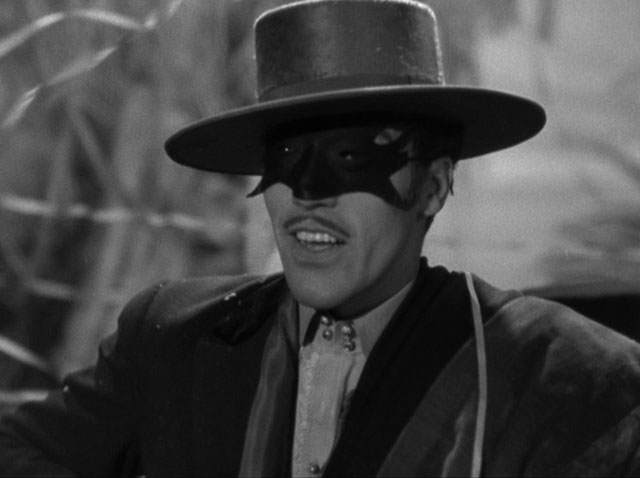
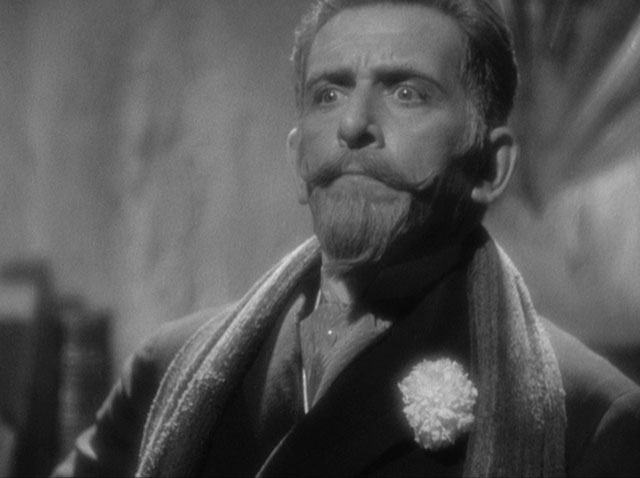
Wonderful adaptation, filled with Cocteau-like movie-magic. Introduced at Emory by Rushdie, who calls it “The Dream” for short, and isn’t a huge fan of James Cagney’s performance.

Katy and I already watched the McNutty version from 60-some years later, so I’m familiar with the story. Dark-haired Olivia de Havilland (her film debut, later in Gone With The Wind) is coveted by both Dick Powell (star of Christmas in July and The Tall Target) and Ross Alexander (short career: suicide), while blonde Jean Muir (star of The White Cockatoo) covets Ross. The lovers (particularly Olivia) give it their all, making their segments more welcome than Cagney’s. I noted that Kevin Kline brought “a touch of sadness to his mostly ridiculous comic-relief role,” but Cagney instead brings an entire can of ham. When he’s not wearing a donkey mask, Cagney works with slate-faced Joe Brown (the guy in love with Jack Lemmon at the end of Some Like It Hot) on their play to be performed for The Duke (Ian Hunter of Hitchcock’s The Ring) and his Amazon conquest/bride (Verree Teasdale of The Milky Way).

Interference comes from fairy queen Anita Louise (of Judge Priest, bringing less personality than Michelle Pfeiffer did) and sparkly-costumed elf king Victor Jory (Power of the Press) with his loyal minion, a cackling pre-Andy Hardy Mickey Rooney. The Queen has mini-minions Moth and Pease-Blossom (both sadly unaccounted-for), Cobweb (appeared in a pile of 1950’s westerns, costarring with Gregory Peck in The Gunfighter) and Mustard Seed (Billy Barty, had already been in fifty movies as Mickey Rooney’s brother, would live to appear in such acclaimed 1980’s dwarf-filled fantasy films as Legend, Willow, Masters of the Universe and UHF).

Lost best picture to Mutiny on the Bounty, but cinematographer Hal Mohr was history’s only write-in oscar winner. He later shot Underworld USA, Rancho Notorious and a Tashlin feature. Banned in Germany for being based on the Jew-music of Mendelssohn. Reinhardt had staged the play ten or more times, left nazi germany and staged Midsummer in Hollywood, then hired to make the film alongside cinema vet Dieterle (The Devil & Daniel Webster).

A “symphony of the Donbass” (region of eastern Ukraine known for coal mining) which aims to celebrate sound recording in film, but still has almost no noticeably-synched sound. I assumed this would be a part-talkie follow-up to Man with the Movie Camera, and it has moments of MwtMC-style montage, but mostly it’s dreary and impersonal (compared to Earth, which I just watched, anyway) propaganda for “shock workers,” which are workers who aim to overachieve their quotas in exchange for glory and prizes.

Before it gets bogged with with shock workers, the first half of the film, cutting between a woman listening to headphones and the reorganization of Russia (churches are torn down, replaced by angular Stalin statues) during the “five-year plan”, is exciting.

Grunes:

Amidst a cacophony of toot-tooting, static, chug-chugging and ding-a-linging, we are told this: “The country needs coal.” Vertov, in a highly fragmented fashion, aims at an integrative view of the interdependency of elements of Soviet productivity. Coal-mining provides energy; factories, combining machine- and human labor, provide steel and manufactured farm equipment; the latter, fueled by coal and operated by farmers, thresh a harvest of wheat. The railroad is shown as connective tissue, transporting mined coal to the factories and, from the factories, whatever is needed in rural areas. Railroad tracks are the new order’s bloodstream. Captions and narration assist in portraying workers at whatever point in this joint process as aggressive warriors and heroic figures.

A tidbit from J. Jacques: “Vertov himself placed massive emphasis upon Enthusiasm’s sound. Western screenings were notorious for Vertov’s insistence on raising the soundtrack to intolerable levels, having blocked the exits to prevent escape.”

from Senses:

After returning from glory abroad with his Man with a Movie Camera, Vertov undertook a suicidal double challenge – to make a political film that would both show (with image and montage) and song (with sound taken from nature and machine) the heroic, dramatic struggles of the state to industrialize at any cost – while pioneering the use of untested sound recording in the field. The finished film, Enthusiasm, was received with derision and incomprehension.

CJ Chamberlin, author of the above, has an outstandingly long, detailed and thoughtful article which would take as long to read as the movie did to watch, so I skimmed and grabbed a few parts.

Vertov was both a genius and a willing creature and subject of a totalitarian ideology. Whatever he was, Vertov never was that ambivalent about the price to be paid in blood and skulls for world socialism. And the Ukraine bore more than its fair share of the price: factory slave labour, brutal collectivisation and the terror famine. By any rational standard, his Donbass Symphony (the alternate title of Enthusiasm) should be an infamous film. If I were Ukrainian, I would burn the negative and sprinkle the ashes with holy water.

“Are you dying, Semion?”
“Yes, I’m dying, Petro.”
“Well, die then.”

From the very beginning – alternate shots of farmland, each time taking up more of the camera’s field of vision, the horizon getting higher until the earth covers the whole frame – which follows to this exchange by two old men, I was captured by the movie. But, reading the below description, I realize I wasn’t following its story closely enough. As usual with these revolutionary Russian silent films, knowledge of the history is important, and I come bearing none at all.

M. Sicinski:

This final scene takes place just as the funeral of Vasyl, the slain Bolshevik, evolves into a fervent demonstration extolling the Communism for which young Vasyl died. Even Vasyl’s father, who had up to this point been skeptical about Communism’s plan to collectivize the farmlands, joins the struggle. But the kulaks, the landowning peasant class from whom the farms are being expropriated, are going down swinging. Khoma Bilokon (Pyotr Masokha), the eldest son of the area’s dominant kulak family, has already committed murder, having shot Vasyl in the back. Khoma confesses, but Earth is not a crime procedural, and Dovzhenko’s final scene is both politically sharp and poetically evocative.
Using an odd form of cross-cutting that makes Khoma’s spatial relationship to the funeral extremely ambiguous, Dovzhenko moves us between the guilty individual and the burgeoning collective, the past and the future. Khoma shouts out to the mourners that he shot Vasyl, in the back, under cover of night. The crowd completely ignores him. Hysterical, Khoma exclaims that the land belongs to him, and he even goes so far as to plant his head in the dirt and run in circles. However, both within the diegetic world of the film and within Dovzhenko’s cinematic syntax, Khoma and the kulak class are marginal, almost nonexistent. Although this image is compromised by the truth that Dovzhenko cannot depict – that of Stalin’s mass extermination of the kulaks – its representation of what it feels like when history passes you by remains unequalled.

Introducing the kulaks with my favorite edit in the film:

So it didnt bother me while watching that I don’t know what a kulak is. I got that Vasyl (Vasili in the subtitles) is excited about technology, that he plows an entire field (which did not belong to him) with the town’s brand-new tractor and is killed for it. The black-bearded man from that early scene in which Semion was dying is apparently Vasyl’s father Opanas, goes asking the townspeople who killed his son and comes across a priest.

Uncle Opanas gets intense:

“There is no god. And there are no priests either.” (the priest lowers his head) “Just like Vasili died for the new life, I’m asking you to bury him according to the new ways, neither priests nor church servants beyond the grave.” It’s an intense thing to say before a priest, and in a movie that opens with discussion of the afterlife between the elders. Vasyl’s sister or wife or somebody goes naked and crazy as he’s buried near the sunflowers, and one of V’s comrades gives a comforting speech to Uncle Opanas and everybody, as the kulak Khoma dances in the graveyard trying in vain to attract attention to himself.

A weird sort of (anti-)war film in that the opposing sides (mostly French vs. German) are extremely nice to each other. The great Jean Gabin (between The Lower Depths and La Bete Humaine) is pilot Marechal, flying the right proper monocle-wearing Captain Boldieu (Pierre Fresnay, star of Le Corbeau and Duvivier’s Phantom Carriage remake) when they’re shot down by the right proper monocle-wearing Erich von Stroheim – who shakes their hands and invites them to dinner.

The next section is the source of many comic/dramatic prison camp films, but without the grit and terror of many of them (although Gabin is painfully placed in solitary confinement after provoking a celebration over Germany losing a battle), since WWII forever changed the face of prison camps. The men are stationed with a series of characters digging an escape tunnel beneath their barracks, including three major Rules of the Game actors: The Engineer (jealous husband Gaston Modot), The Actor (Julien Carette, Gaston’s poacher nemesis) and Rosenthal (Marcel Dallo, the marquis), along with Jean Daste (a brush-mustached vegetarian).

That’s Daste at upper-right, and his L’Age d’Or-starring engineer companion over his shoulder:

Before they can use the tunnel, our initial two Frenchman plus Rosenthal (a rich jew who receives lavish care packages from home) are transferred to a new camp – one run by a stiffly strict Stroheim (is there any other kind of Stroheim?), now in a back/neck brace from an injury. They immediately set about planning their escape again. Boldieu causes a distraction while the other two climb down a handmade rope. Stroheim is extremely depressed to have to shoot down Boldieu, a man he considered too respectful to break the prison rules.

Gabin and Dallo on the run:

Finally, a section that proved unexpectedly resonant with Essential Killing – a prisoner on the run encounters a woman living alone (the lead actress of the film, not appearing until the last fifteen minutes) who brings him in and cares for him. Rosenthal has a leg injury, but overall the guys are in better shape than Vincent Gallo was, and Gabin falls for the lovely Dita Parlo (Renoir was always casting actors from L’Atalante), a German civilian with a young son, whose husband and brothers have all died in the war. The men walk off through Switzerland, Gabin hoping to return. But Renoir obviously doesn’t believe he will.

P. Cowie on the audio commentary:

“War is a great illusion,” said Renoir on another occasion, “with its hopes unfulfilled, its promises never kept.” Of course the interesting thing is that [Marechal and Rosenthal] say farewell to each other with no plans to meet, whereas in the original scenario, Bazin claims that the two fugitives had arranged a rendezvous at Maxime’s in Paris for the first Christmas Eve after the war, and the last shot would show “December 24, 1918,” and their table, reserved but empty in the midst of the busy restaurant, as though even their friendship had been an illusion. . . . Many years later, when Renoir was asked about war films and their effectiveness, he replied soberly, “In 1936 I made a picture named Grand Illusion in which I tried to express all my deep feelings for the cause of peace. This film was very successful. Three years later, the war broke out.”

Based on the diaries of Catherine The Great of Russia, the story felt like it spanned maybe a year or two, but wikipedia says it was sixteen years between her marriage and the coup she arranged to replace her husband on the throne.

Marlene Dietrich plays Sophia (Catherine is her Russian title), at first a naive girl from the country married to a not-handsome prince (Sam Jaffe of The Day the Earth Stood Still), instead entranced by a count (John Lodge of Murders in the Zoo, future governor of Connecticut).

Marlene and the count:

Catherine is under great scrutiny until she bears her “husband” a son (he’s only momentarily bothered by the fact that they never slept together), then she’s free to run around having affairs and plotting. Nothing is done while queen Elizabeth is in charge, but once Catherine’s husband becomes emperor he doesn’t last a year before his wife has taken over. Catherine has caught the Count fooling around with the former queen, realizes he’s just sleeping around with whoever’s in power, and throws him over.

The Queen:

Katy and I would’ve liked to see more than a minute of screen time with Dietrich as the actual empress – didn’t know that would be where the movie dead-ends. Sternberg is, of course, much more concerned with his camera angles and lighting, and most importantly, shooting Dietrich through a series of filters and gauzes and screens. The wedding scene is an incredible cinematography show-reel, each shot outdoing the last.

Robin Wood:

The connecting theme of all the von Sternberg/Dietrich films might be expressed as a question: How does a woman, and at what cost, assert herself within an overwhelmingly male-dominated world? Each film offers a somewhat different answer (but none very encouraging), steadily evolving into the extreme pessimism and bitterness of The Scarlet Empress and achieving its apotheosis in their final collaboration The Devil Is a Woman.

R. Keser calls it the last great pre-code film, says it “mocks Hollywood’s conventional groveling toward royalty.”

I rented The Scarlet Empress in anticipation of seeing Shanghai Express on 35mm at Emory – a screening preceded by a brief talk on the different goals of cinematography (Sternberg’s main one being glamour, not story). Empress is surely glorious-looking, but I appreciate a good story and snappy dialogue to go with my pretty pictures, and so I thought the less opulent and ornate but still exquisite-looking and more excitingly plotted Shanghai Express was the better movie.

Dietrich is Shanghai Lil, a fallen woman who runs into her old soldier boyfriend “Doc” (still-handsome Clive Brook, who played Rolls Royce in Underworld) aboard the titular train. The two of them try to avoid each other in the small first-class section of the Express, along with Marlene’s fellow traveler Anna May Wong, arrogant dog lady Louise Hale, gambler Eugene Pallette (happily closer to his croaky Preston Sturges persona than his Intolerance days), a preacher and a man named Lenard (silent film director Emile Chautard, also in Seventh Heaven) who only speaks French, much to everyone else’s annoyance. Oh, and there’s mysterious Warner Oland (returning from Dishonored), who turns out to be a head communist in the Chinese Civil War traveling undercover. He holds up the train when one of his deputies is captured, keeping Clive Brook (on his way to perform surgery on a head nationist) in exchange.

The government agrees to the exchange, releases the deputy, and Clive is allowed to return to the train. But Warner has made a damned nuisance of himself during the night. He gets Lil to agree to marry him in exchange for Clive’s life, and he rapes Wong. Wong’s not one to take things lightly, kills Warner, grabs Lil and escapes. So they’re all safe on the train together, but Clive is being a putz about Lil’s faithfulness, needs the preacher’s help to “forgive” her for a happy ending.

Expensive-looking, but it was the top-grossing film of 1932 so I guess that’s fine. Won the best cinematography oscar, lost the rest to Grand Hotel. Never seen Anna May Wong before – she’s very good. Remade a couple times, with Ellen Drew then Joseph Cotten.

A story of hot-blooded foreigners who come to France to work, getting in torrid love affairs then killing each other. Renoir beginning on a rare burst of pessimism that would lead to La Bete Humaine.

Toni (Charles Blavett of Stormy Waters and Manon of the Spring) is sleeping with his landlady Marie (Jenny Helia of La Bete Humaine), but has the hots for Josefa. She seems to like him too, but ends up sleeping with Albert, a supervisor at the quarry where Toni works.

Toni and Marie:

Toni and Josefa:

Two years later, Josefa has a kid, her husband Albert is cheating, and Toni still lives noncommittally with Marie. Josefa’s uncle Sebastian, a friend of Toni’s dies, and after Toni gets in a fight with Marie over whether he’s attending the funeral, she tries to drown herself.

Josefa can’t deal with her husband anymore, so plots to escape with her cousin Gabi (“Andrex” of Hotel du Nord), with whom she’s been cheating for years. But the escape goes wrong – Josefa kills Albert, Gabi flees on his own and Toni takes the fall, gets shot down as a train full of new immigrants arrives to take his place.

Eureka provides context:

Based on a police dossier concerning a provincial crime of passion, it was lensed by Claude Renoir on location (unusually for the time) in the small town of Les Martigues where the actual events occurred. The use of directly-recorded sound, authentic patois, lack of make-up, a large ensemble cast of local citizens in supporting roles, and Renoir’s steadfast desire to avoid melodrama lead to Toni often being labeled “the first ‘neorealist’ film”. Renoir himself disagreed. Although Toni is acknowledged as a masterly forerunner of neo-realist preoccupations and techniques he wrote: “I do not think that is quite correct. The Italian films are magnificent dramatic productions, whereas in Toni I was at pains to avoid the dramatic.”

M. Campi:

Renoir continues his investigations of depth of field and the moving camera and makes painterly use of the natural landscapes to counterpoint the drama. He delights in establishing landscapes from foreground to the distance with his characters weaving through diagonally. The organization of the movement within the frame is breathtaking but never straining for effect or obvious. Like nature itself, these elements flow effortlessly, belying the care and attention that has inspired them.

T. Milne:

Toni is not a shapeless mass of observed reality – in fact it is as strictly formalised as any Renoir film. It has a circular construction – the arrival of a batch of immigrants is repeated at the end. This suggests that the events we have just witnessed, though shattering to the lives immediately touched by them, have left no lasting mark on the social milieu. … The fundamental structuring element is the way Renoir contrives to impose the slow serene rhythm of Provence on each scene, so that the urgency of passion or despair – Josefa and Toni laboriously pushing a handcart down a leafy lane while, she tries to make him act upon his love for her, Marie drifting across the lake to stage her suicide – is absorbed by the tranquil, passive landscape.

Jean Gabin (the year after Port of Shadows and La Bete Humaine) lives atop the Seventh Heaven apartment building. He shoots a guy, the cops arrive and shoot back. Barricaded in his room, Gabin embarks on a 90-minute flashback while waiting for the sunrise.

Gabin through a fractured window:

He was a factory worker, met lovely Francoise. But she’s sneaking away to see Valentin (Jules Berry of Renoir’s Crime of Monsieur Lange), a stage performer. Jean follows her to the theater, meets Valentin’s disillusioned girlfriend/sidekick Clara (Arletty, star of Children of Paradise) who quits both those positions and hooks up with Jean instead.

Francois and Francoise through the mirror in happier times:

But Jean still wants Francoise and vice-versa. Valentin says he’s not Francoise’s lover but her father. She says that’s bullshit. Valentin just wants the girl but he can’t have her because she’s in love with Jean. He comes to Jean’s place with a gun, gets plugged instead. Back in the present, a hopeless Gabin kills himself to end the standoff. Sad movie.

Gabin and Valentin, another mirror:

Notable for its long flashback dissolves. Remade with Henry Fonda and Vincent Price eight years later.

“What a charming evening we might have had if you hadn’t been a spy, and I a traitor.”
“Then we might never have met.”

Another Sternberg/Dietrich movie, and this one just kills The Blue Angel, which I thought was overbaked and had too little Dietrich. Here not only is she perfectly lit and doing a better acting job throughout, but the story is a wartime (1915 Austria) spy vs. spy drama, all romance and excitement, more alive and relevant than the period self-punishment of Emil Jannings. Sternberg seems fully comfortable in his sound world now, maybe not pulling as beautiful images as in the silents, when it was all image, but making a movie that fully works. Some good expressive lighting (backlit against windows when she lets Victor escape) and long-held cross-fades.

Marlene with Austrian secret service man Gustav von Seyffertitz (Hymn Book Harry, who performs the wedding in Docks of New York):

The opening titles prepare us for tragedy and sexism, telling us that codename X-27 “might have become the greatest spy in history… if X-27 had not been a woman.” This is referring to the ending, when she lets the enemy spy she loves escape before his execution, which leads to her own. But of course the reason she’s a great spy in the first place is that she’s a woman, able to seduce and sleep with (whoa, pre-code) enemy officers in order to steal information, the Black Book of its time.

At the start, war widow Marlene is out streetwalking to pay the rent (whoa, pre-code!) when she picks up a gentleman with a droopy ‘stache who tests her patriotism, pretending to try recruiting her for anti-Austrian work, and when she has him arrested he reveals that he’s the head of Austrian secret service and actually wants to hire her for pro-Austrian work, argh.

Warner “Charlie Chan” Oland as the spy who shoots himself:

Some veils, feathers and masks later, she’s at a party with more confetti and streamers than I’ve ever seen in one place. She acts interested in Russian Mustache Spy and retires back to his place, where she discovers his secret spy stash, all the while acting super-fucking-cool while he creeps away and kills himself.

The colonel is Victor McLaglen, Lon’s strongman sidekick in The Unholy Three who’d win best actor for The Informer a few years later:

With a distinctive smile like Victor’s, what use is a mask?

Off to unveil the secret identity of the dead spy’s undercover colonel friend from the costume party, which is simple since he has the most excellently recognizable sinister smile. And a cute little mustache – every man has a mustache.

The colonel is onto her spying ways – she’s got him, then lets him escape. She goes to Russia and acts as a timid housekeeper at enemy headquarters, then back home where she sees the grinning colonel again and lets him escapes. Sentenced to death, she asks only for a piano and “any dress I wore when I served my countrymen instead of my country,” so gets killed by rifle squad in her feathers and veil.

Pre-execution, at her piano: