Knife in the Water is playing at Emory tomorrow so I prepped with some early shorts.

Murder (1957)
A man is murdered in bed with a pocket knife. That’s all. Damn good effect, too.

Teeth Smile (1957)
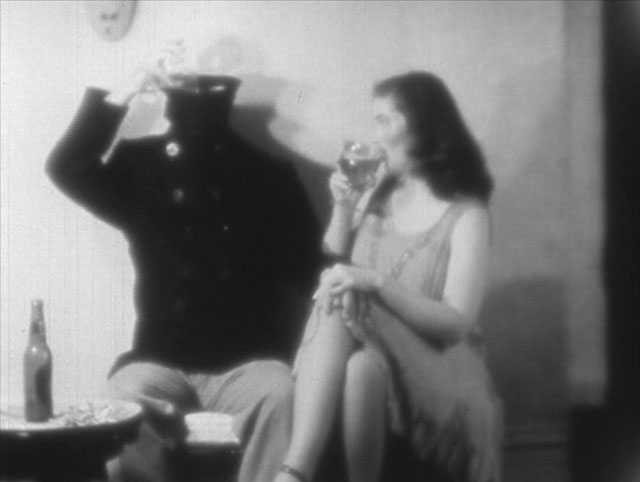
A peeper is dissuaded from his pasttime by the man of the house. At a full two minutes including credits, it’s the longer film so far.

Break Up The Dance (1957)
A pleasant outdoor party. Everyone is having a good time until some miscreants hop the fence and trash the place. The first one with sound. All of these so far have been tightly wound, shadowy and threatening.

Two Men and a Wardrobe (1958)
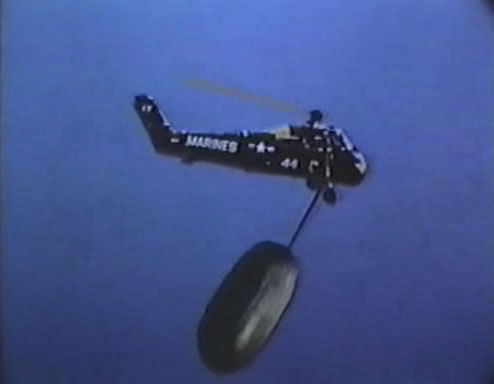
Two men carry a mirrored piece of furniture. Later, miscreants (maybe the same ones) kill a kitten, annoy a woman with its corpse, then smash the mirror and beat up our two moving men. Defeated, they go to a barrel graveyard and get pummelled by a cop, then retreat back into the sea. This was probably my favorite of the bunch. One of the moving men later cowrote Knife in the Water, and the composer would work with Polanski through Rosemary’s Baby. Most of these shorts are wordless – probably with international festivals in mind. This was the first award winner of the bunch, so it’s paying off.

The Lamp (1959)
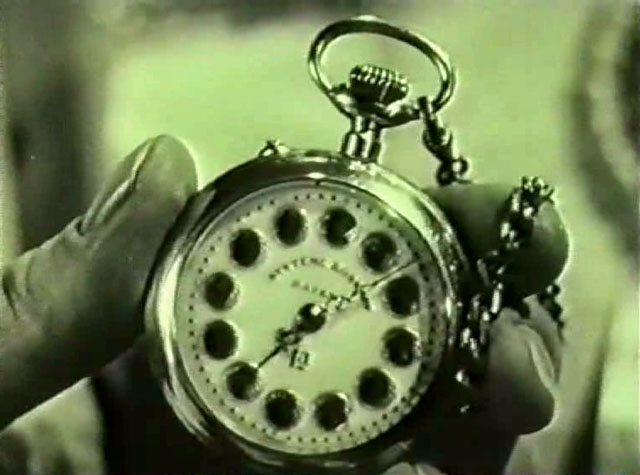
A dollmaker replaces his lantern with an electric lightbulb. The electric box turns into a demon and burns his place to the ground. Dolls missing the tops of their heads always remind me of the Quay brothers.

When Angels Fall (1959)
An elderly black-and-white bathroom attendant has color flashbacks. Second movie with animal killing in it, this time a boy whipping a frog with sticks, and the first Polanski film to depict the horrors of war.

Too many great shots in this one:

The Fat and the Lean (1961)
A flunky is serenading a lazy fat man outside on a hot day. Every day the flunky helps the lazy man hunt and rest and eat and cool off, then tries to escape and gets stopped, until the lazy man ties the flunky to a goat. Times are tough for a while, but one day the flunky is released from the goat, and works twice as hard to please the lazy man, planting flowers all around him instead of trying to escape when the lazy man falls asleep. I was impressed by the acrobatic performance of the slave. IMDB says it’s Polanski himself, but then, IMDB also says Polanski played the old woman in the bathroom.

Mammals (1962)
Two dudes have one sled. Each pretends to be injured so the other will tow him in the sled. My favorite bit is when one wraps himself completely in bandages, turning invisible against the snow. Weird that R.P. would finally make an all-out comedy the same year Knife in the Water came out. I guess even Roman has to unwind once in a while. I don’t know an awful lot about Polish film, but this came after Wajda’s war trilogy, a few years before The Saragossa Manuscript was made, and before Kieslowski’s career had begun.

While everyone is pretending to count down the minutes until the academy awards (I’m not convinced that most people care as much as they let on), we’ve declared February to be TCM Essentials Month, catching up on past Essentials (and yes, oscar winners) that we’ve missed. There’s nothing more essential than The Apartment, which is on every list of great American films made since it came out. Unsurprisingly, we both loved it (much better than Avanti!, that’s for sure).

Jack Lemmon works at an insurance company where all the executives are terrible connivers, cheating on their wives with floozies and office girls they bring to Lemmon’s apartment in exchange for the promise of promotions. He does a good job fitting in, pretending to be a selfish skirt-chasing careerist himself, even outside the office with his neighbors, but ultimately he’s too nice a guy. He’s got a crush on Shirley MacLaine (doing well for herself five years after Artists & Models), a sweet elevator operator who happens to be carrying on a long-term affair with big boss Fred MacMurray (weirdly in the midst of starring in family-friendly Disney films). It all goes wrong, Shirley attempts suicide in Lemmon’s apartment, and he (with his doctor/neighbor) nurses her back to health. All very intense and dark for what’s supposed to be a comedy.

I enjoyed a small Tashlinesque attack on television, as Lemmon tries to watch Grand Hotel on TV only to be put off by the constant commercials.

TCM sez:

Billy Wilder created in The Apartment what many consider the summation of all he had done on screen up to that point. He was the master of a type of bittersweet comedy that had a sadness and a barbed commentary of modern life at its core. … With this film, he managed to make a commercially successful entertainment that, for all its laughter and romance, took a serious stab at the prevailing attitudes and way of life of a country where getting ahead in business had become the greatest measure of personal success.

Won best picture, writing and directing, all for Wilder who did it all himself, but lost the acting awards for Lemmon, MacLaine and Jack Kruschen who played the neighbor/doctor. The writing especially was pretty wonderful, my favorite dialogue of any Wilder movie so far. Also did not win for its glorious b/w widescreen cinematography, which surprised me until I found out a Jack Cardiff movie won instead.

“We, the Futori family, are the oldest family on the island. In recent years, our transgressions have caused trouble on the island, therefore, I now promise the gods that the Futori family will never go out to sea, and I will keep Nekichi in shackles. We will topple the rock and restore the paddy fields of the gods. Once we have made good our promises, please let us associate with the islanders again, please let us go out to sea again, and please let us participate in the Dongama Festival.”

What island? A primitive place, owned by Japan but left largely untouched until now, when industry is trying to creep in. What rock? The massive one desposited on the fields behind the Futoris’ house by a tidal wave. What transgressions? Nekichi slept with his own daughter because her husband wouldn’t, impregnated her, and even worse as far as the islanders are concerned, he was caught fishing with dynamite.

Nekichi with his father:

I actually lost track of how everybody was related – I know, an unforgivable crime in a family/incest film such as this. But I think I figured it out again. Grandpa Futori has two children, the chained Nekichi (Rentaro Mikuni, lead actor in the first segment of Kwaidan) and island priestess Uma (Yasuko Matsui, who runs the inn of In the Realm of the Senses).

Uma and Kametaro:

Nekichi’s father might also be his grandfather, and Nek’s two kids are the straightforward Kametaro (Choichiro Kawarazaki of Kurosawa’s Rhapsody In August) and retarded Toriko (Hideko Okiyama of Kurosawa’s Dodes’ka-den)

Things look up for the family when Ryu from the local sugar factory (Yoshi Kato of Double Suicide) hires Kametaro as assistant to a visiting engineer. But the engineer falls to the same fate as previous engineers, getting caught up in island life and derailed by sabotage (perpetuated in part by Nekichi, who slips out of his chains regularly). He also gets himself into an affair with daughter Toriko, whose heart is eventually broken when the engineer is sent away and replaced by a team that finally gets the work done.

Toriko makes a dream appearance before Kametaro’s train:

Nekichi, meanwhile, is having an affair with his own sister. They murder Ryu and escape by boat during the festival. Kametaro has finally been allowed to join, which means he must also join the search party that rows out to sea, bludgeoning his father to death and leaving his aunt tied to the mast.

What plot description and screenshots can’t convey is how awesome is this movie, a real masterpiece. It just maybe feels a tiny bit long at three hours, but comes together so well at the end, and is lovely to watch. Peppered with closeups of wildlife, like a more grotesque version of the Thin Red Line cutaways (or more relevantly, a less rampantly indulgent version of A Tale of Africa)

G. Kenny:

Every shot in Imamura’s film (which was lensed by Masao Tochizawa) is a feast of often-golden light. The film is set on the sun-drenched fictional island of Kurage (actually Okinawa, of which the fictional construct is merely a thinly disguised version), and the light here functions as a character, as does the water and all the other natural elements that surround the characters. The film’s narrative is nearly three hours of quintessentially Imamurian insanity, wryness, wisdom and acute anthropological observation.

Our narrator/storyteller:

J. Sharp:

By all accounts, Imamura found himself similarly seduced during the production process, embracing island life with a verve that saw the original shooting schedule expand from six to eighteen months, and the budget snowball accordingly. The film’s resulting commercial flop saw Imamura retreat from fiction filmmaking into television documentary for almost ten years, while the studio that financed it, Nikkatsu, migrated away from such ambitious projects to the low-cost/high-impact world of sex film production with the launch of its Roman Porno line in 1971.

The thin line that exists between man and beast remained a salient point of Imamura’s worldview throughout his career, notably in The Insect Woman, his first collaboration with the surrealist scriptwriter Keiji Hasebe … but seldom has man’s precarious position in the natural order of things been so scintillatingly evoked as here.

A silly-ass buddy western with inappropriately jaunty Burt Bacharach music (including a bonkers musical romance scene set to “Raindrops Keep Falling On My Head”). If I was watching this movie in a void I’d assume it was so tonally off-base that it diminished the Western genre permanently until it was finally killed off with Clint Eastwood’s dire Pale Rider. But no, the internet tells me this is one of the AFI’s and IMDB’s best-loved films of all time. What gives? That’s not to say the movie doesn’t have its pleasures. The buddy banter and some of the action scenes (especially an awesome train explosion early on) make the whole thing worth sitting through.

Both Butch (Paul Newman, not long after Cool Hand Luke) and Sundance (Robert Redford, not long before The Candidate) love the same girl, Etta (Katharine Ross, Dustin’s younger love interest in The Graduate). That and the freeze-frame ending make me think director Hill and/or writer William Goldman were Truffaut fans. Conventionally edited (for the late 60’s) with the deaths abstracted away, mostly happening distantly or off-camera – who’d have known The Wild Bunch came out just a few months earlier? I’d find coincidence that the movie’s anti-heroes were hunted down and killed in Bolivia just like Che, except that both movies were based on true events, so instead I’ll just remember not to flee to Bolivia if I’m in trouble.

A belated entry for…

Initiated by Shadowplay

“This war’s gonna have a head on it”

Frank Tashlin’s final film as director is a Bob Hope picture, appropriate since Hope gave Tashlin his big break into live-action directing in the first place with Son of Paleface. Tashlin was only 59 when this came out, younger than Hope, but would only live a few more years. It’s a shame to have lost him so young, since his style kept changing with the times – would’ve been a trip to see a Tashlin picture in the 1980’s. From The Girl Can’t Help It to Caprice, Tash’s films have seemed very of-their-time – until this one, which feels stodgy and old-fashioned.

Why is this? My guess is old buddy Bob Hope. The credited writers are responsible for some TV episodes and the goofy crystalline sci-fi flick The Monolith Monsters but this has Hope written all over it. It wants to be a comedy, but it can’t make any jokes at the military’s expense – not in ’68 with Hope a political right-winger who probably spent more time than any other entertainer performing for U.S. troops. It’s more consistent a story than most Tashlin movies but it lacks all the good gags – the best jokes are the couple that Hope makes at the expense of his beloved partner Bing Crosby – and any comic momentum is killed at the end with a dry ten minutes of flag waving. So you could say it fails as a comedy since it pulls so many punches, or more generously, that it’s a light military drama with a bit of humor.

Hope’s buddy Calvin Coolidge Ishamura, played by Mako of Conan the Destroyer and Pacific Heights – the movie is very tolerant of Japanese-Americans, if not Japanese-Japanese.

Makeshift beer fridge:

The premise is simple: the Japs sunk a boat delivering beer to the army/navy base and Hope schemes to recover it, following the tides to find drifts of beer cars which he passes out to friends and hides from others. Not caring much about military matters, I didn’t realize until late that there’s a whole army vs. navy rivalry on the base (or is it two bases?) which would’ve cleared up some mysteries – like friendly, clean-looking (but with spooky eyes) lieutenant Jeffrey Hunter (below with Hope), don’t know if he’s a rival, a superior, or just a buddy. This turned out to be a late film for Jeffrey Hunter (also Jesus in King of Kings) as well – his career was cut short by a fatal stroke the following year.

The other allowable topic for comedy besides beer is girls. The group sends for nurses, imagining a team of sexy young girls arriving on the island, but all they get is a wild-haired Phyllis Diller, my favorite person in the movie. Hope gets a flashback-provoking love interest in the form of Gina Lollobrigida (of Dassin’s The Law), and I already can’t remember what Mylène Demongeot (of those 1960’s Fantomas movies) was doing there.

The new nurses: imagined

The new nurses: actual

Tashlin has to sneak in one line about television – something about reruns, I forget the context, and he manages to close the picture on a Tashlinesque piece of live-action cartoonery, Hope pulling a captured submarine with his rowboat. I assume there’s a metaphor there.

Masters Coppola and Scorsese, who dedicate much time and money to the worthy cause of film preservation, restored this 1960’s Polish film and brought it to the States, where I’m sure a sparkling, freshly-subtitled 35mm print enjoyed an acclaimed week at the Film Forum. Then these giants, pleased with their accomplishments, went off to watch Tales of Hoffmann at George Romero’s house, while some fly-by-night company bought the rights to a video release, made a middling transfer and issued an interlaced DVD.

Alphonse is so goofy and weak-looking, even next to the flamboyantly-feathered Uzeda. I assume from the actor’s Polish James Dean reputation that this was an unusual character for him.

Rebecca Uzeda: Beata Tyszkiewicz also played Edith Piaf’s mom in a 1983 Claude Lelouch movie

I’ve just finished reading the book by Jan Potocki. The movie wisely cuts out the last half of the book and skips to the final couple pages, missing the Wandering Jew and about a month’s worth of the gypsy chief’s stories within stories within stories. And since it is all stories within stories, composed mainly of meaningless sidetracks (Bunuel was a big fan, and I’d like to think he had this in mind while writing The Phantom of Liberty), I won’t go on forever with plot summary.

Alphonse being told his cousins are pregnant:

The first person Alphonse meets at the haunted inn:

The whole thing seemed to have a more comic, amused tone than the novel – noticable from the first framing story (the titular manuscript, being read together by enemies during wartime, in the midst of a battle). Zbigniew Cybulski (star of Ashes and Diamonds, killed by a train a couple years after this) is our hero Alphonse, constantly having his honor tested by ghosts and servants, heathens and temptresses. He teams up with cabalists Pedro and Rebecca Uzeda and mathematician Don Pedro Velasquez (Gustaw Holoubek, also of Wojciech Has films The Hour-Glass Sanatorium and A Boring Story), hooks up with his cousins Emina and Zibelda, meets Zoto and his hanged brothers, and spends not so much time with the gypsy chief (whose name I’ve forgotten at the moment).

Young Lopez Suarez and his outraged father:

Pasheko (Franciszek Pieczka) was my favorite actor:

Good looking movie, straightforwardly filmed without stylistic excess or ghostly effects. The rumbling electronic music sometimes does the movie a disservice. I’m sure the cinemascope-shot film looked a hundred times better in theaters than on my laptop – fingers crossed for another revival.

I’m guessing Alain Robbe-Grillet liked this shot:

A Zoto brother:

This story (stories) was remade as a miniseries a decade later in France – nobody seems to know much about that version (not in English, anyway). The only other Jan Potocki adaptation was by Raoul Ruiz in the 80’s. W. Has doesn’t immediately seem like a filmmaker I must seek out, but his Hour-Glass Sanatorium does sound good.

Films de France says:
“Fantômas (1964) is certainly a very different film to Fantômas (1913), although both were targeted at mass cinema audiences. Whereas Feuillade’s film is a chilling and atmospheric work which succeeds in conveying the menace of Fantômas, André Hunebelle’s version is little more than a conventional action comedy which is far more concerned with trivial comic stunts than characterisation. Because their approaches are so different, it is difficult, and perhaps unfair, to make comparisons between the two films.”

The French dutifully line up for the latest Fantomas movie:

I disagree, and shall proceed to make comparisons between the two films. The original was wonderful, groundbreaking, while this one is a bit of fluff that would seem demeaning to the great Jean Marais – except that I somehow had him confused with Jean Gabin. Marais… let’s see, he was in those Cocteau movies and Donkey Skin, and before this he made The Iron Mask, Captain Blood and The Hunchback of Paris, so on second thought, this seems right up his alley. Marais plays Fandor the journalist, a sidekick to chief inspector Juve in the Feuillade, but here his rival. With Fandor’s type of sensationalist journalism, Fuller would’ve made him a villain, but Hunebelle makes him our hero. I think we’re supposed to like him, but it’s hard to tell, because I think by the end we’re also supposed to like Juve, a nasty, hateful little man.

A rare smile from Juve after a prolonged earplug gag:

First half of the movie is barely a movie at all, people standing still and talking. Sometimes there’s a joke, usually one that tries too hard. Sometimes cute comic sound effects play on the soundtrack. Ineffectual Juve is Louis de Funes, supposedly a big enough star to make Marais jealous, but with my fancypants Criterion-groomed New Wave bias, I haven’t heard of his other movies. Fandor’s got a fiancee (Mylene Demongeot of Bonjour Tristesse and Tashlin’s Private Navy of Sgt. O’Farrell) and Fantomas, who wears a blue robot mask when he’s not being played by Marais, has a girl (Lady Beltham – remember her?) played by some magazine model. It heats up in the second half with some fun vehicle chases, almost becoming a worthwhile action-comedy were it not for the comedy. I was glad that Mylene takes an active role by the end, taking helicopters to rescue people, and that it’s always the men who are in distress.

Jean and Mylene:

Ah, so Fandor ticks off the great criminal Fantomas by faking an interview, so Fantomas kidnaps him and commits some robberies wearing a Fandor mask. He also wears a Juve mask, getting the chief in trouble with his own subordinates. The two victims grudgingly team up and fail to catch him, because there are sequels. Hunebelle made two more in the Fantomas series with the same stars, and also a few OSS 117 movies. People in the 60’s liked this sort of stuff.

Jean Marais will return… on television!

It’s been a pretty outstanding SHOCKtober over here. I did well to avoid the usual direct-to-video garbage of the last few years and watch stuff I’d actually heard would be good. So I figured I was due for a disappointment when I popped in Kwaidan, another period Japanese piece where everybody moves too slowly – another Ugetsu, in other words. But though it’s definitely true that everyone moves too slowly (and the more rich and upper-class, the slower they move) it’s an awesome looking movie, and even the stories I liked less were a pleasure to watch. I don’t know much about Kobayashi, but easily figured out that he had a background in painting. Watched the full-length version from Masters of Cinema.

1. The Black Hair
Rentaro Mikuni (The Burmese Harp, Vengeance Is Mine, Teshigahara’s Rikyu) is a samurai who has fallen on hard times. He has a good wife, Michiyo Aratama (Sword of Doom, The Human Condition, Ozu’s The End of Summer) but he “could not understand the value of love,” tells his wife “for men, advancement is the most important” and walks out on her, moves away and marries the daughter (Misako Watanabe of Youth of the Beast) of a rich man. But he finds himself unhappy, misses his first wife, so one day he throws it all away and returns to her, finding his property decrepit and run down, but her still sewing quietly in a corner. Or is she? After he pledges he’ll stay with her forever, she’s revealed to be a ghost. He ages about fifty years in the span of a minute, in a pretty awesome scene, then falls to the ground.

2. The Woman of the Snow
This one has the most remarkable images, which is good since I already know the story, first from Tales from the Darkside: The Movie but it also has similarities to The Crane Wife tale. A woodcutter (Tatsuya Nakadai, star of The Human Condition and The Face of Another, played the old king in Ran) is caught in a storm with an older man and witnesses a sort of Jack Frost woman freezing the man to death. She lets him live if he promises to never tell what he’s seen. Soon after, he meets a girl (Keiko Kishi of Early Spring, Sydney Pollack’s The Yakuza), falls in love, gets married, has kids, and one day laughingly tells her about that day in the snow, at which point his wife turns back into the snow demon and leaves him, saying if their children ever have reason to complain about his parenting she will return and kill him. The sky is a series of colorfully painted backdrops, often with an eye in the middle, always watching the woodcutter.

3. Hoichi, The Earless
I assumed for a while that the subtitles had missed a letter in “Fearless,” but no. This was the longest and best story. Set in a monastery near the site of an ancient sea battle, with head priest Takashi Shimura (the older detective in Stray Dog and star of Ikiru) and blind errand boy Hoichi (Katsuo Nakamura of Demons, Sad Vacation). Ghosts of the defeated army appear at a shrine and send a warrior to fetch Hoichi to sing them the story of the sea battle. He secretly performs for them all week, until the priest finds out, and tells him he’s in great danger. The priests write scripture across Hoichi’s skin – but miss his ears. The warrior comes and can’t find the singer, “I will take these ears to my lord to prove his commands have been obeyed.” The ghosts leave, and from then on, people come from all over and pay to hear the famed Hoichi the Earless play his music.

4. In a Cup of Tea
Kan’emon Nakamura (Mizoguchi’s 47 Ronin and Miyamoto Musashi) is a very serious warrior, a guard I think. He sees another man’s smiling reflection in a cup of tea, but drinks it anyway. The ghost (Noboru Nakaya, husband of the Woman in the dunes) appears “in person” with his retainers, challenging the warrior, who finds he cannot fight them since they can disappear at will. But all this is a story being written by an author (Osamu Takizawa of Fires on the Plain) who goes missing until his reflection is seen inside a pot of water – the weirdest of the four stories, and a good one to end on. Kobayashi made 20-some other movies, all of which I must see immediately.

It’s the 50th anniversary of Breathless! It’s also the 50th anniversary of Peeping Tom and Corman’s Little Shop of Horrors, but you don’t see anyone making a fuss over those. It’s also the 50th anniversary of writer Truffaut’s other movie about doomed small-time criminals, Shoot the Piano Player. I don’t know which of the two I prefer. StPP has more indelible images, but Breathless is all about motion, with its jazzy editing. Feels like a story that got away from them, a two hour script filmed as a four-hour feature, then mercilessly reduced to 90 minutes.

I didn’t remember the story very well – not that there’s much story to worry about. Belmondo is an incorrigible cad, stealing from everyone he comes across, and Seberg is the conflicted girl who becomes his downfall, reporting him for having killed a cop at the start of the film. He stops to meet with friends (always trying to get money) and she stops to interview a writer (I think) played by Jean-Pierre Melville, part of her ambition to climb from street newspaper-seller to reporter, while a police inspector is always close behind them both.

Good to see on the big screen, a highly enjoyable classic-film experience. Nice to hear from the DVD interviews that just a couple years after Breathless came out, Godard was already talking about the end of cinema – it’s not a recent thing with him.