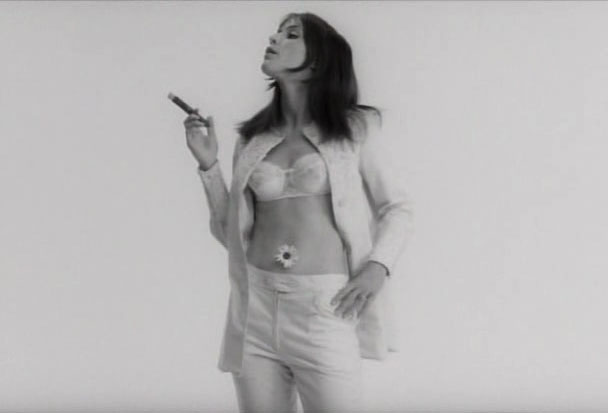
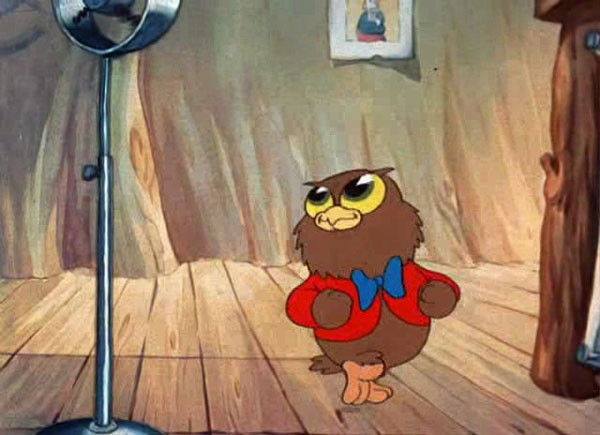
These were the waning years of Doris Day (her third to last film before retirement) and Frank Tashlin (his second to last before death). Doesn’t play like anybody’s final film, just a trying-too-hard jumble of ideas. Doris still has cute comic reactions, but she’s got lump-o-nuthin Richard “Dumbledore” Harris (hope he’s better in This Sporting Life) and a young (relatively) Ray Walston to play off – so, not much.

Doris works for a beauty products company, trying to be a corporate spy and steal another company’s formula. She’s fake-caught trading her boss’s secrets and fake-fired so she’ll be hired by the competitor and steal their product for making hair waterproof. This sounds awfully familiar, and someone needs to investigate that this became available on DVD exactly two years before Duplicity opened.

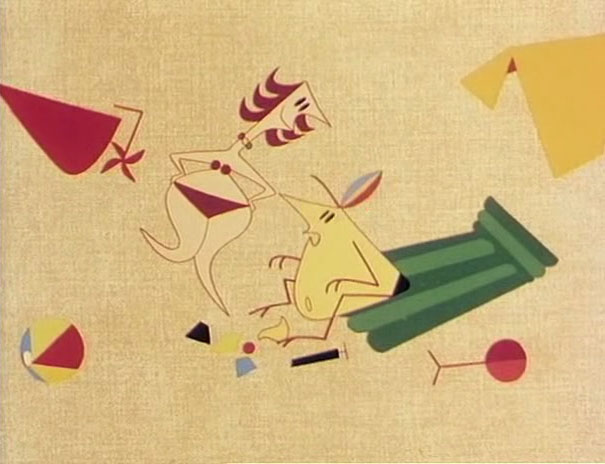
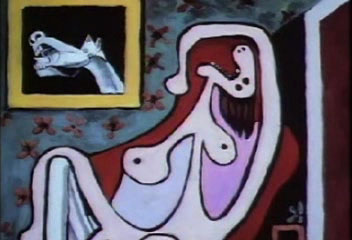
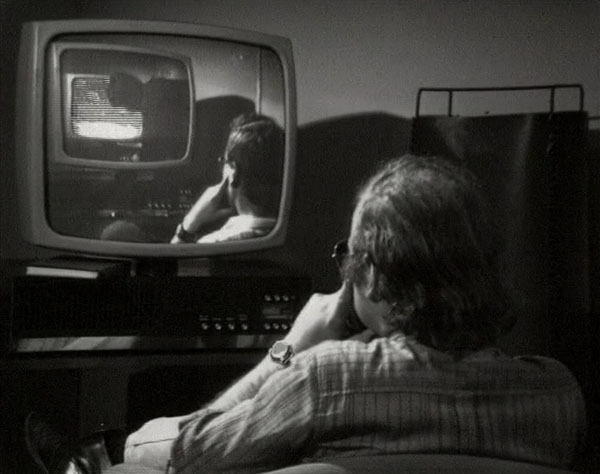
The movie has a meta-theme-song… they’re in a movie theater watching a film with the theme song Caprice. There’s a Tashlinesque bit of trickery for ya. Also featured: a scene where kids are watching cartoons on television and not noticing the real chase scene happening around them.

At the end Richard Harris turns out to be a secret interpol agent, Ray Walston is dressed like a cleaning lady and I’m not sure who is the bad guy anymore. Tried to check out the commentary, but a few minutes in, Kent Jones said that the city of Paris is the third character in the film so I had to turn it off.

“Racism was rife in the public school system then, as were silly uniforms”

Rented this back when it came out – so about two years ago. More intense than I’d thought. Sets up a miserable, oppressive hierarchical school system, a couple rebel friends in the middle of it, and ends with them on the rooftop merrily blowing everybody away.

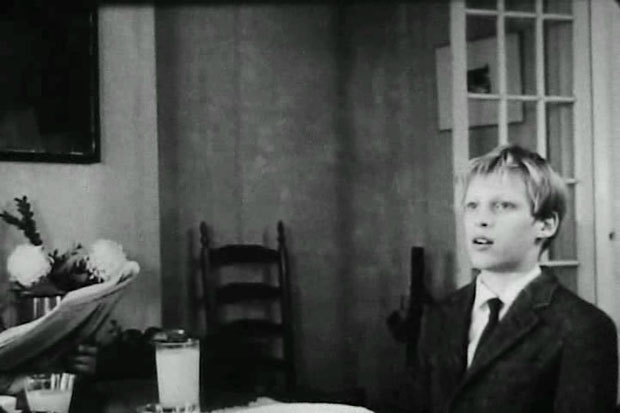
Malcolm’s conspicuous entrance, three years before A Clockwork Orange:
image

Divided into numbered and titled sections, each with one or two scenes in black and white for reasons I never figured out. Turns out cinematographer Miroslav Ondricek (who worked with Milos Forman a bunch of times, earning oscar nominations in the 80’s) used it for budget and simplicity in one scene, then Anderson would request that other scenes at random be shot b/w as well. Gave critics something to talk about, anyway.
image

D. Ehrenstein:

When it was first released, it was impossible to look at If…. without thinking of Zero for Conduct, Jean Vigo’s classic 1932 featurette about a schoolboy revolt. But Vigo’s rebels pelted their hated teachers with vegetables. Anderson’s are armed with bullets. And more than teachers and school officials, it is their fellow students—the senior classmates who truly rule their lives, treating them not as equals but as prison inmates they’re guarding—who are the real targets. Consequently, it is impossible to look at If…. today without thinking of the Columbine massacre of 1991 … Still, that was real, and Anderson’s slaughter is clearly meant to be metaphoric. Why else end the film with McDowell firing straight into the camera like the nameless bandit in Edwin S. Porter’s The Great Train Robbery (1903)? By doing so, If…., like so much else of sixties culture, poses a challenging question rather than offers a glib and easy answer.

image

image

image

Opens with the title “Are you for or against the abolition of the death penalty?”

image

Movie gets straight to the point. After reading Tony Rayns say about In the Realm of the Senses that “there is no thing as the Oshima style,” I thought I’d check out one of his earlier films and see for myself. Sure enough, this has nothing in common with it or with Empire of Passion – it’s bonkers in its own particular way.

Oshima in 1964: “An artist does not build his work on one single theme, any more than a man lives his life according to only one idea. Foolish critics, however, want to think that works have just one theme running through them. Then when they find something that contradicts that one theme, they immediately say that they don’t understand the work. Our work has nothing to do with these foolish critics. We want to put into it everything we are thinking and experiencing now; if we didn’t, creative work would have no meaning for us.”

image

R., a rapist and murderer, is hung but seems unhurt. Since his body won’t die, they rule him demented – but now he can’t be killed because a demented man can’t realize his guilt and understand punishment. The surly chaplain says they can’t even pray for him because last rites have already been administered. R. seems to have amnesia, so the men in the room (prison officials, doctor and so on) act out his crimes to jog his memory. They tell him his history, convince him he is Korean, awaken his mind and memory in order to kill him again.

image

They get really into their re-enactments – the education minister (above) imagines that he has actually killed a girl on the roof of a building and the others think him hysterical – then one by one they begin to see the dead girl – then she’s not dead at all, rises up and starts to talk with R, says she’s his sister. The men are upset because R never had a sister, but that falls by the wayside, and eventually she and R are lying on the floor apparently naked under a sheet while the men all argue and cry and hallucinate around them. It’s that kind of movie. With its loooong shots and loose, imprecise framing, single location and shouty characters, it could’ve easily been done as a play.

Akiko Koyama, an Oshima regular, as the mysterious Korean woman:
image

Oshima 1964: “Unless you see people living in their own country, their true identity escapes you. The tragedy thus grows clear; the Japanese and Koreans have superficial and uncertain views of each other, and cannot see things in their true light.”

1968: “Death By Hanging had as its starting point the events set in motion by the criminal Ri Chin’u, perpetrator of the Komatsugawa High School incident. In my opinion, Ri Chin’u was the most intelligent and sensitive youth produced by postwar Japan, as demonstrated by the collection of Ri’s letter edited by Boku Junan, “Punishment, Death and Love.” Ri’s prose ought to be included in high school textbooks. Ri, however, committed a crime and was sentenced to death. I had been thinking of devoting a work to Ri ever since he committed his crime in 1958. … We created R, a character who did not die after execution.”

1974: “In ancient times, revolutions began with the destruction of prisons. No, history called the uprisings that were strong enough to destroy the prisons “revolutions.”

R (left) with the priest played by Toshiro Ishido, the writer of Oshima’s Night and Fog in Japan:
image

“Death only has meaning if we know it is coming.”

“I don’t want to be killed by an abstraction.”

image

Recommended listening: That Man Will Not Hang by McLusky

Two years after The Face of Another and Pitfall, and seven years after I first fell asleep trying to watch it, I finally make it to/through Woman in the Dunes. I know that sentence makes moviewatching seem like a chore, but this was one I’ve been really looking forward to – a movie I knew I would totally love, so it might as well be saved for a special occasion, like staying home from work unable to sleep from painful poison ivy.

image

This was made in between the other two, and shares their shining, silvery black-and-white cinematography. An entomologist is allowed to stay at a woman’s house in a sand pit but is not allowed to leave. He rages against his situation, declares the sand illogical, tries to escape through cleverness and trickery, and finally (over months, years) resigns himself to it, living with her and helping to fill buckets with sand to be sold by the villagers for building material.

image

At first he doesn’t trust the woman, then he wants to help her get out, then the villagers gather around the edge of the hole offering him favors if he’ll have sex with her in front of them, and finally they’re an acting married couple, and she’s being lifted out of the hole with pregnancy complications, leaving him a chance to escape which he doesn’t take.

image

Funny enough, the same week I watched this, Criterion put out a Japanese movie from a year earlier called Insect Woman, a title this film could’ve stolen.

image

James Quandt’s essay points out the common theme of breaks in identity from Pitfall and Face of Another – the teacher gives up his life of collecting, identifying and documenting and accepts his captive life in the desert. And hey, Quandt saw the same parallel images of sand-flecked bodies between this and Hiroshima mon amour that I was noticing – good for us.

image

The man, Eiji Okada, is the same actor from Hiroshima mon amour, which is probably why that occurred to me. He later appeared in The Face of Another, Crazed Fruit, Samurai Spy, and in the last year of his life, Stairway to the Distant Past. I’m not sure who the dune woman, Kyôko Kishida, played in Ozu’s An Autumn Afternoon, but she also starred in Manji which I’d like to see.

image

image

I’ve said the Brakhage set is my favorite DVD… and yet I’d never watched Dog Star Man all the way through, and never seen The Act of Seeing With One’s Own Eyes until lately. Soon after I got the discs, I had a traumatic experience with DSM. Thought I’d watch it at night lying on the couch with Coil’s Moon’s Milk (In Four Phases) album playing. I remember the image of a man (Brakhage himself, I believe) with his dog climbing a snowy hill, but I quickly fell asleep and had awful nightmares, my worst in years, and woke up not wanting to watch DSM anymore.

So some years later I tried again, this time with Sonic Youth’s Koncertas Stan Brakhage on the stereo, again at night on the couch. Dozed off again during sections of Part 1 and most of Part 2, but I got more of an impression of the overall film this time. It’s tremendously complicated, with ideas and techniques from his other films all run into a feature which actually plays as a feature… I didn’t realize you could extend a Brakhage film past the hour mark and it’d stay gripping. And I know it sounds bad for me to call “gripping” a movie which I can’t stay awake through, but I know what I mean, and I’m the only one who reads this stuff anyway.

Prelude:
image

Part 1:
image

Part 2:
image

Part 3:
image

Part 4:
image

Wallace & Gromit’s Cracking Contraptions (2002)
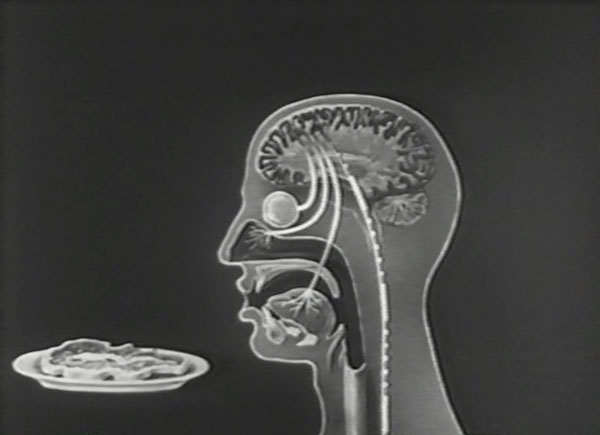
Ten W&G shorts. I think these were made to promote the full-length film… of course I had the chance to watch them back then and somehow put it off for seven years. Anyway these are cute – faves were The Snoozatron (a machine that dresses G. up as a sheep and flips him on a trampoline so W. can “count” him and fall asleep) and The Turbo Diner (a table-setting device exactly a la Charley Bowers in He Done His Best).


All This And Rabbit Stew (1941, Tex Avery)
Tex’s final Bugs short before moving to MGM. Hooray, now that I’ve watched those John Ford movies I can recognize that the offensive black stereotype hunter is based on Stepin Fetchit. I tried telling myself that if he didn’t look African the character would basically be Elmer Fudd – but then Bugs gets out of being held at gunpoint by shaking some dice and that idea goes out the window. Ouch.
image


Vivian (Bruce Conner, 1964)
If you liked a girl in the 1960’s, you made an avant-garde film of her. Harvard Film Archive: “An ecstatic portrait of actress Vivian Kurtz that features footage of a 1964 Conner exhibition and couches a humorous critique of the art market.” Set to a pop song called Mona Lisa, loads of fun and only three minutes long. This would go on my “best of a-g” gift reel if it wasn’t such a problem to make such a thing.
image


Journey on the Plain (1995, Bela Tarr)
Poems about friendship loss, life and death, each with a long tracking shot (imagine that), written by famed Hungarian poet Sándor Petöfi and performed by one of my favorite film music composers, Mihály Vig (Irimiás from Sátántangó, in color!). Suddenly in one scene 20 minutes in, he’s on a truck loudly playing a doomed keyboard. An odd movie, peaceful and beautiful. I would gladly watch again, paying more attention to the words of the poems.

image

image


Thriller (1979, Sally Potter)

A narrator goes over the story and characters of an opera, then analyzes it while staring into a mirror, memory and identity swirling about. Very art-film, told in black-and-white stills and scenes, narrator all heavily french-accented. Kind of entrancing, really, with repeated poses and images and phrases, never quite turning into something I can make sense of (though I hear it’s some kind of marxist-feminist critique of Freud and contemplation of human existence, thanks to a useful, knowledgeable and well-considered review on the IMDB – a rare thing indeed).

Sony Pictures: “a critical re-working of Puccini’s opera La Boheme, was a cult hit on the international festival circuit.” Sudden bursts of the shower theme from Psycho. “Yes, it was murder. We never got to know each other. Perhaps we could have loved each other.” I need to see it again, obviously, but I’m not dying to do so anytime soon.

from K. McKim’s great Senses of Cinema article

Potter’s 16 mm black and white cult hit Thriller (1979) overtly equates revision with survival; the film invokes formal conventions to interrogate the narrative necessity of Mimi’s death. Inscribing this inquiry within allusion to female murder victims (Thriller cites Bernard Hermann’s screeching Psycho score), Mimi questions the conventions that locate meaning in the death of a young beautiful woman. Scripted, edited, produced and directed by Potter, Thriller transforms the opera into, as the title suggests, a thriller that uncovers operatic form’s generic and gendered hypocrisy.

image

image


Dottie Gets Spanked (1993, Todd Haynes)
Wow, this was great. Boy with a mommy complex idolizes an I Love Lucy-esque TV show, wins a contest and gets to visit the set. Movie swirls with repression and fantasy and budding sexuality.

The distributor: “anticipates … Far from Heaven with its excavation of placid mid-century surfaces and deeply-buried emotions.” R. Lineberger: “This short film was commissioned by the Independent Television Service as part of a search for short films about American television. The pairing is perfect. Haynes is subversive, but approachable. His film deals with ominous and disturbing themes, but he never comes out and says anything objectionable. For example, Steven’s father is suggested to be violent, or at least sharply critical, but we never actually see any aggressiveness from him. The whispered consequences and punishments exist in glances, or in Steven’s thoughts.”

image

image


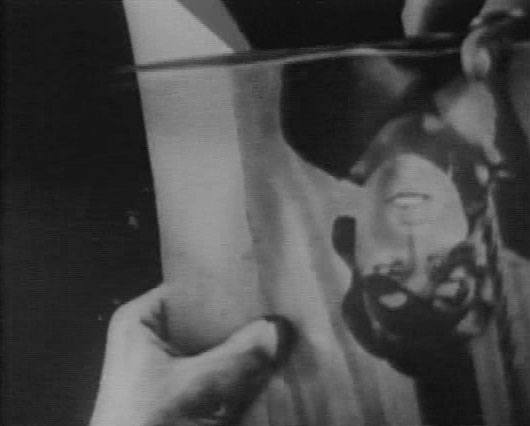
13 Screen Tests (1964-66, Andy Warhol)

Rented Warhol’s screen tests sorta against my will (I just wanted to hear the new Dean & Britta songs) then proceeded to half-watch ’em while listening to the music. The films were better than I thought (that Edie Sedgwick has got something, and Lou Reed and Dennis Hopper are funny) and the music was worse (standard instrumentals, a few new songs and some covers). I did try watching a screen test straight through, the way I’m supposed to, to see if I experienced a sudden tingly appreciation for the Cult of Andy, but it didn’t work; maybe I picked the wrong one.

G. Comenas:

Factory visitors who had potential “star” quality would be seated in front of a tripod mounted camera, asked to be as still as possible, and told not to blink while the camera was running. … Some of the earliest Screen Tests were those included in Warhol’s film The Thirteen Most Beautiful Boys. … More than 500 Screen Tests were made. In addition to The 13 Most Beautiful Boys, some of the footage was incorporated into other compilation reels such as The 13 Most Beautiful Women (1964) and 50 Fantastics and 50 Personalities (1964).

LA Times:

Each test lasted as long as a single 100-foot roll of film. Each was shot at 24 frames per second and projected at two-thirds of that speed, a trick Warhol often used. Each took a little less than three minutes to film, and takes a little more than four to watch. The slow-motion effect adds a discernible flicker, heightens every movement and contributes to the dreamy, ghostly quality.
image

I took advantage of the huge weekend snowfall in Atlanta by huddling on the couch with a pile of DVDs of short films which I’ve long delayed watching, followed by two obscure features, totaling eight newly-seen titles on Jonathan Rosenbaum’s hallowed list of 1,000 favorite movies. At this rate of eight per day, I’ll be through the list in no time, so anyone else can feel free to send me their own thousand-faves list and I’ll get to it shortly.


First off, two by Jane Campion. I wasn’t too kind to Sweetie or The Piano, was hoping I’d enjoy the early shorts more. A Girl’s Own Story (1984) is a vaguely Terence Davies-reminiscent period piece about two sisters and a friend one winter in the 60’s – having fun, going to school, singing Beatles songs and dealing with family trauma. The parents only speak to each other through their children, and dad brings his girlfriend to Pam’s birthday dinner… meanwhile friend Gloria leaves school because she is pregnant by her brother. Passionless Moments (1983) is a series of humorous sketches (each with its own title: “Clear Up Sleepy Jeans”, “No Woodpeckers In Australia”) with an ethnographic narrator telling us somebody’s mostly-insignificant stray thoughts (misheard lyrics to “Daydream Believer”, identifying a strange sound outdoors).

A Girl’s Own Story:
image

These were two of the most enjoyable shorts I watched all day, so hooray for Jane Campion. Both were worked on by Alex Proyas, director of Dark City, whose new Nic Cage movie opens this month, and Passionless was made in collaboration with Gerard Lee, who wrote/directed a comedy in 1995 involving marital strife because of a sold piano, hmmmm.

Passionless Moments:
image


Franz Kafka’s It’s a Wonderful Life (1993, Peter Capaldi)
I’d always admired the title of this and assumed it to be blending of Kafka’s and Capra’s sensibilities, but no such luck… it’s more of a Franz Kafka In Love, as the writer struggles to complete the first line to The Metamorphosis. Might’ve been nicer if I’d watched it earlier then, since by now every known artist’s inspiration has been illustrated by the movies, either as a serious drama or a light fantasy. Richard Grant (same year as The Age of Innocence) is Kafka, and his work-interrupting neighbors include Ken Stott (who’d soon play the lead detective in Shallow Grave) as a knife seller with a missing pet cockroach, and Phyllis Logan (a Michael Radford regular) as a novelty salesman. Our director is better known as an actor (Local Hero, Lair of the White Worm). My favorite detail: being friendly to a neighbor Kafka says “call me F.”

image

image


There’s time in any shorts program for some Norman McLaren. I checked out a section on the DVDs of work he did with Grant Munro, one of the few men strong and patient enough to animate himself with stop-motion. A piece I’ve seen before called Two Bagatelles (1953) has Grant zooming around to music (Katy came in from the other room to express disapproval at the music), a fun exploration of their live-stop-motion ideas. An unreleased set of sketches and experiments called either On The Farm or Pixillation adds slow-mo, film-reversal and mattes into the mix. Canon (1964) features a blippy electronic version of “Frere Jacques” and has four Grant Munroes at once, moving across a stage and interacting. And A Christmas Cracker (1962), for which McLaren/Munro did great dis/appearing stop-motion jester titles and transitions, is a compilation of short holiday cartoons.

On The Farm/Pixillation:
image

A Christmas Cracker:
image

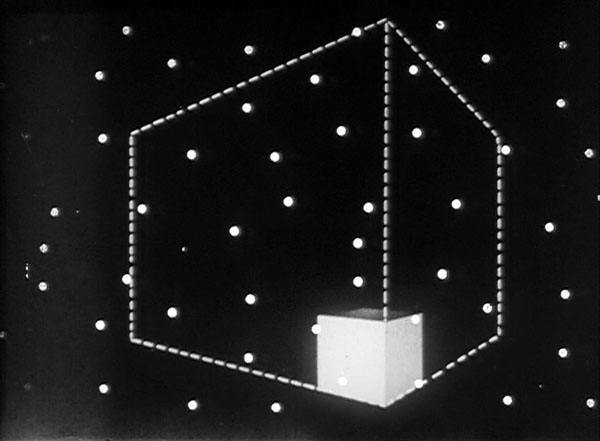
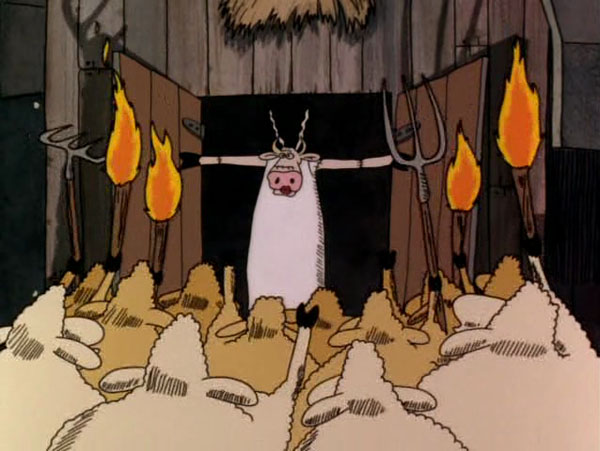
One of the non-McLaren segments of A Christmas Cracker, in which an inventor travels to space to retrieve a real star to top his Christmas tree:
image


Wong Kar-Wai’s Hua yang de nian hua (2000) is a montage of rotting nitrate footage from newly-discovered vintage Hong Kong films. Two minutes long, fast-paced and wordless, set to a song used in In The Mood For Love.
image

Two by Santiago Alvarez. Now! (1965) is a montage of upsetting footage, still and moving images, as Lena Horne belts out the title song, and Hasta La Victoria Siempre (1967) is twenty looong minutes of music and stock footage focusing on Che Guevara and other revolutions and revolutionaries. A chore to sit through – I’m gonna stop watching Alvarez movies for a while now.

Now!
image

Hasta la victoria siempre
image

Two early shorts by D.W. Griffith… although he made about 200 films in the two years between them (those were the days!) so maybe only the first one can be called “early.”

A Corner In Wheat (1909)
Wealthy trader corners the market in wheat, meaning less money for the farmer and higher prices at the market. As unrest grows and the cops are called to protect a bakery, the now even richer trader and some classy women tour the grain elevator to symbolically survey their fortune. He slips and is buried in grain, an ending stolen by Vampyr a couple decades later.
image

Tom Gunning via Erik Ulman says: “the editing has special appropriateness in this film, as it represents the ‘new topography’ of modern capitalist economics, and its ‘lack of face-to-face encounters with the forces which determine our lives.'” Based on a book by the novelist who wrote McTeague (Greed). Actor who played the farmer appeared 45 years later in Ford’s The Sun Shines Bright.
image

Musketeers of Pig Alley (1912)
A musician, just back in town after some weeks away working, gets all his money stolen by the titular gang. A rival crime gang fights the musketeers, and during the fracas our man gets his money back. When the rival gangleader is about to be arrested, the musician and his girl vouch for him, lying that he’d been with them the whole time, as thanks for his help. The enemy of my enemy is my friend, and all that.
image

Wikipedia claims this “probably the first ever film about organized crime” and an influence on Gangs of New York – as if Scorsese’s first exposure to crime was in DW Griffith films. Lillian Gish, star of many Griffith movies, plays the girl.
image

Report (1967, Bruce Conner)
Recording of radio broadcasts from when JFK was shot. Sometimes the visuals are robotically repeated loops of newsreels, sometimes film countdown leader, sometimes all white and black flash flickers, which do not translate well to medium-grade internet video. The second half is excellent, still the radio announcers but with shock associative visual editing from all manner of sources: a bullfight, advertisements, war movies and so on.
image

Tunneling the English Channel (1907, Georges Méliès) has long bothered me because it’s the earliest film on Jonathan Rosenbaum’s 100 favorite films list but hasn’t been available anywhere on video. Fortunately the new Flicker Alley set remedied that, and I could finally see it, in fine condition with wonderful hand-coloring. It’s a cute story and a technically superior film, with the color and the combination of animation, live action and Melies’ usual fun effects. Story goes that the leaders of France and England agree to build a tunnel under the channel, and all goes well until the train crashes. As the tunnel fills with water undoing months of work and drowning the prime minister, they wake up – it was all a dream and they decide not to build the tunnel after all.
image

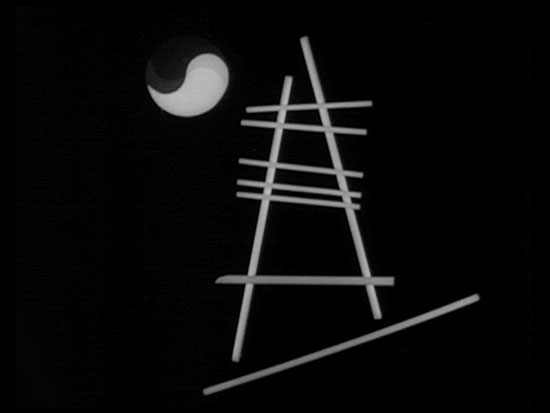
LMNO (1978, Robert Breer)
A hammer, a faucet, a headless naked woman. Rapid-fire comic-book situations. Mainly-irritating soundtrack of running people, running water, and running tape static. Next time I’ll feel free to see how it works with a couple Kinks songs instead. Not my favorite Breer, but I’ve actually seen his films projected in a theater before, so this one obviously suffers from being a bootleg download watched on a laptop.
image

Chris Stults, Film/Video Assistant Curator at the Wexner Center in Columbus, says (out of context): “The thing that has always drawn me the most to avant-garde cinema is that it is intended for an individual viewer, not a mass audience. The individual has to complete the work. To go back to the idea of seeing cinema anew, the viewer often has to figure out how to watch the particular film or video and then from that process of learning how to watch, meaning and interpretation can follow.”

Emory played this for us on 35mm, introduced by poet and politician Gyula Kodolányi who watched it in Hungary during its opening run… and this is the night after I saw a perfect print of The Age of Innocence introduced by Salman Rushdie. If their film screenings are about to stop, as has been rumored, at least they’re going out on top.

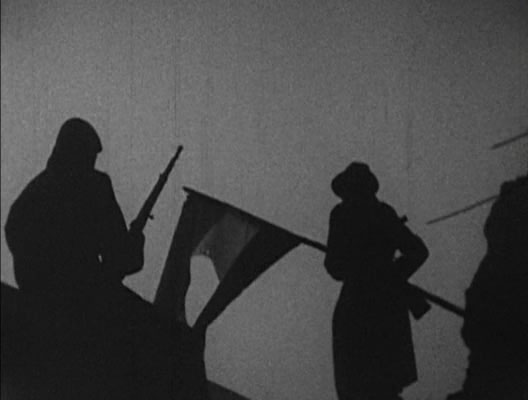
Scary movie. First 90ish minutes I’m wondering “where are they going with this”, then it all comes together in the last five. Set in the 1860’s but meant to illustrate and refer to interrogation techniques of the 1960’s (surprised he got away with it). Stark black-and-white, artfully composed in widescreen, with long-ish shots (nothing over a couple minutes), set at a prison out on the plains and a few surrounding buildings.

A hundred or more prisoners are being held together, a few in solitary covered with hoods and the rest in a large courtyard, but the guards don’t know whether they’ve captured the rebel leader and which of the prisoners are his horsemen. Threat of execution turns one prisonder, a pointy-hatted murderer, into a not-so-covert inside agent for the jailers. Guards capture a local woman and torture her to death in view of the prisoners, provoking suicides. Ultimately the jailers succeed through some twisty psych tricks into getting two elder rebel soldiers to identify themselves. A competition is staged, and the winner gets to select a troop of men to leave prison and join him. It’s announced that the rebel leader has been granted amnesty, and the new troops all cheer. The guards, now having identified the rebels, descend upon them with hoods…

Bright Lights:

In the concise (20-minute) but revealing interview included by Second Run with The Round-Up, Jancsó pauses to explain the larger context intended by these films, that is, how they were meant to universalize human cruelty beyond apparent, coded references to the then recent 1956 Soviet action. Speaking carefully and succinctly, Jancsó offers two themes: “the humiliation by the powerful” and “the defenselessness of the people.”

Zowie, a pip of a western, and not at all a sequel to A Fistful of Yojimbo like I’d feared. Thrilling action with all the close-ups and wide-shots, Morricone twang and badass tough guys we’d expect.

Clint, eight years before facing off against Briggs:
image

Clint is a steely young bounty killer out for heaps of money.

Lee, some six years after Ride Lonesome:
image

Lee is a steely older bounty killer out for revenge. Of course we do not know he’s out for revenge until the very end when it’s revealed that the music-box portrait chain he carries around belonged to his sister who was long ago killed by super-thug El Indio.

Gian Volontè of Hercules and the Captive Women, later in Le Cercle rouge and Sacco & Vanzetti:
image

The meaning of this musical/emotional prop is withheld until the final showdown, almost exactly like Charles Bronson’s harmonica in Once Upon a Time in the West. Lee and Indio are shown to be excellent long-range shooters. Lee, however, is the Fastest Man In The West (making the outcome of the climactic shootout a foregone conclusion). I think Clint’s special skill is a supernatural awareness of his surroundings, knowing exactly where/who to shoot. Awesome movie, anyway.

image