Monsieur Fantomas (1937, Ernst Moerman)
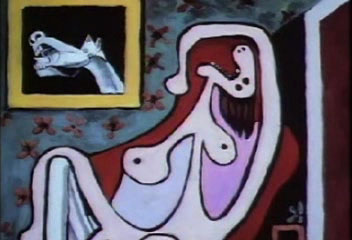
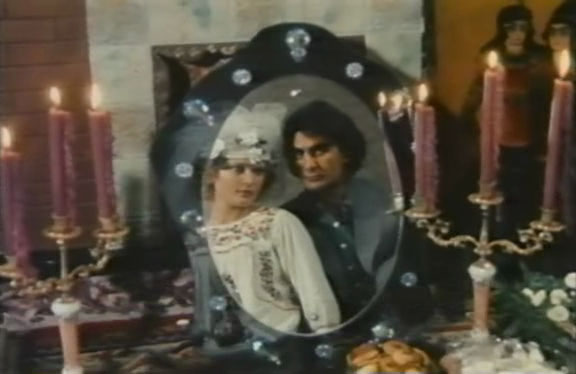
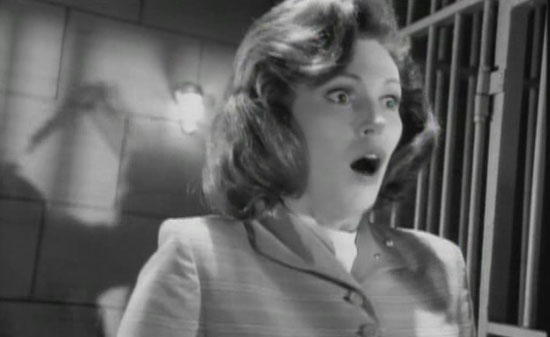
This was the prize short of the month… good show, Moerman. Takes the dream-logic, intense crimes and crazy escapes of Feuillade and goes all-out surrealist with them. The master criminal lives in a room with no walls on the beach (much of the movie takes place on the beach), seeks out his true love Elvire. Chief Juve is roused from the bathtub, consults with some seashells and heads buried in the sand. A hundred delightful things happen then it closes with the title card “end of the 280,000th chapter.” Made in Belgium, and I’m very sorry that Moerman didn’t shoot any more films. There really needed to be more surrealist cinema.

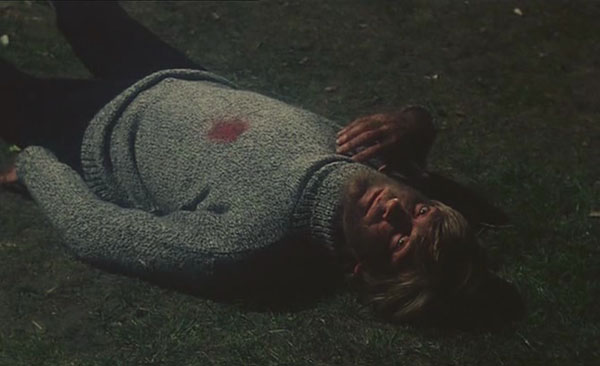
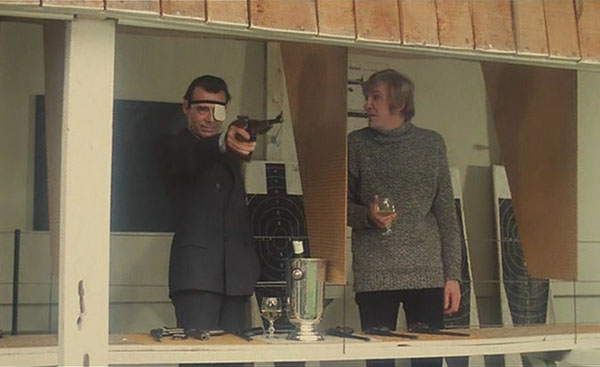
The cops close in on Fantomas… but is it really him, or just a cello?

Dinner For One (1963)
Shot in Germany, and shown traditionally every year on television since, a beloved little sketch in which a butler sets the table for an old woman’s absent guests, drinking toasts in each of their places and getting roaring drunk as he continues to perform his duties.

May Warden and Freddie Frinton:

The Spine (2009, Chris Landreth)
Group marital counseling + codependency, slowly coheres into a story. I didn’t like it nearly as much as his short Ryan.


Three by Sally Potter
These shorts predate Thriller by almost a decade, early film experiments not having much in common with her features – well, perhaps slightly with The Gold Diggers, which I started watching but haven’t finished.

Hors d’oeuvres (1972)
Silent avant-garde film, a flickering light shines on still photographs, then slow, unstable film footage of one person at a time in a bare room. Dance movements, slowed down then paused, superimpositions, the light pulsating. Lasted about twice as long as my willingness to appreciate it.

Play (1970)
Also silent, two cameras high up at different angles capture the same scenes of children playing on the sidewalk, at first presented side-by-side simulatenously, then re-edited, slowed down and chopped up.

Jerk (1969)
Faces, sped up and extremely rapidly edited. This was my favorite. I wonder if Potter considered the film’s motion to be “jerky” or if she thought this guy was a jerk.

Father (1977, Shuji Terayama)
a one-take silent sex scene that turns into a pleasant slideshow, featuring video superimpositions of a hand and the back of a head. No audio on my copy.

La Chambre (1972, Chantal Akerman)
Four slow pans around a cramped apartment, fully silent. First the director flutters her eyes at us from bed, then she is wriggling around, then playing absently with an apple, then – change of camera direction! – eating the apple, as the camera finally realizes she’s the only thing of interest in the room and starts rocking back and forth, homing in on her bed.

Birds Anonymous (1957, Friz Freleng)
“Birds is strictly for the birds.”
Just an average tweety and sylvester short, some kind of parody of werewolf movies and alcoholics anonymous, as far as I can tell. Wonder why this was on my laptop. And what is alum?

Playback (1970, Pere Portabella)
Two cameras, and you can see each in the other’s shot as they circle a composer who is arranging his unconventional choir piece, chattering constantly in unsubtitled Catalan. It’s all kind of exciting. I don’t know anything about Portabella, but I like his shooting style so far.

From the filmmaker’s official site:

Playback is presented as a short rehearsal in a double sense. It is a satellite of the constellation of works that Portabella dedicates to the analysis of the “materiality” of aesthetic and cultural languages (Vampir-Cuadecuc and Miró l’Altre among others can also be understood in this manner). At the same time, he analyzes the rehearsals that Carles Santos carries out for the playback recording of a film on the work of Antoni Gaudi. The choir of the Gran Teatro del Liceu of Barcelona reads fragments from Wagner’s Tannhauser, Lohengrin and the Valkyries. The film was shot in the theater “Lluïsos de Gràcia”.

Two Portraits (1981, Peter Thompson)
The director narrates a series of one-sentence statements about his father, as we see consecutive film frames cross dissolving. “His oldest son died at age 31. The decision to have children was left to his wife, as were all decisions except those concerning money.”

Second portrait is of his mother, filmed sleeping outdoors, while on the audio she reads pages from her diary. The first half was far more illuminating and sympathetic. I’m not sure what to do with the second part, but as with all of Thompson’s films that I’ve seen, I’d be glad to watch it again.

First portrait:

From Chicago Magazine: “When Peter Thompson was 35, his father committed suicide. That tragedy 29 years ago sent the Columbia College professor searching for Super 8 film of his father. He found only 12 seconds’ worth, but stretched them out to 17 minutes and added narration. When he expanded it to include his mother, the resulting film, Two Portraits, moved audiences to tears.”

Second portrait:

“This means something. This is important.”

Ever since I first saw Close Encounters (must’ve been on TV before I was ten) that line has come to mind whenever I see a big pile of mashed potatoes. But I got two things wrong. Firstly, Richard Dreyfuss doesn’t say that line during the mashed potato scene, but earlier. And second, I remembered the movie being a long, slow, boring build-up to a brief, awesome alien sequence, but it’s more of a medium, slightly boring buildup to a long, quite boring alien sequence. Either way, it’s safe to say it’s not my favorite Spielberg movie.

I’ve been meaning to watch more movies from 1977, the year I was born, to figure out what people were up to back then, but it only raises more questions. How was Richard Dreyfuss allowed to be a movie star? I wonder if Spielberg and Lucas (for Star Wars) being up for the same best-director oscar was the ’70’s equivalent of when Saving Private Ryan and The Thin Red Line were nominated for best picture, only back then Spielberg was the arthouse favorite and in ’98 his was the slam-bang commercial juggernaut to Malick’s more contemplative war movie. How did Francois Truffaut end up co-starring in a Hollywood movie, and did it help his later films get into American theaters?

F. Truffaut, and is that Bob Balaban?

Some thoughts:

Is the movie endorsing men having extra-marital affairs and abandoning their families? Dreyfuss has three kids, but when his wife doesn’t understand him he bonds with Melinda Dillon instead, then at the end he leaves not just his home but the planet.

The government is preparing some guys in Devo jumpsuits to go into space as earth ambassadors, but the only time we see them in training it’s at a last-call religious meeting. Gives the weird feeling that they’ve been selected for some kind of Christian mission to the aliens.

Jeez, but Teri Garr as Dreyfuss’s wife is shouty and has no patience at all. I mean admittedly he builds a full-on rock reconstruction of Wyoming’s Devil’s Tower in their living room, but she has already moved out by then, always having seemed more hysterical than sympathetic. Good contrast was Barbara Rush in Bigger Than Life, whose husband is losing his mind, but she never stops trying to help him. Compared to that, Garr is a one-dimensional bitch whom Dreyfuss was right to leave (though it means leaving the kids in her care, so there’s no winning this one).

Teri Garr is unhappy:

Some guy named Larry (Josef Sommer of Stepford Wives) shows up at the Devil’s Tower then falls behind and gets gassed (the visual effect of the gas shown with dazed little birds falling in front of the camera – classy). Who was he? Besides the gassing/evacuation/secrecy, the government seems surprisingly non-hostile.

Wow, Lance Henriksen looks young.

All the backgrounds look fake – even in Wyoming. They’re not fake in a latter-day CGI manner, but in an old-timey studio painted-backdrop kind of way – and the forest Dillon runs through after her son looks so carefully arranged. Strange that a movie which was probably state-of-the-art in ’77 (with the the effects guy from 2001: A Space Odyssey) seems quaint now, years more old-fashioned than its contemporary 1977 Star Wars.

Dillon under a false sky:

The first encounter with the aliens by Melinda Dillon’s young son (Cary Guffey, cast next in a couple of Italian-opportunist alien comedies) foreshadows two later Spielberg productions: Poltergeist (toys coming to life, scary tree shadows waking the kid) then E.T. (the aliens raid the fridge).

All this gentle-alien cuteness, communicating through music and sign language, abductees returned unharmed, the slow buildup to the slow conclusion – it all seems anticlimactic after you’ve watched Mars Attacks a few times.

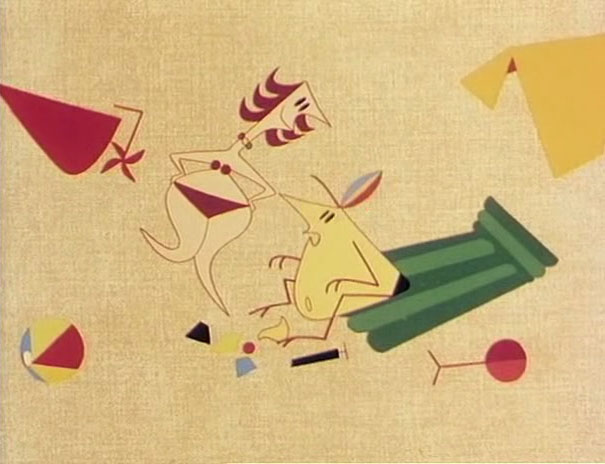
Surogat (1961, Dusan Vukotic)
Slightly naughty beach picture about a fat guy who brings inflatable ball, boat, car, food and girl. Real great anything-goes animation. Disney, Friz Freling and Chuck Jones must’ve cancelled each other out, giving the award to the underdog foreigner.
image

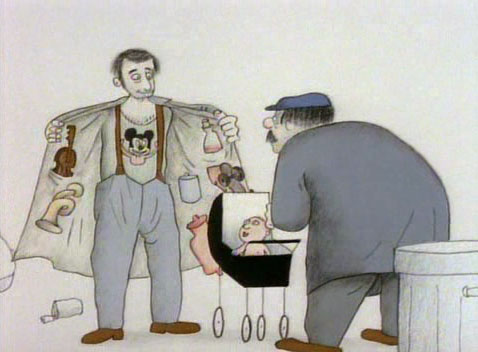
The Crunch Bird (1971, Ted Petok)
“Crunch bird, my ass!” Ugh, punchline shorts. Was there no competition this year? I would’ve awarded Thank You Mask Man over this. From a co-writer of What’s Up Tiger Lily, this beat a comic Canadian short about evolution and an adaptation of an Oscar Wilde fairy tale (OW wrote fairy tales?).
image

The Sand Castle (1977, Co Hoedeman)
A desert man with arms and legs but no body creates clay creatures to help him build a giant sand castle. All stop-motion, the short that (probably deservedly) beat Doonesbury at the oscars.
image

Every Child (1979, Eugene Fedorenko)
More of a foley demonstration than a proper cartoon. The animation is there I guess, though slightly Squiggle-visioney. Wow, someone sings the Umbrellas of Cherbourg theme. So the foley guys are telling the story of an unwanted baby… to a baby. One foley guy went on to voice the French version of Chief Quimby on Inspector Gadget. This beat a short called Dream Doll which I’d like to see, apparently an X-rated spoof of The Red Balloon.
image

Tango (1981, Zbigniew Rybczynski)
An empty room, simple tango music. A kid (looks like stop-motion cut-out photographs) throws a ball into the room, comes in, throws the ball outside, leaves, repeat. Then another person is added, then another and another, none of them interacting with each other until the very end. How’d they do it? Beat out some stop-motion from the great Will Vinton and a half-hour piece about a snowman.
image

The Man Who Planted Trees (1987, Frédéric Back)
Just about the happiest thing ever, so lovely it made my head hurt. Story of a lonely shepherd who singlehandedly reforests an entire region of France. I looked it up, hoping that it’s a true story, and unbelievably it is. Narrated by the familiar voice of Christopher Plummer and animated with lush, colorful sketches. The romantic short from the creators of Bob & Margaret and a big of head-morphing Bill Plympton hilarity never stood a chance against this beauty.
image

A Greek Tragedy (1985, Nicole Van Goethem)
The characters are man/pillars holding up a stone wall that has fallen into ruins. When it finally collapses, the pillars are free to frolic. The kind of simple cuteness you’d see at a festival with three of four similar pieces, not the kind I’d think would win a major award. Hard times in 1986. Actually this beat Luxo Jr. somehow. I guess computer animation wasn’t in style until ’88. At the same time, it’s nice
image

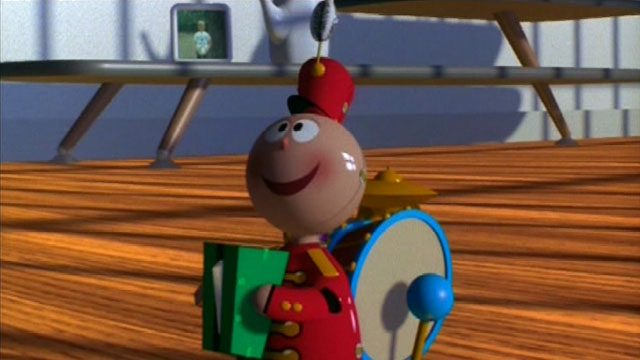
Tin Toy (1988, John Lasseter)
A one-man-band toy escapes the wrath of a slimy toddler, then grudgingly returns to cheer it up when it’s crying only to be ignored in favor of an empty box and a paper bag. Clear precedent to Toy Story. 1988 computer technology was not up to the task of accurate baby rendering, but it’s still pretty cool looking. It beat a Tex Avery-style short from the future director of FernGully and Cordell Baker’s great The Cat Came Back.
image

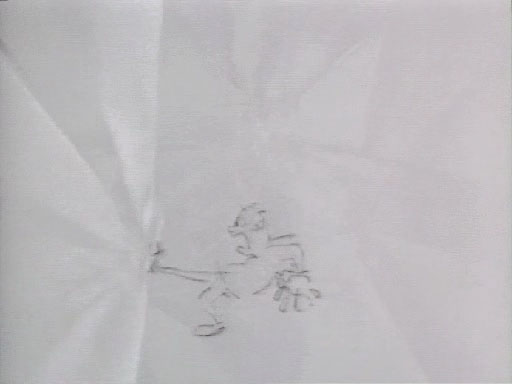
Manipulation (1991, Daniel Greaves)
A good ol’ artist’s-hands-interacting-with-drawing-table short, somewhere between Duck Amuck and Rejected. Funny how one of the most recent shorts is the one available in the lowest quality. The line-drawing guy turns 3D at the end, which I think was done in claymation. Very inventive and fun. Apparently Greaves’ Flatworld is also a must-see. No U.S. shorts in this year’s competition – this UK film beat out two Canadian pieces (including long-time fave Blackfly).
image

Mona Lisa Descending a Staircase (1992, Joan C. Gratz)
Really wonderful little animated film which would probably be the greatest thing ever if I was an art history major. Since I only knew about five of the paintings which were mighty-morphing into each other, I probably attribute more of the film’s beauty to its director than I probably should. Oh wait, it won the oscar so I guess I’m not the only one who was impressed.
image

Then again, some of it is just silliness.
image

Quest (1996, Tyron Montgomery)
A man made of sand navigates increasingly more difficult and dangerous worlds of paper, rock, metal and water. The end is the beginning – would work as a looping DVD or art installation. Nice stop-motion, like The Sand Castle but I liked this one better, Thought it was anti-technology for a while, but now I think its just trying to say the world is a dangerous place. Competition included an Aardman, a Canadian piece I’ve seen but don’t remember, and a stop-motion short from a future Pixar animator.
image

The Bridegroom, The Comedienne, and the Pimp (1968, Straub/Huillet)
Four minutes in, it’s just been a long car ride in the rain with opera music playing (there was no sound at all for the first two minutes) and I am very suspicious.

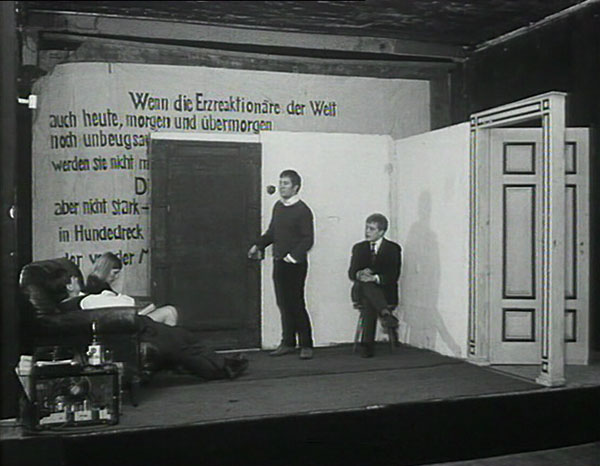
Five minutes in, cut to a stage set, with German words on the wall and a clattering wood floor. Rivette (or Michael Snow) would be pleased. A fast-paced stagey farce follows. Blackout, next scene but the camera hasn’t moved, hasn’t even cut for all I know. Actors include Fassbinder regular Irm Hermann, composer Peer Raben, and future superstar Hanna Schygulla (who I’ve recently seen in The Edge of Heaven, Werckmeister Harmonies and 101 Nights of Simon Cinema).

Bang, cut, new location, and back out on the street. An action scene. Jimmy Powell is marrying Lilith Ungerer (star of a couple Fassbinder films). They go home, the pimp (Fassbinder himself, early in his career) is there, she shoots him and gives a speech as the music returns. All affectless acting.
image

So, what was that all about? Well the title refers to the cinematic drama in the third section, that much is clear. And the actress and the pimp were in the stage play in the middle. IMDB fellow says “The film has its roots in a theatre production of a play by the Austrian playwright Ferdinand Bruckner which Straub had been asked to direct by a German theatre company. He considered the play too verbose and cut its length from several hours down to just ten minutes, and it is the production of this play which forms the centrepiece of the film.” As for the beginning, the same guy says it’s a “Munich street frequented by prostitutes.” F. Croce calls it a “mysterious, structuralist gag” and notes that “filmic subversion can prompt political revolution, and transcendence.” No revolution or transcendence here – I just thought it was a weird little movie made by an overacademic sweater-wearing type. Was only Straub’s fourth work – let’s check out his tenth, which is half as long.
image

Every Revolution is a Throw of the Dice (1977, Straub/Huillet)
It’s in French this time. Actors sit in a half-circle near the memorial site for the Commune members and recite a poem. I’m mistrustful of the English subtitle translation of the poem, and there’s not much in the movie besides the poem (the recitants are as expressionless as in the previous film, maybe even more so), so there’s not much of value for me here. Actors include Huillet herself, Michel Delahaye (the ethnologist in Out 1) and Marilù Parolini (writer of Duelle, Noroit, Love on the Ground), shot by William Lubtchansky and dedicated (in part) to Jacques Rivette.
image

Mongoloid (1977, Bruce Conner)
Music video for a Devo song using (I’m assuming) all found footage (science films, TV ads and the like).
image

Mea Culpa (1981, Bruce Conner)
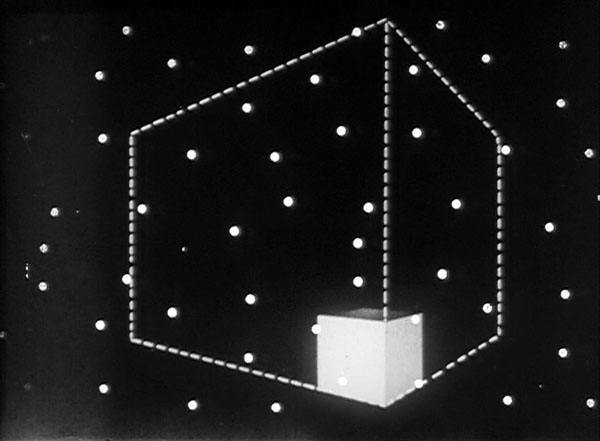
Dots, cubes, light fields and… whatever this is. Conner goes abstract! The music sounds like 1981’s version of the future. Aha, it’s Byrne and Eno, so it WAS the future. I didn’t know that Conner died last year, did I?
image

(nostalgia) (1971, Hollis Frampton)
of a photo of a man blowing smoke rings:
“Looking at the photography recently it reminded me, unaccountably, of a photograph of another artist squirting water out of his mouth, which is undoubtedly art. Blowing smoke rings seems more of a craft. Ordinarily, only opera singers make art with their mouths.”
image

So far I really like Hollis Frampton. His Lemon and Zorns Lemma were brilliant, and now (nostalgia) is too. Anyway this is the one where Frampton films a photograph being slowly destroyed on an electric burner while Michael Snow reads narration describing the next photograph that we’ll see. It’s important to know that Snow is the uncredited narrator for a humorous bit in the middle. The movie also has a funny twist ending that I wasn’t expecting. This would be part one of Frampton’s seven-part Hapax Legomena series. I have the strange urge to remake it using photographs of my own, but I lack an electric burner and a film/video camera.

Gloria (1979, Hollis Frampton)
Remembrance of a grandmother, Frampton-style, meaning annoyingly hard to watch and strictly organized. Clip from an ancient silent film, then sixteen facts about gramma (“3. That she kept pigs in the house, but never more than one at a time. Each such pig wore a green baize tinker’s cap.”) then a too-long bagpipe song over an ugly pea-green screen, and the rest of the silent film. Or as a smartypants would put it, he “juxtaposes nineteenth-century concerns with contemporary forms through the interfacing of a work of early cinema with a videographic display of textual material.” I prefer my version.
image

Prelude #1 (1996, Stan Brakhage)
I don’t think that I enjoy watching low-res faded videos of Brakhage movies. I’ll wait for the next DVD set to come out (or the next Film Love screening). As a side note, I cannot believe that Raitre plays stuff like this. Just imagine: art on television. Picture a single TV station anywhere devoted to showing art. Can you? Can you?!? I feel like screaming!!
image

NYC (1976, Jeff Scher)
Shots of the city sped-up, rapidly edited, reverse printed and hand colored, two minutes long with a jazzy tune underneath. Super, and short enough to watch twice (so I watched it twice).
image

Milk of Amnesia (1992, Jeff Scher)
I’m thinking it’s short scenes from film and television, rotoscoped, with every frame drawn in different colors, with some frames drawn on non-white paper (a postcard, some newspaper). Warren Sonbert is thanked in the credits. I would also like to thank Warren Sonbert.
image

Yours (1997, Jeff Scher)
An obscure musical short from the 30’s or 40’s overlaid with rapidly-changing patterns and images from advertisements. Descriptions and screenshots can do these no justice.
image

Frame (2002, n:ja)
Black and white linear geometry illustrating a Radian song. I can’t tell if it’s torn up by interlacing effects or it’s supposed to look that way. Give me Autechre’s Gantz Graf over this any day. Between this and Mongoloid and the Jeff Scher shorts, I’m not sure where to draw the line between short-film and music-video. Not that it’s a dreadfully important question, but I’m in enough trouble tracking all the films I have/haven’t seen without adding every music video by every band I like onto the list. Although maybe videos should be given more credit… I’m sure Chris Cunningham’s video for Squarepusher’s Come On My Selector would beat 90% of the movies I watched that year.
image

An awful lot like Inferno, with the ludicrous plot, hysterical acting and silly deaths. But also like Inferno, the visuals are excellent enough that I can forgive all that. I think I actually prefer Inferno, even though this one has better music and funnier death scenes.

Eva Axén went from working with Visconti in classy period pieces to getting stabbed, thrown through windows and hung by Argento:
img

Eva up there escapes from a prestigious dancing school, goes to stay with a friend, and is dramatically killed (along with the friend) by an unseen evil which cares little for logic or reasonable dialogue, only for the picturesque posed deaths of young women.

Our heroine in the middle is Jessica Harper (Phantom of the Paradise, Pennies From Heaven). At left is Stefania Casini, an older sister in Blood For Dracula.
img

New student Suzy picks up the narrative from there, discovering right off the bat that her school is creepy but not figuring until the end that it’s a front for a coven of witches run by a hundreds-year-old evil mother.

The Mother Of… something:
img

One thing the movie’s got going for it: casting Udo Kier. But it loses points for casting Udo Kier in a tiny, talky role, essentially letting everyone BUT Udo Kier overact. Bad call. Maybe Kier was busy in Fassbinder’s The Stationmaster’s Wife at the time.
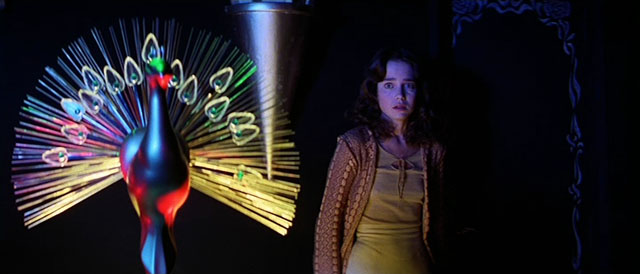
img

While Suzy has fainting spells, deals with a plague of maggots falling from the ceiling, and talks with Udo Kier and some professor (Rudolf Schündler, actor since the 30’s and director in the 50’s and 60’s, also in The Exorcist and Wenders’ Kings of the Road and The American Friend) about historical nonsense, more deaths occur. Her friend Stefania Casini is murdered by the unseen hand in a similar over-the-top manner to the first death (barbed wire, razor stabbing, nails through the eyes). And the blind pianist is kicked out of school and walks through the abandoned square at night. The music warms up, the lighting declares the buildings to be a threat, and suddenly a stone gargoyle comes alive and flies overhead… but in the end, he’s simply killed by his guide dog.

Blind Daniel (Flavio Bucci of Il Divo) getting kicked out of school by mistress Alida Valli (star of Eyes Without a Face, Senso, Il Grido, The Third Man, played a caretaker in Inferno)
img

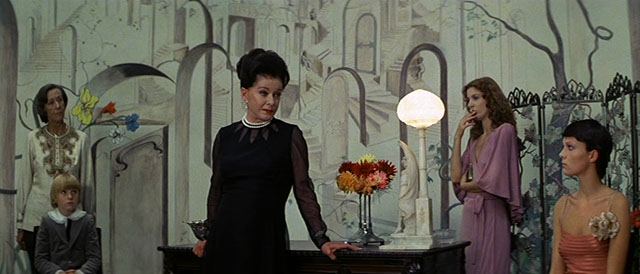
Joan Bennett (30+ years after Scarlet Street), in her final film role, has got some wicked wallpaper.
img

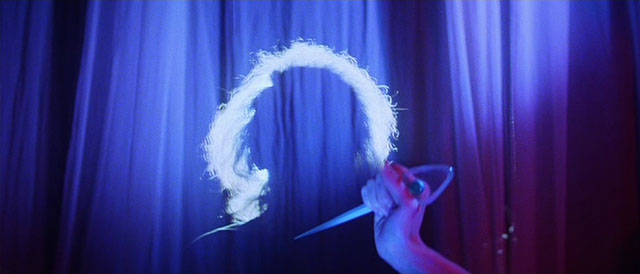
Amazing cinematography by Luciano Tovoli (from Antonioni to Argento to Barbet Schroeder to Titus), who shines red and blue colored lights on simply everything. The dubbing is mostly good, and I liked the pumping Goblin music surprisingly well. I dig when Goblin sings along quietly with a sinister “la la la.”

Argento’s debut seven years prior was titled The Bird with the Crystal Plumage.
img

OCT 2017: watched the new 4k restoration at the Alamo, wowie wow wow.

“The parent system’s no good. Pa grumbles while Ma’s sweet and silent…”

image

Fair haired girl, Pauline, 17, she sings – her ex-neighbor Suzanne, 22, doesn’t. In the early 60’s, strong-willed P is having trouble with her parents, so she visits S, who is having trouble with her boyfriend Jerome, married to another woman. S also has two kids and is unintentionally pregnant. There’s illegal abortion drama, Jerome kills himself, and a title card says “ten years later”…

image

For those who didn’t get Le Bonheur and thought it was asserting male dominance and endorsing cheating on your wife, here’s Varda’s explicitly feminist movie – exploring the joys and pitfalls and terrible music of 1970’s feminism. Unfortunately, explicit feminism (or explicit anything) doesn’t work as well for me as Varda’s more ambiguous movies have… movie is kinda obvious and messagey at times, but she still takes a multifaceted story approach to her message.

image

Anyway, ten years after the suicide, the women meet at a women’s rights demonstration. P is calling herself Apple now, sings a cheesy “my body is mine” song, playing the worst kind of acoustic guitar and tambourine folk. Actually I kinda liked the piano song she sings on an Amsterdam canal boat with her fellow abortion patients later on. S runs a women’s clinic, while P tours her music and theater group, and the two keep in touch sporadically over the years through the mail. Suzanne eventually marries pediatrician Pierre and Pauline goes to Iran with her man Darius (an economist?), and now the two have to cope with being wives and mothers while trying to keep their values uncorrupted. P finds it’s tough to be feminist in Iran so she ditches her guy and returns home. Ends with a lingering shot on Suzanne’s grown daughter, looking troubled at the thought of taking over the plot.

image

P. Kael said “Varda brings a Disney touch to women’s liberation.” Otherwise there isn’t crap about it on the internet, besides saying it’s from France, Belgium and Venezuela, which doesn’t even seem to be true.

an Apple performance:
image

Every movie released in 1977 looks dirty and cheap. Did the entire international film world’s budget go into the first Star Wars? Dialogue is in French, but credits and voiceovers are in English, hmmm. Maybe all this is because of my shady videotape copy.

image

Pauline (Valérie Mairesse) was in Tarkovsky’s Sacrifice and Lucas Belvaux’s Trilogy and Suzanne (Thérèse Liotard, above) was in a Bertrand Tavernier sci-fi flick with Harvey Keitel and Harry Dean Stanton – must see that. The composer shows up as an actor, with four-year-old Mathieu Demy in tow. Assistant camera (in the Iranian scenes?) is appropriately by Nurit Aviv, France’s first licensed female cinematographer.

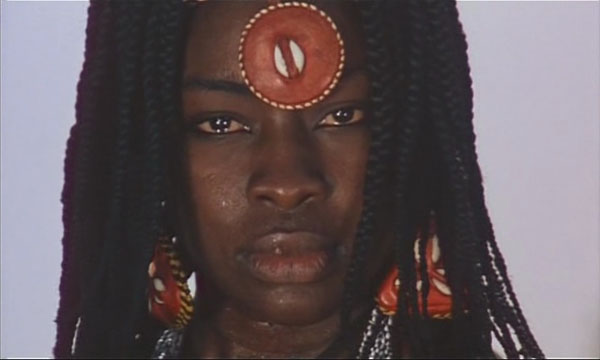
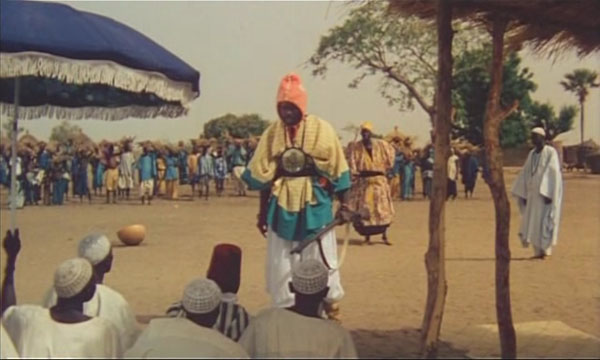
Firstly, the “Ceddo” are the outsider townspeople. Took me half the movie to figure that one out. The town is converting to muslim, and the local imam is becoming more powerful than the king. A small group of traditionalist men kidnap the princess to protest the forced religious conversion. Meanwhile, a white christian missionary is looking for followers but is not doing so well.

While the king and imam disagree over how to proceed and the imam’s men plot to overthrow the throne, three younger men – the king’s potential successors and the princess’s potential husbands, depending which rules you follow – aim to rescue the princess, bringing guns to a bow-and-arrow party. Biram is kind of a compromise choice between mirror-wearing king-loyalist Saxewar and committed muslim Fall, but Biram is easily killed by an arrow. Saxewar goes next, dies stabbed through the throat by the kidnapper. Fall becomes suspicious of the imam and renounces his position, and finally the imam carries through his threat of deposing the king (who dies offscreen) and has the lead kidnapper killed, freeing the princess. She marches right back into town, grabs a rifle and blows away the imam herself. Damn, Sembene was good with endings.

image

Much of the story revolves around slavery. A white trader is in town accepting slaves in exchange for wine and guns, so Ceddo are trading members of their own families for guns to fight the muslims. One reason people are converting to islam in the first place is because law prohibits children who are born muslim to become slaves, so if young adults convert, they might still become slaves but their children will be born free. The christian missionary has no such promise, and at most manages to collect one follower, or at least a curious onlooker to the white man’s sermon. This leads to a wonderful dream sequence, a large modern (as opposed to the no-specific-year historical period of the rest of the film) crowd is gathered as this new guy reads a memorial service for the white priest, seen in a coffin… dreams of a successor, unfulfilled, as the christian is killed unceremoniously later in the movie.

image

Watched this from a very good print with strong color rented from recently-folded New Yorker Films – we were warned that this may be the last screening of this particular film for a long time. This was made two years after Xala – seems that this is the turning-point film for me in Sembene’s career, since I’ve enjoyed this one and everything after it (Guelwaar, Faat Kiné, Moolaadé) more than everything before it (Xala, Emitai, Black Girl). Can’t put my finger on why I like the later ones more… better color, stronger characters, easier-to-follow narratives? I don’t know why I like movies, but this one was damn amazing. We’ll see how unseen early film Mandabi and late Camp de Thiaroye hold up.

The princess appeared 20+ years later in Faat Kiné, and Prince Biram played an interpreter in Coup de torchon

We were always looking for the camera’s reflection in Saxewar’s mirror:
image

From the valuable article by J. Leahy at Senses of Cinema:

Sembène goes so far as to articulate something completely ignored in the discourse of the male protagonists of the village’s internal war: the desire of this strong, silent, beautiful young woman. This is revealed in what I read as a subjective flashforward to a possible future, similar to that of the priest. It is characteristic of the complexity of Sembène’s analysis of the interaction between the individual, history and traditional practice that this shows her married to her kidnapper and finding happiness in the role of a traditional wife serving her husband. Others have read this as flashback to their first encounter. Even if this is so, the moment remains equally evocative in terms of the possibilities it suggests.

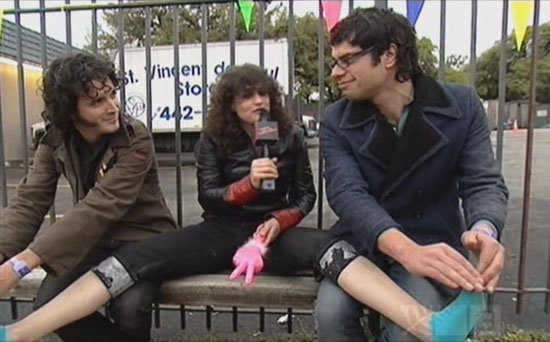
Flight of the Conchords: A Texan Odyssey
Short doc of the duo band at SXSW. Funny! Seen below massaging the feet of Peaches.
image

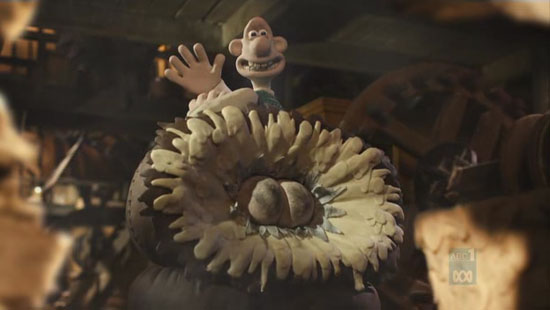
Wallace and Gromit in A Matter of Loaf and Death (2008, Nick Park)
This was as fast-paced as the action scenes in the Wallace & Gromit full-length, and packed full of jokes and puns. Our heroes are bakers now, and a former bread company model, now grown fat on breads and pastries, is out for revenge on the bakery world. She gets cozy with Wallace, plotting to murder him with a giant cartoon bomb (among other things) while Gromit and the woman’s terrified pet poodle try to ruin her plans. Lovely movie, probably inspired by the name of cowriter Bob Baker and/or voice actor Peter Sallis’s appearance in the movie Who Is Killing The Great Chefs of Europe. Must check out Nick Park’s series Shaun The Sheep.
image

Living in a Reversed World
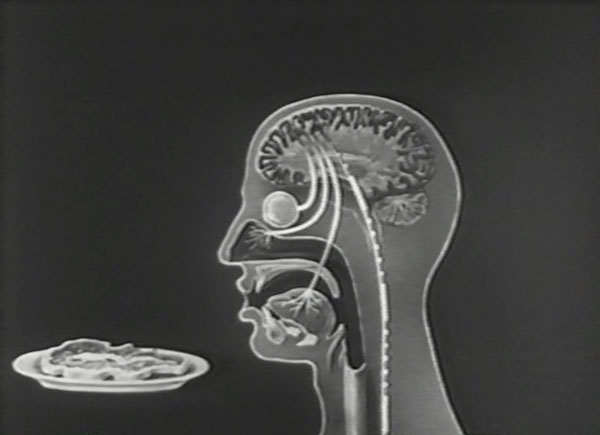
Educational doc. Sadistic Austrian professor, trying to prove a point about perception, gets students to wear special mirror/prism glasses which reverse left/right or up/down and see if they can adjust. They can. He also puts goggles on a chicken, which I don’t think is a good idea.
image

The Contraption (1977, James Dearden)
Closeups of construction. What’s he building in there? What the hell… is he building in there? Turns out to be a giant mousetrap for our suicidal handyman. Dearden later made Matt Dillon thriller A Kiss Before Dying. Contraption-builder Richard O’Brien had lately been in Rocky Horror, would play Mr. Hand in Dark City. Tied for best short at the Berlin fest… this is pretty neat, but I wouldn’t have thought it an award-winner.
image

Cameras Take Five (2003, Stephen Woloshen)
Abstract hand-drawn animation set to Dave Brubeck’s Take Five. Liked it, not super busy, didn’t think people were doing stuff like this anymore.
image

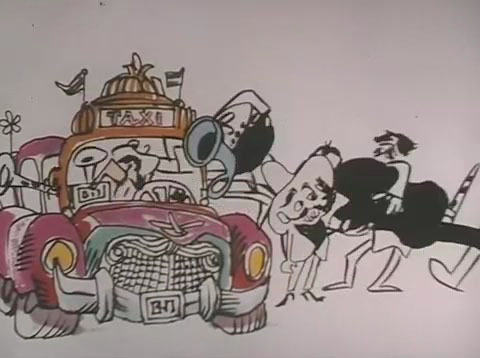
Herb Alpert and the Tijuana Brass Double Feature (1966, Hubleys)
John & Faith animate two short musical numbers to Spanish Flea and Tijuana Taxi. Not slick like the Doonesbury short, homemade-looking. Cute pieces though (predictably about a flea and a taxi). Beat out a Pink Panther short and an anti-smoking PSA for the oscar. Rough year for animation, I guess. Lost at Cannes to a documentary on Holland (not by Bert Haanstra).
image

The Tortoise and the Hare (1935, Wilfred Jackson)
Hare is kinda an asshole – supposedly his character was stolen by Warners as a prototype for Bugs Bunny. This plays like the other Silly Symphonies, not as good as the Three Little Pigs though.
image

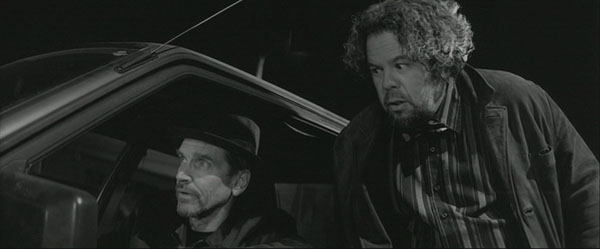
A Perfect Place (2008, Derrick Scocchera)
Sharp b-w cinematography and two very dryly comic actors (Mark Boone Jr. of Memento & Thin Red Line and Bill Moseley of all the Rob Zombie films) make for a good movie. In the first second, MBJ “kills” an acquaintance who was cheating at cards, then they spend the next 25 min trying to dispose of the body. Not the usual over-the-top situations either, movie keeps it cool. I guessed early on that the cheat wasn’t really dead but that didn’t make it less enjoyable. Dig the theme song by Mike Patton.
image

MANT! (1993, Joe Dante)
Tracigally not a full feature. All the scenes shot for the film-in-a-film of Dante’s awesome Matinee were assembled into this short included with the laserdisc.
image

Three excellent shorts by Norman McLaren. Fiddle-de-dee (1947, painted to an upbeat fiddle tune), Boogie-Doodle (1948, drawn with pen to a piano boogie) and Serenal (1959, etched and hand-colored to a Trinidadian string quartet number)

Fiddle-de-dee:
image

Boogie-Doodle:
image

Serenal:
image

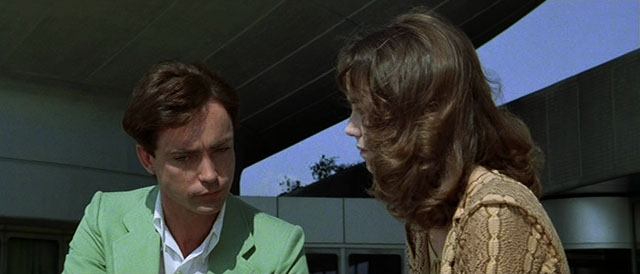
Interesting, very good movie but I didn’t love it as much as everyone else seems to. Swept the Cesar awards in non-acting categories (a war film called Le Crabe-Tambour picked up the rest). I’ll bet Dennis Potter enjoyed it, too.

Come to think of it, looking over my screenshots a few weeks after writing the above paragraph, this was a damned complicated movie, and showed more imagination than Je t’aime, je t’aime. Definitely have to see again (and maybe again).

image

A writer (John Gielgud who, at 73, still had 60-some movies left in him over the next two decades) lives alone (with servants) in his big old house (“Providence”), spends the first two thirds of the movie dreaming up sordid lives for his family members, including his late wife (Elaine Stritch, lately in Romance & Cigarettes), his astro-scientist son (David Warner of Time Bandits), his lawyer son (Dirk Bogarde of The Servant and a bunch of Visconti films) and the lawyer’s wife (Ellen Burstyn of The Exorcist). He re-casts them, giving the lawyer and wife a bitter, joyless marriage, having them hold affairs with the other two. Stritch becomes an older woman with a terminal illness and Warner becomes a free man unsuccessfully prosecuted for murder. Scenes are re-written halfway through – Gielgud’s voice will narrate the action, then rethink things and suddenly characters will leave the scene or change their mind or the whole thing will start over with a different ending. So very Resnais-like, eh? Meanwhile, the writer himself is stumbling around the house at night, drinking, shitting, falling down, breaking things and griping about his ill health.

In the morning, he’s outside, it’s his 78th birthday, and his two sons and the lawyer’s lovely wife have a happy family visit, with dinner and gifts and happy memories. There’s a little bitterness, mentioning the writer’s wife who killed herself after diagnosed with a fatal disease, but overall it’s happy and serene, leaving us to wonder how much of the family problems and awful behavior from the first half of the movie were completely invented by the writer, and how much is actually there under the surface.

image

I’d thought I would enjoy six-time oscar-nominee Ellen Burstyn’s performance more, but maybe it suffered a bit from having just watched Rivette’s ladies in Love on the Ground – she seemed like the weakest link here, speaking as if she’d just received a script. Watching with headphones, the sound mix wasn’t so good either, but then neither was the quality of my downloaded movie very good, so this wasn’t optimal viewing experience. Liked the movie, fun to watch a bitter old man provide amused commentary on his own nightmares and imaginations, just didn’t blow me away.

Denis Lawson, who played the imaginary footballer (David Warner’s brother), appeared later the same year as Wedge Antilles in Star Wars, the film that helped decimate the world market for fancypants French films such as this one. In 1977 subtitles hadn’t been invented yet, so those watching in France heard the dubbed-in voices of actors Claude Dauphin (Le Plaisir), Francois Perier (Stavisky), Nelly Borgeaud (Mon oncle d’Amérique) and Gerard Depardieu.

image

Gielgud speaks the director’s thoughts: “It’s been said about my work that the search for style has often resulted in a want of feeling. However I’d put it another way, I’d say that style is feeling, in its most elegant and economic expression.”

Some woman wrote an article arguing that the ending is a dream also, but I’d have to pay $12 to read the full thing online.

There are weird flashes to military police and concentration camps, maybe explained by this American Cinematheque quote: “A fascinating visual tour de force exploring the creative process, offset by references to the nightmarish political crackdown in Chile in the late 1970’s.”

Ellen Burstyn:
image

V. Canby for NY Times did not like it: “The old man, it’s soon obvious, has imposed on these perfectly decent folk all of his own fears and guilts about a lifetime spent in philandering, selfishness, disinterest in his family, while he enjoyed a reputation as a writer he never really deserved. The structure is complicated but sadly un-complex.”

J. Travers on the ending: “Yet there is something about this Resnais-esque view of Paradise that is even more unsettling than the Hell we have just experienced. Which of these two interpretations paints the more accurate picture of the world in which we live? Can we take seriously the saccharine-doused scene of marital fidelity, brotherly friendship and sweet father-son love? Isn’t it more believable that the two sons would be rivals, that the elder son would have a mistress and would bitterly resent his father’s slow and demeaning death? Surely the world shown to us in the first part of the film, the world apparently belonging in the mind of a solitary writer, is the world that is nearer to our own, a far more accurate portrayal of human nature? The second world, of calm, family harmony and stability, is surely an illusion, a distorted memory of a past that never was, could never have been. Which reality do we believe?”
image