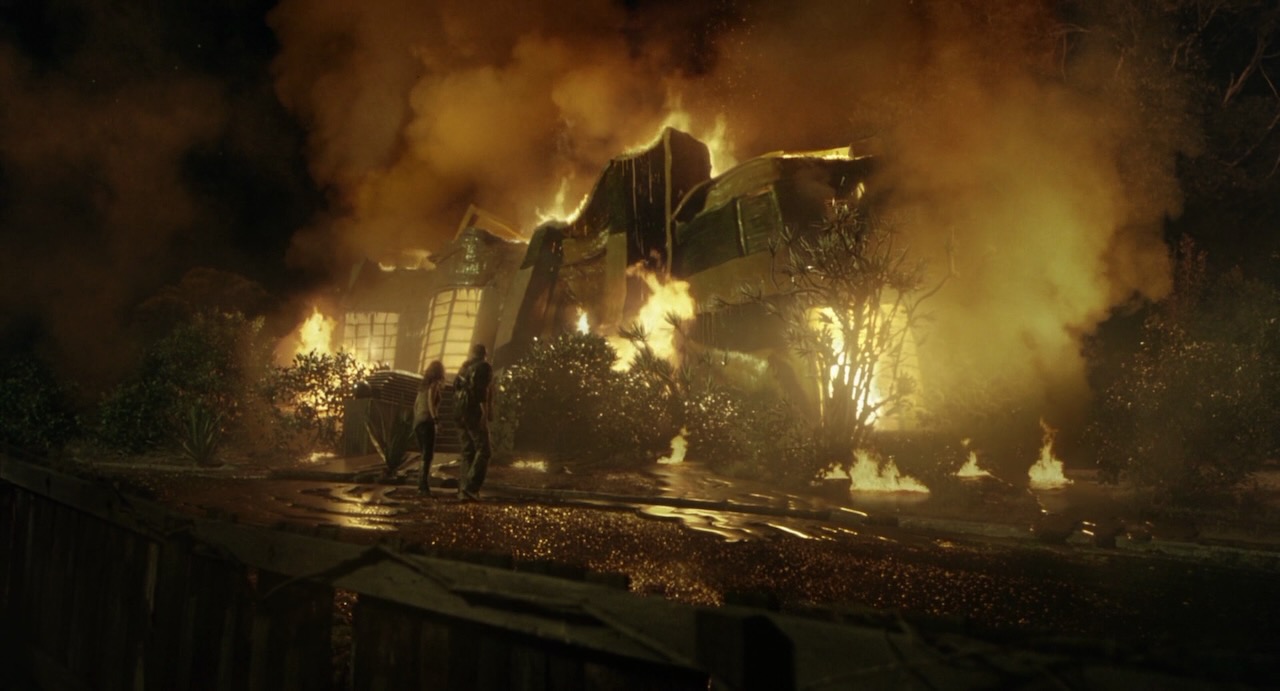
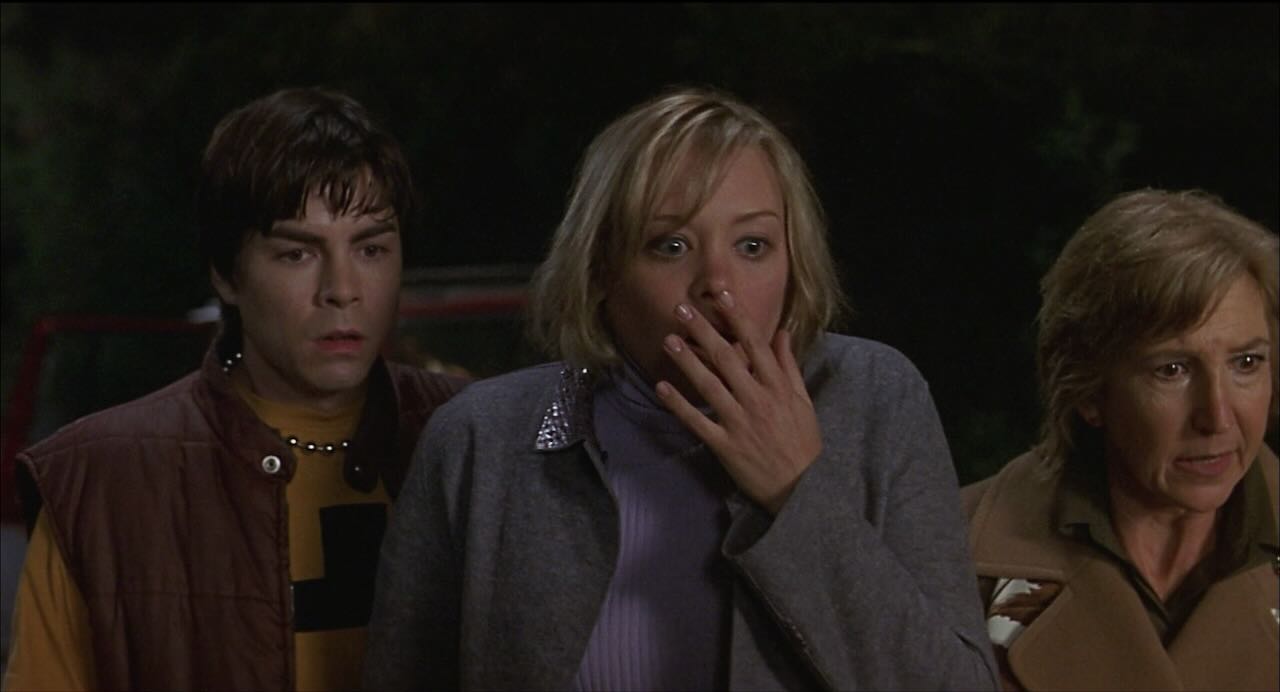
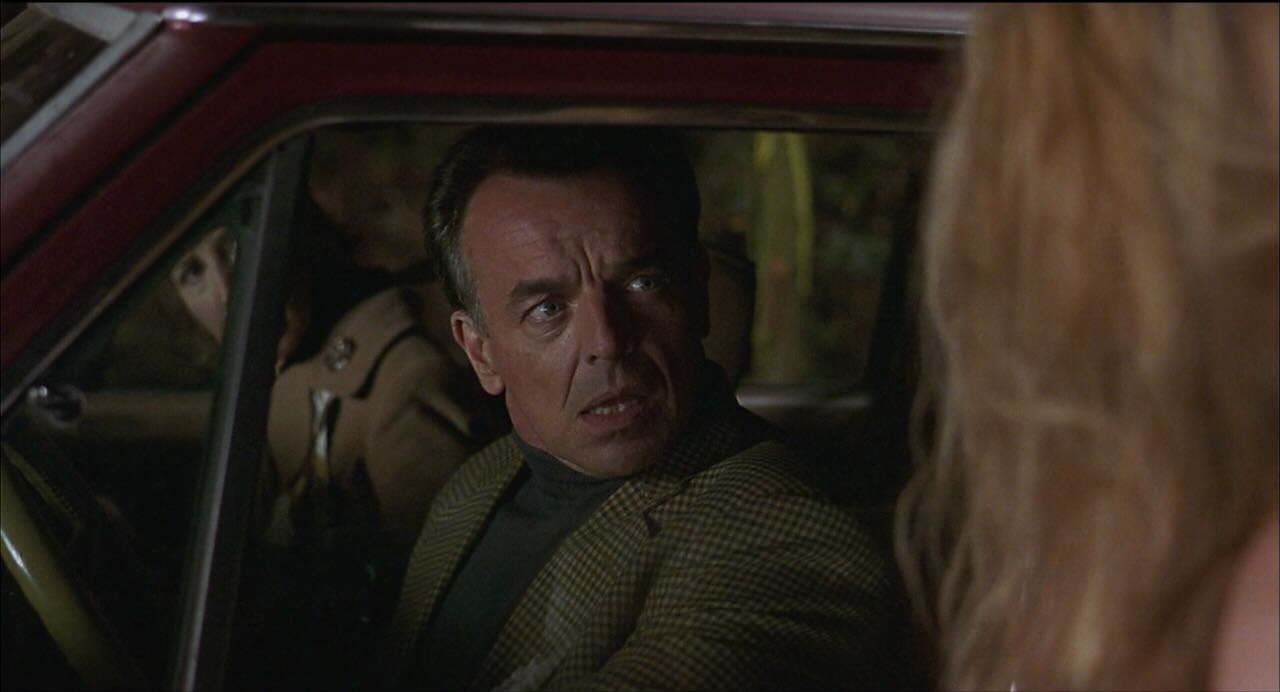
After 3 From Hell, I’m revisiting the original movie and this sequel for probably the last time. Part one was a good time, introducing a Texas Chainsaw-style murder family who slaughters tourists. Part two is just torture and torment (our three killers and their pursuer William Forsythe taking turns as torturers and torturees), part three is needless rehash.

Along the way Brian Posehn gets killed, the guy from The Hills Have Eyes is hanging out with Ken Foree, Danny Trejo and someone else call themselves The Unholy Two, a film critic is called in to analyze character names (all stolen from The Marx Bros), Callahan from Police Academy substitutes for Karen Black, and everybody dies (or DO they).

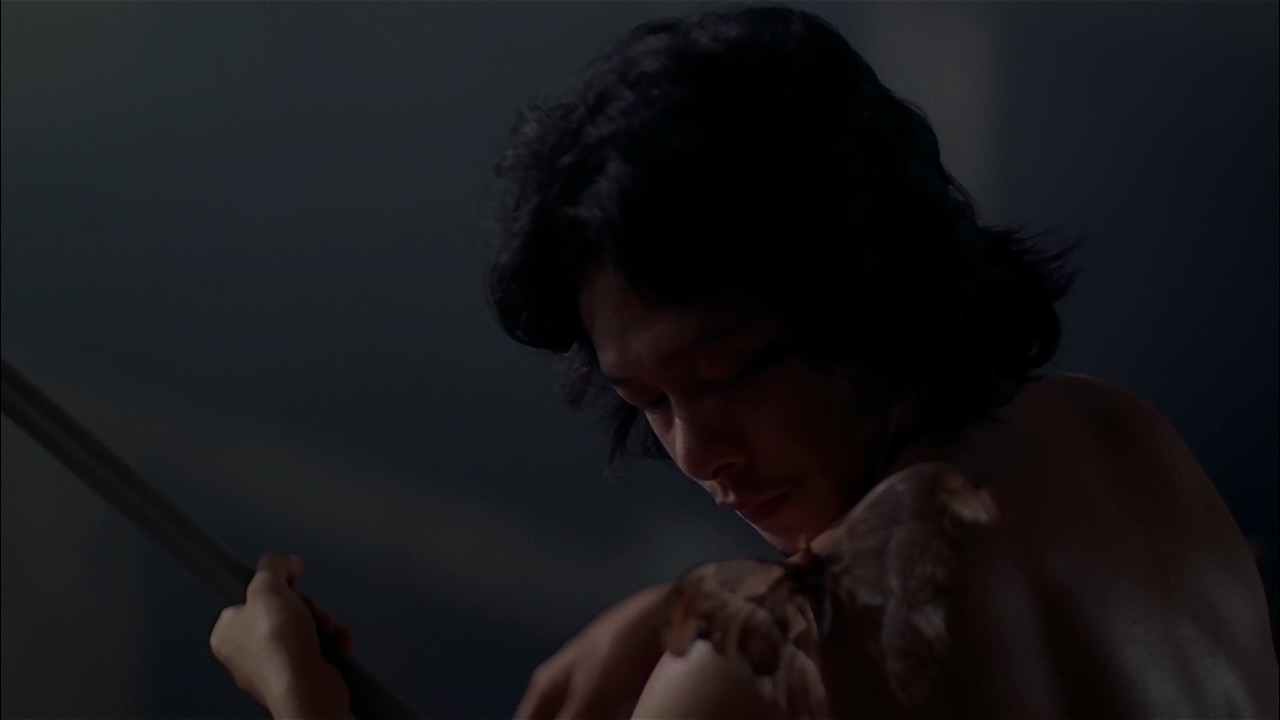
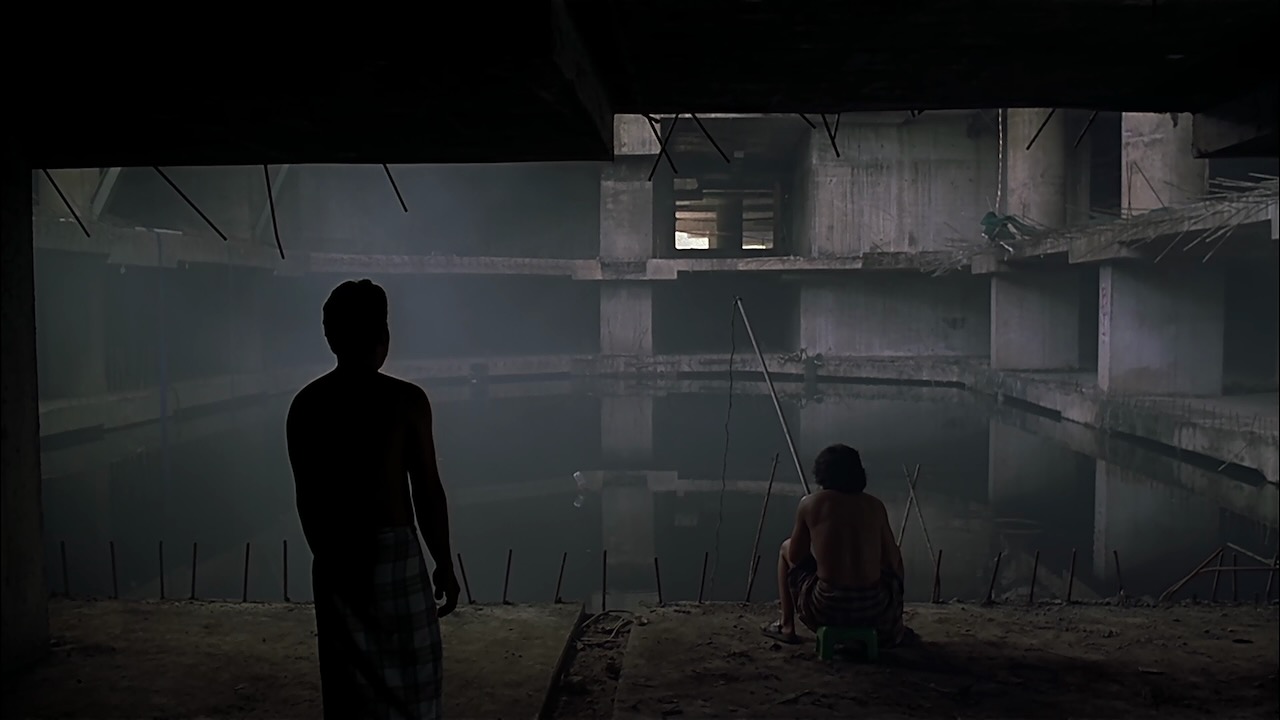
We got another The Hole situation, a girl living alone one loose floorboard away from the catatonic guy (played by short-haired Lee) in the apartment underneath. Meanwhile a local guy (this is Malaysia, where Tsai comes from) takes in a foreigner (played by long-haired Lee) who got himself beat up in the street, has to wash the mattress whenever the foreigner soils it, which is often. Overall more grime and desperation than usual (preceding the great Stray Dogs) though it ends with a lovely dream

The woman upstairs is Chen Shiang-Chyi of Stray Dogs, ticket taker of Goodbye Dragon Inn. Chris Fujiwara wrote of people “staying human under the most hostile conditions” in the final writeup of the Defining Movies book.

Strange focus and framing, really attractive. Amalia’s dad is having twins with a new girl, while her mom Helen is hosting a doctor conference at her hotel. One visiting doc presses his dick against Amalia in a crowd, and later when Dr. Jano has become friendly with mom, Amalia recognizes him as the street pervert. Amalia’s friend gets busted with her boyfriend and tells the adults Amalia’s secrets to distract them. The holy part fades away, and movie ends before either revelation drops – real “formal excellence plus narrative withholding.”

The girl went on to direct A Family Submerged, which played Locarno. Mom is from La Cienaga and costarred in a couple Gael Garcia Bernal movies.

Blake Williams in Cinema Scope:

Like La Ciénaga, The Holy Girl ends with sensorial obscurity, this time with sound, smell, and even weightlessness. As in the former’s conclusion, the setting is once again a swimming pool. Amalia and her best friend Josefina take a dip, and we witness a wave of uncertainty and disturbance briefly overcome Josefina. “Do you notice that smell?” she asks, and Amalia does. “Orange blossom.” Josefina promises to take care of her like a sister would, and the two recline. Floating in the water, an unidentified woman approaches to ask them both, “Did you hear?” which ends the film. It’s a startlingly open-ended and fitting conclusion to this tale of spiritual non-awakenings — cinema as a transitory state, elongated into permanence, stagnation, and aimlessness.

Returning from part one are determined detective Lau Ching-wan (suddenly listed as Sean Lau online) and incompetent commissioner Hui Siu-Hung. Not returning is criminal mastermind Andy Lau, who wasn’t faking his fatal illness. In his place we get impossibly suave and brilliant magician-thief Noodle Cheng (the 2001 Zu Warriors), who keeps assaulting the police and playing mind games (is this where the Now You See Me movies came from?). You don’t think of Johnnie To cops & robbers movies as having CG-crud animal companions, but Noodle’s got a bald eagle, and Lau’s men track him down with help from some eagle-tracking ornithologists. Kelly Lin (Sparrow) is a boring important businessperson whose company is being blackmailed by art thief Noodle, and Lam Suet a gambling-addict cop who the thief is personally tormenting. The point of the thief’s scheme was to robin-hood the money from the company to charity, or some such thing. It’s all beautifully shot by the usual crew, Stephen Chow’s regular composer working extra hard on the score. A collapsing-bicycle race joins To’s pantheon of perfect nighttime street scenes along with Throw Down‘s dollar-chase and tree-balloon, Don’t Go Breaking My Heart‘s headlight-silhouette, Sparrow‘s finale, and half of PTU.

Lost Ruiz miniseries, made between Klimt and Mysteries of Lisbon. Cortinez has been onboard the ship Lucerna all week without seeing any other crew members, they assemble and tell him their own (or each others’) ghost stories. “We’re here either to tell stories or to jump into the water.”

The captain grows horns whenever his wife has affairs, a sailor is set up with a woman who lives 70 years in his past. A demon sets a guy up in the business of selling dead men’s clothes. They might all be dead, or imaginary, or miniaturized on the toy boat of a rich man. “What you see in here, don’t remember it even in dreams.”

I was gonna say “the movie looks artfully shot, too bad my copy is smeary low-res for some reason” – but no, it turns out they shot it on mini-DV. I don’t need to rewatch part two before the third movie, but don’t remember this one at all. Coma victim Cillian awakens into the post-apocalypse, after the extremely infectious rage virus is released from a lab by idiot activists and England is destroyed by Crazies®. He’s rescued by Naomie Harris, and they find a girl whose dad is Brendan Gleeson, and they go on adventures together, getting a flat tire in a rat tunnel, having a Grandaddy-soundtracked grocery shopping spree. Fun’s over after Gleeson gets infected by a crow and the others find a mad group of rapist soldiers. Cillian (a bike messenger who just woke from a coma) turns elite commando and wipes out the squad to save the women. Nayman and Lewis.

Long-take first-person camera to the point of absurdity, with eye blinks. Our guy, swearing to himself he’s not a junkie, smokes some bad drugs. We are Oscar, but it turns out you shouldn’t yell “I have a gun, I’ll shoot” to the police, and then we become Ghost Oscar floating above his body then roaming the city, clipping through walls.

Your first destination as an invisible ghost: the strip club, to watch your sister have sex with some guy in a back room. Sister (Paz de la Huerta, who got naked in The Limits of Control) flashes back to her happy childhood with Bro Oscar until their parents die in a car crash, while Bro remembers meeting Cool Alex who lent him a book of the dead. I guess Oscar’s obsession with his sister, watching psychic steam emanate from sexual encounters, leads to his getting reborn through her?

me, watching this movie:

We’re all watching this because of his Region Centrale camera, right? It bounces back and forth in time but never gets more than a half hour into his post-death, repeats and belabors its points too much, should’ve taken more hits from Je t’aime, je t’aime. Follow-cam with head-piercing sounds, not such fun to watch – Massive Attack’s “Protection” video is both cooler and shorter. At least it’s funny that, in retrospect, by the time Noe made his 3D porno Love, it was the most tame thing he’d done.

My blu-ray of Treme is arriving tonight and I just realized I’ve never watched its prequel. I know I started it at least twice, but pretty sure I’ve never made it to part two before, because I don’t recall armed police “defending” the bridges from residents of other parishes.

Historian Doug Brinkley: “I’ve never seen such a time when the US government turned its back on people in need to this degree, to have a people in such dire need getting such little help from the federal government while they’re screaming for help, I think it’s unprecedented.” Maybe in 2005/06 that was new, but it’s doubly depressing to watch this the week FEMA is getting dismantled. Movie opens with Mayor Ray Nagin under great suspicion, then by episode two he becomes a great populist hero fighting for the people, so imagine my disappointment when I pulled him up on wikipedia to see where he went next (to jail for corruption). Fighting for the people might now have gone permanently out of fashion. Very good music, at least.

I struggle with Jia’s movies sometimes, but when they’re great, they are great. Catching up with his most major work I hadn’t yet seen in anticipation of Caught by the Tides, and it is major indeed. An interview doc with Chengdu former factory workers, but some of the interviews are being reenacted by actors. The woman talking about gaining inspiration from a Joan Chen movie… I think she’s Joan Chen.

Jake gets it. Neil analyzes further.

Sean Gilman: “Factory Leaving the Workers”