Peter (Eddie Marsan), Oliver (Martin Freeman), Steven (Paddy Considine), and Andy (Nick Frost) reluctantly join Gary King (Simon Pegg) in reliving his youth and ignoring adult realities. Then they fight aliens. It’s all kind of amazing.

Jan. 2015:
Watched again. Katy didn’t like it much.

With help from Eli Roth and encouragement from Quentin Tarantino, RZA cast himself in his own martial arts wish-fulfillment movie, constructing a mega-movie with all the favorite scenes, character types and plot threads from what looks like decades of obsession with Asian action cinema. Unlike Tarantino’s movies, RZA’s comes across as a misguided attempt to join in the fun, an overbudgeted male revenge fantasy with generically shit dialogue. It’s overstuffed with plot and action, so stays entertaining enough, at least.

RZA plays an emotionless blacksmith who creates weapons for all the warring clans in some awful village. Clan leader Gold Lion is killed with poison, and his psycho proteges Silver Lion and Bronze Lion take over, shafting revenge-seeking Zen Yi and employing a badass brass-armored wrestler. Lucy Liu runs a brothel. Crazed bounty hunter Russell Crowe comes to town for mysterious reasons. A dude is kicked through the throat with a knife-toed shoe. More people get poisoned. Blacksmith gets his hands cut off and forges new metal ones. Many alliances and betrayals later, Crowe fights the poisoner and RZA fights the brass guy, good guys win.

The Trap and The Power of Nightmares felt like they presented central points (clearly expressed in the open of each episode), then assembled evidence in an orderly fashion, supporting their points in a complex, sometimes roundabout way. This one presents a number of points with related themes. Each episode opens with different titles and explores different events which don’t directly relate back to each other. During episode 2 I was wondering when the Ayn Rand story would come back, but during #3 I realized it had been there all along, that this time Curtis is drawing the connections without explicitly calling back to previous subjects all the time. The movies are starting to link together in interesting ways. At this point, you could fill an “art and world politics” course just by running all his movies and assigning his blog as the textbook.

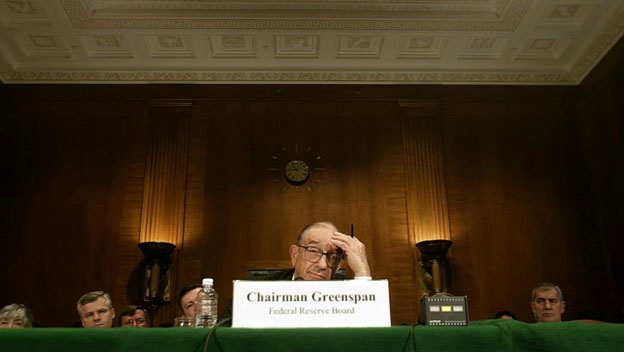
Episode 1 “begins with a strange woman in the 1950’s in New York,” connects Ayn Rand with Alan Greenspan and Silicon Valley, tracing the failures of her personal life and lack of acceptance in her philosphies, comparing to their massive influence decades later among people in power over the global economy. Rand rejected altruism and supported rational egoism, so surprisingly there’s no relation to the RAND Corporation discussed in The Trap, which worked on game theory, positing human behavior as perfectly selfish.
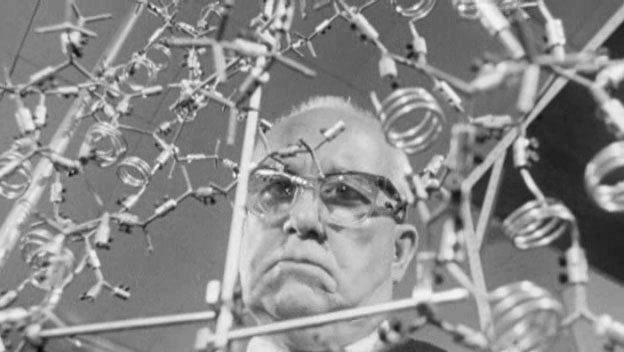
Part 2 is about natural ecosystems, and the myth that they remain perfectly in balance – Curtis says more recent, complex models show them to be in constant flux. Loved the ecology discussions, the scientific project that attempted to precisely measure every detail of a particular field. This is shown alongside early communes (humans trying to live in perfect balance without power structures) and recent national revolts (glorious-looking uprisings by “the people” against authoritarian power, only to see it replaced by new authoritarian power a year later).

Part 3 discusses the social tendency to view people as individually unimportant parts of a large, self-balancing system. We get stories of a game-theory biologist and his colleagues who theorised that all behavior of living creatures is a result of the needs of their genes – more depowering thoughts. We close in Africa where another animal behaviorist, Dian Fossey, was working, showing how false theories on human behavior and evolution combined with the desires of technology companies led to disaster for the people of Congo/Zaire and Rwanda.
So the movie’s often-mentioned “rise of the machines” isn’t literal so much as a social-control concept, caused by simplifying models of natural behavior. It seems perfect that I finished watching this the day before seeing The World’s End, which is about the rise of actual machines that aim to simplify human behavior.

I also read a bunch of articles from Adam Curtis’s amazing blog – sadly without the video segments since I was sitting at the airport sans wifi. Essay called “You think you are a consumer but maybe you have been consumed” about Texas oilman HL Hunt, caricatured in Ken Russell’s Billion Dollar Brain. “The roots of so much of the distrust of the media today lie back with him and his ideas.” One called “Paradiabolical” on Somalia and Algeria, one on England’s history of bumbling spies, and one on animal shows before the rise of David Attenberg Attenborough.

What can you say? Sometimes the genocidal killers win, stay in charge, and have no reason to feel shame for what they’ve done. Someone finally got the great idea to interview these people and allow them to glorify/incriminate themselves. Letting them tell their own stories through filmmaking and showing the behind-the-scenes process was a stroke of genius, and filming it must’ve felt terrible and dangerous, as evidenced by all the anonymously-credited crew members.

Never go to Indonesia.

I thought everyone in Outrage had been killed except for one cop and new boss Kato, but here’s Takeshi still alive and I had to try to keep track of the various crime families again. This did turn out better than the original, but I’m still hoping Election and Drug War destroy ’em both.

People: Tomokazu Miura of M/Other is in charge of some clan, and young hotshot Ryo Kase of I Just Didn’t Do It and Like Someone In Love is his #2 man.

Takeshi and Kimura:

Takeshi teams up with scarfaced ex-rival Kimura with his two dumb-as-hell employees to wage war on these guys. Baddies are brought low by other baddies. Another clan is somehow involved. The Japanese Dr. Guggenheim (Akira Nakao, a regular in 1990’s Godzilla movies) is the first to die. Then lots more die. There is a brief appearance by a woman.

The Japanese Dr. Guggenheim:

We get two partner cops to identify with. Sourface Shigeta (Yutaka Matsushige of Last Life in the Universe) is the outsider who needs everything explained to him, and his sneaky balding corrupt partner (Fumiyo Kohinata of Dark Water) wants to start some shit and get the action going. Beat Takeshi shoots the balding guy at the end, after everyone else is already dead.

L-R: balding cop, sourface cop

A good variety of music, and the score has hints of Dead Man. Scenes end with fade-outs as if to provide space for TV ads. My main concern was listening to the language and noting that half of all sentences end with a sound like arrOH, or errOR. Fumi thinks it’s some kinda gangster embellishment.

This was fun. I suppose I can forgive The Squid and the Whale now. Greta Gerwig (best known as the first victim in House of the Devil) wants to be a famous dancer, will never be a famous dancer, is kind of unsufferable but cute enough that you forgive her. A better movie than Monsters University about childhood dreams and hard work not entirely working out. Katy cringed a lot during the most Baumbachesque scene, an ultra-awkward dinner conversation, while I was busy trying to figure why Dean & Britta were in the scene.

Aliens vs. Robots.

Robots win.

Stars Stringer as Stacker in Striker. Bland main guy is Charlie Hunnam, Ron Perlman’s Sons of Anarchy costar. Rinko Kikuchi was the newcomer who got all the buzz in Babel, later in The Brothers Bloom and Norwegian Wood. Stacker is father-figure to Rinko, who is soulmate bro-bot to Hunnam. Two scientists are racing for the bomb that is the prize: stuffy Brit is Burn Gorman of BBC’s Bleak House, excitable kaiju fan is Charlie Day of It’s Always Sunny. Lot of TV actors here. There are other foreign robot pilot teams, all dead, all dead. And Ron Perlman plays a huge badass. Obviously.

A murderous road comedy. So far Wheatley is living up to the hype, even if I wasn’t thrilled by the ending of Kill List – this was fully excellent, with much more interesting filmmaking than most comedies. Beardy Chris and girlfriend Tina go on a sightseeing tour and accidentally kill a guy… then they just keep killing people.

Made myself a note while watching that this should be some sort of baseline for filmmakers. Got a screenplay and want to shoot it. Watch Sightseers. Think you can do better? No? Then just quit now.

“Murderer.”
“It was an accident, mum.”
“So were you.”

“I don’t think I could cope without potpourri”

“Did you kill Ian?”
“Yeah. Well, I mean…”

“Season of the Witch” plays over two killing scenes. Chris and Tina were also the screenwriters. Tina is Alice Lowe: Liz from Garth Marenghi’s Darkplace, also in My Life in Film and Hot Fuzz (worked for Timothy Dalton at the supermarket). Wheatley already has a new movie out, which I must see.

Mouse-over image to see Tina’s owl face:

“I just want to be feared and respected.”

Whedon’s crew hangs at his house with minimal set dressing and does b/w Shakespeare.

Katy and I liked it.

Dr. “Whiskey” Saunders of Dollhouse plays Emma Thompson, and Alyson Hannigan’s husband plays her arch-rival/love-interest Kenneth Branagh. The great Fran Kranz is young, lovestruck Claudio, best buds with Reed Diamond (Dollhouse head of security). Dr. Simon of Firefly/Serenity is fine as villain Keanu Reeves, but not even secret weapon Nathan Fillion can live up to the mighty Michael Keaton in the 1990’s version.