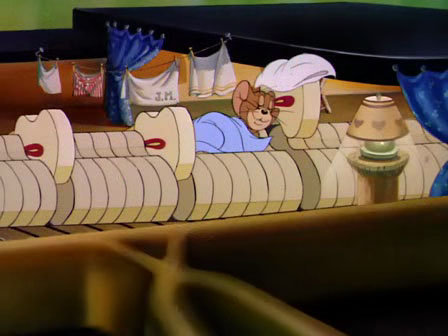
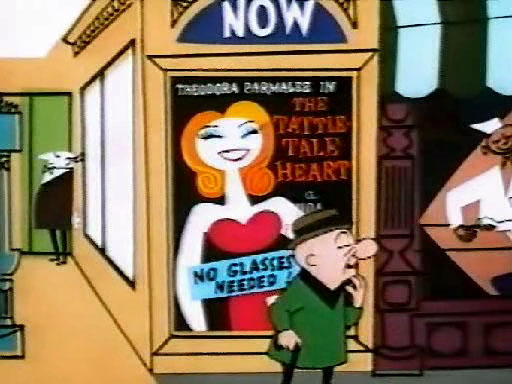
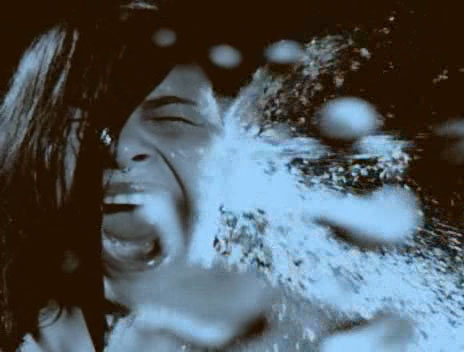
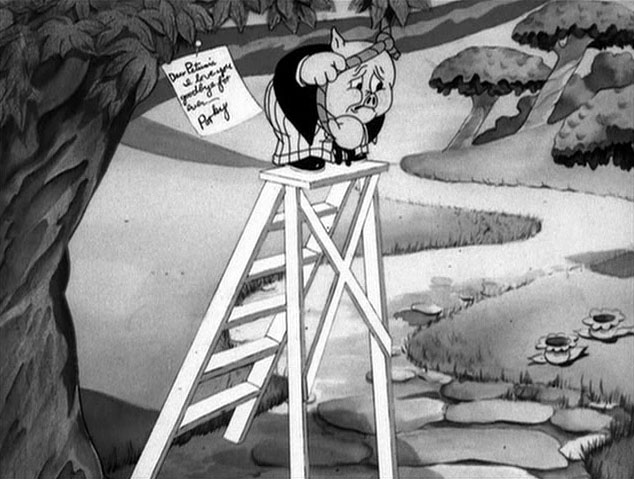
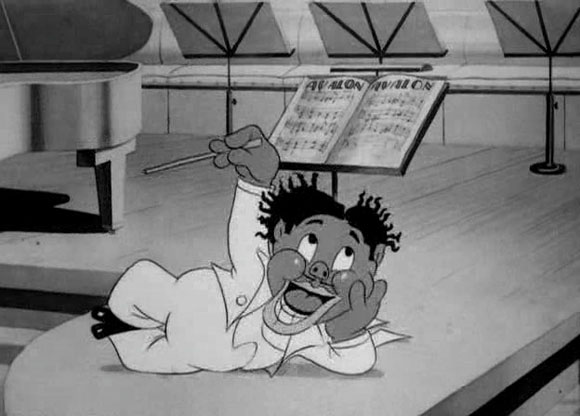
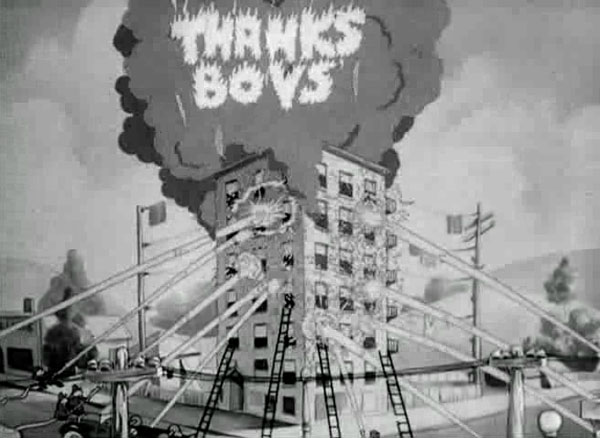
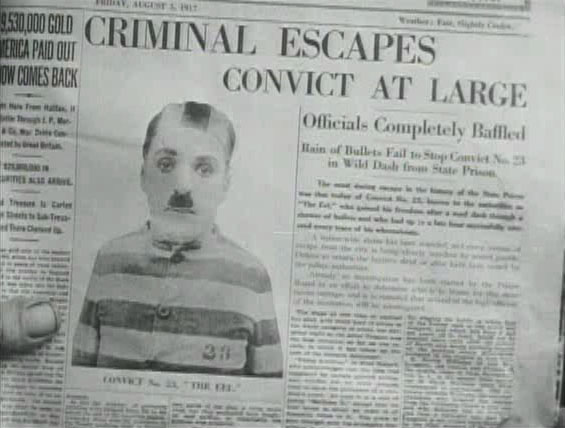
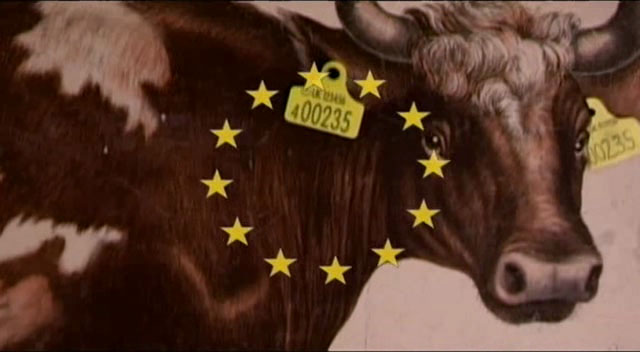
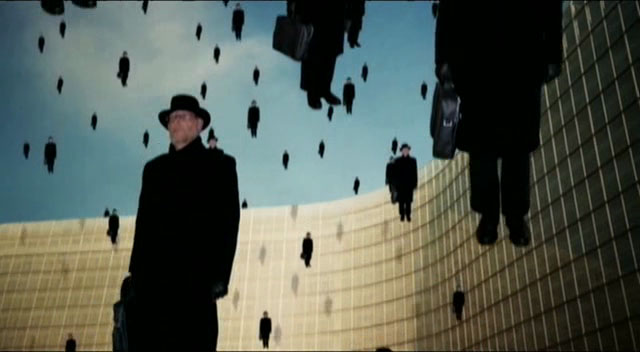
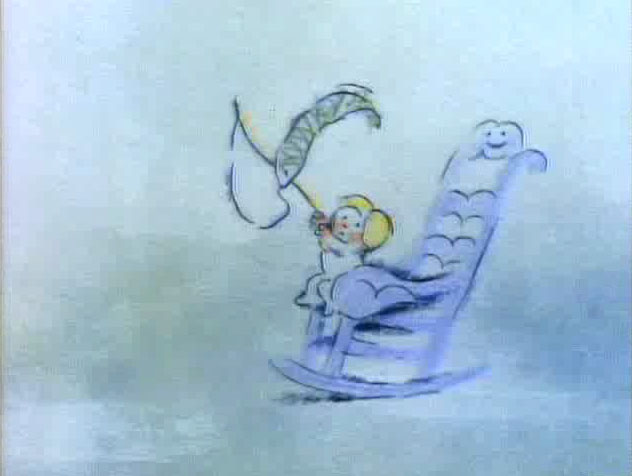
I was expecting that this would be very bad, and was hoping to find a few inspired moments or some cool animation to pick out of the wreckage, but then I liked the whole movie so now I don’t know what to write. I don’t get why Brendan Fraser has to be in every single live/animation hybrid flick, but he and Jenna Elfman were just fine in this. Lotta jokes at the expense of movie studios, the Warner Brothers (played by Don & Dan Stanton from Terminator 2 and Gremlins 2), Brendan Fraser, product placement and movie conventions.

image

Timothy Dalton plays the star of a suspiciously James-Bond-like franchise, and is just-fired studio security guard Fraser’s father. Fraser heads to Vegas with also-just-fired Daffy Duck while studio exec Elfman in league with Bugs looks for them. Note Dick Miller as Fraser’s security coworker.
image

Tim Dalton turns out to be an actual spy, working against the evil Acme corporation (headed by Steve Martin, who is acting strangely Mike Myers-like in this screenshot.
image

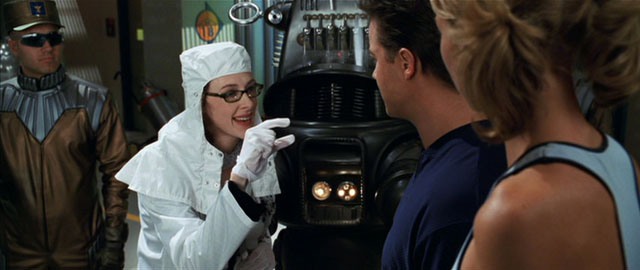
Good to see Joan Cusack as a secret government scientist (not to mention Robbie the Robot).
image

Roger Corman cameos, believably enough, as a film director.
image

Kevin McCarthy reprises his Body Snatchers role – in black and white!
image

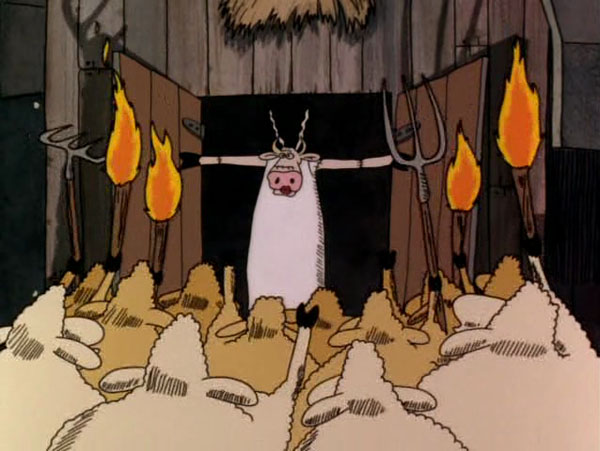
Of course the plot is a thin excuse for a thousand gags and highlight scenes for every major Looney Tunes character. Yosemite Sam and Wile E. Coyote work for Acme, Tweety and Sylvester are Fraser’s neighbors, Marvin Martian is captive in Cusack’s lab, Pepe Le Pew appears in a sidetrack to Paris (where there are Jerry Lewis movie posters all over). Super fun movie… I’m actually so impressed that this was so good, after I’d heard everywhere what a failure it was. Even Dante seems to be making excuses for it in recent interviews (I’m guessing the terrible Scooby/Shaggy cameo is one of the last-minute studio changes he complains about).

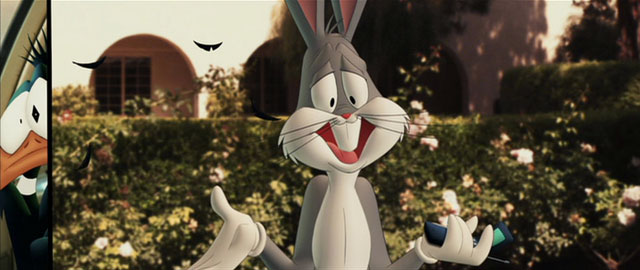
Some highlights: a split-screen phone call where the screen effect smashes Daffy:
image

And a romp through famous paintings at the Louvre… here’s Elmer as Munch’s The Scream:
image

Turns out the movie wasn’t as universally hated as I’d thought. According to Slate, writer and director were fed up with the studio by the time the movie came out, and neither them nor any of the stars participated in the DVD extras. The NY Times and AV Club sure disliked it, but good reviews were posted by J. Rosenbaum (“I had a ball”) and G. Kenny (“comedy of the year”). After reading a couple appreciations I am anxious to rewatch and look for some of the hundreds of gags I missed. I guess it comes down to how much fun you’re willing to have with it. For instance, some reviewers cringed at Steve Martin trying to be funny again, and called him out as a fraud (as if he’s Robert De Niro in Rocky & Bullwinkle), while others bothered to notice that Martin completely succeeded… David Edelstein:

Steve Martin, moreover, is a miracle. Determined not to be upstaged by his flamboyant Warner costars, he has concocted a “supertwit” that is at times at least their equal. His red hair parted in the middle, he staggers around the set in sneakers and an ill-fitting suit, jerking his torso, windmilling his arms—stopping his gyrations only to saunter up to one of several repulsed women, convinced that he is catnip to the ladies. This is the old Steve Martin, the whirligig genius of The Jerk (1979), The Man With Two Brains (1983), and All of Me (1984). To see him this way after at least a decade of domesticated dreck is to love all the more the liberating influence of Warner Bros. cartoons.

Pol Pot’s Birthday (2004, Talmage Cooley)
In 1985, the scrappy dictator’s men throw him a super-weak budget surprise birthday party, with grey cake and music on an old tape player. Awkward conversation ensues… P-P gets peed on by a dog and “Walking On Sunshine” plays over the credits. Kim Rew got paid?
image

Meet King Joe (1949, John Sutherland)
More generic propaganda with no direct sense of purpose. Joe is “the king of the workers of the world” because here in America, competition and investment in infrastructure make our jobs easier with more disposable income than anywhere else. Take that, dirt-poor chinaman! Statistics to be proud of: “Americans own practically all the refrigerators in existence. Bathtubs? We’ve got 92% of them.”
image

Hymn to Merde (2009, Leos Carax)
I agree that Merde/Lavant is wonderful to watch, but Carax doesn’t seem to know what to do with him. Protracted death-sentence courtroom drama wasn’t it, nor is a lo-res music video of him singing a Kills song translated into his own head-slapping language.
image

.tibbaR (2004, Leo Wentink)
Eerie music and nervous sound effects accompany time-remapped footage of lab rabbit breeding. I never know why anything is happening in short films anymore.
image

Go! Go! Go! (1964, Marie Menken)
So damn jittery it gave me an eye-ache, exactly what I was getting away from the computer in order to avoid. All nervous time-lapse footage shot around the city. Some real nice high-angle shots of construction sites and traffic patterns, superimpositions on a wedding, lots of boats and bridges. Color/picture looked perfect on my tube TV.
image

The Spook Speaks (1940, Jules White)
Not-at-all-good short full of corny sound effects and sub-stooges gags, but it’s better than the others I’ve watched on these DVDs since it has a roller-skating penguin. Buster’s costar Elsie Ames (she was in most of these shorts, then showed up 30 years later in Minnie & Moskowitz for some reason) is terrible, but then, Buster is terrible too. Thanks Sony for slapping warnings and disclaimers and legal shit before every short on the disc. They must’ve known it wouldn’t get tiresome because we’d only watch one before quitting.
image

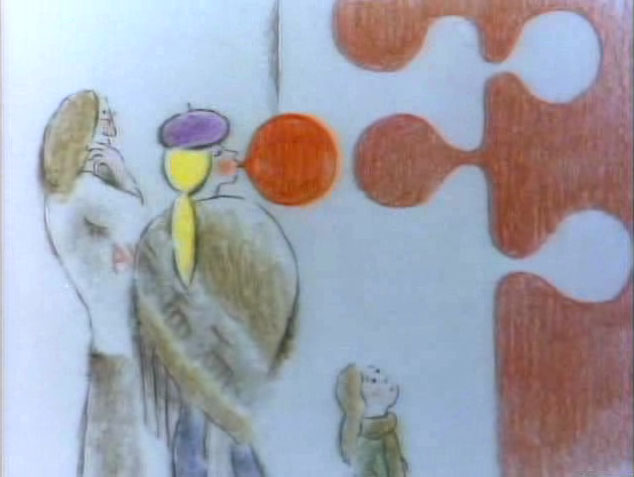
Who Am I? (1989, Faith Hubley)
Things morph into other things, illustrating the five (or six or seven) senses. Short!
image

Blake Ball (1988, Emily Hubley)
Didn’t love the narration in this one. The woman who says “some are born to sweet delight/some are born to endless night” (without the preceding lines) has got nothing on Nobody. I guess all the lines are the words of William Blake, but they’re not making much of an impact, and I never figured out Blake’s connection to all the baseball stuff. There’s more five senses stuff anyway. A bit too laboriously new-agey, but some great moments (like below).
image

O Dreamland (1953, Lindsay Anderson)
Boy did I ever botch the Free Cinema box set, buying it then deciding I didn’t want to watch it after all and letting it sit on the shelf for years. Finally checked this out and I kinda really like it. Could do without the evil laughing clown all over the soundtrack. Kind of like Jean Vigo’s Ă€ propos de Nice which, given If….‘s resonance with Zero For Conduct, proves Anderson saw a Vigo retrospective at some point.

Koko’s Earth Control (1928, Dave Fleischer)
Koko the Clown walks the planet with his dog until they find the Earth Control station. The dog willfully and maliciously pulls the end-of-the-world switch and then acts all panicked when the world begins to end. What did he think would happen? Fun mix of live-action (tilt camera while people pretend to fall to the side, the dog skittering atop an animation table) and animation (earthquakes, volcanoes, the sun melts the moon).
image
image

Dutch Bird (2004, Kirk Weddell)
Ridiculous comedy – old man is sad and alone, so his friends convince him to go out again by pranking him with a story about drugged racing pigeons. On my TV the color was way off, which was really the main interest in the movie. In the below shot, everyone had green skin against a pinkish sky. It was eerie – as the 20 minutes stretched on and on, I liked to imagine that green-faced aliens had gotten a hold of The Full Monty and Waking Ned Devine and were producing Brit-com films of their own. Sadly, getting screenshots on my PC the color turned out normal.
image

Tale of Tales (1979, Yuri Norshteyn)
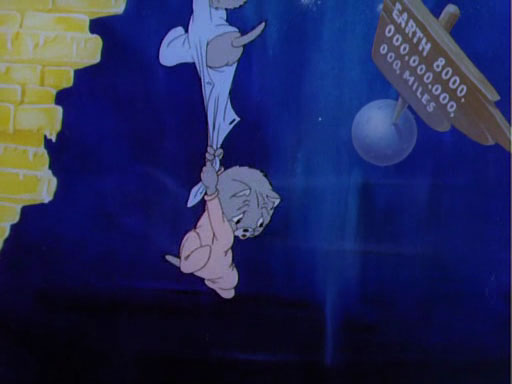
At least two jury competitions have named this the greatest animated film of all time. It is really good, but we all wished it’d been half its 30 minute length, and its symbolism was extremely obvious. Not that I ever get less-than-obvious symbolism, so that’s not something I ought to complain about. Wild Things are playing jump rope and a little dog kidnaps a baby, and there’s war and peace and what not. Supposedly the director has been working on his film of Gogol’s The Overcoat ever since – for 30 years. He must be the Jeff Mangum of Russian animated films.
image

Harpy (1978, Raoul Servais)
Kind of an absurd, funnier Tales from the Darkside episode. Guy saves a poor harpy from being beaten to death by an angry man and takes it home. But it keeps eating and eating and making his life hell. Finally it eats his legs off when he tries to escape, so he attempts to beat it to death, it gets saved by another man, etc. Same ending as Argento’s Jenifer, then. Mostly appealing for the crazy harpy visuals. The Belgian director has also made films called Siren and Pegasus, must find those sometime.
image

Grasshoppers (1990, Bruno Bozzetto)
Cute, no-frills cartoon that looked like something out of Mad Magazine. Civilization rises out of the grass only to fight war after war after war, represented by a few dudes at a time, not by whole armies. The kind of thing that would’ve played on O Canada if it wasn’t Italian.
image

Out of Print (2008, Danny Plotnick)
A dude yearns for the days when cult movies were actually rare and you could only get crappy unwatchable dubbed versions if you knew a guy who knew a guy. As someone who enjoys being able to see cult movies easily and in relatively good quality, I don’t see the dude’s point.
image

World Cinema (2007, Joel Coen)
Llewelyn from No Country stops at an arthouse movie theater playing Rules of the Game and Climates. Gets advice from the ticket guy, watches Climates and likes it. Having seen Climates myself I’m not sure this is too realistic. Also not sure why it was cut from the DVD of To Each His Cinema.
image

Poyraz (2006, Belma Bas)
Rural people sure live quaint and handsomely photographed lives!
Nuri Bilge Ceylan was thanked in the credits

Why Play Leapfrog (1949, John Sutherland/MGM)
Let’s hear it for capitalism! Clever cartoon describes why inflation is okay and raw material costs don’t mean much. A boring explanation of why America is so darned great that ends by telling factory workers to be more efficient and come up with smart cost-saving ideas which will lead to greater pay increases.

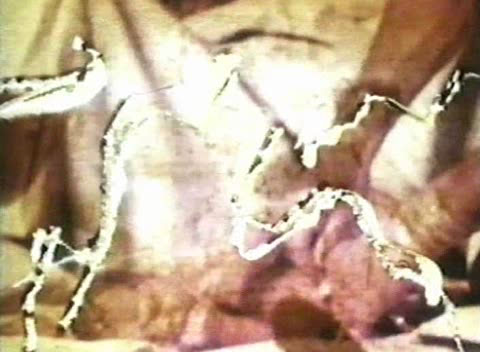
Balance (1989, Christoph & Wolfgang Lauenstein)
Ominous stop-motion – five mute guys with numbers on their shirts and telescoping fishing poles in their shirts are on a balanced platform suspended in space. One catches a sort of music box and the others get greedy, leading to a fight which ends with one guy on the far end of the platform from the box.

Broken Down Film (1985, Osamu Tezuka)
It’s a popeye-like cowboy cartoon except that the film’s projection problems (hair in the gate, scratches, countdown leader, etc) are part of the story. Cute.

and a few from the Unseen Cinema box set…

Paris Exposition Films (1900, James White)
Some one-minute films at the Eiffel Tower a decade after its construction. Best part is this guy on the left side of the screenshot. People were walking up to the camera and this guy saw his chance for stardom, so he prepares himself for some manuever (maybe a backflip) but blows it, stopping instead to shake hands with an acquaintance offscreen as the film runs out.
image

Captain Nissen Going Through Whirlpool Rapids, Niagara Falls (1901, Edison Co.)
It takes longer to type the title than to watch the film, which is of some submarine-looking craft bobbing in a river. Found a wonderful tale online of Nissen’s stupid death four years later, but unsure if it’s true.
image

Down The Hudson (1903, Frederick Armitage & AE Weed)
Much more interesting than the submarine thing – New York riverfront over a hundred years ago. I assume lots more of this stuff will be on disc five.
image

The Ghost Train (1903)
Oooh, someone learned to invert the black/white image AND to matte a moon into the upper corner. This is one of my favorites because it is neat-looking and twenty seconds long. If only you could say the same for Transformers 2.
image

Westinghouse Works, Panorama View, Street Car Motor Room (1904, Billy Bitzer)
Long factory tracking shot reminds me of the beginning of Manufactured Landscapes. Unlike in ML, all the workers stop and look at the camera.
image

In Youth, Beside the Lonely Sea (1925-ish)
Crazy three-panel layout illustrating the poem told with text above and below the picture. Lots of ghostly superimpositions. This was so damn cool I had to lay down for a while.
image

image

I knew that an old guy flies away with his house using hundreds of balloons, along with a boy scout stowaway, and that’s all I knew. If I’d have realized there would be a giant comic bird and a pack of talking dogs I might’ve been less anxious to watch this – but shit, it’s Pixar and they can do no wrong, so we ended up loving it.

Features a montage of a happy couple from childhood to marriage to her death many years later – the saddest thing I’ve seen in ages, used to give us insight into our seemingly cranky protagonist… a boy with an absentee father… a childhood hero turning out to be unworthy (actually a murderous egomaniac, an Incredibles-reminiscent supervillain). It’s a very adult cartoon.

Also a fun short about storks and clouds, Partly Cloudy, directed by animator Peter Sohn (who also did a voice in Ratatouille).

Bunch of Chuck Jones movies on TCM accompanied their new documentary Chuck Jones: Memories of Childhood by Peggy Stern, partially animated by John Canemaker, the duo who made The Moon and the Son. I’m not a huge fan of the TM&TS approach, and they take a similar animated-documentary-reminiscence approach here, but it’s lovely to hear Mr. Jones talk about his youth and how different events and memories shaped his life and the characters in his cartoons.

Haredevil Hare (1948), already a decade into CJ’s directing career, sent Bugs to the moon and introduced Marvin the Martian. A silly episode, ends with them blowing up the moon and me unavoidably obsessing over that Mr. Show episode. Marvin has a different, less distinctive voice, but his character was supposed to be a one-off, so I guess Mel didn’t worry about coming up with a brand new one until Marvin became a recurring thing.

Duck Amuck (1953), supposedly one of the most groundbreaking, original WB shorts with Bugs as Daffy’s animator, tormenting him with pen and eraser, and lines like “It may come as a complete surprise to you to find that this… is an animated cartoon.” It is an outrageous conceit, and there’s nothing more fun than pushing Daffy until he flies into a rage, but maybe I’ve seen this too many times because I find it kinda unsatisfying these days. Would rather see all those wild effects going into something with a story. I’m sure I’m just being a negative nelly… it’d probably still rank in my top ten CJ shorts, but whatever… I was anxious to get through it tonight. Most outstanding Daffy line: “Thanks for the sour persimmons, cousin.”

One Froggy Evening (1955) – one of my all-time fave shorts, and from Robert Osbourne’s loving introduction, it seems like it’s a lotta people’s favorite. A construction worker finds a singing frog in the cornerstone of a 100-year-old building and thinks he’ll get rich exploiting it, but finds the frog will only sing for him. Ruined, he buries the frog again, where it’s discovered in 2056 A.D. by a space-construction-worker. No spoken dialogue except by the frog, who has about ten wonderful old-timey songs.

What’s Opera, Doc? (1956) – Maybe it’s the musical ones that grab me, because I could sit through this one and the last three times in a row. Tells the same story as Fritz Lang’s Nibelungen but this is way shorter. Also the only movie in which Elmer actually kills the wabbit. I suppose operas can’t have happy endings. Some credit should finally be given to Michael Maltese, who wrote the last four shorts.

The Dot and the Line (1965), ahh, finally something new. By now, Bugs’ heyday is over and Chuck is working at MGM doing more independent work but with much lower budgets. Writer of The Phantom Tollbooth contributed this story of a line (not just a line segment – he always extends past the screen in both directions) in love with a free-spirited dot, who in turn is enamored with a wild squiggle. Seems awfully 60’s, and not as much fun as its oscar-winning cannes-nominated reputation would imply, but it’s cute… and short. The line learns to impress by forming shapes and super-complex patterns and formulas, and all the squiggle can do in response is freak out and wriggle about, so the faithless dot hooks up with the line for our happy ending. My favorite bit was near the start, trying to convince the dot verbally rather than through shape-shifting physical prowess, the line tries telling her “I know where I’m going!

The Bear That Wasn’t (1967), based on the story by the great Frank Tashlin, and just in time – R.O. says it was the last-ever MGM theatrical animated short. The premise is super, and typical of Tashlin’s cynicism and distrust of “progress” and technology: while a bear hibernates, a giant factory is built over his cave, and when he wakes up nobody believes he’s a bear. If he’s in the factory, he must be an employee, or as they call him, “a silly man who needs a shave and wears a fur coat.” Finally the factory chain-of-command’s pigheaded insistence convinces the bear that he isn’t a bear, and he goes to work… but when winter comes, he returns to the cave (through a maintenance closet) to hibernate again, a cautiously optimistic ending. Unfortunately the movie itself is repetitive (probably the book too – children’s books sure can be), harping on the “silly man” line, and watching the bear’s spirit get crushed is surely less satisfying than watching Daffy get poked and prodded into a rage, and the happenin’ title song is played too often, but I still liked it more than The Dot and the Line. Maybe I’m a sucker for talking animal cartoons, or abstract math stories are too high-class for the likes of me.

Finally I tried to watch the feature-length The Phantom Tollbooth (1970). It seems cute enough, but perhaps too much of a kids movie for me to completely enjoy. After a live-action intro with some famous child actor it goes all animation. Our kid, who keeps learning slow and pointed Valuable Lessons about things, ends up in a swamp called The Doldrums at which point the sludgy narcoleptic music put our hero to sleep, and me with him.

The Ugly Duckling (1939, Jack Cutting)
Katy said the baby swan wasn’t ugly enough, but I think it’s that (1) he’s different from the ducks and therefore ugly to them, and (2) when he sees his reflection in the funhouse ripples of the water he appears ugly. IMDB says it was the final Silly Symphony cartoon, but it wasn’t very musical… no songs about what it’s like to be a duckling.

Katy: “They’ve turned The Ugly Duckling into a marital dispute.”
image

Me: “Hey there were six baby swans in that shot! There are only s’posed to be five.”
image


Atlanta (1996, Miranda July)
Miranda July’s performance as both the 12-year-old swimmer and her overbearing mother is wonderful. However, this is “video art”, which means it’s like a short film but it’s full of video static and looks like shit. The sound was defective on my copy, and since it’s all interviews, the sound is kinda important.
image

The Summit (1995, The Bros. Quay)
For the first minute I thought “hey wow, the Quays have made something totally different from their usual pretentious goth stop-motion” and I was happy. A few minutes later that thought still stands, but I am not happy. In what language are these guys giving monologues in a featureless room? Oh wait, I get it, “summit”. Funny. Some sites list this as a short satirical art piece, another calls it a 70-minute failed pilot. I saw the short version. The Quays come out and shake their hands at the end. Jonathan Stone, one of the two guys, was in Institute Benjamenta.
image

Jumping (1984, Osamu Tezuka)
Half a funny concept piece about someone who is an awfully good jumper and the places he ends up (incl. stereotype-africa and hell itself), and half a showoff reel of first-person perspective animation. Excels at both… wonderful.
image

Sisyphus (1975, Marcell Jankovics)
Another showoff reel, this time of bodily poses and stress as Sis. rolls the rock uphill, but this one not as delightfully enjoyable as Jumping, and all full of horrible gasping groaning noises.
image

5/4 (1974, Hieronim Neumann)
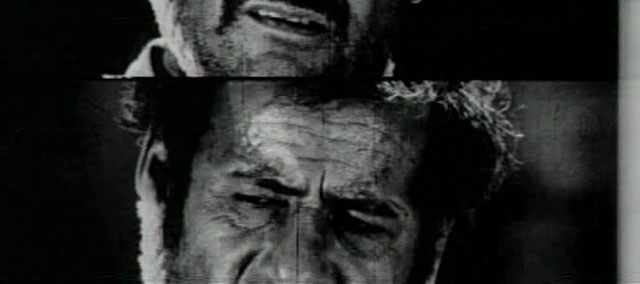
A split-screen stunt used to more wonderful effect than Timecode (or About Time 2), sometimes seeming to fragment a single image, and sometimes looking like different takes of the same action. Playful. Music is light and quiet and not in 5-4 and there are spacey 70’s-sci-fi sound effects whenever something cool happens, which is most of the time.
image

This must be the best book I’ve read on the work of a director. It’s organized just how I’d like, with articles covering all aspects of Tashlin’s work (with little overlap), interviews with Tashlin and with others about Tashlin, excerpts from his cartoons, plenty of photographs, critical write-ups of each film he directed and detailed chronology and filmography of all his work. I read the library copy straight through. Gotta adjust myself to not being able to put it on my shelf of film books since it’s so far out of print… can’t own everything, ya know.

Some edited excerpts:

Jonathan Rosenbaum:

It seems to me that “Tashlinesque” can mean one or more of five different strains in the contemporary cinema which I will list below, with appropriate examples…

A. Graphic expression in shapes, colors, costumes, settings and facial expressions derived from both animated and still cartoons and comic books: The 500 Fingers of Dr. T., I Want To Go Home, Dick Tracy

B. Sexual hysteria – usually (if not invariably) grounded in the combination of male adolescent lust and 1950s’ notions of feminine voluptuousness: Seven Year Itch, The Nutty Professor, Lord Love a Duck, The Man With Two Brains

C. Vulgar modernism: a “popular, ironic, somewhat dehumanized mode reflexively concerned with the specific properties of its medium or the conditions of its making” (Hoberman): Duck Amuck, Hellzapoppin’, Sullivan’s Travels, The Patsy, Real Life, The Purple Rose of Cairo

D. Intertextual film references: Shoot The Piano Player, Zazie dans le metro, Celine & Julie Go Boating, Who Framed Roger Rabbit

E. Contemporary social satire: products, gadgets, fads, trends: Christmas In July, A King in New York, Mon oncle, Tampopo


J. Hoberman

Tashlin’s films ultimately have less to do with the production of cultural forms than with their packaging and consumption. His America is a nation of robotic image junkies whose minds have been colonized by the media. Jerry Lewis’s landlady in Rock-a-Bye Baby does exactly what TV commercials tell her to do, even to the point of dying her hair vermilion; the movie fans in Hollywood or Bust and Rock Hunter are little more than popcorn and fan-mag consuming zombies. The protagonist of The Girl Can’t Help It is made to hallucinate singer Julie London every time he hears one of her records on a jukebox.


Bernard Eisenschitz

Although Truffaut and his colleagues at Cahiers knew little English and even less about contemporary trends in American theater and jazz… they were not caught unawares by The Girl Can’t Help It and Hollywood or Bust. Rivette, Rohmer and Truffaut rated them “masterpieces” in the same month as The Wrong Man and Chikamatsu monogatari. A phantasy view of America to be sure, but no less valid than the recent sociological approach, in which films have little place. Tashlin not only identified and denounced the contradiction of American cinema, but also embodied it, since the ambivalence of his films makes it impossible to say which side he is taking, or to be sure that he is not exploiting the very thing that he is denouncing. The Cahiers group did not only see Tashlin as radically destructive, they also appreciated the sheer beauty of what he showed.

Playing to the French title of Hollywood or Bust, Charles Bitsch wrote, “A true movie nut, Tashlin is the first to have made films for other true movie nuts.”


Tashlin in 1964

Cartoons are a very stimulating medium. For animators, the joke reigns supreme. But it’s also a world of enslavement. The world of an animator, no matter how fertile his ideas may be, is in the end, a confined frame, a tiny glass cel where his creations come to life. It’s as though the whole universe were reduced to a series of postcards. You spend your whole life splicing, flipping through cel sheets, drawing frame by frame. After a few years the whole thing becomes so debilitating that you lose all contact with the real world.

same interview, after he’d quit working at Disney in 1941…

I sought refuge at Leon Schlesinger’s where I worked on the Merrie Melodies and Looney Tunes cartoons, then went to Screen Gems at Columbia where John Hubley and I developed the “Fox and Crow” series. I became a gagman for Harpo Marx in A Night In Casablanca. The mirror sequence, which I invented specially for him, was a series of variations on an old gag … Then I worked for Eddie Bracken, and later for Bob Hope.


Tashlin in 1962

I really hate television. It’s no experience. You sit at home, you don’t get dressed and go out. It’s free – the audience doesn’t participate – they sit there and turn the dial and be critical. I detest it.


1994 interview with Bill Krohn and Joe Dante:

BK: So much live-action filmmaking today is influenced by cartoons which he was the first to do, but so little of it has any social pertinence.
JD: That’s because he was influenced by better cartoons. The people who are doing cartoons today are basing them on The Flintstones. That was the nadir; cartoons were disappearing as cartoons and becoming radio shows. Doing live-action cartoons – movies like L’il Abner, Popeye – it’s a very tough thing to do. But the Flintstones themselves were so uncartoonlike that it’ll be a little easier to translate them into live action. Whereas to do Bugs Bunny, or to do characters that really are fanciful, you just can’t do that in live action.


Mike Barrier interviews Tashlin in 1971

MB: I understand you worked on the very first development of Lady and the Tramp too.
FT: That’s right, Sam [Cobean] and I did that whole story; I’d forgotten about that.
MB: Were you working from the story that Ward Greene wrote?
FT: I don’t recall the book. Joe Grant had modeled the dog, Lady, and Sam and I did a story. I never saw the film… I think we had rats coming after the baby at the end… did they have that? Then that’s what we did.

MB: You’ve mentioned that when you made your cartoons, you were looking forward to feature work. Now that you’ve been making features for many years, have there been occasions when you’ve looked back to your cartoon work and tried to get a cartoon flavor in some of your films?
FT: Oh I guess quite often, because all the reviewers – Truffaut and Godard and all these people when they were reviewers on Cahiers du Cinema, they always treated my films, my Jerry Lewis films and all, as a cartoon. I did a picture with Tom Ewell and Jayne Mansfield [The Girl Can’t Help It] and as far as they were concerned, that was a Tom and Jerry cartoon, and the fact that his name was Tom and hers was Jerri – which I never thought of – they said, “She is the cat and he is the mouse.”


From the chronology:

1952 – Tashlin spends nearly six months working with Robert Welch on the script for “Sapphire Sal,” later re-titled Red Garters. Tashlin is originally set to direct, but when he checks off the Paramount lot in late August the production is put on hold awaiting the loan-out of Jane Russell from RKO. (Red Garters, not produced until 1954, ultimately stars Rosemary Clooney, with screenplay credit going to Michael Fessier.)

Torture Money (1937, Harold S. Bucquet)
Caught on TCM’s Oscar Month – this beat out Deep South and Should Wives Marry? for best two-reeler. A cop from the Bunco Squad goes undercover to investigate a ring of scammers who beat a guy up in a back room then fake a car accident complete with paid “witnesses” to fraud insurance companies. The scammers purposely run over a little girl, just in case insurance fraud wasn’t enough of a crime to get our attention. Our officer blends in successfully thanks to his knowledge of 30’s street slang and his ability to fake a hatred of cops. He’s chosen to be the “accident victim” (that’d be the titular torture), manages to contact his men, spring the trap and send the baddies to jail. I don’t recall the character names, so our cop was either George Lynn (I Was a Teenage Frankenstein) or Edwin Maxwell (The Great Moment, His Girl Friday). The director went on to better things (a Katharine Hepburn feature, the Dr. Kilgare series), as did the writer (T-Men, Robinson Crusoe On Mars).


Three half-hour shorts from the 1997 Africa Dreaming series:

Sophia’s Homecoming (Richard Pakleppa, Namibia)
Sophia arrives in town after years in South Africa and finds that her husband, kids and sister aren’t so happy to see her. Turns out the sister and husband are in love… Soph tries to break it up, but when the sister says she’s expecting the husband’s baby, Sophia packs up her kids and returns to S. Africa. Other than a solo dish-destroying kitchen tantrum, there’s surprisingly little screaming and fighting, considering the situation.

Sabriya (Abderrahmane Sissako, Tunisia)
Hot, uninhibited, waterfall-loving foreign woman comes to town and shakes up the home life of a local chess-playing tavern dweller. He falls in love, but I think she leaves town without him at the end… I was too busy staring at the nice visuals and trying to remember scenes from Waiting For Happiness.

So Be It (Joseph Gai Ramaka, Senegal)
Doctor arrives in town (people are always arriving in town in these movies), sees a mute retarded kid who hangs around. Everyone seems to dump on the retarded kid… finally outta nowhere (actually I predicted it, but I was kidding) the townsfolk come with torches to kill the kid. Why? I dunno, but the doctor is right upset. The written description on the box calls it an African Heart of Darkness (although I would prefer an African Heart of Darkness to concern an adventurer from the Congo on a dangerous mission to England to retrieve a countryman who’d encamped in a rural British village up the Thames and established himself as a god among the locals). The box seems to know a lot that I couldn’t figure out from the movies. Maybe I wasn’t paying attention?


Egged On (1926, Charley Bowers)

Charley invents an overly-complicated machine in his girlfriend’s parents’ barn which makes eggs unbreakable (rubbery, you open them with scissors) and aims to sell it to the egg-shipping industry. The investors are coming, but Charley has no eggs for the demonstration, so he fails to gather some in various ways. Finally gets an egg from a hen who’s been eating dynamite… test goes well until he hits the egg with a hammer to prove its indestructibility and destroys the whole barn. Worth watching for the scene shown below in which a batch of eggs, incubated by Charley’s car engine, hatch into hundreds of little cars in a massive and delightful stop-motion display.

image

image

He Done His Best (1926, Charley Bowers)
Another one involving eggs, and complicated machinery, overall more entertaining then Egged On. Charley needs his girl’s dad’s consent for marriage, ends up working at his restaurant. Gets dad in union trouble, so invents an automatic server/cook machine (powered by stop-motion, natch). Dad is cheered immensely, girl holds wedding at the restaurant, but she’s marrying some other guy which is supposed to be a funny surprise but is instead kind of an anticlimactic ending after a great movie, a la Chaplin’s One A.M.
image


Azur and Asmar (2006, Michel Ocelot)
Not supposed to be a short, but we ditched after 45 minutes because this was so bad. I can’t even think when’s the last time I walked out on a movie (though I remember itching to leave Sam Raimi’s The Gift). The critically-raved-on animation looked to me like weakly-puppeted low-detail Flash, and the story was going nowhere we couldn’t easily predict, so there seemed no point in staying. As a rule, I don’t put half-seen movies on the website, but I’m making an exception here and I don’t need a reason, nyeah.

Euro/African kids grow up with same mum/caretaker, Euro kid is sent away to become classy, African kid/mum is kicked out of house, sent back to whatever country to become super-rich merchants. Eurokid goes to africa, hides his blue eyes, runs into his mum and a hunchback liar fellow, and sets out to locate the three keys and marry some mythic fairy. Africa stuff is all Eurocentric wide-eyed wonder, and the other kid disappears for huge chunks of the movie, so the idea that we were seeing some kind of African tale faithfully told by a Frenchman went out the window.

Then we snuck into the animated shorts program and caught Varmints (Marc Craste) – wordless depresso-short with very good CGI about a bunny in a polluted Wall-E world trying to use his potted plant in order to get captured by giant floating jellyfish to live in meadowy heaven with the girl he met in the elevator – Gopher Broke (Blur Studios) – slick, commercial-looking animal comedy, unlucky gopher upsetting trucks on their way to the farmer’s market in order to get himself some food – Skhizein (Jeremy Clapin) – guy is hit by an asteroid and finds that his consciousness is some number of centimeters to the side of his body, neat premise but in the end it turns out he is just deranged – and Hot Dog and John and Karen which I’d already seen in The Animation Show 4 but played better with a crowd.