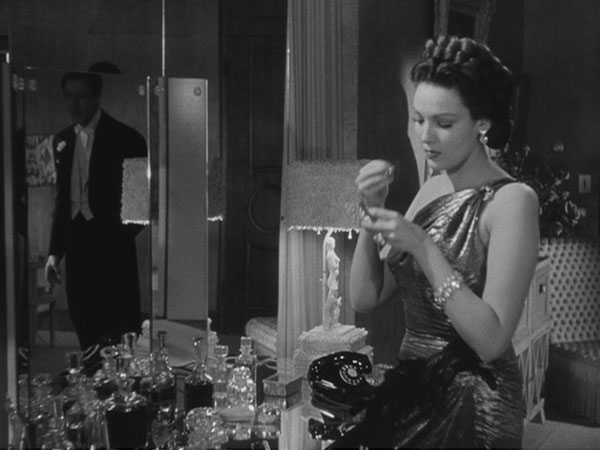
Opening titles: we hear a nice Tom Waits song (the soundtrack is great overall) and see “JVC PRESENTS.” Didn’t JVC used to make blank tapes? The kind that weren’t even as good as Maxell?

Five segments in five cities. Has cute parts, and I guess it’s part of the greater Jarmusch body of work or whatever, but also kinda feels like something that could’ve safely stayed in 1991 (or maybe ’93; it was ahead of its time). What’s funny is that it doesn’t seem like the kind of movie that should get easily dated (except through the usual – fashions, cars, mobile phones – only period pieces are immune to those) but it has this early 90’s aura about it, like Smoke or a Hal Hartley movie, which I don’t see in Dead Man or Down By Law or Mystery Train. Maybe it’s just Winona Ryder. Anyway this remains my least favorite Jarmusch picture, though I did enjoy it overall. If you could break it up Coffee & Cigarettes-style, it’d be nice to lead from New York straight into Helsinki, and maybe add Rome every third or fourth viewing.

LA: Winona Ryder is a midget phonebook-sitting wannabe-mechanic driving fancypants cellphone-calling casting agent Gena Rowlands home from the airport. Gena’s client is looking for a tough young girl, an unknown, so predictably she propositions Winona, who turns Gena down. Jim says it’s the first movie Gena agreed to do after John Cassavetes died. I never made it past this segment when I first tried to watch Night On Earth a decade ago… pixie Winona is too hard to take as a street tough.

NY: East German Armin Mueller-Stahl (same year he did Soderbergh’s Kafka) is new to New York and cab driving, so passenger Giancarlo Esposito takes over, picking up sister-in-law Rosie Perez for a miniature Do The Right Thing reunion, wide-eyed Armin taking it all in.

Paris: Isaach De Bankolé (stolen from Claire Denis) kicks out some diplomats, picks up a blind girl (Beatrice Dalle, star of Time of the Wolf, also a Claire Denis regular) and asks her a bunch of dunderheaded questions.

Rome: Roberto Benigni picks up a priest, drives like a madman (but there’s no traffic so it’s cool) visits a couple transvestites, and tells horribly perverted stories until the priest dies after dropping his meds on the floor and Roberto quietly unloads him on a park bench.

Helsinki: Cabbie picks up three guys from a hard night on the town. Of course all four of them have been in Kaurismaki films (one of the passengers played Polonius in Hamlet Goes Business. They tell their drunk friend’s hard luck story and the cabbie replies with his own hard luck story. Way to end your movie on a dead baby tale there, Jim.

Nice color cinematography by Frederick Elmes (a Lynch regular who later shot Broken Flowers) – not seen here cuz it was a rental and I forgot to get screen shots.

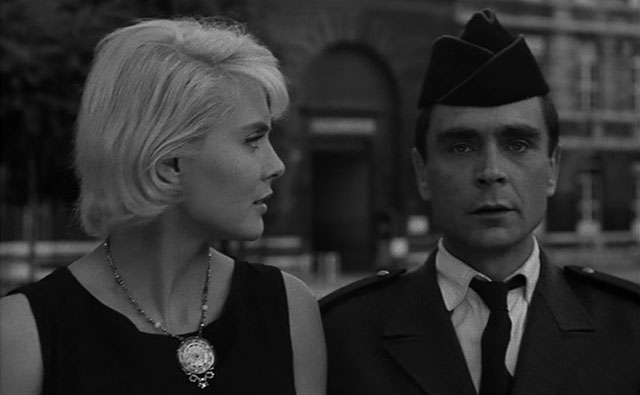
The liner notes say that Cleo’s real-time progression through Paris is very accurate, and that the only cheat is that the 90-minute film wasn’t titled Cleo from 5 to 6:30. This was more documentary-like than I’d remembered. Somehow I’d turned it into a Godard film in my mind (possibly because of his appearance in the film-within, or maybe because I saw Breathless the same week), but it’s really quite naturalistic, the long travel segments in buses and cars reminding me more of Rivette than Godard.

image

Katy actually liked it – the first French movie she has liked in a year and a half (Amelie doesn’t count). She was especially happy about the guy Cleo ends up with at the end – an army guy on leave about to return to Algeria. They share a sense of foreboding in the park. He listens to her (unlike Cleo’s rushed boyfriend who visits her apartment) and accompanies her to the hospital, where her diagnosis is not so serious. Katy thinks the two of them will meet again, or at least that he will write.

image

I haven’t seen Cleo (Corinne Marchand) in anything else, though she’s in Demy’s Lola. I loved the scene where her composer (Michel Legrand!) and lyricist come to her apartment to try out some new songs – Cleo sings one and gets lost in a close-up.

Trapped inside the song (where the nights are so long):
image

Shut up, Michel Legrand:
image

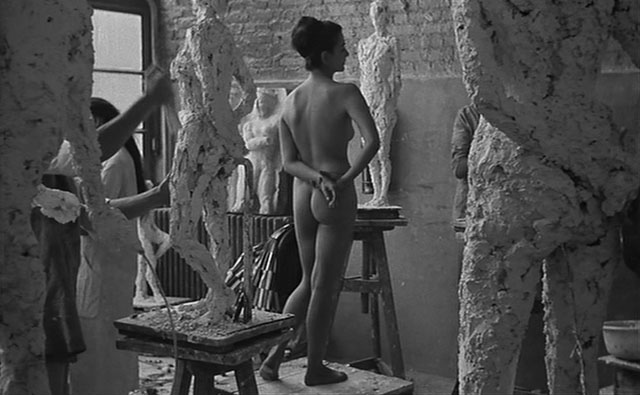
Cleo’s maid Dominique Davray had small parts in Any Number Can Win and Casque d’or, and her nude model friend Dorothée Blank is still acting today, appearing in Resnais’ new Wild Grass. Her boyfriend/lover José Luis de Villalonga was in Malle’s The Lovers. Varda (along with Antonioni with L’Eclisse and Bunuel with The Exterminating Angel) lost the golden palm to a Brazilian realist movie about a sick donkey.

Cleo with maid in awesome apartment:
image

Dorothée Blank’s backside:
image

Cleo with Villalonga:
image

Another early Lubitsch musical. This one starts promisingly with wonderful shots of a wedding which the bride has abandoned (her dress deflated on a chair, the groom traveling under a row of umbrellas) and proceeds to a decent song (the foppish groom – Claud Allister – informing his guests that he will retrieve the girl). Alas, it’s to be the last decent song because after heroine Jeanette MacDonald (of Love Me Tonight) is introduced, she’ll do all the singing in Snow White screech-falsetto.

Zasu Pitts looks wary: madame could start singing at any moment.
image

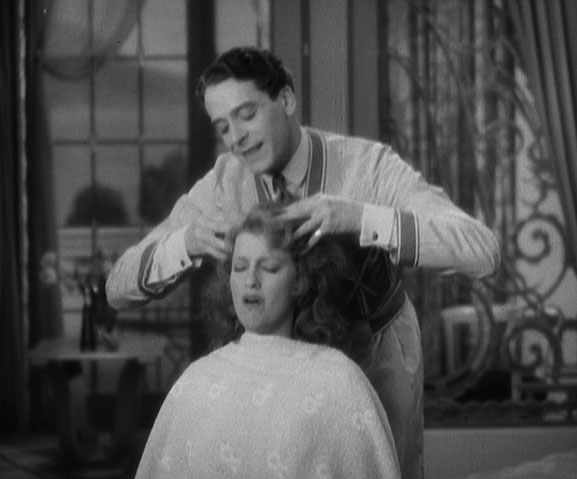
We quickly abandon the abandoned husband to follow Jeanette, escaping by train with loyal maid Zasu Pitts (Greed, Lazybones) to Monte Carlo, where she meets many hopeful fellows and hires 20 assistants – all on credit since she has no money. One especially hopeful fellow is smiley, overconfident Jack Buchanan, who singlemindedly goes after her, finally gaining entry to her hotel suite by posing as a hairdresser then taking over all her servant positions when she has to let everyone go since she can’t pay them.

image

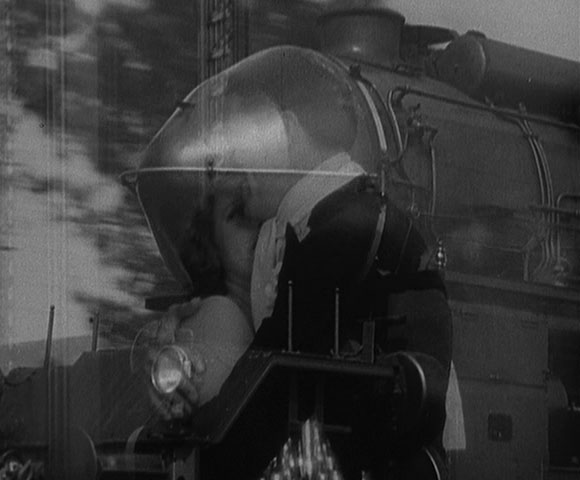
Of course Buchanan is secretly wealthy, so after Jeanette gives up hope of escape and is again going out with her prince from the beginning, Jack makes his move and she escapes again.

A train embrace:
image

Perfectly decent movie, though I didn’t notice many attention-grabbing Lubitschisms after the intro. Felt more like a simply-plotted cheapie. The only real disappointment (besides Jeanette’s singing) was a hollow-eyed, sad-mouthed Zasu Pitts, seeming to slow down the film whenever on screen. My favorite was the prince, so winning a being a loser in the opening scenes.

More miserable, miserable misery from the ol’ misery-monger Mizoguchi. I never like his movies, then I keep hearing they’re masterpieces so I watch another. This one and Ugetsu are universally acclaimed, and while I liked ’em better than Street of Shame and Life of Oharu, I can’t say I really liked ’em. So, laying off the Mizoguchi for a while after this.

Isn’t life torture? Sister Kyôko Kagawa was big-time, starring in movies for Akira Kurosawa and Mikio Naruse. Her mom played the wife in Equinox Flower.
image

Near Fukuoka in south of Japan in the 1100’s, this government guy who we never see is unpopular with the higher-ups because he actually wants to help people, so he’s banished to the other side of the country. His wife Tamaki packs up the kids (Zushio and his little sister Anju) to follow, and together they set off on a wonderful adventure! No just kidding, after the kids are kidnapped and sold into slavery, the wife becomes a prostitute, eventually goes blind and never sees her husband or daughter again.

Tha Bailiff:
image

Mostly focuses on the son Zushio. As a boy he learns his dad’s humanistic ways, but in the slave camp he gives in to authority, becoming a tormentor of his fellow slaves under the rule of Spiky-bearded badman Sansho. Finally he repents, takes a chance to escape (stays with ex-slave Taro, now a priest, who used to be in Zushio’s position), promising he’d be back for his sister. Z goes to Kyoto to appeal to the law, finds sympathy among men who knew his father, and they make Z a governor. He goes down and challenges Sanso’s authority, ordering all slaves freed. When Z says, “My mother and sister will be delighted. Now I can make a happy life for them,” those of us who’ve seen other Mizoguchi movies know what’s coming… he discovers his sister has drowned herself rather than face torture by the guards asking where her brother had gone (as if he’d even told her). Meanwhile mom has been living blind by the sea for years, her song “Isn’t Life Torture” about her kidnapped children spreading throughout the land, so now, having been fired from his post for trying to be nice to people, he manages to track her down and they hug each other and cry.

Zushio and the mad monk:
image

Sistercide:
image

Movie jumps back and forth in time, pretty unusual. The music, hailed on the DVD commentary for being authentic, is either tuneless twanging on a single guitar string or tuneless piercing flute.

I’ve become obsessed with this since watching it again at the Fox. Found a book about the making-of, which I’ve just begun to read. The post-film Q&A with Spike and Joie and fellow Atlanta college grad Radio Raheem was nothing earth-shattering, but it’s an honor to be in the same room as Spike Lee. Learned about the cast: Ruby Dee is still alive and working, Richard Edson (Turturro’s friendly brother Vito) was Sonic Youth’s original drummer, one of the shit-talking guys on the corner is Commissioner Burrell on The Wire, and Martin Lawrence’s comic-relief role cracks people up more than it probably should. Looked beautiful on the big screen. Must watch again soon and show to Katy.

“Will they lead the same sorry lives that we have?”

image

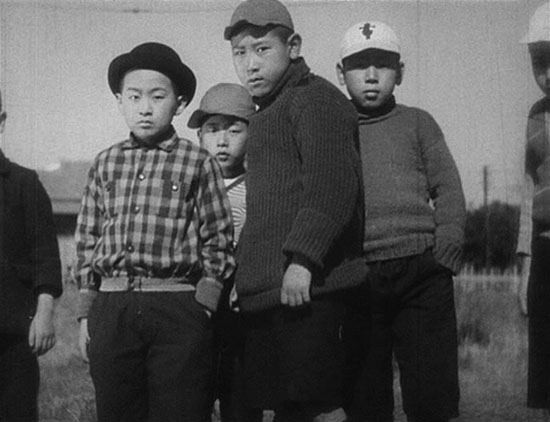
The Eclipse box set title is “Three Family Comedies” but I’d forgotten that Ozu even made comedies until the opening titles played over a drawing of a kid holding his crotch. Then my realization “oh, this will be a zany comedy featuring kids doing dirty stuff” turned out to be off base. Sure, kids are the protagonists, and it features some comedy, but it all leads to the quote above (spoken by the kids’ father) which belongs firmly in drama territory.

image

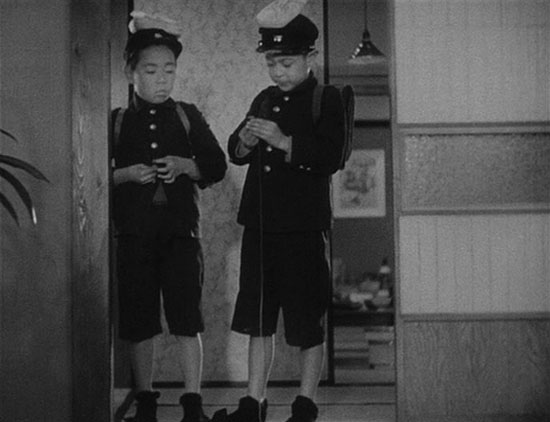
Dad’s got a new job so he moves the family close to work. Actually he moves ’em into the suburb where his boss lives, and it comes out later that dad is kind of a suck-up. The kids are intimidated by a pretty mild gang from their school until they learn to use their wooden shoes as weapons and they dominate the group. It’s kinda like the beginning of 2001: A Space Odyssey but with Japanese schoolchildren instead of apes.

image

Most of the movie seems to be this low-key power struggle with the kids which includes searching for sparrow eggs to eat raw (to prove strength) and trying to get an ‘E’ (for ‘excellent’) in calligraphy at school. A scene at the boss’s house is the turning point. Everyone is watching the boss’s home movies in which our kids’ dad is making funny faces and cracking everyone up – everyone but his kids who are ashamed that their father is playing the fool. The older boy (Ryoichi) goes home, calls dad a yellowbelly and trashes the house until he gets spanked. Moods improve later and the movie ends with the kids relatively cheery again and getting along with the boss’s son (who dresses like Oddjob).

image

One scene I didn’t get: the bully kids find a valuable coin, pool their money to make change, then hand over the change to a policeman and walk away bummed out. What happened?

image

A scene in dad’s office where the camera follows a contagious yawn made me yawn too. Yes, there is camera movement in an Ozu film. Movie is obsessed with trains and streetcars too – there’s one passing behind the action whenever possible.

image

Apparently Ozu’s Good Morning nearly thirty years later was a semi-remake.

TCM:

I Was Born, But…, which Ozu developed from his own story, is a social satire of comic delights and melancholy resignation to the innocence lost as the boys face up to the compromises that await them. The film won first prize at the Kinema Jumpo awards – the first of six such prizes he would eventually win – and is regarded as Ozu’s first genuine masterpiece.

Michael Koresky:

“I started to make a film about children and ended up with a film about grown-ups,” said Ozu, speaking to the film’s dark side. Because of this, Shochiku didn’t know what to do with the picture, even delaying its release for two months. This potent mix of comedy and pathos within the domestic space would, of course, continue to dominate Ozu’s oeuvre in the coming decades—and while the age disparity between the generations would grow smaller, the resentment gap would grow even wider.

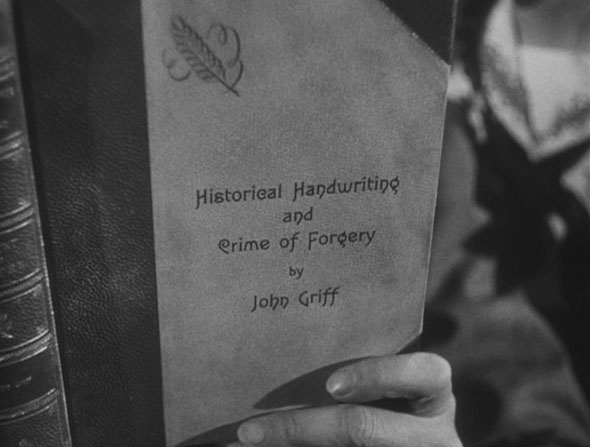
Based on the true story of James Reavis – however his wikipedia article sounds like the true story would make for a far less interesting movie than Fuller’s script. It’s got the pen-and-ink technicality (his forgery is discovered because he uses the wrong kind of ink), the marrying a trumped-up land heir, and the prison time, but it lacks the monastery, the gypsy camp and Reavis-Price’s completely solitary audacity of it all (the real Reavis had financial backers, co-conspirators and hired thugs). Also the guy who exposed the fraud was named Royal Johnson, not John Griff.

image

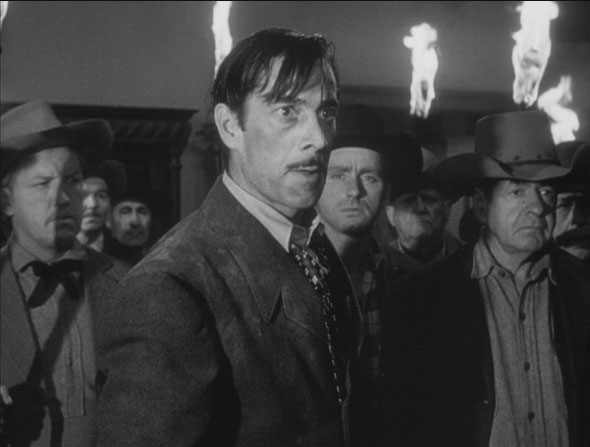
Vincent Price hadn’t found horror fame yet, but he acts up a storm in this – convincing as a showman, a lover, a silent conspirator and an enraged victim of mob violence (see below). His plan involves the U.S. government honoring Spanish land grants – he trumps up his young ward (later his wife, ew) as the sole living heiress of a previously unclaimed grant for the whole territory of Arizona, planting her fictional parents’ gravestones, engraving a proclamation into a giant stone, posing as a monk for three years to inscribe the false grant into the ancient records and getting some gypsies to help him break in where the copy of the records is kept.

image

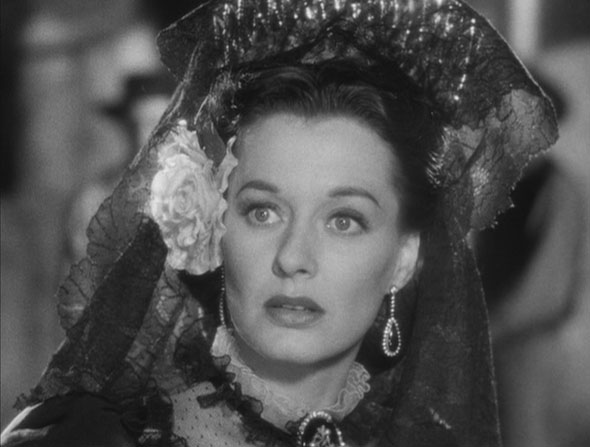
For all that work he is very nearly killed by the angry villagers, but the government saves him in order to imprison him. His wife (Ellen Drew of Christmas In July, who again fails to make much of an impression) apparently forgives him for giving her a false identity and roping her into his land-grab scheme, picks him up from prison at the end.

image

Fictional-historical adventure-romance-dramas aren’t exactly what Sam Fuller is known for, but he pulls it off. I guess he was one of the few writer/directors out there at this time, and The Steel Helmet wasn’t far behind. The only bit that doesn’t work for me is the silly framing device of old men smoking cigars and reminiscing about the Baron’s crazy scheme. At least Sam worked cigars into the story somehow.

image

That’s Reed Hadley as Griff, the government’s expert fraud analyst who manages to debunk Price and help him escape the angry crowd. Within a couple years of this, Hadley played both Jesse James (for Fuller) and Jesse’s brother Frank, and appeared in two MST3K-bait films.

image

Rex “Henry Higgins” Harrison is a famed conductor. His brother-in-law (radio star and megaphone crooner Rudy Vallee, naive rich dude in The Palm Beach Story) hires a private detective to spy on Harrison’s wife (Linda Darnell, recently starred in My Darling Clementine), so Rex, against his own hatred of spying and his belief in trust, accidentally finds out that his wife may be cheating on him. While conducting that night’s three symphony movements, he has three fantasies in which he murders his wife (aided by a sound recorder gismo) and frames her illicit lover (Rex’s secretary) Tony, then he forgives her and writes her a giant check while making her feel small and unworthy, then he confronts the couple and kills himself in russian roulette. After the symphony Rex rushes home and bungles about in a painfully protracted slapstick sequence – he can’t make the recording gismo work, can’t find bullets for his gun, and spills ink all over his checkbook. Finally she casually explains away the circumstances that led detectives to suspect her of cheating, and we have our happy ending.

Recommended listening: Mad at a Girl by Robbie Fulks.

image

In the shot below, on right is secretary Kurt Kreuger (this must’ve been a relieving change of pace for him, after playing nazi flunkies all during the war), middle is brother-in-law Rudy Vallee, and left is Lionel Stander (Katy was appalled at his accent).

image

Caught some Sullivan’s Travels actors: valet Robert Grieg (here a butler, doing a different voice I think) and bus driver Frank Moran (here a fireman). There were more whom I didn’t recognize, but the standout scene was with a relative Sturges newcomer Edgar Kennedy (former Keystone Kop who starred in his own long-running shorts series) as the private detective who spied on the wife, confronted in his office by Rex. It’s one of my favorite scenes in any Sturges movie – beautifully written and acted, sharp dialogue becoming softer as the men bond over their love of music and hard truths they wish they hadn’t learned. William Demarest was around in ’48, acting in four films and voicing a cartoon character for Walter Lantz, so I don’t know why he couldn’t make it onto Sturges’s set.

Don’t think I ever realized that Sturges’s cinematographer is Victor Milner, who worked with Lubitsch in the 30’s and shot Trouble In Paradise. Both Paradise and this one have far more interesting camera work than your average comedy. This one is notable for the looooong zooms into Rex’s eye before each of the fantasy sequences.

Full of wordy dialogue like “August, what happy updraft wafts you hither?” and “You handle Handel like nobody handles Handel,” which enriches the movie to no end, but makes it wearying over its almost two hour runtime (and that’s after having a half hour cut by the producer).

Linda Darnell, unaware that Rex is behind her with a razor in his hand:
image

Nice DVD extras – Terry Jones says it’s a satire of the masculine self-image and Sandy Sturges tells of a romantic scandal involving a girl killing herself over Rex Harrison which made this movie impossible to promote. Commentary points out that this came out the year after Monsieur Verdoux, obviously similar in a few ways.

Meaning of Harrison’s line “my family’s product has kept England on time since Waterloo” is that the real conductor on whom the character was based inherited a family fortune from laxative pills.

This was a script from the early 30’s that Sturges considered as his directorial debut, but the studio didn’t want it at the time. It’s the subject of Sturges’s only remake to date, a flop 1984 version with Dudley Moore, Nastassja Kinski and Albert Brooks, scripted by the writers of And Justice For All.

Set over one year in the mid-to-late 30’s, mostly follows high-school-aged Titta and his family but leaves breathing room for the rest of the town and its inhabitants. The rare ensemble movie that gives everyone a memorably distinct identity without resorting to stereotyping.

On one hand, it would be worth renting the Criterion DVD and poring over the hours of extras. On the other hand, there’s no outside explanation needed for Amarcord. Need to watch this again and again… I’m pretty sure Katy would like it.

The title is slangy for “I Remember.”

I can’t account for why this won an oscar one year (best foreign film) and was nominated for more oscars (writing, directing) the following year.

I always think of “fascism” as a bad word, an insult thrown at your government by foreigners, forgetting that once Italians were screaming their support of fascism in the streets. Nutty buggers.

I don’t think this was packed with movie stars. Red temptress Magali Noël had been in Satyricon, Titta’s mom would appear in Cinema Paradiso 15 years later, and mad uncle Teo would direct a parody of The Exorcist.

So, another great Fellini film, combining the circus-film group atmosphere of 8 1/2 with touches of the tragedy of La Strada, with fortunately no La Dolce Vita influence to be found. I didn’t let the dubbing get me down, but I’d thought a new print of a new restoration of an only 30-year-old film would have more vibrant color than it did.