Two years after The Face of Another and Pitfall, and seven years after I first fell asleep trying to watch it, I finally make it to/through Woman in the Dunes. I know that sentence makes moviewatching seem like a chore, but this was one I’ve been really looking forward to – a movie I knew I would totally love, so it might as well be saved for a special occasion, like staying home from work unable to sleep from painful poison ivy.

image

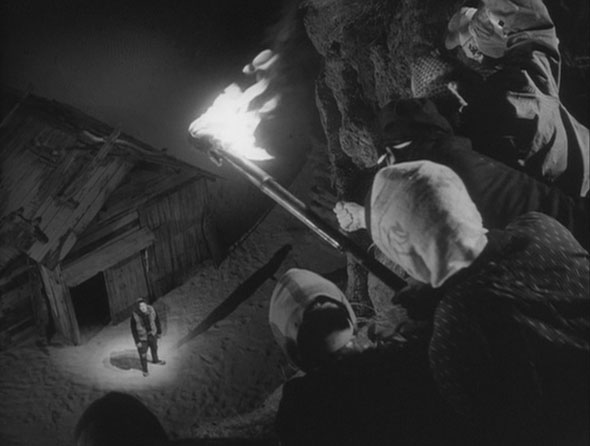
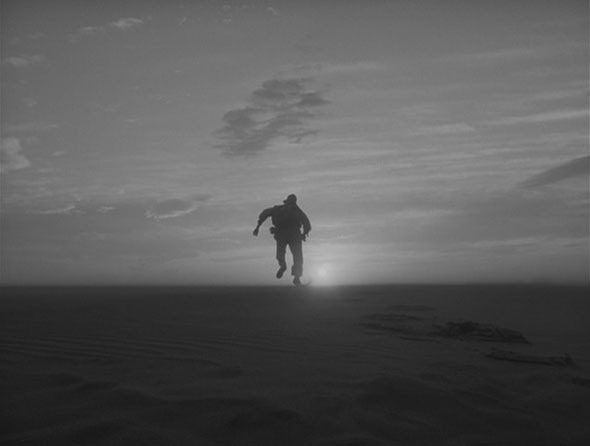
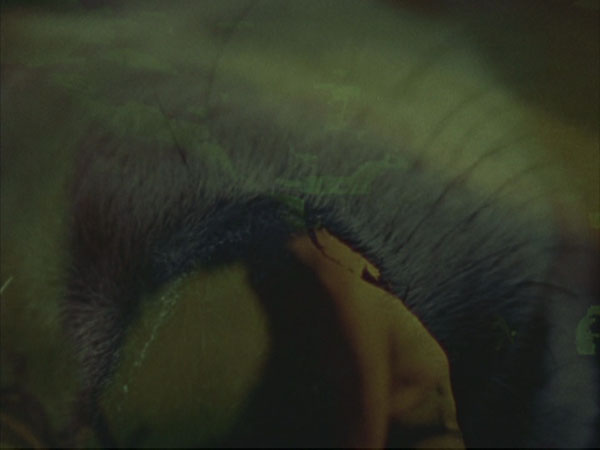
This was made in between the other two, and shares their shining, silvery black-and-white cinematography. An entomologist is allowed to stay at a woman’s house in a sand pit but is not allowed to leave. He rages against his situation, declares the sand illogical, tries to escape through cleverness and trickery, and finally (over months, years) resigns himself to it, living with her and helping to fill buckets with sand to be sold by the villagers for building material.

image

At first he doesn’t trust the woman, then he wants to help her get out, then the villagers gather around the edge of the hole offering him favors if he’ll have sex with her in front of them, and finally they’re an acting married couple, and she’s being lifted out of the hole with pregnancy complications, leaving him a chance to escape which he doesn’t take.

image

Funny enough, the same week I watched this, Criterion put out a Japanese movie from a year earlier called Insect Woman, a title this film could’ve stolen.

image

James Quandt’s essay points out the common theme of breaks in identity from Pitfall and Face of Another – the teacher gives up his life of collecting, identifying and documenting and accepts his captive life in the desert. And hey, Quandt saw the same parallel images of sand-flecked bodies between this and Hiroshima mon amour that I was noticing – good for us.

image

The man, Eiji Okada, is the same actor from Hiroshima mon amour, which is probably why that occurred to me. He later appeared in The Face of Another, Crazed Fruit, Samurai Spy, and in the last year of his life, Stairway to the Distant Past. I’m not sure who the dune woman, Kyôko Kishida, played in Ozu’s An Autumn Afternoon, but she also starred in Manji which I’d like to see.

image

image

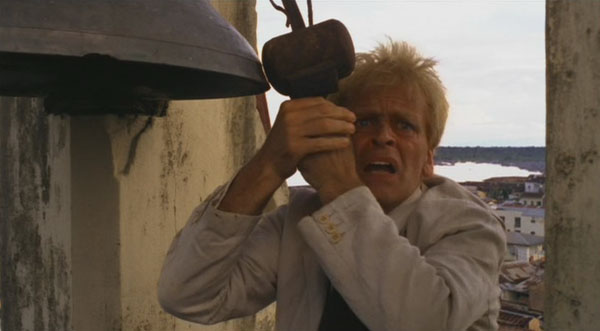
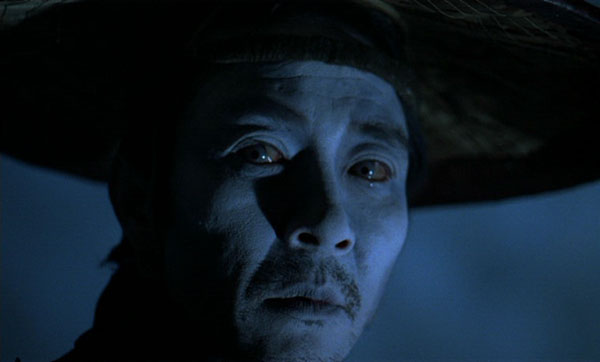
Seki (Kazuko Yoshiyuko of Lady Snowblood 2, Kikujiro) is married to a decent guy, the town’s rickshaw driver Gisaburo (Takahiro Tamura of 24 Eyes, Seisaku’s Wife), but young Toyoji (Tatsuya Fuji, the killer’s father in Bright Future) falls in love with her and ruins all that. One night, in an unexpectedly frank bit of sexuality (later note: not frank at ALL after watching In the Realm of the Senses), he’s going down on her and orders her to shave. A couple hours later he matter-of-factly tells her that since she’s shaved, her husband will suspect them, so they’d better kill him. So they do, strangling the guy and dropping him down a well. Three years later the townspeople haven’t seen their taxi driver around but his ghost has been spotted, Toyoji seems to spend an awful lot of time at Seki’s house and is seen lingering at the well, Seki’s daughter is asking questions and nobody doubts what’s going on… only a matter of time before the cops (led by Takuzo Kawatani of The Burmese Harp and Battles Without Honor & Humanity) catch up and hang ’em. But things get worse before that – Toyoji kills the young master of the property where he works and Seki goes blind.

As with Senses, this is based on a true murder from 1896. This one has more town life in it, more theatrically heightened colors, maybe more traditionally studio-looking shots. A very Japanese (pre-Ring) ghost, Gisaburo dressed as he was when he died with an all-white face, wordless. Some wonderful shots from inside the well, as seen on the box art. I failed to get screen shots, so I’ve stolen a couple from DVD Beaver. I liked the movie a whole lot… not a groundbreaking story, but well told with a nice visual style.

image

If I may quote heavily from Tony Rayns’ great essay:

What intrigued Oshima so much in the story of Gisaburo and Seki? First and foremost, the fact that it bore witness to an eruption of amour fou in a social setting where such passions were previously unrecorded. Western literature from the Middle Ages to the nineteenth century—from Geoffrey Chaucer to Émile Zola—had acknowledged and explored the sex lives of the rural peasant class, but there was no real Japanese equivalent; the bawdy fiction of the Edo period had dealt exclusively with the love lives of the samurai and merchant classes. Oshima responded to the factual account of a torrid affair between a married mother of two and a recently discharged soldier twenty-six years her junior. … He recognized the story as an interesting counterpoint to the one he had told in In the Realm of the Senses. Sada and Kichi had retreated from the increasingly militarized Japan of 1936 into a private world powered by their own sexual fantasies; Seki and her lover, Toyoji, lived out their adulterous passion in a world circumscribed by the laws of nature and the rural traditions of village life. For Oshima, the key element in the story was their defiance: the realization that their affair and their murder of Seki’s husband would be exposed rekindled their passion and made them recklessly indifferent to their punishment.

Oshima has said that he reads the tradition of vengeful spooks as a phenomenon related to the militarist code of Bushido—which he has always vehemently rejected. He sees Gisaburo’s ghost as coming from somewhere very different; he once told me, “The ghost in Empire of Passion is a farmer’s idea of a ghost, not a samurai’s.” Gisaburo, in fact, accepts his sad fate as passively as Kichi succumbed to Sada’s murderous fantasies in In the Realm of the Senses. He doesn’t return to the village as a ghost because he wants revenge but because he’s an unquiet spirit; he appears beside his old rickshaw because he wants to go on serving his wife and the villagers, and beside the hearth in his old home because he still wants the comforts of a pot of warmed shochu liquor. He represents, of course, the guilty conscience of his murderers, not assuaged by emptying dead leaves into the well where his body was dumped, and the collective disquiet of the community that a crime has gone unpunished.

Where is Oshima himself in all of this? … The figure he is closest to is the village’s young master, who also represents the author in Nagatsuka’s novel; he’s the most educated person in the community, the most clear-sighted, and the most ineffectual. First seen at his wedding ceremony, he’s played by Kawarazaki Kenzo, the same actor who stood in for Oshima in the tortured family saga The Ceremony. The young master stands for modernization and “progressive” ideas, but he’s fated to be silenced by an ex-soldier who can think no further than self-preservation. The character’s death suggests that the pessimism that led Oshima to abandon filmmaking in the early 1970s was undimmed.

image

Oshima:

The space in Senses was delineated by the different rooms of love. It was artificially created, completely designed for voluptuousness. On the other hand, in Passion it is all about nature. Seki has a house where she lives with her husband, and Toyoji a small hovel that he shares with his young brother. Neither of these places is artificial. The two lovers live in fear because they constantly feel threatened by nature. I am trying to depict the human condition in its primal stage. In that sense, my new film goes back to the roots of all life, much more deeply than Senses ever did. The lovers seem cast into hell because of their sexual urges, but in my opinion, the rumbling of the earth, the murmur of the wind, the rustling of the trees, the songs of the birds and insects, in short, all of nature, is guiding the couple into hell. And the ghost itself is part of nature. Neither sex nor love has any meaning. Life itself has no meaning. And if it doesn’t have meaning, isn’t it hell? All I can do is express and project before you this human life devoid of any meaning, this hell that for me is always beautiful.

I found, several years after directing my first films, that I was very attracted to these two topics, sex and crime. Subsequently, my films have addressed them in a very analytic way. Today, I’m at a stage where I simply like to project the naked reality of sex and crime before the spectator’s eyes.

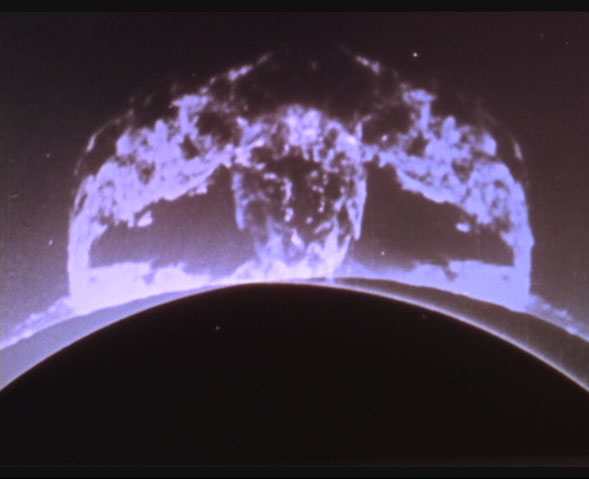
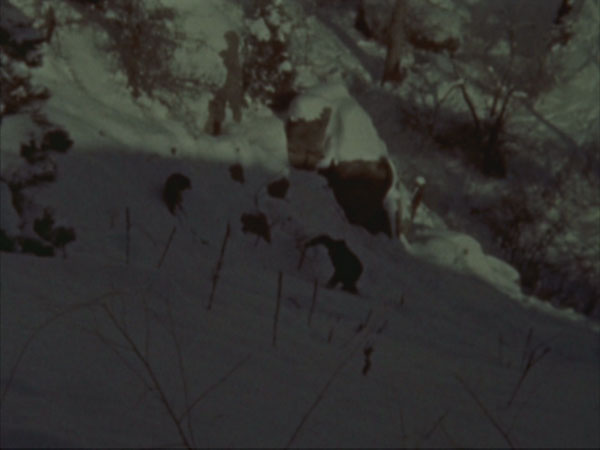
I’ve said the Brakhage set is my favorite DVD… and yet I’d never watched Dog Star Man all the way through, and never seen The Act of Seeing With One’s Own Eyes until lately. Soon after I got the discs, I had a traumatic experience with DSM. Thought I’d watch it at night lying on the couch with Coil’s Moon’s Milk (In Four Phases) album playing. I remember the image of a man (Brakhage himself, I believe) with his dog climbing a snowy hill, but I quickly fell asleep and had awful nightmares, my worst in years, and woke up not wanting to watch DSM anymore.

So some years later I tried again, this time with Sonic Youth’s Koncertas Stan Brakhage on the stereo, again at night on the couch. Dozed off again during sections of Part 1 and most of Part 2, but I got more of an impression of the overall film this time. It’s tremendously complicated, with ideas and techniques from his other films all run into a feature which actually plays as a feature… I didn’t realize you could extend a Brakhage film past the hour mark and it’d stay gripping. And I know it sounds bad for me to call “gripping” a movie which I can’t stay awake through, but I know what I mean, and I’m the only one who reads this stuff anyway.

Prelude:
image

Part 1:
image

Part 2:
image

Part 3:
image

Part 4:
image

“Nobody with a good car needs to be justified.”

Huston, in his seventies, still had six more films to make and his fifteenth oscar nomination to earn. This movie was far weirder (and dirty, run-down & location-shot) than anything I thought a respected veteran hollywood studio filmmaker would produce. His might be a career I need to obsessively explore some day! We saw a square-ish 16mm print, which looked fine and dandy to me (I mean, the film looked like it’d been left in the glove box of Hazel’s car for some years, but looked fine ratio-wise), but I see the Criterion DVD will be 1.78:1.

Hazel Motes arrives back home to find his family gone, his childhood home looted and decrepit. Instead of trying to find them, he stalks a street preacher and daughter, then decides to preach his own church, one without Christ. Simpleton Enoch Emery follows Hazel trying to be his friend, eventually supplies a Christ for his church (pygmy mummy robbed from a museum). Hazel spooks the preacher into leaving town and (inadvertently) charms the daughter into shacking up with him. A con man likes Hazel’s game and emulates it by hiring his own preacher. Cars are run into ditches and lakes, much preaching is done, and Hazel refuses to warm to anybody, finally blinding himself to the delight of his landlady who now has someone helpless to take care of… but when she forces his hand, Hazel wanders off and dies on the streets alone. An extreme movie (and book), full of heresy and, supposedly, redemption. Film is a quite literal adaptation of the book, with a few omissions and modifications.

Professional crazy-actor Brad Dourif (crazy doctor in Alien 4, crazy Wormtongue in Lord of the Rings 2, crazy doll in Child’s Play) played Hazel Motes. Tron star Dan Shor was alright as Enoch Emery – I’d pictured him younger and dumber. It’s good (hell, it’s great) to see Harry Dean Stanton as the fake-blind preacher with daughter Amy Wright (who just appeared in Synecdoche New York). William Hickey (Toulon in the original Puppetmaster!) was the fake preacher hired by con artist Hoover Shoates (well played by Ned Beatty of Nashville). Mary Nell Santacroce (Atlanta native who appeared in another fake-preacher movie, an ill-advised remake of Night of the Hunter) is the landlady who takes over the last few scenes after Hazel blinds himself. And the fictional city of Taulkinham is ably played by Macon, Georgia.

Adapted and produced by the Fitzgerald family (friends of the author). Appalling music by Alex North starts out with bloopy keyboards and wheezing horns then cranks into comic-book twangy versions of recognizable standards. Sounds an awful lot like what someone from Chester Pennsylvania would image people in Macon listen to. Steve agrees the movie would be a masterpiece if you could cut that music out. Let’s hope Criterion has found a way.

Canby of the Times loved it, “lyrically mad and absolutely compelling even when we don’t fully comprehend it.”

FITZCARRALDO (1982, Werner Herzog)

Klaus Kinski (the year after starring in Terayama Shuji’s Fruits of Passion) acts less crazy than usual as Fitz, though he’s still got that hair. And of course, his crazy actions speak for themselves. Fitz loves opera, especially the singer Caruso, whose records he collects (which places the action somewhere 1905-1915ish) and wants to build an opera house where he lives in Iquitos, Peru, but investors won’t be convinced.

image

So Fitz decides to make a fortune as a rubber baron, and build his own damned opera house. Gets his brothel-running girlfriend Claudia Cardinale (over a decade after her heyday in Once Upon a Time in the West, 8 1/2, The Leopard) to front him a steamboat and claims an unharvested plot of riverfront land in the jungle. It’s unharvested because nobody can reach it… it lies upstream from dangerous rapids. But even further upstream, another river veers within half a mile of the river in question, so Fitz plans to sail up THAT (dangerous-native-infested) river, drag his boat onto land across into the other river and harvest his rubber.

Claudia Cardinale:
image

Along with a half-blind but navigationally-keen captain, a drunken chef, and a mechanic (Miguel Ángel Fuentes, fresh from playing the mystical indian sidekick in Puma Man) who’s openly spying on Fitz for his competitors, Fitz makes it to the crossing and with the help of hundreds of natives, drags his 30-ton ship over a damned muddy mountain and into the other river. That night, after the drunken celebration party, the natives cut the ship loose as a sacrifice to the rapids, undoing months of work. In a wonderfully bittersweet finale, with what’s left of his capital Fitz hires the opera to come to Iquitos and perform from the ship.

image

Shot realistically, naturally taking its time to unfold. Herzog’s/Fitz’s ambition is immeasurable, and so a mere two hours cannot contain it. Movie doesn’t seem long so much as… huge. Actors speak English, dubbed into German and subtitled back into English.

image

Hey wow, it was shot by the guy who did Orson Welles: One Man Band, which is the other movie I considered watching tonight. He also shot bunches of Alexander Kluge films.


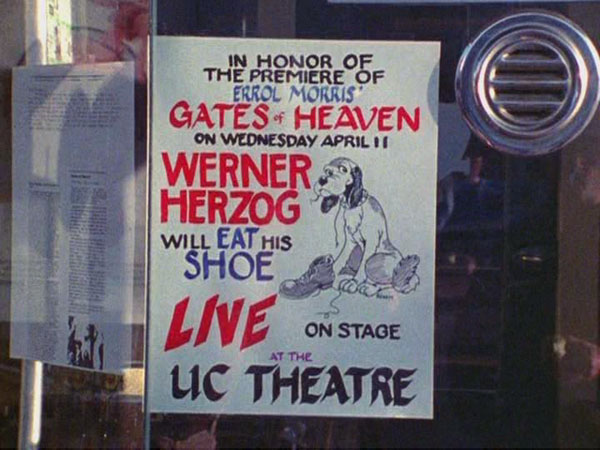
WERNER HERZOG EATS HIS SHOE (1980, Les Blank)

“I’m quite convinced that cooking is the only alternative to filmmaking”
image

Oh man, this was great… first of all because Werner is my hero, here being smart and funny and provocative, and second because Les keeps it lively with a circus atmosphere, bringing in clips of Herzog movies, The Gold Rush, and a Gates of Heaven outtake. Fitzcarraldo was in pre-production, and Les would follow Werner into that venture, filming…


BURDEN OF DREAMS (1982, Les Blank)

“If I abandoned this project I would be a man without dreams, and I don’t want to live like that.”

One of the most amazing docs I have seen, and essential viewing with Fitzcarraldo. Shows and tells the factors that made that film define “troubled production”, making Terry Gilliam and Francis Ford Coppola look like pansies in comparison. Attacks and intimidation by natives (their camp is burned down, a spear attack injures three), losing both stars of the film (post-Melvin and Howard Jason Robards and pre-Tattoo You Mick Jagger) and the actual pulling of a 30-ton steamship over a mountain by natives doesn’t even cover the whole story.

Burden of Dreams:
image

Fitzcarraldo:
image

On-set tantrums by a bored Klaus Kinski aren’t in this film (presumably they’re covered in My Best Fiend). This doc itself is wonderfully well-paced and shot, and Les gets choice interviews with Herzog, including his oft-quoted bit about how the jungle birds don’t sing, “they just screech in pain.” Taken as a package, Fitz and Burden are the rare cult films which exceed their reputation.

image

From Paul Arthur’s Criterion essay:

When production stalls, as it often does—Herzog claims his film is “cursed,” admitting that “the jungle is winning”—Blank filters in lively scenes of the Campa extras’ quotidian routines: food preparation, clothes washing, the blending of a local alcoholic drink made from yuca plants. It is significant that most activities are “women’s work,” a realm that Herzog’s masculinist vision rarely acknowledges. Later, Blank constructs a touching vision of cross-cultural identification by juxtaposing the sound of a Caruso aria coming from a record player in an earlier shot with loving close-ups of native women, as if they are responding to the beauty of this alien voice. The moment recalls an archetypal collision staged by romantic adventurer Robert Flaherty in Nanook of the North (1922), when the titular Eskimo marvels at a phonograph record (then jokingly decides to bite it). Unlike either Herzog or Flaherty, Blank clearly prefers the rhythms of collective effort, of sensuous community, over Eurocentric ideals of heroic individualism. In essence, he has crafted a film about the interaction of premodern tribal existence with European modernity, epitomized by a movie narrative about the invidious clash of brute nature and a singular ego bent on his own, ultimately delusional, mission of cultural enlightenment.

A rare valentine’s day treat for me when Katy suggested (not just “went along with” – suggested!) a Powell/Pressburger double-feature. Maybe she was jealous after reading up on the good times I had watching the previous double-feature by myself, or maybe it’s because I’ve been complaining for three years that we never finished watching The Red Shoes last time, or maybe she just likes me.

A Matter of Life and Death (1946)

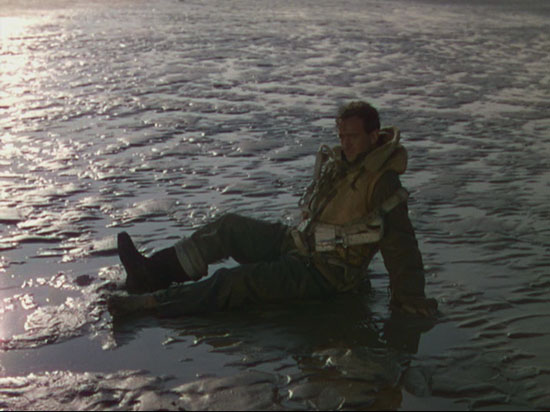
Movie wastes no time, with David Niven (his post-war return to film, previously in Wyler’s Wuthering Heights and Dodsworth) mid-plane-crash having a smooth, romantic radio conversation with a visibly upset Kim Hunter (of The Seventh Victim, later A Streetcar Named Desire), each photographed in close-up with washes of color behind them. He turns up on a heavenly beach, safely alive sans parachute, then finds his radio girl and they fall in love, the end.

image

BUT WAIT, Niven was supposed to be dead, so a French-accented representative of heaven (Marius Goring of the Archers’ The Spy In Black) comes down to collect him. Niven argues that his situation has changed since he fell in love on his borrowed time and challenges the system to let him live. This is hardly precedented, but heaven agrees to give it a go. Niven consults with his new girl’s doctor friend Roger Livesey (star of I Know Where I’m Going!, and it’s nice to see him again) regarding which dead man Niven should employ as legal counsel in his heavenly trial versus the rabidly anti-British prosecuting attorney Raymond Massey (the soldier in the final scene of 49th Parallel). Movie has exquisite color, innovative production design and Roger Livesey, but it’s turning out to be another propagandistic (allied U.S./Britain need to get along) war story, and one with angels, no less. Angel movies are never good.

image

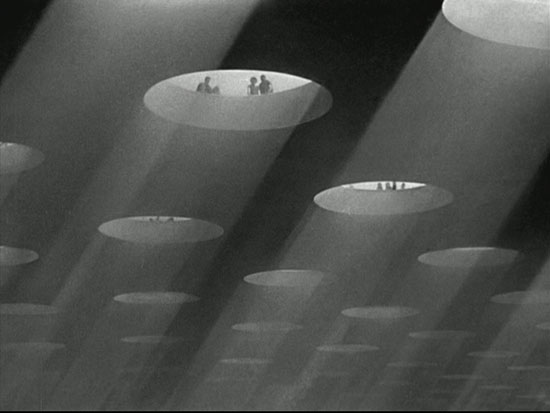
BUT WAIT, new layers are added, as Niven is suspected by the doctor of having brain damage from his fall and is rushed into operation, so the whole heaven business might be in his mind. The doctor, trying to summon an ambulance on his motorcycle, dies in a crash and becomes Niven’s attorney in angel-court. Not particularly nationalist, no theologian, just a very smart and logical man who helps Niven get out of heavenly trouble while the brain surgeon is saving him on earth, leading to the inevitable happy ending.

image

I ended up liking it an awful lot. Another movie, so soon after watching Magnificent Obsession, that hinges on the untimely death of a doctor. Niven’s painfully-British dead buddy, awaiting him in stark, black-and-white heaven, was played by Robert Coote (of The Ghost & Mrs. Muir and Welles’ Othello), all hanging out with the future Sister Ruth, Kathleen Byron. Somehow, even though I’ve seen his brother in a TV series 60 years later, I didn’t recognize Richard Attenborough.


The Red Shoes (1948)

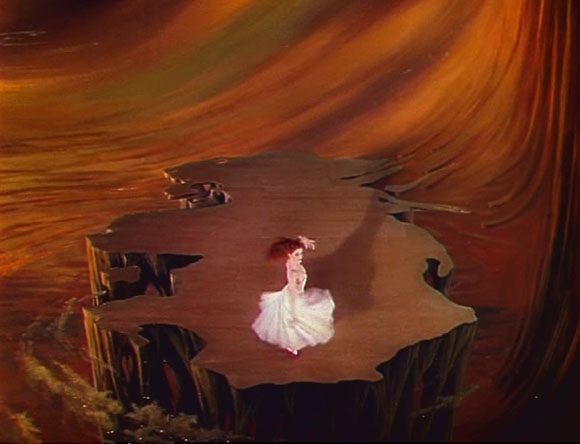
Another glorious-looking film from the Archers and Technicolor pioneer Jack Cardiff. A student composer (hey, it’s a blond Marius Goring, the Frenchman from the last movie) whose work is being stolen by his teacher Austin Trevor (of Alexander Korda’s The Lion Has Wings) ends up on the same production as ballerina Moira Shearer under the tutelage of passionate and ruthless director Boris Lermontov (Ophuls fave Anton Walbrook, also in 49th Parallel). Composer and Dancer fall in love, but her true love is dancing. Torn between the two (she wouldn’t have to be torn if she could be married and dance, but it never works that way), a tragic finale! Wonderful sad conclusion with Lermontov announcing Shearer’s demise before the curtain, the play performed with only a spotlight where she should be. Echoes the end of The Golden Coach, another climactic love vs. art decision with a final curtain announcement.

image

Of course the highlight is the Red Shoes performance, 15 minutes of ballet tricks enhanced with film tricks, one of the most thrilling cinematic montages in history. Besides that one acclaimed scene, movie mostly plays it straight, with believable characterization and classy (but not stifling oscar-classy) filmmaking, until the one bit of fiction crossover at the end, when the red shoes seem to cause Shearer to run from the play and throw herself in front of a train. Close-up on her face, horrified (recalling the finale of Black Narcissus), then a focus on the shoes during the whole run without showing her face again.

image

Robert Helpmann, who was awesome in Tales of Hoffmann (and apparently made his own movie of Don Quixote in the 70’s) is awesome here as well, as the lead company dancer opposite Shearer. Movie won some oscars, including best music, but surprisingly the composer didn’t get much work except for other Powell/Pressburger films. Maybe he wasn’t looking for any.

image

Katy liked the movies, but didn’t love them, and especially disliked the ending of Red Shoes. When asked what she would’ve preferred, she mysteriously replied “I like when we watch classic movies,” as if the Archers films seemed too contemporary.

image

An absolute monster of a movie. No longer called The Argentine and Guerrilla, it’s been simplified to Che part 1 and Che part 2 then run together into a “roadshow” with a 15-min intermission, a printed program, and no trailers, credits or titles.

Part one has flashbacks (or flashforwards, depending on your point of view) to Guevara speaking at the U.N., epic movie music, and titles telling us when and where (within Cuba) the action is taking place. Emphasis on Che’s medical skills and on all facets of the revolutionary struggle: weapons training, psychology and ideology, strategy and inter-group politics. Far as we can tell, it’s Fidel Castro who is leading the men, and Che is going where he’s told – though he gets the final glory of capturing the capital himself (against orders, which were to wait a couple days for the main group to arrive).

Part two: no flashbacks, no narrator, less obvious music, and titles simply number the days since Che’s arrival in Bolivia. Starts out a crafty spy tale, with Che in a master disguise to get into the country with everybody looking for him, then meeting the countrymen who yearn for revolution and think the time is right. Alas, the time is not right… the highly organized military government tracks the men, bombs their camps with help from the U.S., and most damning of all, turns the local citizens against the revolutionaries.

Part one is too much of a hero-portrait with too much of a classic film-history-reenactment trajectory, but part two is too dark, too gritty and hopeless with not enough signposts for the audience. The combination could’ve made for two so-so movies, but it doesn’t – not at all – instead, the weaknesses of each disappear in the presence of the other, forming one extremely strong work, probably Soderbergh’s best.

From the writer of Eragon and Jurassic Park III… I’m serious! Besides Cannes-winner Del Toro and hundreds of unfamiliar faces, we had Catalina Moreno (of Fast Food Nation, Maria Full of Grace), Gaston Pauls (star of Nine Queens), Lou Diamond Phillips (who I didn’t recognize; only place I’ve seen him in 20 years is Bats), Jsu Garcia (Traffic, Nightmare on Elm Street) and a cameo by Matt Damon.

The beginning of Sirk’s glorious late period of overblown technicolor melodramas, two years before the even wilder Written on the Wind. This one has a loonier plot, though – adapted from a cheap Christian novel with a romance veneer written by a pastor, which Sirk hated: “I tried to read it, but I just couldn’t. It is the most confused book you could imagine.”

Starts out loony as hell and stays that way. Dreamboat millionaire Rock Hudson is running dangerous stunts on his motorboat, crashes, and the only respirator in town is brought out to save him… meanwhile, extremely giving and well-loved Doctor Phillips (who has a secret society of people he has helped with no charge) has an attack, needs the respirator, drops tragically dead. Rock sees Phillips’ hot widow Jane Wyman (Reagan’s ex-wife!) and tries to get with her… but he is too forward, and it is too soon, so she runs into traffic to escape him and goes blind. Blind! Rock, who almost graduated from medical school some years ago, goes back, graduates and fixes her eyes (and saves her life) for a happy ending. There’s more to it, but hey, I’ll watch it again sometime.

J-L Bourget in Bright Lights: “The earlier, implicit and scandalous equation of the two men is, by the end of the film, both explicit and exemplary – that is, according to the film’s apparent standards. Bob Merrick is now a famous surgeon, a philanthropist, Randolph’s best friend, Helen’s husband: everything that Wayne Phillips was.”

Written and/or adapted by ten people, including Robert Blees (High School Confidential), and shot by master Russell Metty (Touch of Evil, Spartacus, Bringing Up Baby and a bunch more by Sirk). Also stars Barbara Rush (It Came From Outer Space) as Jane’s suspicious-then-enabling daughter, early Welles collaborator Agnes Moorehead as a nurse with a thing for Rock, Otto Kruger (Dracula’s Daughter) as an artist/doctor/conspirator, and Paul Cavanagh (Secret Beyond the Door, Bride of the Gorilla) as Rock’s med professor.

Lovely, wide, technicolor movie, more womany and less transparently ironic than Written on the Wind. One of Katy’s all-time faves, but she considers it a nostalgic guilty-pleasure chick-flick and she is very suspicious that I liked it too. She suspects that I’m in secret collaboration with the Criterion Collection and film critics everywhere to make fun of her.

So I’m with you here… Cassavetes was a great man who made great films. This doc is so convincing, in fact, that I want to give two movies I disliked some years ago (Chinese Bookie and Shadows) another shot. And there’s good footage: film clips, interviews with cast and crew, and behind-the-scenes stuff. And I understand if you’ve got that much good stuff you want to use it. But three and a half hours of pure Cassavetes love is an awful lot to take!

Good to see the actors from Faces thirty years later. Good to see Peter Falk… every story he tells is golden. And of course, good to see my favorite actress Gena Rowlands.

image

JC:
“In this country, people die at 21. They die emotionally at 21, maybe even younger now. For those of us who are lucky not to die at 20, we keep on going, and my responsibility as an artist is to help people get over 21. The films are a roadmap through emotional and intellectual terrains that provide a solution to how one can save pain. As people, we know that we are petty, vicious, violent and horrible, but my films make an effort to contain the depression within us and to limit the depression to those areas that we can actually solve. The resolution of the films is the assertion of a human spirit.”