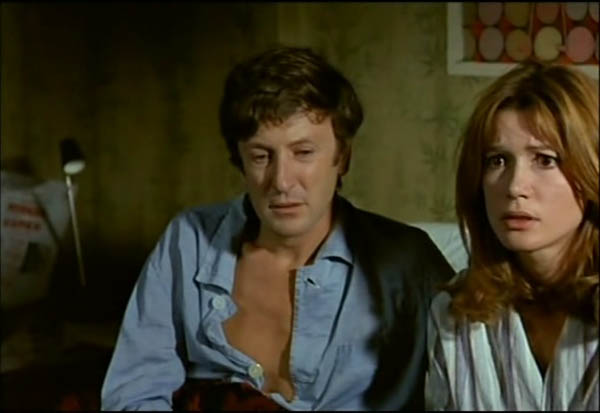
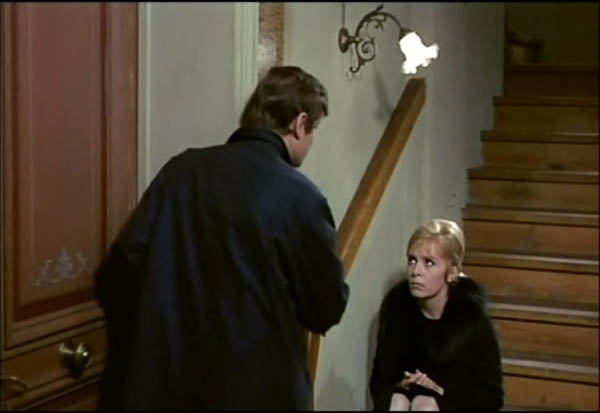
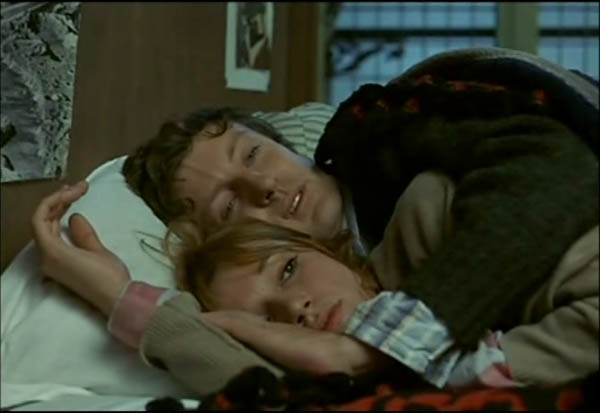
Preceded by nothing (well, “le beau serge”), it was The 400 Blows, Hiroshima Mon Amour and Pickpocket in 1959 France, and it’d never quite be that good again.

I wrote to Trevor
———
Aha… so in 400 Blows, he’s going to the movies with his parents.

“What’s playing?”
“Paris Belong To Us.”

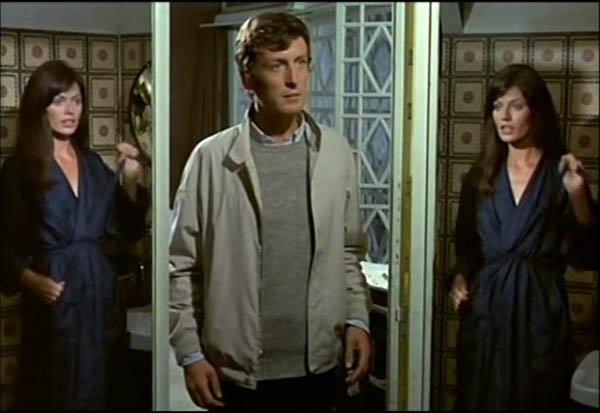
In the DVD liner notes for “Paris Belongs To Us” it says:
“Rivette began production… in 1958. It was only after the commercial
success of Truffaut’s The 400 Blows and Godard’s Breathless that the
resulting film, the elusive and intellectual Paris Belongs To Us, saw its
release in 1960.”

So Antoine Doinel’s parents couldn’t have seen it AND if they had seen it
(“elusive and intellectual”) they wouldn’t have liked it, heh.
———

and he replied…
———
I was more concerned with the fact that his friend (Rene) came to visit him when he was in the correctional institute. He came on a bicycle. When Antoine escaped, he ran to the sea. The closest sea to Paris is about 200km away according to google maps, so if Antoine was within running distance of the sea how did Rene get there on a bicycle?
———

image

image

image

“I have never been so deeply moved by a picture.” – Jean Cocteau

So Rohmer’s standard scenario for the Moral Tales was: male protagonist with one girl, tempted by another. Sounds easy. Let’s go.

The Bakery Girl of Monceau (1963)
Student is in love with girl Sylvie he passes on the street, finally builds up the nerve to talk to her. Then she disappears for a month. He spends his dinner hour that month looking for Sylvie, eating pastries from a bakery, and littering. Starts flirting with the pastry girl Jacqueline, finally asks her on a date, but he’s not serious about her. Suddenly Sylvie reappears, he makes a date with her the same night and stands up Jacqueline, because why waste time with her when the dream-girl is back in his life?

Short, black and white location-shot with a documentary look, no fancy camera tricks, told very straightforward with a narrator doing most of the talking. Interesting and probably a good intro to the Moral Tales, but not a great film on its own. Moral Tales producer Barbet Schroeder (who I now know better as an actor than a director) stars. Bertrand Tavernier, not yet a director himself, narrates. Michèle Girardon, who played Sylvie and starred in Eric Rohmer’s first feature in ’59, killed herself 12 years after the short was made.

Suzanne’s Career (1963)
Bertrand is kind of a shy, low-key guy. He likes popular girl Sophie, and is friends with obnoxious Guillaume. One day they meet Suzanne and Guillaume successfully schemes to get her into bed. She stays in their life constantly, so G. and B. conspire to start getting her to pay for all their outings. But she still hangs around, now she’s just broke. A few months later, G. is busy with school, B. is still trying to date Sophie, and Suzanne shows up happily married to Sophie’s ex. Her “career” was to land a husband, and given that G. and B. have made themselves look like jerks, it would seem that Suzanne wins at the end.

A good movie. Still black and white, higher proportion of dialogue to narration than in “Monceau” and mostly set in cafes and apartments, so less of a documentary feel but still very story/character based with no showoffy new-wave tricks. It seems that Rohmer is more Truffaut than Godard.

Presentation, or Charlotte and Her Steak (1951/61)
A weird one. Filmed in ’51 with Jean-Luc Godard and two actresses, then edited and overdubbed ten years later by Godard and two different actresses, and wedged into a collection of shorts that Godard made about the Charlotte character. Apparently she’s leaving “Switzerland” soon… on her way someplace hurriedly, she stops at her house pursued by Godard to have a bite to eat. He’s not allowed in, has to stand in the doorway, but she does give him some steak, then they go their separate ways. Can’t tell if the original short even had anything to do with the overdubbed story. A curiosity.

Nadja In Paris (1964)
More of a location documentary than a character study, following visiting student Nadja (her real name) through some of her favorite parts of the city.

The long-awaited continuation of my Marker-a-thon!

Dedicated “to the happy many”

“The Lovely Month of May”, in two parts:
Part 1, “prayer from the top of the eiffel tower”
Part 2, “the return of fantomas”

“It happened in may 1962. For some it was the first springtime of peace.”

A series of interviews with Parisians at/about the end of the Algerian War. A little provocative, but more of an inquisitive survey than a personal statement.

Marker as interviewer recommends Cleo from 5 to 7 to a guy who sells suits, then tries recommending Marienbad. Guy replies “but it’s something you’ve gotta understand.” “Don’t you understand things?” “Sure, but why should I take the trouble? I pay, don’t I? Sitting in a movie to rack my brains?”

Narration: “The mayor of Paris would have a lot to do, but there is no mayor of Paris”

Someone petting the head of a baby owl, narration untranslated.

Sometimes there are whole sections that aren’t subtitled or translated. Sigh…

The interviewees are asked about money, politics, world events, their daily lives. Some prodding to get the more apolitical citizens to talk about politics, or to talk about why they don’t want to. There’s a shift to more specific issues in part two. More about racism and prejudice, poking around about the Algerian War. This is the same year Alain Resnais was making a very different film concerning the Algerian War, Muriel.

Not very cinematically interesting, I guess, but today it’s a fascinating look back at a certain time and place (May ’62, Paris) and a general survey on people’s thoughts, hopes, fears and prejudices. I wonder what Parisians thought when the film came out. Can’t imagine they raved about it. He’s asking questions that lots of people didn’t want to be asked, seems like he’s throwing social problems into the faces of the Parisian viewer. I’ll bet foreigners were more intrigued.

A long interview with an Algerian ends with spoken statistics about that particular May over time-lapse photography of the busy streets. “But for the 5,056 people in the prisons of Paris, each day of May was exactly the same.”

“As long as poverty exists, you are not rich. As long as despair exists, you are not happy. As long as prisons exist, you are not free.”

A surprisingly affecting movie… I liked it more than I thought I would. Movie ran only 1:58, forty-five minutes shorter than the IMDB runtime, so that’s further incentive to see a more complete and better translated version if/when I can find one.

Marker: “What I wanted to come out of the film is a sort of call to make contact with others, and for both the people in the film and the spectators, it’s the possibility of doing something with others that at one extreme creates a society or a civilization… but can simply provide love, friendship, sympathy.”

From Catherine Lupton’s book:
“Immersing himself in groundbreaking new developments in camera and sound equipment that allowed human encounters to be filmed with greater ease and spontaneity, Marker brought the interview centre stage in the filming of Le Joli Mai, a less-than-flattering depiction of French social attitudes at the close of the Algerian War.”

“Marker stated that one of his ground rules was to avoid selecting the participants or manipulating the interviews… in order to confirm a ready-made conclusion… Another was to refuse to regard participants as stock examples of social or character stereotypes. ‘People exist with their complexity, their own consistency, their own personal opacity and one has absolutely no right to reduce them to what you want them to be.’ Le Joli Mai does grant its participants the space to be themselves, and to speak fully on the topics and questions proposed by the interviewer, without reducing their contributions to caricatured soundbites. Even when the film makes pointedly critical montage interventions into a discourse that it evidently regards as misguided or fatuous, it still retains the texture and substance of the interviewee’s speech, so that it is possible for the spectator to measure Marker’s reaction against the statements or attitudes that have prompted it.”

Marker produced this film and Le Jetee simultaneously, a film which turned “the documentary adventure of Le Joli Mai inside-out, distilling its subterranean fears and anxieties about the future into an elegaic masterpiece of speculative fiction.” His new filmmaking identity “might be the critical conscience of contemporary France, or the cosmonaut of human memory.” “In his self-curated retrospective at the Cinematheque Francaise in 1998, the earliest of his films that Marker elected to show were La Jetee and Le Joli Mai. He went on record to state that he regards his earlier films as rough and rudimentary drafts and no longer wishes to inflict them on the cinema-going public.”

“The camera operator Pierre L’homme is credited as co-director in recognition of his central role in creating the film’s mobile, responsive visual images.” Pierre later shot Army of Shadows, Mr. Freedom, a Bresson feature, a Godard short, and The Mother and the Whore before working with Marker (and Yves Montaud) again on The Loneliness of the Long-Distance Singer in 1974. Narrator Yves was in Let’s Make Love, The War Is Over, Tout va bien and Le cercle rouge, and narrator Simone Signoret I know from Army of Shadows and La Ronde. Composer Michel Legrand did a James Bond movie, F For Fake, some Jacques Demy (incl. the musicals!), some Varda and Godard.

Netflix says: “Art and life intertwine when four aspiring actresses study with a renowned film instructor in this acclaimed psychological drama … Assigned to analyze the play Double Infidelities, the women – who also happen to be roommates – soon find themselves caught up in a web of suspense and scandal as the script spills over into their offstage lives.”

EDIT: you know I’ve got a horrendous writeup when it opens with netflix’s envelope plot description… need to watch this again and update.

Half of this one takes place in Bulle Ogier’s theater, where the girls are practicing a play we never see performed, and I’m watching, all “ooh, that’s just like in Out 1 and Paris Nous Appartient” but I’m not really paying attention to the text of the play, so whether the Netflix blurb is accurate I cannot say. Then we’ve got a secret conspiracy, the train rides from Secret Defense (done very differently here, brief and abstract), a direct reference to La Belle Noiseuse, throw in Bulle and you’ve got Rivette 101.

The careful compositions and slow unveiling of story and character flow like a Rivette film, but otherwise I can’t say it was similar to his others that I’ve seen… the experience of watching them was very different. I guess it’d be most similar to Secret Defense.

Above: JR muse Bulle Ogier as a great actress turned acting instructor.

The titular four are Joyce, Anna, Claude and new roommate Lucia, who is replacing ex-roomie Cécile, who has started acting strangely and disappearing, caught up in her boyfriend’s criminal trial. In a mystical storm scene, Lucia finds some keys that Cécile has hidden in the apt., keys which could clear the boyfriend’s name while taking down someone powerful. Thomas is out to stop this at all costs, following each of the girls (mostly non-threateningly) and asking them questions, finally getting sometime-lesbian Claude to fall in love with him, gaining him access to the house so he can search for the keys. Cécile has also come back looking for the keys, and even Constance (Bulle Ogier) gets involved, getting arrested at the end for hiding Cécile’s boy after he escaped prison.

Some occasional Celine and Julie antics (see mock trial above). What movie has most in common with Out 1 is its split between the easily-summarized plot (above) and the theater scenes.

Irene Jacob of Red and Double Life of Veronique had a small part, as one of the actors I think.

Above: the Four, left to right:
Lucia – Inês de Medeiros – in movies by João César Monteiro and Pedro Costa
Joyce – Bernadette Giraud – later in Secret Defense and Joan of Arc 1
Claude – Laurence Côte – in Up Down Fragile, Thieves and Godard’s Nouvelle Vague
Anna – Fejria Deliba – in an Olivier Assayas movie

And:
Cécile – Nathalie Richard – Up Down Fragile, 2 by Assayas, 2 by Haneke
“Thomas” – Benoît Régent – lead dude in Blue, died a month after Red opened
Constance – Bulle Ogier – of Out 1 and everything else

Jan 2024: watched again in lovely HD. No men onscreen for the first half hour, and you forget you’re watching an ’80s movie until the moment they appear. Bernadette nails the snooping cop in the head at end after he assaults Portuguese Lucia for the key they’ve been hiding. Not an improv movie like I half-remembered it, proper blocking and editing within scenes. My 2007 writeup is bad but Reverse Shot concurs that it “reeks of Rivette from the very outset… really, what could be more Rivette?”

One of those breezy, happy, lightweight French movies that attracts elderly people to the Tara. I didn’t think I’d be watching stuff like this, but “The Valet” was good and I needed a comedy, so…

Probably liked it better than The Valet, too. Movie about friendship, or more accurately about people who have no friends and why that is. Climax is a maybe-overlong segment of Who Wants To Be A Millionaire with the French Regis.

Rich guy from Valet plays antiques dealer, and lead Valet’s valet friend plays a talkative trivia-obsessed taxi driver who is friendly with everyone and friends with no one. There’s a significant, expensive vase, a daughter who doesn’t love her dad (awww), some jaded girlfriends and coworkers, a cruel bet, and two concerned parents. PG-13, 90 minutes long, better than it sounds, and already due for an American remake.

Okay, just read a Reverse Shot article calling this movie out for being completely uninventive, almost entirely unfunny, and having not a single realistic character or situation, catering to oldies who can’t handle today’s profane American comedies, giving them this “Gallic piffle” that seems highbrow because of the subtitles. Probably true, but I was in the mood for it at the time.

“Still, it’s very sad.”
“But, my friend, happiness is not a joyful thing.”

Three filmed short stories by Guy de Maupassant, reminding me of Quartet. It wasn’t great and made me not want to seek out any of the author’s books… there it also reminds me of Quartet. Not narrated by the author like Quartet was, since the author is dead, but rather by a sort of author character who shows up as an active participant (the artist’s friend) in part 3.

So, Lola Montes and La Ronde, and even Letter From An Unknown Woman would have been wonderful, but I chose to show Katy Le Plaisir instead and now she thinks I enjoy stodgy period pieces. Sure it had some sparks of life in it, but even the documentary extras on the DVD wanted to talk up the difficulty in finding locations and in making the film rather than giving a reason why people seem to like it. Stanley Kubrick once called it his favorite film, so surely there’s something there.

Movie starts out weird, kicking it into high gear with a creepy-looking masked man dancing gaily at a fancy ball, then quickly passing out. It is discovered that he’s an old man trying badly to recapture his youth and hit on young girls, to his wife’s patient dismay.

Centerpiece segment seems like it wanted to be the entire movie, but wasn’t quite long enough so they tacked on the other two bits… it must be over an hour long, about a whorehouse that the camera can never bring itself to go inside. Fortunately, the whores all come outside, closing up shop to take a trip to the country for an unexpectedly moving wedding, before returning home to the glee of the townsfolk.

Last bit, a model and artist fall for each other, but when things get rough and he might leave her, she tries to kill herself… they end up together forever, she in a wheelchair.

Haven’t seen a Max Ophuls movie yet that takes place in modern day… guy liked to create ornate depictions of times past. Some fantastic shots made the whole thing worth watching, incl. the artist meeting the model in the start of segment 3, and her suicide later, which switches fluidly from an objective to a subjective camera, climbs the stairs with her shadow cast before us then crashes through the window and down.

I am so bad at recognizing people, because Simone Simon played the model and I didn’t know it. Jean Gabin was unmissable as the friend/host in the country in the middle segment at least. Claude Dauphin (President of Earth in Barbarella) was the doctor in the first segment.

A program of shorts that played at the 2007 Cannes Film Festival to mark its 60th anniversary. Pretty terrific bunch of 3-5 minute shorts by possibly the best group of directors ever assembled… worth watching more than once. Each is about the cinema in some way or another, with a few recurring themes (blind people and darkness, flashbacks and personal stories). Katy watched/liked it too!

First half of shorts (second half is here):

Open-Air Cinema by Raymond Depardon
image

One Fine Day by Takeshi Kitano, continuing his self-referential streak.
image

Three Minutes by Theo Angelopolous is a Marcello Mastroianni tribute starring the great Jeanne Moreau.
image

In The Dark by Andrei Konchalovsky
image

Diary of a Moviegoer by Nanni Moretti
image

The Electric Princess Picture House by Hou Hsiao-hsien
image

Darkness by the bros. Dardenne
image

Anna by Alejandro González Iñárritu
image

Movie Night, the first of two gorgeously-shot outdoor movie starring chinese children, by Zhang Yimou.
image

Dibbouk de Haifa, annoying business by Amos Gitai.
image

The Lady Bug by Jane Campion.
image

Artaud Double Bill by Atom Egoyan.
image

The Foundry, comic greatness by Aki Kaurismäki.
image

Recrudescence, stolen cell-phone bit by Olivier Assayas.
image

47 Years Later very self-indulgent by Youssef Chahine.
image

“Is that it, then? Is it over, do you think? What have you got to say to Grandma?”

Watched this again because Katy had never seen (and the mime sequence in Paris je t’aime put me in the mood). Had never seen on video – still just as good as it’s always been. Last-minute before the picture I tried to mislead Katy into having low expectations, so surely she would come out of the movie ecstatic with joy because it is surely one of the best animated features made in our lifetime, but the ploy didn’t work and she told me it’s okay, watchable but a little slow. Poo.

image

I love the parts about the tortured psyche of the dog and his awful lifelong relationship with trains. Love how, when the dog is little, he just looks like a full-size dog hit with a shrink-ray. Love the sad look that a disguised gramma gives the biker when she finally finds him (below).

image

A newspaper refers to the French Mafia as the suspects in a biker’s death, which is the clue that leads gramma to their lair… I’d forgotten that bit. I guess our biker was never going to win the tour de france anyway… he’s way in back when he is captured (even though he always outruns the others during the mafia-inflicted games). The DVD comes with a silly music video for M, the performer of the title song (lyrics written by Chomet himself).

image

IMDB users have sleuthed out some details in the Tour de France scenes and determined that the movie takes place in 1957.

image

Wonderful anthology film, bunch of episodes connected with unexceptional cityscapes shot by one of the producers. I don’t know anything about the neighborhoods of Paris, but I guess each short is supposed to have its own local tone to it.

Montmartre
Man is cursing traffic, cursing everyone, alone and angry, then woman walks by and passes out next to his car. He acts the husband to other onlookers and lays her down in the backseat. She wakes up, they kinda like each other, she’s off to her tobaccologist (?) but they’ll meet up later. A nice opening piece, more like the kind of short that plays the film festivals than most of the other segments turned out to be… they were more episodes, excerpts, not stand-alone stories.
Director Bruno Podalydès starred himself, along with Florence Muller of Resnais’s Coeurs.

Quais de Seine
Boy’s friends are yelling insulting things to every woman who walks by, so boy gets away from them and helps up muslim girl. They like each other, it’s cute, her grandfather is nice to him, awww.
Director Guriner Chadha made Bride & Prejudice and Bend It Like Beckham.

La Marais
Jokey bit where dude helping artist Marianne Faithful at a press falls immediately for guy sitting on floor. Dude talks to him forever, tells him how they were destined to meet, gives his phone number, walks off, turns out guy on floor speaks no French, har!
Director Gus Van Sant lovingly photographs Gaspard (the boyfriend in A Very Long Engagement) and Elias (Elephant) in mostly long takes.

Tuileries
American tourist Steve Buscemi is waiting for his subway train and breaking the rules in his tour guide (“don’t make eye contact”), getting himself involved in the power games of two young lovers across the station and leading to his being beaten up with his souvenirs dumped all over him. Poor guy.
Directors Joel & Ethan Coen almost make up for The Ladykillers with this one. Katy was defeated by too-high expectations.

Loin du 16ème
Girl puts her own baby down at the babysitting place, then rides public transit to her job taking case of some rich lady’s baby, sings the same sweet song to both babies. One of the more obvious message-movies, but nice.
Director Walter Salles (Motorcycle Diaries) cast Catalina Sandino Moreno, of Fast Food Nation and Maria Full of Grace.

Porte de Choisy
Okay, Barbet Schroeder is a bald hair-care product salesman who goes to hardass Madame Li’s place to sell her stuff. First meeting doesn’t go well but she tries the stuff and calls him back, delighted. Sort of a choreographed musical comedy. Makes no damn sense. Best part is when he’s between meetings, bowling at a monastery and monks take away his cell phone.
Directed by Christopher Doyle, who I see is shooting a Rufus Sewell thriller and Gus Van Sant’s Paranoid Park next.

Bastille
Guy meets his wife for lunch, intending to tell her he’s leaving her for his mistress, but first she hands over a doctor’s note saying she has terminal leukemia. So he “rises to the occasion”, dumps his girlfriend, and spends the rest of his wife’s life doing things they used to love to do together, falls back in love with her and is destroyed when she dies. The only piece with a 3rd-party narrator, and one of my favorites.
Director Isabel Coixet made The Secret Life of Words and My Life Without Me… stars a guy from Va Savoir as the husband, the girl in a coma in Talk To Her as the mistress, and Miranda Richardson as the wife.

Place des Victoires
Kinda crappy despite two fave stars Willem Dafoe and Juliette Binoche. Her son died a week ago and she follows his phantom voice out to the plaza where Dafoe is a cowboy on a horse who lets her see her son once more. Katy liked it, I thought it was David Lynch-derivative.
Director Nobuhiro Suwa made some well-regarded Japanese movies I’ve never heard of before.

Tour Eiffel
Kid describes how his mime parents first met. Awesome, funny, features identical twins, imaginary cars and lots of miming… the one short that the whole movie would be worth seeing just to catch.
Director Sylvain Chomet’s follow-up to the perfect Triplets of Belleville.

Parc Monceau
In a single shot, father Nick Nolte walks down the street with his daughter to where a friend is watching her son. He takes over babysitting and the friends go off together. Jokey because the dialogue at first makes it sound like she’s cheating on her husband (actually the son) with Nolte.
Director Alfonso Cuarón is into long takes now. I told Katy I was waiting for something to explode but she didn’t get me.

Quartier des Enfants Rouges
One of the better ones… Maggie Gyllenhaal has a kinda cute encounter with her drug dealer, then calls him up to order more (really to see him again), but he sends a flunky instead who steals her watch.
Director Olivier Assayas has apparently completed his new Asia Argento / Michael Madsen thriller.

Place des Fêtes
Another great one, man gets stabbed and as he’s dying, a girl he recognizes is trying to help him. He flashes back to his not-so-easy life in Paris and all the times he’s tried to talk to her. Sad movie.
Director Oliver Schmitz has made a buncha German films. The girl is Aïssa Maïga, the lead (bar singer) in Bamako and also appeared in Caché.

Pigalle
Guy is trying to have a role-playing night out with his wife – it doesn’t go as planned but they’re still alright.
Director Richard LaGravenese made Freedom Writers, seems a weird choice for this. Bob Hoskins stars with Fanny Ardant, whom Katy recognized from 8 Women.

Quartier de la Madeleine
On a creepy street with desaturated colors except for bright-red blood, model Olga Kurylenko is devouring Wes Craven when Elijah Wood interrupts her. Vampire love ensues.
Director Vincenzo Natali made Cube and Nothing, and has seen Sin City more than once.

Père-Lachaise
Spacey, businesslike guy’s on a pre-wedding honeymoon with cute girl, she kisses Oscar Wilde’s grave then decides he’s not romantic enough for her and storms off. He talks to Wilde’s ghost briefly then runs after her and quotes her some Wilde, which idiotically makes her fall back in love with him.
Director Wes Craven isn’t known for this kind of thing. Rufus Sewell and Emily Mortimer are the couple, Alex Payne plays Wilde.

Faubourg Saint-Denis
Blind boy gets phone call from girlfriend, apparently breaking up with him. He flashes back in high-energy Lola-style through their relationship, how he first met her thinking she was in trouble, falling for her rehearsal performance (she’s an actress). He’s fallen for it again and she’s not really breaking up with him. One of my faves.
Director Tom Tykwer made Perfume. Natalie Portman is the girl. This apparently existed as a separate short back in 2004.

Quartier Latin
Gena Rowlands and Ben Gazzara get together at a cafe to talk over their divorce at the end of a long marriage. Good one, Rowlands wrote.
Director Gérard Depardieu is probably a big John Cassavetes fan, appears himself as the waiter.

14th arrondissement
Another really nice one, American woman is narrating to her French class (?) about her trip to Paris. She’s kind of lonely and jetlagged, but everything falls into place for her at the end.
Director Alexander Payne made Sideways and Election, and actress Margo Martindale is in Rocket Science and played Swank’s mom in Million Dollar Baby.

Katy liked it, too.