Jiri Menzel had just died, but instead of one of his movies on a Monday night I chose his countryman. I’ve seen some career-bookend works by Zeman, his early Prokouk shorts and late feature The Sorcerer’s Apprentice, but not the heyday works, and this was spectacular. Real people against illustrated backgrounds, the Sin City of its time. Every kind of animation and visual trick seamlessly integrated, the thin striped pattern from the book illustrations appearing everywhere, overall amazing visual design… and to think his Baron Munchausen is supposed to be even better and I’ve been meaning to rent it for twenty years.

Our Narrator is assisting a scientist when the two are kidnapped (along with a pretty lady, of course) by pirates and taken to an evil mastermind inside a volcano who gets the scientist to help him unlock the secrets of the atom and conquer the world. The narrator is alarmed by all this but the scientist is happily distracted with a new lab and new problems to solve, until the very end, when he realizes what he’s doing and nukes the volcano. In the meantime we get submarines, a fighting octopus, parrots and fishes, of course a balloon or two, and a fantasy tour through all the inventions of the era, real and imagined (camels on rollerskates!), an alternate vision of what Tesla could’ve been.

Oops, we discussed this one but I never wrote anything down about it. Australian period lit adaptation with some lively bits. I completely cannot recognize the Judy Davis of Barton Fink and Naked Lunch (which I just rewatched) in this Judy Davis… both Judys are very good, they just might as well be different people. We very much recognized Sam Neill as her suitor in the latter half, but it’s the odd movie about a woman who chooses to stay unmarried so she can have a career. Along the way we get one of the most well-staged pillow fights since Zero for Conduct.

Michael Nouri (of Flashdance and the original Captain America) is hotshot supercop Beck, and after an ordinary citizen goes on an outrageous crime spree, Beck is joined by serious FBI-guy Kyle MacLachlan (the year after Blue Velvet) who’s on the trail of a body-swapping alien that likes fast cars, hot girls, loud music, and doing murders. The alien’s motivations seem more human-joyride than world-endangering, so its interest in a senator is aiming for high-stakes Dead Zone/Omen III drama but I dunno. Either way, FBI Kyle turns out to be possessed by an alien hunting the rogue alien, and when he check “himself” out in a mirror it’s extremely Twin Peaks.

The first alien host is Hank Jennings, Norma’s husband in Twin Peaks, and the second host (William Boyett’s final film was Theodore Rex which has a surprisingly stacked cast) has a heart condition, to the annoyance of the alien who can’t run fast enough to carjack a convertible, so has to go to the dealer and steal one like an ordinary lunk. Then comes a stripper (Claudia Christian of Babylon 5 and Maniac Cop 2), then a dog… a cop who kills Danny Trejo… and the senator. Our heroes prevail, but Beck is fatally shot so Kyle Luzes into him. It is an 80s thriller, so there’s also a shootout in a mannequin factory, a ray gun, and a flamethrower.

The writer later hit it big with Operation Dumbo Drop, then the National Treasure movies. Director Sholder, the DP and a couple producers had just made Nightmare on Elm Street 2, and apparently they expected to make part 3 since “the third elm street venture” is their copyright company. The 1993 Hidden sequel was directed by nobody, starred nobody, recast Beck and his wife, and had a lead character named MacLachlan.

Right after watching Henry V, here’s another play adapted into a movie in which the play is performed before an audience. In this case, the audience is Wilde himself, whose new Salome play has been banned so his favorite brothel treats him to a surprise performance of it. So the makeup and costumes and performances are all over the top, and every actor in this is worth at least ten of the Henry V actors. “What our production lacks in stagecraft we hope to make up in enthusiasm.”

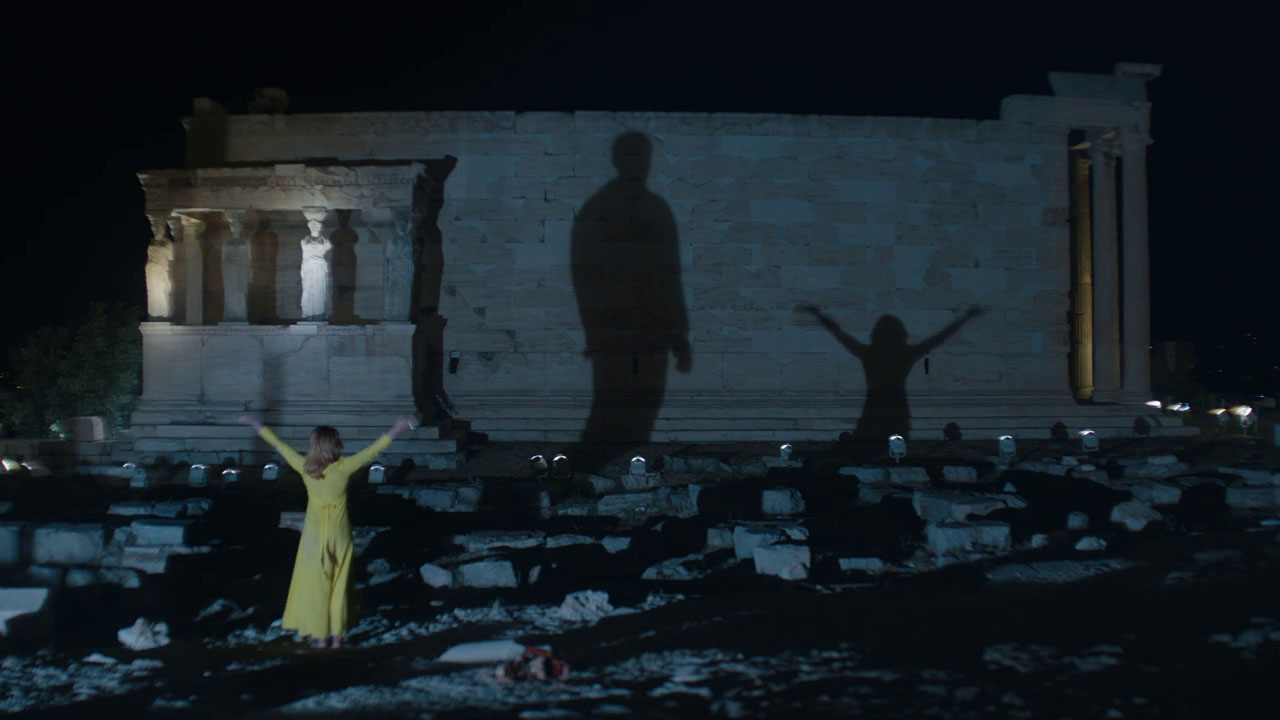
Salome introduces herself to Wilde:

Ken Russell is what happens when a master of cinema technique is also a very silly goose. The great Glenda Jackson (Women in Love) played the queen, Stratford Johns (Lair of the White Worm) the king, Nickolas Grace (jerky guest in Sleepwalker) as Wilde, and John the Baptist was the proprietor of Black Museum. The lead actress, so good in this, never appeared in another film due to illness, but according to a Guardian article her health improved.

Still filling in the gaps in my Buñuel viewing. A big year, with four of his movies released, and this was… certainly one of them. A couple of streetcar guys rescue a malfunctioning car but find out it’s still destined to be scrapped, so they get wasted and take it out on the town one last time, picking up passengers along the route.

Lupita, her brother Tarrajas, and Curls:

Everyone hashes out their societal problems on the bus – there’s a drunken lecture about how inflation causes poverty, and choice quotes like “too much of anything is detrimental – even efficiency.” It’s a madcap stolen-train adventure as an excuse for social commentary.

Fernando Soto (Curls) appeared in Gran Hotel (not Gran Casino), Carlos Navarro in Irving Rapper’s The Brave One, Lilia Prado in Buñuel’s Wuthering Heights. The retired company man who turns them in even though they saved his life (but the company doesn’t care) is Agustín Isunza, whose final film was Alucarda.

“I just came back to see if this is real, if you were real.”

Kate Lyn Sheil, suspiciously named Amy in a movie written/directed by an Amy, is a mess, acting strangely in her new house and insisting that she dies tomorrow. Her friend Jane (Adams, star of Happiness) comes over to check on Amy, then Jane goes home to her microscope art and classical music until the flashing colored lights from Amy’s psychosis start to invade the house – and now Jane, too, will die tomorrow.

Jane’s checkup doesn’t go great:

In the parlance of the kids, this movie is a “mood,” and I am “here for it.” Amy and Jane wander into the world, their imminent death syndrome passing to everyone they meet. The movie begins to feel like a last day on earth story, like Last Night – no explanation is ever given, but we’re also given no reason not to believe the doomed protagonists. Some get high or go on adventures, some get real – break up relationships, disconnect their dad from life support(!). Instead of ending up an urn of ashes, Amy wants to be a leather jacket, and focuses her efforts on this. The cast plays it straight and is uniformly strong, including the usual suspects with some delightful additions (Michelle Rodriguez! James Benning?). It’s even produced by Benson and Moorhead, just gobs of talent.

Tunde Adebimpe!

Bilge Ebiri in Vulture:

As a filmmaker, Seimetz started off in the experimental world, and her willingness to let her narrative occasionally slip into abstraction serves her well, suggesting broader, more cosmic meanings. Her images blur, her frames pulse and shiver, bubbling microscopic phenomena wash over the screen, and fields of unreal color overwhelm the characters. The soundtrack assaults us with ominous thrums, blasts of classical music, whispers, and distant screams. The film is short and sparsely populated, but it can’t be called minimalist — it’s more of a clipped maximalism, bursting with expressive power before quickly pulling back, like a tale told by someone both eager and afraid to let you in on their darkest secrets.

Seimetz in Brooklyn Rail:

I was saying the other night at the Brooklyn premiere, sometimes, when I’m watching movies, the first 15 minutes are giving me a character’s CV, [spelling out] what this person does, what they do for a living, their boyfriend, their relationship status…as opposed to accessing something that I can’t put into words and just showing me their behavior, which I’m much more fascinated by. To do away with, “Okay, this is the character I’m exploring,” and just go, “We’re exploring that feeling,” and doing that with each individual actor and saying, “This is the energy you’re bringing to the scene,” as opposed to, “You work as a florist.”

I didn’t know it was possible to make a biopic this sentimental about Bunuel, of all people. At least it’s animated, so we get the occasional vision of elephants on horse-leg stilts. Opens with artists at a cafe arguing about the purpose of art, and closes with Luis discovering that art is for helping the poor people, I guess. The movie could at least use animation to abstract away all the gruesome animal killings from the Las Hurdes shoot, and it does, but then it makes sure to show us the original footage right after.

After a screening of L’age d’or ends in fire and threats, LB is annoyed that everyone thinks all his good ideas come from Dali, then he can’t get funding for a follow-up until his cousin wins the lottery. LB and producer cousin and cameraman and writer meet in the mountains, get into hijinks, and shoot a movie. LB has many flashbacks and dreams about trying to please his father, and everyone learns a little something about truth and fiction and the true purpose of art.

Always a good call to open your movie with “The Passenger” by Iggy Pop. I lost track of the relationships and double-crosses, because I think all the cops are dirty and spying on each other… or rather, it’s not hard to follow while watching, but with the state of everything, I’ve lost track a month later. Story told in named chapters, out of order.

Our main dude is Cristi, with conspirator Gilda and boss Magda. The conspirators’ whistling language (and Cristi’s Old-Mark-Wahlberg look and performance) mostly serves to add notes of absurd humor, so this doesn’t turn into another grim tale of Romanian society/government corruption like Graduation.

Two dirty cops:

Sharp-looking and pleasurable, filled with guns, whistling, hidden cameras, vinyl records, movie theaters – after 12:08 and Metabolism and Infinite Football, I now have no idea what to expect from this guy.

A superb effect, mountains and fields of crinkled foil surrounding us in 3D, rapidly rotating and expanding, but never getting anywhere, the constant strobing of color inversions masking the loop point where the motion repeats so it looks like continuous motion that never progresses.

Icy blue and warm gold flicker, with blunt text sections (censorship of the Poltergeist DVD is used as an example of America’s shame). The visuals set up predictable patterns only to break them and reset. Watching right after She Dies Tomorrow, the colors flashing on my face, I felt like I was fulfulling some dark omen, or going crazy.

From movie music with vinyl surface noise to mad science lab electro-noises, flies buzzing in stereo, later an argument with the tape sped up. It’s no wonder I enjoyed the music – it was JG Thirlwell.

Jacobs called it “a reversion to my mid-twenties and that sense of horror that drove the making of Star Spangled to Death.”

David Phelps in Mubi:

Sort of reversing the structuralist impulse to let the movie’s internal system arrange the order, movement, and duration of its materials, Jacobs plays his movies like 1st person interrogations of his footage, the artist constantly adopting and discarding new approaches toward his material … Jacobs’ movies can operate like works in progress; abstract expressionism’s emphasis on process seems to carry not only through Jacobs’ compositions, successions of half-completed movements, but his own approach over the duration of the movie.