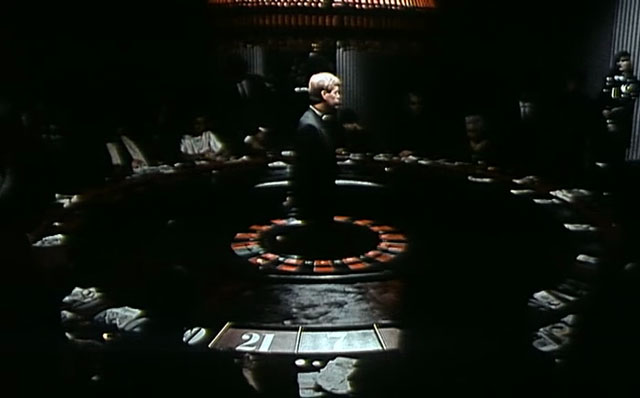
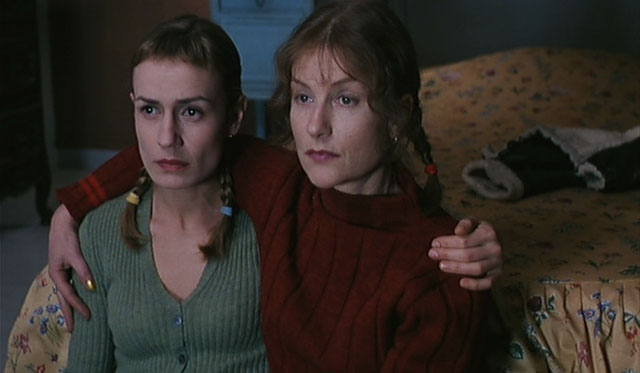
Won the golden lion in Venice against Throne of Blood, White Nights and Bitter Victory. Apu’s family gets settled in the big city by the river. Dad seems to be making a good living as a priest, but he gets sick and dies soon after. Mom moves Apu to a small town (doesn’t seem as rural as their home in Pather Panchali) and works for a rich family, sends Apu to school. Years later, new actor College-Age Apu wants to leave home and further his education. He tries to balance career and family, but favors the former and his mother dies of heartbroken loneliness. Apu’s own story is pretty hopeful (he’s still a good kid who loves his momma) but his family is as depressing and sudden-death-prone as ever. I’m guessing Apu himself will become desperately poor then die of a sudden illness in part three, but we’ll see.
Robin and Marian (1976, Richard Lester)
Watched for Shadowplay’s Film Club, where you can find an excellent summary and valuable comments by regular readers, plus less-valuable comments by myself.

A step down from Disney’s recent Robin Hood in Roger Miller music contributions and in novelty voice characterizations, but two steps up in every other respect. I think David didn’t want to set expectations too high for this one, so I was prepared for a middling semi-romance with clunky action bits, but the action was clunky on purpose (Robin’s not a young lad anymore), the romance is fully there, and I felt the whole thing came together beautifully.

Sets its tone in the first scene: aging, disillusionment, violence (King Richard has turned murderous tyrant), with a hint of the supernatural (a blind man throws an arrow from far too great a distance straight into Richard’s neck). Prince John (now King, and played by Ian Holm in his only scene) and the Sheriff (played by Robert Shaw and his scary eyes, one of his last films) are still in charge. Marian (Audrey Hepburn’s return from retirement) has become a nun. Friar Tuck (TV star Ronnie Barker), Will Scarlett (Denholm Elliott of Brimstone and Treacle) and Little John (Nicol Williamson, later Merlin in Excalibur) happily follow Robin’s renewed, somewhat obligatory-seeming, fight against the sheriff and eager new deputy Ranulf (Kenneth Haigh in cool leafy armor).

Sean Connery (right between James Bond and Time Bandits) and Richard “Dumbledore” Harris as King Richard are both excellent in scary, unpredictable ways. Whenever I thought the movie might drag, whether the final battle-of-champions evoked The Postman/Gladiator-type cheesefests or the plot seemed headed towards a Prince of Thieves action spectacle, it’d either take a left turn or just cruise through on charm, throwing out hints of humor when necessary. Whole movie is a treat, really, with one of the most moving endings I’ve seen in a while.

I like how the end credits disclaimed that “some of the characters and incidents portrayed and some of the names used herein are fictitious”… not really any kind of disclaimer at all.

Post #1000
It’s my thousandth post! Coming up on the four-year anniversary of my movie blog – I celebrated the first and second but missed the third – time to take stock of things.
62% of my web traffic comes from Google image search and 99.9% of my comments are from spammers (much thanks to the Defensio plugin for auto-deleting those). So not a lot of regular readers. But let’s face it, if this wasn’t my own blog I wouldn’t read it either. I guess I will never be a famous film writer, damn it all.
Almost half the movies covered here are from the last decade (that percentage will only increase in the next 11 months, what with my best-of-decade project currently in progress).
Included in the 1690 titles (including shorts):
8 by Takashi Miike, Sam Fuller, Charles Burnett, Pedro Almodovar, Howard Hawks, Peter Watkins
9 by Fritz Lang
10 by Stuart Gordon, Brian De Palma
11 by Luis Bunuel, Werner Herzog
12 by Joe Dante, Eric Rohmer
13 by David Lynch, Guy Maddin
16 by Alain Resnais, Jacques Rivette, Agnes Varda, Buster Keaton
25 by Chris Marker
Taking stock of big movie-list quests:
The IMDB changed their search so I can’t simply list the top-250 films I haven’t seen, and it doesn’t seem worth counting by hand. Wasn’t such an interesting list, anyway. I’m around 427/1000 (up from 380 in 2009) on Rosenbaum’s list (with 65% of his top 100), 554/1000 (up from 500) on the They Shoot Pictures list (helped significantly by a site update which replaced some more obscure titles with popular ones), 266/515 (52%, up from 47%) on the Criterion list and a piddling 10/95 (13%) on the Eclipse list. Those should continue to keep me busy for a good while.
It continues to give me pleasure to watch my little movies, write these little posts, and track them in my fancy, sortable index. Carry on, then.
Kiss Me Deadly (1955, Robert Aldrich)
While it was great to see this on the big screen, to laugh with an audience at va-va-voom Nick the mechanic and watch everyone jump from shock when Mike Hammer cracks open the Pulp Fiction suitcase and hell peeks out, it’s kinda still not a great movie. Filmed as a cheap quickie and looks like it, the bulk of the plot is Mike following one lead to another to another – and as Josh pointed out, you could delete any one (or all) of those chain links without harming the overall plot structure. What’s important is Mike starts out getting mixed up with a dame in trouble, she is killed and he’s presumed dead, then he tracks down her story finally leading to a bad man with a case of nuclear material which explodes, destroying a beach house reminiscent of the one in Lost Highway. And while we’re on the subject of films influenced by this one, I recognized scenes and locations excerpted in Los Angeles Plays Itself.
Wes Addy and Ralph Meeker:

Ralph Meeker who, two years later, would appear in movies by Fuller (Run of the Arrow) and Kubrick (Paths of Glory), was so badass in this movie, the Feds declared it to be 1955’s number one menace to American youth. Badassery is all relative, of course, and he’d soon be out-badassed since the production code was in decline. Hammer and his main squeeze/work partner Velda (Maxine Cooper, of nothing else) are sleazy divorce investigators/instigators until Mike picks up doomed girl Christina (Cloris Leachman, whose career seems to defy summary) on the highway. She’s recaptured by the baddies and tortured to death, then blown up in Mike’s car with Mike, who survives with revenge on his mind. Right away Mike’s in trouble with his cop buddy Pat (Aldrich regular Wesley Addy) who pulls his gun license, and with two thugs (Jack Lambert, who played a bully with a whip in Stars In My Crown, and the great Jack Elam of Moonfleet the same year as this) who work for the evil doctor (Albert Dekker of Siodmak’s The Killers, unseen besides his shoes till the very end). Mike enlists his mechanic Nick (Nick Dennis of Too Late Blues, A Streetcar Named Desire), who gets a car dropped on him by baddies, Velda, who saves Mike’s ass at the end (unless you watched the original ending in which they appear to die in the beach house explosion) and the dead girl’s roommate Gabrielle (TV actress Gaby Rodgers) who turns out to be a baddie spy.
Nympho Marian Carr (Ring of Fear) and bad dude Paul Stewart (Citizen Kane, In Cold Blood):

My favorite thing about the movie is the strangeness of the beginning and end scenes. The nuclear-material-in-a-suitcase factor is most interesting for being so mysteriously underdeveloped, giving the movie a sense of richness that the main investigation plot lacks. With the sound effects and flickering lights at the finale, it acts more like a portal to another world than a physical material. Also great is the shock opening, with a girl running in the night, breathing heavy on the soundtrack before being picked up by Mike, the credits rolling upside-down across the screen.

Only other Aldrich movie I’ve seen (besides Limelight, on which he assisted) is Twilight’s Last Gleaming from the other end of his career. Written by A.I. Bezzerides (Thieves’ Highway, Track of the Cat) and shot by Ernest Laszlo (While the City Sleeps, Stalag 17).

The Man From London (2007, Bela Tarr)
Tarr Noir! Tarr doing suspense/crime drama seems unnecessary since his use of the camera and film editing are suspenseful in itself. The crime doesn’t seem that important (until the very end) and the lead guy is kind of an ass, so the suspense remains in the shots and editing, not much carries over into the story. To get my other complaint out of the way (I quite liked the movie), the sound is off because everything is distractingly dubbed into French and English (voices include Edward Fox of Gandhi and The Duellists and Michael Lonsdale of Stavisky and Out 1). It must be for commercial reasons, but I don’t see it playing anywhere except a few film festivals, so what commercial reasons? Seeing the cast of Satantango hanging out in the bar only makes the dubbing seem weirder. Research indicates that there’s a Hungarian version out there, so I guess Tilda Swinton (French-dubbed in my version) gets screwed in both.

Big-time Euro film producer Humbert Balsan (who worked with Youssef Chahine, Merchant/Ivory, Elia Suleiman, Lars von Trier) committed suicide during production, complicating things. Based on a novel by Georges Simenon (Night at the Crossroads, Betty, Magnet of Doom) which has been filmed before in the 40’s. I dig the Mihály Vig music, but it’s no Werckmeister Harmonies, which I listened to obsessively for a month.

Offscreen, a man is selling his theater for a suitcase full of money, which gets stolen. The thieves get the suitcase onto the docks, under the watchful eye of stoic Maloin, then one kills the other and runs. Maloin snags the money and hides it. That’s the first half hour in maybe six or seven shots, with no dialogue at all. Crisp b/w images with achingly slow, fluid camera movements, as can be expected.

Maloin takes time out from the crime drama to torment his family. He pulls daughter Henrietta (cat-torturing poster girl from Satantango) out of work, buys her furs, then gets screamed at by wife Tilda Swinton. Inspector (from London) questions blond killer Brown. We don’t find out exactly how Maloin kills Brown at the end before returning the money to the Inspector. That’s about it for the plot. Most of the time a very enjoyable flick. Moments of otherworldly Twin Peaks-ish parody during dubbed dialogue scenes are immediately forgiven when we come across some Satantango actors performing random hilarity in the bar, urged on by an accordianist. If Tarr fans can’t have the sustained magic of the last couple movies, at least we can all enjoy some drunken accordian antics together.

Broken Embraces (2009, Pedro Almodovar)
Film director Mateo Blanco (LluÃs Homar of Bad Education) reinvents himself as novelist Harry Caine after an accident, both out of trauma from losing his lover Lena (Penélope Cruz), and to stay in hiding from the men he suspects caused the accident. Millionaire Ernesto Martel (José Luis Gómez of Goya’s Ghosts), producing Mateo’s film which stars Ernesto’s young wife Lena is one of those men, and his closeted son (Rubén Ochandiano of Che, Biutiful), stalking Mateo and Lena with a videocamera, is the other. Those four plus the always excellent Blanca Portillo (pot-smoking friend in Volver) are the core of the movie, which stays twisty and exciting due to Almodovar’s withholding of major story elements (like the car crash) until the end. As with Volver, it didn’t seem to burst off the screen and declare its excellence, just came off as another solid Almodovar pic. But thinking of those two in hindsight they seem so good I want to watch them again right now. Maybe that’s why the Almodovar movies I’ve seen more than once (All About My Mother, Talk To Her, Women on the Verge) are my favorites… all his work needs to be examined a second time, to appreciate the filmmaking once the shocks of the plot twists have worn off.
Cruz:

T. Stempel:
Almodóvar is very aware that he is borrowing, and to save us from having to make a list of films and filmmakers he is referring to, we get a later scene of Diego going through Harry’s DVD collection, reading off titles and directors. One thing that struck me in watching the film is that it makes more sense as you watch it than any summary I have seen in the reviews of it. That is Almodóvar’s skill as a screenwriter.
Portillo:

Ernesto’s son (in the present-day scenes calling himself Ray X) comes off as cartoonish (no disrespect to the actor; he’s given a cartoonish role to play). Mateo/Harry is very good as the star of the story, but as usual with Pedro’s films, my eyes are glued to the women: Cruz, Portillo, Lola Dueñas (The Sea Inside, Volver) as a lip-reader employed by Ernesto, and the unforgettable Rossy de Palma in a brief cameo.
Lola:

Let Each One Go Where He May (2009, Ben Russell)
An obscure one from the decade lists. I read a write-up in Cinema Scope while standing in the airport and it sounded fascinating, but maybe it only seemed so in relation to my surroundings. Watching it was dullsville. I should’ve known – here’s the Toronto Film Fest’s writeup:
A film that both partakes in and dismantles traditional ethnography, opts for mystery and natural beauty over annotation and artifice, and employs unconventional storytelling as a means toward historical remembrance. A rigorous, exquisite work with a structure at once defined and winding, the film traces the extensive journey of two unidentified brothers who venture from the outskirts of Paramaribo, Suriname, on land and through rapids, past a Maroon village on the Upper Suriname River, in a rehearsal of the voyage undertaken by their ancestors, who escaped from slavery at the hands of the Dutch 300 years prior. A path still travelled to this day, its changing topography bespeaks a diverse history of forced migration.
See that word “rigorous”? I’ve seen it before, and it means “dullsville”. I’m betting that Reassemblage and Wavelength and Jeanne Dielman regularly get described as rigorous. Although, I like Hollis Frampton and he is pretty rigorous, so it’s hard to say.
Since the movie only has 13 shots over its 130 minutes, here’s a screenshot from each of them.
1. washing up, setting some plants on fire

2. walking (rural)

3. riding the bus listening to auto-tuned songs

4. walking (urban)

5. mining/wheelbarrow

6. panning for gold

7. loading the boat

8. on the boat

9. walking (town)/sitting by river

10. walking through jungle – gunshot!

11. more jungle: chainsaw and machete

12. costume festival

13. canoeing

Katy says Suriname is in N.E. South America – good to know!
Three Times (2005, Hou Hsiao-hsien)
Three love stories with the same actors in different eras. Can’t think of an apt comparison to another film (haven’t seen Resnais’ Smoking/No Smoking) but it’s sort of the opposite of Hal Hartley’s Flirt). I’d avoided this despite the acclaim because I thought it’d be long and boring (flashback to two Hou movies I didn’t enjoy/understand, Flowers of Shanghai and Goodbye South, Goodbye) but lately I’ve decided that those two required more attention than I gave them, so I watched this one twice (err, six times).
–
1966: A Time for Love

A perfect mini-movie, and it ends so simply and beautifully. He meets her by accident at a pool hall, looking for a different girl. Writes her letters while on his military duty, returns one day and finds her gone. This time, instead of just writing to the next girl, he tracks her down, spends his last few hours of leave with her. Repeated settings, actions and songs (“smoke gets in your eyes” and “rain and tears”) along with the period setting and romantic atmosphere unavoidable evoke Wong Kar-Wai.

Girish draws connections:
The original Chinese title of the film is Best Of Times. Hou, like a popular musician, is drawing from his “discography” of films for these three stories. The first reminds me in look and mood of A Time To Live And A Time To Die or Dust In The Wind; the second is set in a brothel like Flowers Of Shanghai; and the third clearly recalls the modern neon-smeared interior spaces of Millennium Mambo. So, Hou has created a sort of compilation album, only he has “remade” the ideas and memories behind his previous films into new stories.

–
1911: A Time for Freedom

Silent with piano music and intertitles for dialogue most of the time, traditional twangy vocal music a couple of times (performed, it turns out, by our woman). She is a geisha and apparently in love with her man, though he seems to pay her little mind, focusing on poetry, national politics and the fate of another geisha. He pays for the other girl to be freed when she becomes pregnant, leaving his own girl stuck and alone when he leaves town for Shanghai. Such slow, fluid, measured movements I am sometimes not sure if Hou’s movies are in slow-motion.

Stylus:
Of course, the principal subject of both “A Time for Freedom” and Flowers of Shanghai is liberation—from a life of service for the long-suffering geishas, and from foreign rule for Hou’s homeland. Examining the dichotomous relationship between a wealthy activist (Chang) protesting the Japanese occupation of Taiwan and a geisha (Shu) longing desperately for a life outside the brothel, this is Hou’s most explicitly political work since his trilogy on 20th Century Taiwanese history (City of Sadness, The Puppet Master, Good Men, Good Women) and, arguably, his most resonant feminist statement to date.

–
2005: A Time for Youth

A confusing one – multiple girls with multiple problems, little explicit story but more detail information than ever. He’s a motorcycle-driving photographer and she’s a throat-tattooed, epileptic lounge singer with a scary website. Seemed to me the usual commentary on modern disconnection through overload of technology, not adding much besides superior cinematography, but the second time through I enjoyed it more (and figured out more, like the fact that He and She both have other girlfriends). Her girl says she’s committing suicide from neglect (touchy) towards the end. Still doesn’t have the emotional impact of the first two – I might’ve switched the order of the segments.

Senses of Cinema:
Hou represents this state of freedom by a narrative near-chaos transmitted with a calm and almost casual-looking inscrutability that makes the story impossible to comprehend to any satisfactory degree in just one viewing. It is ironic, though, that while an initial impression might well have been that many of the scenes are presented in a chronologically rather random order, careful examination seems to establish that the story is actually told in a scrupulously linear way.

–
Qi Shu (The Eye 2, Transporter and Sex & Zen 2) has got nothing on the career of costar Chen Chang (Red Cliff, Breath, Crouching Tiger, Happy Together and A Brighter Summer Day), but they’re both wonderful here. Story and characterizations are pretty minimal, movie gets by on weight of emotion, similar to Friday Night and In the Mood for Love – and it shares ITMFL’s co-cinematographer Pin Bing Lee, a Hou regular who also shot Air Doll and Norwegian Wood. Would look even more lovely, I’ll bet, if the DVD wasn’t all interlaced and non-anamorphic.
Won all the Taiwanese film awards. Played at Cannes with A History of Violence and Cache, Battle In Heaven and Broken Flowers, all unfairly beaten by that Dardenne movie.
Film ist a Girl and a Gun (2009, Gustav Deutsch)
Scenes from movies in the silent era, cut together to flow nicely. Music that alternates between pleasantly ambient/minimal, and sharply attention-grabbing, including cuts by Fennesz and David Grubbs. Lots of graphic, sometimes deviant, sex. Pointless quotes from ancient poetry on intertitles connect and divide the piece into sections.

Seemed, to me, more valuable as a collection of scenes to peruse, to marvel at these unknown early films (didn’t recognize a single shot, but then I’m no silent film scholar) than as an original piece of editing/filmmaking. It didn’t wear out its welcome, but neither was I impressed by the connections made between scenes. Maybe with access to the original footage one could better appreciate Deutsch’s contribution, besides as curator of some damned interesting old movies. Still excited to see his earlier Film Ist pieces composed of footage from scientific films.

More wonderful screenshots: