These were the waning years of Doris Day (her third to last film before retirement) and Frank Tashlin (his second to last before death). Doesn’t play like anybody’s final film, just a trying-too-hard jumble of ideas. Doris still has cute comic reactions, but she’s got lump-o-nuthin Richard “Dumbledore” Harris (hope he’s better in This Sporting Life) and a young (relatively) Ray Walston to play off – so, not much.

Doris works for a beauty products company, trying to be a corporate spy and steal another company’s formula. She’s fake-caught trading her boss’s secrets and fake-fired so she’ll be hired by the competitor and steal their product for making hair waterproof. This sounds awfully familiar, and someone needs to investigate that this became available on DVD exactly two years before Duplicity opened.

The movie has a meta-theme-song… they’re in a movie theater watching a film with the theme song Caprice. There’s a Tashlinesque bit of trickery for ya. Also featured: a scene where kids are watching cartoons on television and not noticing the real chase scene happening around them.

At the end Richard Harris turns out to be a secret interpol agent, Ray Walston is dressed like a cleaning lady and I’m not sure who is the bad guy anymore. Tried to check out the commentary, but a few minutes in, Kent Jones said that the city of Paris is the third character in the film so I had to turn it off.

The movie dares you to stay awake, like a french Archangel.

Tried to watch this with Katy back in the apartment, but something went wrong. I remember her getting tired then mad, and I never tried to finish it. Then finally I watched again – then took a trip right afterwards and didn’t write anything until now, a month later. There’s not much to remember, plot-wise. A girl is packing her apartment preparing to move in with her fiancee. Stuck on the road during a transportation strike, she offers a ride to a guy (star of La Moustache). He plays it cool and eventually she’s chasing after him. Will they end up in a hotel bed together? Why yes, it’s shown there on the DVD menu, nice. Some computer animation and an iris-shot imagination scene weirdly spice up what’s otherwise a dreamy-distracted natural film. It needs its own sense of time though, maybe its own week, and I don’t give movies that sort of personal space, so I have a feeling this one’s sensitivity will get swallowed up by whatever Takashi Miike flick I watch next. Maybe I’ll try again with Katy sometime.

From E. Hynes’s just-published article in Reverse Shot:

Many films foreground, and take full advantage of, the fact that we like to watch. Rare is the film that considers and satisfies these desires equally. Rarer still is one that doesn’t make us feel guilty for our desires or their satisfaction. Friday Night is aware of guilt as an emotional response but doesn’t make it a moral imperative. … It carves out a space where desires and curiosities can be explored without corrective regret. If only for a night we’re set free to touch and feel and immerse ourselves in the moment. And our conduit—our eyes, ears, and hands—is a woman. As are our director, authors (Denis and Emmanuèle Bernheim, adapting her novel), and cinematographer (Agnès Godard). Denis’s film is radical not just for being so casually yet utterly feminist, but also for forwarding a feminine point of view as frankly universal.

More miserable, miserable misery from the ol’ misery-monger Mizoguchi. I never like his movies, then I keep hearing they’re masterpieces so I watch another. This one and Ugetsu are universally acclaimed, and while I liked ’em better than Street of Shame and Life of Oharu, I can’t say I really liked ’em. So, laying off the Mizoguchi for a while after this.

Isn’t life torture? Sister Kyôko Kagawa was big-time, starring in movies for Akira Kurosawa and Mikio Naruse. Her mom played the wife in Equinox Flower.
image

Near Fukuoka in south of Japan in the 1100’s, this government guy who we never see is unpopular with the higher-ups because he actually wants to help people, so he’s banished to the other side of the country. His wife Tamaki packs up the kids (Zushio and his little sister Anju) to follow, and together they set off on a wonderful adventure! No just kidding, after the kids are kidnapped and sold into slavery, the wife becomes a prostitute, eventually goes blind and never sees her husband or daughter again.

Tha Bailiff:
image

Mostly focuses on the son Zushio. As a boy he learns his dad’s humanistic ways, but in the slave camp he gives in to authority, becoming a tormentor of his fellow slaves under the rule of Spiky-bearded badman Sansho. Finally he repents, takes a chance to escape (stays with ex-slave Taro, now a priest, who used to be in Zushio’s position), promising he’d be back for his sister. Z goes to Kyoto to appeal to the law, finds sympathy among men who knew his father, and they make Z a governor. He goes down and challenges Sanso’s authority, ordering all slaves freed. When Z says, “My mother and sister will be delighted. Now I can make a happy life for them,” those of us who’ve seen other Mizoguchi movies know what’s coming… he discovers his sister has drowned herself rather than face torture by the guards asking where her brother had gone (as if he’d even told her). Meanwhile mom has been living blind by the sea for years, her song “Isn’t Life Torture” about her kidnapped children spreading throughout the land, so now, having been fired from his post for trying to be nice to people, he manages to track her down and they hug each other and cry.

Zushio and the mad monk:
image

Sistercide:
image

Movie jumps back and forth in time, pretty unusual. The music, hailed on the DVD commentary for being authentic, is either tuneless twanging on a single guitar string or tuneless piercing flute.

Let’s see, this opened last July and apparently I was too busy watching classic Hollywood comedies, french auteur cinema, documentaries and Wall*E to go see it. Also I wasn’t so wowed by Pan’s Labyrinth and I figured an action-comedy sequel could only be worse than that. Turns out it’s a very good action-comedy sequel. I should’ve guessed. Anyway, looked great in high-def.

image

I guess Hellboy was dating fire woman Selma Blair in the first one – I barely remember the movie even though I’ve seen it twice. Anyway she’s pregnant in this one with twin fire demons, but that’s hardly discussed because we are busy being introduced to, then figuring out how to kill, various wonderful creatures.

image

Also Doug “Silver Surfer” Jones is back as Abe the aquatic poetry-reading scientist psychic fellow, Jeffrey Tambor as the comic relief operations manager, and introducing the voice of Family Guy creator Seth MacFarlane as the ectoplasmic being encased in a steamy glass-topped robot suit.

image

This time the crew goes to Ireland (actually filmed in Budapest) to fight some Lord of the Rings holdovers.

image

They win at the end.

image

Did I mention John Hurt appears in the intro?

image

If we are to become mighty auteurist film scholars, there are worse hazards than having to declare Public Enemies the greatest film of the year when it’s clearly not; we must also face up to people who question our devotion to the less acclaimed directors working in commercial cinema – specifically, girlfriends who frown incredulously, asking “Snake Eyes? The Nicolas Cage movie? I thought you hated him” and co-workers who say, mockingly, “De Palma isn’t even an auteur… he sucks!”

True, Cage is known for being goofy/awful, but I’ve got a soft spot for his early goofy/awesome roles in Raising Arizona and Wild At Heart (and even Bringing Out The Dead), and I still fancy a good Cage cameo in Grindhouse or his less-crazy role in Lord of War. De Palma seems to have been too concerned with his own gigantor-budgeted bag of tricks to worry about Nic’s wild, yelling performance in the opening scenes. After that, he and best friend/worst enemy Gary Sinise calm down to the standard cop-investigation double-cross game.

The quickly-forgotten Round 7 Girl who’s hot for Cage and his pretend hollywood connections, with the assassin above her to the right.
image

Back to Brian’s bag of tricks: we’ve got cameras through walls and ceilings, split-screen, playback, point-of-view, and long, long shots (the opening sequence, awesomely filmed as it is, has plenty of hidden cuts). It’s bravo filmmaking, but the story dies so hard at the end it seems like Brian has just been giving a turd unprecedented amounts of polish. Everyone online seems to know that a massive sfx tidal-wave-flooding-the-casino ending was cut and replaced by the WTF ending of Sinise shooting open the door where informant Carla Gugino (mom in the Spy Kids series, also in Watchmen) is hiding just as the storm rips the outer wall off the building so an arriving police car can catch him, but why? The current ending (and unnecessary epilogue where Gugino catches up with Cage months later) sucks so hard that throwing a giant tidal wave at the movie could only have improved it. No deleted scenes on the disc, so those of us who don’t buy copies of scripts on L.A. street corners will never know what ending was deemed even worse.

Even if Femme Fatale outdid this one in audacity of plot, this has got plenty to recommend it from a purely De Palma geek-out standpoint.

De Palma takes the split-screen next-level, showing simultaneous actions at one moment, and present-tense Cage split with his recreation of past events at the next:
image

Ends with a cheesy theme song – what is this, a Bond movie? Batman? Nobody does that anymore.

I’ve become obsessed with this since watching it again at the Fox. Found a book about the making-of, which I’ve just begun to read. The post-film Q&A with Spike and Joie and fellow Atlanta college grad Radio Raheem was nothing earth-shattering, but it’s an honor to be in the same room as Spike Lee. Learned about the cast: Ruby Dee is still alive and working, Richard Edson (Turturro’s friendly brother Vito) was Sonic Youth’s original drummer, one of the shit-talking guys on the corner is Commissioner Burrell on The Wire, and Martin Lawrence’s comic-relief role cracks people up more than it probably should. Looked beautiful on the big screen. Must watch again soon and show to Katy.

Koko’s Earth Control (1928, Dave Fleischer)
Koko the Clown walks the planet with his dog until they find the Earth Control station. The dog willfully and maliciously pulls the end-of-the-world switch and then acts all panicked when the world begins to end. What did he think would happen? Fun mix of live-action (tilt camera while people pretend to fall to the side, the dog skittering atop an animation table) and animation (earthquakes, volcanoes, the sun melts the moon).
image
image

Dutch Bird (2004, Kirk Weddell)
Ridiculous comedy – old man is sad and alone, so his friends convince him to go out again by pranking him with a story about drugged racing pigeons. On my TV the color was way off, which was really the main interest in the movie. In the below shot, everyone had green skin against a pinkish sky. It was eerie – as the 20 minutes stretched on and on, I liked to imagine that green-faced aliens had gotten a hold of The Full Monty and Waking Ned Devine and were producing Brit-com films of their own. Sadly, getting screenshots on my PC the color turned out normal.
image

Tale of Tales (1979, Yuri Norshteyn)
At least two jury competitions have named this the greatest animated film of all time. It is really good, but we all wished it’d been half its 30 minute length, and its symbolism was extremely obvious. Not that I ever get less-than-obvious symbolism, so that’s not something I ought to complain about. Wild Things are playing jump rope and a little dog kidnaps a baby, and there’s war and peace and what not. Supposedly the director has been working on his film of Gogol’s The Overcoat ever since – for 30 years. He must be the Jeff Mangum of Russian animated films.
image

Harpy (1978, Raoul Servais)
Kind of an absurd, funnier Tales from the Darkside episode. Guy saves a poor harpy from being beaten to death by an angry man and takes it home. But it keeps eating and eating and making his life hell. Finally it eats his legs off when he tries to escape, so he attempts to beat it to death, it gets saved by another man, etc. Same ending as Argento’s Jenifer, then. Mostly appealing for the crazy harpy visuals. The Belgian director has also made films called Siren and Pegasus, must find those sometime.
image

Grasshoppers (1990, Bruno Bozzetto)
Cute, no-frills cartoon that looked like something out of Mad Magazine. Civilization rises out of the grass only to fight war after war after war, represented by a few dudes at a time, not by whole armies. The kind of thing that would’ve played on O Canada if it wasn’t Italian.
image

Out of Print (2008, Danny Plotnick)
A dude yearns for the days when cult movies were actually rare and you could only get crappy unwatchable dubbed versions if you knew a guy who knew a guy. As someone who enjoys being able to see cult movies easily and in relatively good quality, I don’t see the dude’s point.
image

World Cinema (2007, Joel Coen)
Llewelyn from No Country stops at an arthouse movie theater playing Rules of the Game and Climates. Gets advice from the ticket guy, watches Climates and likes it. Having seen Climates myself I’m not sure this is too realistic. Also not sure why it was cut from the DVD of To Each His Cinema.
image

Shot by the cinematographer of Loft and Retribution. Classy, austere-looking locked-down long shots hiding behind shelves and banisters made me think this is Kurosawa’s prestige pic, hence the jury prize at Cannes and the great reviews. Closest in tone to his Bright Future, which is also the last movie of Kurosawa’s which played here theatrically, but with no sign of the crazy left turns, the never-answered questions that make his other films so maddeningly mysterious. One thing that makes this easily fit in with the rest of his movies, though, is the theme of people not connecting or communicating, not really knowing each other or themselves, as Japan crumbles around them. Kurosawa doesn’t seem like a very happy guy – but this film has a happy ending, probably his most hopeful one ever.

I recognized star Teruyuki Kagawa but couldn’t think which of K.K.’s movies he’d been in – turns out he’s the main dude in the earthquake/agoraphobia section of Tokyo! and the sheriff in Sukiyaki Western Django. Sasaki-san is a middle manager type, and when the company is reorganizing with layoffs, his boss asks him what skills he has, so he can be used elsewhere in the company. He gets up and starts packing. Much of the movie manages this balance between deadpan humor and realistic tragi-drama.

image

Back home to older son Takashi (Yû Koyanagi of Crows Zero), an absentee teen fuckup who decides to join the U.S. military, younger son Kenji who only wants to take piano lessons, and wife/mother Megumi who quietly tolerates all of this (and suspects her husband’s job problems) without getting any breaks or chances to express herself. Dad forbids Kenji from learning piano and gets increasingly obstinate about it, fearing a breakdown of his parental authority, so the boy takes lessons in secret. Sasaki waits in line regularly at the employment agency, hangs out at the mall, and eats lunch from a homeless/unemployed trailer every day with his laid-off buddy who has become an expert at living off his severance pay and lying to his wife.

image

As time passes, the movie gets harsher. Megumi has nightmares of her oldest son returning home shellshocked (the only dream/fantasy scene in the film), Sasaki takes a demeaning job as a janitor and when he finds out about Kenji’s piano lessons he knocks the kid down the stairs sending him to the hospital. One day K.K.’s favorite actor Kôji Yakusho (star of Charisma, Cure, Doppelganger, Retribution), a depressed ex-locksmith who decides crime is the answer to his life problems, breaks into their home and kidnaps Megumi. He’s a crappy kidnapper, but he offers her a temporary escape – she meets her husband and learns about the janitor job, then spends the rest of the day enjoying her freedom from family with the kidnapper.

image

In the morning it looks like he’s drowned himself. Returning home are the wife (who slept in a shack on the beach), her husband (who slept in the gutter, knocked down by a car while running from the mall) and Kenji (who slept in jail). Flash-forward, dad seems content at his job, mom is getting letters from Takashi, and Kenji rocks his piano recital. And thank god, because I was going to be angry at the movie if it had ended ten minutes earlier.

image

Good ones from Cinema Scope: “The outline of Kurosawa’s design is as powerful as some of the particulars within are slightly uncertain.” and on the ending as the parents proudly walk Kenji away from the piano, “Years from now, when someone goes looking for the cinematic moment that most fully embodied this troubled stretch of history, they will undoubtedly settle on this forcefully ambiguous gesture.”

Greencine: “Kurosawa’s framing is always a bit cluttered and claustrophobic, and his willingness to sit and watch for a little too long makes it seem like violent disaster is always just on the verge of breaking out. And then suddenly it does and all hell breaks out.”

Tom Mes, who should know:

Anyone familiar with Kurosawa’s body of work will know that it is often the very real ills of society and its people that give his films their power and their chill: the balding middle-aged man muttering to himself while waiting for his dry-cleaning in Cure, the lack of eye contact in dialogue scenes in Pulse, or the way a husband and wife brush reason aside in Séance. … Tokyo Sonata contains many examples of simple, mundane incidents – family dinners, job interviews, scenes from a mall and walks in the park – but they are charged with a power to distress that is unparalleled even in Kurosawa’s oeuvre. … The world has finally caught up with the films of Kiyoshi Kurosawa, and it’s a horrifying, frightening sight to behold. Tokyo Sonata would be unbearable if it weren’t the director’s masterpiece.

Kurosawa:

This film will portray a very ordinary family in modern Japan. I start from a point where lies, suspicion and a complete breakdown of communication have already established themselves within the family. Without a doubt, this is ‘modern’ and this is also ‘Japan.’ However, I would like to show a glimmer of hope in the end. Can I do that? Even if I could do so, would that be something that can save a conventional family? I just do not know. Since I do not know, I have a strong desire to make this film.

I don’t know much about Ashby – I’m sure he’s wonderful, but it’s Sellers and the writing that make this one of my favorite comedies. It’s not Ashby’s last movie (he made 5-7 more) but it’s the last one I’ve heard of. He lets scenes linger longer than most comedy directors would, stretching the movie out over two hours, but not to its detriment (like Avanti!). Since most of the fun is in Sellers’ delayed reactions to the world around him, slowly taking everything in, the pacing works. Besides, the movie is called Being There, not Getting There.

Sellers vs. MacLaine:
image

Round 2:
image

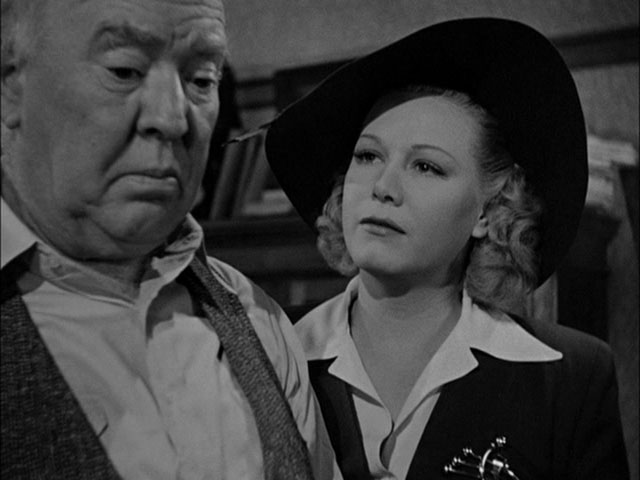
Jack Warden was a good choice to play the president, and 80-year-old Macon native Melvyn Douglas (of The Old Dark House) brings essential humor to the role of the dying rich “kingmaker” with whom Chance the Gardener accidentally finds himself after getting hit by Melvyn’s wife Shirley MacLaine. MST3K punchlines Richard Dysart and Richard Basehart play the old man’s doctor and the Russian ambassador whom Chance talks up at a party, respectively.

Melvyn & Sellers:
image

More Melvyn, More Sellers:
image

Peter & Jack:
image

Katy might’ve liked this, but the day I rented it she was mad at me for not wanting to watch a girl movie with her, and I figured suggesting we watch a male-centric political satire wouldn’t help anything. Actually I think I did suggest and it and she got madder, oops.

image