I’ve always wondered about this one. In my mind it represented all the non-musical Potter plays, the other half of his career, and so I had to coax myself into finally watching it for fear it’d damage my image of the great man. Liked it for sure, but don’t think I would’ve been hooked if this was the first one of his plays/adaptations I’d seen. Well-written, subversive, but dark as all hell… I am surprised this guy was allowed to work in television.

Over two decades before The Blair Witch Project:
image

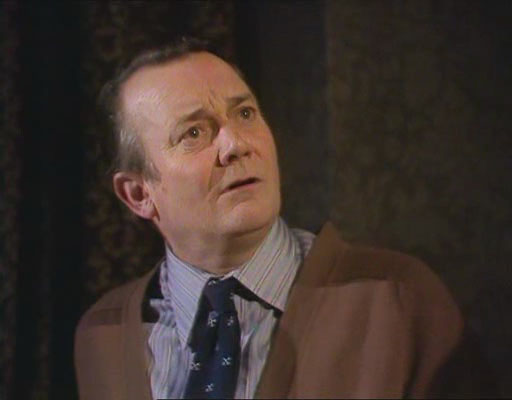
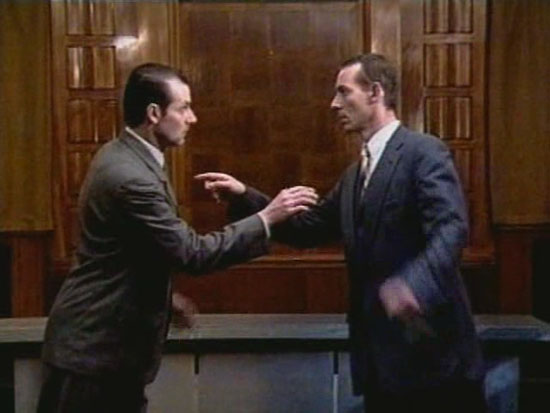
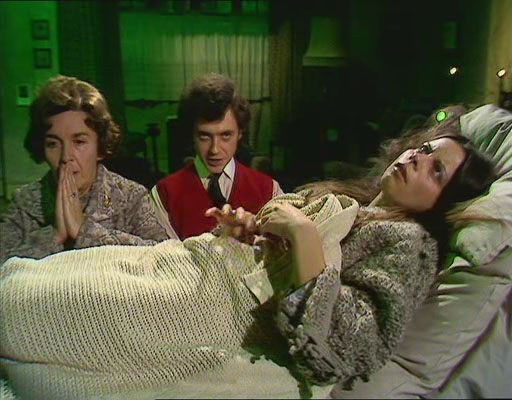
Michael Kitchen (Out of Africa, recurring role in recent James Bond flicks) is Martin, an evil young man who bumps into strangers on the street and tries to convince them that they know each other. Denholm Elliott (A Room with a View, Bad Timing, best known as a good guy in the Indiana Jones movies) almost falls for it then ditches him, but Martin stole Elliott’s wallet, takes it home and easily talks his way into the house with the wife Patricia Lawrence (in Potter’s Son of Man a few years earlier). Martin sees that their daughter Pattie is lying brain-damaged at home and fakes that he was an ex of hers who was turned down for marriage, offers to help care for her, acts ever so polite. Elliott is suspicious but doesn’t move fast enough, and Martin integrates himself. The wife might be gullible, but she’s also so weary from taking care of Pattie constantly and jumps at the chance to leave her in compassionate hands for a few hours each day. One night when Martin is about to rape Pattie for at least the second time, she wakes up screaming, aware of herself at last, and Martin flees, immediately starts looking for a new family.

Move mouse over image to see Michael Kitchen get over-excited:
image

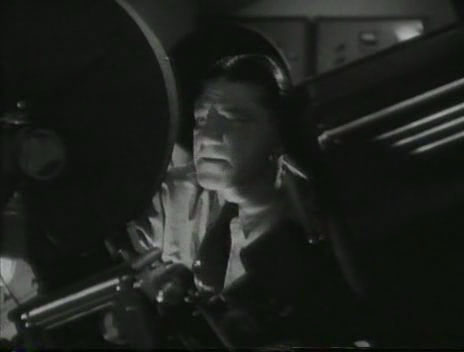
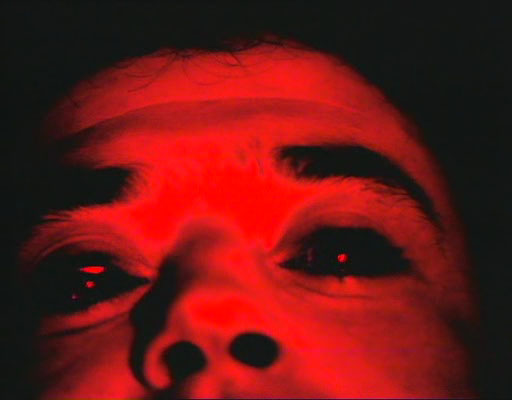
Barry Davis (who also directed Potter’s Schmoedipus the same year) keeps things lively on a miniscule budget. The not-at-all-naturalistic lighting effects (see first screenshot) are especially nice. From the initial street scene on, it stays remarkably intense, bizarre and horrifying. Martin has supernatural powers and hairy demon feet. He talks politics with the family, encourages their own worst impulses. Potter writes: “Deport them, that’s what I say. England for the English” into the mouth of the devil. Then of course there’s the home invasion aspect, the rape of a mentally damaged girl and the miracle ending. This was banned for eleven years (“brilliantly written and made, but nauseating”) – that’s why IMDB lists it as a 1987 release. The theatrical remake starring Sting was actually the first version released in the UK.

Denholm Elliott:
image

My favorite line… having some brandy – “There’s fluoride in the water, so are you able to drink it neat, dear?”

The rarest thing: a smart, funny satire that actually works. Europe is falling into chaos with raging unemployment, while in the “United States of Africa” the people prosper. Immigration is strictly controlled, so our young white protagonist lovers, despite their education and training (teacher and engineer, I think), can’t get meaningful work in Africa. They try it anyway, paying a smuggler to fly them into Africa to take their chances. They’re caught and quite humanely imprisoned in a high-tech facility. She (Pauline: Charlotte Vermeil) takes a job as a domestic servant to Modibo Koudossou (played by the director), a tolerant pro-immigration-reform politician, while he (Olivier: Stéphane Roux, voice of the narrator in Ratatouille) escapes and goes on the run, taken in by a group of poor whites who live in the housing projects.

Meanwhile, Modibo’s rival politician Yokossi (Emile Abossolo M’bo: Ezra, Night On Earth) has got the crooked police chief (Eriq Ebouaney, star of Lumumba, also in Femme Fatale, Kingdom of Heaven, 35 Shots of Rum) gunning for Modibo. Yes, there are crooked cops even in a utopian African film. Modibo doesn’t get to pass his reform bill, but at least he escapes assassination and our lovable white kids help defeat the bad cop. Reunited, Olivier offers Pauline the chance to return home to Europe in shame and poverty with him, but she elects to stay and marry noble Modibo, who has fallen for her, instead. Olivier, though proven good with electronics, was always kind of a douche so this is a happy ending.

Movie is definitely cheap-looking, but not The President Has AIDS-cheap, a respectable made-for-TV-looking cheap. The writing is full of fun satirical tidbits and race-reversal jokes that delighted the High audience. Katy liked it too, and we can’t account for the 4/10 rating on the IMDB…

The Ugly Duckling (1939, Jack Cutting)
Katy said the baby swan wasn’t ugly enough, but I think it’s that (1) he’s different from the ducks and therefore ugly to them, and (2) when he sees his reflection in the funhouse ripples of the water he appears ugly. IMDB says it was the final Silly Symphony cartoon, but it wasn’t very musical… no songs about what it’s like to be a duckling.

Katy: “They’ve turned The Ugly Duckling into a marital dispute.”
image

Me: “Hey there were six baby swans in that shot! There are only s’posed to be five.”
image


Atlanta (1996, Miranda July)
Miranda July’s performance as both the 12-year-old swimmer and her overbearing mother is wonderful. However, this is “video art”, which means it’s like a short film but it’s full of video static and looks like shit. The sound was defective on my copy, and since it’s all interviews, the sound is kinda important.
image

The Summit (1995, The Bros. Quay)
For the first minute I thought “hey wow, the Quays have made something totally different from their usual pretentious goth stop-motion” and I was happy. A few minutes later that thought still stands, but I am not happy. In what language are these guys giving monologues in a featureless room? Oh wait, I get it, “summit”. Funny. Some sites list this as a short satirical art piece, another calls it a 70-minute failed pilot. I saw the short version. The Quays come out and shake their hands at the end. Jonathan Stone, one of the two guys, was in Institute Benjamenta.
image

Jumping (1984, Osamu Tezuka)
Half a funny concept piece about someone who is an awfully good jumper and the places he ends up (incl. stereotype-africa and hell itself), and half a showoff reel of first-person perspective animation. Excels at both… wonderful.
image

Sisyphus (1975, Marcell Jankovics)
Another showoff reel, this time of bodily poses and stress as Sis. rolls the rock uphill, but this one not as delightfully enjoyable as Jumping, and all full of horrible gasping groaning noises.
image

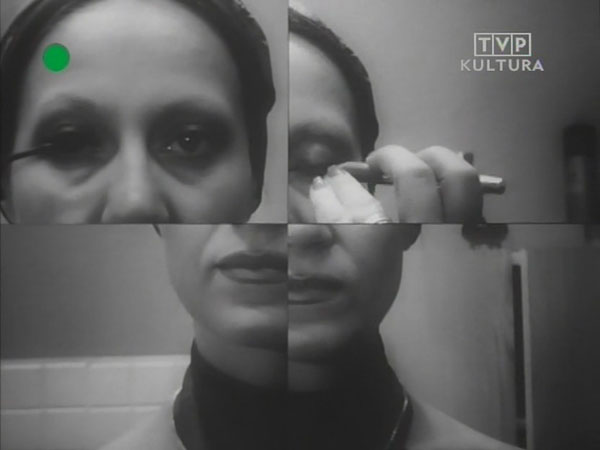
5/4 (1974, Hieronim Neumann)
A split-screen stunt used to more wonderful effect than Timecode (or About Time 2), sometimes seeming to fragment a single image, and sometimes looking like different takes of the same action. Playful. Music is light and quiet and not in 5-4 and there are spacey 70’s-sci-fi sound effects whenever something cool happens, which is most of the time.
image

Director Kwapis made classic punchline film Dunston Checks In (and it doesn’t help that I imagine his last name sounding like “crappest”). Movie landed the writers of Never Been Kissed, producer of Dumb and Dumberer, cinematographer of Antitrust and music composer of Free Willy 3 (no, not Michael Jackson). All that wouldn’t have sounded good on a poster, so it focused on the actresses instead.

Ginnifer Goodwin (Porn ‘n Chicken) is the irritating main character, a desperate love-starved stalker who’s gets simplistic love advice from bartender Mac Guy Justin Long (Herbie: Fully Loaded). Grocery store checkout-aisle magazine star Jennifer Aniston (Leprechaun) has a perfect relationship with perfect guy Ben Affleck (Reindeer Games) but he won’t marry her. Hair-gelled Bradley Cooper (Midnight Meat Train) is married to his neat-freak high-school sweetheart Jennifer Connelly (Dark Water), passive-aggressively sleeps around with flirty wannabe-singer Scarlett Johansson (Home Alone 3, Eight Legged Freaks) which naturally breaks up his marriage. Realtor Kevin Connolly (John Q, Rocky V) dates Ginnifer once, dates Scarlett long-term, provides gay jokes. Drew Barrymore (Freddy Got Fingered, Batman Forever) produced, plays a coworker at Goodwin & Aniston(?)’s design company, and appearances from Kris Kristofferson (as Aniston’s heart-attack-having father) and Luis Guzmán (as Connelly’s home renovation contractor) keep guys like me entertained during the otherwise entirely-chick flick. I found it pretty bearable overall. Katy liked it I think.

JUDGE PRIEST (1934)

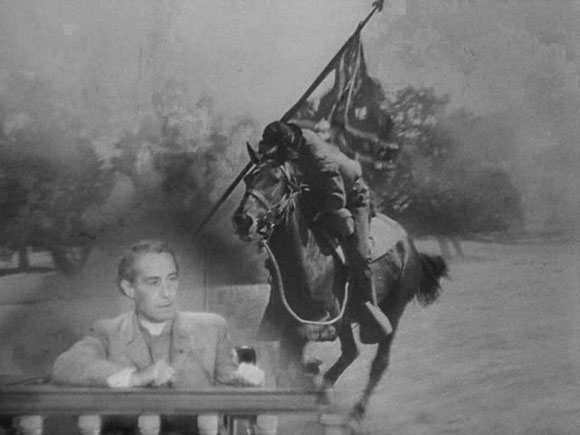
Something like John Ford’s 80th film, if IMDB can be trusted. Contemporary with L’Atalante and the silent Story of Floating Weeds. Set in 1890’s Kentucky – a couple decades past Civil War, which was still on everyone’s mind. And after all, the war wasn’t all that long ago… older audience members watching this film would’ve had parents who participated in it. Strange to think about now, a few more generations removed – my dad wasn’t born yet when this came out.
image

Humorist cowboy and populist philosopher Will Rogers plays the titular good-ol’-boy judge, and controversial sleepy-eyed black actor Stepin Fetchit is his sidekick. Priest is a former confederate soldier (“I kinda calmed down”) who is endlessly proud of Dixie, but respects the law and modern reality, or seems resigned to them anyway.
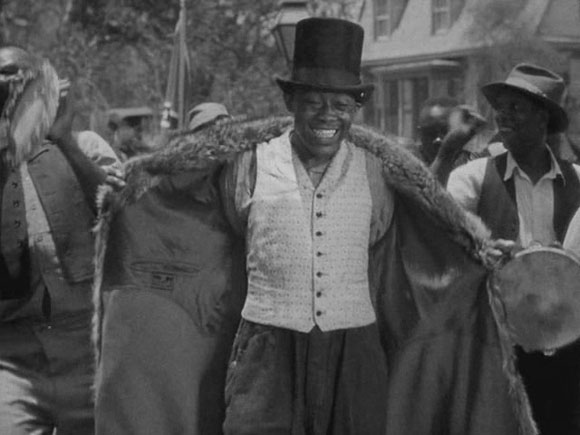
image

The judge’s nephew Jerome (Tom Brown) comes back to town and you can tell he’s supposed to end up with the neighbor girl Ellie May (Anita Louise) but he keeps ending up on dates with a dark-haired temptress instead (Rochelle Hudson, who voiced MGM cartoons and later appeared in Strait-Jacket and Dr. Terror’s Gallery of Horrors). Of course they do end up together after wasting plenty of screen time we’d rather be spending with Will Rogers, but first there’s some problem about Ellie May not having a father.

Our generic romantic leads… everything else in the film is more interesting than these two:
image

Trouble starts in town when the mysterious new guy in town, a blacksmith (the Walter Matthau-looking David Landau of Horse Feathers) punches out Flem the barber for making a crack about Ellie May. He is to be tried in court before Judge Priest, but meddling, villainous-looking senator Horace Maydew points out that Priest was present at the incident and took the blacksmith’s side, so Priest agrees to step down and let someone else (Henry Walthall, in the movies since 1908, costarred in Birth of a Nation and London After Midnight) preside. Priest stays involved by offering to defend the blacksmith, finally, triumphantly revealing him to be an ex-con, a confederate war hero, AND Ellie May’s father.

image

I found less stirring emotion in the overlong “dixie”-soundtracked heartfelt courtroom ending than in a scene early on with the judge talking to a photo of his dead wife. He’s supposed to be a lonely man, but with the young lovers and the big trial, and with Priest’s jovial nature, Ford doesn’t dwell on that aspect too much… just gives us that one lovely scene providing Priest with a deep enough soul to last the rest of the film.

image

Otherwise things stay pretty light, and there’s plenty of worthwhile diversions like the outrageous performance of Stepin Fetchit, and Hattie McDaniel (as Priest’s maid) singing “the sun shines bright in my old kentucky home.”

Look far-left for Hattie:
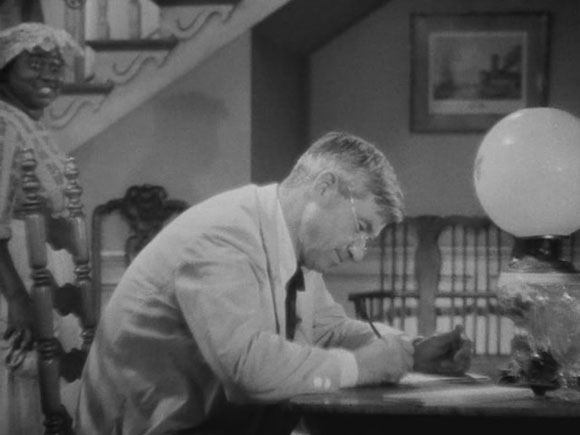
image

Screenplay written by Atlantan Lamar Trotti (American Guerrilla in the Philippines) and Dudley Nichols (Man Hunt, Scarlet Street). Based on a series of books by Irvin Cobb, author of McTeague (Greed), who hosted the Oscars the following year (1935 – this wasn’t nominated). Will Rogers had hosted in ’33. Time was unkind to the lead actors… Rogers, Walthall, and Landau all died within two years of the film’s release.

Sneering villain Horace Maydew:
image


THE SUN SHINES BRIGHT (1953)

I’d thought this would be a remake of Judge Priest, but not exactly. Sure, at the beginning a young man comes home and starts romancing a young girl with a conspicuously missing parent, and sure Judge Priest (now played by Charles Winninger, the captain in Show Boat) is our central character and Stepin Fetchit (the same actor!) is his slow, slurred-voiced sidekick/servant, but things take a turn from there.

image

Priest is still a likable soul, but now he’s an alcoholic on the verge of losing his seat to slick Horace Maydew. Priest doesn’t seem like he runs this hick town anymore – he’s an increasingly irrelevant member of a rapidly growing city. He’s a wise and engaging character, but he’s no Will Rogers. And while the first movie showed us the judge’s loneliness at the start then cheered us up for the next hour, this one gives the judge a rocky start (waking up and yelling for his negro servant to bring him whiskey!), builds him up more and more, then fires off a devastating visual ending, the judge silently retreating into his house alone.

Horace Maydew isn’t as cartoonish a bad guy in this movie:
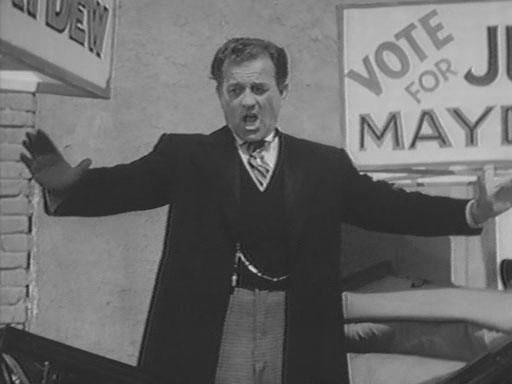
image

The twist this time: young Lucy Lee’s mom, a prostitute who left town so her daughter wouldn’t grow up in shame, returns home to die. Lucy Lee finds out about this, and about her grandfather, the solitary wealthy General Fairfield (James Kirkwood, a director in the silent era, and the farmer in A Corner In Wheat), a former confederate who has distanced himself from his past and won’t talk before the veterans group which Priest leads each week.

The judge and the general share a tender moment:
image

Before LL’s mom died she asked brothel madam Mallie Cramp (Eve March: the little girl’s teacher in Curse of the Cat People, Hepburn’s secretary in Adam’s Rib) to give her a proper funeral and burial and strong-willed Mallie would like to, but she’s met with resistance by the townsfolk, who of course support the brothel but bristle at the idea of those women having public lives or even deaths.

image

The rest of the plot is more complex than in Judge Priest. No big climactic court case, but a few overlapping issues. First, Priest is up for re-election and it’s a close race with Maydew (Milburn Stone, a detective in Pickup On South Street the same year), who paints Priest as old-fashioned and out-of-touch. Young lover Ashby (stiff, cliff-faced John Russell, the main bad dude in Rio Bravo) wins a whip-fight (!) with slimy rabble-rouser Buck Ramsey (Grant Withers, who killed himself a few years later) over Lucy Lee (Arleen Whelan of Young Mr. Lincoln), and Ramsey returns leading an angry mob hoping to lynch young black harmonica player U.S. Grant Woodford suspected of raping a girl out of town. Priest is already politicking around town, leading his confederate group, and dealing with the Lucy Lee situation when he decides to risk his life by blocking the lynch mob and risk his reputation by being the first to follow the prostitute funeral procession through the streets. Priest closes those matters out (U.S. Grant is proven innocent and released, actual rapist Buck is shot trying to escape, Lucy Lee reconnects with her grandfather) just in time to cast the decisive vote re-electing himself. In the end he’s a hero of the town, and everyone stops by his house to wave and sing praises… but he still goes home alone.

image

There were 30+ John Ford films between Judge Priest and this (including Rio Grande and The Quiet Man) and he had nearly 20 more left in him. This one, unlike the original, can definitely not be called a comedy. It has some comic relief though, in the form of drunken hick sharpshooter duo Francis Ford (his 32nd and final appearance in one of his brother’s films) and Slim Pickens (a decade before Dr. Strangelove and Major Dundee). I wanted to like the 30’s movie more, with its lighter tone and a Judge Priest character who is affable without having to humbly heal the whole town’s social wounds while saving a boy’s life, but I think the latter movie impressed me more deeply. No doubt they’re both excellent and make for a lovely double feature though.

image

Jonathan Rosenbaum:

Today The Sun Shines Bright is my favourite Ford film, and I suspect that part of what makes me love it as much as I do is that it’s the opposite of Gone with the Wind in almost every way, especially in relation to the power associated with stars and money. Although I’m also extremely fond of Judge Priest, a 1934 Ford film derived from some of the same Irvin S. Cobb stories, the fact that it has a big-time Hollywood star of the period, Will Rogers, is probably the greatest single difference, and even though I love both Rogers and his performance in Judge Priest, I love The Sun Shines Bright even more because of the greater intimacy and modesty of its own scale.

I should add that in between Judge Priest’s stopping of a lynching and his triumphant re-election brought about in part by the potential lynchers is the act that the Ford regards as his key act of moral and civil virtue – arguably far more important in certain ways, at least in this film’s terms, than his prevention of the lynching. I’m speaking, of course, of his joining a funeral procession for a fallen woman on election day, thereby fulfilling her dying request that she be given a proper burial in her own home town. Once Billy Priest joins this procession, he is followed by almost every other sympathetic member of the community, starting with the local bordello madam and her fellow prostitutes, and continuing with the commander of the Union veterans of the Civil War, the local blacksmith, the German-American who owns the department store, Amora Ratchitt (Jane Darwell), Lucy Lee, Ashby, Dr. Lake, and finally – after the procession arrives at its destination, a black church – General Fairfield, Lucy’s grandfather, who has up until now refused to recognised his daughter under any circumstances.

There are actually two protracted and highly ceremonial processions in the film, occurring quite close to one another – the funeral procession for Lucy Lee’s mother and the parade of tribute to Judge Priest – and the fact that these two remarkable sequences are allowed by Ford to take over the film as a whole is part of what’s so extraordinary about them. Retroactively one might even say that they almost blend together in our memory as a single procession – despite the fact that the first is an act of mourning and the second is an act of celebration – and this undoubtedly contributes to the feeling of pathos in the film in spite of its overdetermined happy ending.

Ultimately, what the film may be expressing is neither celebration nor lament, perhaps just simply affection for cantankerous individuals who exude a certain sweet pathos because history has somehow passed them by – as someone says in the film, I believe in reference to the Confederate veterans, ‘the doddering relics of a lost cause’, which also suggests The Southerner as Everyman. This implicitly suggests a certain darkness as well as lightness – which is why the local blacks serenade the judge with ‘My Old Kentucky Home,’ the first line of which is, ‘The Sun Shines Bright’ – and yet this is a film bathed mainly in the melancholy of twilight. For to emphasise and focus on lost causes as opposed to causes that still might be won assumes a certain abstention from politics associated with defeatism – one reason among others, perhaps, why the Civil War plays such a central role in American history as well as in Ford’s work.

Someone can tell me if I’m out of line in quoting too heavily from this, but it’s so nice to see long, well-thought article devoted to an obscure classic film. If only EVERY film had as thorough a write-up on these internets. Maybe some day.

Our generic romantic leads. Once again, everything in the film is more interesting than these two, but this time Ford seems to realize it.
image

Merian C. Cooper’s name is on the title card – first time I’ve seen him mentioned in a non-King Kong context. I guess he exec-produced a bunch of John Ford movies. Shot by Archie Stout, who won an oscar the previous year for Ford’s The Quiet Man.
This must be the best book I’ve read on the work of a director. It’s organized just how I’d like, with articles covering all aspects of Tashlin’s work (with little overlap), interviews with Tashlin and with others about Tashlin, excerpts from his cartoons, plenty of photographs, critical write-ups of each film he directed and detailed chronology and filmography of all his work. I read the library copy straight through. Gotta adjust myself to not being able to put it on my shelf of film books since it’s so far out of print… can’t own everything, ya know.

Some edited excerpts:

Jonathan Rosenbaum:

It seems to me that “Tashlinesque” can mean one or more of five different strains in the contemporary cinema which I will list below, with appropriate examples…

A. Graphic expression in shapes, colors, costumes, settings and facial expressions derived from both animated and still cartoons and comic books: The 500 Fingers of Dr. T., I Want To Go Home, Dick Tracy

B. Sexual hysteria – usually (if not invariably) grounded in the combination of male adolescent lust and 1950s’ notions of feminine voluptuousness: Seven Year Itch, The Nutty Professor, Lord Love a Duck, The Man With Two Brains

C. Vulgar modernism: a “popular, ironic, somewhat dehumanized mode reflexively concerned with the specific properties of its medium or the conditions of its making” (Hoberman): Duck Amuck, Hellzapoppin’, Sullivan’s Travels, The Patsy, Real Life, The Purple Rose of Cairo

D. Intertextual film references: Shoot The Piano Player, Zazie dans le metro, Celine & Julie Go Boating, Who Framed Roger Rabbit

E. Contemporary social satire: products, gadgets, fads, trends: Christmas In July, A King in New York, Mon oncle, Tampopo


J. Hoberman

Tashlin’s films ultimately have less to do with the production of cultural forms than with their packaging and consumption. His America is a nation of robotic image junkies whose minds have been colonized by the media. Jerry Lewis’s landlady in Rock-a-Bye Baby does exactly what TV commercials tell her to do, even to the point of dying her hair vermilion; the movie fans in Hollywood or Bust and Rock Hunter are little more than popcorn and fan-mag consuming zombies. The protagonist of The Girl Can’t Help It is made to hallucinate singer Julie London every time he hears one of her records on a jukebox.


Bernard Eisenschitz

Although Truffaut and his colleagues at Cahiers knew little English and even less about contemporary trends in American theater and jazz… they were not caught unawares by The Girl Can’t Help It and Hollywood or Bust. Rivette, Rohmer and Truffaut rated them “masterpieces” in the same month as The Wrong Man and Chikamatsu monogatari. A phantasy view of America to be sure, but no less valid than the recent sociological approach, in which films have little place. Tashlin not only identified and denounced the contradiction of American cinema, but also embodied it, since the ambivalence of his films makes it impossible to say which side he is taking, or to be sure that he is not exploiting the very thing that he is denouncing. The Cahiers group did not only see Tashlin as radically destructive, they also appreciated the sheer beauty of what he showed.

Playing to the French title of Hollywood or Bust, Charles Bitsch wrote, “A true movie nut, Tashlin is the first to have made films for other true movie nuts.”


Tashlin in 1964

Cartoons are a very stimulating medium. For animators, the joke reigns supreme. But it’s also a world of enslavement. The world of an animator, no matter how fertile his ideas may be, is in the end, a confined frame, a tiny glass cel where his creations come to life. It’s as though the whole universe were reduced to a series of postcards. You spend your whole life splicing, flipping through cel sheets, drawing frame by frame. After a few years the whole thing becomes so debilitating that you lose all contact with the real world.

same interview, after he’d quit working at Disney in 1941…

I sought refuge at Leon Schlesinger’s where I worked on the Merrie Melodies and Looney Tunes cartoons, then went to Screen Gems at Columbia where John Hubley and I developed the “Fox and Crow” series. I became a gagman for Harpo Marx in A Night In Casablanca. The mirror sequence, which I invented specially for him, was a series of variations on an old gag … Then I worked for Eddie Bracken, and later for Bob Hope.


Tashlin in 1962

I really hate television. It’s no experience. You sit at home, you don’t get dressed and go out. It’s free – the audience doesn’t participate – they sit there and turn the dial and be critical. I detest it.


1994 interview with Bill Krohn and Joe Dante:

BK: So much live-action filmmaking today is influenced by cartoons which he was the first to do, but so little of it has any social pertinence.
JD: That’s because he was influenced by better cartoons. The people who are doing cartoons today are basing them on The Flintstones. That was the nadir; cartoons were disappearing as cartoons and becoming radio shows. Doing live-action cartoons – movies like L’il Abner, Popeye – it’s a very tough thing to do. But the Flintstones themselves were so uncartoonlike that it’ll be a little easier to translate them into live action. Whereas to do Bugs Bunny, or to do characters that really are fanciful, you just can’t do that in live action.


Mike Barrier interviews Tashlin in 1971

MB: I understand you worked on the very first development of Lady and the Tramp too.
FT: That’s right, Sam [Cobean] and I did that whole story; I’d forgotten about that.
MB: Were you working from the story that Ward Greene wrote?
FT: I don’t recall the book. Joe Grant had modeled the dog, Lady, and Sam and I did a story. I never saw the film… I think we had rats coming after the baby at the end… did they have that? Then that’s what we did.

MB: You’ve mentioned that when you made your cartoons, you were looking forward to feature work. Now that you’ve been making features for many years, have there been occasions when you’ve looked back to your cartoon work and tried to get a cartoon flavor in some of your films?
FT: Oh I guess quite often, because all the reviewers – Truffaut and Godard and all these people when they were reviewers on Cahiers du Cinema, they always treated my films, my Jerry Lewis films and all, as a cartoon. I did a picture with Tom Ewell and Jayne Mansfield [The Girl Can’t Help It] and as far as they were concerned, that was a Tom and Jerry cartoon, and the fact that his name was Tom and hers was Jerri – which I never thought of – they said, “She is the cat and he is the mouse.”


From the chronology:

1952 – Tashlin spends nearly six months working with Robert Welch on the script for “Sapphire Sal,” later re-titled Red Garters. Tashlin is originally set to direct, but when he checks off the Paramount lot in late August the production is put on hold awaiting the loan-out of Jane Russell from RKO. (Red Garters, not produced until 1954, ultimately stars Rosemary Clooney, with screenplay credit going to Michael Fessier.)

“Nobody with a good car needs to be justified.”

Huston, in his seventies, still had six more films to make and his fifteenth oscar nomination to earn. This movie was far weirder (and dirty, run-down & location-shot) than anything I thought a respected veteran hollywood studio filmmaker would produce. His might be a career I need to obsessively explore some day! We saw a square-ish 16mm print, which looked fine and dandy to me (I mean, the film looked like it’d been left in the glove box of Hazel’s car for some years, but looked fine ratio-wise), but I see the Criterion DVD will be 1.78:1.

Hazel Motes arrives back home to find his family gone, his childhood home looted and decrepit. Instead of trying to find them, he stalks a street preacher and daughter, then decides to preach his own church, one without Christ. Simpleton Enoch Emery follows Hazel trying to be his friend, eventually supplies a Christ for his church (pygmy mummy robbed from a museum). Hazel spooks the preacher into leaving town and (inadvertently) charms the daughter into shacking up with him. A con man likes Hazel’s game and emulates it by hiring his own preacher. Cars are run into ditches and lakes, much preaching is done, and Hazel refuses to warm to anybody, finally blinding himself to the delight of his landlady who now has someone helpless to take care of… but when she forces his hand, Hazel wanders off and dies on the streets alone. An extreme movie (and book), full of heresy and, supposedly, redemption. Film is a quite literal adaptation of the book, with a few omissions and modifications.

Professional crazy-actor Brad Dourif (crazy doctor in Alien 4, crazy Wormtongue in Lord of the Rings 2, crazy doll in Child’s Play) played Hazel Motes. Tron star Dan Shor was alright as Enoch Emery – I’d pictured him younger and dumber. It’s good (hell, it’s great) to see Harry Dean Stanton as the fake-blind preacher with daughter Amy Wright (who just appeared in Synecdoche New York). William Hickey (Toulon in the original Puppetmaster!) was the fake preacher hired by con artist Hoover Shoates (well played by Ned Beatty of Nashville). Mary Nell Santacroce (Atlanta native who appeared in another fake-preacher movie, an ill-advised remake of Night of the Hunter) is the landlady who takes over the last few scenes after Hazel blinds himself. And the fictional city of Taulkinham is ably played by Macon, Georgia.

Adapted and produced by the Fitzgerald family (friends of the author). Appalling music by Alex North starts out with bloopy keyboards and wheezing horns then cranks into comic-book twangy versions of recognizable standards. Sounds an awful lot like what someone from Chester Pennsylvania would image people in Macon listen to. Steve agrees the movie would be a masterpiece if you could cut that music out. Let’s hope Criterion has found a way.

Canby of the Times loved it, “lyrically mad and absolutely compelling even when we don’t fully comprehend it.”

“It’s a great script – feel how much it weighs.”

Seeing how it’s Academy Awards season, I’ve been watching bizarrely oscar-related movies… first Susan Slept Here was narrated by an oscar statue, and now this one, the only movie to be nominated by accident. It seems a song called “Pig Foot Pete” appeared in an Abbott and Costello movie with the same singer (Martha Raye) and songwriters who worked on this movie, which probably accounts for the never-properly-explained discrepancy of “Pig Foot Pete” getting Hellzapoppin’ awarded an oscar nomination. It’s all beside the point, since nothing stood a chance against the song White Christmas from Holiday Inn.

The story involves mistaken identity, Martha Raye (Monsieur Verdoux) running after Mischa Auer (My Man Godfrey) because she believes he’s an eligible millionaire, while he tries to score Jane Frazee – but the movie (based on a fourth-wall-smashing hit broadway play) is really just an excuse for popular comics Ole Olsen and Chic Johnson to riff on everything around them, including the film itself. Goofy-looking Hugh Herbert (whose “hoo-hoo-hoo!” laugh supposedly inspired the creation of Daffy Duck) of Footlight Parade, Sh! The Octopus and The Beautiful Blonde From Bashful Bend, also wanders about making jokes.

Chic and Ole – don’t ask me which is which:
image

Movies like this (and there aren’t many movies like this) make the phrase “screwball comedy” seem inappropriately applied to such relatively calm, normal films as Bringing Up Baby. Surely the Marx Brothers movies were an influence. I’d like to think that Frank Tashlin, who was working in cartoons at the time this came out, was heavily influenced by its high-energy cartoony gags and unhinged self-reflexivity. Some of the jokes (many of the jokes!) are very bad, but you’ve gotta forgive them because overall the movie is too amusingly nuts to dislike.

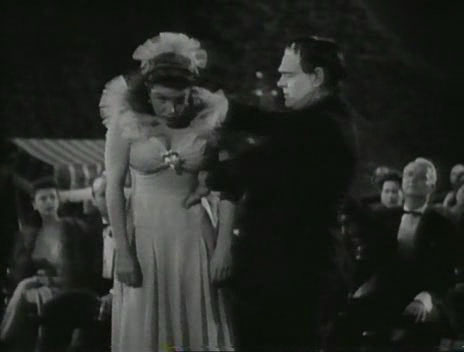
Frankenstein’s Monster, about to helpfully toss Martha Raye:
image

Kevin Lee: “The show-stopper is the much celebrated Lindy Hop sequence involving several Black domestic servants who without warning launch into the most jaw-dropping swing number captured on film.”

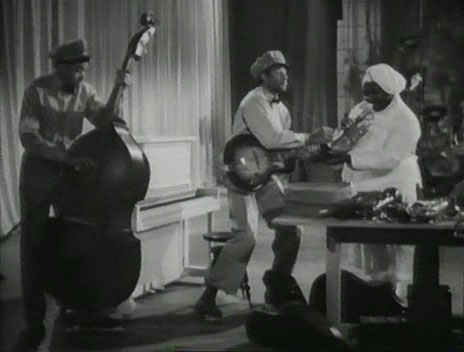
Here’s the precursor to that swing number, which is indeed jaw-dropping:
image

Director Potter would work with all the biggest stars in his other films, and eventually make a sequel to this year’s biggest oscar-winner Mrs. Miniver.

Pretty girls are roasted on a spit in hell – the movie opens with this!
image

The legal battle of Olsen vs. Johnson vs. Universal Pictures has led to the commercial unavailability of their work for so long that if it finally came out now, in sparkling restored deluxe DVD editions, nobody much would care since they are barely remembered. Good job there, guys.

Martha mooning after Mischa Auer:
image

NY Times called it “an anarchic collection of unfunny gags,” but then, they also spelled “alittle” as one word.

Once and future stooge Shemp Howard is the film projectionist. I love how he, not the cameraman, can change the framing of the movie by panning to follow women in swimsuits.
image

“He was the first and only zoopraxographer.”

image

Hour-long doc about the man who invented a form of motion photography (the famous series of tripwire-triggered photos of horses running), spending half his career as a successful still photographer, and the other half capturing and studying human and animal motion with his zoopraxiscope.

Visually, the movie is mostly composed of Muybridge’s work, nicely assembled and presented, including moving reproductions of his motion series. Voiceover tells us his story (memorable detail: he was acquitted for murdering his wife’s lover in 1875).

For his location still photography Muybridge (pronounced “Edward Mybridge” – people added extra letters to seem fancy back then) travelled with a “darkroom wagon”, foreshadowing Medvedkin’s cinetrain.

Muybridge photographed the effects of the Great San Francisco Earthquake… but not the one in 1906 – this is from October 1868!
image

Muybridge died in 1904, having seen the birth of Edison’s cameras and Lumiere’s cinema which shuttled his own inventions to the sidelines. It would be 90 more years before The Matrix would combine Edison’s motion photography with Muybridge’s circular camera arrays to create the bullet-time effect. Muybridge’s photographs of San Francisco are valued as a record of the city before it was leveled by the Even Greater Earthquake of 1906.

Movie is narrated by two-time Cannes best-actor-winner (and future Blue Velvet crooner) Dean Stockwell. Editor Morgan Fisher went on to make that movie I read about which is composed of all insert shots, and the same year, director Andersen made the stock-footage masterpiece Los Angeles Plays Itself. All Movie Guide says this film took ten years to make, and J. Rosenbaum calls it “one of the best essay films ever made on a cinematic subject.”

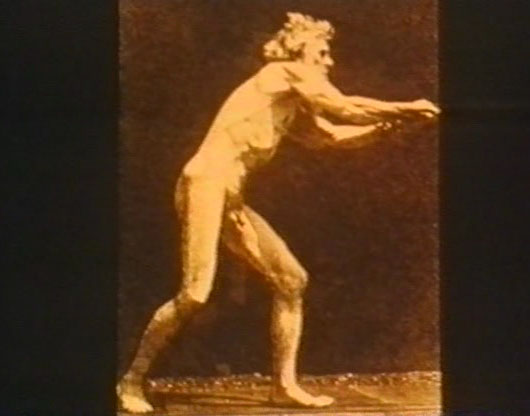
Muybridge self-portrait:
image