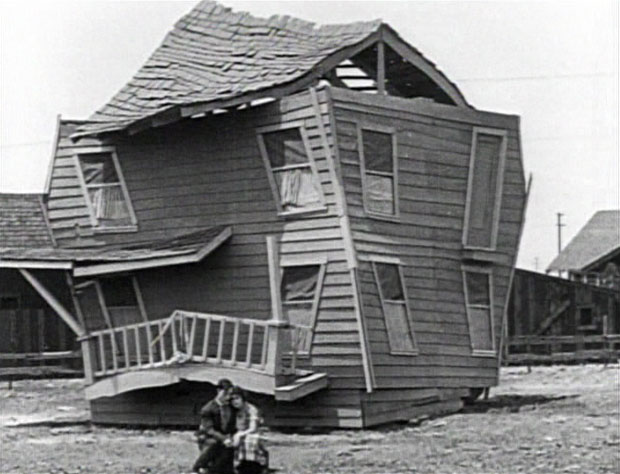
November was Shorts Month! All shorts were watched at home on video, except for an outing to the November edition of Bizarro Saturday Morning, at which I fell asleep during the only theatrical short, tired out by episodes of Casper, Ultraman and Rocket Robin Hood, so it’s sadly not represented here.

The Policemen’s Little Run (1907, Ferdinand Zecca)
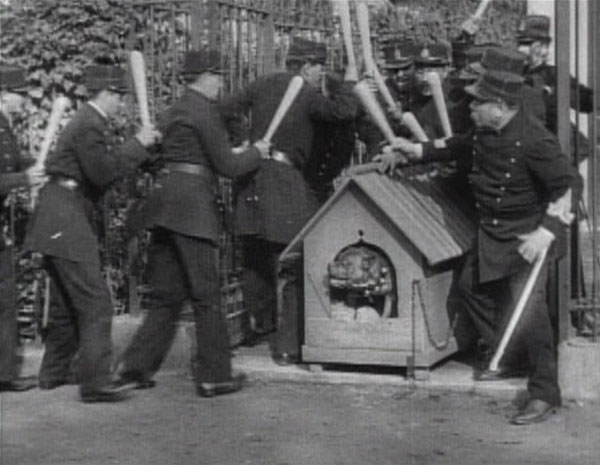
Tedious, undistinguished little romp, wherein cops chase a dog for stealing food, then the dog chases the cops. Fakey backgrounds ensue. Ferdinand Zecca, director of Kissing in a Tunnel (not the 1899 original or the 1899 remake, but the 1901 remake), later co-directed one of the first feature-length (well, 45 minutes) films.
image

Troubles of a Grasswidower (1908, Max Linder)
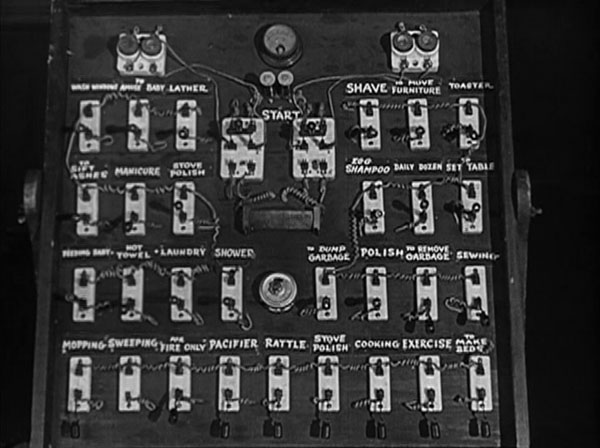
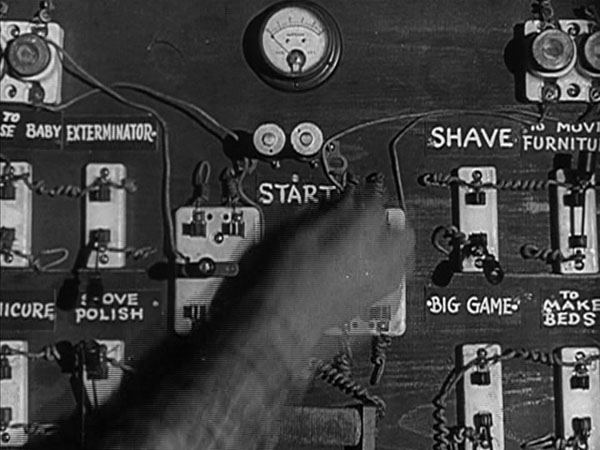
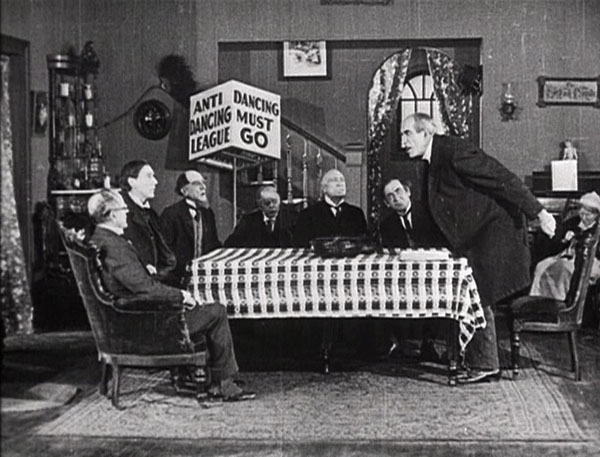
The Mr. Mom of its time. Dude is an asshole so his wife leaves him, goes home to mother. Dude then fails to do the simplest household tasks until everything is in ruins and his wife returns to shame him. Terrible! Well, it’s slightly more bearable than the cops chasing the dog. Linder must’ve played the widower; he wrote and starred in plenty more shorts, such as Max’s Hat, Max Takes Tonics and Max and Dog Dick (?!)
image

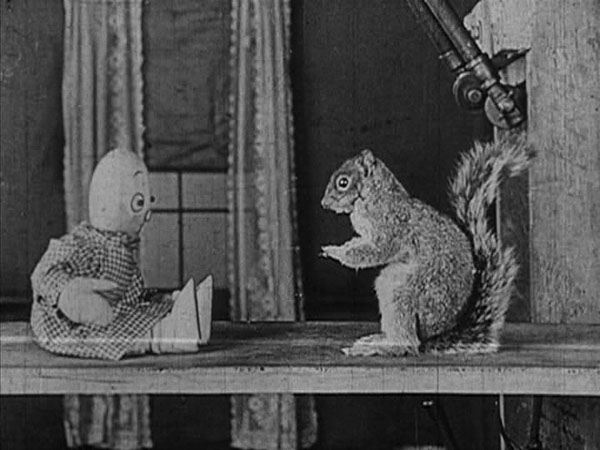
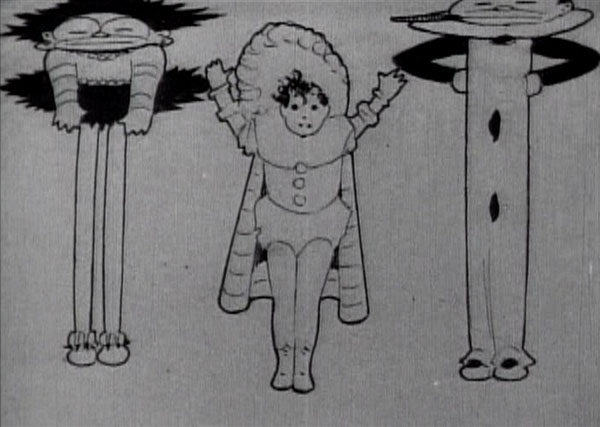
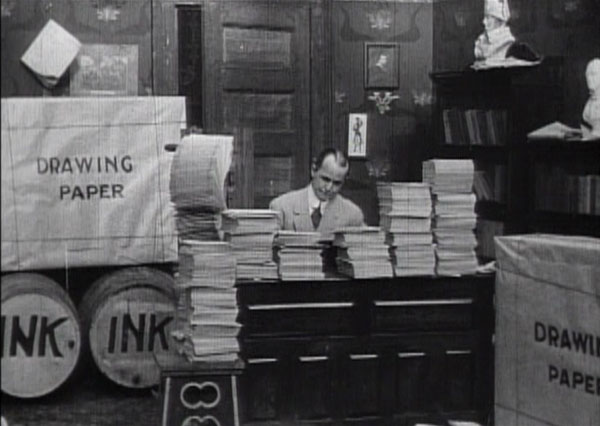
Winsor McCay, the Famous Cartoonist of the N.Y. Herald and His Moving Comics (1911)
Now that’s more like it. Winsor announces he’s going to make an animated moving picture, some blowhard dudes laugh at him, then he damn does it and it’s brilliant. One should never doubt the author of Dreams of a Rarebit Fiend.
image

Winsor at work:
image

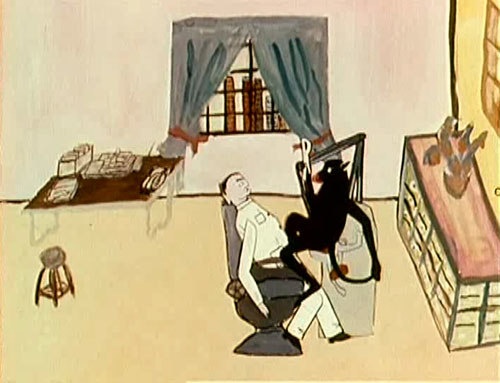
Dream of a Rarebit Fiend (1906, Edwin S. Porter)
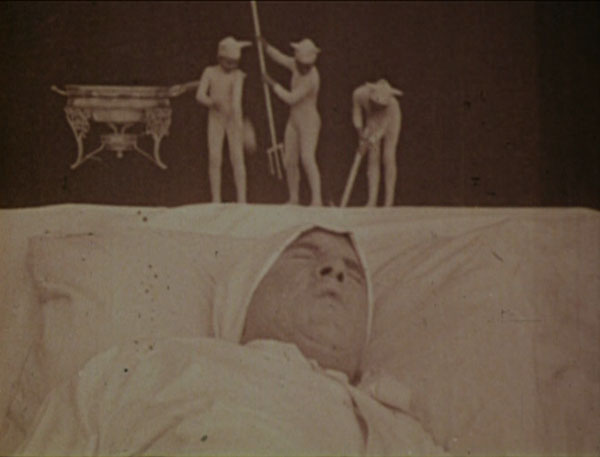
Most of the movie is the guy drinking, eating and going home, with finally some actually dreaming there at the end. His shoes fly off on strings, some stop motion, some Exorcist bed-bucking and Little Nemo bed-flying. The best part, with little devils beating him from above, looks like a Melies-lite advertisement for headache powder. One assumes he’s speaking the punchline at the end, but there’s no intertitle. Comic strip was better!
image
Winsor would later create his own animated Rarebit films, and Melies would make the probably unrelated Dream of an Opium Fiend in 1908.

The Telltale Heart (1928, Charles Klein)
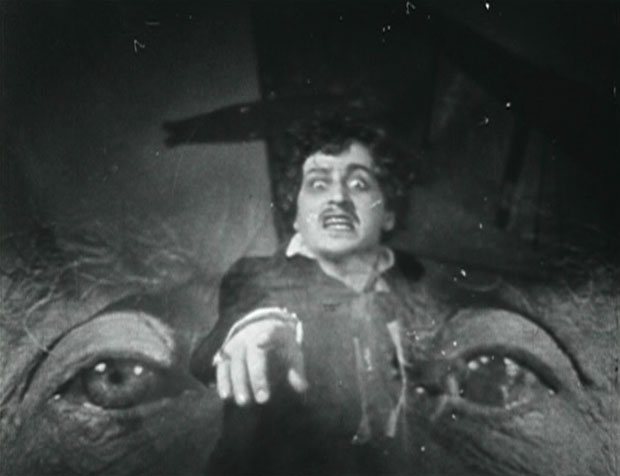
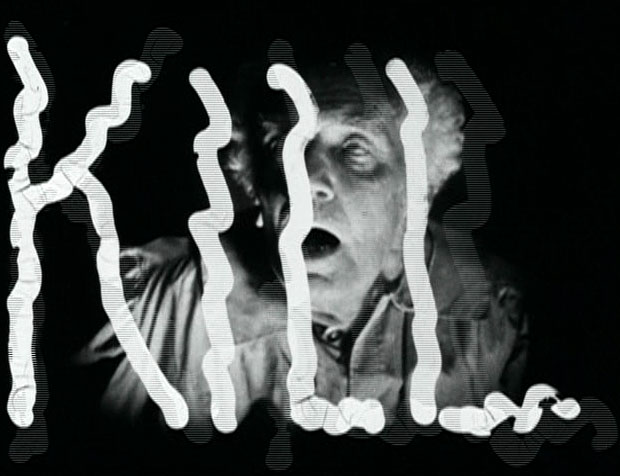
I love total Caligari-ripoff expressionism in cinema, and there isn’t enough of it so I was happy to find this. Completely excellent, probably my favorite Telltale Heart yet. I don’t mean to disparage the recently-watched Ted Parmelee animated version and I do miss the rich voice of James Mason, but everything works here – the Caligari sets and fonts, the acting of the lead fellow, his crazy-POV version of the inspectors and the montage and effects (overlays and mirrors).
image

Depending who you believe, this was either directed by Klein (a writer/director up to the 40’s) or Leon Shamroy (cinematographer through the 70’s who worked with Fritz Lang, also shot The Robe, Caprice and Planet of the Apes).
image

Fall of the House of Usher (1928, James Watson & Melville Webber)
Every version of Telltale Heart re-tells the story with narration or titles, but this film tells the Usher story through mystifying visuals… and since I’m not familiar with the story I still don’t know exactly what happened, but boy was it awesome.
image

What if cinema had ended up looking more like this? What if poets were directors? The mind boggles. I’ll bet Cocteau loved this (or despised it since he didn’t think of it first).
image

dream sequence from When The Clouds Roll By (1919, Victor Fleming)
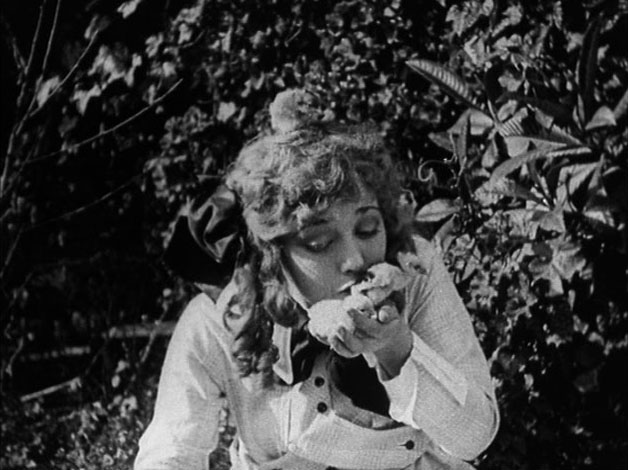
A semi-remake of Rarebit Fiend! Douglas Fairbanks eats some Welsh rarebit (melted cheese on toast) along with mince pie, lobster and an onion. Not a drunken fool like the original rarebit fiends, DF is conned into eating the nightmarish midnight snack by a mad doctor. He then runs around doing stunts on horses, trampolines and camera-trick houses, pursued by ghosts, a party of society women and giant costume versions of the foods he ate. I am definitely dressing up as rarebit next halloween.
image

Oramunde (1933, Emlen Etting)
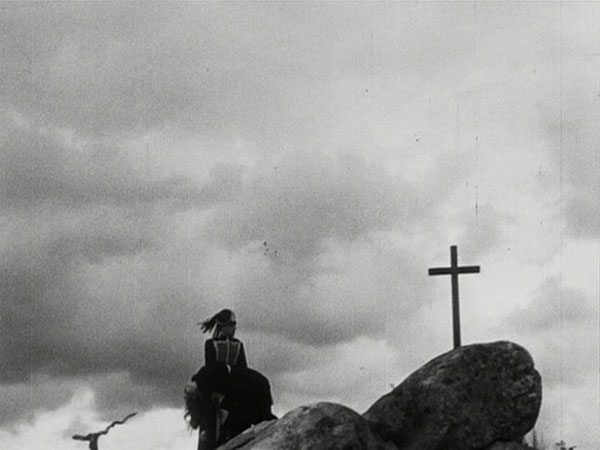
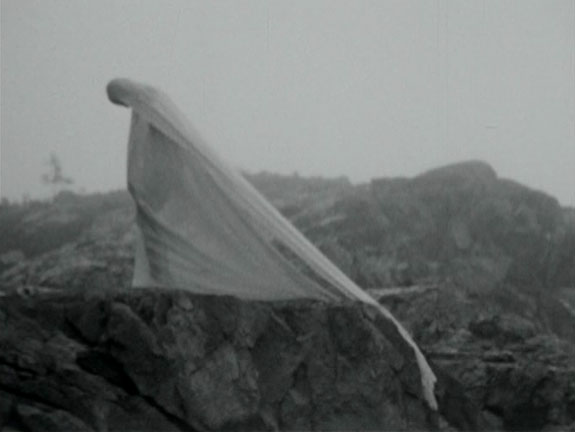
Woman in a too-long white dress dances on the rocks to express her sadness. Made me sad so I guess it’s pretty good.
image

Hands (1934, Ralph Steiner & Willard Van Dyke)
Hands, falling, against black, doing stuff. Montage of hands doing stuff on location. Hands getting money for doing stuff. Hands buying stuff, taking vacation, getting married to other hands. Counts as propaganda somehow.
image

The 30’s were full of Ruggles: Charlie Ruggles, Wesley Ruggles, Ruggles of Red Gap… you don’t hear about Ruggles anymore. A shame, for the most part, but I’d be glad not to hear from this particular Ruggles anymore (although I’m likely to catch I’m No Angel or Too Many Husbands eventually). The movie had a good premise and stars, but writer Claude Binyon (Holiday Inn) and Mr. Ruggles tried everything they could to ruin it with crappy dialogue and pacing.

Claudette Colbert takes a solo vacation to Paris, fleeing simple, earnest boyfriend Lee Bowman (who was he in Love Affair? Must have been Chuck Boyer’s friend/agent), but runs into relentless playboy Robert Young (The Canterville Ghost, Fritz Lang’s Western Union) and his reluctant, sarcastic friend Melvyn Douglas (Ninotchka, Mr. Blandings Builds His Dream House). Bland dialogue ensues, in which Melvyn says something that’s supposed to be witty but isn’t actually witty because of the writer’s limitations, and Claudette, annoyed, tells him he is too sarcastic, phrasing it the same way each time.

They go off to Switzerland (IMDB says it was really Idaho) for a ski vacation, leading to the only exciting scene, in which Claudette gets caught on a bobsled run. A movie’s not a romantic comedy unless she ends up with a guy, and Robert Young turns out to be married. Lee Bowman tracks her down in Switzerland, but she determines that this makes him paranoid, not romantic (a fine distinction), and anyway she didn’t meet him in Paris, so according to the title she must end up with Melvyn, and so she does.

She meets He on a cruise boat, both returning to their wealthy fiancees. They fall in love, promise to meet atop the Empire State Building in six months. Breaking off their engagements and learning to be self-sufficient, he works at his paintings and she takes a job as a teacher – but she’s hit by a car on the way to her date. She doesn’t want to be pitied so stays quiet, while he thinks he’s been stood up. They meet again, he learns the truth, loves her anyway. One of the most romantical stories of all time!

image

Simply-shot, talky melodrama. We watched an ugly, blurry copy, but it seems ugly, blurry copies are the only ones available. The ol’ public-domain problem, I’m guessing. I’ve seen most of the Cary Grant/Deborah Kerr 50’s remake, which is very similar in plot and dialogue, has good color and production design and Cary Grant, so seems the clear winner (though they’re both excellent). This one’s main advantage (besides being the original story cowritten by McCarey himself) is Irene Dunne, who has an awfully cute smile and blows away her own earlier performance in Roberta.

image

Not much to say about Charles Boyer, besides that I recognize his round face from Liliom. It’s Irene’s movie. In fact, the two of them and Boyer’s grandmother (Maria Ouspenskaya of Dodsworth and The Wolf Man) are practically the only actors in the movie (I’m not counting her choir of overly sweet schoolkids). The remake adds a half hour, fleshes out the parts of their fiancees, gives his art dealer and her school principal more lines.

image

Screenwriter Delmer Daves would later helm Dark Passage and 3:10 to Yuma. Love Affair was nominated for every oscar (except actor – sorry, Chuck Boyer) but didn’t stand a chance against color epics Gone With The Wind and The Wizard of Oz.

Set in Paris but I don’t think there’s a single Parisian (character or actor). Stiff lunkhead footballer Randolph Scott (Ride Lonesome), looking convincingly awkward on the delicate Paris sets, is tagging along for some reason with Fred Astaire (here winningly named Huck Haines) and Fred’s band of musical entertainers.

Randolph looks to his rich aunt Roberta (Helen Westley, who also appeared with Irene Dunne in Show Boat) for a place to stay while Fred negotiates with blustery “Russian” Luis Alberni (hotel owner in Easy Living, chef in The Lady Eve) for a place to work.

Enter Fred’s love interest Ginger Rogers. Where did she come from again? I don’t remember, but she’s somewhat hindered here by her awful fake accent and by Fred’s fancy for solo tapdances. Fred’s got no humility – this was only his third film (between Gay Divorcee and Top Hat) and something like Ginger’s 30th. The two dances she participates in are wonderful, especially the first where she wears pants so we can see what she’s up to.

Aaand enter Irene Dunne (pre-Awful Truth, same year she was in John Stahl’s Magnificent Obsession) as Randolph’s love interest. I hate to see a dumb American dude being fought over by a European princess (Dunne, who has also been secretly designing Roberta’s all-the-rage fashions) and an aggressively rich American (Claire Dodd), but maybe Randy is more handsome than I realize. Irene is also secretly (?) the sister of the building’s doorman (Victor Varconi: Pontius Pilate in DeMille’s King of Kings), which leads to misunderstandings. Hmmm. Ultimately what matters is we get some oscar-nominated songs, some Fred/Ginger dances, and some comedic running-around. I like Irene Dunne whenever she’s not singing (she’s fond of the piercing Jeanette MacDonald style, which would thankfully die after the 30’s).

Remade in the 50’s with Red Skelton and Zsa Zsa Gabor. Lucille Ball appears in a fashion montage at the end. IMDB trivia gives clues how to spot her, but I guess my laptop DVD drive is dying so I can’t get screenshots.

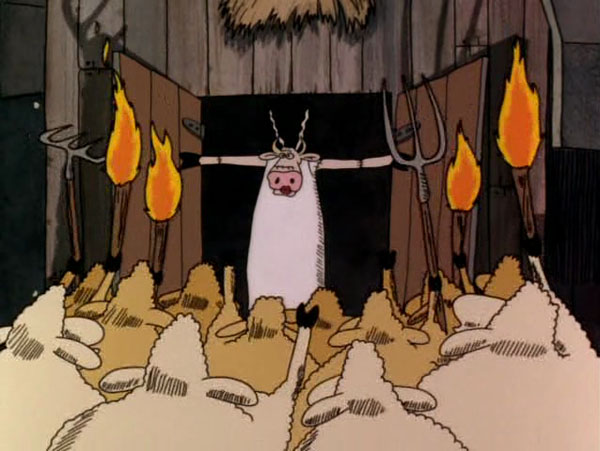
More 16mm screenings from Clay, Halloween-themed this time. Clay showing seasonal shorts reminds me of Robyn Hitchcock’s halloween show where he joked that since he’s only playing songs about ghosts and death, nearly half his catalog is disqualified.

The Skeleton Dance (1929, Walt Disney) was the first in the Silly Symphonies series, with good music-visual sync, but too much repeated animation. No spoken/sung dialogue, wordless skeletons playing in a cemetery until the sun comes up.

Runaway Brain (1995, Chris Bailey) is an excellent, fast-paced Mickey Mouse short with a mad scientist voiced by Kelsey Grammer, beaten for an academy award by Wallace and Gromit. Seems like nobody around me had heard of this before.

The Tell-Tale Heart (1953, Ted Parmelee), animated with some abstract imagery, overlapping shots and sharply-drawn characters. Has a deservedly high reputation, but beaten for an oscar by Disney’s Toot Whistle Plunk and Boom.

Betty Boop’s Hallowe’en Party (1933, Dave Fleischer) – always great to see a Betty short. Her party is pretty tame – kids bobbing for apples and singing like the birdies sing (tweet, tweet tweet) – until a bully shows up and she attacks him with her secret cache of ghostly evils. Full of amazing animation and visual ideas, beautifully synched to the music. I gotta get me a whole pile of these cartoons someday. I asked Wikipedia when the apostrophe disappeared from “hallowe’en” but it didn’t know.
Naturally the show was also full of TV episodes and classic commercials – Count Chocula vs. Franken Berry, of course, also a kids vehicle that looks suspiciously like the Wacky Wheel Action Bike (“you can’t ride it! you can’t ride it!”) and an awesome PSA warning kids to stay away from blasting caps.
Of the TV shows, we’ve got a Popeye the Sailor episode where an evil robot-popeye robs banks, the adventures of Goodie the Gremlin, who helps people invent the steam engine, airplanes etc. instead of tormenting people like the other gremlins want, a Spider-man episode where Green Goblin gets his hands on a book of voodoo spells, and a hilarious, surreal episode of Ultraman (featuring benign fluffy chattering Pigmon monster in a recording studio, giant plumed lizard monster with heat-seeking feather missiles, and the usual bonkers dialogue). Then the lower-tier corny garbage shows: a cartoon Sinbad the sailor, some dimwit monster who shoots smoke out of his head, Beany and Cecil meet the invisible man (1962, produced by a post-Warners Bob Clampett) and a Hal Seeger-created short called Batfink, in which BF and his dim pal Karate fight a magician.

Not as big a horror fan as I claim to be, I’d never seen Dracula before. Watched at least three other Tod Browning pictures, and at least seven other Dracula movies, but never the original that kicked off Universal Horror in the sound era. And I probably should have started with it, because it’s anticlimactic after having just watched Hammer’s blood-soaked version. The sound work is primitive compared with Lang’s M, the horror isn’t horrific compared with Browning’s own Freaks (or even Frankenstein if my memory serves), and the story is nothing to rave about if you’ve ever seen a vampire movie before (I suppose most of Dracula’s original audience had not). One of those movies I can’t unqualifyingly like, just say something weak like “it seems good for its time.”

Exceptions: not much Ed Wood-style hand acting, but Lugosi is a striking figure in wide shots and close-ups. Dwight Frye as Renfield starts out as your standard easily-amazed eyeliner-wearing actor, but turns into a creepily intense giggling psycho after being bitten. He’d play Fritz (the sidekick mistakenly known as Igor) in Frankenstein the same year. And there’s a surprising scene at an opera, where Drac first meets our heroes and has a sober line about fates worse than death, giving an edge of unfortunately-tortured-soul to his standard murderous-villain role.

Tame: no fangs, no bite marks, and needless to say no blood. No score, either – some scenes are conspicuously quiet, lacking any sound effects for minutes at a stretch. No money at Universal to film the storm at sea during the crossing from Transylvania to London (one of my favorite parts of Herzog’s Nosferatu) so they used a scene from a silent film, comically sped-up from 18fps to 24. It works, though, making the scene more intense (it’s the biggest action scene in the entire film, and it’s stolen).

Renfield, not Harker, visits the castle at the beginning, gets turned (halfway?) and helps Drac move to England where he meets useless, boring Harker (David Manners would costar with Lugosi and Karloff in The Black Cat) and his girlfriend Mina, along with Mina’s dad and friend (?) Lucy. He goes about his business draining blood from the girls until family friend Van Helsing (Edward Van Sloan, who appeared in Frankenstein and The Mummy) catches on after Lucy’s death. VH runs down Drac, catches him burying Mina (?), chases him into the castle and pulls down the curtains as the sun rises, turning the vampire to ash and freeing Mina. And Universal stood behind that death – Dracula wouldn’t appear in any sequels until the mid-40’s. Lugosi wouldn’t even fare as well as his most famous character. He’d play Dracula in one more film, Abbott & Costello Meet Frankenstein, before ending up in Ed Wood hell and giving Martin Landau an oscar.

Mythology: They’ve got the no-reflection thing, the turning into bats and wolves, aversion to sunlight and crosses, wooden stakes through the heart, but Drac can enter a room without being invited and vampires avoid wolfbane, not garlic.

Karl Freund, formerly F.W. Murnau’s image-man in Germany, would go on to shoot most episodes of I Love Lucy.

Another great set of Clay’s 16mm cartoons, and it’s been too long since the last one.

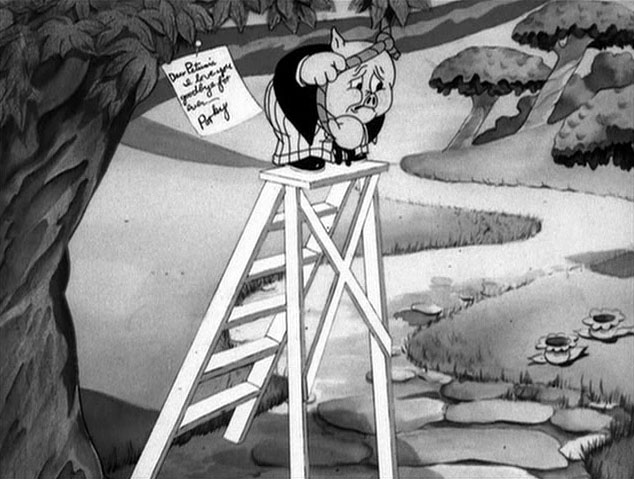
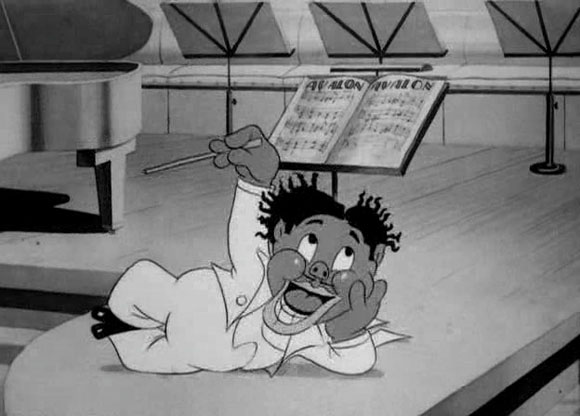
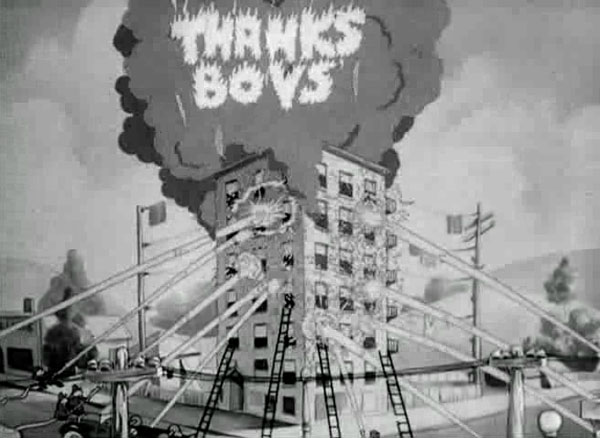
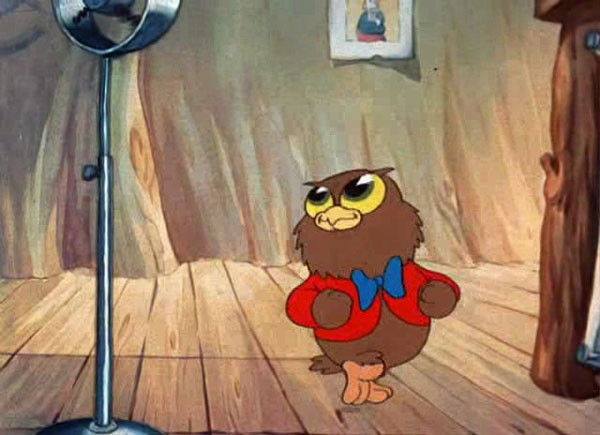
Mysterious Mose (1930, Dave Fleischer) is a proto-Betty Boop (she looks like a dog; a sexy dog) cartoon in which she is haunted by a sorta ghost casanova. The Great Piggy Bank Robbery (1946, Robert Clampett) is a weirdly violent Daffy Duck gangster parody. Since his “Duck Twacy” fantasy is spurred by a knock on the head while reading comic books, it’d be a good short to play before Artists & Models. It’s Tough to Be a Bird (1969, Ward Kimball) is a Disney doc about birds and watchers with musical cartoon segments. And We Have Met the Enemy, and He Is Us (1973, Walt Kelly) is an unfinished Pogo cartoon with a harsh environmental message. I think all the voices were done by one guy.

Bunch of TV stuff. Spiderman fights a bank robber in a mole-man costume. There’s a Casper cartoon (in which Casper does not appear) about a watch repairman who gets attacked by an eagle at the end. Ralph Bakshi contributes an episode of Captain America. A horrible show called Hoppity Hooper (set in Wisconsin) with a Rocky-and-Bullwinkle-repetitive bit about “the traffic zone” was the low point. The high point was the hilarious 60’s-70’s commercials for Mr. Wizard, Hot Wheels, Cheerios and the like. Real fun program… too bad the next one is scheduled for the same night Art Brut is playing.

image

Another early Lubitsch musical. This one starts promisingly with wonderful shots of a wedding which the bride has abandoned (her dress deflated on a chair, the groom traveling under a row of umbrellas) and proceeds to a decent song (the foppish groom – Claud Allister – informing his guests that he will retrieve the girl). Alas, it’s to be the last decent song because after heroine Jeanette MacDonald (of Love Me Tonight) is introduced, she’ll do all the singing in Snow White screech-falsetto.

Zasu Pitts looks wary: madame could start singing at any moment.
image

We quickly abandon the abandoned husband to follow Jeanette, escaping by train with loyal maid Zasu Pitts (Greed, Lazybones) to Monte Carlo, where she meets many hopeful fellows and hires 20 assistants – all on credit since she has no money. One especially hopeful fellow is smiley, overconfident Jack Buchanan, who singlemindedly goes after her, finally gaining entry to her hotel suite by posing as a hairdresser then taking over all her servant positions when she has to let everyone go since she can’t pay them.

image

Of course Buchanan is secretly wealthy, so after Jeanette gives up hope of escape and is again going out with her prince from the beginning, Jack makes his move and she escapes again.

A train embrace:
image

Perfectly decent movie, though I didn’t notice many attention-grabbing Lubitschisms after the intro. Felt more like a simply-plotted cheapie. The only real disappointment (besides Jeanette’s singing) was a hollow-eyed, sad-mouthed Zasu Pitts, seeming to slow down the film whenever on screen. My favorite was the prince, so winning a being a loser in the opening scenes.

“Will they lead the same sorry lives that we have?”

image

The Eclipse box set title is “Three Family Comedies” but I’d forgotten that Ozu even made comedies until the opening titles played over a drawing of a kid holding his crotch. Then my realization “oh, this will be a zany comedy featuring kids doing dirty stuff” turned out to be off base. Sure, kids are the protagonists, and it features some comedy, but it all leads to the quote above (spoken by the kids’ father) which belongs firmly in drama territory.

image

Dad’s got a new job so he moves the family close to work. Actually he moves ’em into the suburb where his boss lives, and it comes out later that dad is kind of a suck-up. The kids are intimidated by a pretty mild gang from their school until they learn to use their wooden shoes as weapons and they dominate the group. It’s kinda like the beginning of 2001: A Space Odyssey but with Japanese schoolchildren instead of apes.

image

Most of the movie seems to be this low-key power struggle with the kids which includes searching for sparrow eggs to eat raw (to prove strength) and trying to get an ‘E’ (for ‘excellent’) in calligraphy at school. A scene at the boss’s house is the turning point. Everyone is watching the boss’s home movies in which our kids’ dad is making funny faces and cracking everyone up – everyone but his kids who are ashamed that their father is playing the fool. The older boy (Ryoichi) goes home, calls dad a yellowbelly and trashes the house until he gets spanked. Moods improve later and the movie ends with the kids relatively cheery again and getting along with the boss’s son (who dresses like Oddjob).

image

One scene I didn’t get: the bully kids find a valuable coin, pool their money to make change, then hand over the change to a policeman and walk away bummed out. What happened?

image

A scene in dad’s office where the camera follows a contagious yawn made me yawn too. Yes, there is camera movement in an Ozu film. Movie is obsessed with trains and streetcars too – there’s one passing behind the action whenever possible.

image

Apparently Ozu’s Good Morning nearly thirty years later was a semi-remake.

TCM:

I Was Born, But…, which Ozu developed from his own story, is a social satire of comic delights and melancholy resignation to the innocence lost as the boys face up to the compromises that await them. The film won first prize at the Kinema Jumpo awards – the first of six such prizes he would eventually win – and is regarded as Ozu’s first genuine masterpiece.

Michael Koresky:

“I started to make a film about children and ended up with a film about grown-ups,” said Ozu, speaking to the film’s dark side. Because of this, Shochiku didn’t know what to do with the picture, even delaying its release for two months. This potent mix of comedy and pathos within the domestic space would, of course, continue to dominate Ozu’s oeuvre in the coming decades—and while the age disparity between the generations would grow smaller, the resentment gap would grow even wider.