image

From Sam Fuller’s autobiography:

[Writer/producer Myles Connolly] and I started throwing around ideas for his picture. It was supposed to be about a character based on Tom Mix, the cowboy star of silent films who’d made scores of Westerns. Then came the talkies, and Mix didn’t make the transition successfully. Myles and I came up with a story about a silent cowboy star who doesn’t want to play a gangster role in a talkie because he wants to be loyal to his fans. He doesn’t want to disappoint the kids who are crazy about his Westerns. We called it Once a Hero, but after the movie went into production, they gave it the more commercial title of It Happened in Hollywood.

Harry Lachman, who’d been a successful painter in Paris, directed the picture. Lachman is forgotten today, but he made over thirty movies before he stopped directing in the early forties. Fay Wray played the female lead. This was after King Kong distinguished her from all the pretty blondes of the day as the one who could scream the best. the Tom Mix character, Tim Bart, was played by Richard Dix. It Happened in Hollywood was my first real credit on a picture.

Fay Wray, the one who could scream the best:
image

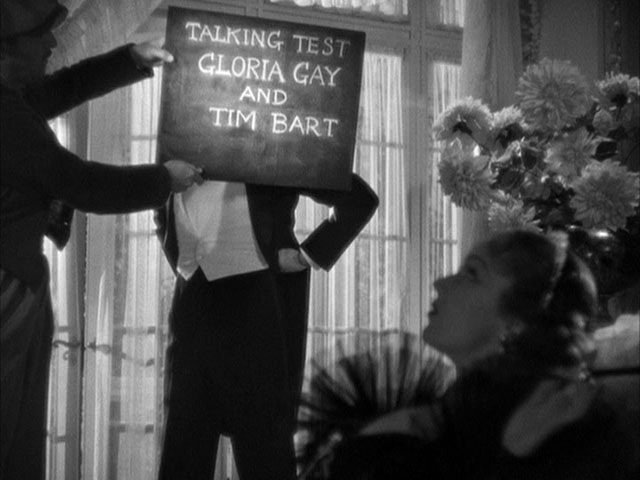
The name wasn’t changed soon enough – the Once a Hero title card made it onto the film. Celeb cowboy actor Bart is introduced screening his latest movie to sick kids, a real white-hat good-guy honest friendly lunkhead. He and his leading lady Gloria are called back to Hollywood for sound tests – she makes it but Bart, dressed in a silly period suit and made to speak out-of-character flowery dialogue, gets cut. Gloria later gets him a bit part as a gangster but he walks when the script is changed to make him a cop killer.

“The day of Westerns is over. We have to make the pictures indoors from now on.” Recalls The Naked City, which we watched the same week, finally making the pictures outdoors again.

Bart in gangster getup with his director:
image

Out of work and unpopular when a young fan comes to visit, Bart throws a party and invites all the stars’ doubles and stand-ins to delight the kid – the highlight of the picture. Some stand-ins do the voices better than others – Chaplin’s and Harold Lloyd’s have no problem since they don’t speak.

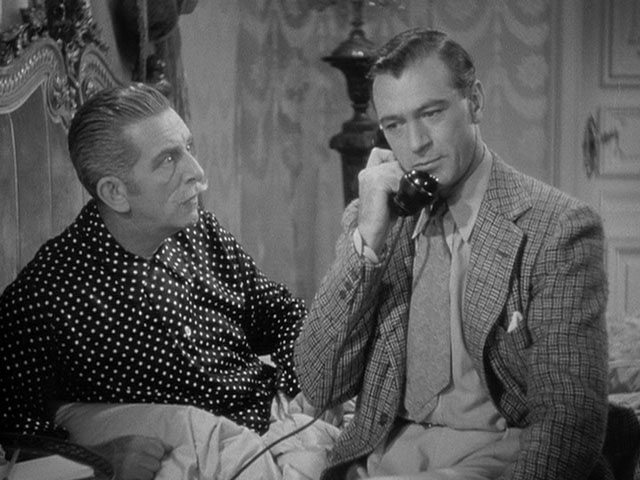
This is not W.C. Fields:
image

The improbabilities pile up… a realtor, after Bart to repossess his mansion while the party is being held, is kidnapped. Bart and Gloria tearfully confess to each other that they’re broke. The boy falls ill and the doctor says he can’t be moved. Tim hits his low point, about to reenact the bank robbery for real, ends up foiling a more serious bank robbery and shooting the criminals. Now a hero in the papers, he’s hired back by the studio, Westerns make a comeback and Tim opens a ranch for sick kids. That’s a better ending than Tom Mix got, touring with a circus after leaving the movies, marrying for the fifth time then dying when his car plunged into a ravine.

Did anybody realize that Blake Edwards made a movie in which Tom Mix (Bruce Willis) teams up with Wyatt Earp to solve a murder at the Academy Awards? It came out three months before Die Hard.

A boy in trouble:
image

Decent movie. I liked Richard Dix (who’d really been a silent film star, and not exclusively in Westerns) but Fay Wray made more of an impression. It all confused Katy, who knows Sam Fuller is some kind of badass and didn’t follow his connection with this movie. I didn’t either, honestly – assuming Power of the Press and Scandal Sheet will show off more of his style (I already know that Shockproof does).

“The class of people who comes here seems to get worse every year… and this year we seem to have next year’s crowd already.” Lubitsch movies always have such great dialogue, but he didn’t write ’em and English wasn’t his first language, so why is it?

It was a bad week for staying awake all the way through movies. Shout out to Gold Diggers of 1933 (I hardly remember anything) and Ninotchka (some awful Russian spies who reminded me of the encyclopedaeists in Ball of Fire were cashing in when I checked out), both of which Katy finished after I’d fallen asleep, and Hollywood Canteen which she didn’t feel like finishing after it got repetitive (army man and buddies are fawned over by actors, including huge star Joan Leslie (who? the girl from Yankee Doodle Dandy?)). I liked this one the most, at least its first half, so I came back the next day to watch the ending.

image

Opens with a racy scene about sleeping in and out of pajamas. Bank owner, cheapskate and stickler for everything Gary Cooper meets Claudette Colbert whose father the marquis is trying to hold onto his status despite being flat broke. CC falls for Gary and they’re to be married when he confesses he’s had seven ex-wives. Angry as hell, she signs a lucrative pre-nup agreement, marries Gary then spends his money while trying her best to provoke a divorce. Hilarity ensues.

image

Gary Cooper’s gruff phonetic pronunciation of French words adds to the humor. He’s actually not bad as a comic actor. Apparently a remake of a Gloria Swanson silent film. That’s David Niven on the beach above as Colbert’s friend (and a bank employee) whom Colbert sets up as a fall guy in her divorce plot. And the great E. Everett Horton as the marquis. Great looking movie with a perfect cast.

Mob violence must’ve been on Fritz Lang’s mind, after making M and fleeing nazis. This is my second or third favorite of his films, a powerhouse drama with a simmering Spencer Tracy, a wrong-man revenge tale. Makes me all upset every time I watch it. I always forget the incriminating word slip that reveals to Tracy’s girl that he’s still alive: it’s memento/momentum.

It’s hard to skim Patrick McGilligan’s Lang bio since it’s full of conflicting stories told by Lang himself, a notorious fabricator. It seems in the original script, Joe was an honest lawyer and after he’s presumed dead his wife (not fiancee) falls in love with a rival attorney. Joe plans to let the townsfolk/mob hang after some are convicted, but he’s discovered by the attorney/wife who run to stop the hanging. No redemption for Joe – he pulls a gun to stop them. Lang suggested Joe become more likable and the wife take over the story after Joe is “killed” so women will have more to enjoy from the film. “There was indeed a tremendous amount of social awareness in the early versions, which featured breadlines, black characters, even a settlement house where Katherine worked. [Newspaperman, The Front Page screenwriter] Cormack’s first rewrite cleared away some of the social commentary; more would disappear as he honed the script.” Lang had shot scenes to visualize Joe’s guilt: ghosts emerging from behind trees to chase him. At the first test screening, which was Lang’s own cut, “after the ghosts came on the public didn’t stop laughing.” So producer Joe Mankiewicz recut the film, removing the ghosts and shooting a final scene where Joe’s wife hugs him forgivingly (which was never in the Lang version) and the movie opened to acclaim. Lang began a lifelong feud with Mankiewicz and studio head Louis Mayer swore Lang would never work at MGM again – some way to begin his Hollywood career. Fury made a star out of Spencer Tracy and exiled Fritz Lang to make westerns and sequels.

Katy said it didn’t feel very JohnFordian, but it did to me, because two thirds of my previous John Ford experience consisted of Judge Priest and The Sun Shines Bright. Takes place in a small town in the south – there’s mob violence and a courtroom climax, and along the way we hear “Dixie” more than once. Sounds extremely Fordian to me. In fact I’m thinking Atlanta-born writer Lamar Trotti, who also cowrote Judge Priest, could stand to vary his game.

Two simple men and their simple mother (Alice Brady, the mom in My Man Godfrey, in her final film) were enjoying simple pleasures in town when they got in a fight with a blowhard and he ended up dead. Blowhard’s buddy Ward Bond (John Wayne’s old friend in Rio Bravo) says they stabbed the blowhard, so off to jail they go. Fortunately, hat-wearing slave-freeing superhero Abe Lincoln (Henry Fonda with a fake nose, looking spookily Lincolnesque in the occasional profile shot) stops the angry lynch mob by picking on them one at a time (a la Sun Shines Bright) and agrees to defend the kids, in between watching his girlfriend (Pauline Moore) die and meeting a new girlfriend (Marjorie Weaver, the lady in The Cisco Kid And The Lady). It’s all based on a completely true story! Except that it was a blunt weapon, not a knife, and the accused men weren’t brothers, and one of them (the one not defended by Lincoln) was convicted of manslaughter and imprisoned for six years, and Lincoln got the other guy acquitted but there was no sneaky buddy to take the fall instead.

Movie slides along peacefully and slowly builds. Very pretty in parts. I’d need to read more or study further to figure why this was one of Sergei Eisenstein’s favorite films… missing something, as usual.

The Country Cousin (1936, Wilfred Jackson)
A Disney Silly Symphony. Country mouse loves all the expensive food in the city, but isn’t fond of cats, cars or roller-skaters so he hauls ass back to the country. Includes an extended drunky joke. It beat a Popeye cartoon and an MGM jazz short of racial caricatures.
image

The Milky Way (1940, Rudolf Ising)
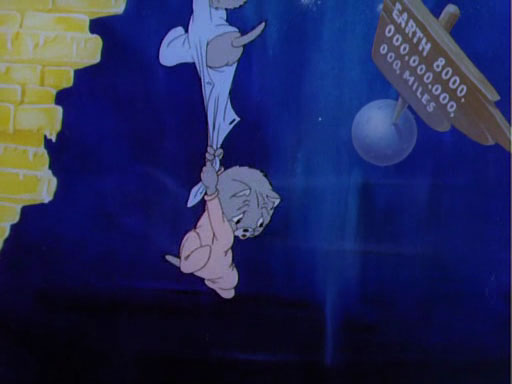
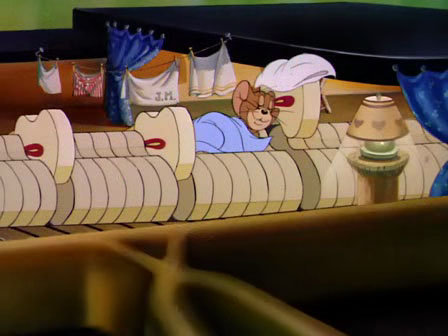
Finally someone other than Disney takes the prize. Disney wasn’t even nominated – competition included the first Bugs vs. Elmer short and the first Tom & Jerry cartoon.
image

The Cat Concerto (1946, Hanna & Barbera)
Won the oscar despite allegations that the story was ripped off from W-B’s Rhapsody Rabbit, beating a George Pal puppetoon about John Henry, a Woody Woodpecker musical, and early appearances by Chip ‘n Dale and Foghorn Leghorn.
image

For Scent-imental Reasons (1949, Chuck Jones)
“Ahhh, le belle femme skunk fatale!”
The greatest sexual predator in the cartoons makes his fifth appearance. This beat a piece John Hubley made for UPA which I’d like to see.
image

Gerald McBoing-Boing (1950, Robert Cannon)
Gerald makes noises, is shunned, finds his place and everyone learns a valuable lesson. Beat out a Mr. Magoo cartoon (also from UPA) and one of my favorite Tom & Jerrys.
image

Toot, Whistle, Plunk and Boom (1953, Ward Kimball)
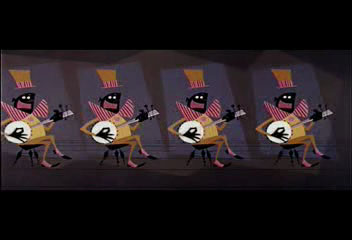
Full-on Disney animation plus outlines and photographs. I’ve seen part of this on those Disney Sing-Along Songs tapes that Trevor played on repeat for two years. The history of musical instruments in ten minutes. Possibly my favorite of all the oscar shorts so far, though I’ll bet it’s not widely played because of the racial stereotypes on display.
image

The first CinemaScope cartoon, originally released to accompany Fantasia – should be a required classic. Tough competition: Chuck Jones, UPA, Donald Duck and Ted Parmelee’s awesome The Tell-Tale Heart.
image

When Magoo Flew (1954, Pete Burness)
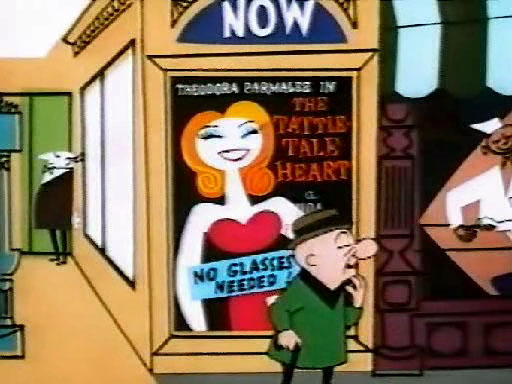
Ridiculous picture (and not always in a good way) complete with weird self-referential ending and a crabby complaint about television. Maybe Tashlin was hiding under a desk somewhere. Not a big Magoo fan, don’t know how this beat a Tom & Jerry mouseketeer short, tweety bird, Disney and Tex Avery. Dig the Ted Parmelee reference in the screenshot.
image

Speedy Gonzales (1955, Friz Freling)
This one doesn’t have the line I remember about wanting to get the cheese but being too lazy, but it does have the line “he’s a friend of my sister” / “Speedy is friend of everybody’s seester!” Another no-longer-politically-correct classic. Surprisingly beat the Hanna/Barbera holiday classic Good Will To Men and an acclaimed Tex Avery piece.

Porky’s Romance (1937)
Porky has barely been introduced and he’s already attempting suicide. First Petunia Pig short – she’s stuck-up and candy-obsessed, with a fancy dog – rejects our man, changes her mind, then in a dream daze he predicts a miserable life with fat, lazy Petunia and flees. Some character introduction… no wonder Petunia didn’t take off. Song “I Wanna Woo” is featured. Don’t know much about 30’s music (despite once replaying the Singing Detective soundtrack for a whole month) but I suppose the Looney Tunes series would showcase popular songs onscreen, the Grey’s Anatomy of its time.
image

Porky’s Double Trouble (1937)
An escaped con looks just like Porky, kidnaps him and replaces him as bank teller for easy money. Two surprises: meek Porky kicks some criminal ass in the finale, and Petunia drops Porky to lust after the killer even as he’s being arrested.
image

The Case of the Stuttering Pig (1937)
The local lawyer takes Jekyll-and-Hyde Juice, calls the audience a bunch of softies and creampuffs, goes after Porky and Petunia’s family to steal their inheritance, defeated by having a chair thrown at him by a guy in the audience.
image

The Woods Are Full of Cuckoos (1937)
Hooray, more owls. Also, the word “esophogi.” The rest isn’t so amusing, all caricatures of 30’s personalities who I mostly don’t recognize.
image

Have You Got Any Castles? (1938)
Opens with a cuckoo – nice continuity. Another collection of caricatures, but this time it’s book titles and characters, something with which I’m more familiar. More excitedly animated and sung than Cuckoos as well. Named after the Johnny Mercer tune.
image

Porky’s Road Race (1937)
More celebrity caricatures, including a parody of the scene where Chaplin goes nuts with his wrenches in Modern Times. Hard to imagine, but that was a current film at the time. The plot is minimal, but among all the film references Porky manages to beat Borax Karloff in a car race. Future head writer Tedd Pierce voices W.C. Fields and Mel Blanc makes his debut.
image

Speaking of the Weather (1937)
Another musical caricature piece, this time with magazines come to life instead of books – even the exact same Thin Man gag. This one has more of a story – a criminal sentenced to Life (heh) escapes and a team of mag covers helps bring him in. Castles has guns firing from All Quiet on the Western Front and Weather has scout troops from Boy’s Life – same idea. Each seems to have been named after a song featured for only half a minute and having nothing to do with the rest of the picture. At least The Woods are Full of Cuckoos is set in the woods. Maybe it’s some contractual co-branding with the music companies, if they had such a thing in the 30’s.
image

Porky at the Crocadero (1938)
P.P., with a music degree from the Sucker Correspondence School becomes band leader at a jazz club, probably imitating other bandleaders of the time but the only one I recognize is Cab Calloway.
image

Porky the Fireman (1938)
Ooh, an animated (and multiplied) Keaton gag, circus tricks, smoke and ash turning frantic white people into lackadaisical black people, murder and mayhem. In the end, the fire wins.
image

Wholly Smoke (1938)
I can’t tell what nationality Porky’s mother is supposed to be: “nix on the mud-playing-in.” An anti-smoking ad with Porky as a stooge conned into trying a cigar by a tough kid. Cameos by the Three Stooges and I think Bing Crosby.
image

Porky Pig’s Feat (1943)
Porky and Daffy are broke, try unsuccessfully to escape from an absurdly high hotel bill. References to Dick Tracy and to other Looney Tunes, including a Bugs punchline at the end. Joe Dante commentary: “By the time he passed away, his career had falled on hard times with bad vehicles for actors of waning popularity.”
image

Swooner Crooner (1944)
Porky’s wartime egg factory is endandered when the hens’ attention is captured by a crooning rooster, leading to a Crosby/Sinatra showdown. Is it naughty that the crooners’ voices make the girls all lay eggs? Also the third Al Jolson caricature I’ve seen today. Oscar-nominated, beaten by a Tom & Jerry.
image

Hare Remover (1946)
I take it Tashlin didn’t do many Bugs cartoons. Elmer (looking a little primitive) is a wannabe mad scientist who recruits Bugs to test a formula which doesn’t seem to do more than taste awful (and explode when thrown).
image

Also watched a short doc on Tashlin’s career. Sounds like his comic strip Van Boring was the Dilbert of its time. Would’ve been great if they had clips from the live-action films instead of just a few stills.

Zweigroschenzauber (1929, Hans Richter)
The intertitle says “Twopence Magic: a commercian in picture rhymes.” Movie shows us a thing, then crossfades to a similar-looking thing. Much better than I’ve made it sound.
image

Dada (1936, Mary Ellen Bute & Ted Nemeth)
Shapes in motion, quick.
image

Synchromy No. 4: Escape (1938, Mary Ellen Bute & Ted Nemeth)
A Bach music video, with black bars perversely imprisoning the viewer away from the orange and blue color geometric spectacle beyond.
image

War, etc. (1983, Leo Schatzl)
Crude drawings of planes, horizontal scratches give the appearance of speed, sound fx from old arcade games. Mix it up with some TV interference. Part of an installation which surely annoyed many (unless the sound was turned down).
image

OXO Wonder Vision (1996, Leo Schatzl)
Looks/sounds like the window of a plane flying through a cloud. Then the plane slowly sinks into a giant coffee pot. It must be endless fun to be an avant-garde video installation artist.
image

The Endless Sandwich (1969, Peter Weibel)
Pretty much this shot, a guy watching a guy watching a guy, until the TVs start staticking from the inside out, until our own TV statics, closing with a quote by the filmmaker.
image

Imaginare Wasserplastik (1971, Peter Weibel)
Meta-video-art using “television as a time-space switch,” only a minute long. Not great, but so far I like this guy better than Leo Schatzl.
image

Fluxfilm 1 (1964, Nam June Paik)
“pranksters”, “playful artists”, “ephemeral humor”: the Fluxus movement sounds like fun. But then the first film I watch is a pure white screen and silent soundtrack. What’s worse, someone has punk’d my DVD player so the clock is moving at half-speed.

Fluxfilm 2 (1966, Dick Higgins)
Still silent, closeup of a man’s mouth chewing. Okay, I’m done for now.

Allegretto (1943, Oskar Fischinger)
All colored diamonds and circles, so lovely. In close sync with the music, where in Motion Painting #1 the music seems an afterthought.
image

Motion Painting No. 1 (1947, Oskar Fischinger)
Like it says, a motion painting – oil on glass, all small rectangles and big spirals. In The Mystery of Picasso the tension was in figuring how the painting would be finished, where he was heading, but in this the fun is in getting from one intermediate step to another. The process is the destination. There should be more of these!
image

Franz Kafka (1992, Piotr Dumala)
Is the movie supposed to be making that sound of a cat in heat beneath the music, or is my laptop freaking out? Dark and scratchy and slow-moving, nothing actually happening. Oh wait, there’s some sex. Fulfills almost all of the Robyn Hitchcock holy keywords: sex, food and insects (what, no death?). I’m sure it’s very technically accomplished but I found it dreary and ponderous. The filmmaker made a plaster-scratch version of Crime and Punishment eight years later (or more likely he worked on it for all eight years).
image

Tales from the Far Side (1994, Marv Newland)
Very inessential, slow-paced animated half-hour of Far Side cartoons. Really the most interesting bit is seeing Marv Newland’s name, 25 years after his seminal Bambi Meets Godzilla. Either he’s no longer a master of timing, or there was too much Gary Larson interference… or maybe you just can’t turn a single-panel comic strip into a 30-minute TV special. Doonesbury worked out, but that was talky and story-driven to begin with.
image

Mr. Prokouk Shoots a Movie (1948, Karel Zeman)
Czech short, part of a whole series of Mr. Prokouk adventures.
image

Prokouk is pointing at us, telling us to get off our asses and join the workforce!
image

The Monkey’s Teeth (1960, Rene Laloux)
Intro is a three-minute doc of a group-therapy institution for depressed people, what follows is an animation of the film they wrote together. Sad man has a toothache, goes to a dentist who steals his teeth to sell to rich people (I wouldn’t think the teeth of the poor would be worth much, but maybe in France everyone practices excellent dental care). When the monkey wizard bicycles by, I figured the dentist would be put in his place and the stolen teeth returned, and that’s just what happens but first the sad man gets chased into a high school by some cops who get turned into children. Hmmm.
image

Dimensions of Dialogue (1982, Jan Svankmajer)
It’s been too long since I’ve watched my Svankmajer shorts. This is an all-time fave. Faces made of identifiable objects consume each other, becoming smoother until they resemble human heads. Two clay humans make love, create an unwanted clay baby then destroy each other. And so on. Not one for brevity, J.S. takes everything to its conclusion and explores all permutations of his object manipulations – this is what makes his features seem so tedious, but his shorts seem so excellently complicated.
image

Flora (1989, Jan Svankmajer)
A clay person tied to a bed and covered in rotting fruit and veg tries to reach a glass of water. Only a few seconds long, made for MTV (that’s czech for WTF).

Food (1992, Jan Svankmajer)
Oooh I love stop-motion using live actors. Guy enters a room facing a paralysed robot guy, reads instructions hanging on his neck (which are actually an MTV entry form: “Entrant must send a VHS or U-Matic, etc.”), manipulates the guy (puts money in his mouth, receives a sausage and mustard from chest, utensils from ears), then the robot guy leaves and the eater takes his place. Two guys sit at a restaurant, can’t get service so they eat their own clothes and the table. Finally, people are made gourmet meals of their own severed body parts. A classic, obviously.
image

I Love To Singa (1936, Tex Avery)
“Enough is too much!” An old favorite. Owl Jolson is of course a parody of The Jazz Singer, which I’ve still never seen. Jazz and owls: a combination you don’t see often enough.
image

Point Rationing of Foods (1943, Chuck Jones)
An extra tucked away on a Looney Tunes DVD, explaining the wartime canned food rationing system to the public through cheap quickie animation. Helpful to me, since I never bothered to learn how rationing worked before. Also tucked away is the Tashlin-penned The Bear That Wasn’t, probably not because of its unworthiness but because it was made at a different studio.

I Haven’t Got a Hat (1935, Friz Freling)
A variety show of children performers, with hijinks. Porky’s first appearance – the studio intended for a more generic troublemaker character (below, right) to take over, but the public demanded a shy stutterer instead. The title song is catchy, anyway.
image

Roof Sex (2003, PES)
Stop-motion of chairs having sex. The cat is blamed.
image

Methuselah (1927, Jean Painlevé)
The title character is a dog-masked shoe-obsessed megalomaniac. Painlevé himself plays Hamlet, and surrealist poet Antonin Artaud found time to appear in this between Abel Gance’s Napoleon and The Passion of Joan of Arc. Doesn’t really make sense on its own – five filmed episodes that were projected during a stage play, strung together here with a stereotypical silent-film piano score.

The Vampire (1945, Jean Painlevé)
Portrait of the South American vampire bat set to happy jazz. They put a bat and a guinea pig in a cage and let the one eat the other. Don’t think I’ll be showing this one to Katy.

Bluebeard (1938, Jean Painlevé)
An opera version of Bluebeard, comically told with awesome and elaborate claymation.

The High Sign (1921, Keaton & Cline)
Buster steals a cop’s gun, runs a shooting gallery, becomes a rich guy’s bodyguard and becomes the same guy’s hired killer. Gags involving ropes and dogs and a house full of traps – one of BK’s funniest and most complicated shorts. So many film scraches I thought it was supposed to be raining. Features Al St. John (the clown who would one day be known as Fuzzy Q. Jones in a hundred westerns) and the gigantic Joe Roberts.
image

One Week (1920, Keaton & Cline)
Opens with the same calendar we just saw in The High Sign and Buster getting married… nice transition from the last movie except that it’s a different girl. The one in which he builds a house. More acrobatic stunts than the previous movie – the two make a good pairing. Ooh, a meta camera gag and some near-nudity. I think more work went into this than all of Go West.
image

A Wild Roomer (1927, Charley Bowers)
Charley (who not-so-subtly calls himself an “unknown genius” in the intertitles) makes a God Machine which creates self-aware puppets.
image

Actually I’m not sure what that was about, besides being an extended stop-motion demonstration – the machine is supposed to take care of all your household chores. As with both of the other Bowers films I’ve watched recently, he has unquestionably made an excellent machine, so the conflict comes from the complications from having to show it off to others (in this case a cranky saboteur uncle with an inheritance at stake).
image

Zooming in further one finds… a baby exterminator??
image

Fatal Footsteps (1926, Charley Bowers)
“If there were a tax on idiots, Tom would send his dad to the poorhouse.” Well that makes up for the “unknown genius” line. Charley is trying to learn the Charleston to win a contest in the very house where the Anti-Dancing League (motto: “mind thy neighbor’s business”) is meeting. Just when I thought it was gonna be that simple, he invents some mechanical dancing shoes – stop-motion ensues. The shoes get mistakenly worn by Charley’s relative who offends his fellow Leaguers, then Charley wins (and escapes) the contest.
image

Even fish are learning the Charleston:
image

Haunted Spooks (1920, Hal Roach/Alfred Goulding)
The girl is first introduced kissing baby birds, so she’s got my sympathy.
image

Her grandfather dies – she gets the house and inheritance if she lives in it for a year with her husband – but she has no husband! I thought I’d be in for 25 minutes of haunted-house hijinks, but the husband problem has to be solved first (Harold Lloyd is rejected by his rich dream girl, picked up by our girl’s lawyer while attempting to commit suicide) so we don’t get to the house until minute 17. After introducing some superstitious-negro stereotypes, the girl’s crooked uncle proceeds to “haunt” the house to drive her away and steal the inheritance.
image

image

Cute movie, but what I liked best were the illustrated intertitles.
image

Chess Fever (1925, Vsevolod Pudovkin)
Fever has gripped the whole town. Chess breaks up a relationship, drives two people to attempted suicide, then happily reunites them. I guess from important-sounding Pudovkin, with his grim-looking video covers, I wasn’t expecting a comedy, but this was light (despite all the suicide) and wonderful. Wikipedia says it includes documentary footage of the 1925 Moscow chess tournament.
image

Charleston (1927, Jean Renoir)
A scientist from central Africa (a white guy in blackface and a tuxedo) flies in his aircraft (a marble on a string) to post-apocalyptic Paris, runs into a sexy Euro-girl and her pet monkey. The girl (Catherine Hessling, Renoir’s wife) teaches him the Charleston, filmed in cool slow-motion. Maybe this wasn’t as surreal in ’27 as it is today. The first (credited on IMDB anyway) film produced by Pierre Braunberger, who would go from Renoir to Resnais/Rivete/Rouch to Truffaut/Godard to Shuji Terayama.
image

The Little Match Girl (1928, Jean Renoir)
New year’s eve, a poor girl (Catherine Hessling again) can’t sell any matches, starves/freezes to death on the street after hallucinating a better life. The first Renoir film I’ve seen with stop-motion (there’s only a tiny bit) but not the first to focus on clockwork machines. Also reverse and slow-motion and a horse race through the clouds – much more ambitious than Charleston. In her fantasy she plays at the toy store, shrunk to toy size herself, and meets a handsome soldier who looks suspiciously like the handsome cop who was nice to her in the snowy street. It’s all fun and games until Death comes and wrestles her from the soldier. Both these shorts were shot by Jean Bachelet, who would be cinematographer on three separate films of The Sad Sack including Renoir’s.
image