image

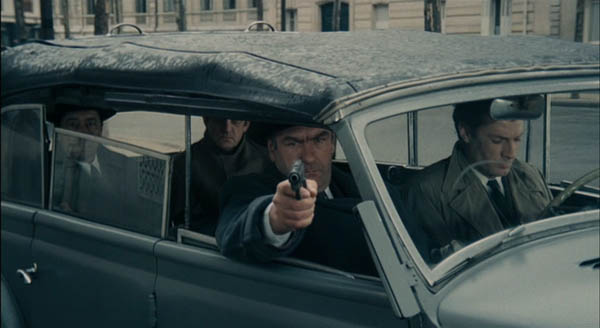
Sooooo bleak. Not the normal kind of resistance movie. Their struggle is necessary but hopeless. Movie opens with our main guy escaping from a camp, then having the guy who ratted on him killed. Many small triumphs and large defeats later, we end with the gang shooting one of their own then driving away as the titles tell us how each of them later got killed in the struggle.

image

Hardly any non-diegetic music, superbly shot, dark and dreary but not in a tiring way, more of a matter-of-fact “this is how things are” straightforward way.
image

These are not heroes in the regular movie sense of the word. Theirs is not a glorious fight… it’s hardly a fight at all, more a struggle for survival. The problem is that it would be easier to survive by living ordinary lives, by cooperating with the nazi regime, by ratting on their fellows, by doing any of a number of things they refuse to do, by giving in. The movie is about how much it can suck to be moral, to stick to your convictions. While those in the resistance who survived the war can’t have much to be proud of… unlike most residents of their country, they also can’t have much to be ashamed of. A great, great movie. Nice contrast to the portrait of resistance to nazi occupation in Black Book this year.
image

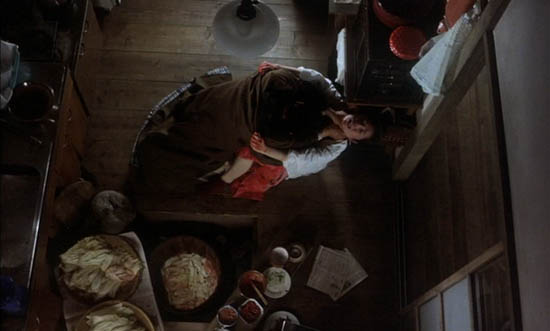
Imamura’s comeback film a decade after Profound Desire of the Gods. Flashed back and forth in time and space and starts at the end, rather like most of today’s movies, telling story of a sociopath killer with a troubled past. Iwao Enokizu is on a delivery run when he kills a couple of guys. Goes on the run for a couple months, pretends to be a professor and takes up with a girl at the boarding house he’s hiding at. They seem to like each other, but he ends up killing her (and her distrustful ex-con mother) and I think one other person before getting caught.

image

image

Style to spare. Not my favorite movie, but definitely good and possibly great, makes up for the last Imamura movie I wasn’t too sure about, The Eel. Happy to see a very modern Japanese movie, not a sloggy period piece. Watched with Jimmy Lo, who also liked. Made about the same time as Days of Heaven, Apocalypse Now, Stalker, Stroszek, Kagemusha, Zigeunerweisen, Altered States and The Elephant Man.

image

image

The first time I watched this, I felt bad for not liking it. Just… nothing ever happened, and it seemed to mostly consist of people standing theatrically far apart from each other and looking away. Bored me to death. Then I embraced my dislike of L’Avventura since I found that more and more Italian films made me feel tired and annoyed. And geez, can those mofos not lip-synch properly. I will never get over that. But watching L’Eclisse and talking to Dawn convinced me to give this one another go, and so I have…

And what a masterpiece it is! Beautiful from start to finish. I guess knowing what I was in for (pace-and-plot-wise) and knowing what to look for (camera compositions, not an engaging story) really helped. Played most of the commentary track afterwards and that helped too.

There is a story here. Gorgeous Claudia (Monica Vitti) vacations with her friends Anna (reconnecting with fiance Sandro after months away) and Giulia (with her drab husband) on a cruise. At a rocky island, Anna disappears and never returns. Claudia and Sandro search everywhere for her, extending the search to the mainland, where they finally fall for each other and give up on Anna.

Story’s not so bad, characters not as horrible as all that, just can’t believe that Antonioni can set up EVERY shot so beautifully.

Wow, this is one of my favorite movies now. I was right about watching it in the theater (on film)… really helped see everything properly. More important, possibly, was seeing it for a second time, already knowing the pace and the organization of story (such as there is a story), being able to sit back and enjoy.

First third (?) of the movie is an architectural dream, all buildings and structure and angles, beautiful and disorienting. Whole movie is concerned with structure and glass.

Funny, but not punchline-funny so much as enjoyable and light, building up towards the end of the crazy restaurant sequence when suddenly humor’s flying from all directions.

I feel like I “got it” this time, but also feel like I missed a lot. Not in a bad way, more in a “could see this again and again” way.

I’d thought Mr. Hulot wasn’t in this one but of course he is. What was I thinking of… Parade?

Katy, Jimmy, Misty, even Adam liked it.

Ah, Preston Sturges movies… always worth watching over and over.

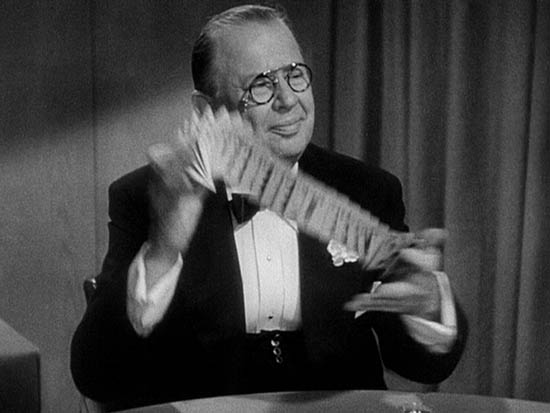
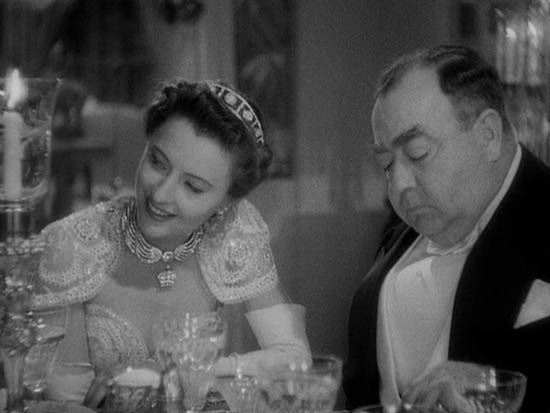
You’d think I’d really know who Henry Fonda is, but you’d be wrong. Anyway, now after this and Return of Frank James, I could probably pick him out of a lineup. Terrific, funny cast between him, Barbara Stanwyck, Charles Coburn as the card shark and William Demarest (the dad in Morgan’s Creek) as Muggsy. Writing is at least as good as the acting… was beaten for an oscar by a Robert Montgomery / Claude Rains comedy.

image

image

Henry’s been up the amazon collecting snakes and meets Stanwyck on the ship back home. They fall in love while she’s conning him out of some money with partner Coburn, and when he finds out about the con he leaves her wanting payback. She reinvents herself as The Lady Eve and gets invited to his family estate via mutual monocled friend Eric Blore (played a valet in Sullivan’s Travels). They get married then she runs off and reappears as her card-playing self to have an “affair” with Henry… the end. Overcomplicated, but a proper comedy should be.

image

image

Did Katy like it? Don’t know for sure but I’d think so.

Update Jan 2015: Katy definitely likes it.

Postcolonial Wednesday, part one. I loved everything about the movie, but Katy didn’t like it because of its colonialist politics.

Based on a Rumer Godden novel, and she was on set during filming. Harriet is a young aspiring poet, who thinks she knows all about India… neighbor Valerie is the daughter of a rich American… and neighbor Melanie is half-Indian with an American father (Mr. John) trying to maintain both her American and Indian heritage. One day Captain John shows up and they all fall for him, though Melania tries to hide it. Oh and Harriet’s little brother Bogey has an unhealthy (and eventually fatal) interest in animals, especially poisonous snakes.

A gorgeous movie, looked great on the big screen. Life/death/love/loss themes throughout, all loosely tied (by Harriet more than by the Indians) to the river. The dream sequence told by Melanie (featuring two Indian gods and some dancing) is so great it even impressed Katy. Renoir movies make me feel more alive.

Harriet’s father, Esmond Knight, was in some Powell/Pressburger movies. Most of the other actors were in plenty of other films, except the nanny “Nan” who was in one more IMDB-credited movie… and Harriet, who never was in another movie, and died from cancer in 1967. Her real dad, a comic movie star in the early 30’s, died three weeks later.

CONTEXT: Jean Renoir made The River semi-independently in India after his Hollywood period (Woman on the Beach, Diary of a Chambermaid, etc) and right before his return to France with the celebrated Coach / Cancan / Elena trio. Came out around the same time as Statues Also DieSamuel Fuller was getting started… Bunuel’s Olvidados, Bresson’s Diary of a Country Priest… some good sci-fi was out in the States… Fritz Lang was making House by the River and Clash by Night and Ophuls had “Madame de…” and “Le Plaisir“.

Came out in late 1960, after Breathless (which Truffaut wrote), 400 Blows and Les Mistons. Dawn doesn’t like it, and the Taschen book I’m reading on Truffaut says it was largely disliked, misunderstood and ignored (and even Jules & Jim did just well enough to break even, no big comeback).

image missing

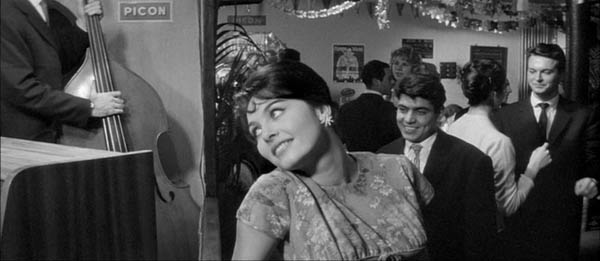
Charlie plays piano at a small-time bar, running away from his old life as a concert pianist after his wife Therese killed herself. He’s friends with a prostitute (Clarisse) and a bartender (Lena). Charlie’s little brother Fido (a kid from 400 Blows) lives with him, and his other brothers are thieves who run into trouble after screwing over their two scary/clumsy accomplices, who chase everyone throughout the picture. In the end, Lena is killed and Charlie returns to work.

image missing

Great bits: Charlie’s inner-thoughts voiceover, the subtitled singer in his bar, the balance between ridiculous and dangerous maintained by the gangsters, the sudden shifts in tone, the beautiful girls surrounding Charlie.

image missing

The commentary points out all the mirrors, says Truffaut used lead actors who looked like himself (true of Jean-Pierre Leaud).

image missing

I enjoy the movie – it’s light and short and heartfelt. But I’m also still suffering from post Children of Men trauma, and this movie’s joyful subversion of genre doesn’t hit hard enough to make an impact. Maybe when I’m in a more delicate mood I can appreciate it more.

Katy thought Belle was dumb and the final scene looked crappy/fake and bits were stolen from Cinderella, but even she was impressed by the handheld candelabras.

One of the most beautiful movies ever, of course. Lighting, set design and costumes are completely perfect, acting and story and effects are all great. Probably not much needed to say since I’ve seen this a bunch of times now.

Learned from commentary: actor Jean Marais (Avenant, The Beast, The Prince) was Cocteau’s lover and suggested he make this film. René Clément (Forbidden Games, Purple Noon) co-directed. Beauty Josette Day starred in Cocteau’s Les Parents Terribles, which I barely remember. Given the post-WWII shortages, Cocteau’s illnesses and all the other problems involved in making this, it must be one of the biggest film triumphs in history.