Falkenau, The Impossible (1988, Emil Weiss)

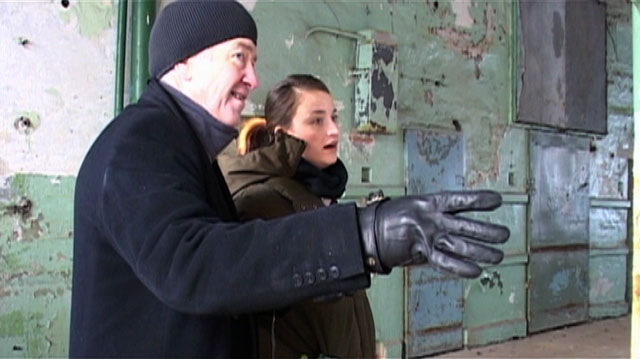
Weiss seems to love Sam Fuller, but he’s not on Fuller’s wavelength, unable to have much of a conversation with the man. So this doc (which is an hour long, but I crammed it in the shorts section anyway) admirably fulfills its purpose by screening all of Fuller’s WWII concentration camp cleanup footage while Sam narrates, taking him to the site of the camp in present-day and asking for his thoughts. That would’ve been more than enough, but Weiss leaves us with a one-sided (Sam likes to talk) silly-ass conversation about fictional representation of war, which would’ve been better left out. I’m most of the way through Sam’s autobiography, one of the greatest books I’ll ever read, where Fuller says this doc screened at Cannes and was praised for its straightforwardness.


Cry For Bobo (2001, David Cairns)

Poor and desperate, a man resorts to thievery to get by. He’s caught and imprisoned, then shot to death after escaping, as his wife and kid leave town, trying to start a new life without him. It’d be a miserable little story if the main characters weren’t clowns. Hilarious, reference-heavy, and better than I’d expected – and I had expected greatness. Already watched twice and trying to get Katy to see it (she hates clowns).


The Possibility of Hope (2007, Alfonso Cuarón)

Zizek:
“We no longer live in a world. ‘World’ means when you have a meaningful experience of what reality is which is rooted in your community, in its language, and it is clear that the true most radical impact of global capitalism is that we lack this basic literally ‘world view,’ a meaningful experience of totality. Because of this, today the main mode of politics is fear.”

Naomi Klein:
“More and more we see the progression of this economic model through disasters. So we’re now in a cycle where the economic model itself is so destructive to the planet that the number of disasters is increasing, both financial disasters and natural disasters.”

James Lovelock:
“If you live in the middle of Europe or here in America, things are going to get very bad indeed.”

Of course the “hope” part comes at the very end, as it does with all recent doom-gloom climate-change global-meltdown documentaries, and the hope in this one, despite the film’s title, isn’t all that hopeful. Start preparing now for how badly the future will suck – and it will suck. An Inconvenient Truth supposedly has a credit-time list of ways you can help the planet, Home encourages us to build windmills and go vegan, Wake Up Freak Out says we must act politically, and there’s always the hope during Collapse that the subject is just wrong, or that he’s a crackpot. Not so much here. If I’ve avoided talking about the filmmaking, well it’s basically a radio show with distracting visuals, much of it b-roll from Children of Men.


Night Mayor (2009, Guy Maddin)

Pronounce it similarly to “nightmare.” An inventor, a Bosnian immigrant, harnesses the “music” of the Aurora Borealis and converts it into dreamlike images which are sent across phone lines to his fellow Canadians using his Telemelodium. Even more/cooler junkpile inventions than in the electric chair short, some nudity (not as much as in Glorious or The Little White Cloud That Cried) and some delicious nonsequiturs. Clean narration by the accented inventor and two of his kids, along with excellent string music. At the end, the government shuts down his project, so he turns his attention from the skies to the seas, considers visualising whale songs.


One Minute Racist (2007, Caveh Zahedi)

Sweet three-minute cartoon story about the slippery slope of racism narrated by CZ, who codirected with a couple animators. Story of a student who doesn’t like asians because they’re too uptight and a paranoid library security guard who threatens to confirm the stereotype.


Talking Heads (1980, Krzysztof Kieslowski)
“What is your year of birth?”
“Who are you?”
“What do you most wish for?”
These three questions are asked to a one-year-old, then a two-year-old, and so on. The final answer: “I’m one hundred years old. What do I want? To live longer. Much longer.”

Most people seem to have thought about the questions for a while – possibly while the camera and lighting crew buzzed about their head, since the film looks like a lesson in how to effectively shoot subjects, professional but no-frills, by cinematographers Jacek Petrycki (No End, Camera Buff) and Piotr Kwiatkowski (second camera on the Three Colors). As a result, the answers come out seeming like a beauty pageant. Everyone wants more honesty and fairness, for everybody to just get along. The answers from kids under ten and adults over seventy are the best.


Born Free (2010, Romain Gavras)

I don’t count music videos as “shorts” or things would get too complicated, but then, I don’t really count this as a music video. M.I.A.’s music isn’t far enough up front, and the video (by Costa-Gavras’s son) is twice as long as the song. It’s a little piece wherein red-headed kids are rounded up by violent cops, beaten, shot and made to run through a minefield. Probably trying to make a point about tolerance and freedom, but for messages of tolerance I preferred the climactic speech in Cry For Bobo, also featuring overzealous cops: “First they came for the mimes, then the jugglers, then the bearded ladies. Next time, it were you.”


Hotel Torgo (2004, buncha dudes)

Buncha dudes head for El Paso and interview the last guy who remembers working on Manos: The Hands of Fate. There’s no real point to this, but the guy is very good-natured about it. Learned that Torgo was high all the time, which shouldn’t come as a surprise but somehow still does.

Resnais was making art shorts a decade before the official birth of the French New Wave, building up to his mindblowing first three features by practicing his filmmaking, not just by writing and dreaming. Le Chant du styrene and Toute la memoire du monde are both wonderful, and the latter looks forward to the themes and camera work of Last Year at Marienbad. Finally got my hands on some earlier shorts with subtitles, very exciting.

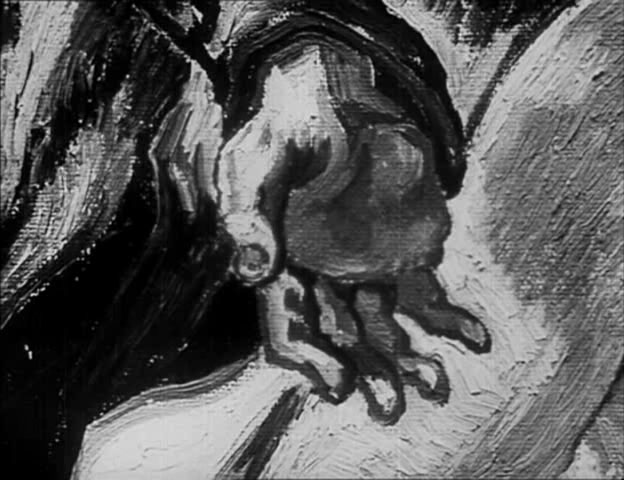
Van Gogh (1948)

This and Paul Gaugin tell abridged life stories of the artists with imaginative narration, the visuals composed solely of the artists’ works, using camera movement, zooms, fades and a musical cutting rhythm. Both artists lived in Paris but moved away, and worked over the same period of time (in fact, they knew each other).

On Van Gogh: “He was a preacher, but he preached badly. The violence of his faith frightened even the faithful. It was in the process of trying to find a way to express his love for mankind that he discovered himself to be a painter.” The film gets great mileage out of the artist’s descent into madness. Katy points out that the sunflowers lose some of their power captured in a black-and-white film.

image

Little about this online, besides that it won an Oscar. Auteurs: “The 1948 piece Van Gogh proved so successful in its original 16 mm form that it was subsequently remade in 35 mm, winning a prize at the Venice Film Festival as well as an Academy Award.” It’s also the earliest listed Resnais film that I’ve ever seen anyone mention, although an article by Rhys Hughes confirms the earlier shorts exist.

E. Wilson in her Resnais book:
“Resnais’s aim is not merely to use Van Gogh’s art as material evidence, substituting paintings for snapshots of the artist’s life; more subtly he uses the paintings to show us the world apparently as Van Gogh saw it, to show us not merely the object world of nineteenth-century Holland and France, but to conjure the subjective images of that world perceived by the artist and captured by him on canvas. Resnais’s investigation in the film is not merely art historical therefore: he seeks already, as he will in his later films, to reveal the work and process of the imagination, the shots of reality that we view, distorted, in our mind’s eye.”

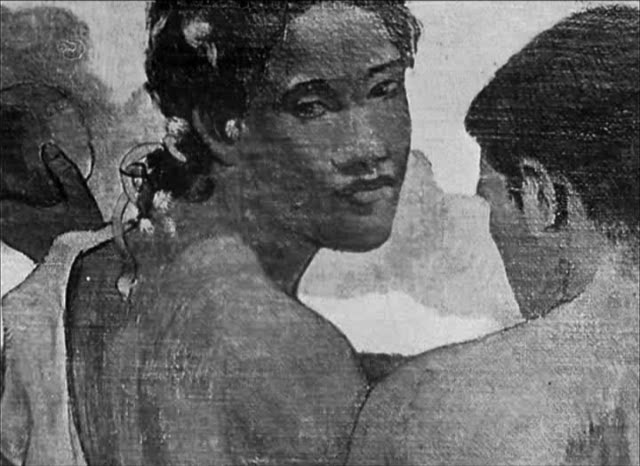
Paul Gaugin (1950)

The opening narration summarizes: “A bank employee and head of family, well-to-do, middle-aged, comfortable, discovers that he has been lying to himself. He wants, indeed he must paint. From that point on, he devotes himself exclusively to painting, and after twenty years of poverty dies alone.”

Starts in 1883, just like the previous film. Instead of poor and insane, Gaugin ends up poor and sick in Tahiti, painting shirtless native women. The commentary on Van Gogh was written by co-producers Robert Hessens and Gaston Diehl, but this one is taken from Gaugin’s own writings. Produced by Pierre Braunberger, who assisted early works by Renoir (Charleston, La Chienne) and Truffaut/Godard, ending up with Terayama Shuji of all the weird people. I wish they’d done a Pierre-Auguste Renoir film in this series.

image

Maybe I didn’t like this as much as Van Gogh because I don’t like the artwork as much, didn’t figure out the painter’s style, or maybe because it seems a rerun of the previous film (artist starts painting, gets obsessive, flees the city, goes poor/mad). E. Wilson, the biography author, agrees and spends more pages discussing Guernica (1950) instead. She calls this “a largely pictorial film by contrast,” points out that in Statues he would be “more self-conscious about self/other relations, colonial and post-colonial tensions.”

Statues Also Die (1952)

I’ve watched this before, but without subtitles. It is immensely improved when I understand the commentary – not that the shots and editing are anything short of excellent, but the movie is making all sorts of points about images, history, culture and colonialism which are sort of essential.

image

On one hand, I thought this was a bad movie.

image

The script seems to have been written for fourth graders, and every camera shot is from a helicopter so you start to get the feeling that all the slow gliding movements are on purpose and you’re watching a giant slow-motion Bollywood video. Narrator Glenn Close throws huge numbers and statistics at us until they become meaningless.
“faster and faster…”
“billions and billions…”
“There’s no time to be a pessimist.”
The slow pace, lingering on each beautiful helicopter shot, and precious repetition-heavy voiceover stinks of pretentiousness, as does the stereotypical music (the kinds of howling African female singers that Martha Wainwright listens to). Sometimes the music turns new-agey, and the voiceover says stuff like “The earth is a miracle. Life remains a mystery,” I’m thinking as a concession to hippie-minded creationists. I wasn’t sure if the doc advocates vegetarianism as part of its packaged hippie agenda or because meat is actually worse for the earth than veggies. And in the length between cuts, I had time to reflect on the irony of a conservationist riding over the whole globe in a helicopter. Maybe their copter ran on biofuel, but more likely they paid a farmer in bolivia a dollar fifty to plant some trees then declared their film “carbon-neutral” in the credits.

image

But speaking of the credits, jeez, this was shot in twice as many countries as The Fall, and there’s no doubt that the visuals are amazing, especially in the high-def version that I watched. And the point of the movie is to keep the viewer hooked with these visuals while impressing upon us how severely we have destroyed the earth (for people like me who missed that Al Gore doc), and what consequences we will soon face. Glenn Close tells me that “humanity has no more than ten years to reverse the process,” then I turn off the movie and, no shit, read the headline “global warming skeptics growing in numbers,” along with the usual business about war, politics and health care. A few windmills in Florida are not gonna be enough to forestall the wrath of Glenn Close’s global-warming pandemic.

image

We are severely screwed. Movie ends up being scarier than Collapse, Wolf Creek and Martyrs combined. I bought ice cream.

image

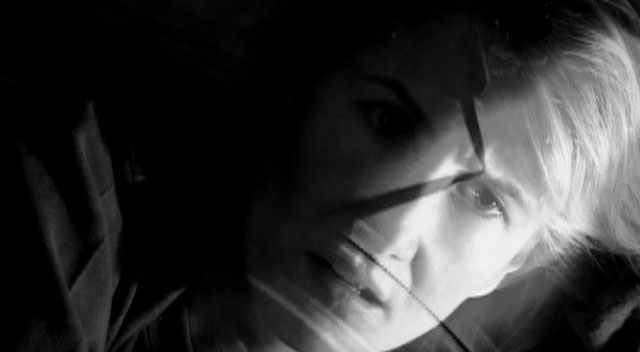
Didn’t stick with me very well the first time, maybe because it didn’t make enough narrative sense for my brain to properly hold on to, like a wacked dream that I remember clearly when I wake up but is already gone by the time I hit the shower, not related enough to reality to survive my beginning to ponder my work day. Should have watched it a couple times originally. But now I see I should watch more than a couple times, maybe annually from now on. Lynch’s most free, most trippy and loose movie, existing almost entirely in dream state, but also his most dirty and real looking because the DV photography feels like a home movie. Completely inexplicable and entirely worthwhile.
image

Hard to watch at home. The three hour runtime, the almost entirely black scenes, and the very dynamic audio levels (quiet whispers turn into sudden shock sound effects and screams) work best when I’m home alone and wide awake on a winter’s night. I think it freaked out my birds more than anything else I’ve watched. Next time I’ll watch on my laptop, in accordance with Lynch’s dreams of an all-digital cinema.

image

The plot, thanks to Cinema Scope:

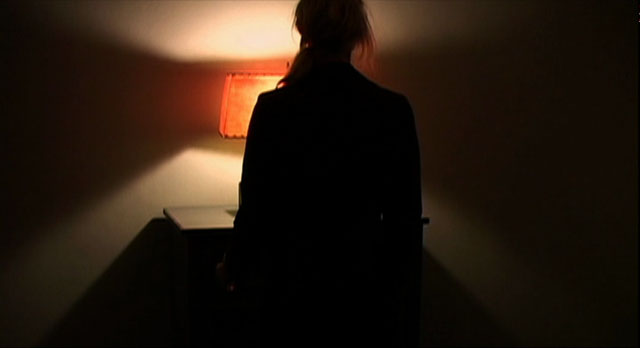
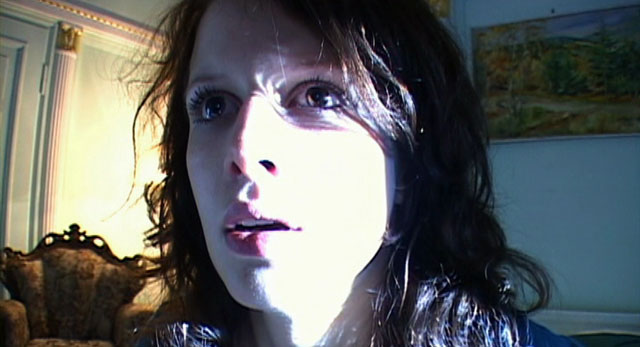
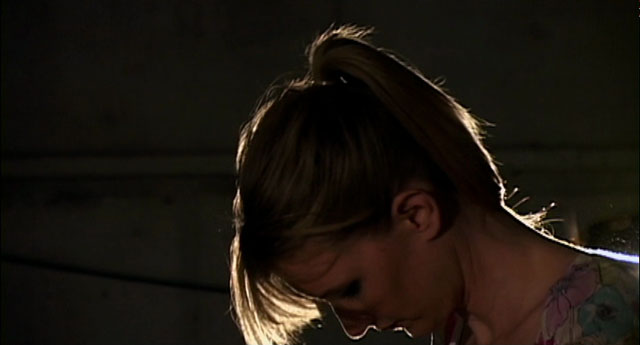
Dern’s first incarnation, Nikki Grace, is an actress who lives in a cavernous Hollywood mansion and lands a coveted role in a Southern melodrama titled On High in Blue Tomorrows opposite suave ladies’ man Devon (Justin Theroux). She soon learns that the film is a remake and that the original Polish production was aborted when both leads were murdered.
image

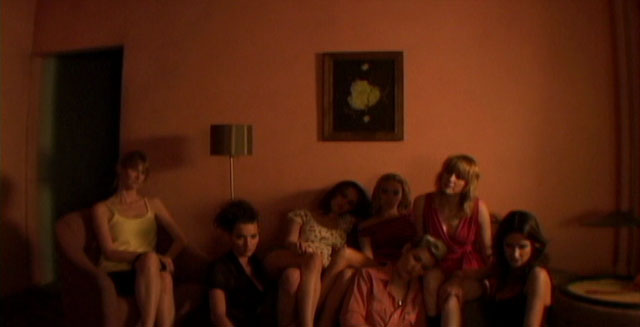
Nikki begins to merge with her character, Sue, and the script’s adulterous affair spills over into real life. But what’s real, and who’s dreaming whom? The boundary between the film and the film-within-the-film — indeed between all levels of reality — vanishes completely. Besides Nikki and Sue, Dern plays at least two other overlapping variations on the character: One lives in a shabby suburban house, sometimes with a harem of gum-chewing, finger-snapping young women. The other, a tough-talking Southern dame, is spilling her guts out in a dank room, telling floridly vulgar tales of sexual violence and terrible revenge. Interspersed throughout are scenes from a Beckettian sitcom with a rabbit-headed cast. Certain phrases, often pertaining to identity confusion (“I’m not who you think I am,” “Look at me and tell me if you’ve known me before”), repeat in varying contexts and start to acquire talismanic power. (The key to transcendental meditation, which Lynch has practiced for over three decades now, is the repetition of a personal mantra.) Meanwhile, the film we are watching is beamed to a TV in a hotel room, and a mystery brunette watches along with us, silently weeping.
image

Did I write this weeks ago, or was I quoting from a website?: “Dern changes identities and locations, each with only a faint memory of the others, giving her a constant sense of unease.”

image

The neighbor who visits her is awfully good in a Twin Peaks sort of way. A choreographed dance to “The Locomotion” manages to be one of the spookiest parts. Seeing father Rabbit leave his locked-down living room set is thrilling. Cameo by the girls from Darkened Room (actually only Jordan Ladd is strictly from Darkened Room, but I like to think they’re the same characters). William H. Macy in a big cheesy cameo as a radio reporter and Harry Dean Stanton as Irons’ sad assistant, always bumming money off people.

image

Bright Lights:
“It sounds complicated, but it makes clear emotional sense, just as Mulholland Drive did.”
image

House Next Door calls the ending hopeful, and I guess you could say that. Dern escapes from at least one of the films she’s trapped within, wakes from the dead and goes back home where, per HND, “Lynch returns to the face of Grace Zabriskie’s Neighbor and, before our jaundiced eyes, this formerly intimidating and ugly figure becomes suddenly beautiful and ethereal. Moreso than Dern’s final close-up (a stunner in its own right) I think the answers to the film’s many mysteries, for those who need them, are contained in Zabriskie’s sideways glance and virtuous smile.”

image

Extras on the UK DVD are all interview-style. One is by The Guardian, one is by Mike Figgis at a hotel in Poland.
image

Interviewer: “If T.M. creates positiveness… some people might ask: what about all the darkness that’s in the films?”
Lynch: “Exactly.”

On the inclusion of Rabbits in Inland Empire: “Sometimes we start something and we think it is that, and later… it sprouts and becomes a bigger thing.” Okay it’s not a great quote.

“Really the only difference [between IE and the earlier films] is Inland Empire was shot with DV… and it was a low-grade, bad DV.”
image

“It is true that the 50’s gave birth to rock and roll and that early rock and roll holds a very special power, I think. It started the whole thing rolling, but in my mind it drifted away a little too quickly. And I think there’s more gold to mine from that feel of the first rock and roll.”

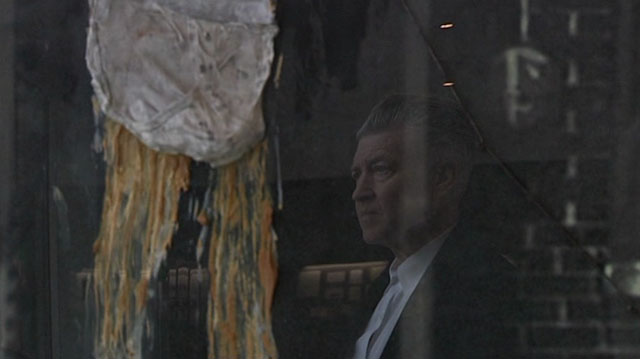
Repeats the same information over and over, not saying much for long periods, interviewers asking stupidly general questions hoping Lynch will tell them a nice story. He does tell a couple light ones, but three times each. So the final segment, The Air Is On Fire, comes as a happy surprise. It’s a biographer (who knows enough about Lynch not to ask pedestrian questions) viewing and discussing Lynch’s paintings and sound installations.
image


“We’re cooking quinoa.”
“This pan is unbelievable.”
The U.S. DVD is already better than the U.K., with a b/w video of Lynch in his kitchen and a nice stills gallery, and that’s before I even get to the meat of the disc. Hey, he times his cooking the same way I do, by yelling out numbers from the clock instead of setting a proper timer.

image

More Things That Happened is outtakes from IE. First 20 minutes are scenes with Dern’s circus husband. He comes home late. He sells a girl a watch.

image

Dern continues talking to the man at top of the stairs. She has a crossed out “LB” tattoo on her hand. A girl with earrings talks to Dern about meeting Billy at a bar. Mostly people telling each other stories.
image

Ballerina
A ballerina performs behind cloudy overlays and blobby digital soft focus to ambient music. Some neat effects in there but too long by half.
image

Lynch (one) is a full-length documentary by BLACKandWHITE, whatever that is, company or person, on the making of Inland Empire. Lots of behind-the-scenes dealings, set construction, some talk with the actors, Lynch in every scene. Lynch 2 on the IE disc is presumably deleted scenes from that doc, another half hour of material. Not tremendously eye-opening, just gives you the impression that IE is completely Lynch’s artistic vision, if you couldn’t have figured that out before, down to the smallest detail. He yells at his crew on set then praises them up and down in interviews. We hear a lot about the improv nature of the film and script, but we see careful planning and scheduling of shots and scenes. Watching David choreograph the closing credits musical number, telling the lumberjack not to cut all the way through the log because “we’ve only got one log,” you realize that all the backstage footage in the world might be fun to see, but still wouldn’t explain a thing.
image

“It’ll be more than a mouthful, which will look real, and it looks great. And you can throw up a lot of blood. Two times you’ll throw up.”

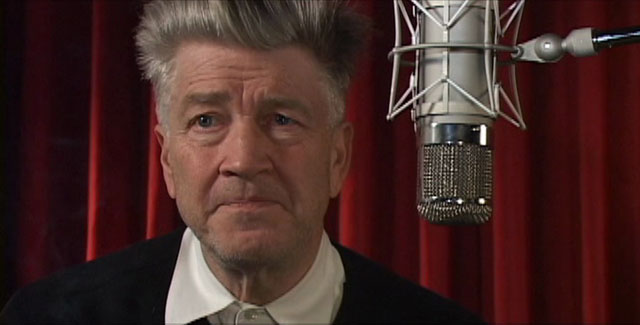
“There was a thought for a long time that you had to suffer in order to create, and this is just about opposite of the truth. If you’re suffering, even a little bit of suffering cuts into your creativity. In fact, the happier you are, and the more wide awake and rested you are, the better it goes… then the ideas can flow way better, way smoother and faster, and more of them.”

Stories is Lynch talking for 40 minutes, maybe excerpts from the website Q&A segments, about IE and digital and meditation, the usual topics. This is where the famous quote about watching a film on a fucking phone is from. His hatred extends to computers as well, but I think if he was here and took a look at my television setup and laptop setup, he’d have to grudgingly admit that I’m getting better picture and sound off the laptop.
image

On a separate disc, Room To Dream: David Lynch and the Independent Filmmaker is mostly Lynch talking about himself and his working methods, and partly an advertisement for Avid systems. Best of all, it includes an extra scene related to Inland Empire. Windowboxed and interlaced, unfortunately – nice going, Avid.
image

Sur la route de Mulholland Drive is a half-hour behind the scenes, interviewing all the principals and watching the filming. More interesting than most backstage press-kits if only because I’m unusually interested in the film. Following that is a cutdown of the film’s Cannes press conference.
image

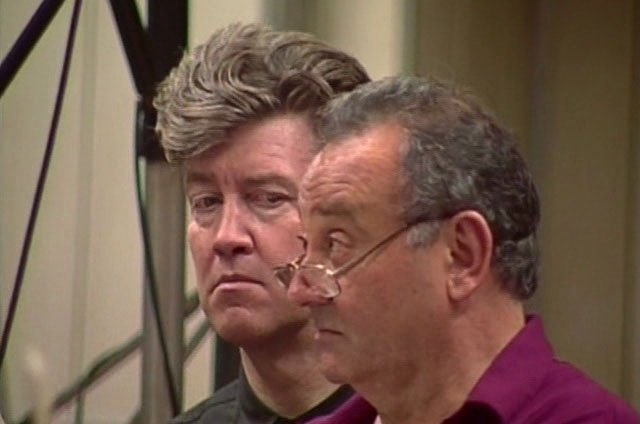
Le Son de David Lynch, another doc, from French television in 2007, interviews Lynch and a bunch of people I didn’t understand. Hmm, Wild at Heart was called Sailor et Lula over there. He and Badalamenti (below) recorded music for Twin Peaks and Lost Highway before shooting, and he’d play the music on set… wonderful.
image

On the Lime Green box set, Out Yonder is a three-actor stilted-humor throwback to The Cowboy and the Frenchman, only Lynch is one of the actors this time. Not really interesting at all, a conversation where all forms of the verb “to be” are replaced by “bees bein'”, with fart jokes, tooth pulling and a distant cavalry. In the next episode, a girl with gonorrhea seeks her missing chickens.
image

Scissors is a Cannes short previously known (to me) as Absurda. A Flash-looking dream-cinema piece incorporating bits of the ballerina footage.
image

A couple of greetings for film festivals, both in b/w, filmed in reverse, starring Lynch himself and just awesome.
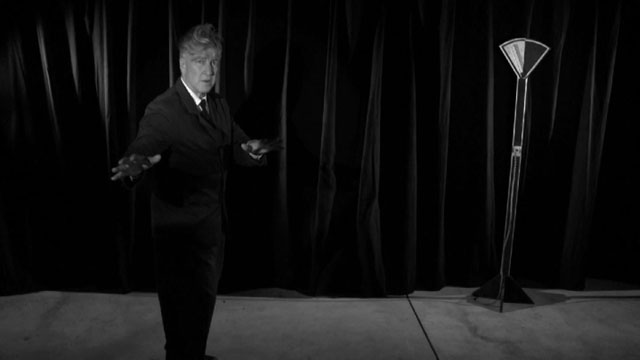
image

Fictitious Anacin Commercial is exactly that, a half-minute gag commercial. A Real Indication is an amateur music video (if amateurs had a crane). And Early Experiments is 16mm footage from the Grandmother/Alphabet/Six Figures era set to overdramatic string music, with some cool motion paintings and lots of mirror symmetry.
image

Then there’s Dynamic 01: The Best of Davidlynch.com
David answers member questions about favorite pieces of music, how to write a screenplay, his box full of ideas on scraps of paper, Marilyn Manson, coffee vs. cappucino, and meditating with Roy Orbison.

Intervalometer Experiments:
Ambient videos with slow, rumbling music. The first consists of trees and a distant mountain at sunset, the video grain threatening to destroy everything. The second is a spooky set of stairs molested by an encroaching shadow. The third is the corner of a sunroom in time-lapse, with scary trees and a dormant alarm system.
image

Industrial Soundscape is a lock-groove computer animation three times as long as it needs to be. Maybe we were supposed to use it for meditative purposes. Bug Crawls is animation of a bug climbing a mad science house in slow-motion as a blimp passes by. Lamp is a half-hour doc of David making a lamp, which isn’t as funny as when he makes quinoa. And there’s another episode of Out Yonder, which I think I’m gonna skip. No, I guess I’ll watch it. “You bees bein’ barkin’ right up the tree which bees bein’ the wrong one!”

Darkened Room
A Japanese girl dances with the camera, talks to us about bananas before introducing her crying fried (must be Jordan Ladd of Death Proof) in the other room. I think I hear the Rabbits music. Third girl (Ladd’s Cabin Fever co-star Cerina Vincent) comes out to torment the crying girl. Hmmm, my note three years ago said this is six minutes long, but now it’s ten. Maybe last time I lacked the intro with the bananas. A few visual cues and mention of a mysterious watch purchase tie this in with Inland Empire and More Things. Little did I know the first time I watched it. Little did Lynch know, probably.
image

Boat / “When things go wrong, it gets like this.”
David takes his boat (the “Little Indian”) out for a spin, takes low-grade blown-out video then adds a woman-in-trouble descriptive voiceover. He goes fast enough to go into the night.
image

Different from the other Curtis docs I’ve seen in that it’s not assembling semi-obscure facts to analyze human/political behavior, but assembling well-known facts to create a mood, and lead to an understanding through experience. Of course I’m missing part of this experience, since the film was part of a multimedia show inside a deserted office building set to music by Damon Albarn and the Kronos Quartet.

Traces a semi-chronological historical path through key events (chimps in space), tragedies (kennedy assassinations, manson family) and future tragedies (WTC construction) but mostly uses pop songs as history, letting artist bios (tina turner, lou reed) and the lyrics themselves tell the stories of disenchantment.

image

What results has Lynchian overtones with its dark seeds beneath 1950’s suburban pop, and shades of Craig Baldwin, using newsreel montages to create new stories, to confuse and not inform. But it’s still got Curtis written all over it, in the pacing and clip selection, that old familiar typeface, and the sense that the film makes your brain understand things in ways not explicitly told by the narration, making covert connections. Most importantly, when it was over I had the same urge to immediately watch it again that I got after The Power of Nightmares and The Trap.

C. Brooker:

Where his preceding works have occasionally been a touch eccentric, this one takes the piss. It is completely and utterly demented – in a positive way. I’m not saying it doesn’t make sense; if anything, it forges its own new brand of coherence whether you like it or not. This is a documentary running on alien software. I’m at a loss to describe it. For starters, the trademark Curtis voiceover has gone completely, replaced instead by occasional, simple captions. Music is at the forefront. Ominous soundscapes and bubblegum pop weave their way around the images: archive news, Hollywood movies. It’s hypnotic.

image

Brooker also gets us some Curtis quotes. I’ve brutally edited so as not to copy his entire article:

I wanted to do a film about what it actually felt like to live through that time … Where you could see the roots of the uncertainties we feel today, the things they did out on the dark fringes of the world that they didn’t really notice at the time, which would then come back to haunt us. … The politics of our time are deeply embedded in this idea of individualism, which is far wider than … consumerism or anything like that. It’s how you feel. … But it’s not the be-all and end-all. It’s not an absolute. It’s a way of feeling and thinking which is a product of a particular time and power. The notion that you only achieve your true self if your desires, your dreams, are satisfied … It’s a political idea. … What you desire is the most important thing. But a great paradox of our time is that what you desire may not be coming from within you. … The iPhone is a good example. People really feel they want one – to express themselves. But they all want one, at the same time. Where does that come from? From within or without? Because we live in an age where the individual is paramount and everything is seen from the perspective of ‘you’, we’ve lost sight of the bigger forces at work. Which has limited us. Not only in our understanding of the world; it’s made us very powerless. I think that’s what I’m really trying to get at in this.

Curtis keeps a blog, which I need to start reading, and I’ve been watching Mr. Brooker’s own TV series, to which Curtis has recently contributed.

On one hand, this guy’s got a point that his is a life worth documenting… I mean, he and his boyfriend directed a musical version of Blue Velvet in their high school using Marianne Faithfull songs.

On the other hand, this is a guy who filmed himself in closeup while on the phone hearing that his mother overdosed on lithium. Reminds me of the Grizzly Man setting up his camera and doing retakes of himself jumping down a hill. Too much information sometimes, too personal, blogging-as-filmmaking.

image

But it’s an engaging movie, edited to death with music video segments and as many cheap visual effects as he could find. Frequent use of intertitles (which refer to himself in the third person) help make it less narcissistic, and in fact it looks like the film was supposed to be about his mother, documenting her history and personality as a warning against electro-shock therapy, but she’s not always around since he moved away from the family for a few years. Don’t think I’d agree with the “best doc of the decade” raves I was reading last week but it’s definitely a good one.

image

“In the new human paradigm everything will be local.”

L.A. policeman starts by talking about the CIA smuggling drugs into the country, moves on to the recent/current financial crises, explains the concept of peak oil (we’re running out) then leads us down the Road to global devastation, huge drops in population, suburbanites starving in their homes.

I need to start growing vegetables in our back yard this spring. Quitting my job, opening a bicycle repair shop. Can rain barrels be used for drinking water?

A chronological romp through Varda’s life and work. Exciting and wonderful and gorgeous and traumatic and mischievous. More inter-intra-self-referential than even 101 Nights of Simon Cinéma, which of course this references more than once. The perfect summary and closer to Agnes Varda Month, and possibly to the great woman’s filmmaking career (we’ll see).

EDIT Aug 2019: Nope, she had at least three more features in her. Watched this with Katy, and it turns out it’s great no matter how many/few Varda movies you’ve seen previously.

It’s fun to see the pre-Awful Truth days when every corporate headquarters didn’t have an Official Michael Moore Policy and when Moore was thrown out of an event not because of who he is but because one of Ralph Nader’s relatives was with him. It’s also fun to see what a good movie Moore can make when he devotes all his time and energy to a single cause instead of bouncing from one populist hot topic to the next (Columbine, Fahrenheit) or tackling issues that are too large to fit in a movie (Sicko). He stays (mostly) in Michigan, covers a couple years’ worth of plant closings, visits and revisits local people (the eviction deputy, for one) and tries to get answers from (and stir up debate against) the corporate overlords and policies seen to be the cause of the problems. We’d been meaning to watch this for a long time, and thought the week of G.M.’s collapse (and Moore’s latest email about it) made for good timing.