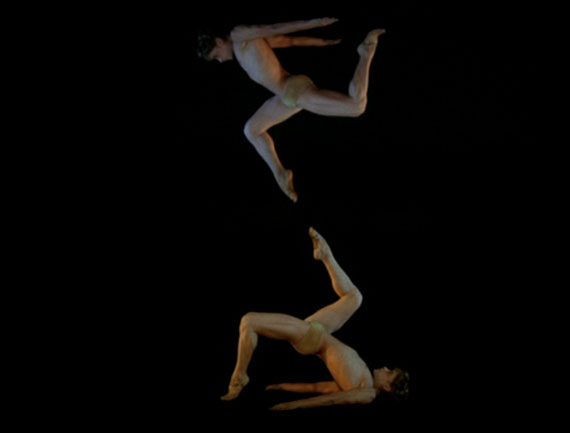
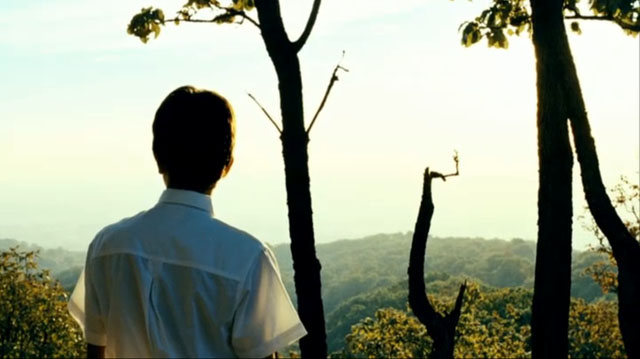
Resnais was making art shorts a decade before the official birth of the French New Wave, building up to his mindblowing first three features by practicing his filmmaking, not just by writing and dreaming. Le Chant du styrene and Toute la memoire du monde are both wonderful, and the latter looks forward to the themes and camera work of Last Year at Marienbad. Finally got my hands on some earlier shorts with subtitles, very exciting.

Van Gogh (1948)

This and Paul Gaugin tell abridged life stories of the artists with imaginative narration, the visuals composed solely of the artists’ works, using camera movement, zooms, fades and a musical cutting rhythm. Both artists lived in Paris but moved away, and worked over the same period of time (in fact, they knew each other).

On Van Gogh: “He was a preacher, but he preached badly. The violence of his faith frightened even the faithful. It was in the process of trying to find a way to express his love for mankind that he discovered himself to be a painter.” The film gets great mileage out of the artist’s descent into madness. Katy points out that the sunflowers lose some of their power captured in a black-and-white film.

image

Little about this online, besides that it won an Oscar. Auteurs: “The 1948 piece Van Gogh proved so successful in its original 16 mm form that it was subsequently remade in 35 mm, winning a prize at the Venice Film Festival as well as an Academy Award.” It’s also the earliest listed Resnais film that I’ve ever seen anyone mention, although an article by Rhys Hughes confirms the earlier shorts exist.

E. Wilson in her Resnais book:
“Resnais’s aim is not merely to use Van Gogh’s art as material evidence, substituting paintings for snapshots of the artist’s life; more subtly he uses the paintings to show us the world apparently as Van Gogh saw it, to show us not merely the object world of nineteenth-century Holland and France, but to conjure the subjective images of that world perceived by the artist and captured by him on canvas. Resnais’s investigation in the film is not merely art historical therefore: he seeks already, as he will in his later films, to reveal the work and process of the imagination, the shots of reality that we view, distorted, in our mind’s eye.”

Paul Gaugin (1950)

The opening narration summarizes: “A bank employee and head of family, well-to-do, middle-aged, comfortable, discovers that he has been lying to himself. He wants, indeed he must paint. From that point on, he devotes himself exclusively to painting, and after twenty years of poverty dies alone.”

Starts in 1883, just like the previous film. Instead of poor and insane, Gaugin ends up poor and sick in Tahiti, painting shirtless native women. The commentary on Van Gogh was written by co-producers Robert Hessens and Gaston Diehl, but this one is taken from Gaugin’s own writings. Produced by Pierre Braunberger, who assisted early works by Renoir (Charleston, La Chienne) and Truffaut/Godard, ending up with Terayama Shuji of all the weird people. I wish they’d done a Pierre-Auguste Renoir film in this series.

image

Maybe I didn’t like this as much as Van Gogh because I don’t like the artwork as much, didn’t figure out the painter’s style, or maybe because it seems a rerun of the previous film (artist starts painting, gets obsessive, flees the city, goes poor/mad). E. Wilson, the biography author, agrees and spends more pages discussing Guernica (1950) instead. She calls this “a largely pictorial film by contrast,” points out that in Statues he would be “more self-conscious about self/other relations, colonial and post-colonial tensions.”

Statues Also Die (1952)

I’ve watched this before, but without subtitles. It is immensely improved when I understand the commentary – not that the shots and editing are anything short of excellent, but the movie is making all sorts of points about images, history, culture and colonialism which are sort of essential.

image

A Letter to Uncle Boonmee (2009, Apichatpong Weerasethakul)

Slow-panning shots outside looking in, but mostly inside looking out. Unique location (Nabua village in Thailand) but also unique photography style. I wonder if another filmmaker could’ve found images half as strong as these. As for the story, well, as usual with A.W. I don’t really get it. The village has a history of violence and repression, and this (fictional?) uncle is unseen, addressed by a narrator. Actually it’s more than one narrator, reading the same script, which is later critiqued for accuracy of dialect as we continue roaming the houses, looking slowly up at the trees. Makes me want to catch up with A.W.’s features that I’ve missed. Later: So I have, with Syndromes and a Century. Its dialogue repetition and shots of trees from inside buildings reminded me of this short.

Academic Hack:

In a stunning act of political avant-gardism, Joe has adapted Thai Buddhist tenets regarding reincarnation as a means for excavating the hidden history of a troubled landscape. As his camera slowly creeps and pans through darkened, abandoned homes, Apichatpong is displaying the remnants of a repressed past, in an assertion of ghostly, vertical time. … Joe’s dominant visual cue throughout Boonmee is the depiction of dark, illegible interiors whose porous walls and broken-out windows allow the bright green of the jungle to puncture the once-domestic space with light and texture. As beautiful as the effect may be, it is also chilling, since it represents the breakdown of human effort’s separation from natural encroachment, the dissolution of basic boundaries.


We Work Again (1937)

A newsreel short about how “we” (meaning black americans, though it sounds like the regular white studio voiceover guy saying “we”) are finding jobs after the depression – mostly jobs in the arts, thanks to the federal works agency. Contains rare footage of Orson Welles’ “Voodoo Macbeth,” which used all black actors and looks like it could’ve used a higher prop budget.

image


The Little White Cloud That Cried (2009, Guy Maddin)

Commissioned for a Jack Smith program. It reminded me of Kenneth Anger, with the classic pop songs strung together, the soft-focus closeups, but that’s probably because I barely know anything about Jack Smith. Lots (lots!) of nudity, largely (maybe entirely) transsexuals. Typical Maddin editing (which is to say: exhilarating). It’s either art or the best porno I’ve ever seen.

image

Someone got the filmmaker by accident. He looks so intense!
image

Send Me To The ‘Lectric Chair (2009, Guy Maddin)

No credits. Need to get a copy someday without interlacing. Made for the Rotterdam festival for an outdoor exhibit. Isabella is in the ‘lectric chair. A man rushes to save her, too late, embraces her as the switch is pulled. Charming homemade effects: tin foil, sparklers and exercise equipment. Louis Negin (reused footage from Glorious?) dances shirtless in celebration!

Maddin: “Now, I was immediately told no nudity, I was immediately told no strobing, so strobing became the new taboo. It would throw the citizens of Rotterdam into epileptic fits flipping on the sidewalks.”

image

More, from a simply fantastic interview with Maddin: “My condition for doing it was that I got permission to re-use the footage in my next feature. Whenever I accept a short film commission, I get permission to use the footage from it and so I’m slowly assembling clips… and in this financially depressed time, you need to. It’s a Frankenstein feature film built together from a bunch of dead short commissions.”

image


Zoo (1962, Bert Haanstra)

One of the greatest short films ever. He must have shot for days and days to get so many great shots of animals and spectators, then associatively edited them together into a docu-comedy. I learned from the ravingly positive writeup on the official Bert site that it was all filmed with a hidden camera.

image


Contact (2009, Jeremiah Kipp)

Boy and girl visit dealer, get bottled drug and take it together naked. Bad trip ensues. Girl’s concerned parents wait at home, until she shows up late, hugs daddy. Very little spoken dialogue – for artistic sake, or with international film fest distribution in mind? Heavy-handed sound design with echoey shock-horror effects with a sidetrack into 8-bit glitch noise.

image


The Bookworm (1939, Hugh Harman)

The crappiest little time-filler of an MGM cartoon. Can’t imagine anyone wanting to buy these as a set, so may as well parcel ’em out as bonus content on other discs. Poe’s raven wants to catch a bookworm (that’s a worm who eats books) to put in the Macbeth witches’ cauldron, but the worm is saved by characters from other books, with a complete lack of imagination, not even the har-har caricature value of those not-great Tashlin library shorts. Why would the books want to save a bookworm anyway? This seems an important part of the story, and it’s just ignored. Ted on IMDB overthinks the movie, says it’s “amazingly sophisticated in its abstraction,” no kidding. A Tashlin movie would just blow Ted’s head right off. Harman put more effort into the same year’s classic short Peace On Earth.


Love On Tap (1939, George Sidney)

At least with The Bookworm you can tune out the story and watch the animation, but there’s no joy in this one. Well, it’s a musical short so I guess you’ve got dancing, but that’s not much of an attraction. Story goes this dude is trying to marry a gal who leads a dance troupe, but her dancers are whiny dependent brats and she caters to their every whim, putting off the guy until he threatens to leave instead of marrying her. He should’ve. Sidney later directed celebrated musicals like Annie Get Your Gun and Kiss Me Kate… guess you gotta start somewhere.


Michelangelo Eye to Eye (2004, Michelangelo Antonioni)

Antonioni silently contemplates the work of another Michelangelo. 15 minutes of static or slowly tracking shots, with just room noise until an ethereal choir sings us out into the credits. Nice to see that after all these years, M.A. is still filming people dwarfed by giant structures and pillars.

image


Wake Up, Freak Out, Then Get a Grip (2008, Leo Murray)

A cute cartoon illustrating how we’re all going to die from global warming. Only Leo doesn’t say we’ll all die, he says all the good species of animals will die, leaving rats and roaches, and since there won’t be enough resources left for all of us, those with the most guns and lowest morals will survive to slaughter the rest. Then he says we can’t stop things by being jolly good consumers and buying fluorescent bulbs, we must rather campaign our governments and friendly local corporations to smarten up. Not likely! Move inland.

Didn’t stick with me very well the first time, maybe because it didn’t make enough narrative sense for my brain to properly hold on to, like a wacked dream that I remember clearly when I wake up but is already gone by the time I hit the shower, not related enough to reality to survive my beginning to ponder my work day. Should have watched it a couple times originally. But now I see I should watch more than a couple times, maybe annually from now on. Lynch’s most free, most trippy and loose movie, existing almost entirely in dream state, but also his most dirty and real looking because the DV photography feels like a home movie. Completely inexplicable and entirely worthwhile.

image

Hard to watch at home. The three hour runtime, the almost entirely black scenes, and the very dynamic audio levels (quiet whispers turn into sudden shock sound effects and screams) work best when I’m home alone and wide awake on a winter’s night. I think it freaked out my birds more than anything else I’ve watched. Next time I’ll watch on my laptop, in accordance with Lynch’s dreams of an all-digital cinema.

image

The plot, thanks to Cinema Scope:

Dern’s first incarnation, Nikki Grace, is an actress who lives in a cavernous Hollywood mansion and lands a coveted role in a Southern melodrama titled On High in Blue Tomorrows opposite suave ladies’ man Devon (Justin Theroux). She soon learns that the film is a remake and that the original Polish production was aborted when both leads were murdered.

image

Nikki begins to merge with her character, Sue, and the script’s adulterous affair spills over into real life. But what’s real, and who’s dreaming whom? The boundary between the film and the film-within-the-film — indeed between all levels of reality — vanishes completely. Besides Nikki and Sue, Dern plays at least two other overlapping variations on the character: One lives in a shabby suburban house, sometimes with a harem of gum-chewing, finger-snapping young women. The other, a tough-talking Southern dame, is spilling her guts out in a dank room, telling floridly vulgar tales of sexual violence and terrible revenge. Interspersed throughout are scenes from a Beckettian sitcom with a rabbit-headed cast. Certain phrases, often pertaining to identity confusion (“I’m not who you think I am,” “Look at me and tell me if you’ve known me before”), repeat in varying contexts and start to acquire talismanic power. (The key to transcendental meditation, which Lynch has practiced for over three decades now, is the repetition of a personal mantra.) Meanwhile, the film we are watching is beamed to a TV in a hotel room, and a mystery brunette watches along with us, silently weeping.

image

Did I write this weeks ago, or was I quoting from a website?: “Dern changes identities and locations, each with only a faint memory of the others, giving her a constant sense of unease.”

image

The neighbor who visits her is awfully good in a Twin Peaks sort of way. A choreographed dance to “The Locomotion” manages to be one of the spookiest parts. Seeing father Rabbit leave his locked-down living room set is thrilling. Cameo by the girls from Darkened Room (actually only Jordan Ladd is strictly from Darkened Room, but I like to think they’re the same characters). William H. Macy in a big cheesy cameo as a radio reporter and Harry Dean Stanton as Irons’ sad assistant, always bumming money off people.

image

Bright Lights:
“It sounds complicated, but it makes clear emotional sense, just as Mulholland Drive did.”

image

House Next Door calls the ending hopeful, and I guess you could say that. Dern escapes from at least one of the films she’s trapped within, wakes from the dead and goes back home where, per HND, “Lynch returns to the face of Grace Zabriskie’s Neighbor and, before our jaundiced eyes, this formerly intimidating and ugly figure becomes suddenly beautiful and ethereal. Moreso than Dern’s final close-up (a stunner in its own right) I think the answers to the film’s many mysteries, for those who need them, are contained in Zabriskie’s sideways glance and virtuous smile.”

image

Extras on the UK DVD are all interview-style. One is by The Guardian, one is by Mike Figgis at a hotel in Poland.
image

Interviewer: “If T.M. creates positiveness… some people might ask: what about all the darkness that’s in the films?”
Lynch: “Exactly.”

On the inclusion of Rabbits in Inland Empire: “Sometimes we start something and we think it is that, and later… it sprouts and becomes a bigger thing.” Okay it’s not a great quote.

“Really the only difference [between IE and the earlier films] is Inland Empire was shot with DV… and it was a low-grade, bad DV.”
image

“It is true that the 50’s gave birth to rock and roll and that early rock and roll holds a very special power, I think. It started the whole thing rolling, but in my mind it drifted away a little too quickly. And I think there’s more gold to mine from that feel of the first rock and roll.”

Repeats the same information over and over, not saying much for long periods, interviewers asking stupidly general questions hoping Lynch will tell them a nice story. He does tell a couple light ones, but three times each. So the final segment, The Air Is On Fire, comes as a happy surprise. It’s a biographer (who knows enough about Lynch not to ask pedestrian questions) viewing and discussing Lynch’s paintings and sound installations.
image


“We’re cooking quinoa.”
“This pan is unbelievable.”
The U.S. DVD is already better than the U.K., with a b/w video of Lynch in his kitchen and a nice stills gallery, and that’s before I even get to the meat of the disc. Hey, he times his cooking the same way I do, by yelling out numbers from the clock instead of setting a proper timer.
image

More Things That Happened is outtakes from IE. First 20 minutes are scenes with Dern’s circus husband. He comes home late. He sells a girl a watch.
image

Dern continues talking to the man at top of the stairs. She has a crossed out “LB” tattoo on her hand. A girl with earrings talks to Dern about meeting Billy at a bar. Mostly people telling each other stories.
image

Ballerina
A ballerina performs behind cloudy overlays and blobby digital soft focus to ambient music. Some neat effects in there but too long by half.
image

Lynch (one) is a full-length documentary by BLACKandWHITE, whatever that is, company or person, on the making of Inland Empire. Lots of behind-the-scenes dealings, set construction, some talk with the actors, Lynch in every scene. Lynch 2 on the IE disc is presumably deleted scenes from that doc, another half hour of material. Not tremendously eye-opening, just gives you the impression that IE is completely Lynch’s artistic vision, if you couldn’t have figured that out before, down to the smallest detail. He yells at his crew on set then praises them up and down in interviews. We hear a lot about the improv nature of the film and script, but we see careful planning and scheduling of shots and scenes. Watching David choreograph the closing credits musical number, telling the lumberjack not to cut all the way through the log because “we’ve only got one log,” you realize that all the backstage footage in the world might be fun to see, but still wouldn’t explain a thing.
image

“It’ll be more than a mouthful, which will look real, and it looks great. And you can throw up a lot of blood. Two times you’ll throw up.”

“There was a thought for a long time that you had to suffer in order to create, and this is just about opposite of the truth. If you’re suffering, even a little bit of suffering cuts into your creativity. In fact, the happier you are, and the more wide awake and rested you are, the better it goes… then the ideas can flow way better, way smoother and faster, and more of them.”

Stories is Lynch talking for 40 minutes, maybe excerpts from the website Q&A segments, about IE and digital and meditation, the usual topics. This is where the famous quote about watching a film on a fucking phone is from. His hatred extends to computers as well, but I think if he was here and took a look at my television setup and laptop setup, he’d have to grudgingly admit that I’m getting better picture and sound off the laptop.
image

On a separate disc, Room To Dream: David Lynch and the Independent Filmmaker is mostly Lynch talking about himself and his working methods, and partly an advertisement for Avid systems. Best of all, it includes an extra scene related to Inland Empire. Windowboxed and interlaced, unfortunately – nice going, Avid.
image

Sur la route de Mulholland Drive is a half-hour behind the scenes, interviewing all the principals and watching the filming. More interesting than most backstage press-kits if only because I’m unusually interested in the film. Following that is a cutdown of the film’s Cannes press conference.
image

Le Son de David Lynch, another doc, from French television in 2007, interviews Lynch and a bunch of people I didn’t understand. Hmm, Wild at Heart was called Sailor et Lula over there. He and Badalamenti (below) recorded music for Twin Peaks and Lost Highway before shooting, and he’d play the music on set… wonderful.
image

On the Lime Green box set, Out Yonder is a three-actor stilted-humor throwback to The Cowboy and the Frenchman, only Lynch is one of the actors this time. Not really interesting at all, a conversation where all forms of the verb “to be” are replaced by “bees bein'”, with fart jokes, tooth pulling and a distant cavalry. In the next episode, a girl with gonorrhea seeks her missing chickens.
image

Scissors is a Cannes short previously known (to me) as Absurda. A Flash-looking dream-cinema piece incorporating bits of the ballerina footage.
image

A couple of greetings for film festivals, both in b/w, filmed in reverse, starring Lynch himself and just awesome.
image

Fictitious Anacin Commercial is exactly that, a half-minute gag commercial. A Real Indication is an amateur music video (if amateurs had a crane). And Early Experiments is 16mm footage from the Grandmother/Alphabet/Six Figures era set to overdramatic string music, with some cool motion paintings and lots of mirror symmetry.
image

Then there’s Dynamic 01: The Best of Davidlynch.com
David answers member questions about favorite pieces of music, how to write a screenplay, his box full of ideas on scraps of paper, Marilyn Manson, coffee vs. cappucino, and meditating with Roy Orbison.

Intervalometer Experiments:
Ambient videos with slow, rumbling music. The first consists of trees and a distant mountain at sunset, the video grain threatening to destroy everything. The second is a spooky set of stairs molested by an encroaching shadow. The third is the corner of a sunroom in time-lapse, with scary trees and a dormant alarm system.
image

Industrial Soundscape is a lock-groove computer animation three times as long as it needs to be. Maybe we were supposed to use it for meditative purposes. Bug Crawls is animation of a bug climbing a mad science house in slow-motion as a blimp passes by. Lamp is a half-hour doc of David making a lamp, which isn’t as funny as when he makes quinoa. And there’s another episode of Out Yonder, which I think I’m gonna skip. No, I guess I’ll watch it. “You bees bein’ barkin’ right up the tree which bees bein’ the wrong one!”

Darkened Room
A Japanese girl dances with the camera, talks to us about bananas before introducing her crying fried (must be Jordan Ladd of Death Proof) in the other room. I think I hear the Rabbits music. Third girl (Ladd’s Cabin Fever co-star Cerina Vincent) comes out to torment the crying girl. Hmmm, my note three years ago said this is six minutes long, but now it’s ten. Maybe last time I lacked the intro with the bananas. A few visual cues and mention of a mysterious watch purchase tie this in with Inland Empire and More Things. Little did I know the first time I watched it. Little did Lynch know, probably.
image

Boat / “When things go wrong, it gets like this.”
David takes his boat (the “Little Indian”) out for a spin, takes low-grade blown-out video then adds a woman-in-trouble descriptive voiceover. He goes fast enough to go into the night.
image

Surogat (1961, Dusan Vukotic)
Slightly naughty beach picture about a fat guy who brings inflatable ball, boat, car, food and girl. Real great anything-goes animation. Disney, Friz Freling and Chuck Jones must’ve cancelled each other out, giving the award to the underdog foreigner.
image

The Crunch Bird (1971, Ted Petok)
“Crunch bird, my ass!” Ugh, punchline shorts. Was there no competition this year? I would’ve awarded Thank You Mask Man over this. From a co-writer of What’s Up Tiger Lily, this beat a comic Canadian short about evolution and an adaptation of an Oscar Wilde fairy tale (OW wrote fairy tales?).
image

The Sand Castle (1977, Co Hoedeman)
A desert man with arms and legs but no body creates clay creatures to help him build a giant sand castle. All stop-motion, the short that (probably deservedly) beat Doonesbury at the oscars.
image

Every Child (1979, Eugene Fedorenko)
More of a foley demonstration than a proper cartoon. The animation is there I guess, though slightly Squiggle-visioney. Wow, someone sings the Umbrellas of Cherbourg theme. So the foley guys are telling the story of an unwanted baby… to a baby. One foley guy went on to voice the French version of Chief Quimby on Inspector Gadget. This beat a short called Dream Doll which I’d like to see, apparently an X-rated spoof of The Red Balloon.
image

Tango (1981, Zbigniew Rybczynski)
An empty room, simple tango music. A kid (looks like stop-motion cut-out photographs) throws a ball into the room, comes in, throws the ball outside, leaves, repeat. Then another person is added, then another and another, none of them interacting with each other until the very end. How’d they do it? Beat out some stop-motion from the great Will Vinton and a half-hour piece about a snowman.
image

The Man Who Planted Trees (1987, Frédéric Back)
Just about the happiest thing ever, so lovely it made my head hurt. Story of a lonely shepherd who singlehandedly reforests an entire region of France. I looked it up, hoping that it’s a true story, and unbelievably it is. Narrated by the familiar voice of Christopher Plummer and animated with lush, colorful sketches. The romantic short from the creators of Bob & Margaret and a big of head-morphing Bill Plympton hilarity never stood a chance against this beauty.
image

A Greek Tragedy (1985, Nicole Van Goethem)
The characters are man/pillars holding up a stone wall that has fallen into ruins. When it finally collapses, the pillars are free to frolic. The kind of simple cuteness you’d see at a festival with three of four similar pieces, not the kind I’d think would win a major award. Hard times in 1986. Actually this beat Luxo Jr. somehow. I guess computer animation wasn’t in style until ’88. At the same time, it’s nice
image

Tin Toy (1988, John Lasseter)
A one-man-band toy escapes the wrath of a slimy toddler, then grudgingly returns to cheer it up when it’s crying only to be ignored in favor of an empty box and a paper bag. Clear precedent to Toy Story. 1988 computer technology was not up to the task of accurate baby rendering, but it’s still pretty cool looking. It beat a Tex Avery-style short from the future director of FernGully and Cordell Baker’s great The Cat Came Back.
image

Manipulation (1991, Daniel Greaves)
A good ol’ artist’s-hands-interacting-with-drawing-table short, somewhere between Duck Amuck and Rejected. Funny how one of the most recent shorts is the one available in the lowest quality. The line-drawing guy turns 3D at the end, which I think was done in claymation. Very inventive and fun. Apparently Greaves’ Flatworld is also a must-see. No U.S. shorts in this year’s competition – this UK film beat out two Canadian pieces (including long-time fave Blackfly).
image

Mona Lisa Descending a Staircase (1992, Joan C. Gratz)
Really wonderful little animated film which would probably be the greatest thing ever if I was an art history major. Since I only knew about five of the paintings which were mighty-morphing into each other, I probably attribute more of the film’s beauty to its director than I probably should. Oh wait, it won the oscar so I guess I’m not the only one who was impressed.
image

Then again, some of it is just silliness.
image

Quest (1996, Tyron Montgomery)
A man made of sand navigates increasingly more difficult and dangerous worlds of paper, rock, metal and water. The end is the beginning – would work as a looping DVD or art installation. Nice stop-motion, like The Sand Castle but I liked this one better, Thought it was anti-technology for a while, but now I think its just trying to say the world is a dangerous place. Competition included an Aardman, a Canadian piece I’ve seen but don’t remember, and a stop-motion short from a future Pixar animator.
image

The Country Cousin (1936, Wilfred Jackson)
A Disney Silly Symphony. Country mouse loves all the expensive food in the city, but isn’t fond of cats, cars or roller-skaters so he hauls ass back to the country. Includes an extended drunky joke. It beat a Popeye cartoon and an MGM jazz short of racial caricatures.
image

The Milky Way (1940, Rudolf Ising)
Finally someone other than Disney takes the prize. Disney wasn’t even nominated – competition included the first Bugs vs. Elmer short and the first Tom & Jerry cartoon.
image

The Cat Concerto (1946, Hanna & Barbera)
Won the oscar despite allegations that the story was ripped off from W-B’s Rhapsody Rabbit, beating a George Pal puppetoon about John Henry, a Woody Woodpecker musical, and early appearances by Chip ‘n Dale and Foghorn Leghorn.
image

For Scent-imental Reasons (1949, Chuck Jones)
“Ahhh, le belle femme skunk fatale!”
The greatest sexual predator in the cartoons makes his fifth appearance. This beat a piece John Hubley made for UPA which I’d like to see.
image

Gerald McBoing-Boing (1950, Robert Cannon)
Gerald makes noises, is shunned, finds his place and everyone learns a valuable lesson. Beat out a Mr. Magoo cartoon (also from UPA) and one of my favorite Tom & Jerrys.
image

Toot, Whistle, Plunk and Boom (1953, Ward Kimball)
Full-on Disney animation plus outlines and photographs. I’ve seen part of this on those Disney Sing-Along Songs tapes that Trevor played on repeat for two years. The history of musical instruments in ten minutes. Possibly my favorite of all the oscar shorts so far, though I’ll bet it’s not widely played because of the racial stereotypes on display.
image

The first CinemaScope cartoon, originally released to accompany Fantasia – should be a required classic. Tough competition: Chuck Jones, UPA, Donald Duck and Ted Parmelee’s awesome The Tell-Tale Heart.
image

When Magoo Flew (1954, Pete Burness)
Ridiculous picture (and not always in a good way) complete with weird self-referential ending and a crabby complaint about television. Maybe Tashlin was hiding under a desk somewhere. Not a big Magoo fan, don’t know how this beat a Tom & Jerry mouseketeer short, tweety bird, Disney and Tex Avery. Dig the Ted Parmelee reference in the screenshot.
image

Speedy Gonzales (1955, Friz Freling)
This one doesn’t have the line I remember about wanting to get the cheese but being too lazy, but it does have the line “he’s a friend of my sister” / “Speedy is friend of everybody’s seester!” Another no-longer-politically-correct classic. Surprisingly beat the Hanna/Barbera holiday classic Good Will To Men and an acclaimed Tex Avery piece.

Visions of Europe is a 2004 anthology film with shorts by various directors about the current state of the continent, which I’ve already started to watch earlier and still may never finish. Pretty hit or miss.

The Miracle (Martin Sulik)
An immaculate conception story, the girl’s parents and priest trying to get answers. God’s message, via the girl, “We mustn’t build tower blocks. The big ones must heed the small. We need to travel more to resist the false messiah.” Weird, kinda spooky. Not sure if the floating coffee cup at the end helped or not.
image

Anna Lives In Marghera (Francesca Comencini)
Briskly edited montage of an Italian student who participates in Rage Against The Machine-soundtracked political protests and prays when she’s not working on her thesis about industrial pollution.
image

Children Lose Nothing (Sharunas Bartas)
A girl collects frogs. Two boys fight over a girl. A paper boat! Finely photographed brownish little art short. Symbolic of something!
image

Room For All (Constantine Giannaris)
Talking heads tell us about the immigrant experience in Greece. Giannaris just made a movie called Gender Pop – the title alone is more interesting than this.

Prologue (Béla Tarr)
Loooong black-and-white dolly shot (imagine that) with pretty music by Mihaly Vig showing hundreds of people waiting in line to get food. Tibor Takacs was one name in the credits – could it be the director of The Gate?
image

Invisible State (Aisling Walsh)
A serious man in a suit tells us angrily about human trafficking. “They will tell of Irish eyes not smiling.” Walsh made a teary Aidan Quinn drama the previous year.
image

Crossroad (Malgorzata Szumowska)
The adventures of a catholic cross outdoors at a crossroad. Eventually some coroners take down the classic Jesus and replace it with a blobby new plastic Jesus. Was it supposed to be funny? I found it kinda funny.
image

Paris By Night (Tony Gatlif)
Immigrants on the run, one of them injured, run through the Paris streets to some good music. Jarmuschy. Same year as Gatlif’s acclaimed Exiles.
image

Glorious (2008, Guy Maddin)
Far more guns, gangsters and cocksucking than has ever been in a Maddin film before. Features Louis Negin as a single-frame apparition turned fellatio-ghost. Must pay more attention to the music next time. In other news, when I looked up Louis Negin on IMDB, it says he played a zombie in Pontypool.
image

image

image

image

Yay, got me a 2007 disc of cartoons based on the work of Jim Woodring. Jim himself kicks off the collection with the one-minute Whim Grinder: A Frank Adventure, in which Frank and his pet… box? intercept a transmogrifying eggbeater from a mischievous devil.
image

Frank (Pushpow) (Taruto Fuyama)
I dig the use of the “meet george jetson” music cue. Watched twice because there’s a second audio track with elektronischy music by James McNew. Black and white and very stripey. Done in Flash, maybe? then transferred off a videotape from the looks of the credits. One of the greatest things ever.
image

Frank (Eri Yoshimura)
Next one, done in a puppet cutout style, is very different. Frank seems to be having a picnic with his buds until a rampaging pig beast tears them all apart. Seems about two minutes of animation edited into four. The closing credits are pretty nice – not so much the rest.
image

I’ve Been Twelve Forever (Michel Gondry)
Gondry talks with his mom, storyboards his dreams, builds a spinning camera-spirograph triggered by strings tied to Bjork’s fingers, makes cartoon farts with cotton balls, invents new animation methods, films himself in stop-motion, and discusses his best music videos. This turned out not to be a short at all, though I thought it would be when I started watching it, and much more elaborate and creative than its status as a DVD-extra on a music videos disc would suggest. I’m pretty sure I like this better than Be Kind Rewind. Co-directed with four people including Lance Bangs.

Wet Chicken (2003, Myznikova & Provorov)
A woman’s hair blows in the breeze, then she shakes her head, then she’s shot with a stream of water. Seems like the kind of rough materials that Shinya Tsukamoto would make something interesting from, but these guys forgot to make something interesting and accidentally released it like this. Too late to re-edit now that it’s on the internet.
image

The Marker Variations (2007, Isaki Lacuesta)
One ruler of Dijon uses photographs to rule, and the next uses them as execution aids. 12th century monks composed Bach concertos 900 years before Bach did, inscribing the notes into their stone architecture. Buenos Aires is “the divided city” so a story of two mirroring authors is told using split-screen images.

Opening with these unbelievable stories reminded me more of Magnolia than Chris Marker, but an exploration of the images and possible existence of Marker is what follows. He goes over Marker’s references, he asks his own Japanese friend the questions asked of Koumiko, and eventually he gets caught up in his own essay, his own connections, but accompanied by so many images from Marker’s films (not to mention the music) that none of it escapes, sticks in my mind. To a Marker-phile such as myself it’s just too much.
image

Musco (1997, Michael Smith & Joshua White)
A fake 1984 infomercial for a music-oriented lighting equipment company. I don’t get it. It was part of an art installation, and I don’t get those in general, maybe because I don’t live in New York.
image

Flash Back (1985, Pascal Aubier)
Two-minute short – soldier is killed in combat, life flashes before his eyes represented by photos going back in time until to the earliest baby picture. Guess Pascal had to find an actor with lots of family photos for this.
image

The Apparition (1985, Pascal Aubier)
A guy’s bathroom light makes the Virgin Mary appear in a church across town. Aubier ought to be at least as popular as Don Hertzfeldt.
image

Un ballo in maschera (1987, Nicolas Roeg)
Things I like:
1. That the king is played by a woman (Theresa Russell) with a mustache
2. That the action takes place in an ellipsis (“…but”) between the opening and closing text (“King Zog Shot Back!”)

Nice piece, set to music by Giuseppe Verdi. First segment of the anthology film Aria, which I must watch the rest of when I’m not so tired (next segment put me to sleep in a couple minutes).
image

Universal Hotel (1986, Peter Thompson)
“1980, I have a strange dream. Between the fortress and the cathedral is the universal hotel.” Slow, calm analysis of photos and reports about a nazi experiment where prisoners were frozen then revival was attempted using boiling water, microwaves and “animal heat.” “I make statements about the photographs which cannot be proven. I speak with uncertainty.” Increasingly intense, with narrated dreams illustrated with photography tricks, a murder-mystery without an ending. Last line: “they come while I’m asleep.” Scary, and I would not have watched this right now had I known nazis were involved, but now I’m glad I did.
image

Universal Citizen (1987, Peter Thompson)
Now in Guatemala, Peter talks with a concentration camp survivor who told himself he would move to the tropics if he survived. He did, so he does, laying in a hammock, floating in the warm water, working on the sun roof of his house, listening to Armenian records and refusing to be filmed. Mayan ruins. This time the dream/nightmare scenes lack narration. Ends with a joke (and a shot from the beginning of the other film). Oh wait, no it ends with depression after the credits. I preferred the joke.
image

Bunker of the Last Gunshots (1981, Jeunet et Caro)
There’s an insurrection inside the bunker. A timer count backwards, people have gas masks and eyegear and prosthetic limbs, there are shootings, eletroshock, cryogenics, there is complicated machinery, tubes and wires and hidden cameras. Possibly they are Germans, it is possibly post-apocalyptic, and the soldiers possibly go crazy and kill each other. I am not entirely sure of the politics, but it’s a neat little flick, definitely full of the clutter style of their later features.
image

Opening Night of Close-Up (1996, Nanni Moretti)
That’s just what it’s about. The nervous cinephile (Moretti himself) who runs an Italian theater is opening Kiarostami’s Close-Up and wants everything to be just right.
image

World of Glory (1991, Roy Andersson)
“This is my brother. My little brother. I suppose he is my only true friend, so to speak. [both look away uncomfortably]” I just checked and yeah, Roy Andersson is the acclaimed deadpan comedic filmmaker who made Songs from the Second Floor and You, The Living. I’d believe it, and be almost excited to see those two after viewing this short, a guy grimly introducing us to his sad life, with he and others looking slowly into the camera as if we’re to blame for all this – except why did it start with a mini-reenactment of the holocaust? The whole rest of the movie I’m wondering that… he won’t let go of the “blood of christ” wine pot at mass and it’s supposed to be a funny scene but I’m thinking “the holocaust?!?”
image

Reverse Shot explains:

World of Glory locates a society — ostensibly the director’s native Sweden, but easy interchangeable with any modern European country — so paralyzed by ennui, anxiety, and desperation that its inhabitants are apparitions. The main character is a thin, pasty man who takes us on a guided tour of his life — his loveless marriage, his stultifying job, his pathetic day-to-day activities. It was not until the second time I saw the film that I realized that this character had been present in the first shot: dead center of the frame, turning away from the proceedings every so often to fix us with his gaze. His meek, self-effacing misery in the later scenes thus comes into sharper relief: a person who does not act to avert tragedy endures beneath its weight.

image

Je vous salue, Sarajevo (1993, Jean-Luc Godard)
“Culture is the rule, and art is the exception. … The rule is to want the death of the exception, so the rule for Cultural Europe is to organize the death of the art of living, which still flourishes.” This two-minute piece is a montage made from a single photograph, with voiceover. Directly to the point, I like it better than almost all of Histoire(s) du cinema.
image

Origins of the 21st Century (2000, Jean-Luc Godard)
A bummer of a film, montaging footage from news videos and feature films (The Shining, The Nutty Professor, Le Plaisir) over quiet music with the occasional commentary or block lettering, war and death, pain and happiness and a few plays-on-words.
image

If 6 was 9 (1995, Eija-Liisa Ahtila)
Sex, split-screens and supermarkets. More people looking into the camera confessionally, but all about sex this time, not too similar to Today.
image

Can’t figure what a full hour-long Ahtila film would be like, but she’s made two of them so I’ll find out eventually.
image

Zig-Zag (1980, Raul Ruiz)
Ruiz had adapted Kafka’s Penal Colony ten years earlier so surely he knows he’s making another Kafkaesque film here. A man named H. “realizes he is the victim of the worst type of nightmare: a didactic nightmare” when, late for an appointment, he finds himself part of a global board game at the mercy of pairs of dice. The game keeps changing scale, zooming out, so H. has to travel further distances more quickly – from walking to taxi to train to plane. Rosenbaum (who says it’s Borgesian not Kafkaesque) says it was made to promote a map exhibition in Paris, which to me just makes it more strange than if it was promoting nothing at all. “The history of cartography [is] the business of labyrinth destruction.”
image

Either H. or the mysterious gamer was played by Pascal Bonitzer, cowriter of some of Rivette’s best films. “We now live in the pure instantaneous future.”
image

Precautions Against Fanatics (1969, Werner Herzog)
“Have you ever seen a dishonest man with a chest like this?”
Said to Werner’s cameraman by a one-armed man in a suit: “What are you doing here? Go away!” It’s not clear who is supposed to be here where they’re filming, in the training area of a horse racetrack. Some guy is repeating himself and karate-chopping flat stones. This cannot actually be happening! It is all pretty wonderful, a parody of a behind-the-scenes documentary. Made in between Signs of Life and Even Dwarfs Started Small, both of which I need to catch some day.
image

Organism (1975, Hilary Harris)
Time-lapse footage and readings from biological textbooks portray a large city (New York, of course) as a living organism. The dated 70’s sound design is unfortunate but otherwise it’s completely wonderful. Makes me wish I had a classroom of kids to show it to. He worked on this for years, inventing a time-lapse camera in the 60’s for the purpose. Bits from Scott MacDonald “As late as 1975, Harris apparently felt that time-lapsing imagery was unusual and high-tech enough to justify his frequent use of science-fictionish electronic sounds as an accompaniment. … Hilary Harris shot some of the New York City traffic shots used in Koyaanisqatsi, though apparently Reggio didn’t see Organism until after his film was well under way.”
image

L’Opéra-mouffe (1958, Agnes Varda)
Somehow I missed this during Varda Month – one of her earliest shorts hidden amongst the copious features on a Criterion DVD. Varda films either herself or another pregnant nude women, then goes on a rampage through the marketplace, mostly capturing the faces of people shopping there, with interludes featuring actors (incl. Varda regular Dorothée Blank, as nude here as she is in Cleo) clowning around. Sections highlight public drunkenness, anxiety and affection. I want to say this is my favorite of her shorts so far, but then I remember they’re all so good. Delightfully scored by a not-yet-famous Georges Delerue.
image

“I was pregnant. I felt the contradiction of expecting a child, being full of hope, and circulating in this world of poor, drunken people without hope, who seemed so unhappy. I felt tenderness toward them, especially the elderly. I imagined them as babies, when their mothers kissed their tummies.”
image

Silent Snow, Secret Snow (1966, Gene Kearney)
A boy named Paul starts to obsess over snow, allowing the snow in his mind to filter him from reality. Creepy and well shot. Later remade as a Night Gallery episode with Orson Welles narrating. Makes me think of the Handsome Family song “Don’t Be Scared,” with its line “when Paul thinks of snow, soft winds blow ’round his head,” except it’s one of their very few comforting, happy songs and the movie is anything but.
image

Une histoire d’eau (1961, Truffaut & Godard)
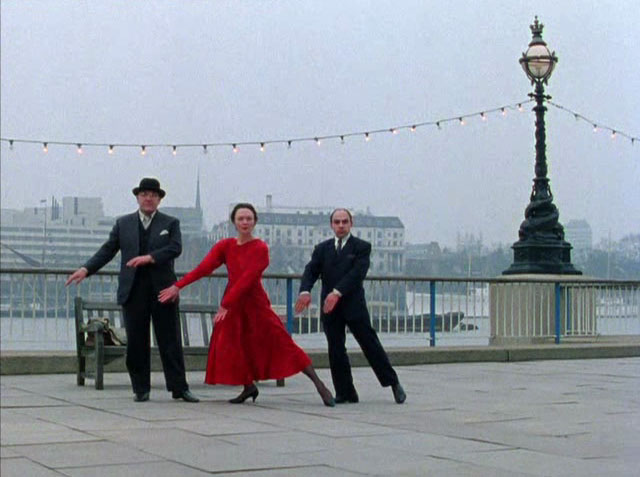
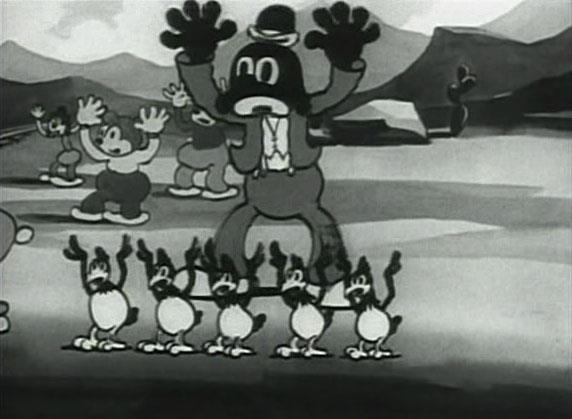
A girl wakes up and the whole town is flooded from melting snow. She meets a guy (a young Jean-Claude Brialy) who offers to drive her to Paris before nightfall. Music is weird – gentle flute or horns punctuated with bursts of percussion. Ooh, a Duchess of Langeais reference… in fact there are a ton of references in her quick monologue narration, which ends with spoken credits.
image

The Forgotten Faces (1960, Peter Watkins)
Revolution in Budapest. Nice reconstruction, convincingly documentary-like – where’d Watkins get all those guns? No sync sound, a TV-sounding narrator. One part, the reading of a communist speech turns briefly into a dramatic propaganda montage – don’t see that happen much in Watkins’ films.
image

image

The Perfect Human (1967, Jorgen Leth)
“Today I experienced something I hope to understand in a few days.”
image

I like the British narrator. “What does he want? Why does he move like that? How does he move like that? Look at him. Look at him now. And now. Look at him all the time.” There’s no diegetic sound, but if this was dubbed in a studio, why does there have to be so much tape hiss? A fake documentary and a stark white delight, with slow zooms in and out, gentle string music, and a general sense of serious absurdity. Only saw, what, a third of this in The Five Obstructions.
image

Les Maître fous (1955, Jean Rouch)
Document of a group in Ghana called the Hauka doing something involving wooden toy guns, red ribbons, chicken sacrifice, dog-blood-drinkin’ and having lurchy foaming-at-the-mouth fits. I’m not ever quite sure, because the French narration has been auto-subtitled by google – whatever they’re doing, the subs call it “having.” After they’ve had, the film crew catches up with them at their day jobs, not freaked-out cultists anymore, just working hard, smiling at the camera. This is one African film that Katy didn’t want to watch, because Rouch is an exoticizing anthropologist. So what’s going on that this film makes the best-ever lists? A Rouch tribute page says he popularized direct cinema/cinema verite, that he was known for rethinking ethnography, and a documentary surrealism (sounds like Jean Painleve). Ian Mundell says the film “drew plaudits from the Nouvelle Vague, in particular from Jean-Luc Godard. They liked the fact that Rouch’s fiction emerged from an encounter between the actor (professional or non-professional) and the camera, and his willingness to break the rules of cinema.” Paul Stoller says Rouch crisscrossed “the boundaries between documentary and fiction, observer and participant,” but I take it that’s more about his later films, which I’m thinking I would like better. So it’s seeming like this film gets awarded because it’s one of the most-seen of his films and because of its influence, not because it’s Rouch’s best work.
image

Nicky’s Film (1971, Abel Ferrara)
A mysteriously silent possibly gangster-related 6-minute film. I can’t imagine even a Ferrara scholar gets much out of this.

The Hold Up (1972, Abel Ferrara)
Super-8 production made when Abel was 21, seven years before Driller Killer. A few minutes in, I realized it’d be much better with the director commentary turned on. “And away we go. Wait, it’s the other way. Which way is she looking?” Um, some guys get fired from factory jobs, hold up a gas station, get caught. The song “Working on a Building” is heard.
image