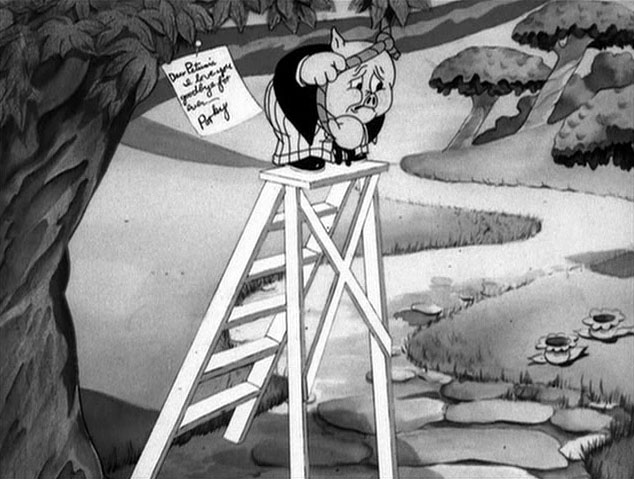
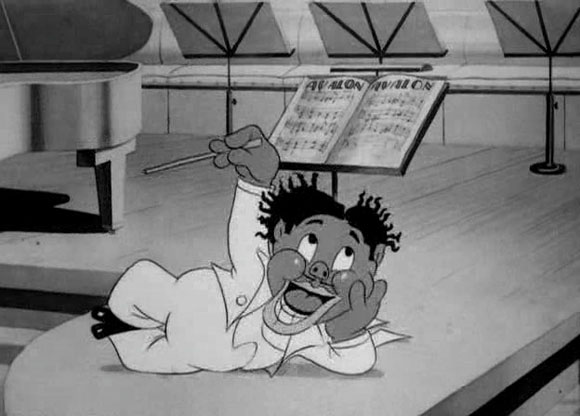
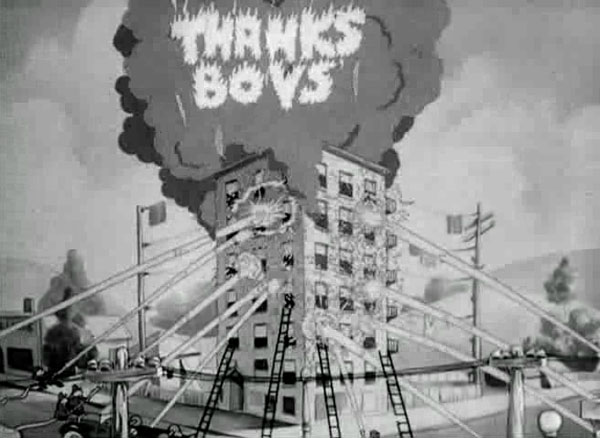
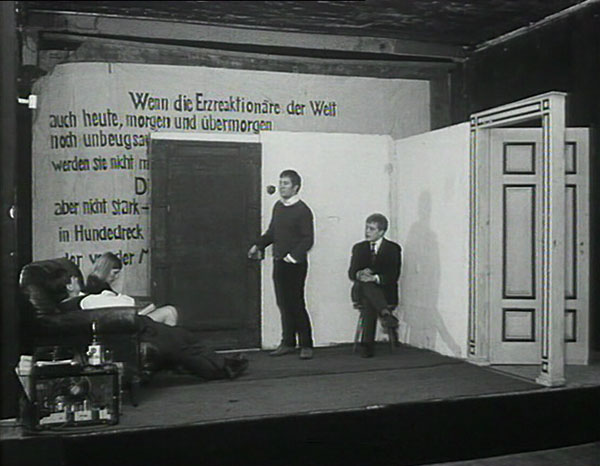
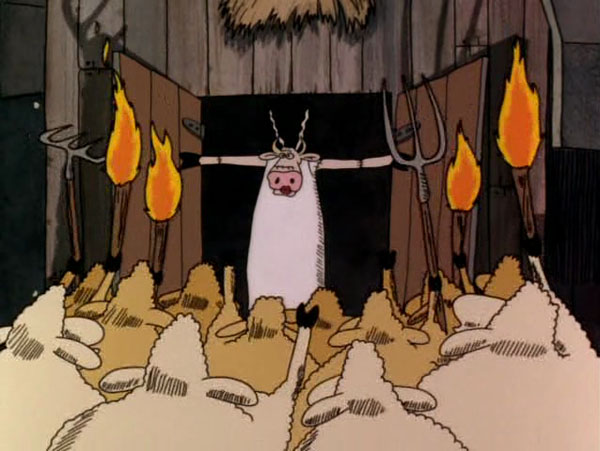
More 16mm screenings from Clay, Halloween-themed this time. Clay showing seasonal shorts reminds me of Robyn Hitchcock’s halloween show where he joked that since he’s only playing songs about ghosts and death, nearly half his catalog is disqualified.

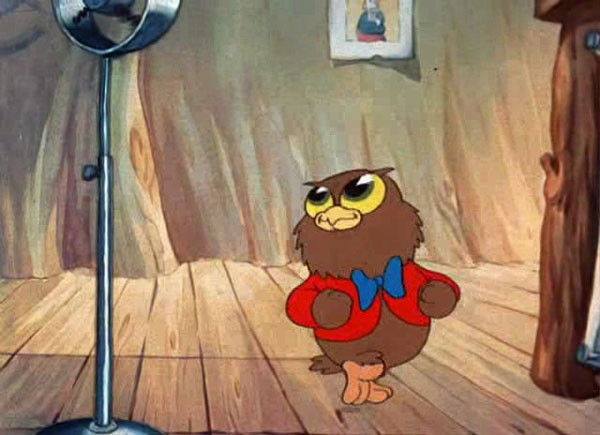
The Skeleton Dance (1929, Walt Disney) was the first in the Silly Symphonies series, with good music-visual sync, but too much repeated animation. No spoken/sung dialogue, wordless skeletons playing in a cemetery until the sun comes up.

Runaway Brain (1995, Chris Bailey) is an excellent, fast-paced Mickey Mouse short with a mad scientist voiced by Kelsey Grammer, beaten for an academy award by Wallace and Gromit. Seems like nobody around me had heard of this before.

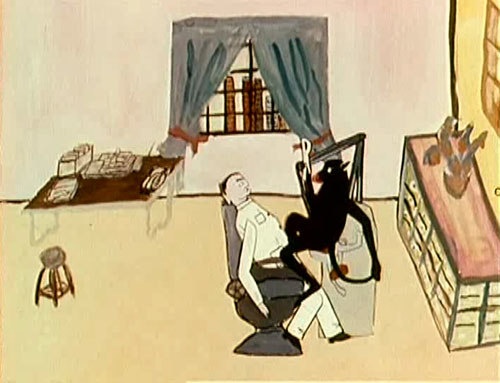
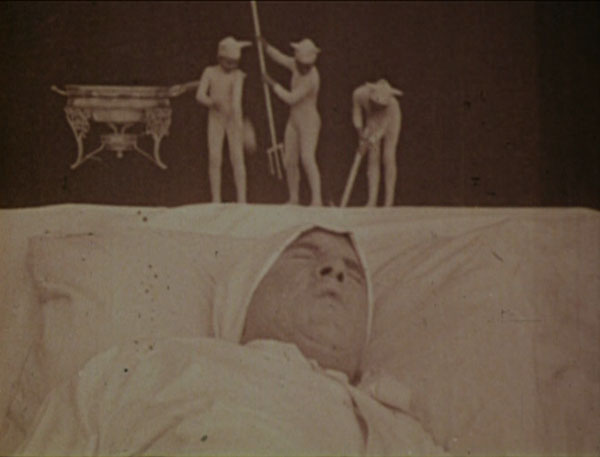
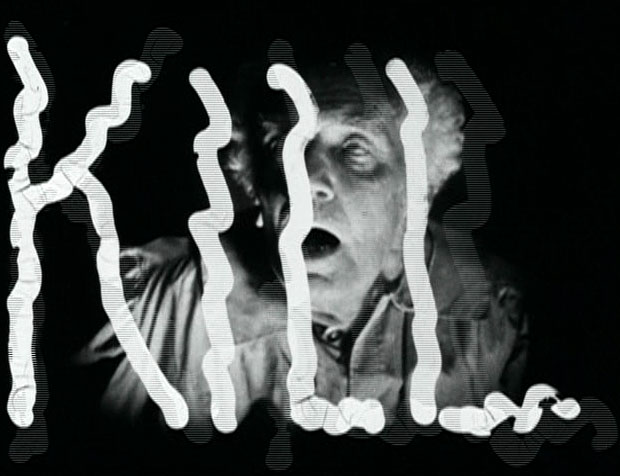
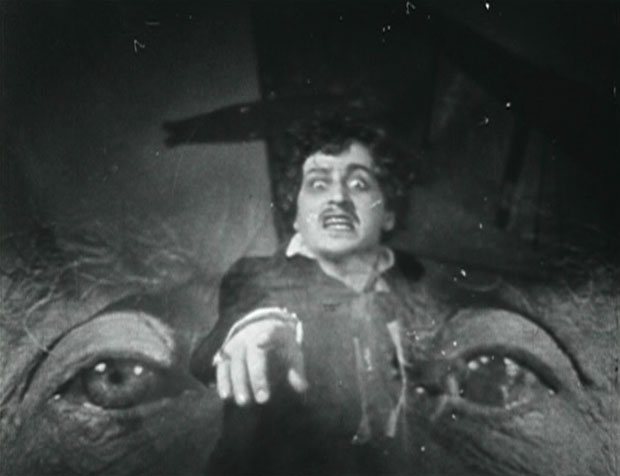
The Tell-Tale Heart (1953, Ted Parmelee), animated with some abstract imagery, overlapping shots and sharply-drawn characters. Has a deservedly high reputation, but beaten for an oscar by Disney’s Toot Whistle Plunk and Boom.

Betty Boop’s Hallowe’en Party (1933, Dave Fleischer) – always great to see a Betty short. Her party is pretty tame – kids bobbing for apples and singing like the birdies sing (tweet, tweet tweet) – until a bully shows up and she attacks him with her secret cache of ghostly evils. Full of amazing animation and visual ideas, beautifully synched to the music. I gotta get me a whole pile of these cartoons someday. I asked Wikipedia when the apostrophe disappeared from “hallowe’en” but it didn’t know.

Naturally the show was also full of TV episodes and classic commercials – Count Chocula vs. Franken Berry, of course, also a kids vehicle that looks suspiciously like the Wacky Wheel Action Bike (“you can’t ride it! you can’t ride it!”) and an awesome PSA warning kids to stay away from blasting caps.

Of the TV shows, we’ve got a Popeye the Sailor episode where an evil robot-popeye robs banks, the adventures of Goodie the Gremlin, who helps people invent the steam engine, airplanes etc. instead of tormenting people like the other gremlins want, a Spider-man episode where Green Goblin gets his hands on a book of voodoo spells, and a hilarious, surreal episode of Ultraman (featuring benign fluffy chattering Pigmon monster in a recording studio, giant plumed lizard monster with heat-seeking feather missiles, and the usual bonkers dialogue). Then the lower-tier corny garbage shows: a cartoon Sinbad the sailor, some dimwit monster who shoots smoke out of his head, Beany and Cecil meet the invisible man (1962, produced by a post-Warners Bob Clampett) and a Hal Seeger-created short called Batfink, in which BF and his dim pal Karate fight a magician.

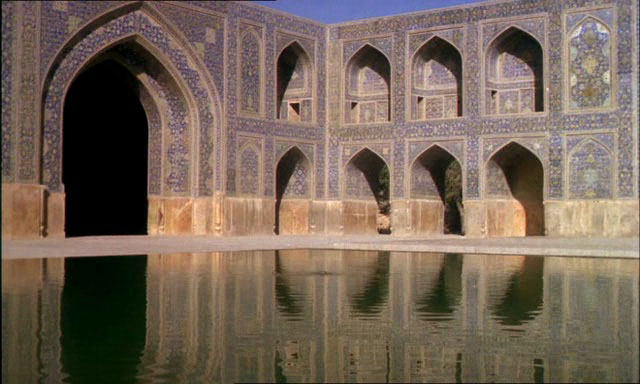
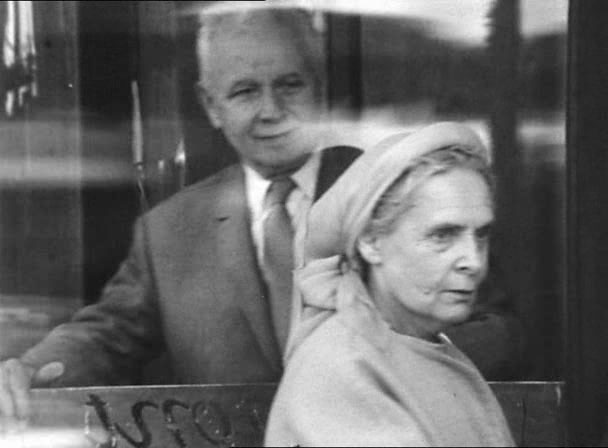
Plaisir d’amour en Iran (1976)
An expanded version of Pauline and Darius’s trip to Iran in L’Une chante, l’autre pas. Pauline and a narrator comment on the sensuality of Persian architecture. I would’ve liked it if the feature had been edited more rhythmically like this short (or if the picture quality had been as good).
image

image

Du Coté de la Côte (1958)
Fun, half-hour exploration of tourism along the coast, more gentle than Vigo’s À propos de Nice and simpler than a Marker travelogue.

image

“These parks, overpopulated with merry people attracted by the Latin shore, foreshadow the dead people seeking eternal rest there. In both cases, space is limited because of its good quality. It is a well-rated coast.”

image

image

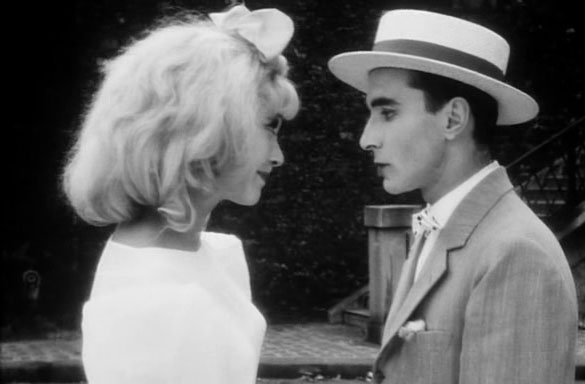
Les Fiances du pont Mac Donald (1961)
The short within Cleo from 5 to 7 is apparently considered its own little film. “I wanted to provide a little relief for Cleo. … So I thought at the beginning of the third part of the film, where films often have a lull, a weakness, a slow-down … I would introduce something uplifting. My other goal was to show Jean-Luc Godard’s eyes. At the time, he wore very dark glasses. We were friends, and he agreed to this little story about glasses in which he must take them off and reveal his big, beautiful eyes, like Buster Keaton’s.”
image

Ulysse (1982)
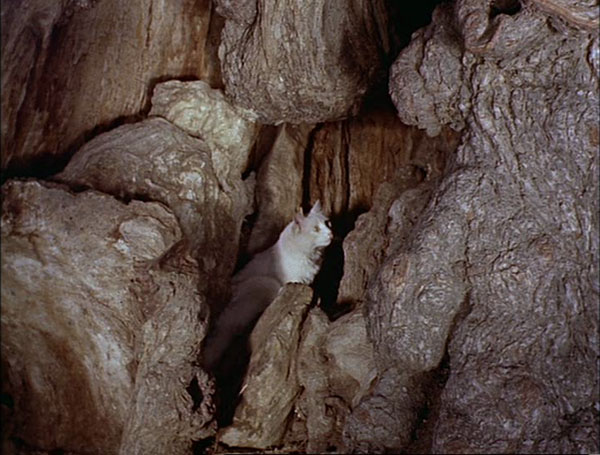
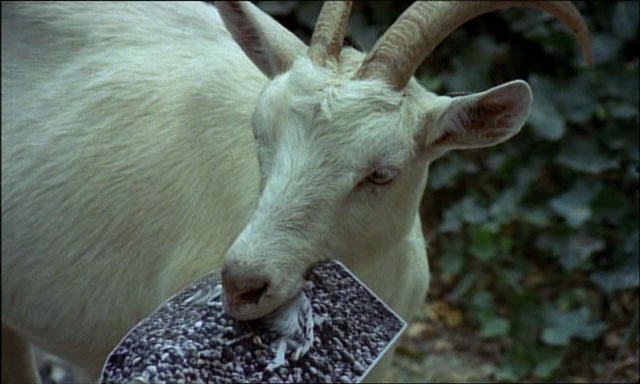
This was fantastic. Varda finds an old photo of hers, taken in 1954, and investigates. What was she thinking about at the time? What were the models in the photo thinking? She looks them up and asks. Agnes: “This almost painful investigation taught me so much about what an image says, what it says to each of us, and what it cannot say. It merely represents.”
image

AV: “How does she see her own goat image? Without making animals talk, like in American cartoons, or defining memory as a rumination of mental images, may I suggest that there is an animal ‘eatingmagination,’ a self-predatory imagination?”
image

Salut les cubains (1963)
Months after Cleo from 5 to 7 opened, Varda went to Cuba to photograph the country’s inhabitants for an exhibit which opened in Havana (introduced by Raul Castro!) before it moved to Paris. She also made this film out of the photos, narrated by Michel Piccoli. Subjects include the Castros, famous national artists, workers, dancers, posters and drawings and artworks. She creates action sequences, animating the photos, best of all with this guy dancing for the camera.
image

Mentions Marker’s Cuba Si, which came out a couple years before. In her introduction, Varda says twice that “we must place it in the context of 1962,” since the Cuban dream society didn’t turn out the way the French leftists hoped it would. Interesting that she made such a happy, idealist film as this, then her next feature would be the happiness-breakdown of Le Bonheur.
image

These last two were reissued in the 2004 collection Cinevardaphoto with a third, current short about a teddy bear collector, but somehow I didn’t have subtitles for that one. If Cleo from 5 to 7 and L’Une chante, l’autre pas revealed Varda’s kinship with the filmmaking of husband Jacques Demy, these shorts represent a definite (and oft-mentioned) kinship with Chris Marker, and either of them could stand alongside his best documentaries. The commentaries are more personal, less consciously witty. The images are wonderful, and the sense of investigation, of images and memory, the psychology of the films puts them on the Marienbad and La Jetee side of the new wave fence… my favorite side.
image

Elsa la rose (1965)
A portrait of Elsa in the words of her husband Aragon, who has spent their entire relationship writing and publishing poems about her. Varda calls them a “famous couple and fervent communists.” Elsa is filmed as Aragon imagines and remembers her, says she repeated the exercise with her own husband for Jacquot de Nantes. In voiceover, Piccoli reads the poems as fast as he can, a hilarious idea. First movie Lubtchansky and Kurant shot for Varda.
image

Elsa: “The readers of these poems expect me to be 20 years old forever. As I cannot satisfy this need for beauty and youth that the readers have, I feel guilty and it makes me unhappy. That’s what’s terrible, they’re not just for me.”

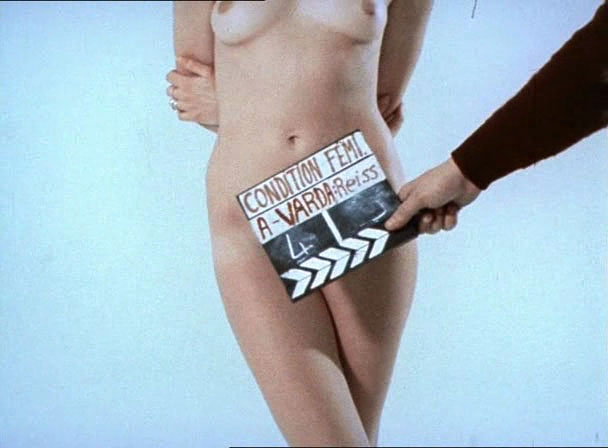
Réponse de femmes (1975)

“Women must be reinvented.”
image

Agnes has a few minutes to state the case of all women, socially and politically. Lots of nudity, which she points out is not exploitative unless used to sell a product or titillate viewers.

Coming attractions (when I’ve got subtitles): Black Panthers (1968)
image

Static (mostly) shots of outdoor junk sculptures near San Francisco, 5 minutes long. Shot with a guy who IMDB knows nothing about, and a guy who worked on Wenders’ Hammett as well as Ice Cube actioner xXx 2.

image

This was titled “Shorts watched September 2009 (on land),” as opposed to “on the plane“, but I only ended up watching the one.

Dude who named his domain after the film says: “The film was shot in Emeryville, near the east section of the Bay Bridge, but unless I’m mistaken the co-ordinates in Marker’s intertitles appear to be for somewhere in Redwood City.”

image

Another great set of Clay’s 16mm cartoons, and it’s been too long since the last one.

Mysterious Mose (1930, Dave Fleischer) is a proto-Betty Boop (she looks like a dog; a sexy dog) cartoon in which she is haunted by a sorta ghost casanova. The Great Piggy Bank Robbery (1946, Robert Clampett) is a weirdly violent Daffy Duck gangster parody. Since his “Duck Twacy” fantasy is spurred by a knock on the head while reading comic books, it’d be a good short to play before Artists & Models. It’s Tough to Be a Bird (1969, Ward Kimball) is a Disney doc about birds and watchers with musical cartoon segments. And We Have Met the Enemy, and He Is Us (1973, Walt Kelly) is an unfinished Pogo cartoon with a harsh environmental message. I think all the voices were done by one guy.

Bunch of TV stuff. Spiderman fights a bank robber in a mole-man costume. There’s a Casper cartoon (in which Casper does not appear) about a watch repairman who gets attacked by an eagle at the end. Ralph Bakshi contributes an episode of Captain America. A horrible show called Hoppity Hooper (set in Wisconsin) with a Rocky-and-Bullwinkle-repetitive bit about “the traffic zone” was the low point. The high point was the hilarious 60’s-70’s commercials for Mr. Wizard, Hot Wheels, Cheerios and the like. Real fun program… too bad the next one is scheduled for the same night Art Brut is playing.

image

Wonderful program by Beebe, a Florida film prof when he’s not touring art spaces with eight projectors. He’s a low-key charismatic speaker who held the audience easily while introducing films, telling stories or fixing equipment breakdowns. It probably helps that most of us were Film Love regulars who weren’t exactly expecting to see Transformers 2… I wonder how the screening went in Macon the night before.

Last Light of a Dying Star (2008)
This is the big one. Opens with two 16mm loops of blippy light tears, then more 16mm and a Super-8 of science videos (comets, solar system, eclipses) and a german or russian show about the sun getting drunk and trying to stay up all night, and videos of an astounding sequence of thousands of still images featuring the sun or moon aligned and sequenced to show a sunset/moonrise. Also a short stop-motion 16mm loop of a star, sliding and breaking. The frames are positioned around the wall, some overlapping, as Roger “conducts”, starting and stopping and moving frames so it’s more a performance than any kind of traditional film.

Money Changes Everything (2009)
3x16mm, the left and right being documentary shots of Las Vegas while the middle is similar but has a ghostly frame inside a frame, and the audio track sounds like a radio show explaining research which shows Vegas to have the highest suicide rate in the nation.

TB TX Dance (2006)
TB is Toni Basil (singer of the hit song Mickey) and TX is Texas (the state). After their respective introductions, they dance. Made with a laser printer on clear film leader (including the soundtrack), and projected side-by-side with its inverse image, this was an impressive, creative and goofy way to start the show. I won’t say the name of the litigious filmmaker from whom some of the images were borrowed.
image

The Strip Mall Trilogy (2001)
Strip-mall images are reclaimed, decontextualized and rapidly edited. If I was a serious film scholar I would’ve cornered Beebe and bugged him about Hollis Frampton and Zaireeka, but it doesn’t matter if this was Zorns Lemma-influenced or not – it is awesome.
image

Composition in Red & Yellow (2002)
An ironic hymn to the ever-present McDonald’s.
image

Famous Irish Americans (2003)
Educational! Made during a Minneapolis winter when he was afraid to go outside, heh. Tried to show this to Katy but when she learned it wasn’t about Minnesota, she declined.
image

There was another one shot in Paris – spoken intro along the lines of “Now you’ll see I don’t just hate America – I hate France, too.” Also, a reluctant dude from the audience sang along with a karaoke music video of “Touch Me I’m Sick” consisting of clips from a venereal disease educational film. Director was selling (cheap!) DVDs of his work, hence the screenshots.

Nice to have a laptop full of movies on the plane. I’d loaded up on drowsy motion-sickness pills so instead of falling asleep in the middle of a feature (as I did with The Grand Duke’s Finances) I took a bunch of shorts. The first four are from the 2004 compilation Visions of Europe.

image

Europe Does Not Exist (Christoffer Boe)
A large businessman (actor from The Celebration) tries to pronounce the word “europe” with the help of a hot woman, I’m not sure why. Boe made the art-drama Reconstruction the year before this.
image

It’ll Be Fine (Laila Pakalnina)
Each scene a person or a few stand faces the camera for a not-fixed period of time, then finally nod and walk off. Some vaguely unsettling music and sci-fi soud fx. Europe! Director is an award-winning Latvian.
image

Die alten bösen Lieder (Fatih Akin)
Idel Üner sings about about the death of old evil songs in an empty theater while a guy who may be FM Einheit drills something and hammers a giant spring. B/W music video with a color scene. Interesting, but over my head if it had a point.
image

Cold Wa(te)r (Teresa Villaverde)
Illegal immigrants, I’m guessing – being rounded up on the shore (alive and dead) and processed by the authorities. Wordless, quiet, slow-motion. Not crazy about this one. Villaverde is Portuguese, has a film called Os Mutantes.
image

Love Exists (1960, Maurice Pialat)
“Deep in my memory, a train passes by just like in the movies. Memories and films are filled up with objects we dread.” You have to read the subtitles loosely – translation seems off. Present-tense empty landscapes accompany wistful music and a wistful narrator speaking of childhood memories from these places. I think it’s really easy to use cinema to express nostalgia. I won’t hold it against Pialat – still looking forward to checking his À nos amours and Naked Childhood. Gives way to distopian dread over the suburbs: “Again and again advertising prevails over reality.”
image

image

Charlotte et son Jules (1960, Jean-Luc Godard)
Translated as “Charlotte and her lover” for some reason. Girl (Anne Collette, returning from Charlotte et Véronique but not Charlotte and her steak) walks into Jean-Paul Belmondo’s apartment to jaunty music and he never stops talking for 12 minutes, essentially “I know why you left me, I knew you’d come back, I know why you’re back, I don’t need you, I do need you,” and when she finally gets a chance to speak it’s “I came back to pick up my toothbrush.” Godardian hilarity! Gérard Blain (of Truffaut’s Les Mistons) waits for her in the car. These last two movies were on that DVD “Their First Films,” alongside Resnais’s Le Chant du styrene and Rivette & Chabrol’s Le Coup du Berger
image

image

I’d considered declaring August to be Shorts Month and watching hundreds of those, so I stocked up, but the inspiration had fled by the time the month rolled around. But we can’t let all these shorts go to waste, so I still watched more than usual.

73 Suspect Words and Heaven’s Gate (2000, Peggy Ahwesh)
Fun gimmick videos, one displaying the “suspect words” found by running the Unabomber manifesto through a spell checker, and the other listing off the search keywords of the Heaven’s Gate cult’s website. In the first the text appears quickly and fades out, and in the second the words flicker constantly.
image
image

Apocalypse Pooh (1987, T. Graham)
scenes from Apocalypse Now and Winnie The Pooh inexpertly combined. Actually the lipsync and some of the shot selections were pretty wonderful. I’m pretty sure nobody will ever care about this movie again now that a hundred thousand video mashups are clogging youtube, but it’s a cute piece of cult history. The poor video quality would turn on the guy who made Out of Print.

Thanksgiving Prayer (1991, Gus Van Sant)
William S. Burroughs hatin’ on America, being a general bummer, as is the fashion among leftists around Thanksgiving time. Decent video but I far prefer Ballad of the Skeletons with Allen Ginsberg.
image

Szalontudo (2006, Szirmai Marton)
That joke where guy 1 thinks guy 2 has stolen his food, so he starts eating from the other side, and they glare at each other eating the same food, then guy 2 walks off and guy 1 sees his food still untouched… he was eating guy 2’s food! Ah! This was terrible, with gross squishy chewing sound effects. Won an audience award in north-central Spain where they’ve never heard that joke before.
image

Le Vol d’Icare (1974, Georges Schwitzgebel)
I think it’s primitive animation made on a lite-brite. Or maybe it’s HyperStudio version 0.1. Story of icarus, I suppose. I liked the flocks of birds. What is that, a harpsichord?
image

Instructions for a Light and Sound Machine (2005, Peter Tscherkassky)
Pumping stutter-motion! Variable-speed lock-groove dude in a Leone western having a death-dream. Ends with words “Start,” “End” and “Finish” overlapping as the guy, appearing to be on fire, runs with mirrored graveyards above and below him.
image

The Adventurer (1917, Charles Chaplin)
Weird to see Charlie as an escaped convict threatening cops with a shotgun. But there’s plenty of ass-kickin and cliff-jumpin so it’s alright. I forgot the encoding quality is garbage on my copy of these… must buy a better one.
image

image

Inflation (1927, Hans Richter)
Rich people, money, poor people, more money, stock traders, more and more and more money, digits rushing at the screen whilst speed-adjusted carnival nightmare music plays until the whole damn thing comes crashing down. Only two minutes long! An achievement.
image

Yellow Tag (2004, Jan Troell)
In the old days we were close to our farm animals but today governments require tracking ear-tags. Fun movie… maybe didn’t need the classroom and religious art scenes, but it makes up for that in the end by going all wacky with shooting galleries and suited men raining down outside some kinda UN building.
image

image

Crac! (1981, Frédéric Back)
Animated story of the creation and long life of a rocking chair, accompanied by drum and fiddle music. It’s much better than it sounds.
image
image

Thigh Line Lyre Triangular (1961, Stan Brakhage)
Arrrrgh, another birthing movie! Why did nobody warn me? Apparently the title is Brak-code for “vagina.” Once I got over the initial shock, this is excellent. Hand-processed frames over live-action film, intense.
image

image

Pol Pot’s Birthday (2004, Talmage Cooley)
In 1985, the scrappy dictator’s men throw him a super-weak budget surprise birthday party, with grey cake and music on an old tape player. Awkward conversation ensues… P-P gets peed on by a dog and “Walking On Sunshine” plays over the credits. Kim Rew got paid?
image

Meet King Joe (1949, John Sutherland)
More generic propaganda with no direct sense of purpose. Joe is “the king of the workers of the world” because here in America, competition and investment in infrastructure make our jobs easier with more disposable income than anywhere else. Take that, dirt-poor chinaman! Statistics to be proud of: “Americans own practically all the refrigerators in existence. Bathtubs? We’ve got 92% of them.”
image

Hymn to Merde (2009, Leos Carax)
I agree that Merde/Lavant is wonderful to watch, but Carax doesn’t seem to know what to do with him. Protracted death-sentence courtroom drama wasn’t it, nor is a lo-res music video of him singing a Kills song translated into his own head-slapping language.
image

.tibbaR (2004, Leo Wentink)
Eerie music and nervous sound effects accompany time-remapped footage of lab rabbit breeding. I never know why anything is happening in short films anymore.
image

Go! Go! Go! (1964, Marie Menken)
So damn jittery it gave me an eye-ache, exactly what I was getting away from the computer in order to avoid. All nervous time-lapse footage shot around the city. Some real nice high-angle shots of construction sites and traffic patterns, superimpositions on a wedding, lots of boats and bridges. Color/picture looked perfect on my tube TV.
image

The Spook Speaks (1940, Jules White)
Not-at-all-good short full of corny sound effects and sub-stooges gags, but it’s better than the others I’ve watched on these DVDs since it has a roller-skating penguin. Buster’s costar Elsie Ames (she was in most of these shorts, then showed up 30 years later in Minnie & Moskowitz for some reason) is terrible, but then, Buster is terrible too. Thanks Sony for slapping warnings and disclaimers and legal shit before every short on the disc. They must’ve known it wouldn’t get tiresome because we’d only watch one before quitting.
image

Who Am I? (1989, Faith Hubley)
Things morph into other things, illustrating the five (or six or seven) senses. Short!
image

Blake Ball (1988, Emily Hubley)
Didn’t love the narration in this one. The woman who says “some are born to sweet delight/some are born to endless night” (without the preceding lines) has got nothing on Nobody. I guess all the lines are the words of William Blake, but they’re not making much of an impact, and I never figured out Blake’s connection to all the baseball stuff. There’s more five senses stuff anyway. A bit too laboriously new-agey, but some great moments (like below).
image

O Dreamland (1953, Lindsay Anderson)
Boy did I ever botch the Free Cinema box set, buying it then deciding I didn’t want to watch it after all and letting it sit on the shelf for years. Finally checked this out and I kinda really like it. Could do without the evil laughing clown all over the soundtrack. Kind of like Jean Vigo’s À propos de Nice which, given If….‘s resonance with Zero For Conduct, proves Anderson saw a Vigo retrospective at some point.

Koko’s Earth Control (1928, Dave Fleischer)
Koko the Clown walks the planet with his dog until they find the Earth Control station. The dog willfully and maliciously pulls the end-of-the-world switch and then acts all panicked when the world begins to end. What did he think would happen? Fun mix of live-action (tilt camera while people pretend to fall to the side, the dog skittering atop an animation table) and animation (earthquakes, volcanoes, the sun melts the moon).
image
image

Dutch Bird (2004, Kirk Weddell)
Ridiculous comedy – old man is sad and alone, so his friends convince him to go out again by pranking him with a story about drugged racing pigeons. On my TV the color was way off, which was really the main interest in the movie. In the below shot, everyone had green skin against a pinkish sky. It was eerie – as the 20 minutes stretched on and on, I liked to imagine that green-faced aliens had gotten a hold of The Full Monty and Waking Ned Devine and were producing Brit-com films of their own. Sadly, getting screenshots on my PC the color turned out normal.
image

Tale of Tales (1979, Yuri Norshteyn)
At least two jury competitions have named this the greatest animated film of all time. It is really good, but we all wished it’d been half its 30 minute length, and its symbolism was extremely obvious. Not that I ever get less-than-obvious symbolism, so that’s not something I ought to complain about. Wild Things are playing jump rope and a little dog kidnaps a baby, and there’s war and peace and what not. Supposedly the director has been working on his film of Gogol’s The Overcoat ever since – for 30 years. He must be the Jeff Mangum of Russian animated films.
image

Harpy (1978, Raoul Servais)
Kind of an absurd, funnier Tales from the Darkside episode. Guy saves a poor harpy from being beaten to death by an angry man and takes it home. But it keeps eating and eating and making his life hell. Finally it eats his legs off when he tries to escape, so he attempts to beat it to death, it gets saved by another man, etc. Same ending as Argento’s Jenifer, then. Mostly appealing for the crazy harpy visuals. The Belgian director has also made films called Siren and Pegasus, must find those sometime.
image

Grasshoppers (1990, Bruno Bozzetto)
Cute, no-frills cartoon that looked like something out of Mad Magazine. Civilization rises out of the grass only to fight war after war after war, represented by a few dudes at a time, not by whole armies. The kind of thing that would’ve played on O Canada if it wasn’t Italian.
image

Out of Print (2008, Danny Plotnick)
A dude yearns for the days when cult movies were actually rare and you could only get crappy unwatchable dubbed versions if you knew a guy who knew a guy. As someone who enjoys being able to see cult movies easily and in relatively good quality, I don’t see the dude’s point.
image

World Cinema (2007, Joel Coen)
Llewelyn from No Country stops at an arthouse movie theater playing Rules of the Game and Climates. Gets advice from the ticket guy, watches Climates and likes it. Having seen Climates myself I’m not sure this is too realistic. Also not sure why it was cut from the DVD of To Each His Cinema.
image