Detective Robin (Elisabeth Moss of Queen of Earth) is visiting her sick mom in the New Zealand small town where she grew up. A 12-year-old girl is discovered to be pregnant then disappears, and Robin takes over the case.

The story sucked me in, and I appreciated the actors, particularly Moss and local drug lord (and missing girl’s dad) Peter Mullan and a too-rarely-seen Holly Hunter as the guru of a makeshift trailer-park of troubled women. I was hoping for a good movie given extra time to deepen and spread out, but it started to feel too television. Each episode develops the main plot a bit more, gives the main character a bit more backstory, and reveals a bit more of the town’s dark secrets. And the big hook at the beginning (pregnant child) and big reveal at the end (child-molesting club run by chief cop), along with Robin’s stories of past abuse and constant present threats and the women’s camp and whatever they’ve been through, all adds an icky air of sexual violence to the show. As the episodes progressed, I started to cynically believe that this isn’t helping anyone, just attempting to give an air of importance to an otherwise standard story, though I suppose the intent was to recognize the sexual violence present, mostly hidden, everywhere. Overall I did like it, the distinct characters in gorgeous settings, but not jonesing for season two.

Bonus subplots: clashes with local law enforcement, occasional stories of the women at the camp, some late revenge on one of Robin’s childhood rapists, a major on/off/again affair with her high school boyfriend (Thomas Wright of The Bridge), adventures of tight-lipped Jamie (Tui’s most trusted friend), threats of incest, a couple of deaths (most horribly Jamie’s) and a late reveal that the drug lord is Robin’s real dad.

Jamie:

Robin’s mom and stepdad:

Cowritten with Gerard Lee (Sweetie) and directed with Garth Davis (Lion). Same cinematographer as True Detective season one – that’s no surprise. I recently saw Peter Mullan as the evil father in Sunset Song – he’s good at being menacing. Local boss cop Al is David Wenham of Public Enemies. Moss won best actress at the golden globes and the show won best cinematography at the emmys, but Behind The Candelabra took best TV movie at both.

Sepinwall liked it:

The character work is rich and devastating, the atmosphere hypnotic, and the overall storytelling so good that even if the mysteries hadn’t been resolved, I wouldn’t have felt like my time was wasted … who done it ultimately isn’t as important as the toll the crime takes on our heroine, and on the community around her.

Finally got around to watching the rest of these episodes (though not the Jon Hamm Christmas special) in prep for the upcoming American launch.

Be Right Back

After her cellphone-addict boyfriend Ash dies in a car crash, pregnant Hayley Atwell (Agent Peggy Carter in the Marvel movies/shows) signs up for a service that analyzes his voice recordings and social media posts and creates a Siri-like program she can speak with. Then she beta tests the next version, where a folded-up pseudo-flesh Ash (Domhnall Gleeson of About Time, who plays the human in the similar Ex Machina) is shipped to her house. But it turns out the way you behave at home with your spouse can’t be easily predicted by your social media posts, and even though Ash is able to learn, Hayley finds him creepy and finally banishes him to the attic. Director Owen Harris also made Holy Flying Circus.


White Bear

My favorite of the bunch, either because it’s the most horrific or because it costars Michael Smiley as a dystopian game show host. Victoria (TV’s Lenora Crichlow) wakes up confused and amnesiac, is told that most of the world has been consumed by a mysterious screen transmission, and those who haven’t are insanely murdering random citizens – so The Signal meets The Purge. Vic and a couple refugees come across Smiley in the woods, who first appears to be on their side, then is revealed to be one of the killers. After her thrilling escape, all this is revealed to be a complicated piece of theater. Nobody is dead, except the child Vic kidnapped and murdered, for which her punishment is to live in this nightmare, being constantly pursued and terrified, humiliated in front of a live audience, then her mind zapped with the MIB forgetfulness-ray for the next show. Director Carl Tibbetts has worked on Hemlock Grove, did a little-known plague thriller called Retreat with a promising-looking cast.


The Waldo Moment

Comedian Jamie (Daniel Rigby of the show Jericho) who talks through a cartoon bear called Waldo finds his attack on politicians going viral. Jamie’s more of an insult comic than a politician, but his producers smell a hit and strong-arm him into continuing, even entering Waldo into the campaign, at the expense of his sanity and his relationship with a woman in the race. This isn’t quite dark enough for Black Mirror, so at the end a guy from an unnamed U.S. agency meets them wanting to use Waldo to destabilize global elections. Based on a Nathan Barley sketch, I think. Director Bryn Higgins has a series of historical hospital dramas.

Unstable puppetmaster:

Dignified debate:

Dumont sure has a great sense of picture composition. The last movie of his I watched was in a familiar mode: long-take elliptical arthouse cinema. But what is this? A comedy with no jokes, a miniseries detective story with no resolution. On the basis of Hors Satan alone, if you told me Dumont made a comedy miniseries, this is pretty much what I would’ve imagined, but the reality of it still comes as a surprise.

All the actors are unknowns, and at least the casting director deserves a mighty round of applause for the interesting new faces on display. I did kinda tire of the extremely twitchy Inspector, who is visiting a coastal town with his dim assistant Lt. Carpentier to solve a murder – then a new murder occurs every episode, all spiraling around the family of P’tit Quinquin, who is generally more interested in hanging out with his racist buddies and bike-riding with his girlfriend Eve.

Premiered at Cannes, watched here during Cannes Month two years later. Film of the year according to Cahiers, so there must be more to it than I noticed… or maybe it’s just their ideal situation of a sharp-eyed arthouse auteur joining the Peak TV revolution.

“All the suspects have been murdered.”

Mike D’A:

Would have preferred an ending that feels less like a resigned shrug, personally, and fewer antics involving Quinquin’s brother … and I wish I could get that fucking “Cause I Knew” song out of my head for even ten minutes.

M. Sicinski:

Dumont shows us a world bigoted and illiberal enough that most anyone would harbour sentiments similar to those that prompted the murderer to kill … by the time we have reached the final episode, and the fourth murder, there is no hope for identification, and certainly no hope for resolution, much less justice.

Gotta read his great Cinema Scope article again after watching Dumont’s L’humanité.

We’re dumped into the middle of a complex situation in a mechanized future city, where teenage kids are piloting giant robots to fend off invading aliens, or “angels,” then as the show settles into a groove of one angel per episode (each requiring either skill, strategy, or brute force/rage to defeat) it gradually fills in the details – some of them, anyway. Plenty of questions remain: why teenagers? Where do the alien-angels come from, and how are they connected to the apparently partly-biological robots (or “evas”)? Who’s the shadowy organization that runs the shadowy organization that runs the eva program and where did they get their plans and prophecies from? Why do the main characters have a pet penguin? And why is every single character in this show extremely neurotic?

I get that we’re in Japan, so of course there are teenagers piloting giant robots and of course there’s an out-of-place, comic-relief pet penguin. These traditions endure from Voltron to Macross/Robotech to Gundam to American movies like Robot Jox and Pacific Rim. I just played a 2015 Japanese video game in which cool dudes and underdressed sexy ladies pilot giant robots to kill marauding aliens, accompanied by a comic-relief talking potato, so it’s still going strong.

Our heroes:

Things get dark quickly:

The show is obsessed with numbering things (the third child, unit 04, seventh construction phase of tokyo-3, twelfth angel, second branch, code 707), feeling at times like the script was written in Excel. Set in the futuristic time of 2015-2016.

Seele or Nerv or something:

Our tormented lead character is Shinji. He lives with Misato, a hard-drinkin’ penguin-owner who runs mission control along with ex-rival Ritsuko and ex-flame Kaji, or actually I’m not sure what any of their jobs are because I watched the show slowly and missed or forgot some details. Also living with them is super-cocky pilot Asuka, whose whole world falls apart if she can’t be the best at everything. And living on her own is the quiet, often-injured Rei. Everyone has major, major parental and/or love-life issues, the worst of which is that Shinji’s dad Ikari runs the shadowy Eva organization Nerv but has never once spoken to his son with affection, and has a weird offscreen relationship with Rei, who he might be cloning.

Rei-clones:

Ikari-hand:

Then in the final episodes, instead of polishing off the story it dives into the tortured minds of the lead characters for an experimental-film psychoanalysis session. “This is the me that exists in your mind.” Shinji meets the perfect friend who turns out to be the final angel and must be killed by Shinji’s own hands. Asuka’s and Shinji’s moms die repeatedly in flashback. Ikari talks to an eyeball in his disfigured hand. Rei keeps being resurrected. Even the penguin is sent to live with someone else. Finally, Shinji reaches self-acceptance. “It’s okay for me to be here.” I found parts of the final episodes whiny and repetitive, but over the next few days warmed up to the idea of the whole series having been a prolonged Shinji therapy session.


The End of Evangelion (1997)

Then, the movie remakes those last two episodes the way the fans preferred: with mad apocalypse instead of therapy. There are still sexual and parental hangups, petty grievances, inter-agency power struggles, and everyone’s still super lonely and unhappy, but now there’s more sci-fi storyline to go with it. Nine new winged evas are unleashed along with military forces upon our Tokyo base, decimating it. Asuka goes on the biggest homicidal rampage of all time, taking down all the new evas, then Shinji has the biggest crippling self-doubt paralysis of all time, then every other character in the entire series is killed, then Rei becomes a planet-sized god, rapturing and absorbing the souls of all humanity. Unfortunately, the underground control panel nerds stay alive until the very end so they can keep spouting nonsense:

“Ikari has installed a Type 666 firewall on the MAGI’s external feed circuits.”

“Psychograph signal down!”

and my favorite,

“Pilot response approaching infinite zero!”

Said to be one of the best anime series ever… after this and Paranoia Agent I wonder what I should try next. Apparently Death & Rebirth is a skippable movie, condensed from the series and End of Evangelion movie, and there’s a trilogy of remake movies from 2007-2012 from the original creative team, which might be good, but I’ll hold off watching those since Wikipedia says there’s a part four coming. Writer/director Hideaki Anno apparently created the series (particularly the finale) in response to his own battle with depression. He started out as an animator on Nausicaa, also made Cutie Honey (which I enjoyed), some other kid/teen animated shows, and I guess he’s making the next Godzilla movie. Codirector Kazuya Tsurumaki directed the weirdo series FLCL.

Master of None season 1 (2015)

We watched this in mourning for the end of Parks & Recreation, and it’s fantastic – a very successful comedy-drama mix with hot issues (most notably racism and immigrant-parent stories) mixed into its relationship drama. I love how there’s an ensemble cast but each episode gets to tell its own story without roping in superfluous characters just because their actors are listed in the opening titles. Aziz, returning from Parks & Rec and the great Human Giant is a struggling actor, having been cast in (and cut from) an awful-looking movie called The Sickening. His on-again girlfriend is SNL’s Noël Wells and his friends are the giant Eric Wareheim and Lena Waithe (a writer on Bones and producer of Dear White People) and Kelvin Yu (Bob’s Burgers writer, in Milk and Cloverfield), with appearances by usual suspects Todd Barry and Jon Benjamin.

Great editing and music, widescreen cinematography – TV comedy is reaching new levels. Eric and Aziz directed episodes, along with Lynn Shelton (Laggies, Humpday) and James Ponsoldt (The Spectacular Now).


Rick and Morty season 2 (2015)

Not as revelatory as the first season, but just as high quality.

Featuring Key & Peele as testicle monsters, Jemaine Clement as a psychic cloud-being named Fart, Christina Hendricks and Patton Oswalt as hive-minds, Matt Walsh as Beth’s new bisexual husband Sleepy Gary, Stephen Colbert as a Rick-like scientist inside the car-battery microverse, half the Mr. Show cast in minor roles, and Dan Harmon as Ice-T.


Veep season 3 (2014)

In which Selina is running for president, Amy and Dan compete to be her campaign manager, and Jonah bounces between campaigns while running a DC insider blog. Also in the presidential race are defense secretary Isiah Whitlock Jr., senator(?) Randall Park, MLB coach Glenn Wrage, and some normal-looking white guy who I forget who he is (Paul Fitzgerald). Unbelievable ending, as Veep’s losing on the campaign trail, but becomes President anyway after her boss steps down. I’m guessing it won’t last long.

Presidential debaters:

Veep Daughter Sarah Sutherland in front of the strategy board:

Trip to England:


And rewatched The Mighty Boosh season 3

Six years in the life of Yonkers NY, surrounding the building of court-ordered low-income housing for black/hispanic residents in the white parts of town. Lots of scenes in city council meetings and offices, places which don’t necessarily make for great TV viewing, and of course the local bars where David Simon characters always meet to make the real decisions.

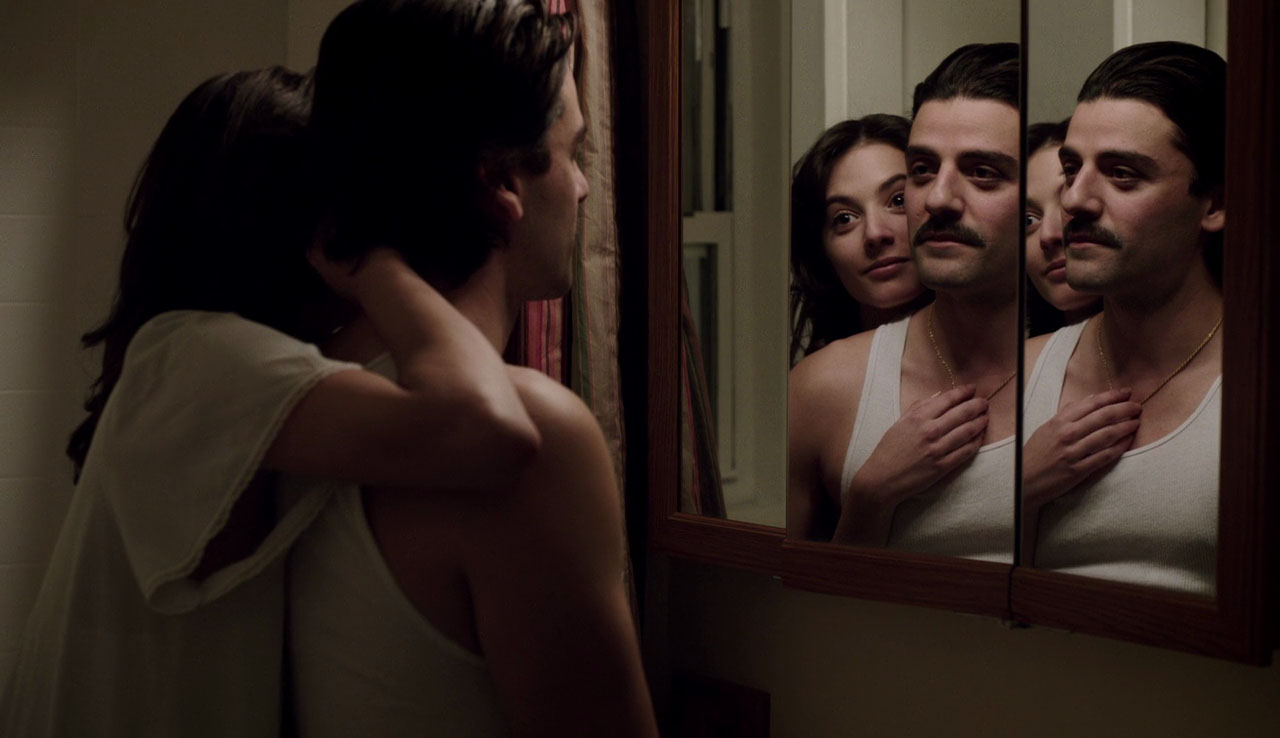
The less-engaging side of the series is about local politics with Nick (Oscar “Llewyn Davis” Isaac, who had an epic 2015) as our protagonist. He’s the title hero, though his investment in desegregating Yonkers seems a far distant second to his self-centered political aspirations, which take off when he becomes an unlikely young mayor, swept into office (replacing Jim Belushi) to fight the desegregation, but finding himself having to defend it. Sure, Nick has morals, but his “doing the right thing” is meant to keep the city from going bankrupt from federal fines, not to bravely and singlehandedly defeat racism. And though he turned out to be the mayor the town needed at that particular time, he’s quickly run out of office by arrogant bastard Alfred Molina, and Nick’s political dreams turn to despair, feeling that he’d won a great victory, but a victory the angry residents would never recognize.

The rest of the show follows prospective residents of the new townhomes, detailing their individual lives and travails. Among the indifferentiated mob of white residents who show up to town hall meetings screaming about their property values is Mary (Catherine Keener), who’s representative of the gradual acceptance of the new housing. When the houses finally go up and families move in, Mary is coerced (by Clarke Peters, Det. Lester Freamon) to join a committee to meet with the residents and help them adjust – and help their bitter white neighbors adjust as well.

Mary before/after:

“We’re not prejudiced. Anyone is welcome to live in my neighborhood if they have the money.”

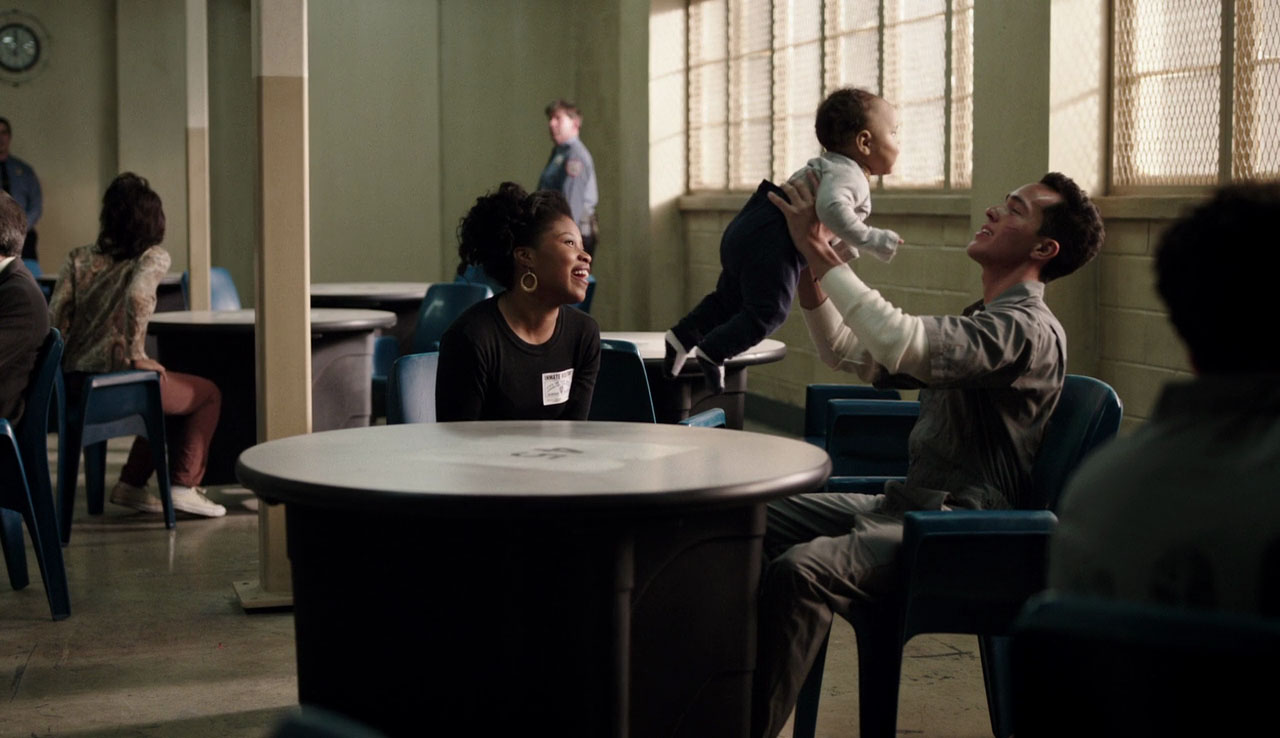
Most of the future residents we follow are women in trouble. Doreen (Natalie Paul)’s man is a drug dealer with asthma – and we know what happens to movie characters with asthma, so soon she’s a single mom, hooked on the crack. Norma (LaTanya “wife of Samuel L.” Jackson) was a nurse until she loses her sight due to diabetes, is helped out by her son Brother Mouzone. Carmen (Ilfenesh Hadera, currently on the Paul Giamatti show Billions) is from Dominican Republic, tries going back there but can’t make ends meet in either country. Billie (Dominique Fishback, soon appearing with D’Angelo Barksdale in another period New York David Simon miniseries, The Deuce) gets pregnant (a bunch of times) by petty criminal (later major criminal) John (Jeff Lima of Half Nelson), who spends half the show in prison.

Meanwhile, Nick will do anything to get back into office, including getting his wife (Carla Quevedo) fired and turning on his oldest council friend Winona Ryder. But he’s not exactly beloved around Yonkers, having sided with the federal enemy. The quiet unsung heroes here are the smart federal specialists (housing experts Peter Riegert and Clarke Peters, and judge Bob Balaban) manipulating a belligerent town towards social change.

Molina don’t give a shit:

Some awful hair and suits, gradually getting more tolerable as the horrors of the 1980’s fade away. Lots of Bruce Springsteen and a good Steve Earle tune used as theme song. Sadly, only one use of the word “mook”. Movies often start at the end (I have a starts-at-the-end tag on the blog), but this one repeats its suicidal-Nick-in-the-cemetery finale at the beginning AND in the middle.

Mostly this got deservedly great reviews, though the Haggis-haters at Slant tore it apart (I’ll agree with the line “Keener dons ridiculous old-lady drag”). Presumably they didn’t tear up, as I did, at the final episode: the joy and terror felt by the new residents about their neighborhood, Nick’s strangled cry for help before heading to the cemetery, the horrified look Winona Ryder gives Nick’s widow at the funeral, and the thaw in hostilities between new neighbors represented by Poodle Lady (played by the director’s ex-wife).

Poodle Lady:

A Wish For Wings That Work (1991, Skip Jones)

First time I’ve watched this since its highly anticipated TV premiere. It’s like Rudolph but with Opus – he helps Santa with a problem and is rewarded with a fly-around by the ducks that used to laugh and call him names. Highlight is when Opus is injected into a scene from Frank Capra’s Lost Horizon after an ad break.

Opus was Michael Bell (Duke in G.I. Joe), neighborhood pig and ducks were Joe Alaskey (Plucky in Tiny Toons, Bugs and Daffy in Looney Tunes: Back in Action), and uncredited appearances by Robin Williams (botching a NZ accent) and Dustin Hoffman (goofing on Tootsie). Director Skip Jones was a Don Bluth animator.

Breathed was not happy with the final result, and I can see his point. Still the only appearance of Bloom County characters on TV – technically Outland characters at this point – though Breathed’s Mars Need Moms book was adapted as a crappy-looking flop feature film, and his story Edwurd Fudwupper Fibbed Big was adapted into a short the author called “an unmitigated technical disaster – unfinished and unwatchable.”

Isabella Rossellini’s Green Porno Live (2015, Jody Shapiro)

A weird hour-long mash-up of scenes from Rossellini’s Green Porno live tour, behind-the-scenes tour footage, coverage of the book tour, the original short films, and related stuff, like following a scientist to observe mating seals. “It is essential that what I say is scientifically correct. Otherwise I’m a nut – and who needs another nut?” I didn’t realize she’s done two other series called Seduce Me and Mammas, and an hourlong documentary called Animals Distract Me. Jody Shapiro also shoots and produces Guy Maddin films.

A Very Murray Christmas (2015, Sofia Coppola)

In which a bunch of our favorite actors who cannot sing very well, and a handful of actual singers, congregate in Coppola’s underlit Lost In Translation hotel to act sad, goof around and gradually cheer up. The band Phoenix was the best part, with Chris Rock’s off-time backing vocals a close second.

Chris Isaak Christmas (2004)

Watched in hotel while getting ready for the family Christmas. A million times more festive than the Bill Murray one, with more upbeat music.

Charlie Brooker’s 2015 Wipe

Funny look at a depressing year. Good bit on the media’s changing attitudes on the humanity of refugees, and Brooker finally got to address his spooky Black Mirror PM pig-sex prediction on the air. Stanhope got cut for being too controversial… hope his segment turns up sometime.

Shaun The Sheep: The Farmer’s Llamas (2015, Jay Grace)

Like the movie, but shorter, and with troublemaking nihilist llamas which are even worse than the pigs.

“TV is a nickname, nicknames are for friends, and television is no friend of mine.”


Toy Story of Terror (2013, Angus MacLane)

After watching horror movies in the car trunk, the gang stays at a sinister hotel where manager Stephen Tobolowsky’s pet lizard steals toys from children’s rooms so Stephen can sell them on eBay. Also, Jessie struggles with her fear of boxes (cuz she spent years boxed-up). As usual, all looks hopeless until a last-minute rescue is mounted. Carl Weathers continues his post-Arrested Development self-conscious-comedy phase as Combat Carl, also appearances by Legos, a Transformers-Voltron hybrid and Ken Marino. MacLane has been a Pixar animator since Geri’s Game and A Bug’s Life, is codirecting the Finding Nemo sequel. Katy wasn’t too sure about watching The Cabinet of Dr. Caligari with me for SHOCKtober, but she eventually agreed to this one (it wasn’t scary).


Parks & Recreation season 7 (2015)

Victory lap for one of the greatest sitcoms. This season is set in the near-future, with cameos by everyone from previous seasons. Until Amy has another show, we’re watching Aziz’s new one. One of the Parks & Rec creators works on Brooklyn Nine-Nine, which Trevor said is good.


Inside Amy Schumer season 2 (2014)

I watched season 1, Trainwreck, and season 2 in a sort of continuum and I can’t keep straight which is which anymore. But obviously I love this. Appearances by Michael Ian Black, Ali Reza (Delocated), Jim Norton (Lucky Louie), Zach Braff, Greta Lee (Soojin from Girls), Josh Charles (Sports Night), Patrick Warburton, Rachel Dratch (30 Rock), Parker Posey, Scott Adsit, Janeane Garofalo, Jon Glaser, Mike Birbiglia, Colin Quinn, Todd Barry, Reggie Watts, Adrock, and Paul Giamatti as God. Most episodes directed by Ryan McFaul (NTSF, Broad City… and The Electric Company?)


Wet Hot American Summer: First Day of Camp (2015, David Wain)

Not the pure, unfiltered genius that people seemed to be expecting, since I heard from all sources that it was a letdown. I’m not a quick-draw TV viewer, took us a couple months to get through eight half-hour episodes, and in the end it was certainly better than I assumed it’d be, and one of the few comedy series (miniseries, really) I’d consider watching a few more times.

Unbelievable string of actors on this, including everyone from the original movie plus Jason Schwartzman as a scandal-discovering counselor, Mad Men lead Jon Hamm as a spy, Mad Men lead John Slattery as guest director of the theater program, Kristen Wiig and Sports Night star Josh Charles at the rival camp across the lake, Chris Pine as a reclusive rock star, Randall Park as Molly Shannon’s post-lunch love interest, Michael Cera as a lawyer, Lake Bell, Paul Scheer, Rob Huebel, Jordan Peele, Weird Al Yankovic, probably a bunch I’m missing.


Rick and Morty season 1 (2014)

I loved the hell out of this. Justin Roiland (Sarah Silverman Program) voices both Rick and Morty, Dr. Spaceman is Morty’s dad, Kelsey Grammer’s daughter is Morty’s sister and Sarah Chalke (Scrubs) his mom – appearances by Dan Harmon, David Cross, Tom Kenny, Futurama’s Maurice LaMarche, Dana Carvey, John Oliver, Rich Fulcher, and Alfred Molina as The Devil. Weirdly specific and extended references to movies both popular (Titanic, Jurassic Park, Inception-meets-Nightmare On Elm Street) and not-at-all-popular (Needful Things). Standard family-sitcom drama with lots of interdimensional travel thrown in, kind of the best of both worlds from Simpsons and Futurama. I was enjoying the random travel scenarios, then in the second half of the season it starts tying together previous episodes, exposing huge Rick-vs.-Morty tension, and becoming weirdly self-referential with Rick’s catchphrase and breaking the fourth wall. And I only started watching this because I heard season two is even better, if that’s possible.

Pete Michels (Family Guy) codirected all the episodes, writing by a couple Community writers (in addition to Harmon), plus web comedians Wade and Eric.


Superjail! season 1 (2008)

This Adult Swim show fills the Metalocalypse-shaped hole in my life with its ten-minute episodes of ultraviolence and nonsequiturs. Although I should really watch the next two seasons of Metalocalypse, too. Every episode is absolutely overstuffed with animated mayhem, looks expensive to make. David Wain plays the Willy Wonkaesque Warden with assistants Jared (Teddy Cohn) and Alice (Christy Karacas, director/creator of this show and of Robotomy, which sounds fun). Another creator did animation for Fox animated features, the third wrote for a Speed Racer reboot series.

Part one, featuring Richard Kiel, a Scooby-Doo mystery, a rooster-beast, Ida Lupino, Barré Lyndon (not Barry Lyndon), a mannequin museum, John Ireland and a voodoo cult can be found here. I watched those four years ago, so at this rate I’ll be through season one in the year 2054. Thriller paired well with Black Sabbath, which also had three episodes hosted by Boris Karloff.

The Twisted Image

First episode of the show started off with a bang. Leslie Nielsen (post-Forbidden Planet and Tammy and the Bachelor) plays bland but successful executive and family man Alan, and not one but two people are insanely obsessed with him. Secretary Lily (Natalie Trundy of the Planet of the Apes series) wants to marry him and Mailroom Merle (George Grizzard of Happy Birthday, Wanda June) wants to be him. Lily stalks Alan and writes letters to his wife (Dianne Foster of Drive a Crooked Road). Merle is more dangerous, steals Alan’s watch, wallet, car and daughter, and murders Lily when she says he’s no Alan.

Typical plot-contrivance follows. Alan goes to Lily’s apartment (because if your wife suspects you’re having an affair, you should definitely go to the girl’s apartment alone at night), finds her dead, is spotted at the scene, then goes looking for Merle alone.

Wife: “Why can’t you call the police?”
Alan: “Judy, you don’t understand. I can’t go into details now, just take it easy.”

Happy ending, family values are upheld, etc. Lot of good close-ups of Lily with confident, creepy eyes. Also featuring Constance Ford (the 1962 The Cabinet of Caligari) as Merle’s abusive sister and Virginia Christine (Becky’s cousin in Invasion of the Body Snatchers) as his annoyed boss. Arthur Hiller later made See No Evil, Hear No Evil, which is not a horror movie, though quite horrible in its own way.

Pigeons From Hell

“Those were no ordinary pigeons – they were the pigeons from hell” says Karloff without even smiling. Maybe Thriller was trying to distance itself from the smartass introductions on Alfred Hitchcock Presents. Too bad the intro proved to be the most amusing part of this talky, boring episode.

Two doofus college-age brothers get stuck in a swamp, immediately blame it on the South, then camp out in an abandoned house, where one brother appears from upstairs all bloody attempting to axe-murder the other. Survivor Tim (Brandon De Wilde of Hud and Shane) flees, interrupts a redneck sheriff (Crahan Denton, a huge racist in Bunuel’s The Young One) who was drinking with his buddies, tells the crazy story and is accused of killing his brother, the end.

But wait, it’s not the end! The most fantastic part of this episode isn’t the house full of haunted pigeons or the zombie remnants of the family that owned it, but the rural cop deciding to investigate this city kid’s story, consider the evidence and finally believe him and try to discover what really happened. From a story by Robert Howard, creator of Conan the Barbarian.

Rose’s Last Summer

Drunken nuisance ex-movie star Rose French (played by actual movie star Mary Astor, princess in The Palm Beach Story) goes on a trip, is found dead in a random suburb. Her friend Frank and ex-husband Haley (Jack “brother of Roger” Livesey) are more suspicious than the cops were, investigate the family whose yard Rose died in.

Mary!

Turns out Rose has been hired by the family to be their dying mother, who needs to stay alive a few more weeks to claim inheritance from eccentric relative (a genius doll inventor!), after which they’d planned to dispose of Rose to protect their secret before Frank rescued her.

Real mom, fake mom: