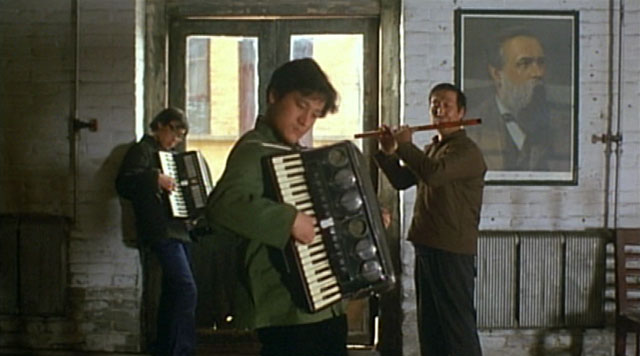
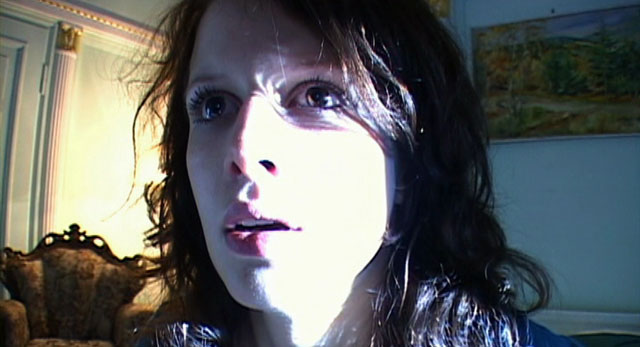
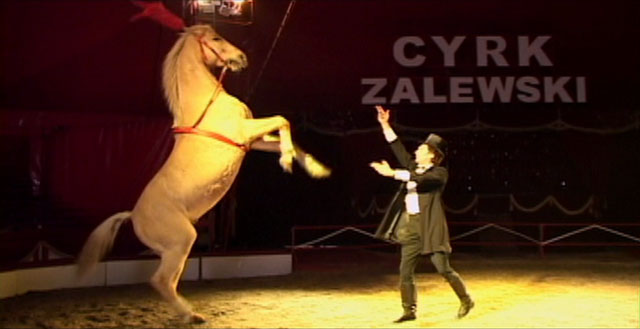
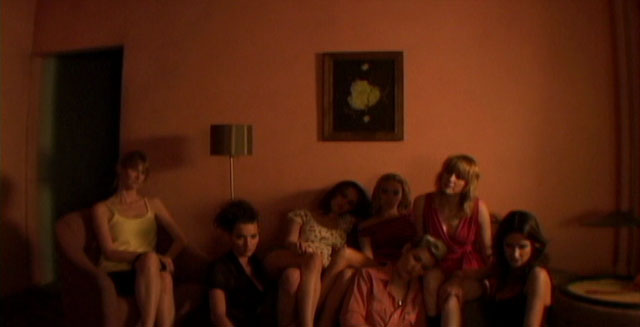
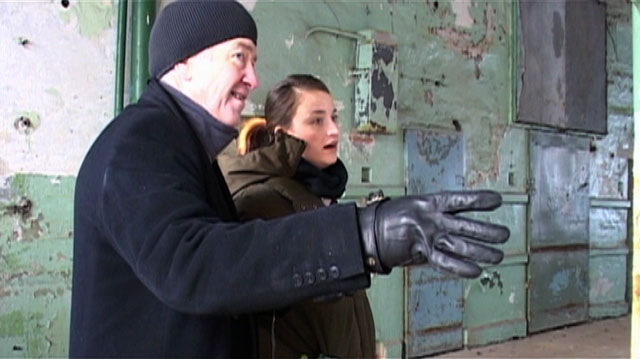
Oops, I told Jimmy this was made in 1988. I was a decade off, but we didn’t see any technology that would’ve proved me wrong. Another anarchic exuberant junkpile Yugoslavic film full of accordian music from Kusturica, but this one is a pure comedy (romantic, even) so the only person who dies and stays dead is a bad guy, and in the end everyone is married and the gangsters, scammers, rich old men, dwarf women and everyone else is dancing and happy.

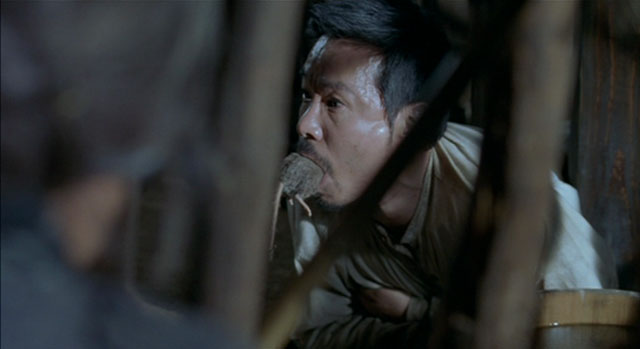
Two who died but did not stay dead:
image

The main character for the first half hour – is that Matko? – gets scammed by some Russians, borrows money from his dad and from rich (?) Grga and from dangerous coke-fiend party gangster Dadan, buys a train full of oil (?) and loses that along with the money. So as payment for his debts he agrees to have his son marry Dadan’s laughably short daughter.

This guy stayed dead, but his body was used in a Keatonesque comedy bit so it’s allowed:
image

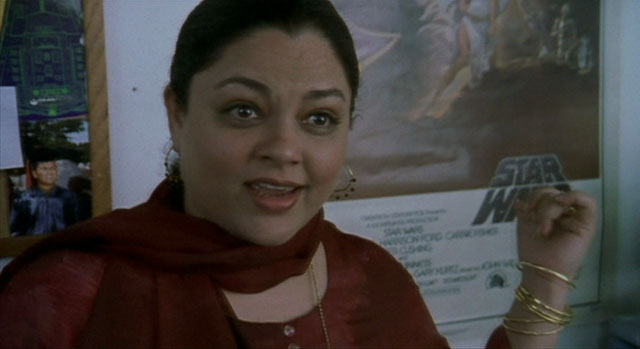
Smurfette and big Grga:
image

The son’s grandfather hides his cash in an accordian and keels over – a calculated death to stop the wedding – but Dadan will have none of that, and stashes him in the attic so nobody starts mourning until the wedding is done. The tiny bride flees, runs into Grga’s giant son, and it’s love at first sight followed by a gunfight with her dad. Son marries his crush (below), the giant marries the tiny girl, the two dead old men (I didn’t mention Grga’s dad died a few minutes ago) come back to life, and Dadan falls into a toilet, grossing out Katy who came in to watch the ending.

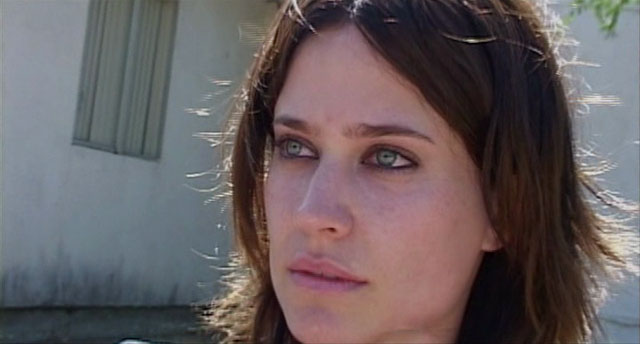
One of the actresses, possibly this one, was later in Big Love and Public Enemies:
image

Pitbull! (Terrier!)
image

Not just cats – movie’s got a pig eating a car, a shrieking peacock, a goose used as a towel, and cute goats. I thought the whole thing was a riot, and excellently filmed & edited, but maybe too silly for the others in the room. There’s no pleasing some people!

Black cat, white cat:
image

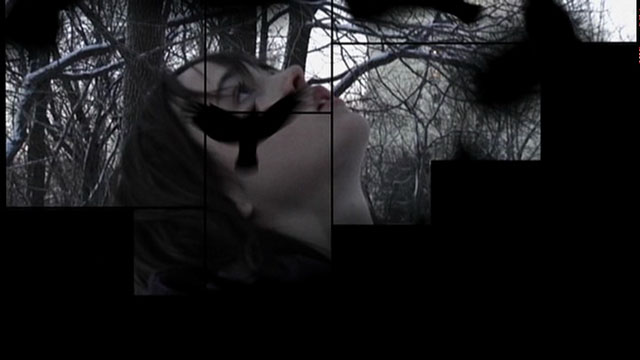
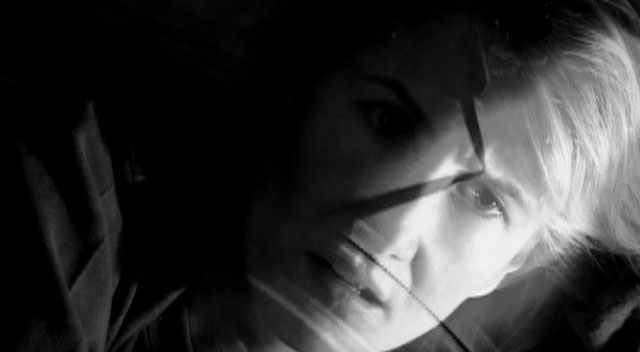
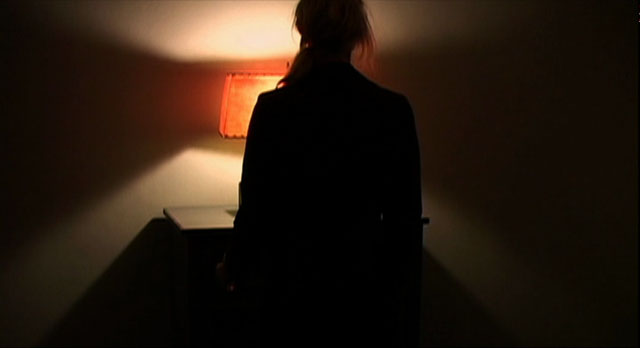
I told Katy I wanted to call this “post-feminist cinema” but she said “anti-feminist” would fit better. I’m gonna read what everyone wrote about this later on, but for now my first impression was that it’s a beautiful film of a less-beautiful story. Charlotte and Willem lose their young son and since he’s a psychologist he tries to help her through it using dodgy methods like taking her to the place she’s most afraid of. So he’s either doing a good job, or he’s misguided but still trying to help the best he knows how, or he’s an awful person who hopes to further incite his wife’s trauma so he can write an exciting book about it. I go back and forth, but what I’m sure about is that Charlotte turns out to be an evil witch. She watched her son die and did nothing to stop him, she drilled a metal rod through Willem’s leg, and she acts generally psycho until he stops her and is confronted by the ghosts of a hundred dead forest witches. Or something. Gotta say I actually liked it a whole lot, found it an effective and gorgeous horror movie, despite any political or character misgivings.

She meets He on a cruise boat, both returning to their wealthy fiancees. They fall in love, promise to meet atop the Empire State Building in six months. Breaking off their engagements and learning to be self-sufficient, he works at his paintings and she takes a job as a teacher – but she’s hit by a car on the way to her date. She doesn’t want to be pitied so stays quiet, while he thinks he’s been stood up. They meet again, he learns the truth, loves her anyway. One of the most romantical stories of all time!

image

Simply-shot, talky melodrama. We watched an ugly, blurry copy, but it seems ugly, blurry copies are the only ones available. The ol’ public-domain problem, I’m guessing. I’ve seen most of the Cary Grant/Deborah Kerr 50’s remake, which is very similar in plot and dialogue, has good color and production design and Cary Grant, so seems the clear winner (though they’re both excellent). This one’s main advantage (besides being the original story cowritten by McCarey himself) is Irene Dunne, who has an awfully cute smile and blows away her own earlier performance in Roberta.

image

Not much to say about Charles Boyer, besides that I recognize his round face from Liliom. It’s Irene’s movie. In fact, the two of them and Boyer’s grandmother (Maria Ouspenskaya of Dodsworth and The Wolf Man) are practically the only actors in the movie (I’m not counting her choir of overly sweet schoolkids). The remake adds a half hour, fleshes out the parts of their fiancees, gives his art dealer and her school principal more lines.

image

Screenwriter Delmer Daves would later helm Dark Passage and 3:10 to Yuma. Love Affair was nominated for every oscar (except actor – sorry, Chuck Boyer) but didn’t stand a chance against color epics Gone With The Wind and The Wizard of Oz.

Set in Paris but I don’t think there’s a single Parisian (character or actor). Stiff lunkhead footballer Randolph Scott (Ride Lonesome), looking convincingly awkward on the delicate Paris sets, is tagging along for some reason with Fred Astaire (here winningly named Huck Haines) and Fred’s band of musical entertainers.

Randolph looks to his rich aunt Roberta (Helen Westley, who also appeared with Irene Dunne in Show Boat) for a place to stay while Fred negotiates with blustery “Russian” Luis Alberni (hotel owner in Easy Living, chef in The Lady Eve) for a place to work.

Enter Fred’s love interest Ginger Rogers. Where did she come from again? I don’t remember, but she’s somewhat hindered here by her awful fake accent and by Fred’s fancy for solo tapdances. Fred’s got no humility – this was only his third film (between Gay Divorcee and Top Hat) and something like Ginger’s 30th. The two dances she participates in are wonderful, especially the first where she wears pants so we can see what she’s up to.

Aaand enter Irene Dunne (pre-Awful Truth, same year she was in John Stahl’s Magnificent Obsession) as Randolph’s love interest. I hate to see a dumb American dude being fought over by a European princess (Dunne, who has also been secretly designing Roberta’s all-the-rage fashions) and an aggressively rich American (Claire Dodd), but maybe Randy is more handsome than I realize. Irene is also secretly (?) the sister of the building’s doorman (Victor Varconi: Pontius Pilate in DeMille’s King of Kings), which leads to misunderstandings. Hmmm. Ultimately what matters is we get some oscar-nominated songs, some Fred/Ginger dances, and some comedic running-around. I like Irene Dunne whenever she’s not singing (she’s fond of the piercing Jeanette MacDonald style, which would thankfully die after the 30’s).

Remade in the 50’s with Red Skelton and Zsa Zsa Gabor. Lucille Ball appears in a fashion montage at the end. IMDB trivia gives clues how to spot her, but I guess my laptop DVD drive is dying so I can’t get screenshots.

Based on the works of 1700’s poet Sayat Nova, and in fact Sayat Nova was the film’s original title before the censors changed it.

Doesn’t look or play very similar to Parajanov’s also-amazing Shadows of Our Forgotten Ancestors.

My screenshots are all from the first six minutes. After that the laptop wouldn’t read the disc so I watched the rest on TV. EDIT: nope, all screenshots now replaced with 2018 versions.

Divided into sections, with the poet at different stages of his life. Little spoken dialogue.

In the middle section, both Sayat Nova and his girl are played by the same actress:

Just a first viewing. Will watch again (and hopefully again).

2018 UPDATE: This finally came out in a beautiful HD restoration, so now’s the time. I’d forgotten just how completely non-narrative this is. There are scenes from the poet’s life, but you wouldn’t know it without further research. Instead of a story, we get dioramas in front of an unmoving camera. The blu-ray includes a text commentary, since he wants to discuss the audio without obscuring it. He has access to the script and outtakes, so discusses what’s actually happening, in addition to the symbolism and shooting locations and historical context. It’s very helpful to know what’s going on, but I don’t feel like understanding the story makes me love the movie more.

“Let’s see ’em top this on television.”

image

Sequel to a flick where clueless Bob Hope goes west to make his fortune, kills some Indians and causes some chaos. Now Hope plays his own son, a Harvard-obsessed goofball out to claim his dead dad’s missing wealth and escape town without being scalped by vengeful Indians or the townsfolk, their hands full of I.O.U.s from Hope’s father. More importantly, Frank Tashlin is in charge of his first live-action pic, which he treats like one of his cartoons, paying no respect to laws of reality.

image

image

Jane Russell is gold-robbing outlaw Torch by day, nightclub owner and star Mike (?) by night. Straight-arrow do-gooder undercover-lawman Roy Rogers either knows or does not know that they’re the same person. Hope wants nothing to do with Roy, but plots to marry Jane (once he realizes his inheritance amounts to an empty chest) in order to be rich enough to pay his debtors and leave town alive. Torch kidnaps him to get at his loot, his dad’s ol’ prospector friend finds where the actual Paleface loot is hidden (then gets hisself killed by Torch’s badman sidekick), Roy and Trigger do some stunts and sing a song, Jane agrees to marry Bob, and it ends with plenty of unashamed injun-killin’. Who would ask for more?

image

“That cowboy has no eyelashes”
image

Just as much cartoon-anarchy as I was promised from the Tashlin book, so I was pleased. Katy found out she doesn’t much care for Bob Hope, and we agreed the story was full of holes, but to please me she said she also liked the cartoony bits and she thinks Roy Rogers is neat but wishes he had eyelashes.

image

Joke cameo by Cecil DeMille, who was making The Greatest Show on Earth at the time. Looks like the cast of each movie played extras in the other. Jane Russell, returning from the original Paleface, starred in Gentlemen Prefer Blondes the next year. Hawks must’ve seen her in this – she was awesome. This was one of the few times Roy didn’t play “Roy Rogers.” He’d been starring in films for fifteen years, and this was his last (along with horse Trigger, who deservedly won an award for his performance) before moving on to television. Paul Burns (the ol’ prospector) had been in movies since the tender age of 58, appearing in Renoir’s Swamp Water along the way, living just long enough to portray “bum in park (uncredited) in Barefoot in the Park. And handsome baddy Lloyd Corrigan would appear in Tashlin’s followup Marry Me Again before following Roy to TV Land.

image

image

Seems safe to call this a screwball comedy. Cary Grant, a famous painter of Americana whose work we never see, gives a lecture before lovestruck Shirley Temple’s class a couple hours after being dismissed by Temple’s judge sister Myrna Loy for taking part in a bar brawl. An older-sister-younger-sister-Cary love triangle follows, complicated by serious man Rudy Vallee (guy with the constantly-broken specs in Palm Beach Story) who likes Myrna. Anyone who’s seen a romantic comedy before knows that two serious people should not end up together, so Myrna eventually warms up to the reputedly wild (we never see him misbehave much) Grant.

Cary, Shirley’s own-age love-interest Johnny Sands, and Rudy:
image

Shirley is too good for the bellboy:
image

Won a well-deserved oscar for writing, beating out Monsieur Verdoux and Shoeshine. Super enjoyable overall, and Shirley Temple is excellent. Can’t think of any other 18-year-old who would’ve equalled her performance. That’s the upside of being a child star. The downside is that the following year at 19, with a kid and an abusive husband (MST3K target John Agar), her film career was over.

Myrna Loy is not amused:
image

Also good: the girls’ uncle (Orson Welles regular Ray Collins) as a meddling, unethical psychologist, and grumpy oldster Harry Davenport (Meet Me In St. Louis, You Can’t Take It With You). Written by Sidney Sheldon (Anything Goes, Pardners, Annie Get Your Gun) and energetically directed by Reis, who’d be dead from cancer six years later.

How everyone in the 40’s saw Cary Grant:
image

It’s not hard to find a Shakespeare play I haven’t read/seen/acted, but that never stopped Katy from exclaiming “really???” whenever I claimed total unfamiliarity with Midsummer, so we finally rented her favorite version. I liked it… of course, it’s no Much Ado About Nothing with Emma Thompson, but what is? Less zany and complicated than I’d expected. Shakespeare could’ve learned something about comedy from Howard Hawks – or maybe it’s Hoffman, director of dullsville drama Game 6 who could learn something. Fortunately he keeps things much more animated here, seems to do a good job with the so-wide-it’s-squintingly-small-on-my-TV cinematography, though there’s mysteriously no participation by Kenneth Branagh or Michael Keaton (at the time they were busy filming Wild Wild West and doing nothing whatsoever, respectively).

Elf Ritual:
image

Ally, Bale, McNutty, Friel:
image

Okay, Dominic West (The Wire‘s McNulty) loves Pushing Daisies star Anna Friel (who doesn’t?) but her fun-hating parents insist she marry boring Christian Bale (toning things down after Velvet Goldmine) who is being stalked by Calista Ally McBeal Flockhart. Unconnected to any of that, Kevin Kline’s cheesy theater group (including Sam Rockwell) is preparing a play to be performed at the royal court. And all of this would probably end badly if not for the meddling of elf king Rupert Everett (Dunston Checks In) who sends puckish Stanley Tucci to prank fairy queen Michelle Pfeiffer, and along the way he turns Kline into a half-donkey and screws with the four lovers. Mud fights and bicycle rides ensue.

Rockwell is a woman, Kline is a ham, the guy behind them is a wall:
image

Convincingly elvish elf Tucci with mopey Rupert:
image

In the end everything is sorta normal except that Kline’s play is a hit, McNutty is allowed to be with his girl, and Bale magically loves Ally. I was surprised that McNutty and Ally gave the best performances of the four, even edging out all the magical beings (well maybe not Stanley Tucci), and Kline is excellent, bringing a touch of sadness to his mostly ridiculous comic-relief role. So where’s he been hiding this decade? Prepping for a comeback, hopefully.

Donkey-Kline and Queen Pfeiffer:
image

Spike has turned a beloved ten-page kids book into a dark, psychological grown-up divorce drama acted out by a confused kid and large, brown, dangerous puppets. We’re not sure how we feel about this. I’m pretty sure I like the movie. It’s different as hell, seems a ballsy move to have made it at all. Don’t know how much of Spike’s (or co-writer Dave Eggers’) vision made it intact, vaguely recalling rumors of delays and studio-mandated CG puppet-enhancement. Whoever meddled in whose affairs, the monsters came out looking great.
Trouble: handheld camerawork provides no sense of composition most of the time, and fantasy world and characters are all painted in shades of brown. The filmmakers are creating a ten-year-old’s escapist fantasy realm, and all we get is brown? Suppose it’s a natural-environment thing, since he’s fleeing civilization for the wilderness. The music is alright, but the quiet version of Arcade Fire’s “Wake Up” on the trailer was so beautifully suited to the imagery, I’m tempted to say I liked the preview better than the film.

Young (imaginative, loner, duh) Max and his older sister live with beleagured mom Catherine Keener. Divorced dad isn’t in the movie, except once by phone, but mom is dating a guy, probably third-billed Mark Ruffalo who I didn’t recognize for the 45 seconds he was in the film, when Max goes on a rage, runs away in his monster pajamas and dreams a perfect world where he gets to be king of the monsters and have fun all the time.

Just kidding – Max dreams up monsters who are as moody as himself, always quarrelling and splitting up like his parents or going off to hang out with their cool friends like his sister, building beautiful things then destroying them in temper tantrums, hurting each other accidentally or on purpose, and often threatening to eat Max up. After an hour of this, nothing is resolved and Max goes home… just like real life, but not much like the hollywood spectacle we were all expecting.