IMDB says ’87, websites say ’90 but the movie’s own credits say 1989, so there.

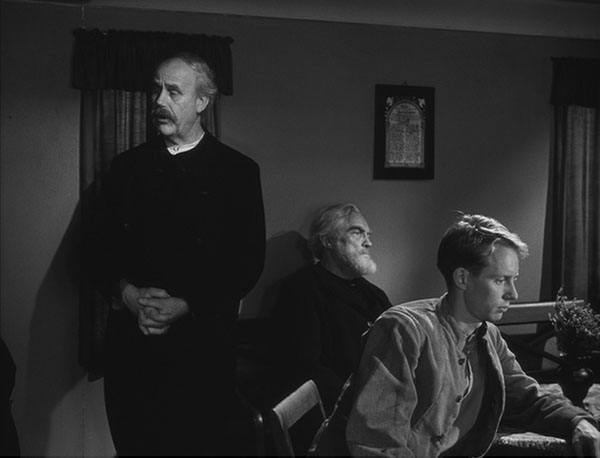
It’s not the first time I’ve watched a painfully low-quality downloaded video of a rare art film on J. Rosenbaum’s list of 1000 favorite movies only to come out scratching my head… and it won’t be the last. It’s impossible to tell if the handheld b/w photography is any good because my copy was so poor, but hey it might’ve been.

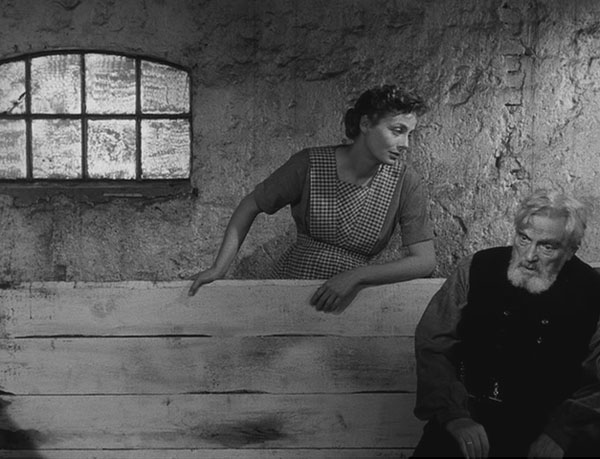
JR himself says the movie “charts the adventures of a nearly naked heroine who leaves the corpse of her dead lover in a country house, goes to a bar and sets in motion a scabrous free-form orgy before returning to her house to die. The film manages to approximate the transgressive poetic prose of Bataille (a mixture of elegance, raunchy defilement and barbaric splendor) while celebrating female sexual desire without the usual patriarchal-porn trimmings.” That’s Georges Bataille, famed French semi-philosophical writer, whom I know nothing about except from glancing at his wikipedia.

Marie drunkenly wrestles/dances with a dude in the bar:
image

JD Rhodes: “The film’s events more or less follow those of the story. Ahwesh has said that she was drawn to adapt the text because she liked ‘how Bataille does not explain the emotions of the characters’. The camera actually seems to savour its exteriority to the events of the profilmic. The use of silent film intertitles, all actual lines culled from the original Bataille story, reinforces the exteriority of the film’s narration.” Aha, Rhodes also says the cinematography is often under- or over-lit, so my bad copy might not have been as bad as I thought.

Me, I didn’t get it… but then I’m not all that deep, and while watching a nude woman romp through a “purposely” amateur-looking super-8 movie is still more interesting than the recent Batman flick, I never sit there thinking “ah, it’s exactly this film’s deceptive slackness that constitutes its philosophical and even political rigour: only through its superficially amateurish (often hilarious) elisions and dilations, its mordant tautologies and wilful omissions, its hokey dialogue and its raw display of female sexuality can the film succeed in forcing the kinds of questions it does from its viewers.” [Rhodes again]. Nope, just another WEIRD ART FILM to me.

Rhodes: “We think of Pasolini here, of Jack Smith, of Warhol.”
Me: Exactly.

Marie with the deadman:
image

Fred has a decent life with his wife, who is expecting a second baby, when old friend (actually an old friend’s ex) Chloe resurfaces and they start meeting in the afternoons. Fred lunches with Chloe, then goes shopping with her, then kisses her, then sees her naked, then almost sleeps with her but runs back to his wife for a tearful finale.

Fred & Chloe:
image

Progressions from the previous films:
– Fred is married with two kids, so stakes are higher
– We meet the wife and get to know her more than we’ve gotten to know the other “chosen girls”, again raising the stakes.
– a dream sequence wherein Fred meets the girls from the other movies on the street while wearing a magical crystal
– At the end, Rohmer beautifully shows us (below) Fred’s decision to cut it off with Chloe and return to his wife instead of having Fred explain it to us in voiceover.

image

Felt self-conscious watching this with Katy, who didn’t like it. Overly-talky French films with protagonists who have crappy ideas about women should apparently be watched alone, cuz I felt fine watching the five other talky entries with cad protagonists in this series.

As Fred, Bernard Verley is the guy I just saw playing Jesus in The Milky Way (he’s very different here, and not just because he has no beard and is not playing Jesus). Fred has better hair and a better personality than any guy since My Night at Maud’s. Zouzou (Chloe) appeared in a 1977 Edgardo Cozarinsky revolution comedy with Dennis Hopper. Guy who plays Fred’s business partner Gerard was in Stolen Kisses and Bed & Board. Fred’s wife, unfortunately, was in nothing else of note.

Fred’s wife is def. more attractive than Chloe:
image

“What Rohmer gets better than anybody else, I think, is the way in which we justify ourselves, the way we talk ourselves into such silly and demeaning but human interactions with people, that we can justify just about anything. He’s one of the great justifiers. He loves to watch these men squirm their way along through life.” – Neil LaBute, director of the Wicker Man remake. It’s actually a very nice interview, a ten minute appreciation of Rohmer’s cinema.

The famous shot:
image

Fred with a dream-sequence girl… is that Haydée?
image

also: Veronique and Her Dunce from 1958, before the Moral Tales. Shot by Charles Bitsch, who did Le Coup du berger and Paris nous appartient for Rivette. Veronique shows up to tutor a kid who isn’t too good at math or composition and likes to ask questions. Then she goes home. That’s really it! Not exactly The 400 Blows here, or even Le Coup du berger, but it’s a likeable little sketch. Veronique would return the next year in Charlotte et Veronique written by Rohmer and directed by Godard – it’s on the A Woman is a Woman DVD. As for this short, I liked the tile floor, and am glad they showed it so often.

Veronique before meeting her dunce:
image

Behind the scenes on Akira Kurosawa’s Ran. I didn’t believe the hype that this would be one of Marker’s best films, but the hype was right! Gorgeous movie, more following general daily activity on-set than Kurosawa himself, to the great annoyance of the IMDB reviewers. Besides CM, praise to cameraman Frans-Yves Marescot (no other credits) and the great Tôru Takemitsu whose music is used extensively.

Tôru Takemitsu visits the set looking for musical inspiration:
image

image

“In this kind of shooting the first pitfall to avoid is appropriating a beauty that does not belong to us, to play up the lovely backlit shot. Of course some of that borrowed beauty will come through anyway. But we shall try to show what we see the way we see it, from our eye-level.”
image

On the TV is The Horse, the last movie Kurosawa assistant-directed before beginning to make his own films
image

Movie was shot around Mt. Fuji, but apparently the mountain isn’t seen in Ran.
image

“When cement has been added to the black earth of Mt. Fuji so that the horses’ hooves can kick up clouds of dust, the assistant director and the script girl pitch in as enthusiastically as the grips. It’s as though each person, however great his or her professional qualifications regarded the film as a whole, as a collective endeavor in which there is no such thing as a noble or a menial task. We saw, for example, Kurosawa’s closest aide helping with makeup, the head electrician cutting the grass side by side with the art director, the clapman rehearsing stunts. Most unusual.”

image

Sound recordist Fumio Yanoguchi, who died during the editing of A.K., had worked with Kurosawa since the late 40’s:
image

Ishiro Honda himself – director of Mothra, Rodan and the original Godzilla:
image

Fallen warrior, or an extra taking a nap?
image

“The sensei is he who, by achieving technical perfection, has got a sort of spiritual bonus out of it. The aura of respect that surrounds and protects Kurosawa is nothing like the reign of terror that some lesser directors impose on the set. And just like the great sword masters of the past, sensei has no time for abstraction. When he speaks of his work he reflects on factual experiences. When asked why he did this or that he says “I simply make a film as I want it to be”.

Sensei:
image

It’s my first-ever post on movies I haven’t seen!

Here are some movies I have not watched because I can not understand them.
More reasons to learn French.

If I Had Four Dromedaries, 1966

image

image

image

image


Far From Vietnam, 1967

image

image


Maspero, les mots ont un sens, 1970
(also mentioned in one of my previous Marker round-ups)

image

image


Blue Helmet, 1995

image

image


Silent Movie, 1995 (and/or Owl Gets In Your Eyes)
(The girl is Catherine Belkhodja, star of Level Five – note the cartoon owls reflected in her sunglasses)

image

image


A Mayor in Kosovo, 2000

image

image


Commentaires

image

image

This page from the Catherine Lupton book gives a good intro to this post on three Chris Marker movies I just watched, and this other post on some Chris Marker movies I did not watch.

Marker has also continued to engage directly with contemporary political events and debates. In The Last Bolshevik and in Berliner Ballade (1990), a report produced for a French television current affairs strand, Marker reflects on the political ideals that collapsed at a stroke with the fall of the Berlin Wall and the end of Communist rule over the Soviet Union and Eastern Europe, and attempts to hold open a space for those who still believe in the founding principles of Socialism. Coinciding with this abrupt shift in the political landscape of Europe, the welter of savage inter-ethnic conflicts triggered by ultra-nationalist movements in the former Yugoslavia during the early 1990s (and again more recently in Kosovo) has focused Marker’s attention through a series of candid engagements with people caught up in the long drawn-out war. Les 20 heures dans les camps (1993, Prime Time in the Camps) focuses on a group of Bosnian refugees who are producing their own television broadcasts. Casque bleu (1996, Blue Helmet) is an extended interview with a French soldier who served with the UN peacekeeping force in the former Yugoslavia, and now voices his disillusion with UN policy towards the region. Two as yet unreleased works, Un Maire au Kosovo (2000, A Mayor in Kosovo) and Avril inquiet (2001, currently unfinished, Worried April), are built around interviews with Kosovans involved in the most recent stage of the conflict. This cluster of short, pointed, interview-driven videos is the direct descendant of Marker’s unsigned political films of the 1960s and ’70s, and retains the same ambition: to give a voice to people who are spoken about, but never heard, in mainstream news reporting.

Tokyo Days, 1986

Twenty minutes long, seems very much like outtakes from Sans Soleil. We watch people dreaming on the subway, check out Japanese television… all very familiar. Of course I’m not complaining. There’s always room for more Sans Soleil. Wish this had been an extra on its DVD, instead of a hyper-obscure oddity on a bittorrent site.

image

No dialogue except in this part – French, of course, so I’m not sure what she said. This girl is Arielle Dombasle – an actress in the films of Raoul Ruiz, Eric Rohmer and Alain Robbe-Grillet (she’s the one labeled “one goofy actress” in my La Belle Captive entry), who also appeared in Sans Soleil and The Owl’s Legacy. I think we hear Marker himself talking to her in this segment.

image

image

image

image


Berlin ’90
I thought this was the same film as Berliner Ballade but apparently this is its sequel which accompanied Tokyo Days in the installation project Zapping Zone. I wasn’t always sure what was going on… yeah, the Berlin Wall and elections, but I didn’t get as much out of it as other viewers have. Nothing wrong with it, just some news/reportage footage.

EAI:
Berlin 1990 travels the streets and the political landscape of the recently re-unified Berlin. In the tumultuous atmosphere of 1990, we watch Berliners walk through check points manned by soldiers, past street vendors selling sausages and “actual” pieces of the Berlin Wall, and watch as they watch the election results come in for another “new” Germany.”

Frieze:
Berlin (1990) records daily life by the Berlin wall during its dismantling. Formerly capitalism’s outer limit and the most striking emblem of world economic division, the wall itself became just another commodity, as pieces of it sprayed with fake graffiti were sold next to East German police uniforms and frankfurters. Though Marker documents the optimism of the first East German elections, a stunning montage to the lilting melody I Can Hardly Wait for Spring suddenly evokes the darker memories hiding behind German reunification: flowers strewn along the streets for Hitler, and the burning of Berlin.”

image

image

image

image

image


Prime Time in the Camps, 1993

In the Bosnian refugee camps during the war in Sarajevo, some amateurs take over a TV station, dedicated to collecting the news, sorting out the truth and re-broadcasting along with their own reportage to fellow refugees. “They are young people who never imagined that one day they’d be behind a television camera or holding a microphone.” One of the reporters: “People had a particular model in their heads of what television was. So we had to make the news look like the news, which meant making it look like what people are used to seeing. It was then that it became credible.”

At the end we see people watching the show that their neighbors had just finished assembling, a la Medvedkin on his train. If there was a topic in ’93 more custom-made for the interests of Chris Marker, I can’t think of it. Peter Watkins should have been there too (see Frieze quote below).

Wikipedia: “The Siege of Sarajevo was the longest siege in the history of modern warfare, conducted by the Serb forces of self-proclaimed Republika Srpska and Yugoslav People’s Army (later transformed to the Army of Serbia and Montenegro), lasting from 5 April 1992 to 29 February 1996.”

BFI: “Documentary on the Ruska refugee camp in Ljubliana (Slovenia), where a group of Bosnian refugees present news every night on VHS video. Documentary on the making of the news.”

Frieze Magazine: “The amateur journalists sift information from three or four news sources: ‘I ask myself who might want to lie, and who might have the ability.’ Ordinary people, they have slowly come to realise that television news is a vast form of manipulation.”

Frieze 2: “Marker was Resnais’ assistant on Night and Fog (1955), one of the first films to document the Nazi death camps. This early moral imperative to remember is echoed in the Bosnian conflict. News, for those who live within violent struggle, is part of the work of mourning.”

image

image

image

Katy asked why I like Chris Marker movies so much. I told her that Sans Soleil is one of my very favorite movies, and that everything else he has made connects with it in some way, that more than most other filmmakers he seems to be making one long work, rather than a bunch of disconnected movies, and I hope to see as much of that work as possible.

Songs heard:
Tokyo Days: Good Morning from Singin’ in the Rain
Prime Time in the Camps: Leonard Cohen’s Everybody Knows
Berlin ’90: The Air That I Breathe

If you go by the IMDB date of original release, nearly all the 2008 movies I’ve seen have sucked. Good stuff like My Blueberry Nights, Paranoid Park and The Edge of Heaven count as last year’s movies. Why is there always a year delay on quality movies, while crap is available immediately? And why do I ask questions on a blog nobody reads?

I never intended for the new Coens comedy to be lumped in with the 2008 crap, but there you have it. This would probably be below Intolerable Cruelty in their pile of late-career misfires, but I’m not about to rewatch that one to find out for sure. Katy “detested” this movie. I thought it was pretty okay, watchable for a few good performances and favorite actors but certainly not for story or humor. I heard this was supposed to be a comedy, so where was the funny?

Plot rundown so I don’t forget everything and feel compelled to watch this again soon: Bearded G. Clooney has seemingly good relationship with wife, but he’s also a huge sex addict, sleeping with Tilda Swinton and Frances McDormand, so his wife has hired private investigators to catch him (which is not too hard). John Malkovich is a gov’t flunky who is getting demoted at work and divorced by wife Tilda Swinton and locked out of his house and bank accounts. Frances McD works at a gym with Brad Pitt and wants surgery to look younger. An energetic Pitt accidentally gets a disk of Malkie’s private files and tries to blackmail him with Frances in tow. When blackmail fails, Pitt breaks into Malkie’s house to get more files to sell to the Russians, and is memorably killed by Clooney. Pitt/Frances’ nice boss visits the house trying to help and gets killed by Malkie. Then some bunch of mid-rank government fellas puzzle over what has happened, and tell us about some stuff we did not see, then end the movie with a big godlike zoom-out mirroring the zoom-in at the start, either to show us how far above this story the filmmakers consider themselves, or to point out that nothing of significance actually happened.

Music, recognizably, by Carter Burwell. Good cinematography by Coen newbie Emmanuel Lubezki, who just finished shooting two of the most amazing films of the decade, The New World and Children of Men. Lubezki keeps the film looking alive even when it’s set in a series of depressing buildings (a gym, McDormand’s apartment, government offices), and adds touches of comic terror to the scenes of Malkovich obsessing on his boat or Clooney getting paranoid in the park. He does all he can, I guess. Everyone did all they could… it’s a high-quality production with good acting, but to serve an empty story. The Coens think it’s hilarious to create an amoral world populated by a couple likeable people, then have the rest of the cast bloodily murder those likeable people. I’m aware that they’ve done this plenty of times before, but when the story is tight (Miller’s Crossing, Man Who Wasn’t There) or the humor is funny (Hudsucker Proxy, Raising Arizona) I give their sociopathic tendencies a pass. Not here, bros. Better luck next time.

When bad American drug guys feed 007’s friend to big fish, there will be many fish-related revenge killings! But when Bond is fired by the British government for going vigilante, he goes… well, even more vigilante to continue the revenge stuff. Movie soon turns less aquatic, with more dirty, dusty drugs-and-oil-type crime going down. This is the movie where Bond drives a tanker truck up on half its wheels to avoid a missile blast, which is only slightly less laughable than the rocket vs. handcart scene in Darkman III: Die Darkman Die, but looks cooler.

From John Glen (the director of a Christopher Columbus movie with Tom Selleck) and the writer of The Great Gatsby (according to IMDB, anyway). Timothy Dalton of Hot Fuzz is Bond. Movie seemed long; was long.

Must’ve been sponsored by velcro – the stuff pops up everywhere.

Most importantly, Benicio Del Toro:
image

Benicio Del Toro!
image

Benicio Del Toro:
image

This is one of Buñuel’s anarchic sketch films (see also: Simon of the Desert, Phantom of Liberty) which he made in between his relatively more normal, subversive upper-class films (in this case between Belle de Jour and Tristana). I still think I appreciate his films more than I enjoy them, but the more of them I watch, the more I feel that his career is unassailable, that his last twenty years of filmmaking produced one long masterpiece. It turns out I had seen this before, though I barely remembered it. Must’ve rented the tape from Videodrome. Don’t think I finished it last time, because it got foggier around the halfway point.

image

Such a smart and well-researched movie, I don’t feel qualified to discuss it. I can discuss the cinematic aspects though. Good photography with no surprises, unusually long shots but not noticeably/showoffy long. Buñuel’s movies always feel the tiniest bit too slow for me, too perfectly calm and collected, the acting and sets and camerawork too high-quality for their content, which I suppose is the point.

The plot is a “picaresque”, two beggars wander into various scenarios during their long walk from Paris France to a holy pilgrimage spot in Santiago Spain – although it turns out they’re not on a pilgrimage themselves, they just heard there’s a huge crowd in Santiago where they can get rich on spare change. Different historical periods and bible stories blend into their present-day 1960’s voyage without anyone batting an eye. They meet Satan(?), the Whore of Babylon, and lots of people discussing the six central mysteries of Catholicism and their associated heresies. They do not meet Jesus, the Virgin Mary, the Marquis de Sade or the Pope, but they’re all in the movie via sidetracks from the main action (though one could argue that it’s all sidetracks). Plenty of surreal moments keep the movie lively even when the dialogue is all obscure religious debate.

image

French cinematographer Christian Matras was about Buñuel’s age, had also shot most of Max Ophüls’ best films, also The Eagle Has Two Heads with Cocteau and Grand Illusion with Renoir. Co-writer Jean-Claude Carrière (also an occasional actor) worked on most of Bunuel’s 60’s-70’s stuff and over a hundred other movies, including recent ones like Chinese Box, Birth and Goya’s Ghosts. The guy who played Jesus starred in Rohmer’s sixth moral tale a couple years later. Virgin Mary Edith Scob was in Franju’s Judex in the 60’s, and lately in some Raoul Ruiz films and the newest by Olivier Assayas. Of the two tramps, the older would be in the next two of Buñuel’s French films, and the younger would star in Clouzot’s La Prisonnière and Godard’s Détective.

image

In the DVD interviews, Ian Christie tries to make us feel better for not knowing the historical references – he says nobody knew them. He got a press kit. The film was influenced by The Saragossa Manuscript, which sounds cool. “What heresy means for him is a kind of metaphor, I think, for human beings’ fascination with arguing about the immaterial, the invisible, trying to bolt it down and make it literal.” Screening when it did, it was alternately seen as cleverly reflecting or having nothing to do with the political and social upheaval in late 60’s France. Interview with the writer and documentary on the DVD are both pretty alright, nothing that needs repeating here.

Our two bums with the whore of babylon:
image

Michel Piccoli as the Marquis de Sade:
image

Alain Cuny as the mysterious walkin’ guy:
image

L’Age d’or reference:
image

Bahrani has Iranian heritage but was born in North Carolina, and this movie was clearly made in the USA so it sadly doesn’t count as part of Iranian Month.

I liked it a lot. It’s got the realist approach, child protagonist and hopeful ending of Where Is The Friend’s Home, but set in the auto junkyards in the shadow of Shea Stadium in Queens. Ale(jandro) and older sister Isamar live and work in an auto garage. He hustles cars into the shop and helps the mechanics by day, and sells bootleg DVDs by night; she works a food stand by day and dabbles in prostitution by night. Together they hope to afford a $4500 food-service truck of their own, but after they buy it the dream comes crashing down. The vehicle can be fixed and painted but the kitchen is unusable so they scrap their just-bought truck for $1000 in parts. Meanwhile, Ale finds out his sister is sucking dicks in the parking lot and wonders what to do/think about that.

Whole movie I’m thinking “indie dramas about poor people in poor neighborhoods always ends in tragedy”, but this one didn’t. The truck is a setback, and nobody wants their sister to be a prostitute, but at the end the kids are still together, making money, with friends and a place to live. They’re making plenty, really… doesn’t seem like it took that long to afford the truck. Nobody is physically hurt or killed, Ale’s secret cash stash is never found/stolen, they’re not kicked out of the garage and back on the street, drugs are never mentioned. Not that big a deal, but jeez do movies love to pile on the tragedy when it comes to poor people, so it was refreshing.

Camerawork is nice, all handheld, nothing that stands out except the awesome final shot (Isamar scares pigeons, camera follows pigeons quickly up, lingers on white frame of the sky, then cut to black). I don’t know if everyone read this in the same place or if they’re all just having the same idea, but every time I hear about this movie it’s compared to Italian Neorealism (fair enough) and they say if it wasn’t for the stadium it would be easy to believe it was set in some foreign country. I don’t know what country they’re talking about, and it seems neither do they. Felt pretty American to me. The kids are very good. My favorite part of the movie was Isamar’s voice, actually. Predictably this kid-salesman movie won the “someone to watch” independent spirit award over Munyurangabo (kid movie) and Frownland (salesman movie).