Supposed to be the first great work by Para(d)janov, whose other work I haven’t seen yet.

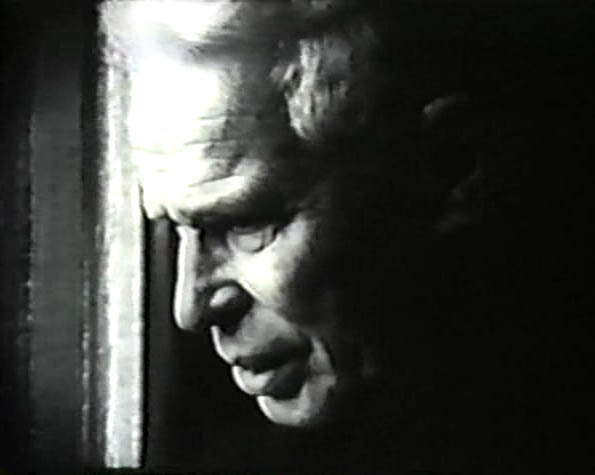
young Ivan:
image

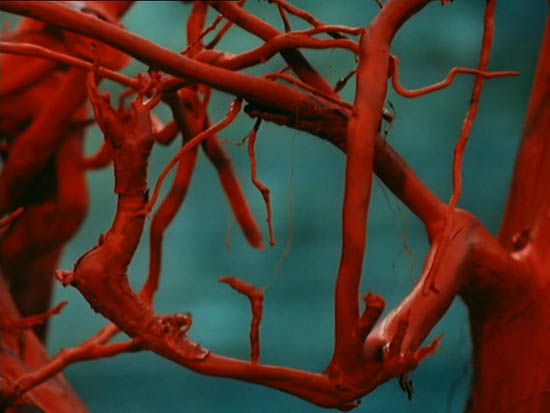
Film is divided into sections. At the end of each one the world turns red, then a bold title card introduces the next. Time is fluid here, sometimes passing slowly, sometimes quickly, and it’s hard to tell how much of it has passed… this is because Parajanov refuses to film anything that is not awesome for purpose of story or character clarification. This is a cine-poem, a work of art, not even the same medium as the David Schwimmer and Jim Carrey and Neil Marshall movies playing in theaters right now.

grown Ivan discovering Marichka’s body:
image

Only a minute into the film we have a shot from a falling tree’s POV. Later, we see naked children, multiple axe-fights, a long-take shot travelling from a giant raft over an unseen bridge onto shore. Vodka. No sex, but suggested sex. A sorcerer and voodoo dolls, many deaths.

Palagna:
image

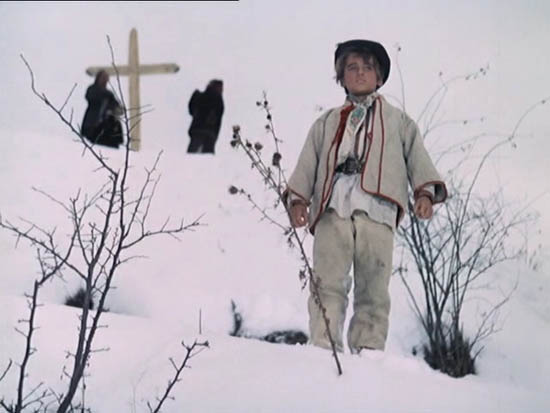
Story is divided in half. When he is young, Ivan(ko)’s brother and father are killed in the same week, he meets a girl (Marichka, daughter of his father’s killer), they grow up in love but she drowns before they can wed. Second half, Ivan is depressed, brightens up enough to marry Palagna, then goes back to being depressed. She just wants to be rid of him, eventually gets her wish.

Actually sounds kind of depressing, but it is so beautifully told (and Ivan meets Marichka in a death dream at the finale, so it’s sort of a happy ending), a pleasure to watch.

Marichka reborn:
image

There was a movie a few years later, The White Bird Marked with Black, directed by this film’s cinematographer, with the same lead actress (Marichka), written-scored-and-starring our Ivanko.

One tiny little complaint: I wish movies would not blatantly show characters biting into apples when they are about to give in to temptation.

image

Medvedkin:

[working on the film train] I came across a very interesting type of peasant, the sort who’d entered a kolkhoz [communal farm] but didn’t feel the true power of it and wasn’t happy there. For such a peasant, life was hard. No one liked him much, he was laughed at, and he was very unhappy. I was thinking of him when I made Happiness. Every man is seeking happiness. Some see it in wealth, but the Russian peasant who struggled in poverty dreamt of it in his own way. … I tried to show the tragedy of such a man, and the effort he makes to find his ideal life. His dreams couldn’t be very elaborate, of course, they were on his own scale but in his own way he was looking for happiness. And in this film I tried to tell a story that’s funny, sad and tragic, the story of a peasant like him, Khmyr, for whom nothing goes right. His life is a struggle… and totally unexpected to him, at the end of the film he finds that there are others who care about him, friends, neighbors, the government too. And in a collective farm he comes close to happiness.

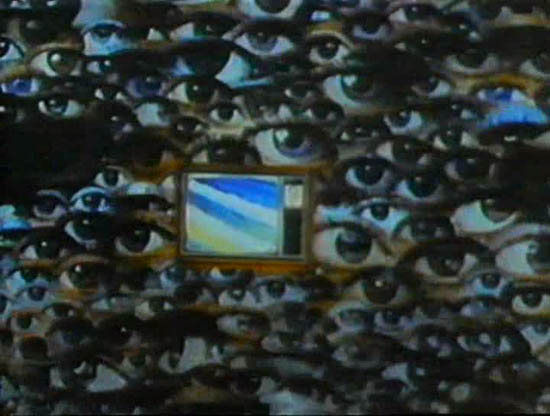
Funny movie, with good performances by the lead actors (first screenshot), some real surprising moments (second screenshot), some scenes that deserve to be well-known Classic Moments in film-school montages (third screenshot) and a good Ivan The Terrible beard shot (fourth screenshot).

image

image

image

image

It’s the late 60’s, early 70’s, and Chris Marker has got himself a Great Cause. Inspired by Aleksandr Medvedkin (Alexandre Medvedkine) and by political and social unrest in France and elsewhere, Marker and his friends have decided to read lots of Lenin, to try to make films that change the world, and ultimately to try putting film production into the hands of the people, the workers.

Marker hadn’t been greatly involved with the French New Wave movement, but he was present at the end of it, contributing to the 1967 omnibus film Far From Vietnam, wherein Marker, Resnais, Godard, Ivens, Lelouch, Varda and Klein voiced their support for the communist north vietnamese, while Rohmer, Rivette, Truffaut and Demy stayed out of it, pursuing their own romantic ideals.

Marker, Godard and others started making purely political works and stopped putting their names on their films, using collective names. I can’t find copies of some of these films (Cinetracts, Battle of the Ten Million) and can’t find English subtitles for most others (Far From Vietnam, Sixth Face of the Pentagon, À bientôt j’espère, Les Mots ont un sens), so it’s pretty much just these two, The Train Rolls On and Embassy. I’m filling out the rest of the timeline by quoting heavily from Catherine Lupton‘s amazing book on Marker.

1967-1977
Marker goes “beyond the privileged status of the auteur-director into the humbler and less visible functions of producer, fund raiser, editor, facilitator and general fixer, ensuring the exposure through [production company] SLON of other people’s work while continuing to make his own (unsigned) films.”

FAR FROM VIETNAM, 1967
“Under the auspices of SLON (which also happens to be the Russian word for elephant), Marker instigated, edited and wrote the commentary for Far From Vietnam, a collective portmanteau film made to protest against American military interventionism in Vietnam.”

A BIENTOT, J’ESPERE, 1968
In support of striking workers in southeast France, they started on “a film about the strikes, entitled A Bientot, j’espere (‘Hope To See You Soon’).” Workers complained that the film was pessimistic, that they came off as victims. “Marker’s response to these criticisms was that he and Marret would always be outsides to the workers’ lives, and that the logical step forward was for them to begin making their own films.” And so the Medvedkin group was born.

CINETRACTS, 1968
After the May ’68 business, “The Estates General of the Cinema sponsored a series of collective short documentaries recording the May events from the perspective of students and striking workers. Following an idea suggested by Chris Marker it also produced the Cinetracts. These were a series of anonymous, combative and often strikingly eloquent visual pamphlets, filmed on silent black and white 16mm-negative stock using easily assembled materials – still photographs, collages and texts – in order to respond quickly to unfolding events. Marker, Godard, Resnais, Jean-Pierre Gorin (who formed the Dziga Vertov Group with Godard), Philippe Garrel and Jackie Raynal were among the better-known contributors to the series alongside young militants with no prior experience of film.”

LES MOTS ONT UN SENS, 1970
“Number 5 in the [SLON counter-information newsreels] series, On vous parle de Paris: Maspero, les mots ont un sens (‘Maspero, Words Have Meaning’), is an affectionate portrait of the left-wing publisher and bookshop owner Francois Maspero, who was a contributor to Far From Vietnam and would later publish the commentary to Le Fond de l’air est rouge. Maspero is one of the most satisfying and likeable of Marker’s films from this period, achieving an exemplary balance of quirky human warmth with a clear and inventive form of political argument.”

1970-71
Marker worked as a still photographer on Costa-Gavras’s film The Confession, then made a film about the shoot called Jour de Tournage, and a film on the controversy surrounding The Confession, number 6 in the newsreel series, Le Deuxieme proces d’Artur London.

BATTLE OF THE TEN MILLION, 1970
“Both [Les mots & Artur London] consider the question of how committed socialists and revolutionaries can acknowledge past mistakes, undergo productive self-criticism and still maintain their basic political beliefs, in a climate where their political opponents on the right take such criticism as proof of the total failure of communism. … This dilemma comes sharply to the fore in The Battle of the Ten Million, a clear-eyed account of the failure of Fidel Castro’s ambitious project for Cuba to achieve a 10-million-ton sugar-cane harvest in 1969-70.”

LE TRAIN EN MARCHE, 1971
“The French version of Happiness was accompanied in cinemas by Le Train en marche, an introduction to Medvedkin, Happiness and the film-trains based around an animated interview with Medvedkin filmed in a train depot in the Paris suburd of Noisy-le-Sec. Its core motifs are the eye, the hand and the train.”
image

A 10-min intro about trains in the 1920’s traversing russia/asia acting as bookmobiles, then a change of narrator voice when Medvedkin is introduced, and his story takes us away. His crew watched and filmed the techniques of successful and unsuccessful farmers and showed the films to each other to help increase production, then moved on to steel plants.

Medvedkin: “We realized that the cinema could be not just a means of entertainment, a way of arousing aesthetic emotions, but also a great and forceful weapon capable of reconstructing factories, and not just factories but the world, making it a better place. Such a cinema in the hands of the people was a powerful weapon.”

In the last bit, he talks about his motivation for filming Happiness, which makes sense now that i know Le Train en marche was screened as an introduction to that film.

A pretty straightforward documentary with english voiceover rather than subtitles on my copy, using archive footage (but none from the actual cine-trains, which had all been lost). No cats or owls or tricks, though halfway through the movie, Marker reveals the camera crew filming Medvedkin.

From the sound of it, Marker’s Medvedkin Group has at least partially succeeded. In CM’s own words: “I think that it’s this fabled and long forgotten bit of history… that underlies a large part of my work – in the end, perhaps, the only coherent part. To try to give the power of speech to people who don’t have it, and, when it’s possible, to help them find their own means of expression. The workers I filmed in 1967 in Rhodesia, just like the Kosovars I filmed in 2000, had never been heard on television: everyone was speaking on their behalf, but once you no longer saw them on the road, bloody and sobbing, people lost interest in them. To my great surprise, I once found myself explaining the editing of Battleship Potemkin to a group of aspiring filmmakers in Guinea-Bissau, using an old print on rusty reels; now those filmmakers are having their films selected for competition in Venice.”

VIVA LA BALEINE, 1972
“Ecological politics are not usually mentioned as being among Chris Marker’s preoccupations, but they are at the heart of a short film he co-directed with Mario Ruspoli in 1972, Viva la baleine / Long Live The Whale… a sharply politicized re-take on Ruspoli’s anthropological study, which now sets the archaic practices of the Azores whaling communities in the context of a pointed condemnation of industrialized whaling.”

CHILE & PATRICIO GUZMAN, 1973-75
Marker traveled to Chile to make a film about the new socialist government under Salvador Allende but “discovered that the Chilean filmmaker Patricio Guzman and his colleagues already had the job in hand” so CM instead helped bring their films to France and contributed financial assistance for Guzman’s later three-part The Battle of Chile, 1975, after the government’s 1973 takeover by a military dictatorship.

EMBASSY, 1973
In late ’73, “Marker transposed recent events in Chile into a remarkable fictional document, L’Ambassade (Embassy). As a fictional commentary on the contemporary political world, Embassy invites comparison with La Jetee. Despite their evident differences, the films share a measured, inexorable narration, and a catastrophic transformation of Paris that leaves a small group of survivors trapped.

image

“Wednesday, 2 days after the coup”

Lupton’s notes: “An unexpected response to Pinochet’s 1973 coup d’etat in Chile. A Super-8 film apparently found in an embassy -as it’s written in the original title-, where political activists had taken refuge after a military coup d’état. But the events -and their setting- are not what they first appear to be.”

8mm film with no direct sound. Also English voiceover rather than subs on this one, a bored-sounding reporter voice.

“You are all motherfuckers as dumb as corpses quarrelling in the grave. The only lesson to draw is that all political directions have gone bankrupt.”

I admit I snickered at the ending. Shades of Cradle Will Rock as the “truth” behind the film is revealed: “From a window of the embassy I took my last shot, the van that was leading them into exile from that city we had known when she was free: Paris.”

THE LONELINESS OF THE LONG DISTANCE SINGER, 1974
La Solitude du chanteur de fond fused personal friendship and the pressing political concern of the moment by filming the rehearsals and final performance of [Yves] Montand’s one-man benefit concert for Chilean refugees, held at the Paris Olympia on 12 February 1974 and his first stage appearance for six years. … [Loneliness] was released in December 1974 with the dormant If I Had Four Camels [completed in ’66], but it was the Montand film that attracted critical accolades, as a fond and revealing homage to one of France’s best-loved film actors and popular entertainers. … Loneliness is a minor masterpiece of observational documentary…”

SPIRAL, 1975
Marker helped initiate and wrote the commentary for the film Spiral, helmed by a French sociologist expelled from Chile, Armand Mattelart, and editors Jacqueline Meppiel and Valerie Mattelart. “The title of the film, Spiral, derived from its proposed spiral structure of seven successive phases of right-wing reaction leading up to the coup of 1973, many of which also delved back in history to consider, for example, the past roles of the military and the United States in Chilean affairs.” The film was largely edited from archive footage, then matched to a 3-hour Marker-written commentary and edited to 155 minutes for final release. “Although Marker was not involved at every point of the film’s production, Spiral nonetheless stands as an instructive precursor to Le Fond de l’air est rouge. It develops the same intricate marshalling of archive resources as Marker’s later film, representing the arraignment of conflicting social forces at a given moment in history by playing off film extracts informed by different political perspectives against each other.”

Hope I’m able to see more of the above films sometime. Learning French would help. Meanwhile I’m either tackling Grin Without a Cat next, or taking a Patricio Guzman or Alexander Medvedkin sidetrack before heading boldly forth into the 1980’s.
An attractive movie – fun musical to start with, gets more serious as it progresses. Shoulder-dancing Topol (of Flash Gordon, heh) is a poor milkman trying to get good husbands for his three daughters and stick to the all-important traditions. But he’s a smart fella and knows that traditions must change with the times. Some daughters want to marry for love instead of through matchmakers, unheard-of! Finally the police chief is commanded by higher-ups to force Topol’s whole Jewish community off their land. Topol does what he’s gotta.

Most amusing part is that one daughter is briefly engaged to a man named Laserwolf. Laserwolf! Then she marries a dude named Motel, a huge step down if you ask me.

The matchmaker was in Cannonball Run 1 & 2, Topol’s wife Golde was on television, and none of the daughters were really in anything else. Shot by Oswald Morris (Lolita, Oliver!, The Wiz). Orchestrated and conducted by John Williams.

A quality movie, affecting and with very good music and camera work. Liked it better than My Fair Lady.

Earlier I wrote: “Movie was good. Not holy-wow-mindblowing, but Cronie knows how to shoot a movie, so despite any narrative failings the whole thing was a raw pleasure to watch.”

And it’s not a “failed” narrative, but everyone seems to agree that there isn’t much there. Cronenberg seems to have bought a barebones nothing-special script about the Russian mafia in London (written by nothing-special author Steve Knight of Dirty Pretty Things and Amazing Grace) and given it a few Cronenberg touches (an extreme fight scene, heavy focus on tattoos), then directed the hell out of it. Ever since re-watching Existenz recently I’ve been thinking about how watchable his films are, how I feel a high-quality tension from them that I never think to analyze in terms of camera placement and shot length, but just relish and enjoy. So while it’s no History of Violence in his overall career, it’s not a disappointment either. The guy does not know how to disappoint.

The great acting doesn’t hurt, either. Viggo Mortensen is back from HoV, playing a deep-undercover cop infiltrating the Russian mob. Naomi Watts (remember King Kong?) is an overly concerned hospital midwife trying to find a family member of the young girl who died giving birth so it won’t go up for adoption. Armin Mueller-Stahl (X-Files, 13th Floor) is the mob head and secret father of the baby. In the intense-unstable-closeted role is mobster son Vincent Cassel (Blueberry, La Haine, Brotherhood of the Wolf), and as Naomi’s racist russian uncle is Jerzy Skolimowski, a Polish 60’s filmmaker (who also acted in Before Night Falls and Mars Attacks) currently shooting his first film in 17 years with Isabelle Huppert and Dennis Hopper [edit 2011: this was cancelled and he made Four Nights With Anna instead].

At the center of the story is the dead girl’s diary which implicates Armin and Vincent but is written in Russian. Jerzy translates it, so Viggo has to kill him (actually sends him to a hotel, being a cop and all). In the end, presumably Armin is locked up on a rape charge, with Vincent in charge of the family (he gets to live despite almost murdering a baby) and Viggo about to take it down from the inside, Naomi’s family happily together again.

As for Cronenbergian script touches, you’ve got your naked sauna knife fight, your life written on your body in tattoo form, your finger-chopping body-disposal man and three other big bloody scenes. And since, despite all my writing online I still haven’t learned how to analyze and discuss a movie, I can’t put my finger on why (couldn’t be empty boosterism of my favorite directors, could it?), but I feel it’s a quality movie, exquisitely filmed and paced, and thrilling to watch.

Interestingly, in Reverse Shot’s review, Andrew Tracy directly addresses the question I ask above, saying it is boosterism, and that it’s hurtful to the world of film criticism to pretend that Eastern Promises is a good movie. He says “unequivocal praise or panning is the unfortunate rule of these latter days of criticism”, then aggravatingly calls it “a failed film”. I don’t know that anyone considers it a masterpiece, and by the AV Club rating system I’d only give it a B or B+, but I reserve the term “failure” for a D-grade or below. “Failed film” sounds like “if it isn’t great, it’s rubbish”, and a good B+ thriller with some great acting and a few outstanding scenes isn’t rubbish. Rather it’s a movie I’m very glad I saw, instead of going to The Brave One or Shoot ’em Up or Halloween, all recent additions to my endless to-rent list.

Nice one from Reverse Shot:

With the aid of Mortensen’s granitic face and body—which is not simply a given quality but an acted entity—Cronenberg depicts flesh as armour, the shell of a man who lives entirely through his outward gestures. Mortensen’s impeccable overcoat, suit, gloves, and slicked-back hair are further layers of a constructed identity that begins with the skin, which itself is covered with the tattoos relating the story of his life to his underworld masters. The progressive stripping, both literal and metaphorical, of Nikolai throughout the film reveals not the person beneath the artifice, but the meticulously constructed series of artifices which constitute the person himself.

Frank Film
image
Barebones story of Frank Mouris’s life narrated on the soundtrack blended with a free-association list of words. Visual is a fast-motion collage of magazine-clipped images. Neat, must’ve taken forever. Won the Oscar, kickstarting a long life of filmmaking obscurity for Frank, poor guy.

Valse Triste
image
Looks like a montage of found footage from rural America in the 1940’s set to sweeping sad music. Sepia-tinted, only 5 minutes long. Took me a visit to IMDB to realize the montage represents the wet dream of the boy who goes to sleep at the beginning of the film, damn. I get it now. Bruce Conner born in Kansas in 1933, so he WAS that boy!

Adam, 5 to 12
image
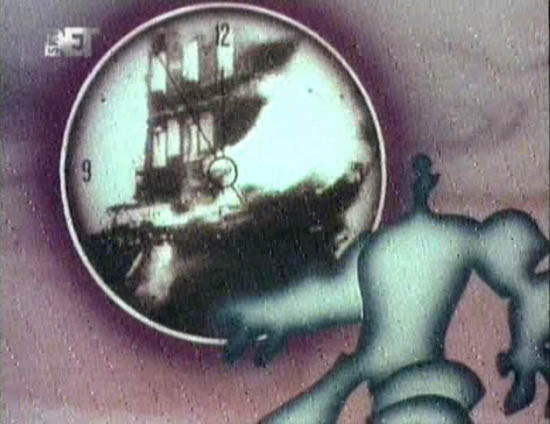
Begin the rhythmic Estonian vocal music. Trippy animation doesn’t do much, then the clock appears, then a whole pile of grim images of war and death are overlaid on the clock. Adam tries to turn the clock back but it’s frozen at 5 to 12. Finally it moves dramatically to THE END. Director Petar Gligorovski died in 1995.

V. Gligorijevic (via email) on the music: “Its composer, Veljo Tormis, had clash with Soviet authorities which perceived Estonian nationalist overtones in Tormis’s music, from which the Curse to the Iron, the featured background, is considered one of his most recognizable works.”

Reflecting Pool
image
Wow, this is great. Seven minutes of a reflecting pool with some video effects. A man motions to jump in, but is frozen in midair while the pool stays in gentle motion. The man slowly fades out, and most of the rest of the action takes place in the pool’s reflection and through its varying levels of agitation. Probably just a more complicated metaphor for sex than the last film… I don’t pick up on those things easily. Bill Viola is only 56 and still working.

Sweet Light
image
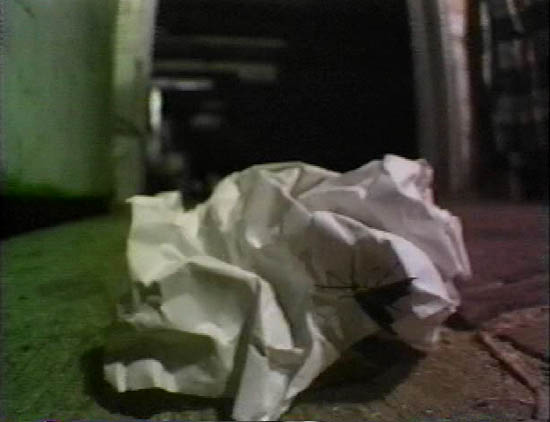
Another by Bill Viola. Close-up: some flies on a windowsill. Camera moves slowly and evenly away and turns toward a man writing at a desk. Camera fast follows a ball of paper he hurls on the floor. Abrupt change to camera spinning around a dinner table candle, then insects leaving vapor trails in the air. There is light involved, and it’s all pretty sweet, so there’s your title.

Pause!
image
A man against a wall making hand gestures, distorting his face and making breathy sounds. Gets violent at times. Probably also a metaphor for sex. My copy was dark and muddy but it’s not like I’ll be scouring rare video stores looking for a better version. Oh, I looked it up and the man is Arnulf Rainer, a surrealist-influenced artist known for “body art and painting under drug influence”. This must be body art. I wouldn’t have named a museum after this guy, but I guess the New York art scene knows better than I do. Directed by Peter Kubelka.

Powers of Ten
image
By famous designers/architects/filmmakers Charles and Ray Eames. “A film dealing with the relative size of things in the universe and the effect of adding another zero”, made for IBM. A man is laying in a park in Chicago. We zoom out from him to 100 million light years (10^24 m) then zoom into his hand to 0.000001 angstroms (10^-16 m). Both Eames died on August 21, ten years apart. Music by Elmer Bernstein (also dead) of Far From Heaven and Ghostbusters.

The Metamorphosis of Mr. Samsa
image
The Kafka story done with cool mushy black and white perspective-shifting animation (paint on glass?). Samsa might be some sort of spider/beetle. Caroline Leaf works with the National Film Board of Canada.

Elimination Dance
image
Co-written and starring Don McKellar (Last Night). Dir. by Bruce McDonald, who made cult films Roadkill and Hard Core Logo. Couples dance all night while an announcer reads off descriptions (“anyone who has lost a urine sample in the mail”) eliminating them one by one, as the cops slowly close in fearing unrest. A comedy, cute. Not from the seventies, I realize (1998).

A Doonesbury Special
image
Kind of limited animation, but that’s not a cool criticism to make of a well-intentioned independent production like this one. Neat movie, could’ve stood to be another half hour longer. A regular day at the commune with a bunch of flashbacks, “feeling the present as it moves by”. A little sad, some disillusionment about the fallen ideals of the late 60’s, probably a nice companion to the comics (which I haven’t read since Hunter died). Both Hubleys have died, Trudeau cowrote the Tanner movies.

La Soufriere
image
“This is the police station. It was totally abandoned. It was a comfort for us not having the law hanging around.” Would’ve probably been one of Werner Herzog’s best-known movies (OR have led to Herzog’s fiery death) if the volcano had exploded as predicted, but since it didn’t, this is an obscurity on a DVD of documentary shorts. “There was something pathetic for us in the shooting of this picture, and therefore it ended a little bit embarrassing. Now it has become a report on an inevitable catastrophe that did not take place.” Herz and crew tromp about an extremely dangerous volcano site in the Caribbean, explore the completely empty towns below, and interview what few stragglers remain. One of the cameramen is from Morristown NJ, also shot Far From Heaven, A Prairie Home Companion, Tokyo-ga, True Stories and The Limey.

Most of these movies are as old as I am.