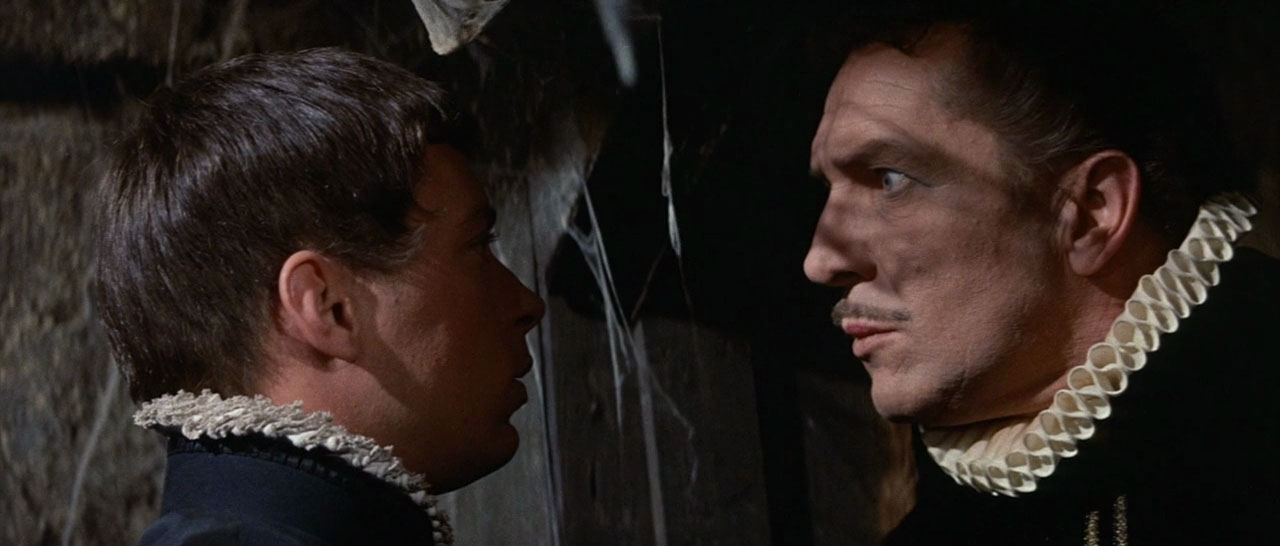
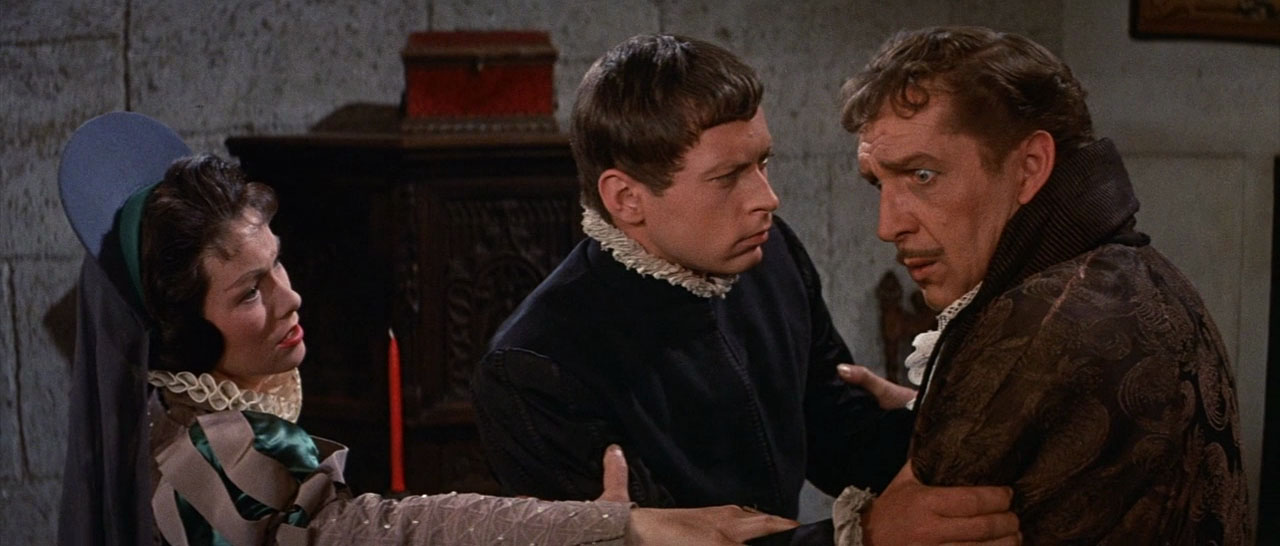
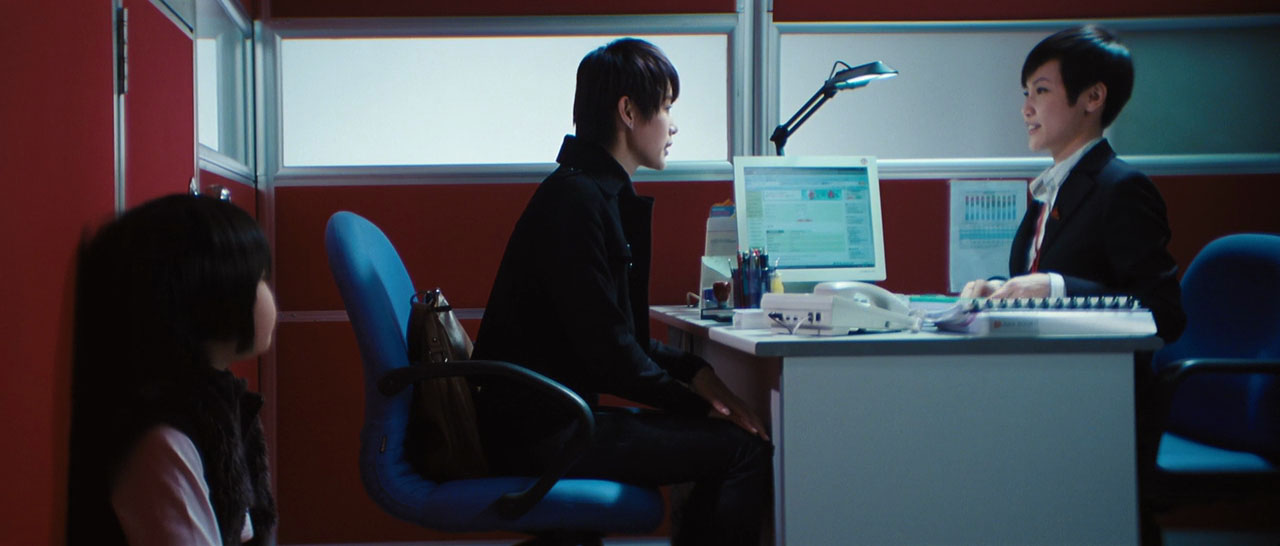
I’ve done this before many times, and there’s no point, but I can’t help myself. The only thing I like more than movie lists are lists of movie lists, and the BBC’s got a new one. I must turn it into a viewing list for myself, even though it’s Criterion Month now, and SHOCKtober is coming up, and when that’s over I will have forgotten all about this until I stumble upon it two years from now and get annoyed that I still haven’t watched any of these. Movies like Innocence keep showing on these lists – it’s also here and here – but if I ever make a list comparing the frequency of titles on my various lists, someone will need to take this blog away from me. Anyway.


Movies from the Top 100 that I’ve never seen, or never written about so should probably watch again, in increasing order of greatness

Toni Erdmann (Maren Ade, 2016)
The Assassination of Jesse James by the Coward Robert Ford (Andrew Dominik, 2007)
The Secret in Their Eyes (Juan José Campanella, 2009)
The Pianist (Roman Polanski, 2002)
Far From Heaven (Todd Haynes, 2002)
A.I. Artificial Intelligence (Steven Spielberg, 2001)
Shame (Steve McQueen, 2011)
The Return (Andrey Zvyagintsev, 2003)
Dogville (Lars von Trier, 2003)
Spring Breakers (Harmony Korine, 2012)
Spring, Summer, Fall, Winter… and Spring (Kim Ki-duk, 2003)
Fish Tank (Andrea Arnold, 2009)
The Great Beauty (Paolo Sorrentino, 2013)
A History of Violence (David Cronenberg, 2005)
Moulin Rouge! (Baz Luhrmann, 2001)
Tropical Malady (Apichatpong Weerasethakul, 2004)
Goodbye to Language (Jean-Luc Godard, 2014)
Amour (Michael Haneke, 2012)
City of God (Fernando Meirelles and Kátia Lund, 2002)
Crouching Tiger, Hidden Dragon (Ang Lee, 2000)
Son of Saul (László Nemes, 2015)
Oldboy (Park Chan-wook, 2003)
Caché (Michael Haneke, 2005)
Lost in Translation (Sofia Coppola, 2003)
Yi Yi: A One and a Two (Edward Yang, 2000)
Eternal Sunshine of the Spotless Mind (Michel Gondry, 2004)
Spirited Away (Hayao Miyazaki, 2001)
In the Mood for Love (Wong Kar-wai, 2000)
Mulholland Drive (David Lynch, 2001)


Must-see titles from the individual lists

Sam Adams in Slate:

As always, the real action is in the individual ballots, all 177 of them. That’s where you’ll find the outliers, the beloved orphans and oddball singularities … Polls tell us what everyone likes, but sometimes it’s more interesting to focus on the movies that just one person truly loves.

Simon Abrams
The White Meadows (Mohammad Rasoulof, 2009)
Night Across the Street (Raoul Ruiz, 2012)
Sparrow (Johnnie To, 2008)
Fados (Carlos Saura, 2007)

Thelma Adams
Snow White (Pablo Berger, 2012)
Frozen River (Courtney Hunt, 2008)
Gosford Park (Robert Altman, 2001)

Matthew Anderson
The Piano Teacher (Michael Haneke, 2001)
Lourdes (Jessica Hausner, 2009)
Red Road (Andrea Arnold, 2006)
Tony Manero (Pablo Larraín, 2008)

Adriano Aprà
These Encounters of Theirs (Danièle Huillet and Jean-Marie Straub, 2006)
Vincere (Marco Bellocchio, 2009)
The Profession of Arms (Ermanno Olmi, 2001)
Gostanza da Libbiano (Paolo Benvenuti, 2000)

Michael Arbeiter
The Comedy (Rick Alverson, 2012)
The Congress (Ari Folman, 2013)

Cameron Bailey
Mommy (Xavier Dolan, 2014)
Selma (Ava DuVernay, 2014)

Lindsay Baker
I Am Love (Luca Guadagnino, 2009)

Diego Batlle
The Son’s Room (Nanni Moretti, 2001)
Extraordinary Stories (Mariano Llinás, 2008)

Mahen Bonetti
Cuba: An African Odyssey (Jihan El-Tahri, 2007)
Sexe, gombo et beurre salé (Mahamat-Saleh Haroun, 2008)
Shoot the Messenger (Ngozi Onwurah, 2006)
The Colonial Misunderstanding (Jean-Marie Téno, 2004)

Richard Brody
Butter on the Latch (Josephine Decker, 2013)
Heaven Knows What (Josh and Benny Safdie, 2014)
The Future (Miranda July, 2011)

Enrico Chiesa
The Three Burials of Melquiades Estrada (Tommy Lee Jones, 2005)

Robbie Collin
You, The Living (Roy Andersson, 2007)

Colin Covert
Manchester by the Sea (Kenneth Lonergan, 2016)

Mike D’Angelo (via letterboxd)
Afterschool (Antonio Campos, 2008)

Ken Dancyger
Lincoln (Steven Spielberg, 2012)

Fernand Denis
Eldorado (Bouli Lanners, 2008)

Lindiwe Dovey
Hooligan Sparrow (Nanfu Wang, 2016)

Alonso Duralde
Weekend (Andrew Haigh, 2011)

Bilge Ebiri
An Injury to One (Travis Wilkerson, 2002)
Love & Basketball (Gina Prince-Bythewood, 2000)

David Ehrlich
Girl Walk: All Day (Jacob Krupnick, 2011)

Kate Erbland
Nightcrawler (Dan Gilroy, 2014)

Joseph Fahim
Divine Intervention (Elia Suleiman, 2002)

David Fear
Head-On (Fatih Akin, 2004)

Kenji Fujishima
In Jackson Heights (Frederick Wiseman, 2015)
Love Exposure (Sion Sono, 2008)

Owen Gleiberman
Chuck & Buck (Miguel Arteta, 2000)
Munich (Steven Spielberg, 2005)
Lilya 4-Ever (Lukas Moodysson, 2002)

Ed Gonzalez
Femme Fatale (Brian De Palma, 2002)
Two Lovers (James Gray, 2008)

Jean-Philippe Guerand
Saraband (Ingmar Bergman, 2003)
Import Export (Ulrich Seidl, 2007)

Tom Gunning
Daylight Moon (Lewis Klahr, 2002)
The Fourth Watch (Janie Geiser, 2000)
Our Daily Bread (Nikolaus Geyrhalter, 2005)

Angie Han
Me and You and Everyone We Know (Miranda July, 2005)

Aisha Harris
When the Levees Broke: A Requiem in Four Acts (Spike Lee, 2006)
Fruitvale Station (Ryan Coogler, 2013)
Brick (Rian Johnson, 2005)

Tina Hassannia
Closed Curtain (Jafar Panahi, 2013)
Tangerine (Sean Baker, 2015)

Shiguehiko Hasumi
Triple Agent (Éric Rohmer, 2004)
Seventh Code (Kiyoshi Kurosawa, 2013)

Katarina Hedrén
Dreams of a Life (Carol Morley, 2011)
Tey (Alain Gomis, 2012)
Eat, Sleep, Die (Gabriela Pichler, 2012)
Middle of Nowhere (Ava DuVernay, 2012)

Alexander Horwath
Wolff Von Amerongen: Did He Commit Bankruptcy Offences? (Gerhard Benedikt Friedl, 2004)
Longing (Valeska Grisebach, 2006)
The External World (David O’Reilly, 2010)
Secret Sunshine (Lee Chang-dong, 2007)
The Holy Girl (Lucrecia Martel, 2004)

David Jenkins
Eden (Mia Hansen-Løve, 2014)
Punch-Drunk Love (Paul Thomas Anderson, 2002)
Ghost World (Terry Zwigoff, 2001)

Kent Jones
My Golden Days (Arnaud Desplechin, 2015)
The Son (Jean-Pierre and Luc Dardenne, 2002)

Butheina Kazim
Theeb (Naji Abou Nowar, 2014)
A Time for Drunken Horses (Bahman Ghobadi, 2000)

Andreas Kilb
Rust and Bone (Jacques Audiard, 2012)
5×2 (François Ozon, 2004)

Uri Klein
The Last of the Unjust (Claude Lanzmann, 2013)
Police, Adjective (Corneliu Porumboiu, 2009)

Eric Kohn
Enter the Void (Gaspar Noé, 2009)

Dan Kois
You Can Count On Me (Kenneth Lonergan, 2000)
Morvern Callar (Lynne Ramsay, 2012)
Animal Kingdom (David Michôd, 2010)

Tomris Laffly
Father of My Children (Mia Hansen-Løve, 2009)

Rebecca Laurence
The Consequences of Love (Paolo Sorrentino, 2004)

Maggie Lee
Café Lumière (Hou Hsiao-hsien, 2003)
Millennium Actress (Satoshi Kon, 2001)

Fiona Macdonald
The Taste of Others (Agnès Jaoui, 2000)

Hans-Christian Mahnke
Days of Glory (Rachid Bouchareb, 2006)
Waltz with Bashir (Ari Folman, 2008)

Calum Marsh
Millennium Mambo (Hou Hsiao-hsien, 2001)
Woman on the Beach (Hong Sang-soo, 2006)

Lee Marshall
Silent Souls (Aleksey Fedorchenko, 2010)

Adrian Martin
Un lac (Philippe Grandrieux, 2008)
Detention (Joseph Kahn, 2011)
Mia Madre (Nanni Moretti, 2015)

Joe McElhaney
No Home Movie (Chantal Akerman, 2015)
The Blues: Warming by the Devil’s Fire (Charles Burnett, 2003)

Farran Smith Nehme
About Elly (Asghar Farhadi, 2009)

Michael Phillips
Poetry (Lee Chang-dong, 2010)

Hannah Pilarczyk
Beyond the Hills (Cristian Mungiu, 2012)

Agnès C Poirier
Oasis (Lee Chang-dong, 2002)
The House of Mirth (Terence Davies, 2000)

Claudia Puig
Sin Nombre (Cary Joji Fukunaga, 2009)
Nebraska (Alexander Payne, 2013)

Alberto Ramos Ruiz
The Sky Trembles and the Earth Is Afraid and the Two Eyes Are Not Brothers (Ben Rivers, 2015)
From What Is Before (Lav Diaz, 2014)
Lost and Beautiful (Pietro Marcello, 2015)

Isabelle Regnier
The Captive (Chantal Akerman, 2000)
Tie Xi Qu: West of the Tracks (Wang Bing, 2002)
Shara (Naomi Kawase, 2003)
Twixt (Francis Ford Coppola, 2011)
To Die Like a Man (João Pedro Rodrigues, 2009)

Scott Renshaw
Sita Sings the Blues (Nina Paley, 2008)

Vadim Rizov (via twitter)
In the City of Sylvia (José Luis Guerín, 2007)
Happy Hour (Ryûsuke Hamaguchi, 2015)
Certain Women (Kelly Reichardt, 2016)
Could See a Puma (Eduardo Williams, 2011)

Antonio Mazón Robau
The Beat That My Heart Skipped (Jacques Audiard, 2005)
Good Bye Lenin! (Wolfgang Becker, 2003)
Incendies (Denis Villeneuve, 2010)

Tim Robey
Elena (Andrey Zvyagintsev, 2011)

Jonathan Romney
The Arbor (Clio Barnard, 2010)

Rasha Salti
The Time That Remains (Elia Suleiman, 2009)

Matt Zoller Seitz
Gett: The Trial of Viviane Amselem (Ronit Elkabetz and Shlomi Elkabetz, 2014)
The Look of Silence (Joshua Oppenheimer, 2014)
Godzilla (Gareth Edwards, 2014)

Avner Shavit
No (Pablo Larraín, 2012)

Matt Singer
Step Brothers (Adam McKay, 2008)

Justine A Smith
Bright Star (Jane Campion, 2009)
Mr. Turner (Mike Leigh, 2014)

Fernanda Solórzano
Still Walking (Hirokazu Koreeda, 2008)

David Stratton
Distant (Nuri Bilge Ceylan, 2002)
Samson & Delilah (Warwick Thornton, 2009)
The Man Without A Past (Aki Kaurismäki, 2002)

Cédric Succivalli
Secret Things (Jean-Claude Brisseau, 2002)
La Ciénaga (Lucrecia Martel, 2001)

Ella Taylor
Burning Bush (Agnieszka Holland, 2013)
Barbara (Christian Petzold, 2012)

Jake Wilson
I Don’t Want to Sleep Alone (Tsai Ming-liang, 2006)

Raymond Zhou
The Sun Also Rises (Jiang Wen, 2007)
Lust, Caution (Ang Lee, 2007)

My own top fifteen, at the moment, unranked:

2046
25th Hour
Boyhood
The Forbidden Room
Holy Motors
Hot Fuzz
Inglorious Basterds
Le Havre
Mulholland Dr.
The New World
The Royal Tenenbaums
The Trap
The Turin Horse
Up
World of Tomorrow

Watching shorts from the Flicker Alley blu-ray, part four.

Film that Rises to the Surface of Clarified Butter (1968 Owen Land)

Repetitive little piece in which people draw a character, then it comes to brief stop-motion life, then they ponder this, then it happens again with a constant, quiet burbling horror of a soundtrack. Not as much fun as I’m making it sound.


Our Lady of the Sphere (1969 Lawrence Jordan)

I was rather dismissive of this last time but I’m starting to find its variety of techniques and combinations of images and cutouts from old-time illustrations pretty charming. It’s certainly a funnier and more imaginative way to spend nine minutes than the last movie was. “Jordan orchestrates the film in terms of a rake’s progress” say the liners, but I couldn’t make out much of a story (though I could identify recurring characters, at least).

Mouseover to hit the bear:
image

Mouseover to BZZZZZZT the donkey:
image


DL2 (1970 Lawrence Janiak)

Differently colored patterns fill the screen to varying degrees, from starfields to spaghetti-o’s to shower-curtain dots to bright silly-string and confetti parties, all created by organically Begotten-ing strips of film. Chiming, percussive soundtrack. Hypnotic and strangely relaxing to watch, though next time maybe play my own music.


Love It, Leave It (1970 Tom Palazzolo)

Speech from a car show plays over a nudist festival. Speech honoring the military plays over clowns. Then the soundtrack goes into a hypno-loop of “love it, love it, love it, leave it” under images of contemporary America (sports and recreation, demonstrations and celebrations, people and get-togethers and riot police), the sound finally mutating into a patriotic song layered over itself like that remix I made of the Brave trailer. The liners say he had a “sharp eye for Americana,” true. And the last page of Cinema Scope #66 points out where more Palazzolo films can be found, if I get into an Americana mood later.


Transport (1970 Amy Greenfield)

One of those dance shorts where the camera moves with the dancers, only the movements here are not too exciting – small group of people lifting each other across a dirty field. And the sound is completely unbearable, a series of horrible tones like the ones they play in movies after a bomb goes off to indicate tinnitus in the lead character. Also, two minutes of opening credits in a six minute movie?


Sappho & Jerry, Parts 1-3 (1977 Bruce Posner)

Early film by one of the anthology project’s many film restorationists. Three two-minute pieces where Bruce takes existing film elements, combines, mutates and split-screens the living hell out of them, adding more simultaneous frames in each ensuing chapter. Great fun.

Part 1:

Part 2:

Part 3:


Ch’an (1983 Francis Lee)

Pans, zooms and crossfades of black and white watercolors, with some short bursts of animation. Nice texture closeups of the watercolor work. I preferred Lee’s 1941 from earlier on the disc (these are his first and last films).


Seasons… (2002 Solomon & Brakhage)

Gorgeous variety of textures and patterns, colors and rhythms. “Intentionally silent” doesn’t fly with me, so I played the second half of the new David Grubbs album, which I would highly recommend. If I understand correctly, Brakhage did the textures and patterns, and Solomon did the lighting and coloring? Bravo to both.

I dig this frame because it looks like a dragon crashing into an aerial antenna:

Starring the lovely, ever-suffering Agyness Deyn, who recently played Aphrodite, as Chris. It’s more recognizably a Davies movie than The Deep Blue Sea was, because it centers around a piece of shit domineering father (Peter Mullan of War Horse, Children of Men) for the first half, then he’s dead (a la Distant Voices, Still Lives) so we focus on a husband Ewan (Kevin Guthrie) who might become a piece of shit domineering father – but doesn’t, because he’s shot for cowardice while at war. Opens with Chris’s mom poisoning herself and her young twins because she’s become pregnant again. So it’s basically a domestic horror movie.

Beautiful lighting, and per Davies tradition, some terrific crossfades. I turned on the subtitles half the time to make out the accents… and even then I sometimes have trouble. “I’m going to live on at Blawearie a while and not roup the gear at once. Could you see to that with the factor?”

I’m on M. D’Angelo’s side here, and I’ll add that the juxtaposition mentioned below was already done very well in Distant Voices, Still Lives:

Whatever Gibbons’ novel means to Davies — and it must mean a lot, as he reportedly spent many years struggling to get this film made — it doesn’t come across, except perhaps in the occasional juxtaposition of brutality and joyous group song. A few stray moments of piercing beauty toward the end (which also complicate what had previously seemed like the tediously downbeat trajectory of Chris’ marriage) can’t redeem the unrewarding slog that precedes them.

As far as beautifully shot but disappointing Davies films I watched this year go, I preferred The Deep Blue Sea, and as far as films I watched this month where soldiers get shot for cowardice in World War One, I’ll take Paths of Glory.

Always difficult to adapt poetry to the screen, so including words from the book as narration is nice. “So that was her marriage – not like waking from a dream, but like going into one. And she wasn’t sure, not for days, what things she had dreamt and what actually done.” Previously filmed as a 1971 miniseries, by the same director who shot Testament of Youth, which was also remade last year.

I’ve been enjoying some HD rewatches of movies I’d previously seen many years ago on crappy video – classics like Close-up, Koyaanisqatsi, Paths of Glory… and Darkman. This is the perfect connection between his Evil Dead trilogy and his Spider-Man trilogy, and was probably an answer to Tim Burton’s Batman. It proved Raimi could maintain the tone of his filmmaking, shooting a fundamentally ridiculous story, filling in details both comic and horrific, without (arguably!) toppling into camp.

Really good ratty bandages and scar tissue in this movie:

Matt Singer:

It’s eerily like a Taken movie when you watch it now: Liam Neeson’s life gets wrecked and he swears revenge using (in this case literally) superhuman fighting skills. It also includes the phrases “The Rangeveritz Technique” and “The Bellasarious Memorandum.”

Double-Durant:

Liam Neeson is perfecting his formula for liquid skin, about to propose to Frances McDormand, when bad guys melt his face and hands and blow up his lab, so he seeks revenge while wearing a series of limited-time false faces. Hallmarks of 1990 include the evil property developer plot (still being used in 2016, actually), the bad hair and bad cars, and one guy in every gang having to wield nunchucks. I’d forgotten the part where Neeson is rescued post-explosion and doctors fix up his nerves so he feels no pain and incidentally has superhuman strength and rage issues.

You can tell he’s evil from the lighting:

Ted Raimi plays one of the baddest bad guys, shooting Neeson’s lab assistant to death. The evil property developer, also McDormand’s boss, is Colin Friels, also in Dark City, which I bought at the same time as this movie. Great Bruce Campbell cameo as Neeson’s getaway disguise face at the end. Dialogue is kinda clunky, but what do you want from a movie called Darkman.

For some reason she’s more freaked out by the lookalike than the dead man:

In the commentary, cinematographer Bill Pope says Sam and the Coens might still be doing secret revisions of each other’s scripts. Darkman Legacy: the late Larry Drake was always happy to return as Durant, including in the TV series pilot (with UK TV’s Christopher Bowen as Darkman) and two straight to video sequels The Return of Durant and Die Darkman Die (with Mummy Returns star Arnold Vosloo as Darkman, and a hilarious scene with a rocket launcher in a tunnel).

Trying to pick a title from the endless scrolling netflix crap, we surprised each other by agreeing on this Albert Brooks comedy. Brooks plays a screenwriter (envisioning a Jim Carrey comedy) who learns through his friend Jeff Bridges (one of the few celebrities not playing himself) that all the hugely successful filmmakers are getting advice from Greek goddess Sharon Stone. So Brooks hires her, eventually moves her into her house where she takes to helping his wife Andie MacDowell start a cookie empire, while Brooks brings her meals and looks for clues as to what he should do with his script.

K. Uhlich: “I love The Muse‘s vision of Hollywood as a town in thrall to a disarmingly flighty mental patient.” Fun cameos, low-key at first, leading up to Rob Reiner, James Cameron and Martin Scorsese. But the highlight is Steven Wright as the director’s cousin Stan Spielberg. Katy gets annoyed at Albert’s characters’ total lack of compassion for those around him, even though she recognizes that’s where much of the comedy comes from.

I’ve watched this before, and both times I knew the general idea (documentary footage is being faked, people involved in real events are restaging them for the camera), but I was noticing this time how in some movies Kiarostami never tips his metafictional hand. We know from interviews and DVD extras that the movie theater (and the movie) never existed in Shirin, that the drivers and riders of Ten were never in the car at the same time, and that everyone in Close-Up is performing the role of themselves, but you can’t necessarily tell these things when watching the films.

Farazmand is a reporter who hears about a man (Sabzian) impersonating Mohsen Makhmalbaf, receiving money from a middle-class family while acting like he’s prepping a film shoot. He arranges to get Zabzian arrested for this, after which AK visits the man in jail and records his court date, discussing his intentions in pretending to be a filmmaker.

When Sabzian is interviewed by Kiarostami, realizing AK knows the real Makhmalbaf:

In the commentary, Rosenbaum calls it “a film about impersonation” right as Farazmand is telling the taxi driver and policemen that he aspires to be a famous journalist while he’s clearly unprepared (can’t find the house, not enough cash for the cab, didn’t bring a tape recorder). They discuss how the film is called Close-Up when Kiarostami loves to film in long-shot.

Asking directions from turkey man while looking for the Ahankhah house:

They also discuss the dead time and story distractions, how the film spends time in turn with almost every character.

JR: “Most people would agree that the members of the family come off overall less sympathetically than Sabzian does … they’re more defensive.” His co-commentarian Mehrnaz Saeed-Vafa says the rumor is the family originally did not withdraw their complaint against Sabzian, but later agreed to do so for the film. She also says that Sabzian points out that because of Close-Up, the family did in fact get to be in a film as he promised them. Even these experts don’t know whether the filmed trial is real or staged.

The Complainants:

I get the two sons confused, but can you blame me?

JR: Many of Kiarostami’s films from here on are “about the unequal relationship between filmmakers and the people they’re filming who are much poorer and are relatively powerless”.

Two Makhmalbafs:

JR: “I think the real subject of this film … is not impersonation or fraud, it’s the social importance of cinema and how it affects everything – how it affects things socially, how it affects people’s sense of power, their sense of ethics, their sense of identity … and their sense of truth, and perhaps truth is the thing that gets the most severe unpacking in this film.”

Watching shorts from the Flicker Alley blu-ray, part three.

Abstronic (1952 Bute & Nemeth)

Animation based around electronic imagery from oscilloscopes, set to two catchy tunes. What the future looks like.


Bells of Atlantis (1952 Ian Hugo)

Very abstract imagery. You can often tell he’s filming real objects (woman in hammock) but it’s been blue-filtered and overlaid with patterns to appear underwater. Pulsing and whooping electronic sounds by the Barron couple, visual effects by Len Lye and narration by Anaïs Nin – it’s a pretty cool movie, not a favorite, but made by remarkable collaborators.


Eaux d’artifice (1953 Kenneth Anger)

Seen this before. The imagery is supposed to be erotic but I always end up pondering fountain design and mechanics.


Evolution (1954 Jim Davis)

Wild, almost organic light patterns
Cellophane reflections give an electric glow.
Shifting light blobs that look like colored liquid being pressed under glass.


Gyromorphosis (1954 Hy Hirsh)

Hirsh filmed segments of a sculpture with colored lights and overlaid them spiraling around and inside each other. The result is spindly bits, lines and grids and spokes, all spinning in air like the visual representation of an Autechre song (it’s actually accompanied by some light chiming jazz).


Hurry, Hurry! (1957 Marie Menken)

Wriggling sperms behind a sheet of flames, set to battlefield sound effects covered in horrific scratching. Not nearly as much fun as her similarly-titled Go! Go! Go!. The liners say Menken was “physically imposing” and her relationship with her poet husband inspired Who’s Afraid of Virginia Woolf, which sounds just awful. Don’t I have a documentary about her somewhere?


NY, NY (1957 Francis Thompson)

Kaleidoscope-refracted fly-eyed process shots of NYC, with synched Disneyish orchestral music by Gene Forrell. An absolute stunner – maybe the best find of this collection. Film Quarterly reveals that Thompson worked on perfecting it for a decade, screening it at MOMA to “a thunderous ovation” in 1952, but still reworking it for five more years.


Castro Street (1966 Bruce Baillie)

Similar to the last film in a way: abstract-ish view of a city that ends up involving construction workers and transportation. Great sound layering on this one. I guess from watching Baillie’s Here I Am and Valentin de las Sierras I assumed he was less avant-garde and more a documentarian of the underclass.

Sitney:

Baillie occasionally uses slightly distorted images of the trains and the railroad yard with prismatic colors around the border of distinct shapes. He also uses images which were recorded by an improperly threaded camera so that they appear to jump or waver up and down on the screen.

Lucy Fischer, from an astounding 9-page analysis in Film Quarterly:

Castro Street is, above all else, a film of hyperbolic superimposition; from beginning to end it creates a uniform texture of densely enmeshed imagery … Rather than create a sense of superimposed images in dialectical conflict, Baillie works against this to create a sense of coherent union … As Baillie has phrased it in relation to Quick Billy, his matting strategy is one of overlaying imagery so that it “looks like it was all invented or occurring at the same moment.”


9 Variations on a Dance Theme (1966 Hilary Harris)

Dancer in a bare room does a short routine, then again from a different angle. When he starts with the extreme closeups, editing between angles and camera movements to match the dancer’s motions it gets really great. The liners: “informed by his notions of kinesthetics, in which images are structured around movement with the camera in constant motion.”

E. Callenbach in Film Quarterly:

The dancing is cool and straight, by a girl who wears long woolies and never bats an eye; she is not being Modern and not trying to express her soul, but doing a curious ritual action with its own internal logic and rhythm. Watching her is like watching a musician play; it has an immense technical interest as well as the delights of motion.

Mesmerising footage using slow-motion and time-lapse to make ordinary things (clouds, a night drive, video games, stock exchange) look wonderous.

Glass:

Several generations have grown up looking at those images, but in ’78 they were extremely startling and it was like looking at the world for the first time.

Reggio: “It’s not for lack of love of the language that these films have no words. It’s because, from my point of view, our language is in a state of vast humiliation. It no longer describes the world in which we live.”

Rebaixes!

I knew what Reggio was going for with the images, but was pondering how, until the final title cards (defining the title as life in turmoil / disintegrating / out of balance), it’d be possible to see most of the movie as a positive celebration of technological progress. Reggio apparently meant it to be ambiguous in this way.

Set to a rightly celebrated Philip Glass score (reminded me at times of the latest Tortoise album), shot by Ron Fricke (Baraka, Chronos), played in competition in Berlin (with La Belle Captive and Pauline at the Beach). But most importantly, someone at IMDB has figured out how many frames of this film contain topless footage of Marilyn Chambers (four).

Pruitt-Igoe:

From the extras it looks like the movie could’ve become a hippie happening, with staged art events and an Allen Ginsberg spoken-word response soundtrack, before the concept was reworked. Reggio was inspired to filmmaking by Los Olvidados and there’s a good segment on his ACLU-sponsored anti-surveillance campaign.

A most unusual movie. Katy loved it and wants to see more like it, if such a thing exists. Opens in Oz, which is like a Miiverse Second Life, then quickly becomes the story of Kenji, a student and not-terribly-important freelance Oz coder, who gets talked into joining cute girl Natsuki at a family reunion to pretend to be her boyfriend.

Family reunion conflict:

Oz gets super-hacked, which has real-world consequences because, unlike Second Life or Miiverse, people and companies use it for actual business, and traffic signals and emergency services can be accessed through it. After the family’s beloved grandma dies, they pool their real and online skills to stop the Oz hacker, with some great digital swarm animation along the way.

One of the few movies I’ve watched recently without reading any critic reviews/comments first – just looked interesting when Alamo programmed it last month – and now all I can find is Adam Cook hating on it at Letterboxd. Good thing I didn’t read that sooner, since we’re now looking forward to more of Hosoda’s movies.