Looking over the decade list and reading up on Va Savoir, I realized I’ve seen eight of the ten top prize winners at the Cannes Film Festival from the last decade, and all in theaters, no less. I only missed The Class and The Son’s Room.

Other Cannes winners I should check out sometime:

Eternity and a Day (Theo Angelopoulos)
Rosetta (even though I didn’t love L’Enfant)
Secrets & Lies (Mike Leigh)
The Best Intentions (3-hour film written by Ingmar Bergman)
Pelle the Conqueror (same director as The Best Intentions)
Under the Sun of Satan (Maurice Pialat)
The Mission (follow-up to The Killing Fields)
When Father was Away on Business (Kusturica)
The Ballad of Narayama (Imamura)
Missing
Yol (from Turkey)
All That Jazz
Kagemusha
The Tree of Wooden Clogs (Ermanno Olmi)
Padre Padrone
Chronicle of the Years of Fire (Algerian)
Scarecrow (Hackman/Pacino)
The Hireling
The Mattei Affair
The Working Class Goes to Heaven
The Go-Between (Losey)
Signore & Signori
A Man and a Woman (Lelouch)
The Knack… and How to Get it
Payer of Promises
The Long Absence (written by Marguerite Duras)
Friendly Persuasion
The Silent World
Marty
Gate of Hell
Two Cents Worth of Hope
Miss Julie
Miracle in Milan

Why have I only even heard of fewer than half of these?

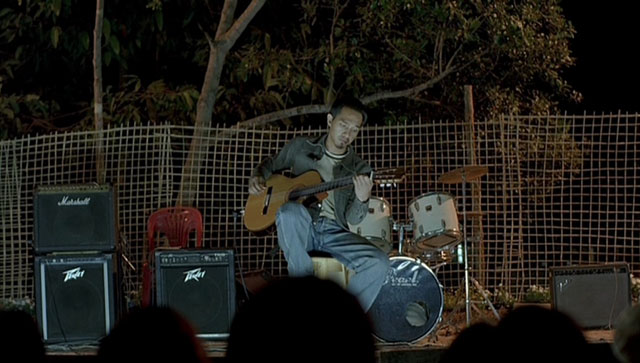
I don’t really know what happened or what it all meant, but I know I enjoyed every moment of this movie. Strange how that can happen, and it’s more rare than I would think. It’s a LOT funnier than Tropical Malady, which was unexpected. That short I watched a few weeks ago, Letter to Uncle Boonmee, prepared me well for Syndromes, which had its share of lush trees and repeated action. Halfway through, the movie appears to start over (do all of AW’s movies start over halfway through?) with doctors Nohng and Toey going through an interview scene they’ve already played out, but in a new setting. Anyway, I’m not going to analyze and read about the movie all night long, just leave this placeholder for myself to watch it again sometime.

image

Part of that Mozart festival that I read about four years ago in a magazine while standing in line at the airport. Sticks in my mind very well for some reason… I believe Opera Jawa was mentioned in the same article. Too bad I watched Opera Jawa as a low-res video projection and Syndromes on a crappy interlaced DVD with burned-in subs. I hope standard-def video dies pretty soon.

Ah yes, here’s A.W. in a Criticine interview talking about the Mozart thing:
“It is funded by Austria. It does not have to be about Mozart, but it has to have the spirit of Mozart. I see his music to be about miracles and its connection to everyday life. My film will look back at the past in order to see into the future. Just people living life, inhaling and exhaling, meeting each other—these are already miracles. It’s a film about beauty.”

image

I’m leaning heavily on Grunes these days… his nice intro:

Thai writer-director Apichatpong Weerasethakul has said that Sang sattawat is a tale of two trees representing his doctor-parents, one on the grounds of a rural hospital in the 1970s, the other on the grounds of an urban hospital in the present day. The film is divided into two parts—the bifurcated structure begging a series of questions, including: What is the present without the past? city without the country? one parent without the other? One gauge of the success of this film, which is full of talk about reincarnation, is our sense that the breeze animating one tree is the same as the breeze, eternal, animating the other.

image

So there’s a monk (above, played by a lead actor from Tropical Malady) and his dentist (Dr. Ple), a flower breeder named Noom and his girl Pa Jane. The interview participants Nohng and Toey must represent A.W.’s parents, but as M. Koresky puts it, “if we’re truly seeing some version of the meeting between Apichatpong’s mother and father, then the director is much more interested in the settings surrounding them and the forces controlling them—architecture, nature, medicine.” Stories are told which take over the movie; the sidetracks become the new main tracks. There’s possibly a fantasy scene or two, a flashback or flash-forward, and gentle talk of philosophy and love. And trees.

image

An exercise session in the park cuts to credits (including one for “ringtone composer”) with loony upbeat music, giving the giddy impression that you’ve just watched a madcap comedy. Maybe you have. A.W. seems to have no regard for familiar storytelling or filmmaking conventions, so maybe besides the sex jokes in the dialogue the form itself was meant to be humorous.

CA Newsreel has blurbs by Jonathan Demme and Charles Burnett, so this was seen when it came out even if it hasn’t been seen since. “Saaraba presents an unsparing indictment of a corrupt older generation intoxicated with Western consumerism and of alienated urban youth addicted to drugs, sex and millenarian politics.”

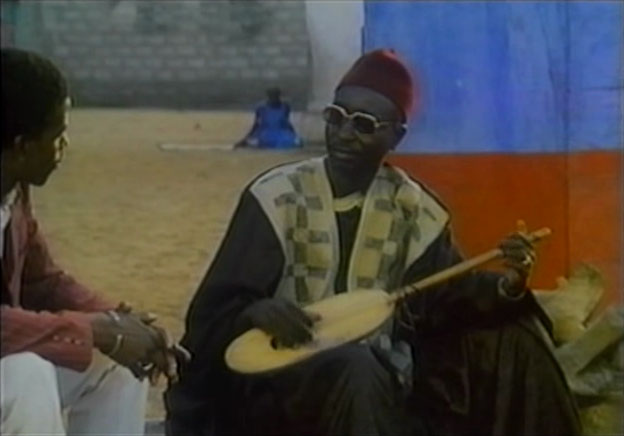
Good looking movie, with more traditionally beautiful shots than in countryman Ousmane Sembene’s 1970’s movies (I haven’t seen his only 80’s film yet). At the time we were watching it, I thought I liked it pretty well. Katy was glad to be watching African movies again. We could both follow the story without any problems. But a couple days later we realized neither of us could remember anything about it. Saaraba had vanished! Now, a couple weeks later, my blogging task is hopeless. If not for Jonathan Demme’s pull-quote and this amazing screen-shot I took, the movie may cease to exist.

image

Well that’s not completely true. I can tell you it opens with our hero Tamsir returning to Dakar after years spent abroad, determined to live a proper African existence and reject the West. He has a pothead friend and likes a girl named Lissa. She’s promised by her parents to marry a fat man (“the MP”), but things go sour when Tamsir knocks her up. Either her dad or his dad needs to perform a sacrifice to save the herd (really don’t remember this part). T’s dad dies at some point. Demba, the cool dude shown above, spends the whole movie trying to fix his motorcycle so he can ride away to Saaraba (paradise), but I think he rides into a ditch and gets killed… or does he kill Tamsir’s dad? No, I am almost sure Demba dies.

image

The writer/director’s only listed film. Some of the crew was German. IMDB lists no acting credits, but I looked some of them up and found a couple Sembene crossovers: Elhadj Abdoulaye Seck of Xala and Omar Seck of Guelwaar. The American University, whatever that is, says this was the director’s thesis film.

The first post of my special four-part In Over My Head series, in which I watched some movies I didn’t fully understand, and can’t adequately describe, or even remember properly. I must have been tired last week.

image

A big title on the decade list. Not only did it show up on multiple lists, but it’s one of Jonathan Rosenbaum’s top 100 of all time, and the Telegraph called it the masterpiece of the “sixth generation”. I’ve now seen five of Jia’s movies and I probably like this one second-best to The World, but I don’t even love The World very much. I watched it once in theaters, then a year later when Cinema Scope sent me the DVD (to replace the announced Colossal Youth) I just tossed it onto the shelf, thinking “don’t suppose I’ll ever watch this again.” I find a great Jia movie less desirable than a pretty-good Brian De Palma movie, and since Jia won the consensus critical vote for auteur of the decade in Film Comment while winning my own WTF Award of 2009 for Dong and Still Life, I am clearly missing something.

First, a quote from the esteemed Acquarello. Despite all the big, big words he uses, this is my favorite short description of the film that I’ve found:

An estranged and depersonalized chronicle that illustrates the marginalization of humanity under the turmoil of profound national change…
Similar to the plight of the perennially dislocated acting troupe in Theo Angelopoulos’ epic film, The Travelling Players, the evolution of the itinerant performers – from disseminators of peasant propaganda, to champions of an eroding, indigenous culture, and eventually, to gauche (and unintentionally comical) assimilators of commercial pop culture – is a poignant articulation of a generation foundering in their own seeming irrelevance and figurative exile from within their homeland, desperately struggling for inclusion and a sense of place in their country’s future. It is this sentiment of cultural displacement that is illustrated in the repeated encounters between Ming-liang and Ruijuan among the ruins of a disused ancient fortress: an elegiac image of unrequited love lost in the expansive and formidable landscape of a silent, unarticulated, and disconnected human history.

image

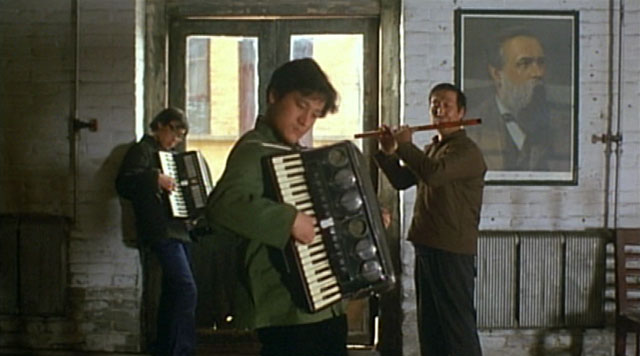
During the first hour of the movie (the “peasant propaganda” section) I wrote: “it must be tiring to be that nationalistic all the time.” During the last hour (the “unintentionally comical” section) I noted the group was calling themselves The All Star Rock ‘n’ Breakdance Electronic Band.

Cui Mingliang, is our sorta-hero, a glasses-wearing bellbottoms-wearing so-called artist who doesn’t seem to believe much in anything he’s doing, just going along with the group. He meets with his girl regularly, but they never seem to fully connect, and when he comes home from a tour at the end, she has become a cop or a commie or something. Camera is mostly stock-still, but not afraid to pan around when outdoors. Whoa, does the movie really end with some girl and her baby playing around a teapot? Since I have no wisdom, here are more helpful quotes.

image

AO Scott: “The story, which unfolds episodically over more than three hours, might be described as a Boogie Nights about socialist cultural politics instead of pornography.”

Senses of Cinema:

That Jia shows the negative consequences of this economic revolution goes without saying but his imperatives are non-judgmental and totally undogmatic. His cinema belongs to a humanistic tradition in the larger ecumenical sense but Jia’s style is buffeted by postmodern means and a dedication to realism. At the same time, Jia associates his humanity with a feeling for home. Home is Fenyang, which to Jia, acts as a microcosm of China itself. Fenyang shows the “original face” of China. Jia depicts the fundamentally harsh conditions of the backwater that is Fenyang as the wheels of the market economy turn, driving the residents of Fenyang into the modern age and leaving many by the wayside.

Jia himself makes a surprisingly good interview subject.
“A hundred years ago, if you felt lonely, you would write a poem. A hundred years later, if you felt lonely, you might make a movie. Such problems persist.”

S. Teo: “But your movies are banned inside China, and in fact, they have been mostly seen outside of China, in foreign countries.”
JZ: “This is a fact. This is the most embarrassing and tragic aspect of being a Chinese filmmaker. … Then again, Xiao Wu is quite widely seen in China because there are pirated VCDs being circulated. So I have conflicting emotions. My film is being pirated on the one hand, but on the other hand, it is one method of getting my film shown. I feel embarrassed and helpless.”

image

Jia again:

I use a lot of long shots. If the audience can see things in there, that’s good, if they can’t, so be it. I don’t want to impose too many things onto the audience. For instance, in Platform, I used only two close-ups. One was the close-up of the postcard that Zhang Jun sent from Guangzhou. It’s not that there are special situations where I wanted to hold back some information. I don’t want to impose a message onto the audience. I want to give them a mood and within that mood, you can see things that you want, or you can’t see things. My films are rather challenging for the audience. They are not very clearly stated to the extent where the audience can see clearly the objects they want to see – this pen or this watch. If they don’t notice it, they don’t notice it. It’s not that I am being indifferent. Through all these, I am imparting a director’s attitude, how he sees the world and the cinema. What I mean to say is that it’s only an attitude because you can never be absolutely objective. When you need somebody to look at something, it’s no longer objective. There is no absolute objectivity, there is attitude, and through this attitude, there is an ideal.

Mr. Grunes: “Some reviewers have called the film ‘static’ – technically, an odd claim given the film’s prolific use of moving cameras (pans, trackings, fixed cameras in moving vehicles), but a claim that makes emotional sense.”

Aha, Jia also says the whistling teapot at the end is meant to evoke a train whistle, the train having the same meaning of escape from the small-town ordinary as it does in Pather Panchali. He gives a very good interview, plainly explaining his style and intentions – and, horror of horrors, he says he prefers the shorter cut of the movie, the version I watched, not the elusive 3+ hour so-called director’s-cut.
Eat it, Film Comment.

Tracey is in therapy for teen-rebellion issues. One day while hooking up with a boy she likes from class, she loses her cute little brother, who presumably drowns in the icy river. Tracey can’t deal with what she’s done, wanders the city getting into dangerous situations looking for her brother. Part of her actually expects to find him but mostly it seems like a grief/catharsis journey.

image

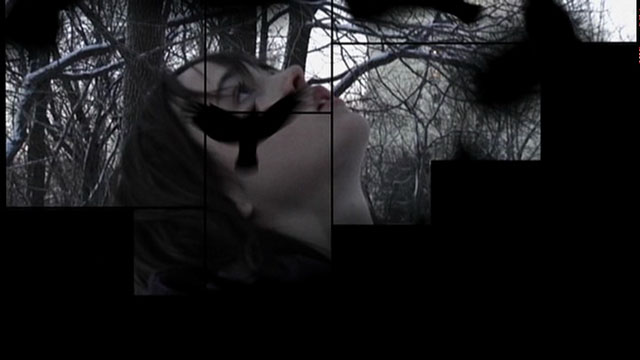
Rotten Tomatoes and Metacritic say the movie was mostly disliked, the IMDB reviewers say it “sucks,” but a lone blog (Subtitle Literate) put it on their best-of-decade list alongside nine other movies I saw and liked, so I sought it out. And I’m going to side with the lone blogger. It’s a teen family-problems death-and-grief depression drama AND it’s presented via extreme split-screen, with frames within and beside each other, displaying memory and fantasy and foreshadow and unrelated footage, and the timeline of the main narrative is scrambled as well. Sounds like the kind of thing I would hate, but it’s done very, very well. I liked Ellen Page (Juno, Hard Candy, Whip It, X-Men 3, gee I watch a lot of Ellen Page movies) and loved her little brother (pretending to be a dog), her cross-dressing psychiatrist (would anyone visit a cross-dressing psychiatrist?), the questionably dangerous guy she befriends in the city (“Lance From Toronto”) and dream sequences of her behind-the-music imagined future with new kid in school Billy Zero. But mostly I was bowled over by the editing, which doesn’t seem arbitrary like 21 Grams, but carefully thought-out to make emotional sense.

What’s it say on the board? Pontypool (changes everything).
image

Bruce’s first theatrical flick since 2001 (I’m not sure that it opened here). McDonald once again has book’s author write the screenplay (see also: Pontypool). Shot on Inland Empire-looking “bad” DV and populated with the finest Canadian actors, including Ari Cohen (Archangel) as Tracey’s dad, Max McCabe (Land of the Dead) as Lance From Toronto and Julian Richards (Hard Core Logo, Survival of the Dead, opening scene of Cube) as the psychiatrist.

image

D. Sallitt, 2007:

Knowing that he’s discovered the philosopher’s stone, McDonald tirelessly generates new formal prototypes every few seconds, and leaves us at film’s end with the sense that he could have kept going forever. What makes Tracey more than an impressive demo is its unity of form and feeling, the sense that its screen may have been shattered by its young protagonist’s hormonal violence, McDonald’s wild-eyed punkish sense of drama, and Medved’s vivid dialogue

image

D. Sallitt, 2008:

McDonald and his admirable writer Medved did not choose random subject matter for this experiment. Not only does the style seem intended to reflect the streaming consciousness of Medved’s material, but there is also a strong underlying musical structure to the film, with music and dialogue working together to organize the story into movements that almost resemble musical numbers.

Howard Hawks planned to film Fuller’s “The Dark Page” with Edward G. Robinson and Humphrey Bogart while Fuller was still in the war, but by the time the story finally staggered onto the screen featuring a lower-prestige cast and director, Fuller himself had directed four pictures and was working on his own newspaper drama, Park Row. Maybe that explains why he was so disappointed in Scandal Sheet while he had no complaints about It Happened In Hollywood or Power of the Press. Or maybe he saw the early ones as collaborative screenplays, while this was his novel, written alone, being adapted without his input by three screenwriters – James Poe (Attack, The Big Knife), Eugene Ling (Behind Locked Doors) and Ted Sherdeman (Them!). The reason I wonder is because I think Scandal Sheet blows away the earlier movies and rivals Fuller’s own first two films. I’m sure the script wasn’t what Sam envisioned, but Phil Karlson (later 99 River Street, The Phenix City Story) sure knew how to shoot it. It’s noirish and well-paced with good acting throughout (the hero failed to impress, but isn’t it always that way) and looks like it’s been given care and attention. I doubt Sam was any more pleased when the film was remade in the 80’s with Burt Lancaster and a plot that sounds not-at-all similar to this one).

L-R: some extra, Donna Reed, John Derek, B. Crawford, H. O’Neill
image

You can’t tell from the beginning, with crime reporter McCleary (John Derek of Knock On Any Door) and his photographer (Harry Morgan, who played a character named Sam Fuller the same year in High Noon) deceiving a grieving victim into telling them her story before the cops arrive, if the reporter is a slimeball bastard or just a resourceful newsman. Eventually he starts to look like the editor in Power of the Press (but with dreamy slick 1950’s hair), a good guy at heart but a slimeball by association with his muckraking boss, ed-in-chief Broderick Crawford (depressed train operator in Human Desire). That’s not really the point of the story, and the question is dropped when it becomes clear that McCleary is our hero (you can tell because Donna Reed likes him).

image

Dudes are going about their business raising circulation at the paper by treating the public like dolts (as in Power of the Press, this seems to work) when the editor runs into his ex-wife (Rosemary DeCamp, above, of 13 Ghosts) at the paper’s Lonely Hearts Ball. She’s rightfully pissed at him for ditching her twenty years ago without a divorce, changing his name and moving to the big city, so she offers to blackmail him until violent hubby pushes her into a bedpost, killing her. Now he’s trapped (Broderick Crawford always seems to be short-tempered and trapped), trying to cover up his crime while allowing his star reporter to try cracking the case. Loose end Henry O’Neill (The Sun Shines Bright) is eliminated, turning the accidental killer into a cold-blooded murderer, and the paper follows the case until its own editor’s face is plastered on the front page as circulation finally surpasses the level that would’ve made him a partner.

image

As a possible shout-out to Sam Fuller, the actor who played the judge who fingers Broderick in the gun-totin’ final showdown was actually named Griff.

image

Griff! He played a judge in Angel Face the same year.

image

A film by a guy who I’m surprised hasn’t been killed, based on the novel by an author who I’m surprised hasn’t been killed (IMDB says he’s living under police protection). Won every Italian academy award and every European Film award, got second place to The Class at Cannes. After watching the beginning of Fellini’s 8 1/2 on TCM a few nights ago, I was just glad to watch an Italian flick without rampant dubbing.

image

Multiple story threads that manage not to crash (see: Crash) together into one narrative, but stay where they belong, illustrating different parts of the problem. The problem is the Camorra, the Naples crime organization which, as the end titles claim, is widespread enough to have invested in reconstruction of the world trade center in New York. Movie is well-shot, but mostly handheld, not stylish like most classic gangster movies (such as Scarface, referenced here a few times). Scary as hell in that non-horror, Collapse sort of way; I would never ever like to visit Italy after watching this.

image

Toni Servillo is a busy man, playing Franco the illegal dumping magnate and the lead in Il Divo the same year. Two dumb-as-fuck youth steal some guns and get predictably killed at the end. Clothing manufacturers spy on each other. A kid helps get his neighbor killed, desperate to join the local gang. All is sadness and violence with no hope. To hell with Italy.

image

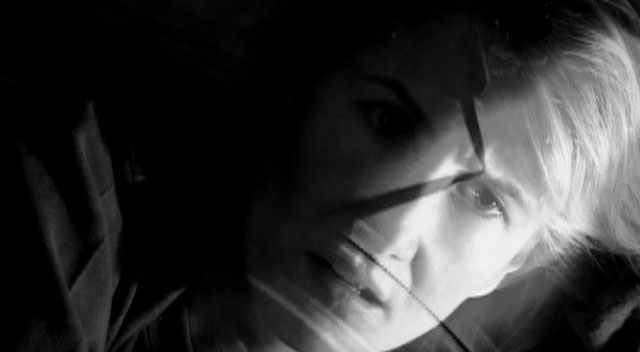
Didn’t stick with me very well the first time, maybe because it didn’t make enough narrative sense for my brain to properly hold on to, like a wacked dream that I remember clearly when I wake up but is already gone by the time I hit the shower, not related enough to reality to survive my beginning to ponder my work day. Should have watched it a couple times originally. But now I see I should watch more than a couple times, maybe annually from now on. Lynch’s most free, most trippy and loose movie, existing almost entirely in dream state, but also his most dirty and real looking because the DV photography feels like a home movie. Completely inexplicable and entirely worthwhile.
image

Hard to watch at home. The three hour runtime, the almost entirely black scenes, and the very dynamic audio levels (quiet whispers turn into sudden shock sound effects and screams) work best when I’m home alone and wide awake on a winter’s night. I think it freaked out my birds more than anything else I’ve watched. Next time I’ll watch on my laptop, in accordance with Lynch’s dreams of an all-digital cinema.

image

The plot, thanks to Cinema Scope:

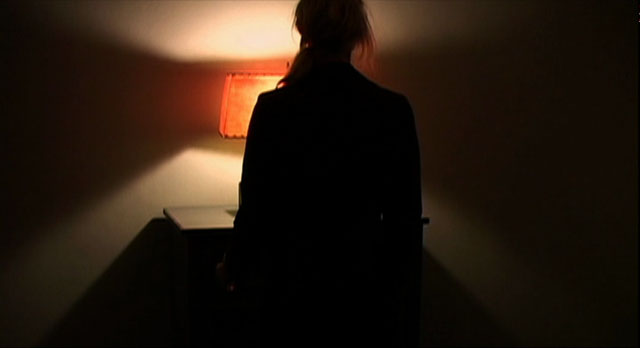
Dern’s first incarnation, Nikki Grace, is an actress who lives in a cavernous Hollywood mansion and lands a coveted role in a Southern melodrama titled On High in Blue Tomorrows opposite suave ladies’ man Devon (Justin Theroux). She soon learns that the film is a remake and that the original Polish production was aborted when both leads were murdered.
image

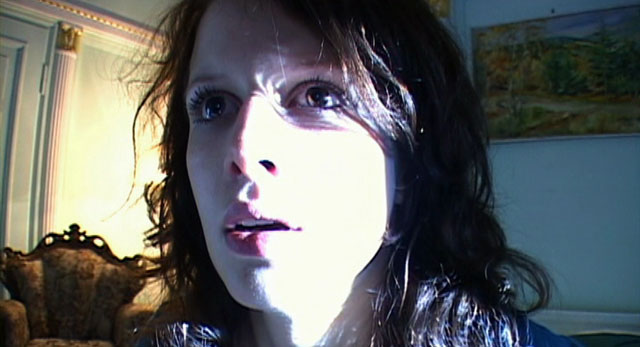
Nikki begins to merge with her character, Sue, and the script’s adulterous affair spills over into real life. But what’s real, and who’s dreaming whom? The boundary between the film and the film-within-the-film — indeed between all levels of reality — vanishes completely. Besides Nikki and Sue, Dern plays at least two other overlapping variations on the character: One lives in a shabby suburban house, sometimes with a harem of gum-chewing, finger-snapping young women. The other, a tough-talking Southern dame, is spilling her guts out in a dank room, telling floridly vulgar tales of sexual violence and terrible revenge. Interspersed throughout are scenes from a Beckettian sitcom with a rabbit-headed cast. Certain phrases, often pertaining to identity confusion (“I’m not who you think I am,” “Look at me and tell me if you’ve known me before”), repeat in varying contexts and start to acquire talismanic power. (The key to transcendental meditation, which Lynch has practiced for over three decades now, is the repetition of a personal mantra.) Meanwhile, the film we are watching is beamed to a TV in a hotel room, and a mystery brunette watches along with us, silently weeping.
image

Did I write this weeks ago, or was I quoting from a website?: “Dern changes identities and locations, each with only a faint memory of the others, giving her a constant sense of unease.”

image

The neighbor who visits her is awfully good in a Twin Peaks sort of way. A choreographed dance to “The Locomotion” manages to be one of the spookiest parts. Seeing father Rabbit leave his locked-down living room set is thrilling. Cameo by the girls from Darkened Room (actually only Jordan Ladd is strictly from Darkened Room, but I like to think they’re the same characters). William H. Macy in a big cheesy cameo as a radio reporter and Harry Dean Stanton as Irons’ sad assistant, always bumming money off people.

image

Bright Lights:
“It sounds complicated, but it makes clear emotional sense, just as Mulholland Drive did.”
image

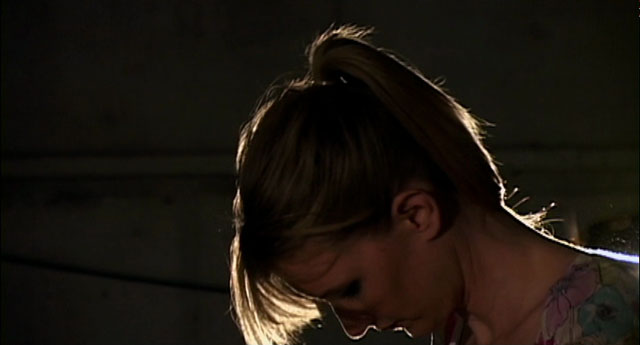
House Next Door calls the ending hopeful, and I guess you could say that. Dern escapes from at least one of the films she’s trapped within, wakes from the dead and goes back home where, per HND, “Lynch returns to the face of Grace Zabriskie’s Neighbor and, before our jaundiced eyes, this formerly intimidating and ugly figure becomes suddenly beautiful and ethereal. Moreso than Dern’s final close-up (a stunner in its own right) I think the answers to the film’s many mysteries, for those who need them, are contained in Zabriskie’s sideways glance and virtuous smile.”

image

Extras on the UK DVD are all interview-style. One is by The Guardian, one is by Mike Figgis at a hotel in Poland.
image

Interviewer: “If T.M. creates positiveness… some people might ask: what about all the darkness that’s in the films?”
Lynch: “Exactly.”

On the inclusion of Rabbits in Inland Empire: “Sometimes we start something and we think it is that, and later… it sprouts and becomes a bigger thing.” Okay it’s not a great quote.

“Really the only difference [between IE and the earlier films] is Inland Empire was shot with DV… and it was a low-grade, bad DV.”
image

“It is true that the 50’s gave birth to rock and roll and that early rock and roll holds a very special power, I think. It started the whole thing rolling, but in my mind it drifted away a little too quickly. And I think there’s more gold to mine from that feel of the first rock and roll.”

Repeats the same information over and over, not saying much for long periods, interviewers asking stupidly general questions hoping Lynch will tell them a nice story. He does tell a couple light ones, but three times each. So the final segment, The Air Is On Fire, comes as a happy surprise. It’s a biographer (who knows enough about Lynch not to ask pedestrian questions) viewing and discussing Lynch’s paintings and sound installations.
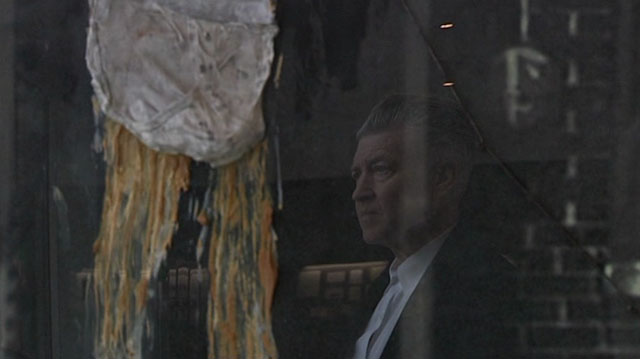
image


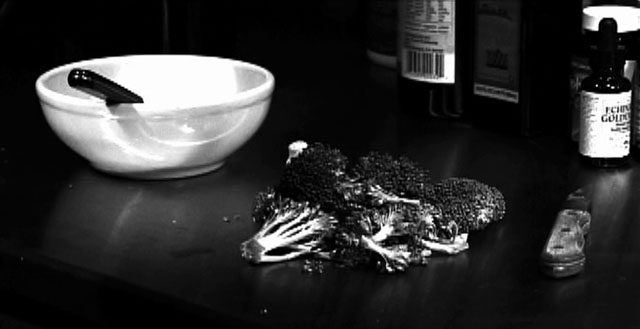
“We’re cooking quinoa.”
“This pan is unbelievable.”
The U.S. DVD is already better than the U.K., with a b/w video of Lynch in his kitchen and a nice stills gallery, and that’s before I even get to the meat of the disc. Hey, he times his cooking the same way I do, by yelling out numbers from the clock instead of setting a proper timer.
image

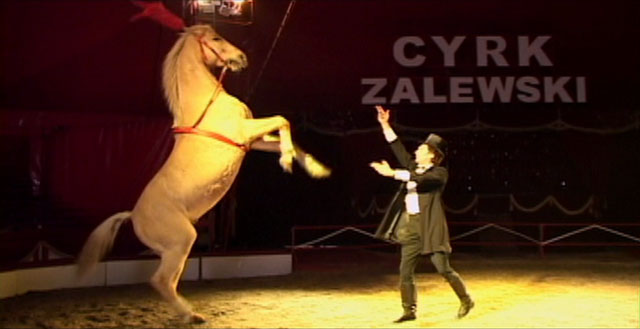
More Things That Happened is outtakes from IE. First 20 minutes are scenes with Dern’s circus husband. He comes home late. He sells a girl a watch.
image

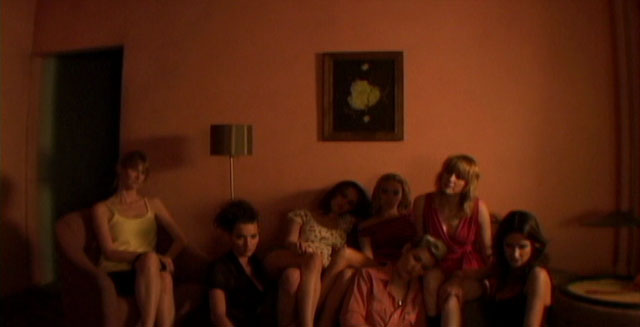
Dern continues talking to the man at top of the stairs. She has a crossed out “LB” tattoo on her hand. A girl with earrings talks to Dern about meeting Billy at a bar. Mostly people telling each other stories.
image

Ballerina
A ballerina performs behind cloudy overlays and blobby digital soft focus to ambient music. Some neat effects in there but too long by half.
image

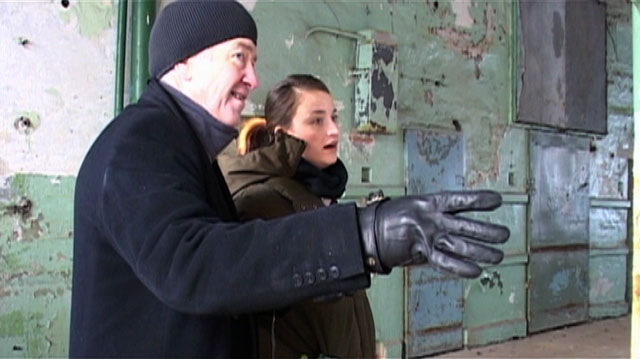
Lynch (one) is a full-length documentary by BLACKandWHITE, whatever that is, company or person, on the making of Inland Empire. Lots of behind-the-scenes dealings, set construction, some talk with the actors, Lynch in every scene. Lynch 2 on the IE disc is presumably deleted scenes from that doc, another half hour of material. Not tremendously eye-opening, just gives you the impression that IE is completely Lynch’s artistic vision, if you couldn’t have figured that out before, down to the smallest detail. He yells at his crew on set then praises them up and down in interviews. We hear a lot about the improv nature of the film and script, but we see careful planning and scheduling of shots and scenes. Watching David choreograph the closing credits musical number, telling the lumberjack not to cut all the way through the log because “we’ve only got one log,” you realize that all the backstage footage in the world might be fun to see, but still wouldn’t explain a thing.
image

“It’ll be more than a mouthful, which will look real, and it looks great. And you can throw up a lot of blood. Two times you’ll throw up.”

“There was a thought for a long time that you had to suffer in order to create, and this is just about opposite of the truth. If you’re suffering, even a little bit of suffering cuts into your creativity. In fact, the happier you are, and the more wide awake and rested you are, the better it goes… then the ideas can flow way better, way smoother and faster, and more of them.”

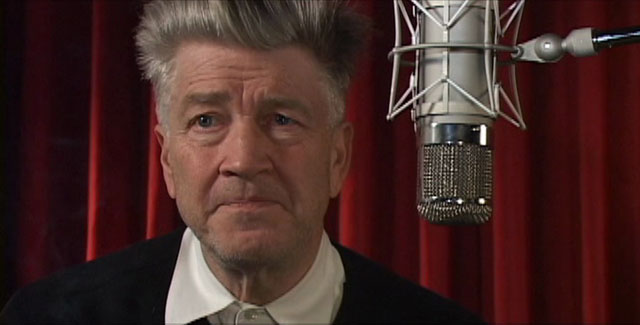
Stories is Lynch talking for 40 minutes, maybe excerpts from the website Q&A segments, about IE and digital and meditation, the usual topics. This is where the famous quote about watching a film on a fucking phone is from. His hatred extends to computers as well, but I think if he was here and took a look at my television setup and laptop setup, he’d have to grudgingly admit that I’m getting better picture and sound off the laptop.
image

On a separate disc, Room To Dream: David Lynch and the Independent Filmmaker is mostly Lynch talking about himself and his working methods, and partly an advertisement for Avid systems. Best of all, it includes an extra scene related to Inland Empire. Windowboxed and interlaced, unfortunately – nice going, Avid.
image

Sur la route de Mulholland Drive is a half-hour behind the scenes, interviewing all the principals and watching the filming. More interesting than most backstage press-kits if only because I’m unusually interested in the film. Following that is a cutdown of the film’s Cannes press conference.
image

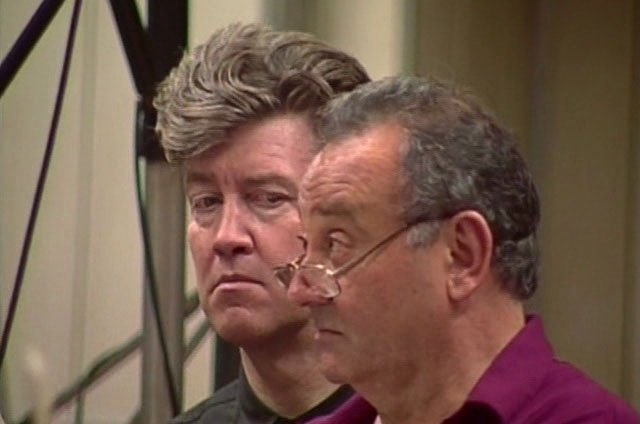
Le Son de David Lynch, another doc, from French television in 2007, interviews Lynch and a bunch of people I didn’t understand. Hmm, Wild at Heart was called Sailor et Lula over there. He and Badalamenti (below) recorded music for Twin Peaks and Lost Highway before shooting, and he’d play the music on set… wonderful.
image

On the Lime Green box set, Out Yonder is a three-actor stilted-humor throwback to The Cowboy and the Frenchman, only Lynch is one of the actors this time. Not really interesting at all, a conversation where all forms of the verb “to be” are replaced by “bees bein'”, with fart jokes, tooth pulling and a distant cavalry. In the next episode, a girl with gonorrhea seeks her missing chickens.
image

Scissors is a Cannes short previously known (to me) as Absurda. A Flash-looking dream-cinema piece incorporating bits of the ballerina footage.
image

A couple of greetings for film festivals, both in b/w, filmed in reverse, starring Lynch himself and just awesome.
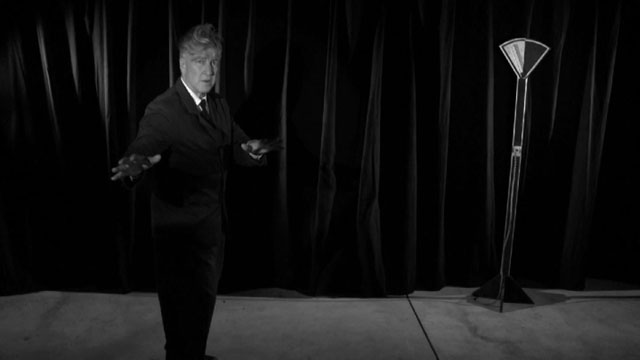
image

Fictitious Anacin Commercial is exactly that, a half-minute gag commercial. A Real Indication is an amateur music video (if amateurs had a crane). And Early Experiments is 16mm footage from the Grandmother/Alphabet/Six Figures era set to overdramatic string music, with some cool motion paintings and lots of mirror symmetry.
image

Then there’s Dynamic 01: The Best of Davidlynch.com
David answers member questions about favorite pieces of music, how to write a screenplay, his box full of ideas on scraps of paper, Marilyn Manson, coffee vs. cappucino, and meditating with Roy Orbison.

Intervalometer Experiments:
Ambient videos with slow, rumbling music. The first consists of trees and a distant mountain at sunset, the video grain threatening to destroy everything. The second is a spooky set of stairs molested by an encroaching shadow. The third is the corner of a sunroom in time-lapse, with scary trees and a dormant alarm system.
image

Industrial Soundscape is a lock-groove computer animation three times as long as it needs to be. Maybe we were supposed to use it for meditative purposes. Bug Crawls is animation of a bug climbing a mad science house in slow-motion as a blimp passes by. Lamp is a half-hour doc of David making a lamp, which isn’t as funny as when he makes quinoa. And there’s another episode of Out Yonder, which I think I’m gonna skip. No, I guess I’ll watch it. “You bees bein’ barkin’ right up the tree which bees bein’ the wrong one!”

Darkened Room
A Japanese girl dances with the camera, talks to us about bananas before introducing her crying fried (must be Jordan Ladd of Death Proof) in the other room. I think I hear the Rabbits music. Third girl (Ladd’s Cabin Fever co-star Cerina Vincent) comes out to torment the crying girl. Hmmm, my note three years ago said this is six minutes long, but now it’s ten. Maybe last time I lacked the intro with the bananas. A few visual cues and mention of a mysterious watch purchase tie this in with Inland Empire and More Things. Little did I know the first time I watched it. Little did Lynch know, probably.
image

Boat / “When things go wrong, it gets like this.”
David takes his boat (the “Little Indian”) out for a spin, takes low-grade blown-out video then adds a woman-in-trouble descriptive voiceover. He goes fast enough to go into the night.
image

Fun to watch British comedians tear apart TV shows I don’t watch while praising The Wire and Deadwood to the heavens. I tuned in because of a connection between this series and documentarian Adam Curtis in later seasons, but now I’ll have to hold off watching those later seasons for fear of catching Wire spoilers in the raving recaps. The show kind of works as a best-and-worst-of television. Now I can feel more connected to society, because I know what Deal Or No Deal? is, as well as major differences between the US and UK versions. Mainly, though, it’s worth watching because writer/host Charlie Brooker is a funny guy, charismatic despite his sociopathic posturing.

image