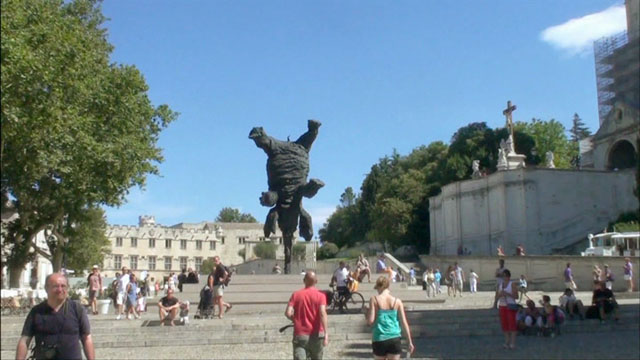
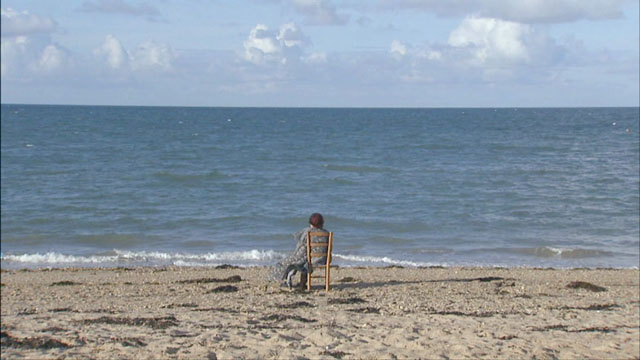
A few annoyances – Cousins’s lilting voice makes me laugh for a few minutes at the start of each episode (I never get used to it), and all the statements that the well-known film classics aren’t really the great films (as opposed to Rosenbaum’s distinction between acknowledged greats and personal favorites). I tried to keep my ears sharp for factual errors after reading an early account on Shadowplay, but by the five minute mark I’d completely melted, just enjoying the hell out of the clips on display, the cinematic history lesson and its clever organization. Also, I couldn’t believe he mentioned Samira Makhmalbaf in his introduction.

Part 1: 1895-1918, Thrill Becomes Story

From the earliest works through DW Griffith’s Intolerance in 1916, with spotlights on Lumiere and Melies, Billy Bitzer, Edwin Porter (his Life of an American Fireman gets the most play), Alice Guy, Victor Sjostrom and Griffith.

Part 2: 1918-1928, The Triumph of American film and the first of its rebels

About the industrialization of Hollywood, then the breakout comic stars of Keaton, Chaplin and Lloyd, the beginning of documentary with Nanook of the North (with a shout out to The Five Obstructions) and realism in fiction film. More rebels: first The Crowd, then Aelita and Yevgeni Bauer, then a spotlight on Carl Dreyer and The Passion of Joan of Arc.

Part 3: 1918-1932, Great Rebel Filmmakers around the world

Focuses on challenges to the dominant Hollywood romanticism in the 1920’s and 30’s. Lubitsch’s style and innuendo, French impressionism (Abel Gance), German expressionism (Caligari, Metropolis, Sunrise), experimentalists (Walter Ruttmann, Entr’acte, Alberto Cavalcanti, Un Chien Andalou and L’age d’or), Soviet montage (Potemkin and Arsenal), Ozu’s humanism and compositional innovations, Mizoguchi’s feminine miserablism and the realistic acting of Ruan Lingyu.

I see that Mark Cousins doesn’t have a better copy of A Page of Madness than I do – a shame. I hope a decent print of it exists somewhere. Five years before that one, he calls Souls on the Road the first great Japanese film.

Part 4: The 1930’s, Great American movie genres and the brilliance of European film

Sound film in hollywood and europe: Love Me Tonight as example.
The genres: horror, gangster, western, comedy, musical, cartoon
Europeans who push boundaries: Cocteau, Vigo, Carne/Prevert, Renoir
in South America: Limite (looks great)
in Poland: The Adventures of a Good Citizen (whoa, looks just like Polanski’s Two Men and a Wardrobe)
in Germany: Leni Riefenstahl (way to go, Germany)
Back in Hollywood, reasons why Hitchcock was “the greatest image maker of the 20th century” then a run through the women of Ninotchka, Wizard of Oz and Gone with the Wind

Part 5: 1939-1952, The Devastation of War and a new movie language

On to neorealism, but wait – first Ford’s and Welles’s use of deep space and wide lenses – okay, back to neorealism, then film noir (Gun Crazy looks amazing). He calls the Hollywood blacklist “the single greatest trauma in american cinema.” A chat with Stanley Donen, then onto Britain for Powell and Pressburger, Humphrey Jennings and The Third Man (“a compendium of 40’s cinema”). I like how he keeps flashing-forward to Martin Scorsese films influenced by the clips he’s showing.

Part 6: 1953-1957, The Swollen Story: world cinema bursting at the seams

Another world cinema round-up: Youssef Chahine – “the founding father of creative african cinema” for Cairo Station – is the original James Dean. Indian realism in the mid-30’s to Pather Panchali to Mother India. A melodrama called Two Stage Sisters by Xie Jin. A few by Kurosawa. Rio 40 degrees by Dos Santos in Brazil. In Mexico, Dona Barbara and La Perla and the return of Bunuel with Los Olvidados. Then on to Sirk, attacking Hollywood melodrama from within, along with Kenneth Anger and Nick Ray. The rise of television, Marty, and method acting. Checking in with old friends Welles, Ford, Hawks and Hitchcock, then in Britain, David Lean vs. Lindsay Anderson. A sign of sexy things to come: Brigitte Bardot.

Lars Von Trier:

Part 7: 1957-1964, The Shock of the New: Modern Filmmaking in Western Europe

Bergman, Bresson, Tati and Fellini led the way in making European films personal – a couple examples of each. Then enter the French New Wave, beginning not with Breathless and The 400 Blows but, happily, with Cleo from 5 to 7 and Last Year at Marienbad. New waves everywhere: in Italy you’ve got Pasolini’s Accatone and The Gospel According to St. Matthew plus Visconti and Sergio Leone. Nice how he talks about each filmmaker’s specific innovations, instead of just listing them out like I’m doing. In Spain, Marco Ferreri (The Wheelchair) and the return (briefly) of Bunuel. In Sweden, I Am Curious, Yellow. And then back to France, where The Mother and the Whore knocked the wind out of the new wave.

Part 8: 1965-1969, New Waves sweep around the world

In Poland, Wajda and Polanski (again with his wardrobe short). Czech: Jiri Trnka, Milos Forman and Vera Chytilova. Hungary: Jancso. Soviet: Tarkovsky and Parajanov. Japan: Oshima, Imamura. India: Ghatak (I interrupted his Ajantrik to watch this show, and Cousins gave away the bloody ending) and Mani Kaul. Brazil: Glauber Rocha. I Am Cuba. Iran: The House Is Black. Senegal: Black Girl (by the “founding father of black african cinema” – note the extra word). Britain: Karel Reisz, Ken Loach and Richard Lester. And in the USA, a curious list of titles I would not have come up with: Primary, Shadows, Psycho, Blow Job, Medium Cool, Easy Rider and 2001: A Space Odyssey.

Part 9: 1967-1979, New American Cinema

Unlike Adam Curtis, Cousins doesn’t seem to have enough footage to go around. His pillow shots of city streets in between interviews and film clips start to feel repetitive. Anyway, he divides New American Cinema into three categories. 1. Satirical Movies (Buck Henry, Frank Tashlin, Robert Altman, Milos Forman). He brings up some of the great, subversive stuff Buck Henry wrote in The Graduate and Catch-22, then in his interview Henry points out that these come straight from the source novels. Good stuff on Altman though, and always nice to see Artists & Models get some credit. 2. Dissident Movies (Charles Burnett, Dennis Hopper). Nice, but where are Robert Downey and Frank Zappa? 3. Assimilationist Movies (Paul Schrader, Robert Towne, P-Bog, Sam Peckinpah, Terence Malick, Bob Fosse, F.F. Coppola, Martin Scorsese). Shout out to Woody Allen for bringing the Jewish experience onto the screen. A bit about how Schrader’s solution to the emptiness of his protagonists was “astonishing” – he stole from Pickpocket. Then he stole the ending of Pickpocket AGAIN in another movie (the two being American Gigolo and Light Sleeper). I guess that is pretty astonishing, but I wouldn’t go bragging about it in TV interviews.

I don’t know who was responsible for this, but in a corner of the screen during the closing credits, over a picture of Paul Schrader they throw up the words PAUL SHRADER. Perhaps an unhappy Bresson fan at the studio?

Charles Burnett:

Part 10: 1969-1979, Radical Director in the 70’s make state of the nation films.

A globetrotting look at films about identity in the 70’s. I’ve only seen a few films discussed in this segment but need to watch them all – they look stupendous. In Germany: Fassbinder, Wenders (Alice in the Cities), Margarethe von Trotta and Herzog. Italy: Pasolini again (Arabian Nights) and Bertolucci. Ken Russell and Nic Roeg and Gillian Armstrong. Documentaries in Japan: Minamata, The Victims and Their World and The Emperor’s Naked Army Marches On with an interview with Kazuo Hara. On to Africa with La Nouba, Xala, Kaddu Beykat, Harvest: 3000 Years and Mambety. Yilmaz Guney with Hope and Yol. The Battle of Chile and finally, The Holy Mountain.

Part 11: The 1970’s and onwards, Innovation in popular culture around the world

“Cinema of sensation rather than contemplation”

In Hong Kong with Bruce Lee, John Woo and Yuen Woo-ping, with special notice given to King Hu as innovator and Tsui Hark for producing every 80’s and 90’s movie he didn’t direct. In India with insanely popular actors Sharmila Tagore (who started in Satyajit Ray’s Devi and The World of Apu) and Amitabh Bachchan, scenes from Mughal e Azam and a long segment on Sholay, which looks like a Western. On to Arab countries with The Message and The Sparrow, and Cousins seems to have gotten Youssef Chahine incensed by calling Egypt a developing country. Then back to Hollywood for the rise of the blockbuster, more “sensation,” with Jaws, The Exorcist and Star Wars.

Part 12: The 1980’s, Moviemaking and Protest around the world

“Speaking truth to power” is the theme of the episode – he uses that phrase about thirty times. Another globetrotting decade-roundup. The Chinese “fifth generation” filmmakers like Zhang Yimou, Tian Zhuangzhuang (Horse Thief) and Chen Kaige (Yellow Earth) are discussed with Stanley Kwan. In Spain, “protest had a sex-change” with Almodovar, who he pits against Victor Erice. Cousins declares Come and See the greatest war film ever made, Kira Muratova one of the most underrated filmmakers, Yeelen “one of cinema’s most complex works of art,” Distant Voices, Still Lives the greatest British film of the 1980’s, and John Sayles & Maggie Renzi “America’s state-of-the-nation filmmakers.” I like how he demonstrates different filmmakers’ techniques with his own camera, training us to watch for specific techniques in the following clips.

Part 13: 1990-1998, The Last Days of Celluloid before the coming of digital

A great round-up of self-reflexive Iranian cinema starting with Samira Makhmalbaf, then her dad, then Kiarostami’s Friend’s Home trilogy. I showed this section to Katy, since she suffered through Where is the Friend’s Home with me, not understanding the fascination. Though his mantra is “the last days of celluloid,” the point in this episode isn’t film itself but the filmmakers who are still making personal art in new ways as multiplex fare gets ever more glittery and disconnected from reality. So there’s Wong Kar Wai and Irma Vep, an interview with Tsai Ming-liang who discusses Hou Hsiao-hsien. Miles away from their cinema is Shinya Tsukamoto with Tetsuo, then Ring and Audition (what, no Pulse?). Interview with Lars Von Trier, discussion of La Haine, L’Humanite, Rosetta. Claire Denis says she was greatly influenced by Touki Bouki. Crows, Wednesday and Haneke.

Part 14: The 1990’s, the first days of digital, reality losing its realness in America and Australia

Discussion of the possibilities of digital with Gladiator and Terminator 2. The opposite ends of the digital spectrum with Toy Story and Blair Witch, then asian innovation in House of Flying Daggers. Referential postmodernism in Goodfellas and the movies of Tarantino and the Coens. An interview with Gus Van Sant. “No movies in the 90’s was more complexly connected to film history” than Elephant – I wouldn’t have guessed that one. I love when Gus reveals his utter cluelessness about video games. Cousins is such an auteurist that he puts the name of Tomb Raider’s lead designer over the footage. Matthew Barney with Cremaster 3. Robocop and Starship Troopers mixed sci-fi, comedy and politics. Jane Campion talks about the unconscious and subjectivity in An Angel at My Table and The Piano, and we close on a good interview with Baz Luhrmann.

Part 15: 2000 onwards, film moves full circle and the future of movies

“The clash between reality and dreaming.” A hilarious metaphor, referring to innovation as “the gorilla.” Post-2001, documentaries got big: Fahrenheit 9/11, To Be and To Have, Zidane. Reality in fiction photography with The Assassination of Jesse James, Climates, Mr. Lazarescu, The Headless Woman, Battle in Heaven. In Korea: Oasis, Memories of Murder and Oldboy. American dream films: Mulholland Dr., Requiem for a Dream. Then the combination of reality and dreams with Songs from the Second Floor, and digitally screwing with perception with The Rules of Attraction and Avatar. The boldness of Tropical Malady (he pronounces the director’s name Vair-suh-THACK-ull). Cousins ends the series in the present, not with some hot young filmmaker who may be the voice of the future, but with sixty-year-old Aleksandr Sokurov: Mother and Son, Russian Ark (“perhaps the most inventive film ever made”). But wait, here it is, an epilogue set in the future: Inception, Eternal Sunshine and a lovely post-cinema roundup closing in Burkina Faso.

Of course, while watching The Story of Film I kept seeing clips and hearing mention of great films that I never got around to watching, and so I hereby declare The Story of Film Festival, during which I’m watching one never-seen film from each episode. Lineup below – will update as I go.

1. Intolerance
2. The Crowd
3. Nothing But Time & Entr’acte
4. Daybreak
5. Gun Crazy
6. Rio 40 Degrees or Cairo Station or Mother India
7. Curious Yellow
8. Daisies
9. The Last Picture Show
10. ?
11. A Touch of Zen, Dragon Inn or Chahine’s The Sparrow
12. The Horse Thief
13. Beau Travail
14. Gerry or An Angel at My Table
15. Mother and Son

An attempted Christmas Movie with no real Christmas scenes. The story is just a pathetic thing to hang musical setpieces on, but they’re good ones, so we forgive it. A band’s pianist (ordinary John Payne) agrees to adopt an orphan as a publicity stunt but ends up with extremely smiley teenage norwegian girl Sonja Henie (who was nearly 30 when this was filmed). Supposedly he is dating the group’s new singer Lynn Bari (pin-up runner-up to Betty Grable), but his adopted daughter aims to marry him and succeeds at the end (ew).

Glenn Miller:

Payne and group – dig those shadows:

The good parts: Dorothy Dandridge sings “Chattanooga Choo-Choo” with two amazing dancers (the Nicholas Brothers) who do the splits a lot. Former Olympian Sonja Henie does some figure-skating, including an impressive-looking bit on reflective black ice. And (Katy’s favorite band leader) Glenn Miller’s orchestra gets to perform three full songs without any annoying plot interruptions. The photography on these is very good, always varying the view with some curious angles and sharp shadows. We’ll try to forget one musical number, “The Kiss Polka.”

Dandridge and Nicholas Bros:

This was Glenn Miller’s first big film, followed by Orchestra Wives the following year (also featuring the Nicholas Brothers – must watch this), followed by a fatal plane crash. Henie’s star was beginning to fall after a string of late-30’s hits. Upcoming comedian Milton Berle plays the band’s manager. Humberstone (heh) made some fifty movies, culminating in some Gordon Scott Tarzan flicks before he crept away to television.

Scorsese’s first major non-DiCaprio feature in a decade.

After the films of Georges Méliès aren’t popular anymore, he burns his props, donates his precious drawing robot to a museum and opens a trinket shop in a train station. Museum worker Jude Law takes the robot home to repair it then dies in an explosion. Museum man’s son Hugo, secretly the station’s clock-winder since his drunk uncle (Sexy Beast star Ray Winstone) has disappeared, repairs the mechanical man and, Amelie-like, presents it to Georges Méliès, rekindling his hopes, dreams and love of cinema. Help comes from Méliès wife (Helen McCrory: Tony Blair’s wife in The Queen, Malfoy’s mum in Harry Potter), an author of a book on cinema (Michael Stuhlbarg, star of A Serious Man) and Chloe Moretz, who seems to have gotten younger since her last few films.

Some side plots are loosely integrated – they must be leftovers from the novel. Inspector Cohen has a crush on lovely flower girl Emily Mortimer (of Shutter Island) but is embarrassed by his mechanical leg brace, Christopher Lee is a forbidding/kindhearted book seller, and Richard Griffiths (uncle Monty in Withnail) is doing something or other with Frances de la Tour (in charge of the Albert Finney’s Head science project in Cold Lazarus) and her dog.

Set at the Gare Montparnasse train station where the famous photograph of the train derailment was shot – Hugo must’ve seen the photo because he dreams himself causing it. Some good cinema-reference, a few lovely bits of 3D (and some 90 minutes where I barely noticed the effect), and a nice performance by Ben Kingsley, but ultimately I couldn’t shake the feeling that it’s just a well-made kids movie.

Matt Damon-looking Christopher Gable (Strauss himself in Dance of the Seven Veils) plays Eric Fenby, an energetic young composer who volunteers to help one of his heroes, Frederick Delius (Max Adrian of The Boy Friend), dying slowly of syphillis and unable to work. Fenby (who co-wrote and scored this movie forty years after the portrayed events) persisted through Delius’s cranky fits and constant illness, coaxing a bunch more completed works out of him, offering his own advice and corrections.

Fenby is constantly on call in the secluded house with no social life of his own, chatting with Mrs. Delius (Maureen Pryor, Glenda Jackson’s mum in The Music Lovers), reading Huckleberry Finn aloud for Delius to fall asleep. Once an energetic Percy Granger shows up (David Collings: Cratchit in the 1970 Scrooge), grabs Delius’s wheelchair and races it around the yard – but usually life is dull and frustrating.

A visit from Percy:

Back-story: Delius used to be a huge cheater, doesn’t believe in love or church. His wife used to have girlfriends, paint nudes. Delius attacks Elgar and Mahler, among others who would appear in Russell films. It’s a classy picture, handsome and not over-long at 70 minutes. Russell is in tune with the music, films waves and seagulls in rhythm with the sound.

Excerpt from a J. Rosenbaum article, graciously explaining what the film was about:

The first text, read by Huillet, is an excerpt from a letter written by Friedrich Engels to Karl Kautsky describing the impoverished state of the French peasantry on the eve of the French Revolution … we see the various places in France that are described as they appear today … The second part of the film, roughly twice as long, uses a more recent Marxist text about the Egyptian peasants’ resistance to the English occupation prior to the “petit-bourgeois” revolution of Neguib in 1952 – a more journalistic text by Mahmoud Hussein, author of Class Struggles in Egypt. In both sections, it is suggested that the peasants revolt too soon and succeed too late. Once again, the locations cited in the text are filmed by Straub-Huillet … the sites of revolutionary struggle, again mainly rural.

I wish I’d read that right before watching, instead of afterward. But even if I completely missed the filmmakers’ intentions until I researched it later on, I did enjoy the movie. It’s peaceful to watch, and I had fun trying to compare it to other films. I considered Chantal Akerman (From The Other Side) and even Michael Snow (La Region Centrale), but I slowly realized it’s a huge influence on Profit Motive and the Whispering Wind.

After the two long sections, it ends with stock footage and a radio announcer, again bringing to mind Profit Motive with its street-march finale.

Near the beginning, the camera whirls around a traffic circle while we hear something about revolution (get it? circle? revolution?) and the bourgeoisie, then on to other towns and cities. “Out of 130 families there are 60 which are impoverished.” Much space between blocks of narration, giving me time to attempt understanding of the directors’ politics. The narration itself is sometimes not much help – I wish they’d have checked to see if John Hurt had a couple free hours instead of recording it themselves.

Notes I took:
– colonialist readings of Egyptian history
– Peasant revolts vs. French occupiers
– A couple of revolts are put down, old power prevails
– Narration is directly giving us information, but so slowly
– Second narrator is better
– Ferocious repression in Egypt
– Imprisonment, military rounding people up and searching them

At least now I understand the long horizontal-pan establishing shot in Manfred Blank’s documentary that I watched with Class Relations – it’s a reference to this movie.

The longest-held static shot:

After around ninety-five minutes, the camera follows a man with a donkey cart – the first time it’s followed any living thing all movie.

“But it is the reformist petit bourgoise forces sprung from the army who took the initiative of the coup d’etet of 1952”

“And from 1955 to 1967 the mass movement would be dismantled and (courted?) by a new ruling (caste?) inheriting all the vices of the old and betraying the national dignity which had served its ascension.”

More from Rosenbaum – this is excellent:
“The very slow pans, according to Dave Kehr, always move in the same direction as the wind, and it is largely the sense one has of the film’s profound attentiveness to the material world that makes the film so singular a documentary – calling to mind the three living quotations cited by Straub before the screening of the film at the Collective for Living Cinema on April 30, 1983:”

D. W. Griffith at the end of his life: “What modern movies lack is the wind in the trees.”

Rosa Luxembourg: “The fate of insects is not less important than the revolution.”

Cézanne, who painted Mont Saint-Victoire again and again: “Look at this mountain, once it was fire.”

I actually kept up with all the plot confusion, so better write this down while I still remember it. Thief Maurice (Serge Reggiani, would-be star of Clouzot’s Inferno) kills and robs his fence/friend Gilbert (Rene Lefevre, Monsieur Lange in The Crime of Monsieur Lange), goes home to girlfriend Therese, hangs out with friends Silien and Jean, then gets caught robbing a house the next night, kills a cop who knew Silien and Gilbert, and gets arrested for both killings, neither of which can be proven.

From another POV (with a few holes), as soon as Maurice leaves Therese’s house robbery, buddy Silien (Jean-Paul Belmondo, one of three Melville movies he did between Breathless and Pierrot Le Fou) runs in, ties up Therese (smacking her around first) and asks her where the robbery is taking place. Cops cars arrive just as Maurice’s partner has started drilling the safe – the partner and the cop are killed, and Maurice faints with a bullet wound, picked up by persons unknown in a car. Belmondo visits the police station, a known informer, and offers to call around the bars looking for Maurice – they catch him in one, and he’s arrested. Meanwhile, Therese turns up dead in her car at the bottom of a ravine. Looks like Belmondo has locked up Maurice for offing his cop friend, and killed his girlfriend too. On top of that, Belmondo finds the buried jewels, cash and gun from the Gilbert killing (Maurice had left Therese a map, in case anything happened to him). In jail, Maurice (who’s as much the star of the movie as the over-the-title-credited Belmondo) hires a dude to kill Belmondo once they get out.

But Belmondo turns out to be a true friend who’s extremely good at covering for Maurice’s crimes. Belmondo killed the girl for ratting, saved Maurice at the scene of the heist, met up with his own ex-girl (Fabienne Dali of Kill Baby, Kill) and used the jewels to frame Michel Piccoli for the murder(s). So all is well… or it would be, but Maurice remembers that he’s got a hit man after his friend, so he races to Belmondo’s house and everybody gets killed.

So much twisty plot going on, I barely noticed anything else. Seemed like one of Melville’s more busy, exciting films.

A story of hot-blooded foreigners who come to France to work, getting in torrid love affairs then killing each other. Renoir beginning on a rare burst of pessimism that would lead to La Bete Humaine.

Toni (Charles Blavett of Stormy Waters and Manon of the Spring) is sleeping with his landlady Marie (Jenny Helia of La Bete Humaine), but has the hots for Josefa. She seems to like him too, but ends up sleeping with Albert, a supervisor at the quarry where Toni works.

Toni and Marie:

Toni and Josefa:

Two years later, Josefa has a kid, her husband Albert is cheating, and Toni still lives noncommittally with Marie. Josefa’s uncle Sebastian, a friend of Toni’s dies, and after Toni gets in a fight with Marie over whether he’s attending the funeral, she tries to drown herself.

Josefa can’t deal with her husband anymore, so plots to escape with her cousin Gabi (“Andrex” of Hotel du Nord), with whom she’s been cheating for years. But the escape goes wrong – Josefa kills Albert, Gabi flees on his own and Toni takes the fall, gets shot down as a train full of new immigrants arrives to take his place.

Eureka provides context:

Based on a police dossier concerning a provincial crime of passion, it was lensed by Claude Renoir on location (unusually for the time) in the small town of Les Martigues where the actual events occurred. The use of directly-recorded sound, authentic patois, lack of make-up, a large ensemble cast of local citizens in supporting roles, and Renoir’s steadfast desire to avoid melodrama lead to Toni often being labeled “the first ‘neorealist’ film”. Renoir himself disagreed. Although Toni is acknowledged as a masterly forerunner of neo-realist preoccupations and techniques he wrote: “I do not think that is quite correct. The Italian films are magnificent dramatic productions, whereas in Toni I was at pains to avoid the dramatic.”

M. Campi:

Renoir continues his investigations of depth of field and the moving camera and makes painterly use of the natural landscapes to counterpoint the drama. He delights in establishing landscapes from foreground to the distance with his characters weaving through diagonally. The organization of the movement within the frame is breathtaking but never straining for effect or obvious. Like nature itself, these elements flow effortlessly, belying the care and attention that has inspired them.

T. Milne:

Toni is not a shapeless mass of observed reality – in fact it is as strictly formalised as any Renoir film. It has a circular construction – the arrival of a batch of immigrants is repeated at the end. This suggests that the events we have just witnessed, though shattering to the lives immediately touched by them, have left no lasting mark on the social milieu. … The fundamental structuring element is the way Renoir contrives to impose the slow serene rhythm of Provence on each scene, so that the urgency of passion or despair – Josefa and Toni laboriously pushing a handcart down a leafy lane while, she tries to make him act upon his love for her, Marie drifting across the lake to stage her suicide – is absorbed by the tranquil, passive landscape.

“Tommy is the only rock opera ever made” – Ken Russell

Sad Ann-Margret’s husband is killed in the war. Some time later she goes on vacation and meets Bernie (Oliver Reed) at a resort. He moves in, but one night the husband returns, disfigured from a plane crash, and Bernie kills him in front of little Tommy, who’s told that he didn’t see anything, didn’t hear anything, won’t say anything. And so he doesn’t ever again.

Tommy grows up to be curly-haired space-cadet Roger Daltrey. He’s not healed by attending Eric Clapton’s church of Marilyn worship, nor when Bernie gives him a night with extreme drug fiend Tina Turner (filling in for David Bowie), nor when he’s left with psychically abusive babysitter Paul Nicholas or sexually abusive Uncle Ernie (Keith Moon), nor from a visit to Dr. Jack Nicholson (filling in for Christopher Lee).

But one day Tommy finds something he’s good at. After defeating Elton John (who agreed to be in the movie provided he got to keep these boots) at a pinball championship, he becomes famous and attracts hundreds of groupies.

At home, mom celebrates their new wealth by throwing a bottle of champagne through the television and writhing in the bubbles, baked beans and chocolate that pour forth from the damaged set.

Tommy breaks through his mom’s mirror and starts speaking again, becomes a messiah to kids everywhere, his symbol a cross with a pinball on top. Mom is his biggest supporter, and stepdad Bernie is the financial wizard, plotting to set up Tommy camps everywhere and sell merchandise everywhere else. But their prefab religion backfires and the kids revolt, killing Tommy’s parents. But he lives to bathe in waterfalls and climb mountains with a big cheery grin.

It’s a ridiculous story, a twisted excuse for lots of music and celebrity cameos. Russell was never a huge fan of rock music (I’m not a big Who fan myself, really only enjoy “I’m a Sensation” from this soundtrack), had written a follow-up to The Devils called The Angels about false religion, which he couldn’t get off the ground. When offered to direct a movie with sympathetic ideas to his own, which Russell could help mold (he got Pete Townshend to write additional scenes and change plot details) with a pre-sold celebrity cast – a batshit-crazy musical story that needed visual accompaniment – how could Ken say no? It might not be Ken’s purest personal vision, but I double-featured it with Song of Summer as memorial screenings when I heard he’d died.

Unsurprisingly produced by Robert Stigwood, who produced Jesus Christ Superstar (and later Grease). Oliver Reed (of The Devils, of course) was doing Richard Lester’s Musketeers movies around the same time. Daltrey would be back with Russell on Lisztomania, which I need to see. And Ann-Margret needs to be much more popular – she was fantastic in this.