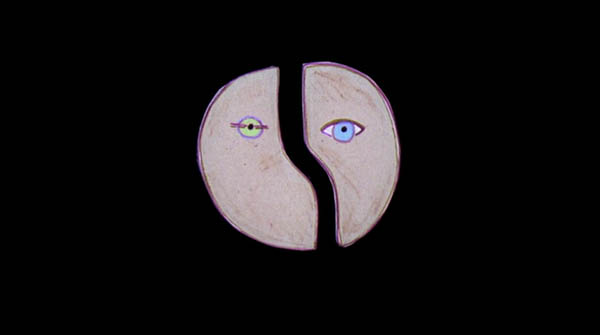
“Storyboards are stupid, stupid things.” – Béla Tarr

37 shots (not counting credits) in 145 minutes, so average 4-minute shots, with all but a handful of scenes contained within a single shot. Camera usually in slow, gliding motion. Stark b/w photography.

Same editor as Tarr’s previous films (Tarr’s wife, now also credited as co-director), same composer and same author of the source novel. Similar in look and feel to Satantango for sure, which means it’s long and slow in a beautiful and captivating way. I never get bored watching these movies, and I don’t even have a theory for why that is… they ought to be boring as all hell, especially Satantango, but I’d gladly watch each one again.

From reading the credits you’d think it’s a grand communal project, not a film by one clear artistic voice. IMDB credits six people for cinematography, unbelievable, including a Kansas native (an acclaimed indie filmmaker), a French steadicam operator who worked on Amelie and The Science of Sleep, and unsurprisingly the guy who is sole credited cinematographer for Satantango and Damnation. Must read source novel sometime, “The Melancholy of Resistance” by Laszlo Krasznahorkai.

Opens in a bar at closing time, Janos Valuska positioning the other bar patrons into a model of the solar system, the camera spinning and rotating around them.

image

Janos walks to uncle Gyuri’s house (how does Tarr manage to make walking scenes the highlights of his films?) to put him to bed. Stops outside to watch a massive truck slowly roll into town, carrying an exhibition with a giant stuffed whale, various curiosities in jars, and “the prince”, a mysterious dwarf.

Next morning, townspeople are all alarmed, talking doom and destruction. Janos delivers some papers, goes back to his composer uncle Gyuri’s house and listens to Gyuri give a strange music-conspiracy speech.

image

Walks through the town square where groups of people are gathered whispering rumors amonst themselves. Thinking himself less naive and superstitious than the rest, Janos pays his 100 forints (about 50 cents) and tours the trailer. Walks home, sees uncle Lajos, must be tired by now cuz I can’t figure when Janos sleeps… but no time for rest, because his aunt Tunde (Gyuri’s estranged wife) comes with threatening news.

If Janos doesn’t get Gyuri to help her efforts gathering a town decency committee (presumably to eject the whale exhibition), she will move back into Gyuri’s house and make his life hell. So Gyuri and Janos get right on that.

image

They get some lunch, carry on, finally part and Janos goes back to the square, where he is accosted by the ever-more-restless townpeople gathered there. I’m starting to wonder if all of these are townspeople, or if some are outsiders drawn by the exhibition (which nobody but Janos is ever seen entering). Janos visits aunt Tunde to report, but she is with a raving police chief and Janos is sent to put the chief’s rowdy kids to bed. Okay, by now Janos has got to be tired, but he walks back to the square (sees uncle Lajos on the way) and sneaks into the trailer, hearing the trailer guy talking with the Prince (seen only in shadow) raving about chaos and destruction. Janos escapes and runs, hearing explosions in the distance behind him, presumably caused by the Prince’s riot-provoking megalomaniacal speech to the crowd.

Janos hides while the townsfolk smash up the trailer (off-camera) and tear up a hospital for some reason, terrorizing the people within including a very sad naked old man. Aftermath of that, everyone files slowly out of the hospital, Janos walks around and discovers uncle Lajos dead, and army men interview Tunde.

image

Back home, Janos sees aunt Harrer looking for her husband Lajos. She tells Janos that the army men are looking for him and he should flee town. He does so, running along the train rails until a helicopter catches him.

image

Gyuri is visiting Janos in a hospital. Is Janos mad? “Nothing counts. Nothing counts at all.” Gyuri leaves, walks through the square, examines the eye of the whale laid out on the destroyed trailer in the middle of town.

Main actor (Janos) is german Lars Rudolph (The Princess and the Warrior). His uncle Gyuri Harrer is Peter Fitz (Au revoir, les enfants) and aunt Tunde is Hanna Schygulla (star of Marriage of Maria Braun and other Fassbinders). Guy who played Petrina (Irimiás’s sidekick) in Satantango shows up as a hotel porter, and Janos’s neighboring aunt and uncle (I’m unclear whether these people are all actual aunts and uncles) played Halics and Mrs. Kráner in Satantango. I recognized Mrs. Schmidt in a scene as well.

Visual themes of space, shadows, enormity, eclipses, light disappearing.

MovieMartyr: “The film’s title gains meaning when János overhears his uncle György, a cooped-up music theorist, talk about tonal scales. He explains that the Werckmeister scale, upon which the musical octave is based, is a false construct, and is not true to natural sound since it cannot convey the full range possible in nature. He elaborates, stating that since all music is based on this faulty foundation, it is all inherently false. With his description of these musical concepts, György seems to tap into the film’s undercurrents. Certainly, the defective musical scale is roughly analogous to the broken political state of the country that the film is set in. His suggestion that all music is unnatural seems to set up a competition between the natural and unnatural (light and dark) that runs throughout the work. That he’s driven his wife Tünde out of his house with his obsession toward his out of tune piano doesn’t bother him in the least.”

Scope: “The climactic storming of the hospital, and the formation of the mob, is given more significance in the film than the novel. And although such an alteration suggests that Tarr intends Werckmeister Harmonies to be read as an allegory of fascist violence, the film does not offer any specific political causes for the violence. Rather, Tarr situates the violence as a function of modernity and industrialization, and, more abstractly, as having a cosmological basis.”

Sight & Sound: “The one truly identifiable centre of malevolence is Tünde, a reactionary opportunist exploiting superstition to gain power in the name of order. It may even be that her musicologist ex-husband Eszter, obsessed with the theories of 17th-century German composer Werckmeister, has himself contributed to disturbing the harmonic order of things by withdrawing from any active involvement; at the very least he is a representative of an enfeebled intelligentsia, vainly fiddling with abstractions while the world burns.” … “In the end the defeated thinker Eszter finally visits the whale, now beached and exposed in the wrecked square and more inscrutable than ever. It’s hard to imagine a more downbeat ending the complete triumph of entropy and reaction yet this conclusion derives a profound grace from the extremity of its pessimism. Explaining the cosmos to his drunks, Valuska pleads, “All I ask is that you step with me into the bottomlessness”, and that is essentially Tarr’s invitation to the viewer. The enigmatic harmonic preoccupations alluded to in the title suggest that this film rich in movement, low on dialogue aspires, as the old phrase has it, to the condition of music. But Tarr’s true achievement is to attain the condition of silence, and of bottomless, awesomely inscrutable nightmare.”

Online articles mention 39 shots, so one of us has mis-counted.

Béla Tarr: “We never use the script. We just write it for the foundations and the producers and we use it when looking for the money. The pre-production is a very simple thing. It takes always a minimum of one year. We spend a year looking all around and we see everything. We have a story but I think the story is only a little part of the whole movie. I have to tell you I absolutely hate the movies that I can watch at the theatres. They are like comics. They always tell the same stories. We don’t like these stories because for us every story is always the same old story from the Old Testament. After the Old Testament we have no new stories.”

Interviewer: “I just think there is a trend in world cinema towards this sort of existential terror and chaos.” Tarr, being awesomely elusive: “No, I just wanted to make a movie about this guy who is walking up and down the village and has seen this whale.”

“If you want to make a colour movie, and you go out onto the street, and you want to create the right atmosphere, you must paint the whole street, because every house is red, blue, green and so on. And you have no colours, you just have some colour chaos. For me it’s a kind of naturalism, the colour movie. With black and white you can keep it more stylistic, you can keep more of a distance between the film and reality which is important.”

same 2001 interview: “Do you know Georges Simenon? After the New York Film Festival one American producer called us. He wants to work with us. And he sent us a script which is full of shit and we said no, no, no. And afterwards he had another idea which we also said no to. And finally we proposed to him this short story by Simenon. The title is L’homme De Londres (The Man from London). And now we are working on this project. The script is ready. And this American producer founded this European company in Denmark and he moved from New York to Copenhagen. And we will start this project now which I hope we can complete.”

“You know the final cut took just half a day!”

May 2024: Watched the new restoration and read the novel… slowly. Fortunately there are only a few characters, with verbose tangles of thoughts, so it’s hard to find a paragraph break to put the book down but easy to pick up later. As always, Lasz-Krasz’s books in English seem like impossible feats of translation. The book has multiple perspectives including dim postman Valuska, while the movie entirely follows Valuska, who seems less dim. A different person dies in the riot (V’s mom in the book, Mr. Harrer here). The movie’s advantages include gorgeous photography and music, a compelling Valuska performance, and his unknown fate at the end. Replaced some screenshots above – more:

All those people smiling on the cover of the DVD tricked us into expecting a romantic comedy, not these wintry intertwined tales of sad, lonely Parisians.

Relationships: Thierry and Charlotte are real-estate agents. Thierry lives with his younger sister Gaelle. Gaelle is dating men from the internet and meets Dan. Dan is breaking up with his girlfriend Nicole. Nicole is looking for a new apartment with the help of Thierry. Dan hangs out a a hotel bar tended by Lionel. And Lionel’s elderly father (offscreen Arthur) is looked after part-time by Charlotte.

Difficulties: Charlotte, very religious, secretly likes to tape herself dancing in naughty lingerie. Thierry sees one of the tapes and becomes attracted to Charlotte. Gaelle catches her brother watching the tape and gets angry. Nicole is frustrated with Thierry and can’t find an apartment. Charlotte and Lionel don’t know what to do with Lionel’s horrible father. Aaaand Gaelle sees Dan talking with Nicole and runs off.

Written by the same playwright who did Smoking/No Smoking, Private Fears etc was the original title and Resnais changed the film’s title to Coeurs. Easy enough to see why. He shoots one careful scene at a time (no cross-cutting), softly falling snow behind every window and over every scene transition, every once in a while a sudden zoom (signifying what?). Soft and incomplete boundaries between people, beginning with a bedroom split in half by a wall (so the two “rooms” share a window), then Lionel’s bar, his father in the other room with the door always open, a curtain of beads, a glass wall between the real-estate agents’ desks. Gaelle’s failure to connect with Dan helps her reconcile with her brother. Charlotte’s aching hidden desire to express herself frustrates Thierry but helps free Lionel. The actors are all super, and their characters are affecting, building up to a snowing-indoors finale.

Music by Mark Snow (X-Files!) and shot by Assayas fave Eric Gautier, who also did Gabrielle and Into the Wild.

Nicole – Laura Morante of The Son’s Room
image

Dan (left) – Lambert Wilson, the english guy from Not On The Lips
image

Charlotte – Sabine Azéma, star of Melo, Not On The Lips, Same Old Song and Smoking
image

Gaëlle – Isabelle Carré of various films I’ve never heard of
image

Lionel – Pierre Arditi of Melo, Smoking, Same Old Song
image

Thierry – André Dussollier, Audrey’s lawyer? uncle? in A Very Long Engagement and in Same Old Song, Melo and Rohmer’s Perceval le Gallois
image

Arthur (offscreen) – Claude Rich of Stavisky

Dave Kehr:
“At first, Resnais’s mise-en-scene seems stiff and broadly theatrical, emphasizing the divisions within the decor and between the characters; then, the camera becomes more mobile, rising above walls and partitions, as the characters seem to break out of their established orbits and begin colliding with each other. The playing becomes more naturalistic, the lighting more gentle, and the geometry of the compositions less harsh as seemingly appropriate couples begin to form.” … “At 84, the eternally elegant, emotionally reserved Resnais seems to be allowing the mask to slip a bit: this is the quietly devastating testament of a deeply lonely man.”

Keith Ulrich in Slant:
“There’s more than a whiff of contempt in the way Ayckbourn conceives his seven upper-class characters, all of whom circle in and out of each others’ lives with contrived dramaturgical abandon, but Resnais’s inquiry into their tragicomic malaise is genuine, at best enraptured.”

Jonathan Rosenbaum:
“It’s an archetypal and at points almost insufferably clever piece of boulevard theater — the sort of thing Resnais has been producing periodically ever since he adapted the French play Melo in 1986 and began mining his childhood playgoing experiences. At the same time, it’s a lyrical lament that doubles as a comprehensive retrospective of his career. The characters, invested with an almost tragic tenderness, are by and large played by actors Resnais has been using for two decades. When Dan and Gaëlle trade confidences in the hotel bar, we could almost be back in Hiroshima Mon Amour (1959), just as a camera movement exploring part of a flat summons up Last Year at Marienbad (1961) and a montage of domestic objects returns us to Muriel (1963). All three of these films, to some degree, are about private fears in public places, a theme that’s come up again and again in his work.”

and
“The film’s constant snowfall, not at all indicative of typical Paris weather, is a personal invention with no counterpart in the play. (Another is the 19th-century portraits and landscape paintings, by Turner and others, that crop up in some of the flats, pointing toward the characters’ unacknowledged Victorianism.) This magical heavy snow, viewed through windows and used in transitions bridging the film’s 54 short scenes, is as laden with metaphorical nuance as the snow in Citizen Kane and The Magnificent Ambersons. It’s so central to the overall mood and visual texture that when we suddenly see it falling inside a kitchen during a climactic scene, shortly before the camera starts to encircle two characters, the moment’s emotional logic is perfectly pitched. Fundamentally, Resnais has always been an expressionist, using his settings and compositions to evoke the inner states of his characters. Here, tying expressionism to social critique, he becomes an improbable but unmistakable blood brother of Carl Dreyer, turning material written by others into a highly personal testament that burns its way into our souls.”

Don’t know why I’m frustrated by this, but the movie seems VERY Kiyoshi Kurosawa in themes, plot, pacing and look. It’s nice to see auteurist consistency, but Kurosawa’s not injecting his personality subtly into a studio picture, he’s writing all his own films, so maybe he could stick these themes somewhere else than another supernatural detective story. Those complaints aside, going through the screenshots I was struck again by what a nice looking movie it is… probably superior to the rest of the now decaying J-horror genre, which is again why I wish he’d break out of that genre for good instead of coming back to ghost stories after showing his depth with Bright Future and Charisma. Although, maybe Kurosawa was requested to write this kind of picture by his producers, who have done a whole ton of J-Horror, including the Ring and Grudge series, Reincarnation and Cross Fire… yeah, I’ll go with that.

image

Kurosawa fave Kôji Yakusho plays Noboru, an unremarkable detective with a cute girlfriend he sees off and on. A murder is committed, a woman in a red dress drowned in salt water, and the clues point to Noboru. His partner Miyagi suspects him and he begins to suspect himself, but soon there are two other murders to distract them. A high-school kid and an office worker are also found drowned in salt water, but Noboru, playing on a ghostly intuition, quickly finds the murderers: the boy’s father Dr. Takagi, upset at the boy’s out of control behavior, and the man’s secretary with whom he was cheating on his wife.

image

The two (three?) are unlikely people to be murderers, but they are all apparently driven to kill by the ghost of the red dress lady, who has been haunting our detective. I think she was either a former inmate at a black asylum on the river or a passer-by who got lost there. The ferry used to pass that building a decade ago, and our hero would see her in the window. The killings are her revenge for being ignored and left behind. “I died, so everyone else should die too”. She’s the collective conscience of the ferry riders, or the guilt of a civilization.

image

I’m not sure if our detective killed the woman in red, but he is revealed to have killed his girlfriend. In the end, he alternates between seeing her (ghost) and being able to hold her, and seeing her dead decayed body on the floor, drowned in a pan of salt water. He goes to the black building and confronts the woman in red, who is grateful to be recognized, but carries on her quest to drown everyone in salt water. The final scene is our man wandering the empty city streets, once again (as in Pulse) the survivor of a ghostly apocalypse brought on by loneliness and neglect (and revenge [let’s not forget the title of the film], another of Kurosawa’s very favorite topics).

image

Kurosawa reveals the ghost in different ways. Sometimes the detective is haunted in his dark apartment (the usual way to be haunted by a ghost), but sometimes he sees her in broad daylight, disturbingly composited into the shot to give her an otherworldly appearance, and sometimes (as in a great long-shot interrogation scene with Dr. Takagi) she’s in the room with a group of people, but only visible to one (and not to the audience).

image

The movie is not too scary as horror (just a few jumpy moments), and it’s only okay as a detective story or a parable about society, but Kurosawa brings his usual mastery to the plotting and camera work, making it the most worthwhile movie I watched this week anyway. It’s not nearly as complicated / incomprehensible as reviews seem to indicate… jeez, are these people playing video games during the movie that they can’t ever follow a story, or am I some sort of narrative expert that I can? The movie portrays Tokyo as a crumbling metropolis besieged by earthquakes, and scenes are set in decayed abandoned buildings and over landfills.

H. Stewart at Film School Rejects writes:

Retribution’s greatest defiance of horror convention is that despite the identical M.O.s of the murders, there is no serial killer afoot, as the police suspect; Kurosawa’s cultural commentary, vaguely similar to that found in Mario Bava’s Bay of Blood, hints that the sorry state of our global society is not the result of one bad individual, one rampaging murderer of the Michael Meyers variety, but as a result of all of our combined actions; nearly everyone in the film is a killer, implying that we are all collectively culpable, not only for the things we do but for the things we don’t do that nevertheless manage to have a pernicious effect on others, even though we might not be conscious of it. … Retribution, coming in the era of the Iraq War, serves to show the devastating result of an unquenchable need for vengeance, and how we’re all responsible.

Our guy and his partner:
image

Interestingly, the working title for Rob Zombie’s new remake was Halloween: Retribution, so I just saw two movies in a row named Retribution.

The cinematographer previously worked on K. Kurosawa’s Loft as well as Fatherfucker and Splatter: Naked Blood. Dr. Takagi starred in Princess Raccoon and Kurosawa’s Bright Future. The woman in red starred in Parasite Eve. Detective Toru Miyaji (above, right) was the horse-riding Baron in Letters From Iwo Jima and starred in the first of the 90’s Gamera movies. Harue starred in Udon, which I just missed at Emory last week. Kôji Yakusho (our star Noboru) starred in Cure, Charisma, Doppelganger, Seance, Eureka, The Eel, Shall We Dance, Babel, Memoirs of a Geisha, and appears at the end of Pulse.

One article on this film refers to Loft as a “ghost story/mummy film”. Can’t wait.

Second half of shorts listing from Cannes 60th anniv. celebration (first half is here):

It’s A Dream by Tsai Ming-liang
image

Occupations by a hatchet-wielding Lars Von Trier
image

The Gift, more weirdness by Raoul Ruiz
image

The Cinema Around The Corner, happy reminiscing by Claude Lelouch
image

First Kiss, pretty but obvious, by Gus Van Sant.
image

Cinema Erotique, a funny gag by Roman Polanksi with one of Jean-Pierre Jeunet’s large-faced actors.
image

No Translation Needed, almost too bizarre to be considered self-indulgent, first Michael Cimino movie since 1996.
image

At the Suicide of the Last Jew in the World in the Last Cinema in the World by and starring David Cronenberg, one of his funniest and most disturbing movies.
image

I Travelled 9,000 km To Give It To You by Wong Kar-Wai.
image

Where Is My Romeo? – Abbas Kiarostami films women crying at a movie.
image

The Last Dating Show, funny joke on dating and racial tension by Bille August.
image

Awkward featuring Elia Suleiman as himself.
image

Sole Meeting, another gag, by Manoel de Oliveira and starring Michel Piccoli (left) and MdO fave Duarte de Almeida (right).
image

8,944 km From Cannes, a very pleasurable musical gag by Walter Salles.
image

War In Peace, either perverse or tragic, I don’t know which, by Wim Wenders.
image

Zhanxiou Village, supreme childhood pleasure by Chen Kaige.
image

Happy Ending, ironically funny ending by Ken Loach.
image

Epilogue is an excerpt from a Rene Clair film.
image

Not included in the DVD version was World Cinema by Joel & Ethan Coen and reportedly a second Walter Salles segment.

Not included in the program at all was Absurda by David Lynch (reportedly he submitted too late, so his short was shown separately). I saw a download copy… some digital business with crazed sound effects and giant scissors.

A program of shorts that played at the 2007 Cannes Film Festival to mark its 60th anniversary. Pretty terrific bunch of 3-5 minute shorts by possibly the best group of directors ever assembled… worth watching more than once. Each is about the cinema in some way or another, with a few recurring themes (blind people and darkness, flashbacks and personal stories). Katy watched/liked it too!

First half of shorts (second half is here):

Open-Air Cinema by Raymond Depardon
image

One Fine Day by Takeshi Kitano, continuing his self-referential streak.
image

Three Minutes by Theo Angelopolous is a Marcello Mastroianni tribute starring the great Jeanne Moreau.
image

In The Dark by Andrei Konchalovsky
image

Diary of a Moviegoer by Nanni Moretti
image

The Electric Princess Picture House by Hou Hsiao-hsien
image

Darkness by the bros. Dardenne
image

Anna by Alejandro González Iñárritu
image

Movie Night, the first of two gorgeously-shot outdoor movie starring chinese children, by Zhang Yimou.
image

Dibbouk de Haifa, annoying business by Amos Gitai.
image

The Lady Bug by Jane Campion.
image

Artaud Double Bill by Atom Egoyan.
image

The Foundry, comic greatness by Aki Kaurismäki.
image

Recrudescence, stolen cell-phone bit by Olivier Assayas.
image

47 Years Later very self-indulgent by Youssef Chahine.
image

From the director of Kinky Boots and a whole lotta tasteful literary adaptations comes this tasteful literary adaptation.

Katy liked it. I didn’t mind it because I was floating on having just seen Sunshine.

Jane Austen = Anne Hathaway (whom I half-saw when I half-watched half of The Devil Wears Prada).
Mrs. Austen = Julie Walters (mrs. weasley in Harry Potter)
Mr. Austen – James Cromwell (of I Robot and Star Trek First Contact)
Love Interest = James McAvoy (boring dude in Last King of Scotland)
His Uncle = Ian Richardson (Mr. Book in Dark City, Mr. Warrenn in Brazil)
False Love Interest = Laurence Fox (Gosford Park)
His Mom = Maggie Smith (Gosford Park, Harry Potter)

Loved this. The music was perfect. As things start to fall apart on the spaceship, the image gets more strange, with some almost avant-garde shots throughout the second half.

Spaceship behind giant solar shield is heading for dying sun to launch a bomb that may reignite it. On the way, they board the previous ship that was sent out on same mission, now inhabited by a dark force. Shades of Event Horizon follow, with a heaven thing going instead of Event‘s hell thing.

Each crew member gets enough personality to be easily distinguished a half hour in (and I was hardly trying to keep up), so that instead of wasting time in the second half trying to remember who’s who, we can focus on action blasting through space. Your standard kinda Aliens / The Abyss sci-fi action structure then, but with images that do not seem to belong in a big-budget movie. The camera can’t seem to SEE the Icarus 1 captain – he’s always out of focus or hidden by sunlight, even when another character should be able to see him clearly. I just enjoyed the hell out of that idea, and probably appreciate the movie more than I should because I’ve latched onto it. But there’s no shame in loving a particularly well-made sci-fi thriller. This one will be my War of the Worlds or Minority Report for 2007.

Who were those people: Cillian Murphy is in an upcoming film noir comedy. Michelle Yeoh was in Crouching Tiger. Rose Byrne was the girl in 28 Weeks Later and Kirsten’s friend in Marie Antoinette. The tan guy was in The Fountain and Die Hard 4. The captain played the lead in Twilight Samurai and was in The Promise and Ring. Suicide guy was in Code 46 and Tristram Shandy. The replacement captain was Human Torch in Fantastic Four. The guy who doesn’t make it back from Icarus 1 played Tom Hayden in Steal This Movie. And best of all, the captain from Icarus 1 (which lost contact seven years ago) was in 1999’s Sunshine (just over seven years ago) starring Ralph Fiennes in the Cillian Murphy role.

Kelly’s follow-up Southland Tales starring The Rock and Buffy is finally getting released later this year, or so I’ve heard.

Forgot how GOOD this movie is. Somehow I’d chalked it up as a sentimental underdog fave, but I still really like it.

Donnie’s dad will be in Southland Tales, and we caught him last night in Bring It On.
Donnie’s mom plays the president of Battlestar Galactica.
Samantha Darko is Lilo in Lilo & Stitch and a regular in Katy’s Big Love.
Bunny Suit Frank was in every “cool” teen movie in the 90’s.
Donnie’s teacher is in Southland Tales, No Country For Old Men, and Little Miss Sunshine (as a pageant official).
Recording artist Jena Malone will be in Into The Wild and The Ruins.
Seth Rogen of Knocked Up was apparently in there somewhere.
Donnie’s psychiatrist had starring roles in Butch Cassidy/Sundance Kid, The Graduate, The Final Countdown and Stepford Wives.

image

image

image

image

Watched again, this time on film, and confirmed that it’s one of the greatest movies I’ve seen this year. Fiery badass political in a more artful way than Michael Moore could ever dream, the culmination of Sissako’s filmmaking styles from Waiting For Happiness and Life On Earth merged with a long, deep-seated desire for change. Too bad it’s almost impossible to recommend as good art and entertainment to people not already interested in African cinema… they’ll never believe me. Jimmy liked it too!