A happy movie full of good smiling people, including J-Lo, Up in the Air‘s Anna Kendrick and The State‘s Thomas Lennon. Based on a self-help book, which AV Club points out makes it a similar adaptation to Fast Food Nation, building stories from a non-fiction book to convey its general idea. Mostly I looked past the actors and focused on the Atlanta locations (lots of Piedmont Park, the Woodruff Arts center, someplace on/near Highland, and a whole scene at Smith’s Olde Bar). Katy says it makes adoption seem preferable.

At least it was written by women, even if it was directed, produced, shot, edited, scored and designed by men – bland men, if you ask me. One of the writers did Whip It, the other the Jamie Lee Curtis Freaky Friday.

This is the fifth post-’68 Godard movie to put me to sleep, after Letter to Jane, Histoire(s) du Cinema (in installments), In Praise of Love and Notre Musique (in a theater). In this case, I was tired and angry at the movie and fell asleep on purpose, to make the movie feel bad about itself (assuming Godard doesn’t take it as a compliment when you sleep through his movies, like Guy Maddin does).

techno-rasta godard:

Tried to watch it without paying heed to the stories surrounding its production, which turn out to be more interesting than the film itself. Godard signed the “contract” on a bar napkin, over a year later got calls from the “producer” asking where’s our film?, JLG read the first few pages of King Lear and got bored with it, hired a bunch of overqualified actors and pissed them off. Writer/actor Norman Mailer walked out after one day, and Godard put this and his voicemails from the producer into the final cut. Something like that, anyway – I can’t be arsed to look it up.

Shakespeare Jr. or whatever:

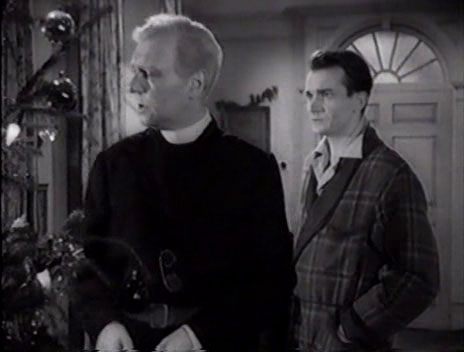
Burgess Meredith (in his follow-up to a Dudley Moore Santa Claus movie) is apparently the King, talking some nonsense with Molly Ringwald (her inexplicable follow-up to Pretty In Pink) in a hotel room. Downstairs in the restaurant, a wiry, spike-haired Peter Sellars (dir of something called The Cabinet of Dr. Ramirez) is real interested in what everyone else is doing. As I drifted awake again later, Godard (with RCA cables wound through his hair and indecipherable English speech) and Woody Allen caught my attention for a few moments each. Might be a nice-looking movie – the DP had shot the last couple of Eric Rohmer movies – but you can’t tell from my VHS copy. And I doubt it, anyway.

Molly:

from Canby’s original NYTimes review: “a late Godardian practical joke . . . as sad and embarrassing as the spectacle of a great, dignified man wearing a fishbowl over his head to get a laugh. . . . After making what is possibly the most lyrical film on language in the history of the cinema (Le Gai Savoir), Mr. Godard has now made the silliest.”

Rosenbaum would disagree: “It may drive you nuts, but it is probably the most inventive and original Godard film since Passion,” and he talks about the complex surround-sound mix, which again, I’m sadly missing on my VHS version.

Typically, JR has put more thought into the film than anyone else, his analysis revealing the film’s fundamental link to the spirit of the play.

Excerpts:

Sellars “introduces himself offscreen as William Shakespeare Jr. the Fifth, and roughly describes his job as restoring what he can of his ancestor’s plays after a massive cultural memory loss was brought about by Chernobyl.”

As the film proceeds . . . we get snatches of Shakespeare’s Lear, snatches of what appears to be Mailer’s Don Learo, and snatches of what appears to be an earlier, unrealized Godard project, The Story, about Jewish gangsters Bugsy Siegel and Meyer Lansky in Las Vegas. (Three Journeys Into King Lear, as one printed title puts it. But does “King Lear” in this case refer to the play, the character, or the Cannon Films project?)

For Godard, it’s a legitimate source of pride that he won’t film anything to illustrate a scriptwriter’s point or provide continuity; his disdain for ordinary filmmaking practice becomes a creative challenge, and, in terms of his limited capacities for story telling, a calculated risk. . . . This originality often seems to be driven by hatred and anger, emotions that are undervalued in more cowardly periods such as the present, just as they were probably overvalued 20 years ago. It is a source of energy that remains crucial to much of the avant-garde.

Okane (Ayako Wakao, star of Red Angel) comes from a poor family, is the young bride of a gross old man. So she poisons him to death, claims her inheritance and returns to her mother’s village, where the people completely ostracize her. When her mother dies from illness, Okane agrees to watch her retarded cousin Heisuke, and they live in their rich, lonely house.

When golden boy Seisaku (Takahiro Tamura, murdered husband in Empire of Passion) returns to the village, he gets the opposite reaction – constant praise and a parade in his honor. He takes to ringing a bell every morning to awaken the whole town and inspire them to get to work. He enlists people to help with Okane’s mother’s burial, chastising them for being terrible to her. Inevitably the two get together, but brave Seisaku returns to war, and everyone goes back to being shitty towards Okane for the next six months.

Okane, hated:

Seisaku, loved:

Seisaku returns wounded, and as full of honor as ever, promising next time he’ll die for his country. The two are unofficially married, sleeping together but nobody in town (and certainly not Seisaku’s family) takes her seriously. He’s all she has, and life is horrible without him, so she pokes out his eyes with a giant nail as he prepares to leave again.

Okane with Heisuke:

Okane with nail:

She’s sentenced to two years, and since Japan doesn’t understand logic, the whole town hates Seisaku for dishonorably failing to return to war, figuring he was in on the plot with his wife – a woman none of them ever trusted. During that time, he understands how it feels to be an outcast, and after Okane returns, they go away together. “Without you I would have stayed a stupid role model soldier.” Good story, but I was sick of the hateful villagers and wished for a Carrie ending: punishment for all.

Written by Kaneto Shindo, who also made the great Onibaba and died a month ago at the age of 100.

It’s been a month since I watched this amnesiac comedy so I’ve forgotten most of it, but IMDB says “Boring businessman recovers from amnesia and discovers he’s really a con man… and loves his soon-to-be-ex wife.” Starring Myrna Loy (with never enough screen time) and William Powell (better at playing amnesia/gangster than he was at playing nuts in Love Crazy).

Besides the love plot, Powell has to keep up appearances in town, running a pottery business and other organizations. It turns into a big swindle with he and his new buddy Frank McHugh (part of Cagney’s company in A Midsummer Night’s Dream) getting the local rich folk to bid against each other for some worthless land on which they’ve planted an oil spill.

I spotted Preston Sturges regular Harry Hayden at the bar in the first scene, then nobody else for the whole rest of the movie, though the children included future Lost Highway creep Robert Blake.

R.R. places a deteriorating family amongst lovely scenery, like a proto-Eclisse or Climates. Ingrid Bergman and husband George Sanders are a bored rich couple in Naples waiting for an inheritance sale to come through – the first time they’ve been alone without friends and distractions since their marriage began eight years prior, and the solitude immediately reveals that they’re not very good together. Bergman is troubled and questioning, the titular voyager, taking meaningful tourist trips, while cruel drunken Sanders fucks off to Capri, hangs with some old acquaintances, tries to hook up with one of them then drives around with a prostitute. Finally back together, the couple admits it’s not working and plans divorce (in between two death scenes – Pompeii then a funeral), but a minute later they’re separated in the streets and run back into each other’s arms. This seems like an unhappy ending to me, but I’m not Italian so I wouldn’t know.

We visit Pompeii and unearth dead lovers, while Vesuvius lurks in the background, where I imagine Bergman’s clone is running from her husband Stromboli-style. Much mention from the locals about Bergman’s uncle Homer, late owner of the inherited property, how loved and respected he was. Our modern couple couldn’t seem to care less about love and respect, these small-town people and their concerns and customs.

Bergman is led around the area by Leslie Daniels, later of The Brain That Wouldn’t Die while Sanders hits on Maria Mauban, later of a Chabrol movie called Code Name: Tiger. Sanders had recently won an oscar as the gossip columnist narrator in All About Eve, and had as little respect for this film as his character had for his own circumstances, saying “the story of the film was never understood at any time by anyone, least of all the audience when the picture was released.” Ross nicked DP Enzo Serafin from the last few Antonioni films and had long stretches with no music, but it was brother Renzo’s most pleasant whenever it arrived. I liked it much more than Stromboli, not as much as Europa 51. For all R.R.’s supposed realism, I’ve been lately feeling that his movies’ endings ring false.

DVD commentarian Laura Mulvey calls it the last of the three “major” Rossellini/Bergman films, and the last of their marriage, “a story of social contrast and cultural shock,” and says that Renzo uses Neapolitan folk songs in his score. I can’t believe I didn’t catch this: the couple’s last name is Joyce, and Bergman tells a story of an admirer from her youth similar to the climax of James Joyce’s The Dead.

Set up to be a doc of house-arrested filmmaker Panahi by his documentarian friend Mojtaba Mirtahmasb, with Panahi explaining and roughly staging the next film he would have made if the authorities had let him (coincidentally[?] to be filmed inside a house, concerning a girl who is not allowed to leave). But Panahi cuts off the play-acting and gets philosophical, showing scenes from his work and telling us that if films could be explained, they wouldn’t have to be made. He then takes over the not-film, finally picking up the camera, following a maintenance man outside to a small-scale replay of Offside‘s finale. Throughout, there are definite signs that either this movie was much more cleverly planned than it’s meant to appear, or that Panahi’s life is full of happy coincidences and unplanned art. Either way, I’d been afraid that this would be a movie solely acclaimed because of its subversion, its very existence as political protest, which would’ve been enough, but was delighted than the entire work justifies its Cannes-acclaimed reputation.

Panahi’s daughter’s pet iguana provides the special effects, an unseen neighbor who needs a dog-sitter so she can participate in the celebratory new-year fireworks provides humor, and Jafar’s phone conversations with his attorney provide context on the project.

Panahi attempts to use the internet inside Iran. “Wherever you go, it’s blocked. Most websites are filtered. The rest don’t say anything.”

Mirtahmasb: “Take a shot of me, so in case I’m arrested there will be some images left.”

Panahi’s next film was going to be made with Mohammad Rasoulof, who now suffers the same political fate as Panahi and filmed his own response while out on appeal, Goodbye, which hasn’t made it to video yet.

M. Peranson in Cinema Scope:

Of special note… is Panahi’s bootleg DVD collection, which features the Ryan Reynolds-in-a-coffin film Buried facing us, clearly placed there to make a point.

The work feels completely effortless but my money says it’s an elaborate sound and image construction: though it claims to be a day in the life of Panahi, Mirtahmasb explained in interviews that the film was shot over four days.

I got this confused with Naruse’s later film entitled Late Chrysanthemums, so I watched his When a Woman Ascends the Stairs to get an idea of Naruse’s style and point of view before watching his Chrysanthemum movie. Unfortunately, I learned that I enjoy Naruse’s movies more than Mizoguchi’s. Still, it’s the earliest Mizoguchi movie I’ve seen by over a decade, and I figured perhaps he hadn’t fully developed his theme of depressed women, fucked over by life, dying sad and alone. The premise had promise, but sure enough, halfway through, the main couple is coughing, crying, broke in the rain. The man recovers, becomes famous, but there’s no saving the woman.

Kikunosuke (Kiku) is the rich, spoiled son of a master actor, who keeps fucking up on stage. Not knowing a bloody thing about Japanese theater, I can’t tell the difference between a good and bad performance (any more than I could figure why The Puppetmaster was considered a master) so I took the movie’s word for it. He falls for Otoku the maid because she’s the first person to tell him outright that his performances are bad.

Kiku leaves town for a year, then comes back for Otoku and she faithfully follows him to a travelling troupe where he gradually improves. Poverty kinda turns him into an asshole, but he’s still devoted to his woman – to a point. When his family takes him back to the respectful theater in Tokyo, they’re easily able to separate the two, and he only returns in time to see her die.

The high-def picture was pretty beat-up looking. Kiku is often tiny in the frame, facing away from the camera, but I can still recognize his Sherlock Holmes hat. Also, at one point there was a monkey.

The Guardian on Mizoguchi:

He was nicknamed “the Demon”, and it was often said that he only made films in order to have enough money to entertain geishas. He was fascinated all his life by demimondaines [“a class of women on the fringes of respectable society supported by wealthy lovers” aka prostitutes], and some critics have suggested there was something suspect about his compassion for the often tragic fate of such women. However, in Late Chrysanthemums he remorselessly shows the selfishness of the actor and the innate snobbery of the kabuki world.

Manual of Arms (1966)

A series of half-in-shadow close-ups of his friends, silent with jittery camera, with black between them. Then four minutes in, the title. After that, another series of the same people in a room with a single light, the camera moving differently for each subject. It seems to love objects, focusing on one person’s mug, another’s fur coat, a knife and cigarette, a can – for another person it’s their hair, or their shadow, or the stage light itself. Lots of cuts to black, sometimes rhythmically but usually not. Some fast cutting and superimpositions. Still the jittery handheld camera, the deep black.

Music played: Steroid Maximus “Gondwanaland” tracks 1-5

Process Red (1966)

Like a more obsessive version of the previous film, focusing on hands holding objects, the color that of photographs on ancient film which have faded to pink, interspersed with b/w shots of quick panning, just blurry movement lines – always moving with hyper editing.

Music played: “Gondwanaland” track 6

Maxwell’s Demon (1968)

“It was a very important film to me because it representing getting several concerns into a very tight and tense structure.” Named after physicist James Clark Maxwell, whose work led to color photography. The film was “an homage to the notion of a creature that deals in pure energy, and to Maxwell, whom I’ve admired.”

Simple b/w shots with still camera of an exercise instructor, intercut with quick segments of pure color, and color-tinted waves that emit a fuzzy sound. Fun, energetic, short.

Music played: “Gondwanaland” track 6

Surface Tension (1968)

Opens and closes with an ocean wave.

Part 1: Man on windowsill starts clock, talks. Time flies, about a minute per two seconds. This continues, as a phone rings constantly on the soundtrack.

HF: “The first part is a comic passage that emphazises the passage of time.”

Part 2: time-lapse of a handheld tour through the city, awesome. A man speaks German on the soundtrack.

HF: “The second part is, if not tragic, at least pathetic in a foot-sore (?) sort of way, and emphasizes passage through space.”

Part 3: a goldfish inside tank with shore waves crashing around. Silent, words appearing on screen, possibly a partial translation of what the German guy was saying? I loved this part.

HF: “The third part proposes to deal with a subject that… disregards both time and space.”

A Lecture (1968)

“Nothing in art is as expendable as the artist.”

Speaking about film as sculpture in light, he shows pure white light on the screen. “Our white rectangle is not nothing at all. In fact, it is, in the end, all we have. That is one of the limits of the art of film… We must devise ways of subtracting, of removing, one thing and another, more or less, from our white rectangle.” I wish narrator Michael Snow would speak a little faster and more naturally. It gets over-long in the second half. “Self-expression was only an issue for a very brief time in history, in the arts or anywhere else, and that time is about over.”

Also on the disc: Carrots and Peas, which I watched a few weeks ago, Zorns Lemma, which I watched at Emory some years ago, and Lemon, which has a great commentary from Frampton on Screening Room in ’77. He speaks of so-called minimalist artists (“a label that they like about as much as I like structural”), trying to get at “what really was at the root necessity of the art… What could you get rid of and still have a painting? The same is true of film.” Film Necessities: “I felt at that time that one of the most important things about film was that we were looking at it with EXPECTATION, we were believing what we saw, there was an ILLUSION, and what we probably were expecting was CHANGE.” Speaking of the difference between film and video, Frampton seems pretty open-minded about it, the idea that his films could be viewed on television. Saying Frampton could have chosen any fruit, Gardner asks the great question: “Are you trying to stay on the acid end of things with this?” Frampton: “When I went to the market to purchase the star of the show, found a lemon that was as breast-like as possible.” HF speaks of the film’s dedicatee, painter Robert Huot, who claims he heard that the word “lemon” appears exactly once, precisely in the middle of the novel Ulysses. Hewitt’s response: “Do you mean to tell me that Joyce could’ve written the word lemon, then written the first word to the right and first word to the left of it, and built it out from the middle?”

Plus twenty minutes of interview excerpts, Frampton himself, not hiding behind Snow and a white frame, speaking straightforwardly about his artistic history and interests.

Almost as good as the other Joss Whedon movie I watched this month. The action scenes are fun, but the movie gets too loud and ‘splosioney at times. Better is the comic bickering between Thor, Iron Man, Sam Jackson, Captain America, Black Widow and Loki. But best of all is watching Hulk smash. For all the perceived failure of the last two Hulk movies, he seems like an excellent character and it is undeniably fun to watch him smash.

Jeremy Renner’s Hawkeye isn’t listed amongst the banterers above because he spends most of the movie as a villain under Loki’s spell, as does a mostly-offscreen Stellan Skarsgard (whose friend Natalie Portman gets quickly explained out of the movie). The extraterrestrial villain who puts Loki up to his mischief doesn’t matter, nor does the additional post-credits sequel-setup extraterrestrial villain. Essential Killing director Jerzy Skolimowski appears as the evil Russian whose ass Black Widow kicks at the beginning. And everyone is sad that Nick Fury’s bland MIB assistant Coulson gets (potentially) killed, but there’s a pretty girl MIB to take his place.