“If you strangle me, don’t stop midway. It’s too painful afterward.”

image

Kichi runs an inn, makes explicit advances on one of his workers. They begin passionate secret, explicit, OH-so-explicit sexual affair. Eventually he leaves his wife, the girl (Sada) and he move in together having continual sex, the sex gets more dangerous and starts involving knives and choking, and finally he lets her strangle him to death.

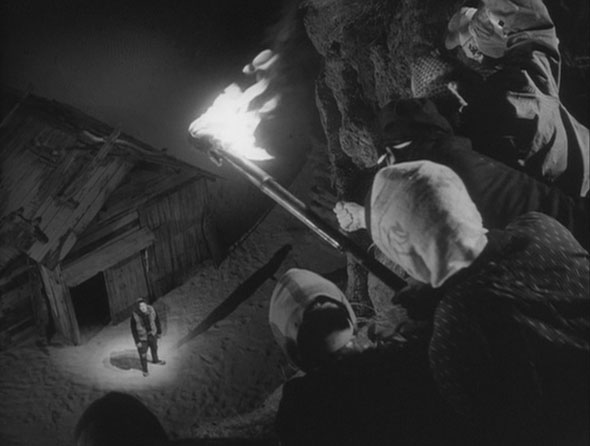
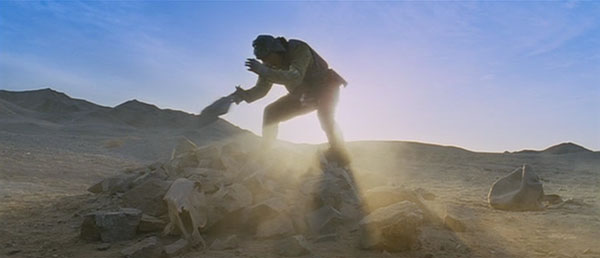
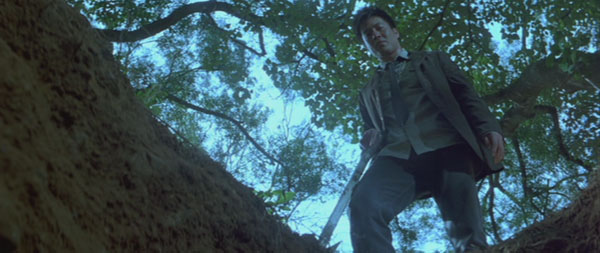
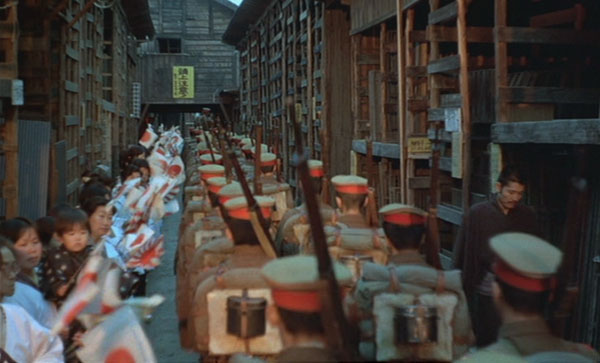
I liked Empire of Passion so I thought I’d like Oshima’s celebrated, scandalous arthouse porno even more, but was surprised not to. It’s got less cinematic flair than Passion, and less of a story too. I hate to say it, but all that sex gets boring after a while. Okay I take it back – there’s interesting stuff in here… some cool high shots (see below), a wildly fucked dream sequence where the woman grabs a naked six-year-old’s penis and won’t let go, a geisha gang rape, and some political business (nationalism on the streets, an army march – this is the year before the bombing of Shanghai) completely ignored by our sheltered protagonists, making me think this is a predecessor to Bertolucci’s The Dreamers.
image

Finally, a ridiculous closing voiceover tells us this happened in 1936 and she was arrested a few days later. I thought this was wedged in by the producers, but in his excellent commentary, Tony Rayns tells us that’s Oshima’s own voice.

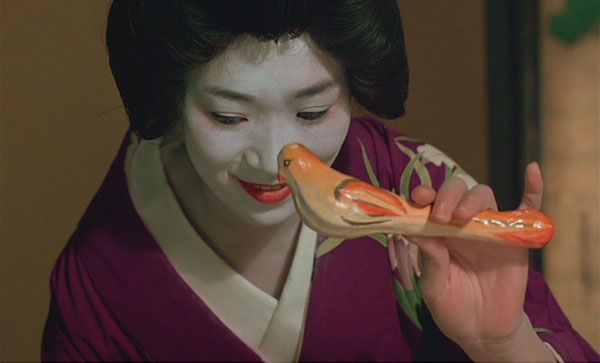
There’s more weirdness involving an egg, pubic hair consumption, fantasies of Sada killing Kichi’s wife, and a quirky dancing man. The girl has a scorpion tattoo on her ear – Tony didn’t tell us the relevance of that, so perhaps it has no relevance, because Tony knows all. The two have a fake marriage ceremony at an inn (not his inn, this is after they’ve run away) which leads to the geisha gang-rape and the quirky dancing man (below). I am already out of things to say… it’s a pretty simple movie for something so controversial.

image

Produced by Wakamatsu Koji (United Red Army), produced and suggested by Anatole Dauman (Hiroshima mon amour, Masculin Féminin, some Walerian Borowczyk features, Fruits of Passion, La Belle captive, Wings of Desire and Marker’s Level Five – wow).

Original title was Empire of the Senses. I assume the Mekons song Empire of the Senseless, with its lyrics about censorship, is referencing that. Oshima’s chosen Japanese title Ai no corrida (translated: Love’s Bullfight) looks to me like Spanish for Hey! No Running.
image

Tony Rayns:
“Oshima sees himself as standing apart from the consensus. For him, anybody who breaks the bounds of convention, anyone who dares to think for him or herself is in some sense an admirable figure,… hence an overall focus, I think, on the figure of the outlaw in many of his films.”

Most of the people in the film are women, including all the voyeurs (and there are many voyeurs). At the very beginning, a woman tries to initiate some lesbian sex with our hero and is rejected outright. Tony tells us these things explicitly delineate Senses from standard porn films.

image

More Tony:
“No two Oshima films look alike – there is no thing as the Oshima style.”

The geishas all falling upon each other as Sada has painful menstrual sex is “not a realistic detail.”
image

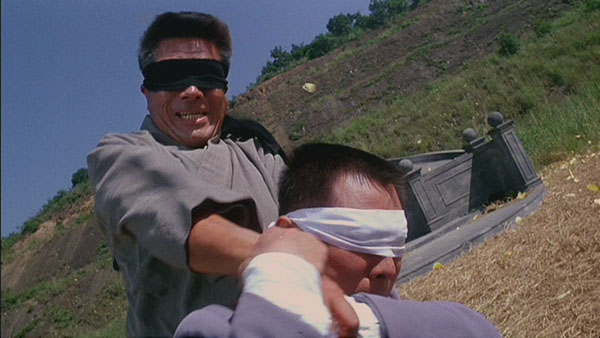
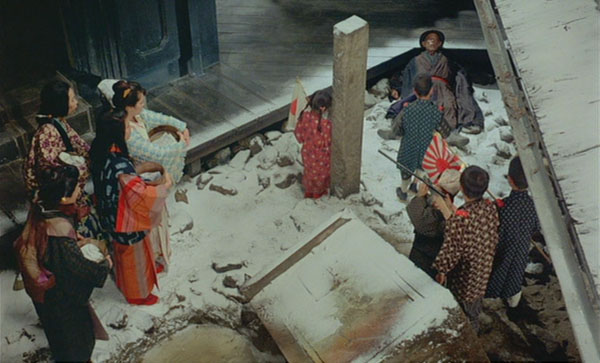
Girl who played Sada appeared the next year in a Kinji Fukasaku film with Sonny Chiba, otherwise not too many acting roles, while Kichi became a fairly successful actor. Typical. Although he was also a known actor before this, while she was just starting out in movies (previously in Terayama Shuji’s theater group). The actor playing an old tramp (glimped in the top screenshot) played the father in Kaneto Shindô’s Naked Island. Oshima didn’t finish his l’amour fou trilogy, and only made three more features and a couple documentaries over the next twenty years.

“Men don’t have to tell women everything.”

I love Jet Li but I think he’s been in about two good movies since the mid-90’s, so thought it was time to rent some of his early good stuff. Thought this was just okay though – an action flick given importance by tying in some historical drama. From the director of King of Beggars, Royal Tramp and The Medallion, but not as goofily comedic as those (and fortunately not as drab and dry as Jet Li’s Fearless either). This could still afford to be more fun, but I think it had a political point which I mostly missed.

image

Jet is Chen Zhen, disciple of a respected Shanghai fighting school gone to Japan to study. This is the mid-30’s and China is occupied by Japan, so when Jet starts the film by kicking the asses of thirty Japanese dudes who belittled his country, you know what direction the movie is going. Turns out his master was killed at home by a new school of rude Japanese guys so Jet returns home (followed belatedly by his Japanese girlfriend; you see Jet is beyond racism and just wants everyone to get along).

So Jet teams up with the master’s son and new clan leader Ting’en (Siu-hou Chin of Twin Warriors and the Mr. Vampire series) and cool-headed elder guy Uncle Nong (Paul Chun of Peking Opera Blues, played a king in Royal Tramp II). They talk peace and strategy, challenge some guys to some fights, and so on.

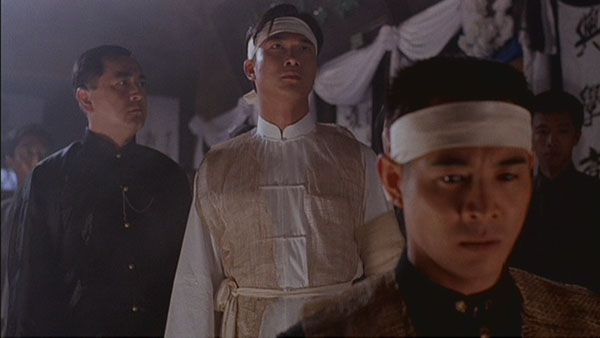
Uncle Nong, Ting’en, Jet:
image

Hmmmm, I’m thinking… okay, Jet kicks the ass of the guy who killed his master and figures out that the school’s chef poisoned the master to make him lose the match. A Japanese general kills the guy who Jet beat and takes control of the other school. Somehow involved is this guy Fumio Funakoshi (Yasuaki Kurata, also of Fist of Hero, Fist of Vengeance, Fists for Revenge and Fist of Unicorn) who challenges Jet to a blind match, which ends in a draw then Fumio respectfully bugs off. The general is not so graceful about losing, pulls a sword forcing Jet to fight back – with his belt! – and kill the guy.

image

There was also some racism business, a thing about a brothel girl who Ting’en hangs out with, a court case, and Jet pulling boxing moves in the middle of his kung-fu fights. At the end, Jet is “executed” by the Japanese, but really he’s secretly shuttled out of town with his girl. Some extremely cheesy parts – if this is better than Fearless, it’s not an awful lot better. Filmmaking seemed pretty standard, with too much editing but some good fight choreography by Yuen Woo-ping, who himself directed a Brigitte Lin movie and a Michelle Yeoh movie the same year. After Black Mask (1996) he’d start bouncing back and forth to Hollywood to help with Matrix sequels and Tarantino flicks.

image

Movie is apparently considered one of the greatest martial arts films ever (I preferred Royal Tramp) and contains references to Bruce Lee’s Fist of Fury.

Two years after The Face of Another and Pitfall, and seven years after I first fell asleep trying to watch it, I finally make it to/through Woman in the Dunes. I know that sentence makes moviewatching seem like a chore, but this was one I’ve been really looking forward to – a movie I knew I would totally love, so it might as well be saved for a special occasion, like staying home from work unable to sleep from painful poison ivy.

image

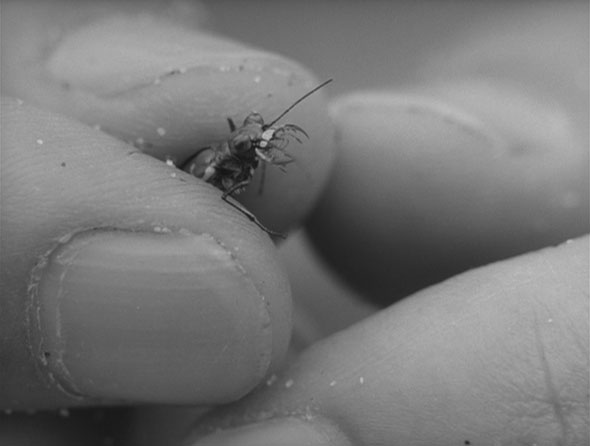
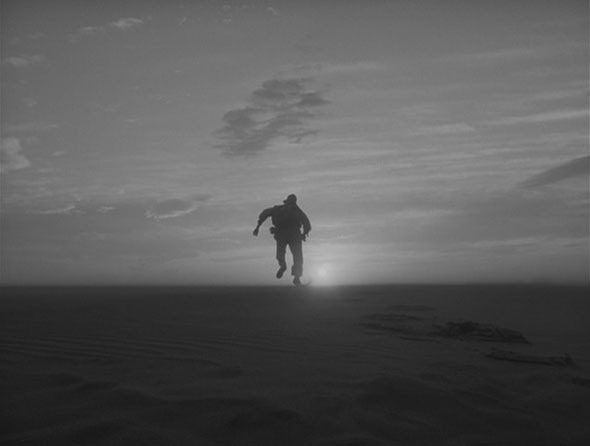
This was made in between the other two, and shares their shining, silvery black-and-white cinematography. An entomologist is allowed to stay at a woman’s house in a sand pit but is not allowed to leave. He rages against his situation, declares the sand illogical, tries to escape through cleverness and trickery, and finally (over months, years) resigns himself to it, living with her and helping to fill buckets with sand to be sold by the villagers for building material.

image

At first he doesn’t trust the woman, then he wants to help her get out, then the villagers gather around the edge of the hole offering him favors if he’ll have sex with her in front of them, and finally they’re an acting married couple, and she’s being lifted out of the hole with pregnancy complications, leaving him a chance to escape which he doesn’t take.

image

Funny enough, the same week I watched this, Criterion put out a Japanese movie from a year earlier called Insect Woman, a title this film could’ve stolen.

image

James Quandt’s essay points out the common theme of breaks in identity from Pitfall and Face of Another – the teacher gives up his life of collecting, identifying and documenting and accepts his captive life in the desert. And hey, Quandt saw the same parallel images of sand-flecked bodies between this and Hiroshima mon amour that I was noticing – good for us.

image

The man, Eiji Okada, is the same actor from Hiroshima mon amour, which is probably why that occurred to me. He later appeared in The Face of Another, Crazed Fruit, Samurai Spy, and in the last year of his life, Stairway to the Distant Past. I’m not sure who the dune woman, Kyôko Kishida, played in Ozu’s An Autumn Afternoon, but she also starred in Manji which I’d like to see.

image

image

I don’t know why I sat down with a Korean spaghetti-western-influenced comic action flick from the director of A Tale of Two Sisters after the disappointment of Miike’s Sukiyaki Western Django, but I’m glad I did. This was a hot pile of fun, more true in spirit to its source material than the Miike but plenty contemporary in its staging of action. Some of the most exciting (fast-cut yet spatially-coherent) editing I’ve seen in a while, certainly better than in Star Trek or Fist of Legend and great characters (the prototype super-cool good guy and super-evil bad guy are here, but the hero is an amoral thief, the comic-relief character) excuse the failure of the story to ever come together.

Action takes place in Manchuria (so truly in “the west” from Korea). Unlike Sukiyaki but like the Leone flicks, there are practically no women. A prostitute here, someone’s aged aunt there, but the wild west is a man’s world. And wild it is – ruthless and brutal, killing hundreds without hesitation, but maybe in reference to the old westerns it avoids lingering on dead bodies or showing grievous wounds, so it’s ultraviolent but more in the Sam Peckinpah body-count manner than in modern Tokyo Gore Police fashion.

image

Kang-ho Song, star of The Host, is our thief, and it’s great to see him playing a more lively soul than the dimwitted Host hero. The “Good” bounty hunter, fastest draw in the west, is secretly out for revenge on the goth-haired bad guy (Byung-hun Lee, star of Chan-wook Park’s segment of Three Extremes and soon to play Storm Shadow in G.I. Joe). A couple older guys and their men are tracking these three, but I never figured out who they are exactly, following after a mythical treasure map in the thief’s possession, and everyone is being followed by the Japanese army (Japan occupied Korea from pre-WWI through WWII). Everybody seems to be in a different underground independence movement, and the map has political ramifications that I didn’t puzzle out.

image

The bad guy dies in the end, as he would have to, in a brutal shootout with the good guy… but not before the movie strangely decides to reveal our comic thief’s past life as a finger-snatching serial killer. So the chase continues in epilogue with the bounty hunter after him. Strange choice, like at the end of For a Few Dollars More suddenly declaring Clint Eastwood is a wanted criminal in another state, Lee Van Cleef chasing him into the sunset with guns blazing.

image

Like any Leone movie it has its slow drawn-out character parts, but the movie seems well aware of what it’s doing with pacing and editing, if not story – and maybe I’ll figure that out when I see it again. Jimmy, we should’ve watched this one instead.

image

Briefly in 2004 I thought I’d like to be a film reviewer. It didn’t work out – I’d just go on and on like I do now, but instead of writing my own thing for my own self, I was aiming to describe why You, The Reader should be interested in each movie. Ugh. I just read through these again, and the only one I enjoyed was this piece on Goodbye Dragon Inn, though it worked better with white text on a black background.


What does Goodbye Dragon Inn want from me?
image

What do I want from Goodbye Dragon Inn?
image

Some reviewer on the IMDB calls it “spectacularly dull… limp… smitten with its own stasis”.
image

Stylus Magazine calls it “yet another masterpiece… starkly minimal… sublime”.
image

Who is right?
image

They are both right.
image

Found in my email archive: my movie lists for 2005. The “most forgettable” category near the bottom was a primary reason for starting this movie journal. I was annoyed that there were movies I’d watched less than a year earlier which I already couldn’t remember having seen. As much as I love making lists, collecting things, completism, I started wondering what’s the point in having watched movies only to immediately forget them.


Best New Movies In Theaters:

1. 2046
2. A History of Violence
3. The New World (150-minute cut)
4. Land of the Dead
5. Sin City
6. Million Dollar Baby
7. Wallace & Gromit: Curse of the Were-Rabbit
8. Munich
9. Kung Fu Hustle
10. Grizzly Man

11. The Devil’s Rejects
12. King Kong
13. 3-Iron
14. The Real Dirt on Farmer John
15. Henri Langlois: Phantom of the Cinematheque
16. Kiss Kiss, Bang Bang
17. Broken Flowers
18. Serenity
19. March of the Penguins
20. Mirrormask

Runners-up: 40-Year-Old Virgin, Howl’s Moving Castle, Three Extremes, Yes


Best Old Movies Seen In Theaters:

1. Phantom India (Louis Malle, 7-part documentary on video at Emory)
2. Yumeji (rare seijun suzuki, beautiful color, on film at Emory)
3. Charisma (kiyoshi kurosawa, film at Emory)
4. The Freshman (part of the damaged Harold Lloyd retrospective, hilarious)
5. Mother Joan of the Angels (film at Emory)
6. Out of the Past (film at Emory
7. Kenneth Anger Series (at Eyedrum, his newest one and three classics)
8. Elevator to the Gallows (Louis Malle, amazing B&W photography)
9. The Conformist (Bertolucci, only Italian movie I enjoyed all year?)
10. His Girl Friday (Nashville Film Festival)


Top 25 Movies Seen On Video (for the first time):

1. The Compleat Tex Avery (67 cartoon shorts on laserdisc)
2. The Big Red One: Reconstruction (samuel fuller)
3. The Miracle of Morgan’s Creek
4. Spalding Gray: Terrors of Pleasure / Monster in a Box
5. Fixed Bayonets (samuel fuller)
6. The Same River Twice
7. The Man Who Fell To Earth
8. The House is Black
9. House of Bamboo (samuel fuller)
10. Not on the Lips

11. New Rose Hotel
12. The Red Shoes
13. Drowning by Numbers
14. The Kid (charlie chaplin)
15. I Am Cuba
16. Day of Wrath
17. Naked (1993)
18. Straw Dogs
19. The Village (m. night)
20. Nazarin (bunuel)

21. Tropical Malady
22. Prospero’s Books
23. Closer (2004)
24. Rivers and Tides
25. Bird


Most Forgettable Movies of 2005:
(maybe it’s not the movie’s fault, but I barely remember watching these)

1. Exorcist: The Beginning
2. Crossfire
3. Unknown Pleasures
4. Chronicles of Riddick
5. Live Flesh


Worst Movies Seen In 2005:

1. Richard Kern Collection (neither sexy nor funny nor anything)
2. The Heart is Deceitful Above All Things (xxxtreme “squid/whale”)
3. 9 Songs (lots of sex + lousy concert footage = not a good idea)
4. Godzilla: Final Wars (where’s godzilla? why all this kung-fu?)
5. Zombi 2 (amazing shark scene plus 85 tedious minutes)
6. Bad Guy (a movie that hates you and itself)
7. Melinda & Melinda (woody allen is terrible now)
8. The Edukators (politically idiotic, just standard indie fare)
9. Incident at Loch Ness (felt embarrassed for Werner Herzog)
10. Haute Tension (didn’t see the point in all this)

In 2004 I had a different idea for this website – instead of tracking every blasted movie I’ve ever seen, I’d write focused reviews of “obscure” movies, the idea being to develop myself as a film critic without covering all the same titles everyone else was talking about. Later I’d decide I didn’t want to be a film critic or to write for any audience besides myself, and this movie journal was born. To flesh out the old site since I hadn’t written many reviews yet, I made some top-ten lists of my favorite obscure films of recent years (“obscure” mathematically defined as anything with fewer than 3,000 votes on the IMDB). Those lists (from early ’05) follow, unmodified.


2004
1. A Very Long Engagement
2. Zebraman
3. Primer
4. Dig!
5. She Hate Me
6. Cash Flow (Argent Liquide)
7. The Fourth World War
8. Move
9. Criminal
10. Dumplings


2003
1. The Saddest Music in the World
2. Bright Leaves
3. A Talking picture (Un Filme Falado)
4. Cowards Bend the Knee
5. The Return
6. Doppelganger
7. Rocks (Das Rad)
8. Long Gone
9. Masked & Anonymous
10. The Five Obstructions
Runners-up: Code 46, My Architect, The Singing Detective, Pan With Us


2002
1. Dracula: Pages from a Virgin’s Diary
2. Amandla! A Revolution in Four Part Harmony
3. Populi
4. Infernal Affairs
5. Demonlover
6. Dark Water
7. Cremaster 3
8. Mt. Head
9. The Trilogy (Lucas Belvaux)
10. Ken Park
Runners-up: Dolls, The Cuckoo, Horns and Halos, The Weather Underground


2001
1. Pulse (Kaïro)
2. Winged Migration
3. Ichi the Killer
4. No Such Thing
5. Pootie Tang
6. Autumn Spring
7. The Happiness of the Katakuris
8. Pistol Opera
9. Wet Hot American Summer
10. Human Nature


2000
1. The Heart of the World
2. Rejected
3. George Washington
4. The Circle
5. Camera
6. Steal This Movie
7. Time and Tide
8. The Gleaners & I
9. The House of Mirth
10. Trade Off
Runners-Up: Dark Days, Uzumaki

Reasonably paced at 70 minutes. This was part of some made-for-TV or direct-to-video series of Maiku Hama stories. I think there are 12, written/directed by the likes of Alex Cox (Repo Man) and Tetsuya Nakashima (Kamikaze Girls), but this is the only one I can find…

image

I’ve had Aoyama’s critically-acclaimed, award-winning Eureka for years, but instead of finally watching it, I rented this. I’ll try not to judge him too harshly by it. Apparently shot or once presented on film (can see dirt on the print and reel-change marks), Facets proudly presents us a letterboxed, non-anamorphic, hard-subtitled, interlaced video with poor color. Thanks for that, Facets.

Mike travels to a retreat in the woods to retrieve a rich man’s daughter who has this weird idea that she’s free to marry whoever she wants. He gets slightly mixed up in the tree-worshipping new-ageyness of the place and intimidated by the woman in charge, but hey, it all turns out fine in the end.

image

I wasn’t exactly looking for a slam-bang action flick, given the slow strangeness of the last two movies in the series, but I don’t think watching Mike pad around getting in touch with his inner self is exciting enough to justify watching this. Mike is the same actor as before, Masatoshi Nagase (additionally of The Hidden Blade and Suicide Circle), and we know he can be funny, so I’m blaming the D.O.A. humor in this one on Aoyama. Kyoka Suzuki (above left) of Bullet Ballet and Zebraman plays the mysterious camp leader.

image

Fabulous action thriller, visually stylish with wild acting and a great, complicated script. According to Masters of Cinema it was the “year’s largest grossing film at the Hong Kong box office.” According to IMDB, it made nearly $5,000 at the U.S. box office. This is why a remake is inevitable (thanks to the producer of Rush Hour, can’t wait).

image

Ho (Andy On of Black Mask 2 and New Police Story) is new on the police force, investigating the disappearance of another officer. Bun (Ching Wan Lau of Black Mask 1 and My Left Eye Sees Ghosts) is the unhinged “mad” detective, actually an ex-detective fired from the force for cutting his ear off but still an utter master of deduction through his unusual methods of instinctually empathizing with killers and victims. It’s part Training Day (crazy partner) and part Silence of the Lambs (dangerous non-cop assisting investigation), except that Bun is a good guy.

Bun visits a crime scene and imagines himself participating:
image

image

image

In fact, he begins to emerge as the only good guy, as he gets deeper into the conspiracy (the disappeared cop was killed by his partner Chi Wai (Ka Tung Lam of Election 1 & 2), who is going on crime sprees with his murdered partner’s gun) and Ho reveals himself to be a useless coward. Bun claims to see people’s inner personalities (including “Fatso” and a strong violent dude, both Breaking News vets, and “the calculating woman” who makes all of Chi Wai’s decisions) – in the shot below, Chi Wai’s many personalities ride in the back seat while Ho appears as a scared little boy.

image

So in the end it’s less Training Day meets Silence of the Lambs than MPD Psycho meets Herman’s Head. May (Kelly Lin of Boarding Gate) exists as two characters – she’s Bun’s tough ex-wife, an inspector on the force who warns Ho about his erratic behavior, and in Bun’s mind she’s still his loving wife, always by his side at home and at dinner parties with Ho and his worried girlfriend Gigi.

Inspector May:
image

During the shootout finale in a hall of mirrors (of course there are mirrors), Ho becomes the new Chi Wai, displacing guns and covering up who shot whom to keep himself out of trouble, controlled by his brand-new commanding woman inner-personality, a terribly good, scary ending.

image

Looked to me like To and his cinematographer were using whichever camera Mann shot Miami Vice with, but IMDB says it’s 35mm so I’m way off.

image

AUGUST 2021: Watched again in HD, still great. Guess that English-language remake isn’t gonna happen.

APRIL 2024: And again with Maria, who said at least the first ten minutes was good before it went straight into the deep end.